
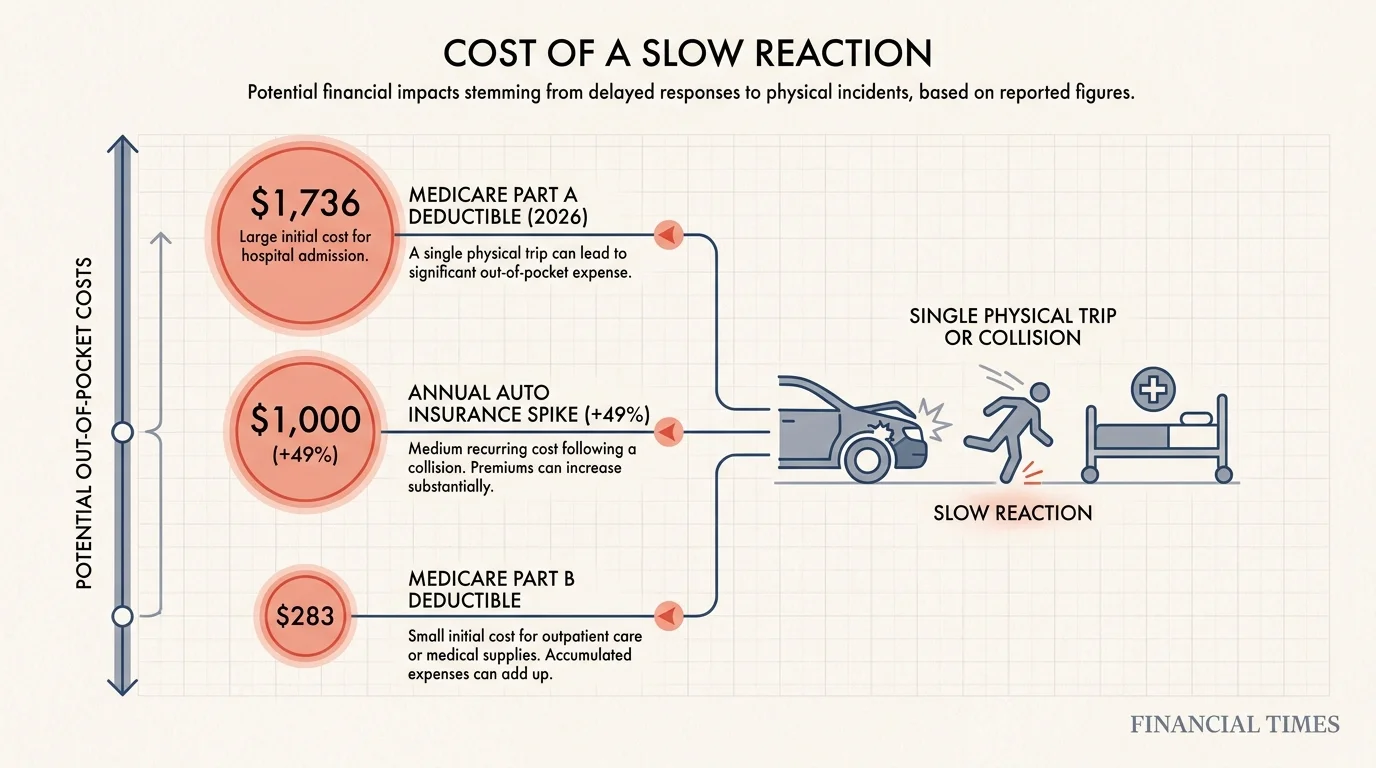
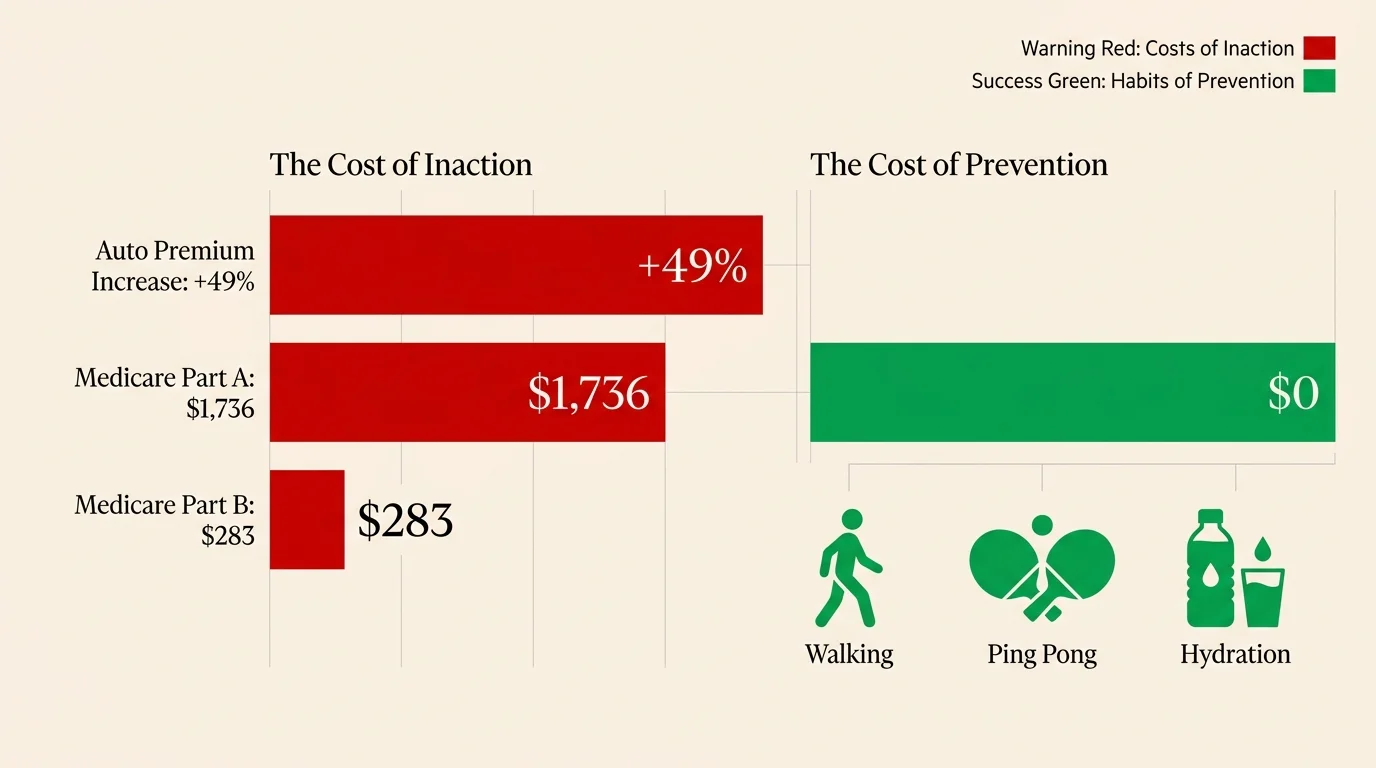
Human reaction time peaks around age 24 and gradually declines by roughly seven milliseconds per year after age 40. While a fraction of a second sounds trivial, that slight delay determines whether you catch a falling glass, brake in time to avoid a fender bender, or regain your footing on a slick sidewalk. Slower reflexes do not just threaten your physical independence; they carry enormous financial risks. An at-fault car accident can spike your auto insurance premiums by 49%, and a single bad fall could trigger the $1,736 Medicare Part A hospital deductible for 2026. Fortunately, your nervous system remains highly adaptable. You can physically rebuild your processing speed, protect your savings, and stay sharp by adopting seven straightforward daily habits.
Why Your Reaction Time Dictates Your Financial Independence
When you map out your retirement strategy, you likely focus on asset allocation, tax brackets, and Social Security optimization. You probably do not spend much time calculating the financial return on your physical reflexes. Yet, preserving your reaction time acts as a powerful insurance policy against some of the most expensive threats to your retirement nest egg.
Consider the cost of a slower physical response. According to the Centers for Disease Control and Prevention (CDC), falls among older adults cost the U.S. healthcare system over $50 billion annually. If you trip and cannot catch yourself in time, the resulting hospital admission triggers significant out-of-pocket expenses. For 2026, the Medicare.gov Part A inpatient hospital deductible is $1,736 per benefit period. If your recovery requires outpatient physical therapy or specialized equipment, you will also need to meet your $283 Medicare Part B deductible and cover the 20% coinsurance.
Driving is another area where split-second delays carry steep penalties. A minor delay in moving your foot from the gas pedal to the brake can result in an at-fault collision. National insurance data for 2025 and 2026 shows that an at-fault accident raises auto insurance premiums by an average of 44% to 49%. With the national average for car insurance hovering around $2,189 per year, a single delayed reaction could drain an extra $1,000 from your annual budget for years to come.
“The most important investment you can make is in yourself. Anything that improves your own talents; nobody can tax it or take it away from you.” — Warren Buffett, Chairman and CEO of Berkshire Hathaway
Your nervous system relies on neuroplasticity—the brain’s ability to form new neural connections—to stay quick. You can actively stimulate this process. By integrating specific, reaction-focused habits into your daily routine, you strengthen the pathways between your brain and your muscles.
1. Challenge Your Brain with High-Speed Hobbies
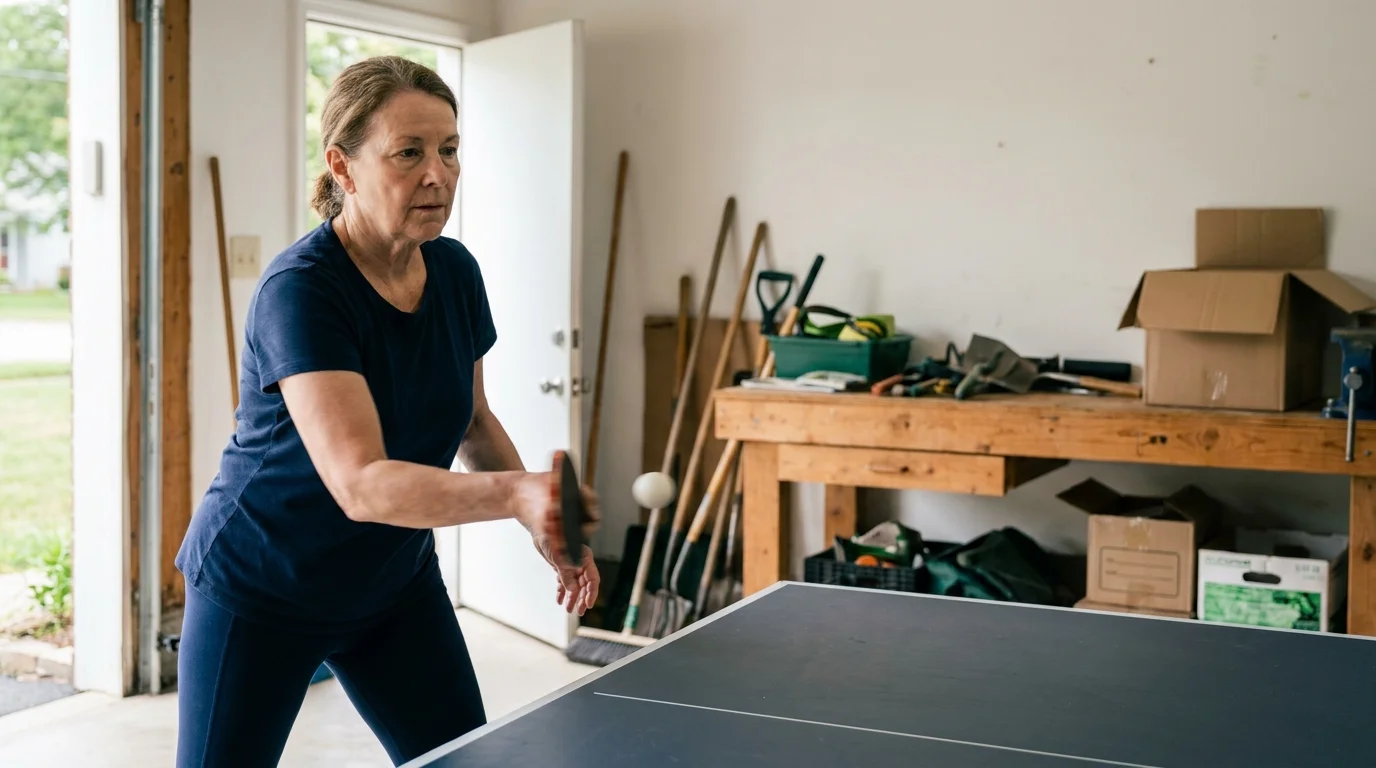
Your brain processes visual information and translates it into physical movement. When you engage in activities that force you to track fast-moving objects, you train your central nervous system to process data more efficiently. Racket sports—such as tennis, pickleball, badminton, or even table tennis (ping pong)—are exceptional tools for improving hand-eye coordination.
Ping pong, in particular, requires you to track a small, high-speed object, calculate its trajectory, and move your paddle to intercept it, all within milliseconds. This forces your brain’s prefrontal cortex and cerebellum to work in perfect harmony. If you do not have access to a ping pong table, tossing a tennis ball against a wall and catching it with alternating hands provides a similar cognitive workout. The key is unpredictability. When you cannot perfectly predict where the object will go, your brain must stay highly alert, which sharpens your reflex speed.
2. Upgrade Your Walking Routine to Agility Training
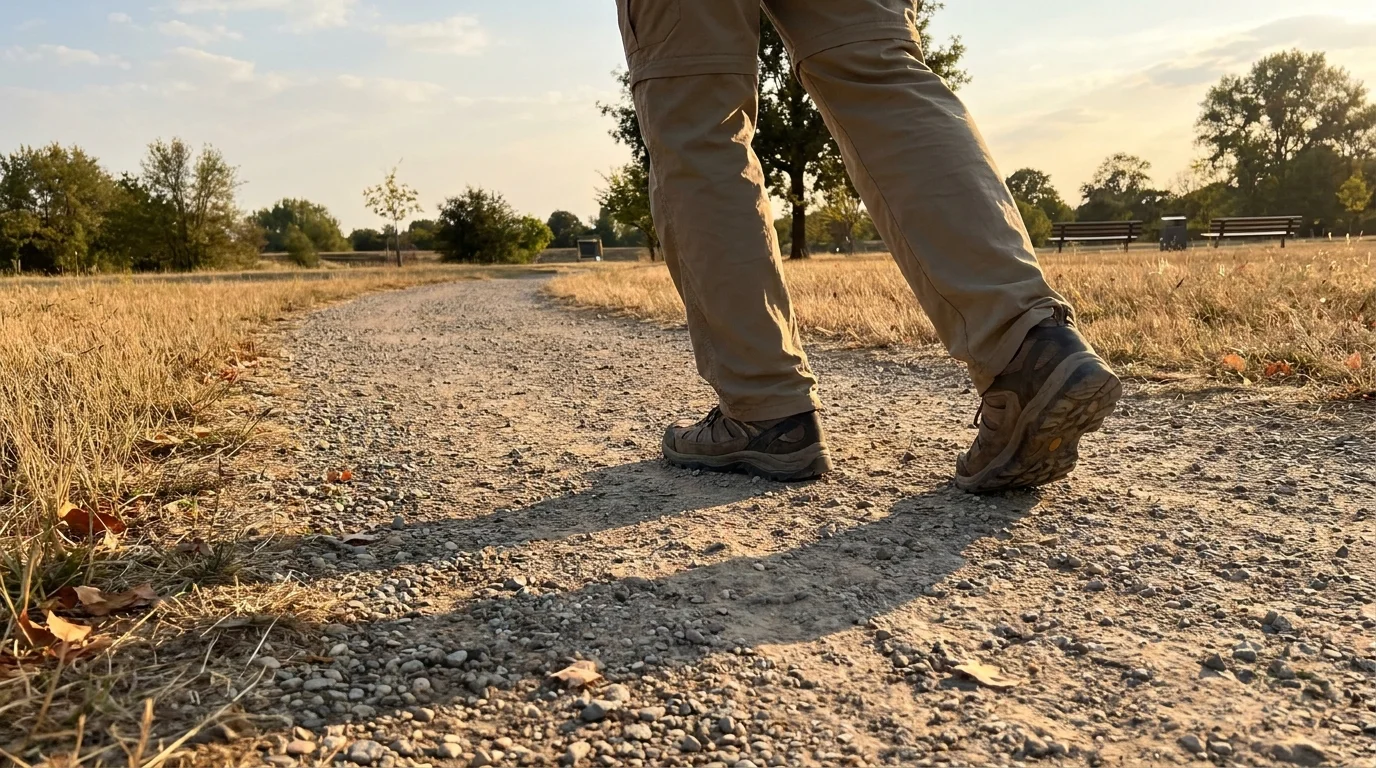
Walking is excellent for cardiovascular health, but walking at a steady pace in a straight line does very little for your reaction time. Your body quickly adapts to the predictable rhythm, allowing your brain to switch onto autopilot. To improve your reflexes, you need to introduce variables that force your brain to engage with your environment.
Transform your standard daily walk into an agility workout by incorporating unexpected movements. Here is how you can naturally weave agility into your routine:
- Interval pacing: Walk at your normal pace for three minutes, then briskly power-walk for one minute to force your muscles to adapt to sudden speed changes.
- Directional shifts: Safely step sideways for ten paces, or weave around park benches and trees rather than walking in a straight line.
- Terrain variation: Leave the paved sidewalk and walk on grass, dirt trails, or sandy beaches. Uneven surfaces force your ankles and brain to constantly micro-correct your balance, which builds faster communication between your lower body and your brain.
By keeping your physical movements unpredictable, you train your fast-twitch muscle fibers—the exact muscles you need to catch yourself if you suddenly slip on a wet floor.
3. Play Action-Oriented Video Games
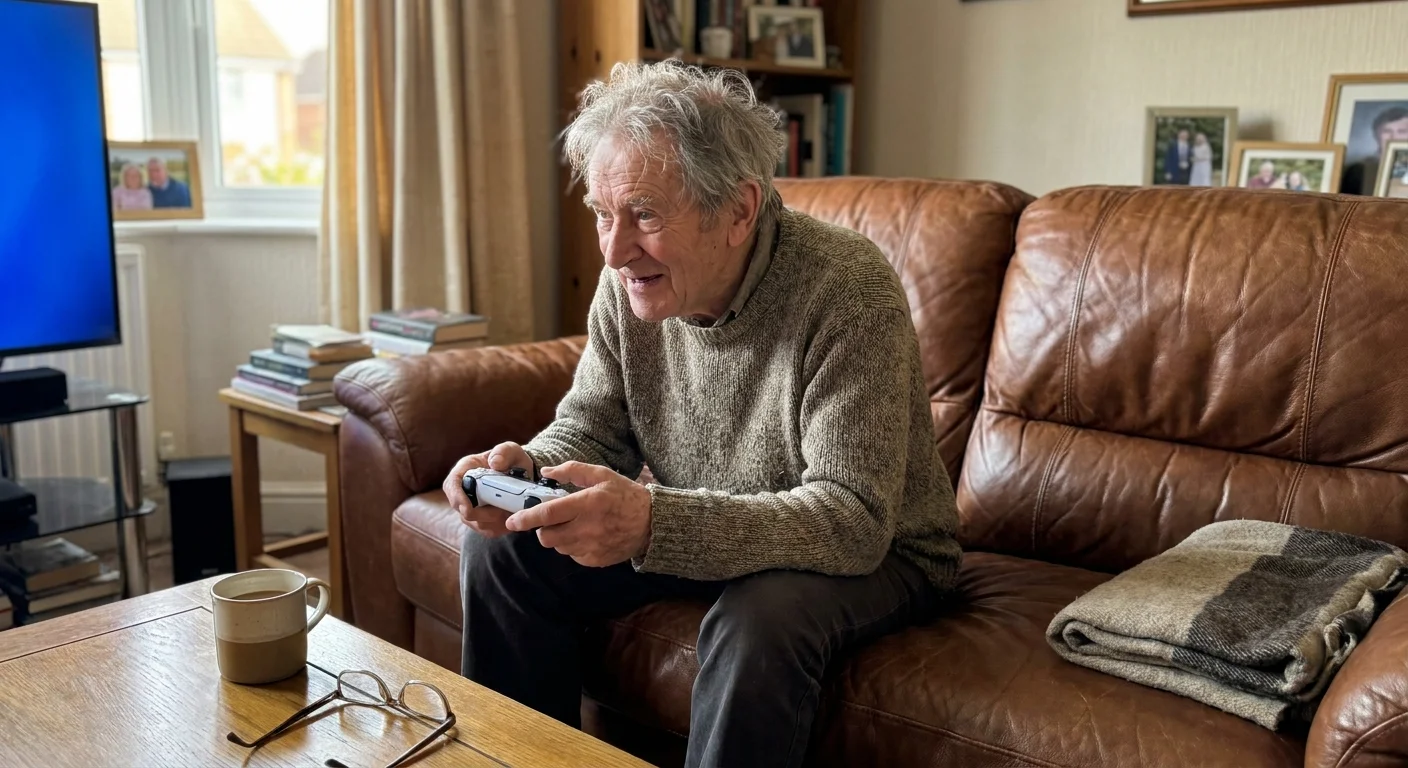
Video games are no longer just for teenagers. A robust body of cognitive research demonstrates that playing certain types of video games significantly improves visual processing speed, spatial awareness, and decision-making in older adults. You do not need to play complex, high-stress games to reap the benefits; the goal is to play games that require rapid responses to changing on-screen stimuli.
Driving simulators, puzzle games with time limits (like Tetris), or fast-paced tablet games force your brain to process visual information rapidly and execute a physical command (tapping a screen or pressing a button). The National Council on Aging (NCOA) and AARP both champion cognitive training games as a way to maintain mental sharpness. Just 15 to 20 minutes of daily gameplay can strengthen the neural pathways responsible for executing quick physical movements.

4. Make Hydration a Strict Daily Requirement
It is easy to underestimate the mechanical role water plays in brain function. Your brain is roughly 73% water. When you become even mildly dehydrated—losing just 1% to 2% of your body’s water volume—your cognitive processing speed plummets. Dehydration thickens your blood, reducing the oxygen and nutrient flow to your brain, which directly impairs your ability to react quickly to stimuli.
As you age, your natural thirst mechanism weakens. You might be chronically dehydrated without ever feeling physically thirsty. To keep your reaction time sharp, you must treat hydration as a scheduled daily habit rather than a response to thirst.
- Drink a full glass of water immediately upon waking to replenish fluids lost during sleep.
- Keep a measured water bottle visible in your living space to track your daily intake.
- Consume water-rich foods like cucumbers, watermelon, and oranges to supplement your fluid levels.
Maintaining proper hydration ensures that your neurotransmitters can fire at optimal speeds, keeping your reflexes crisp and responsive.

5. Train Your Balance to Prevent the $30,000 Fall
Reaction time is useless if your body does not have the muscular stability to execute the movement. When you trip, your brain sends a rapid signal to your leg to step forward and catch your weight. If your leg muscles lack the strength or your joints lack the stability, the signal will not prevent the fall.
Tai Chi is widely recognized by medical professionals as one of the most effective exercises for fall prevention. It involves slow, deliberate weight transfers that build profound spatial awareness—known as proprioception. Proprioception is your body’s ability to sense its location, movements, and actions. When you improve your proprioception, your body requires less time to figure out where your limbs are in space, effectively shortening your physical reaction time.
If you prefer a simpler approach, practice single-leg stands daily. Stand near a sturdy chair or kitchen counter for safety, and lift one foot slightly off the ground. Hold it for 10 to 20 seconds, then switch. This simple habit fortifies the neuromuscular connections in your legs.
Comparing the Financial Impact of Slow Reactions vs. Preventive Habits
To truly understand the value of these habits, look at the potential financial costs of slow reaction times compared to the negligible costs of staying sharp.
| Life Event | Potential Financial Cost (2026) | Preventive Habit | Cost of Preventive Habit |
|---|---|---|---|
| Hospitalization from a Fall | $1,736 (Medicare Part A Deductible) plus 20% Part B coinsurance for rehab | Tai Chi, Single-leg balance training | Free at home or $10-$20 for a community class |
| At-Fault Car Accident | 44% to 49% Auto Insurance Premium Hike (approx. $900+ per year) | Brain training, Video games, Racket sports | Free to $30 for equipment/apps |
| Minor Stumble / Sprain | $283 (Medicare Part B Deductible) for outpatient clinic visit | Agility walking, Uneven terrain hiking | Free (Requires only supportive walking shoes) |

6. Prioritize 7 to 8 Hours of Cognitive Recovery
Sleep is when your brain clears out metabolic waste and consolidates the neural pathways you used during the day. If you skimp on sleep, your reaction time degrades significantly. In fact, studies show that severe sleep deprivation impairs your physical reflexes to the same degree as alcohol intoxication.
Many seniors accept poor sleep as a normal part of aging, but it actively destroys your processing speed. To protect your reflexes, you must practice ruthless sleep hygiene. This means going to bed and waking up at the same time every day, keeping your bedroom comfortably cool, and turning off screens at least an hour before sleep. The blue light emitted by televisions and smartphones disrupts your melatonin production, leaving you tossing and turning. Guarding your sleep is guarding your reaction time.
7. Keep Your Eyesight and Hearing Sharpened
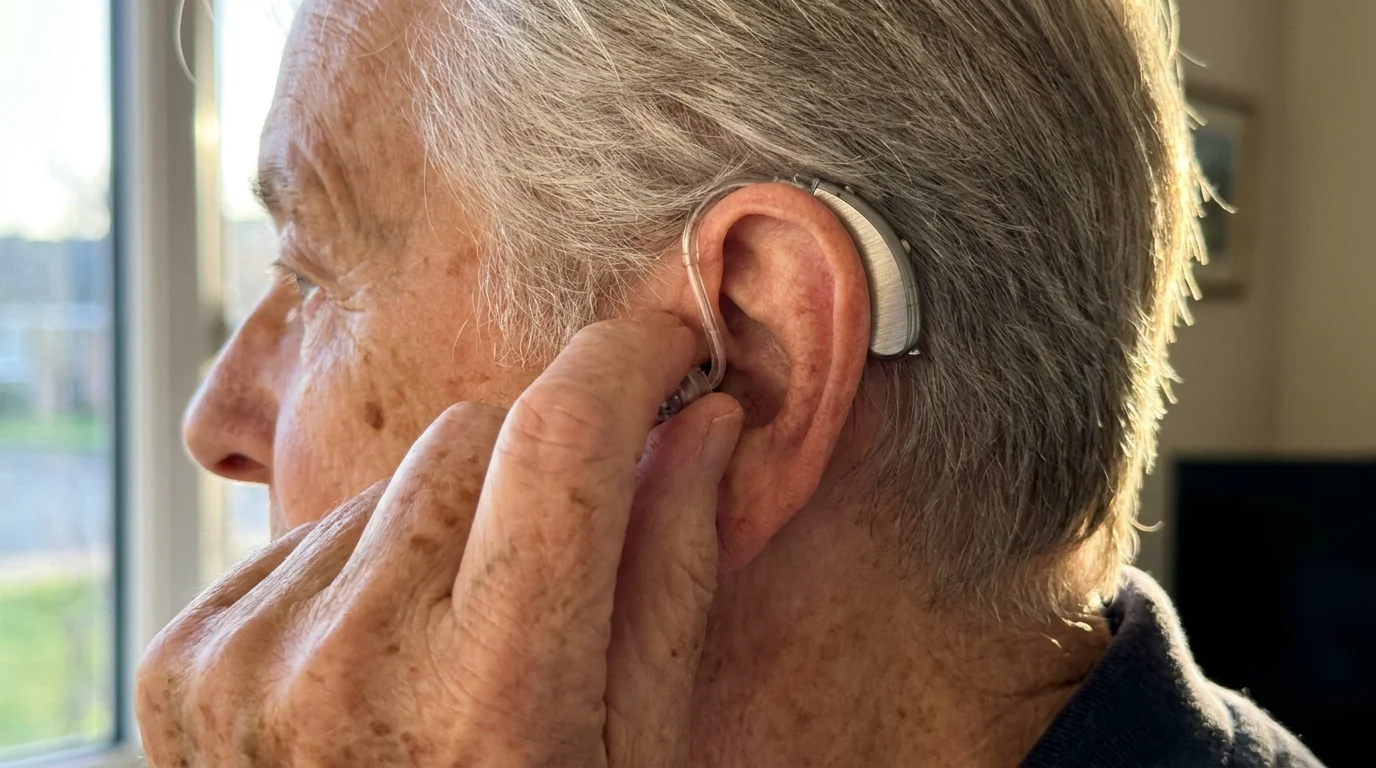
Your brain can only react as fast as the information it receives. If your sensory input is delayed, your physical output will be delayed. A significant portion of age-related “slowing down” is actually caused by uncorrected vision or hearing loss, not a cognitive decline.
If your glasses prescription is outdated, your brain takes a fraction of a second longer to decode a blurry stop sign or a raised crack in the sidewalk. Similarly, your ears provide crucial spatial awareness. Hearing a car approaching from your blind spot allows you to react before you ever see it. Schedule annual exams for both your eyes and ears. Keeping your prescription lenses current and utilizing hearing aids if necessary removes the friction from your sensory processing, allowing your brain to react instantly to the world around you.
What Can Go Wrong: 3 Common Mistakes Seniors Make with Mobility
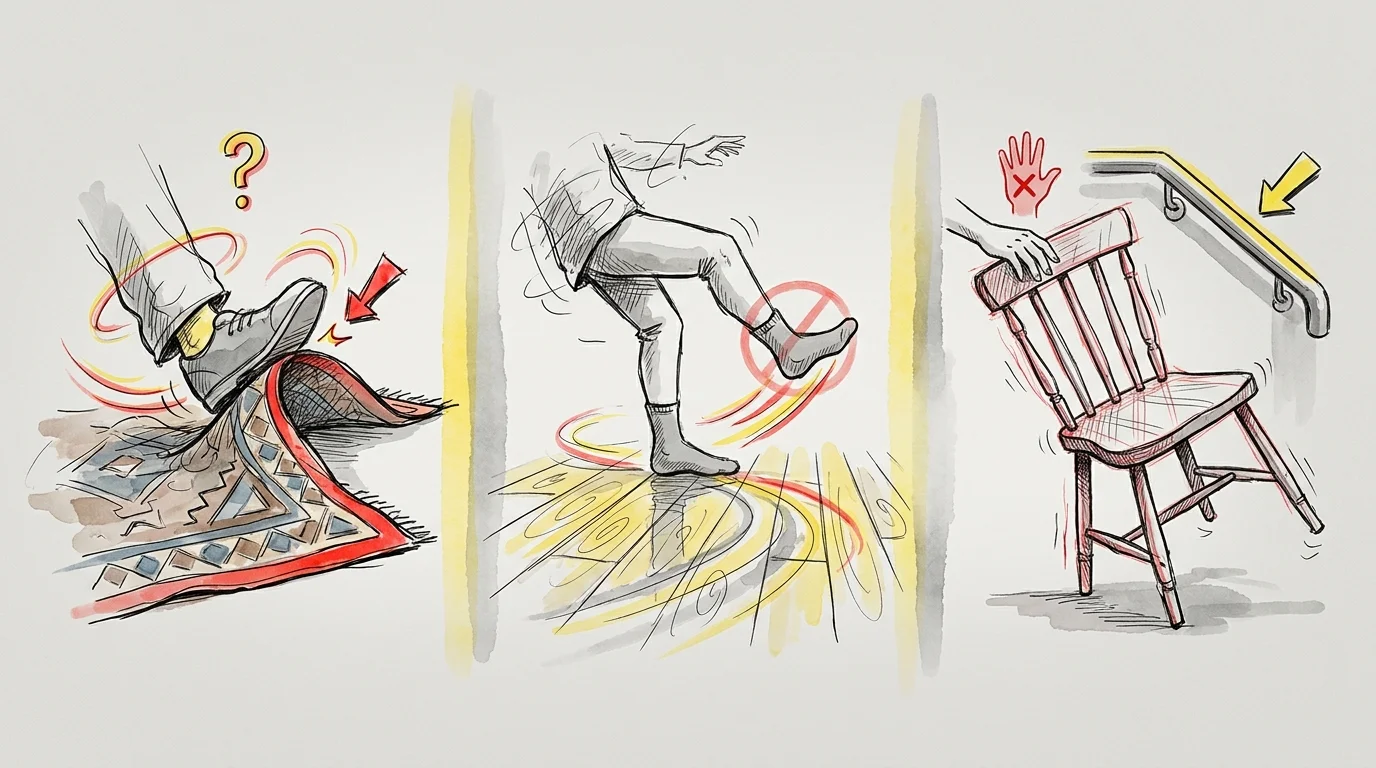
When attempting to protect their mobility and reaction time, many people inadvertently make choices that hinder their progress. Avoid these three common pitfalls:
- Accepting sluggishness as “normal aging”: The biggest mistake you can make is assuming that a severe drop in reaction time is inevitable. While a slight decrease is normal, a rapid or debilitating loss of reflexes is a warning sign. By dismissing it as “just getting old,” you miss the window to reverse the decline through targeted physical and cognitive training.
- Relying solely on slow, static exercises: Yoga and gentle stretching are fantastic for flexibility, but they do not train the fast-twitch muscle fibers required for split-second reactions. You must incorporate dynamic, unpredictable movements into your routine to keep your reflexes sharp.
- Ignoring medication side effects: Many common prescriptions for blood pressure, anxiety, or insomnia can cause drowsiness and significantly delay your reaction time. Taking these medications right before driving or attempting complex physical tasks puts you at high risk for an accident.

When to Consult a Professional
While daily habits form the foundation of a healthy reaction time, certain situations require expert intervention. You should seek professional guidance if you experience any of the following:
- You notice a sudden, drastic drop in your reflexes: If you find yourself suddenly dropping items frequently, tripping over flat surfaces, or struggling to follow fast conversations, consult a neurologist. A sharp decline is not normal aging and could indicate an underlying medical condition.
- You take multiple prescription medications: Bring your complete list of medications and supplements to a pharmacist or your primary care physician. Ask them to perform a “brown bag review” to identify any drug interactions that might be causing brain fog, dizziness, or delayed reaction times.
- You want to start an agility or balance program safely: If you have a history of falls or joint replacements, do not start agility training on your own. Ask your doctor for a referral to a physical therapist. A physical therapist can design a customized, safe reaction-training program covered by Medicare Part B (after you meet your $283 deductible for 2026).
Improving your reaction time is entirely within your control. By introducing a little unpredictability into your daily walks, playing fast-paced games, guarding your sleep, and practicing balance, you build a resilient nervous system. These small daily actions compound over time, keeping you confidently behind the wheel, steady on your feet, and securely in control of your retirement finances.
This is educational content based on general financial principles for seniors. Individual results vary based on your situation. Always verify current benefit amounts, tax rules, and program eligibility with official government sources.
Last updated: May 2026. Benefit amounts, tax rules, and program details change annually—verify current figures with official government sources.