
7 Walking Mistakes That Can Make Joint Pain Worse

Facebook
Twitter
LinkedIn
WhatsApp
Reddit

Daily walking is one of the best habits you can maintain for your cardiovascular health and mobility, but small biomechanical mistakes can quickly turn this beneficial exercise into a source of severe joint pain. When you walk with poor posture, wear exhausted footwear, or skip the crucial warm-up phase, you place excessive stress on your knees, hips, and lower back. Over time, these daily micro-injuries accelerate cartilage breakdown, which could eventually lead to expensive medical interventions like a total knee replacement—a procedure averaging nearly $32,570 in the U.S. By correcting how your foot strikes the ground and adjusting your stride length, you protect your joints and keep your long-term healthcare costs down. Let us look at the movement habits you need to fix immediately.
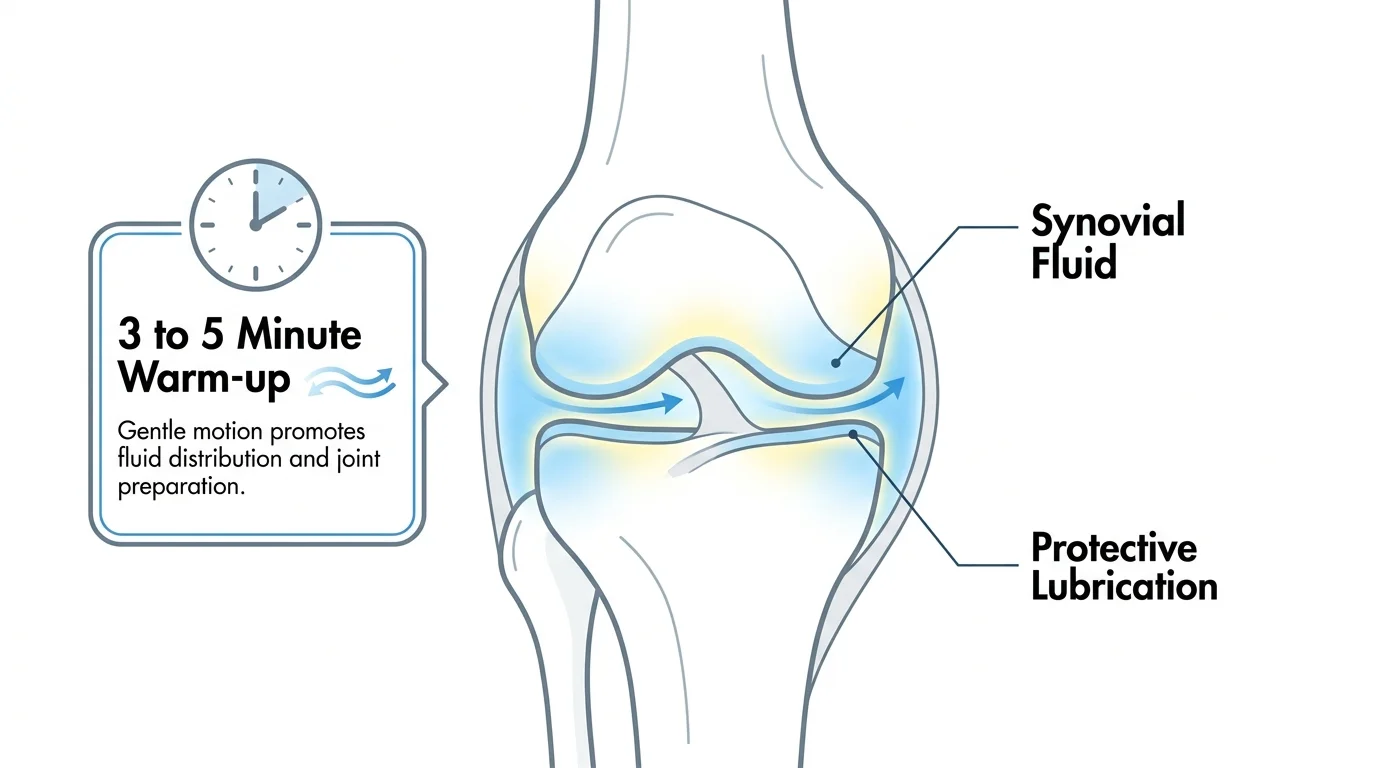
A medical diagram of a knee joint showing synovial fluid lubrication and a 3-5 minute warm-up callout.
A brief warm-up distributes synovial fluid to provide protective lubrication for your knee joints.

Mistake 1: Starting Your Walk at Maximum Speed

Stepping out of your front door and immediately launching into a brisk, high-speed pace feels energetic, but it actively harms your joints. Your body operates like a machine; when it has been resting or sitting, its parts are cold. The cartilage in your joints does not have its own blood supply. Instead, it relies on synovial fluid to stay lubricated and healthy. When you are inactive, this protective fluid pools in specific areas of the joint cavity rather than coating the entire surface.

Demanding full performance from joints that lack adequate lubrication creates dangerous friction. You force raw cartilage surfaces to grind against each other, creating microscopic rips in the tissue. Individually, these tiny injuries cause no immediate symptoms, but they accumulate over weeks and months to produce chronic pain.

To fix this, spend the first three to five minutes of your walk moving at a slow, leisurely pace. This gentle motion pumps synovial fluid evenly across your joint surfaces, providing a protective film that absorbs shock. It also gives your heart rate a chance to climb gradually, reducing sudden stress on your cardiovascular system.


A comparison diagram showing how tilting the head forward increases spinal strain compared to looking 20 feet ahead.
This diagram compares how looking down increases spinal strain versus maintaining neutral alignment while you walk.

Mistake 2: Walking With a Head-Down Posture

Take a moment to observe people walking through a neighborhood park. You will notice that many of them walk with their shoulders rounded forward, their necks bent, and their eyes glued to the pavement a few feet ahead. We spend so much of our daily lives hunched over devices and steering wheels that this posture feels entirely natural. In reality, it acts as a biomechanical catastrophe for your joints.

An adult human head weighs approximately eleven pounds. When your head sits directly over your spine in a neutral position, your skeletal structure supports that weight effortlessly. However, when you shift your head forward by just an inch or two, you exponentially increase the strain on your cervical spine. This postural imbalance does not stay isolated in your neck. Your body compensates by shifting your pelvis, altering your center of gravity, and forcing your knees and hips to absorb heavier, misaligned impacts with every step.

Correct your posture by keeping your chin parallel to the ground and lifting your chest. Focus your gaze roughly fifteen to twenty feet ahead of you. This simple adjustment straightens your spine, opens up your airway for better oxygen intake, and properly aligns your hips to take unnecessary pressure off your knees.

A close-up photo of a worn-out sneaker sole with smooth tread, showing the loss of structural support.
A severely worn shoe sole lacks the cushioning needed to protect your joints from impact while walking.

Mistake 3: Wearing Shoes Long Past Their Lifespan

Many seniors wait until their shoes look visibly frayed or torn before replacing them. By the time a walking shoe looks worn out on the outside, its structural integrity collapsed months ago. As you age, your joints naturally lose some of their internal cushioning, making you highly reliant on external support to absorb the shock of walking on hard pavement.

Every step you take sends a small shockwave up from the ground, through your foot and ankle, straight into your knee and lower back. Quality walking shoes feature specialized foam midsoles designed to absorb this impact. However, that foam compresses and breaks down with regular use. Walking in exhausted shoes allows those harsh shockwaves to travel freely into your fragile joints.

Make it a priority to replace your primary walking shoes every 300 to 500 miles, or roughly every six to eight months if you walk daily. Look for footwear that offers substantial cushioning, proper arch support to prevent your feet from rolling inward, and a flexible sole. Treating your footwear as medical equipment rather than a fashion accessory represents one of the simplest investments you can make in your long-term mobility.

A stride analysis diagram comparing a long overstride to a shorter, safer step that protects the knees.
This diagram compares the high impact force of overstriding with the safer geometry of an optimal stride.

Mistake 4: Taking Strides That Are Too Long

When you want to walk faster for a better cardiovascular workout, your instinct probably tells you to stretch your legs out and take longer strides. Reaching forward with your leading leg straightens your knee and forces your heel to strike the ground forcefully, well in front of your body’s center of gravity.

This movement pattern is known as overstriding, and it effectively acts as a braking mechanism. Instead of smoothly rolling through your step, a harsh heel strike sends a jarring force straight up your shin bone into your kneecap. Repeating this motion thousands of times during a neighborhood stroll places an enormous, destructive burden on your knee joints and lower back.

If you want to increase your walking speed, increase your cadence—the number of steps you take per minute—rather than the length of your steps. Keep your strides short and quick, ensuring your foot lands naturally under your body rather than far out in front. This technique promotes a softer landing, utilizes your glutes effectively, and spares your knees from repetitive trauma.

An ink illustration showing the difference between stiff, board-like arms and a natural, fluid walking swing.
Walking with stiff, wooden arms prevents the natural swing needed to keep your joints pain-free.

Mistake 5: Keeping Your Arms Stiff and Locked

Walking is not just a lower-body exercise; it requires fluid coordination across your entire body. Many walkers instinctively jam their hands into their pockets, cross their arms, or let them hang stiffly by their sides. Immobilizing your upper body in this way disrupts your natural biomechanics.

The human body moves efficiently through a contralateral pattern, meaning that as your left leg steps forward, your right arm should naturally swing forward to counterbalance it. This arm swing acts as a pendulum that drives the subtle, healthy rotation of your spine. When you lock your arms, you force your hips and lower back to work overtime to generate momentum and maintain stability.

Take your hands out of your pockets, bend your elbows slightly, and allow your arms to swing naturally from your shoulders. You do not need to march rigidly; simply let your upper body move in a relaxed rhythm that matches your footsteps. This takes significant tension off your lower back and hip flexors.

A calendar illustration showing a week of inactivity followed by a high-intensity, joint-taxing weekend.
This calendar shows how sitting all week followed by intense weekend activity can lead to painful joint strain.

Mistake 6: Cramming Your Activity Into the Weekend

You may start your week with great intentions, but busy schedules often push exercise to the weekend. You might sit for five consecutive days and then attempt a rigorous two-hour walk on a Saturday afternoon. This “weekend warrior” approach damages older joints.

Your cartilage requires daily movement to stay nourished, and your muscles need consistent activity to maintain their elasticity. When you force inactive, tight muscles to perform a long, demanding walk, you invite inflammation and strain. The body does not adapt well to sudden, massive spikes in physical demand.

Consistency matters far more than volume. Walking for twenty to thirty minutes, five days a week, provides dramatically better joint health and cardiovascular benefits than a single two-hour weekend trek. If a daily thirty-minute walk feels unmanageable right now, start with ten minutes a day and gradually increase your duration.

A POV photo of a person looking at a phone while walking toward a large crack in the sidewalk.
Staring at your phone while navigating cracked pavement can lead to missteps that worsen your joint pain.

Mistake 7: Staring at Your Phone While Moving

Holding a smartphone in front of your face while you walk combines several harmful biomechanical mistakes into one dangerous habit. It forces your neck into a severe downward tilt, locks your arms in a static position, and completely ruins your spinal alignment. Beyond the structural damage, looking at a screen drastically increases your risk of tripping and falling.

According to the National Council on Aging, falls remain the leading cause of fatal and non-fatal injuries for older Americans. A simple trip over an uneven sidewalk can result in a fractured hip, triggering a cascade of medical expenses and a permanent loss of independence.

Put your phone securely in your pocket for the duration of your walk. If you enjoy listening to audiobooks or podcasts while you exercise, connect a pair of earbuds and start the audio before you leave your driveway. Keep your hands free, your head up, and your attention on your environment.

An infographic showing $32,570 as the cost of knee replacement compared to the low cost of prevention.
Investing in quality footwear and prevention can save you from the high cost of knee replacement surgery.

The Financial Cost of Ignoring Joint Health

When you ignore joint pain or dismiss it as a normal part of aging, you risk more than just your comfort; you put your retirement savings in jeopardy. Chronic joint degradation eventually forces medical intervention, and orthopedic procedures carry staggering price tags.

According to recent medical cost analyses for 2026, the average cost of a total knee replacement in the United States sits at approximately $32,570, though complex hospital revisions can push that figure significantly higher depending on your location. Even if you carry comprehensive health insurance, you still face substantial out-of-pocket expenses.

Under Original Medicare, hospitalizations for joint replacement fall under Part A. For 2026, the Medicare Part A deductible requires you to pay $1,736 out of pocket before coverage begins. Your surgeon’s fees and outpatient recovery fall under Medicare Part B, which means you are responsible for a $257 annual deductible, followed by a 20 percent coinsurance on the Medicare-approved amount. When you add up the deductible, coinsurance, pre-operative testing, and required home modifications, a single joint surgery can easily drain thousands of dollars from your fixed income.

“The best investment is in yourself. Anything that improves your own talents; nobody can tax it or take it away from you.” — Warren Buffett, Investor and CEO of Berkshire Hathaway

Investing time in correcting your walking form, and spending a little money on supportive footwear, serves as a vital financial defense strategy. Protecting your joints preserves your wealth just as effectively as a well-managed mutual fund.

A watercolor illustration of a Medicare brochure and a physical therapy appointment card on a kitchen table.
Medicare Part B documents and a physical therapy appointment card rest on a table beside steaming coffee.

How Medicare Covers Physical Therapy for Joint Pain

If you experience lingering joint pain despite correcting your walking habits, do not wait for the cartilage to deteriorate completely. Early intervention through physical therapy can strengthen the muscles surrounding your joints, correct your gait, and often prevent the need for invasive surgery entirely.

Fortunately, Medicare.gov confirms that Medicare Part B provides robust coverage for medically necessary outpatient physical therapy. In 2026, Medicare rules make accessing this care straightforward, provided your doctor or therapist documents the medical necessity of the treatment.

Here is how the cost structure breaks down for Medicare beneficiaries in 2026:

  • The Annual Deductible: You must first meet your annual Part B deductible, which is $257 for 2026.
  • Your Coinsurance: After meeting the deductible, Medicare pays 80 percent of the approved amount for your physical therapy sessions. You pay the remaining 20 percent. If you carry a Medigap policy, such as Plan G, your supplemental insurance typically covers this 20 percent entirely.
  • The KX Modifier Threshold: Medicare no longer enforces a hard financial cap on how much physical therapy you can receive. Instead, they use a tracking threshold. For 2026, this threshold is $2,480 for physical therapy and speech-language pathology combined. If your therapy costs exceed this amount, your therapist simply attaches a “KX modifier” to your billing code, attesting that continued care remains medically necessary.

To help you visualize the financial difference between preventive care and surgical intervention, review the comparison table below.

Intervention Type Average Estimated Total Cost Medicare Coverage (2026 Rules) Estimated Out-of-Pocket Expense
High-Quality Walking Shoes $120 – $180 Not Covered (considered personal apparel) $120 – $180
Outpatient Physical Therapy $150 per session Part B covers 80% after $257 annual deductible $30 per session (if no Medigap plan)
Total Knee Replacement $32,570 Part A covers hospital; Part B covers surgeon $1,736 Part A deductible + 20% of Part B fees
A grid of seven icons summarizing the walking mistakes: speed, posture, shoes, stride, arms, timing, and phone use.
These sketches illustrate common walking mistakes like poor posture and bad gear that worsen joint pain.

Common Mistakes to Avoid

As you focus on improving your joint health, be careful to avoid these related missteps that can derail your progress.

  • Masking Pain With Medication: Relying heavily on over-the-counter anti-inflammatory medications allows you to walk through the pain, but it does not fix the root cause. Pain acts as your body’s warning system. When you mask it with pills and continue walking with poor form, you accelerate joint destruction silently.
  • Ignoring Post-Walk Recovery: Walking shortens and tightens your hamstrings and calf muscles. Skipping a basic five-minute stretching routine after your walk leaves these muscles tight, which pulls your pelvis out of alignment and creates lower back pain the next time you move. Drink a glass of water and gently stretch your legs while your muscles are still warm.
  • Walking on the Wrong Surfaces: Consistently walking on slanted surfaces, such as the crowned edge of a paved road, forces one leg to reach farther than the other. This creates an artificial leg-length discrepancy that severely stresses your hips and knees. Whenever possible, seek out flat, level surfaces like dedicated walking trails, high school tracks, or flat sidewalks.
A couple walking away on a sunny park path, demonstrating healthy mobility and good posture.
An older couple walks along a scenic path, practicing healthy habits to protect their long-term mobility.

Protecting Your Mobility

Your daily walk should serve as a cornerstone of your physical independence, not a catalyst for joint degradation. By making conscious adjustments to your posture, pacing, and footwear, you eliminate the hidden friction that wears down your knees and hips. Small, deliberate corrections today will keep you moving comfortably for decades, sparing you from painful surgeries and protecting your hard-earned retirement savings from massive medical bills. Treat your walking routine with intention, listen to your body, and do not hesitate to consult a physical therapist at the first sign of persistent discomfort.

This article provides general financial education and information only. Everyone’s financial situation is unique—what works for others may not work for you. For personalized advice tailored to your retirement needs, consider consulting a qualified financial professional such as a CFP or CPA.


Last updated: May 2026. Benefit amounts, tax rules, and program details change annually—verify current figures with official government sources.

Leave a Reply

Your email address will not be published. Required fields are marked *

You May Also Like