
Finding the perfect place for retirement means balancing daily lifestyle perks with the hard realities of living on a fixed income. The best small towns offer walkable downtowns, easy access to high-quality healthcare, and robust tax advantages that stretch your savings further. Whether you prioritize zero state income tax, sweeping exemptions on your Social Security benefits, or simply a lower cost of living, moving to a strategic location can drastically improve your financial security. We analyzed current 2026 state tax codes, housing data, and healthcare infrastructure to pinpoint twelve distinct communities that deliver. These charming towns provide the ideal combination of affordability, natural beauty, and strong senior support networks to help you thrive after age 65.
Federal Tax and Medicare Adjustments for 2026
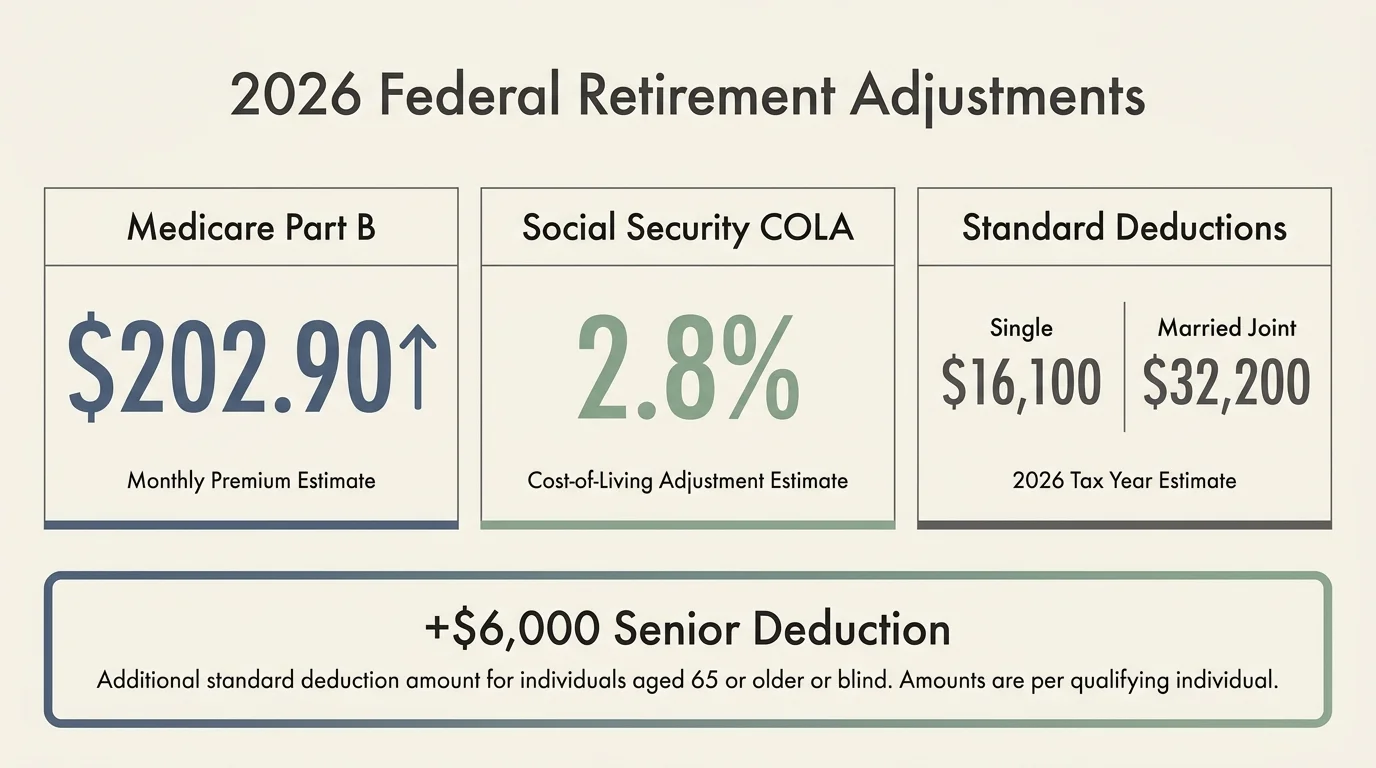
As you evaluate your relocation budget, you must account for new federal baselines. For 2026, the standard Medicare Part B monthly premium increased to $202.90. To help offset these rising premiums and daily expenses, Social Security recipients received a 2.8% Cost-of-Living Adjustment (COLA). Always verify your specific premium amounts, as higher earners may face an Income-Related Monthly Adjustment Amount (IRMAA).
On the tax side, the Internal Revenue Service (IRS) increased the 2026 standard deduction to $16,100 for single filers and $32,200 for married couples filing jointly. If you are 65 or older, you receive an additional standard deduction of $2,050 for single filers and $1,650 per qualifying spouse for joint filers. Furthermore, a temporary senior tax deduction allows eligible taxpayers aged 65 and older to claim an additional $6,000 deduction per person, reducing the federal tax burden on fixed incomes through 2028.
“When you relocate in retirement, you aren’t just buying a new home; you are buying into a tax structure and healthcare ecosystem. Always run the numbers on property taxes and Medicare access before you pack.” — Jean Chatzky, Financial Expert

1. Peterborough, New Hampshire
Peterborough provides the quintessential New England retirement experience without the steep price tag of coastal cities. The Monadnock Region delivers unhurried beauty; you keep more of your money because New Hampshire levies no state income tax and no sales tax. In fact, the state repealed its interest and dividends tax entirely, making it fully income-tax-free. Healthcare access remains a top priority here; Monadnock Community Hospital offers collaborative acute care right in town. If you want four distinct seasons, historic brick-lined streets, and a quiet community, this small town fits the bill perfectly.

2. Lewes, Delaware
Lewes pairs walkable beaches with some of the most retiree-friendly tax policies on the East Coast. Delaware charges zero state sales tax and completely exempts your Social Security benefits from state income taxation. Furthermore, if you are 60 or older, you can exclude up to $12,500 of qualified retirement income, including pensions and 401(k) distributions, from your state taxes. You also benefit from exceptionally low property taxes compared to neighboring states. On the medical front, retirees rely on Beebe Healthcare, a comprehensive community hospital located directly in Lewes.

3. Traverse City, Michigan
Traverse City hugs the Great Lakes shoreline and offers incredible outdoor recreation for active seniors. Michigan currently exempts 100% of your Social Security benefits from state income tax, regardless of your birth year or income level. The state also rolled back the historic “retirement tax,” phasing in significant deductions for pension and retirement account income through 2026 based on your age. Healthcare access is anchored by Munson Medical Center, which provides complex specialty care. Living here means enjoying cherry orchards, quiet trails, and robust tax protections.

4. Oxford, Mississippi
Oxford delivers deep southern charm, a vibrant collegiate atmosphere, and an unbeatable tax environment. Mississippi stands out as one of the most tax-friendly states in the country because it completely exempts all forms of retirement income from taxation. Your Social Security benefits, IRA withdrawals, 401(k) distributions, and pension payments remain untouched by the state. Any other income faces a low flat tax rate of 4.0%. With a median property tax bill near $1,189 annually, your housing costs stay highly manageable. You also have direct access to the Baptist Memorial Hospital-North Mississippi for both routine and emergency care.

5. Pella, Iowa
Pella blends strong Dutch heritage with tremendous financial advantages for retirees. Iowa recently transformed its tax code to become highly competitive. If you are 55 or older, the state excludes virtually all retirement income from state taxes, including pensions, 401(k) withdrawals, and IRA distributions. Social Security benefits remain 100% exempt. For other sources of income, Iowa enacted a low flat 3.8% tax rate. The town itself features a massive lake, 17 miles of paved trails, and a peaceful atmosphere tailored to those living on a fixed income.

6. Brevard, North Carolina
Nestled in the Blue Ridge Mountains, Brevard offers mild weather and an active outdoor lifestyle. North Carolina does not tax Social Security benefits, preserving a significant portion of your income. The state taxes other income at a flat rate that continues to decrease. Transylvania Regional Hospital, part of the extensive Mission Health system, provides comprehensive healthcare services directly within the community. From abundant waterfalls to a highly walkable downtown arts district, Brevard allows you to stay active and socially connected.

7. Winchester, Virginia
Winchester sits in the beautiful Shenandoah Valley, offering rich American history and a vibrant downtown walking mall. Virginia does not tax Social Security benefits and offers an age-based deduction for other retirement income for those 65 and older. Winchester Medical Center, a not-for-profit hospital, serves over 400,000 residents in the region, ensuring you never have to travel far for top-tier cardiac or specialty care. The town provides a perfect balance of rural beauty and modern conveniences.

8. Boerne, Texas
Located just outside San Antonio in the Texas Hill Country, Boerne provides a slower pace of life without sacrificing access to major amenities. Texas charges zero state income tax, meaning your Social Security, pensions, and retirement withdrawals remain untouched by the state. While property taxes run notoriously high in Texas, the state offers robust property tax exemptions for seniors over 65 that help cap your liability. You can enjoy the town’s famous Hill Country Mile while remaining just a short drive from San Antonio’s world-class medical facilities.

9. Prescott, Arizona
Prescott offers a mild four-season climate and historic western charm. Arizona does not tax your Social Security benefits, and the state’s low flat income tax rate keeps your overall costs predictable. Property taxes remain lower than the national average, making housing far more affordable than in major metropolitan areas. The local healthcare system, Yavapai Regional Medical Center, provides excellent care for residents, making this high-desert town a safe, beautiful place to settle.

10. Maplewood, Missouri
Maplewood sits just outside St. Louis, offering small-town walkability with major city resources next door. Missouri recently improved its tax climate for seniors; as of 2024, the state fully exempts Social Security benefits from state income tax regardless of your total income. Missouri also offers a deduction for public pension income. With a low cost of living and immediate access to top-rated St. Louis hospital networks, Maplewood delivers high value for your retirement dollar.

11. Gulf Shores, Alabama
For those dreaming of a coastal retirement, Gulf Shores offers white-sand beaches and championship golf courses. Alabama stands out as one of the most tax-friendly states in the South. The state does not tax Social Security benefits and fully exempts defined benefit pensions. Property taxes are among the lowest in the nation. South Baldwin Regional Medical Center is close by, giving you peace of mind while you enjoy the Gulf Coast lifestyle.

12. Greenville, South Carolina
Greenville consistently ranks as a top retirement destination thanks to its stunning downtown waterfall park, plentiful green spaces, and incredible culinary scene. South Carolina does not tax Social Security benefits and offers generous retirement income deductions—up to $15,000 annually for residents 65 and older. The state also features highly competitive property taxes. The local Prisma Health system provides award-winning care, making Greenville a smart, vibrant choice for your later years.
Costly Errors to Sidestep When Relocating
Moving to a new state involves far more than simply hiring a moving truck. Avoid these common financial pitfalls when planning your relocation:
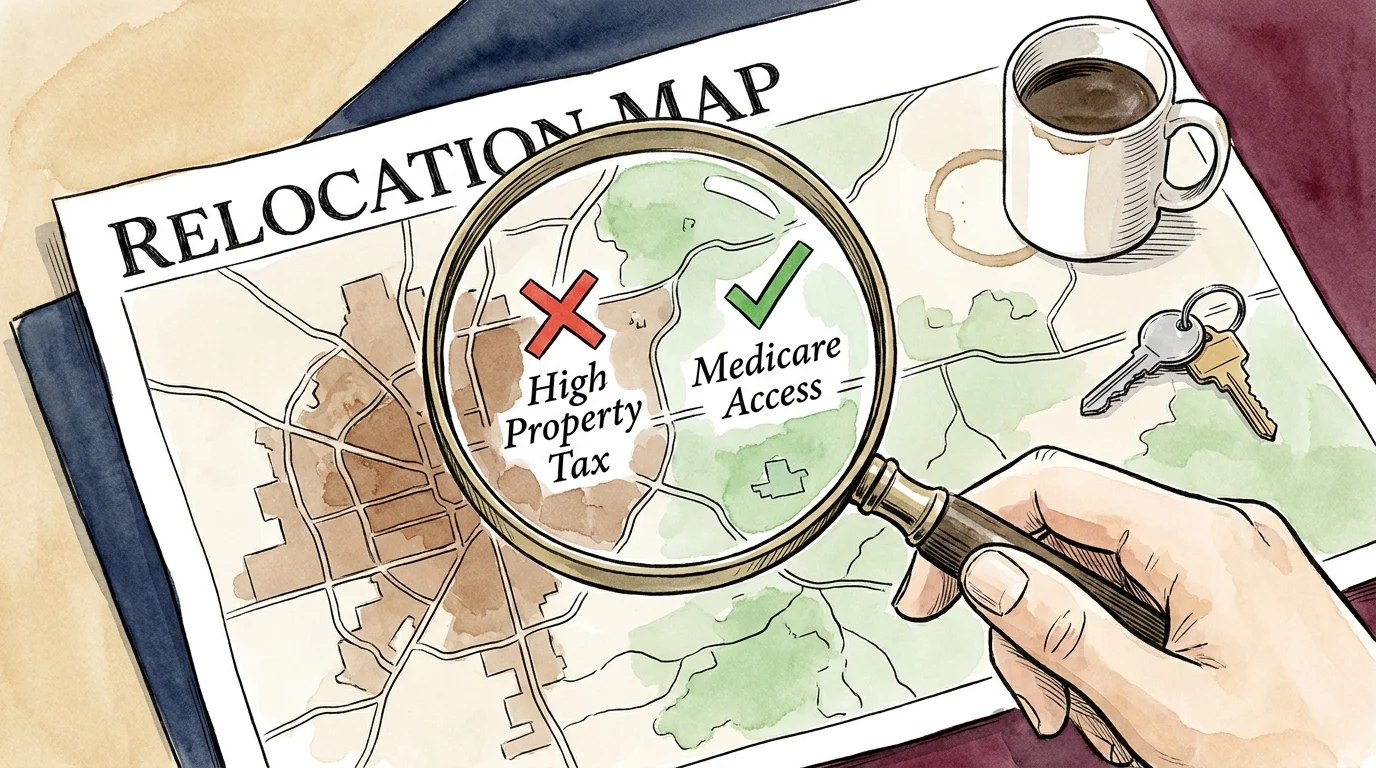
- Ignoring the total tax burden: Moving to a state with no income tax might seem like a guaranteed win, but you must factor in property and sales taxes. For instance, Texas has no income tax, but a retiree with a $500,000 home might pay $8,000 annually in property taxes. Always evaluate the combined tax impact.
- Failing to research healthcare networks: Your current Medicare Advantage or Part D plan may not be available in your new zip code. You must verify that high-quality hospitals and specialists in your new town accept your specific insurance plan before making a commitment.
- Overlooking climate and mobility: A multistory home in a snowy climate might be manageable at age 65, but it could become a costly burden at 85. Prioritize single-story living, walkability, and mild weather to reduce future home modification expenses.
When DIY Isn’t Enough
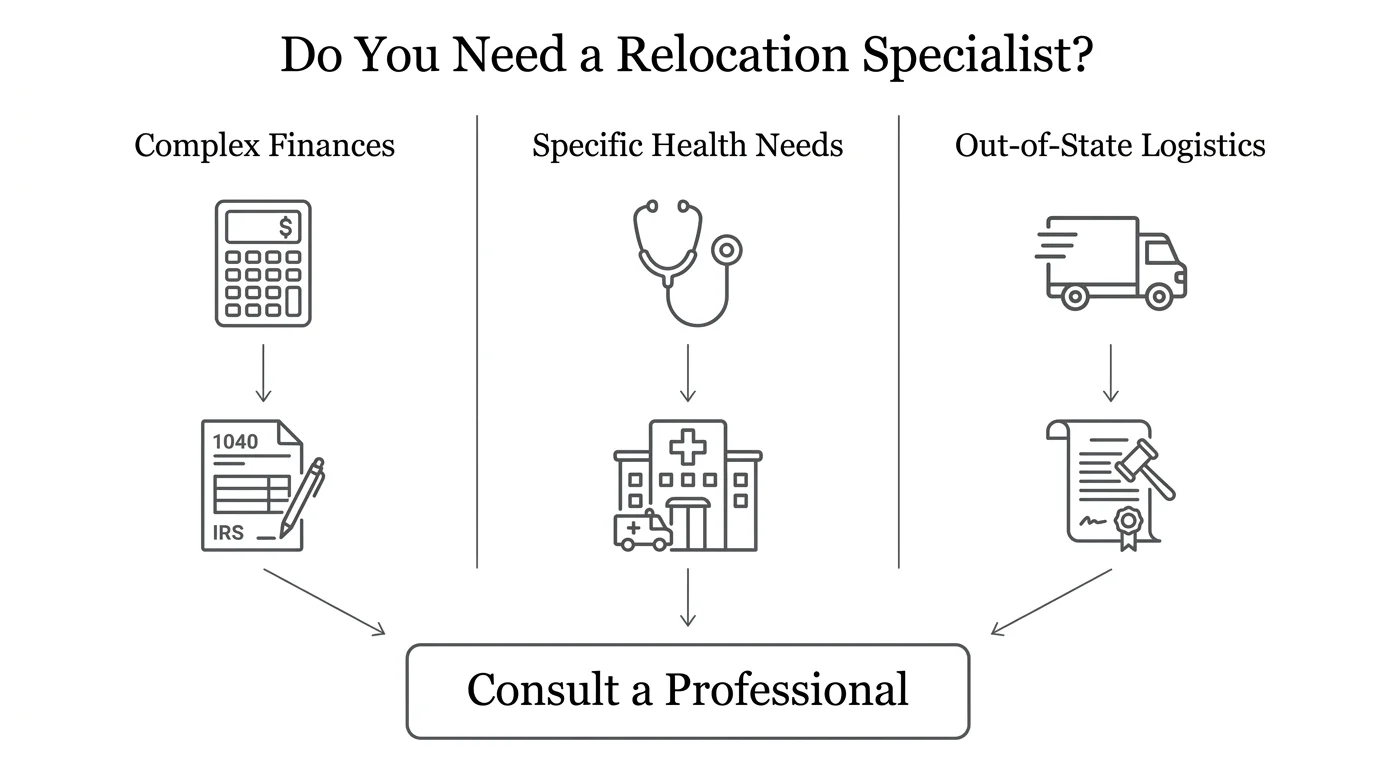
While you can research housing markets and tax codes on your own, certain situations require professional guidance. Consider hiring a fee-only fiduciary financial planner or tax advisor if you face any of the following scenarios:
- Executing a Roth conversion strategy: If you are moving from a high-tax state to a tax-free state, timing your Roth IRA conversions correctly can save you thousands. A professional can help you avoid triggering higher Medicare IRMAA premiums.
- Selling a highly appreciated primary residence: If you plan to sell a home with significant equity, you need to navigate capital gains taxes carefully. A tax professional ensures you maximize the primary residence exclusion.
- Navigating complex pension rules: State tax laws regarding out-of-state pensions vary wildly. If you draw a substantial pension from a former employer, a tax expert can model exactly how your new home state will treat that income.
Frequently Asked Questions
Do I need to change my Medicare plan if I move out of state?
If you are enrolled in Original Medicare (Part A and Part B), your coverage travels with you anywhere in the United States. However, if you use a Medicare Advantage plan (Part C) or a standalone prescription drug plan (Part D), you generally must enroll in a new plan specific to your new zip code. Medicare grants you a Special Enrollment Period when you move outside your current plan’s service area.
Which states do not tax Social Security?
As of 2026, the vast majority of states do not tax Social Security benefits at the state level. States like Iowa, Missouri, Michigan, and Mississippi completely exempt these benefits from state income taxation, allowing you to keep more of your fixed income. Always check with the Social Security Administration and your specific state’s department of revenue for current guidelines.
How does my age affect my state income taxes?
Many states offer generous tax exemptions once you turn 55, 60, or 65. For example, Iowa exempts virtually all retirement income for residents 55 and older, while Delaware provides a $12,500 pension exclusion specifically for those 60 and above. These age-based brackets drastically change your tax liability as you grow older.
Relocating after 65 provides a tremendous opportunity to reset your budget and upgrade your daily life. Take your time, visit these towns during different seasons, and consult with a tax professional to ensure the numbers align with your long-term goals. By doing your homework now, you can secure a peaceful, financially sound retirement.
Disclaimer: This is educational content based on general financial principles for seniors. Individual results vary based on your situation. Always verify current benefit amounts, tax rules, and program eligibility with official government sources.
Last updated: February 2026. Benefit amounts, tax rules, and program details change annually—verify current figures with official government sources.