

Your garage might be the most valuable, underused asset on your property. You can turn that open floor into hundreds of dollars in steady monthly revenue without a stressful commute.
Whether you prefer hands-off rental checks or a creative hands-on craft, your extra space offers remarkable financial flexibility. Many older homeowners use their outbuildings to offset rising living costs.
This practical guide breaks down seven realistic garage ventures that fit your schedule, protect your home, and safeguard your retirement benefits.
Financial Ground Rules: Taxes and Social Security in 2026
Before you clear out boxes or invite clients onto your property, you must understand how local earnings affect your broader retirement picture. The federal government treats money from manual labor differently than checks from rented real estate.
Active work involves your personal time, physical labor, and direct operational effort. Passive earnings stem from allowing someone else to use your property or equipment without your ongoing daily involvement.
The Social Security Administration makes a sharp distinction between these two income streams. This legal separation determines whether your new venture puts your monthly benefits at risk.
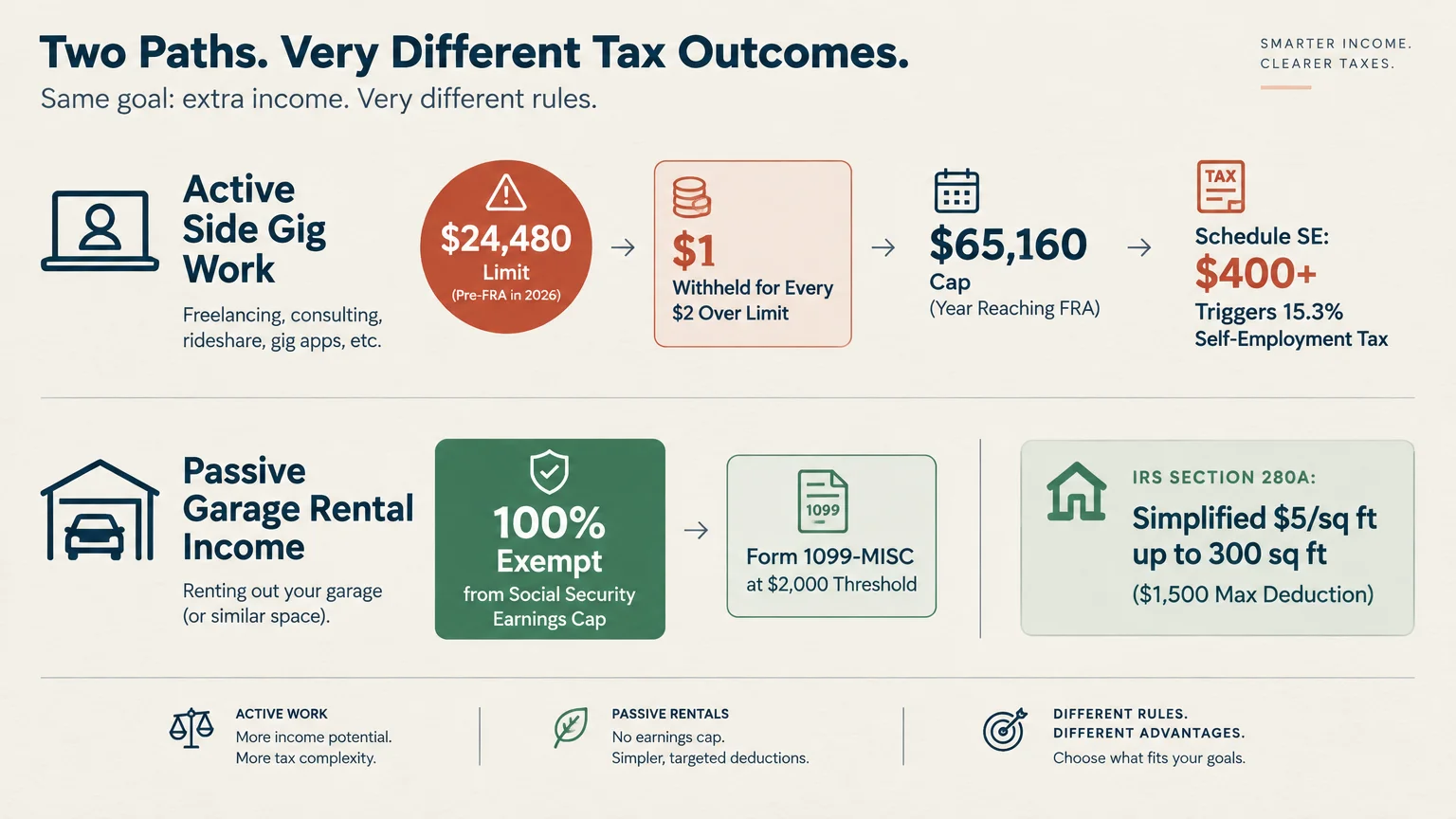
If you collect benefits before your Full Retirement Age (FRA) in 2026, the annual earnings test limit is $24,480. That equals exactly $2,040 per month in allowable earned income.
For every $2 you earn above $24,480 from active side gigs, the agency withholds $1 of your benefits. Earning active profit from a home workshop requires careful monthly monitoring.
Beneficiaries who reach Full Retirement Age during 2026 face a higher annual limit of $65,160. For the months leading up to your birthday month, the agency deducts $1 for every $3 above that cap.
Once you reach your Full Retirement Age, the earnings penalty disappears completely. You can earn an unlimited amount from any active side business without sacrificing a single benefit check.
Crucially, passive garage rental income does not count toward the Social Security earnings cap. Renting storage space or parking stalls leaves your full retirement checks intact regardless of how much you collect.
Tax compliance also matters when turning residential space into commercial revenue. The Internal Revenue Service expects you to report all taxable revenue, regardless of how you receive payment.
If your net earnings from active self-employment hit $400 or more, you must file Schedule SE. That filing triggers the standard 15.3% self-employment tax covering Medicare and Social Security contributions.
For casual sellers and renters, federal reporting forms saw significant adjustments under the One Big Beautiful Bill Act. For the 2026 tax year, third-party payment networks issue Form 1099-K only after exceeding $20,000 in gross payments and 200 transactions.
Meanwhile, businesses paying you for independent contract services or rent must issue Form 1099-NEC or 1099-MISC once payments reach $2,000. You remain legally responsible for reporting all earnings even if no tax document arrives.
Fortunately, active workshop operators can utilize the IRS Section 280A home office deduction. If you use a dedicated garage space exclusively and regularly for business, the simplified method allows a deduction of $5 per square foot up to 300 square feet.
That simplified calculation provides an automatic $1,500 annual tax deduction without maintaining complicated utility receipts. Alternatively, you can track actual utility, depreciation, and repair expenses using IRS Form 8829.
“The best way to achieve financial freedom is to make your assets work for you, rather than spending your golden years working exclusively for money.” — Suze Orman, Personal Finance Author and Host
1. Peer-to-Peer Storage Rental
Traditional self-storage facilities across the country maintain high occupancy rates between 92% and 95%. Commercial facilities often charge $100 to $150 per month for a standard 10×10-foot unit.
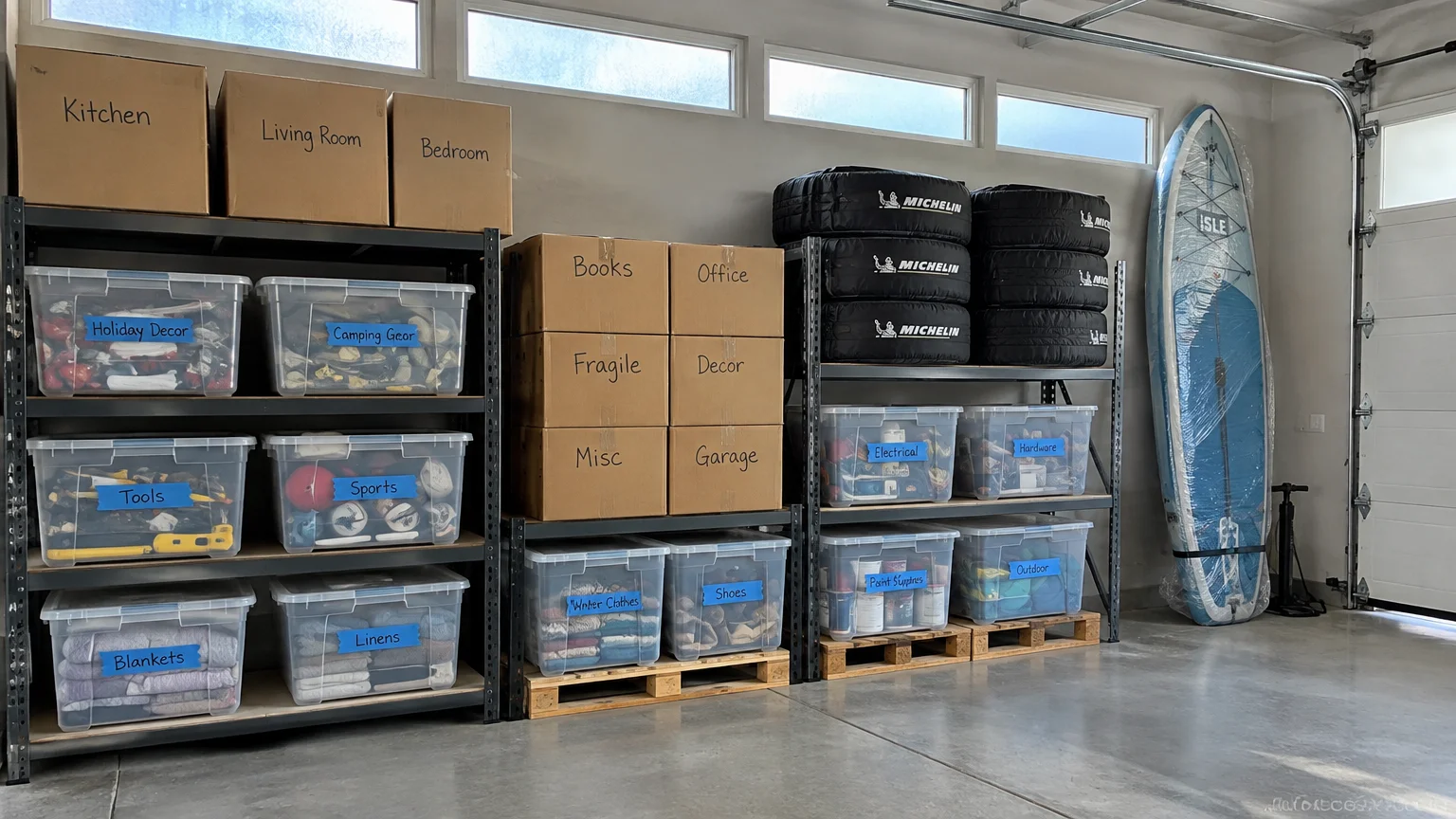
You can capture this steady demand by listing empty floor space on peer-to-peer storage platforms like Neighbor or PeerStorage. Homeowners often price their space 30% to 50% below commercial facilities to attract reliable long-term neighbors.
In typical suburban neighborhoods, renting out garage floor space generates between $100 and $400 every month. If you reside in a dense urban market, monthly earnings often reach $300 to $800 or more.
Because storage rental represents purely passive income, it will never reduce your early Social Security benefits. You collect steady rent without trading physical labor or losing your free time.
Getting started requires sweeping the concrete floor, ensuring zero roof leaks, and setting clear house rules. You decide whether renters receive independent digital access or must schedule visits in advance.
Established hosting platforms provide host liability coverage up to $1,000,000 to protect against property damage or injury. That built-in protection provides significant peace of mind when opening your property to outside renters.
Make sure to specify prohibited items in your rental agreement. Forbid flammable chemicals, perishable foods, explosives, and illegal items before allowing anyone to unload boxes.

2. Dedicated Vehicle and Recreational Parking
Homeowners associations and city ordinances frequently prohibit neighbors from parking RVs, utility trailers, or vintage project cars on residential streets. That creates continuous demand for clean, secure garage stalls.
A clean, dry bay provides superior weather protection compared to outdoor gravel lots. Collectors and seasonal campers gladly pay a premium to protect expensive paint and upholstery from sun, snow, and hail.
Vehicle owners rarely need daily physical access to stored property. A vintage car owner might only visit once every two months, leaving your private driveway quiet and undisturbed.
Before accepting a vehicle, verify that the owner carries primary auto insurance and current registration. Require an absorbent drip mat under the engine bay to keep your garage concrete clean and stain-free.
A single sheltered bay can easily produce $150 to $350 each month depending on your regional vehicle storage rates. That predictable income arrives automatically every month without active physical maintenance.
Ensure your garage door opener functions reliably and that your threshold seal keeps out blowing rain and leaves. Taking these small maintenance steps justifies charging premium rates for indoor vehicle preservation.

3. Furniture Upcycling and Restoration
Transforming weathered wooden furniture into stylish statement pieces combines creative fulfillment with immediate cash profit. Older solid wood furniture boasts craftsmanship and materials rarely found in modern retail stores.
You can source dated dressers, side tables, and dining chairs for free from neighbors or for minimal cost at yard sales. With basic sanding, durable paint, and modern hardware, these pieces command impressive resale prices.
A garage makes an ideal restoration workshop because it contains dust and eliminates paint fumes inside your living quarters. You can sand, stain, and paint comfortably with proper roll-up door ventilation.
A restored six-drawer dresser often sells on local digital marketplaces for $200 to $500. Selling just two or three customized pieces per month produces a dependable, rewarding income supplement.
Keep in mind that furniture flipping constitutes active self-employment under IRS guidelines. Track your sanders, brushes, sandpaper, and paint supplies meticulously on Schedule C to offset taxable earnings.
Photograph your finished pieces against a clean, neutral garage wall with plenty of natural daytime light. Quality staging photos attract serious buyers and speed up sales on community marketplaces.
4. Small Engine and Tool Maintenance
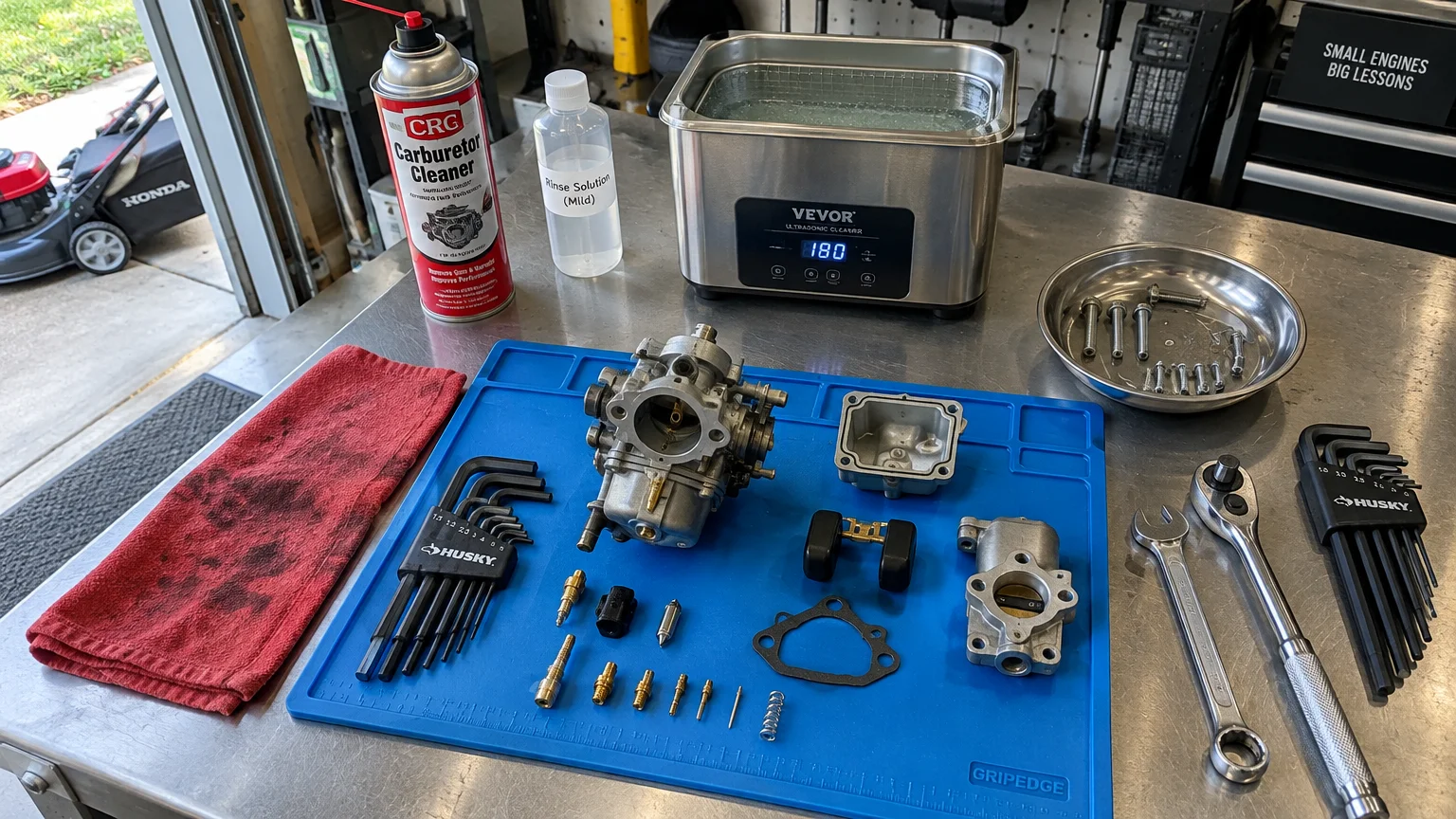
Many homeowners discard expensive lawn mowers, snowblowers, and string trimmers simply because a gummed carburetor prevents starting. If you enjoy mechanical troubleshooting, this creates a lucrative local service opportunity.
Basic maintenance tasks require modest overhead and standard hand tools you likely already own. Cleaning a fuel system, sharpening blades, or replacing a spark plug takes less than an hour of work.
Commercial repair shops frequently carry long waiting lists and charge steep diagnostic fees during peak seasonal changes. Offering quick turnaround times and honest pricing ensures your garage stays busy through word of mouth.
Typical tune-up jobs command $60 to $120 plus the cost of replacement filters and parts. Servicing four or five machines each week generates steady part-time earnings without overwhelming physical exertion.
Remember to store all gasoline, motor oil, and cleaning solvents in approved fireproof containers. Verify that your municipal codes allow small equipment repair before displaying outdoor signs.
Take spent motor oil to local automotive supply stores that offer free recycling. Maintaining an orderly, eco-friendly workspace reassures customers and protects your neighborhood environment.
“Retirement work should be on your own terms. Finding a small enterprise that provides intellectual engagement and extra cash is the ultimate retirement hedge.” — Jean Chatzky, Financial Journalist and CEO of HerMoney

5. Handcrafted Woodworking and Specialty Carpentry
Handcrafted goods enjoy steady demand from shoppers looking for unique home decor and personalized gifts. Converting part of your garage into a dedicated woodshop allows you to build products at your own pace.
High-margin projects include end-grain cutting boards, decorative birdhouses, raised garden planters, and custom coat racks. These functional items require relatively small amounts of lumber yet yield attractive retail margins.
Focus on compact projects that do not require heavy industrial machinery or excessive physical lifting. A standard miter saw, router table, and random orbital sander can support an extensive product catalog.
You can sell finished items through craft markets, community holiday bazaars, or online storefronts. Building custom pieces to order eliminates excess inventory and minimizes upfront financial risk.
Because this activity represents an active trade, you can take advantage of the IRS home office deduction. Dedicating 250 square feet solely to woodworking yields a $1,250 direct deduction under the simplified IRS calculation.
Invest in a proper dust collection unit and wear hearing protection while cutting stock. Organizing lumber vertically on wall racks frees up walking room and keeps trip hazards off your floor.
6. E-Commerce Reselling and Inventory Staging
The reselling industry continues to expand as consumers seek vintage collectibles, replacement household parts, and out-of-print books. Your garage serves as an efficient staging zone for inspecting, sorting, and photographing items.
Sourcing inventory can be a fun weekend hobby at local thrift stores, moving sales, and church bazaars. Look for vintage cookware, retro electronics, specialized tools, and designer outerwear.
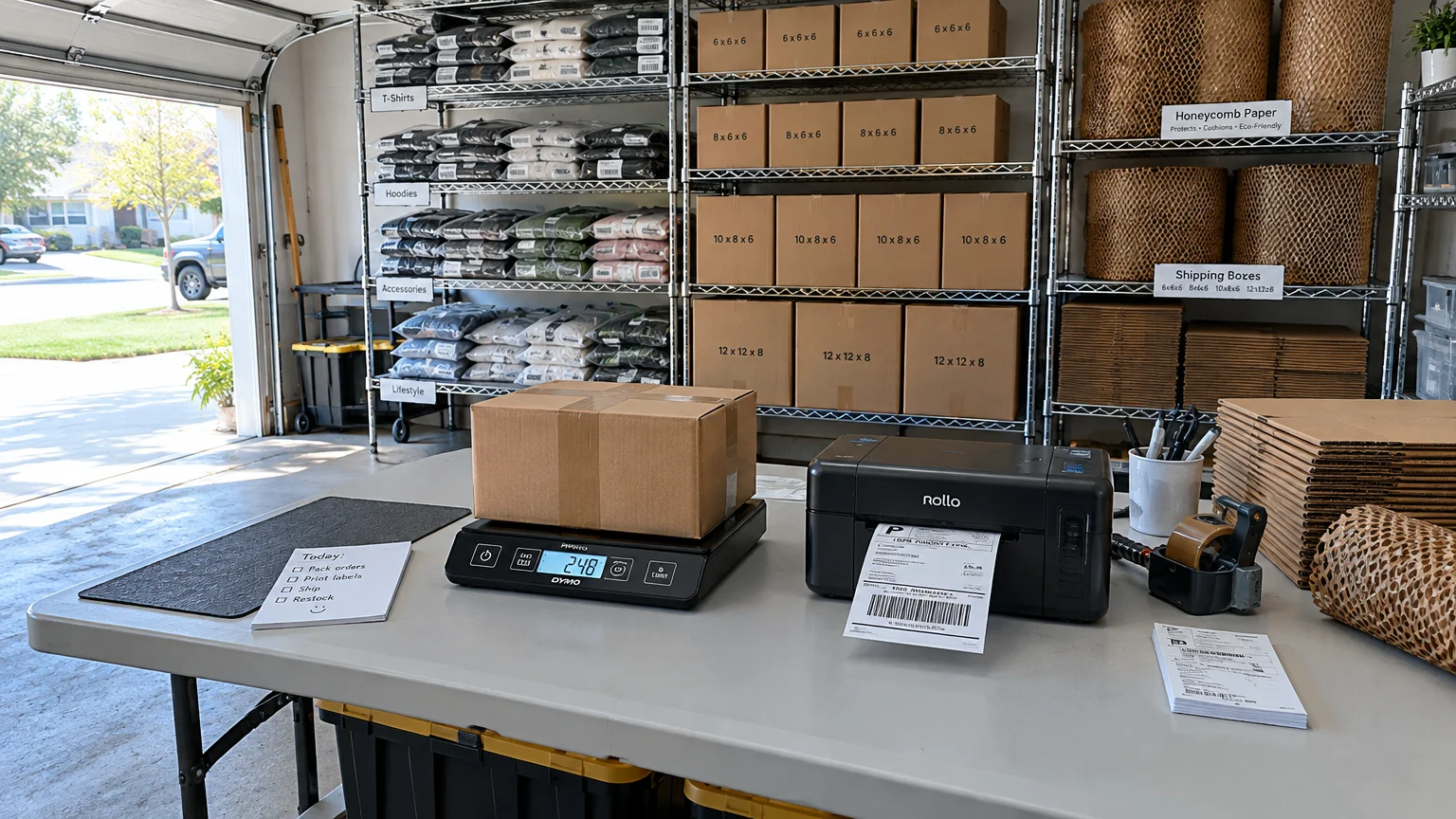
Storing inventory inside your garage keeps commercial cardboard boxes and packing supplies away from your primary living rooms. Install modular wire shelving units to keep inventory clean, organized, and elevated off the floor.
Pack sold items efficiently using a dedicated shipping station equipped with a digital scale, thermal printer, and recycled boxes. Consolidating your shipping supplies in one corner speeds up daily order fulfillment.
Remember that the IRS threshold for payment processors like PayPal or eBay stands at $20,000 and 200 transactions. Keep clear receipts for all purchased goods to accurately subtract your cost of goods sold.
Schedule free package pickups through the United States Postal Service directly from your front porch. This simple convenience saves fuel and eliminates unnecessary daily trips to commercial parcel counters.

7. Creative Studio and Workshop Subletting
Many local hobbyists, painters, ceramic sculptors, and content creators lack dedicated space inside their apartments. Renting a portion of your garage as a daytime creative retreat solves their problem while paying your bills.
Unlike high-traffic retail uses, creative studio rentals usually involve one vetted tenant working quiet hours. An artist working on canvas paintings creates zero street congestion and very little ambient noise.
You can supply basic utilities like overhead LED shop lighting, clean electrical outlets, and portable climate control. Charging $250 to $600 per month for exclusive access represents strong supplemental earnings.
Establish strict parameters regarding operating hours, visitor limits, flammable solvents, and cleanliness. A clear, written lease agreement prevents misunderstandings and establishes mutual respect from the very first day.
Check with your local zoning department to confirm that non-commercial creative rentals align with neighborhood land-use rules. Most municipalities allow low-impact artisan hobbies as long as the tenant does not conduct retail customer transactions.
Consider installing an inexpensive Wi-Fi extender so your creative tenant can access high-speed internet without entering your residence. Providing basic amenities justifies higher monthly rents and attracts reliable, long-term creators.
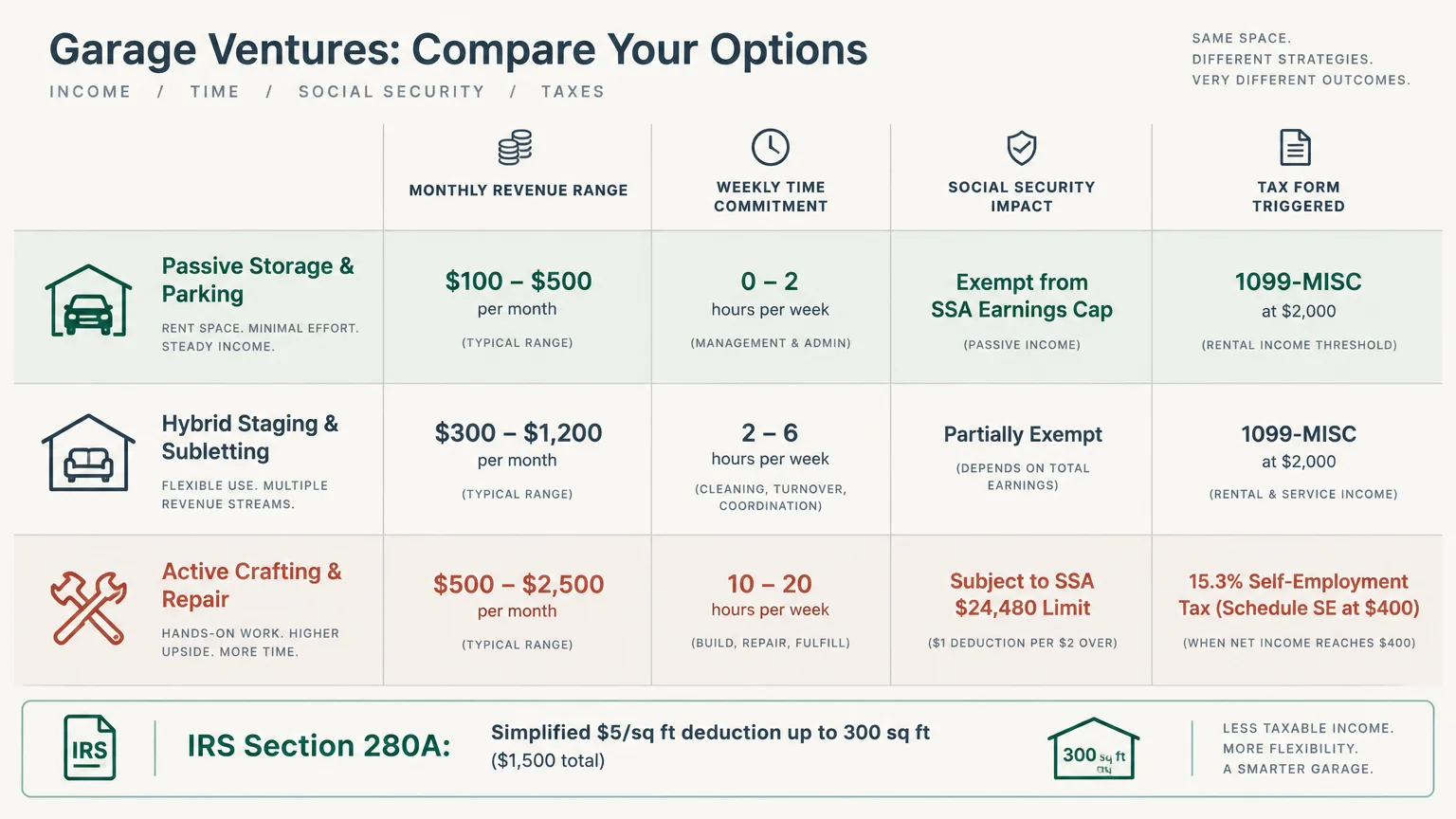
Comparing Garage Side Gigs: Income, Effort, and Rules
Selecting the right opportunity depends on your personal financial goals, physical stamina, and current Social Security status. The table below outlines how each garage venture compares across key operational criteria.
| Garage Side Gig | Estimated Monthly Earnings | Income Classification | Startup Investment | Social Security Earnings Impact |
|---|---|---|---|---|
| Peer-to-Peer Storage Rental | $100 – $400 ($800+ urban) | Passive Rental Income | Minimal ($0 – $50) | No penalty (does not count toward cap) |
| Vehicle or RV Parking | $150 – $350 per bay | Passive Rental Income | Low ($20 – $100) | No penalty (does not count toward cap) |
| Furniture Upcycling | $300 – $1,200 | Active Self-Employment | Moderate ($150 – $400) | Counts toward $24,480 cap if under FRA |
| Small Engine Repair | $400 – $1,500 | Active Self-Employment | Moderate ($200 – $500) | Counts toward $24,480 cap if under FRA |
| Handcrafted Woodworking | $250 – $1,000 | Active Self-Employment | Moderate ($300 – $800) | Counts toward $24,480 cap if under FRA |
| E-Commerce Reselling | $300 – $1,500+ | Active Self-Employment | Flexible ($100 – $500) | Counts toward $24,480 cap if under FRA |
| Creative Studio Subletting | $250 – $600 | Passive Rental Income | Low ($50 – $200) | No penalty (does not count toward cap) |
Passive opportunities suit retirees who travel frequently or want predictable revenue without ongoing labor. Active ventures offer higher earning potential and creative freedom but require ongoing recordkeeping for tax compliance.
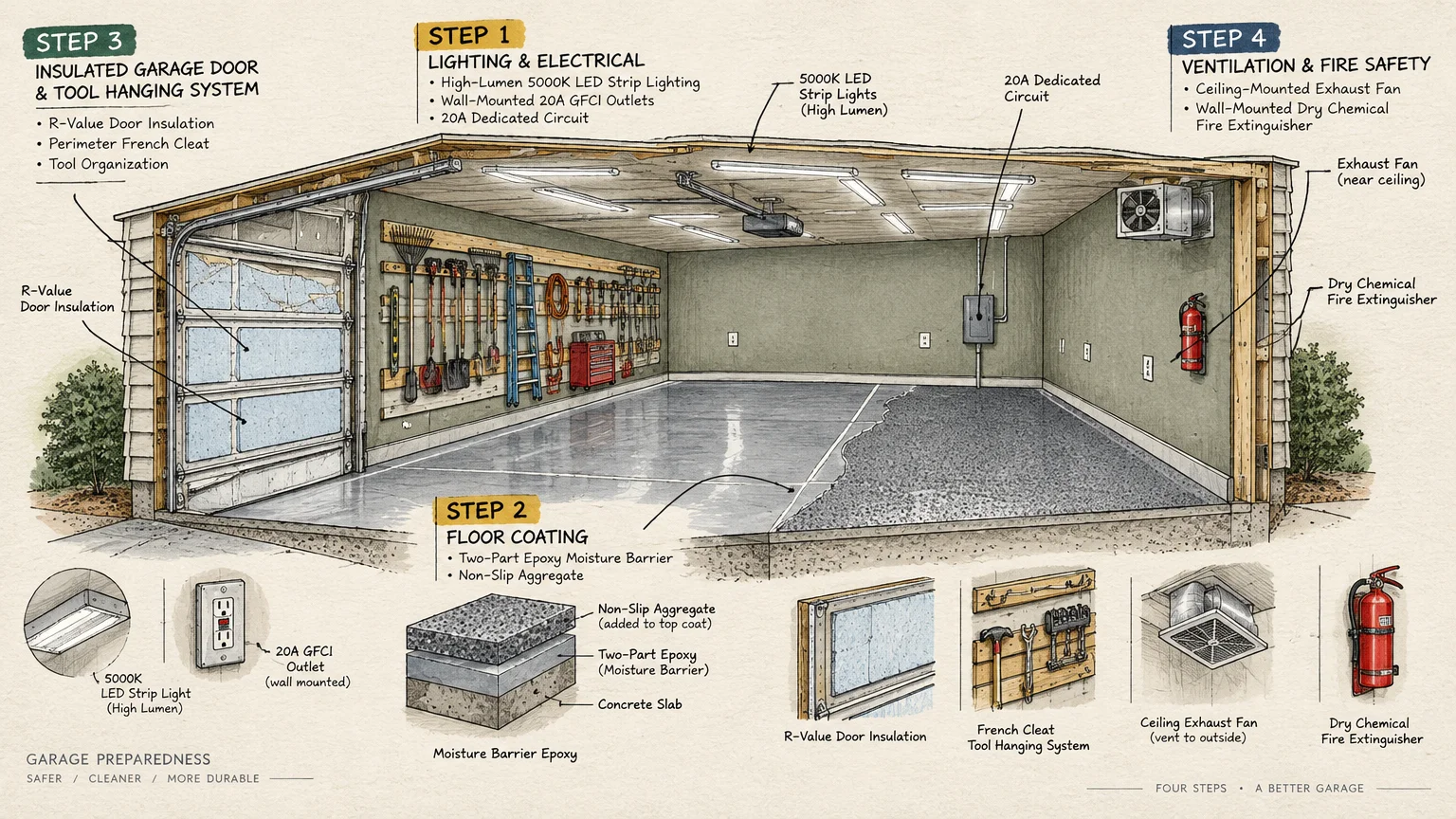
Essential Steps to Prepare Your Garage Workspace
Before launching any venture, upgrading your garage ensures safety, efficiency, and compliance. Completing a few basic preparation steps protects your home investment and improves your overall daily productivity.
- Deep clean and seal the concrete floor: Degrease oil spots and apply an epoxy or clear concrete sealer to prevent dust accumulation.
- Upgrade overhead lighting: Replace dim fixtures with bright, energy-efficient LED shop lights to illuminate workbenches and storage aisles.
- Inspect electrical capacity: Install ground-fault circuit interrupter (GFCI) outlets to protect against shocks when operating power tools or space heaters.
- Ensure climate and moisture control: Seal doors and windows with weatherstripping to protect sensitive furniture, inventory, or stored belongings from humidity.
- Install dedicated safety equipment: Mount a multi-purpose fire extinguisher near the exit door and test your carbon monoxide detectors regularly.
Taking time to address physical layout and safety early prevents costly operational disruptions later. A clean, climate-controlled space allows you to work comfortably during summer heat and winter cold.

Pitfalls to Watch For
Operating a business or rental out of your home involves legal, tax, and structural risks. Avoiding these four common mistakes protects your personal safety, your property value, and your retirement nest egg.
Assuming Standard Homeowners Insurance Covers Everything
Most residential insurance policies specifically exclude commercial liability, paid vehicle storage, and business inventory losses. If a paying storage renter slips on your driveway, your standard policy may deny the claim completely.
Speak with your insurance agent to obtain an inexpensive commercial umbrella policy or business liability rider. If you utilize peer-to-peer apps, confirm that their platform guarantees act as primary coverage.
Violating Homeowners Association or Municipal Zoning Codes
Many subdivision covenants and local municipal ordinances strictly regulate home occupations, customer traffic, and commercial signage. Running an unapproved small engine repair shop could lead to steep neighborhood association fines.
Review your HOA bylaws carefully before launching any garage venture that generates foot traffic or mechanical noise. Quiet, low-impact ventures like passive storage or mail-order reselling rarely trigger municipal complaints.
Exceeding the Social Security Earnings Test Unintentionally
If you take early Social Security before your Full Retirement Age, active business profits count against the $24,480 cap in 2026. Failing to track net earnings could cause unexpected benefit withholdings from the government.
Work with a tax professional to track all deductible business expenses on Schedule C. Deducting tool costs, mileage, and supplies lowers your net self-employment earnings, keeping you safely beneath the earnings cap.
Neglecting Quarterly Estimated Tax Payments
Unlike standard employee wages, garage business income does not come with automatic tax withholding. If you expect to owe more than $1,000 in federal tax, you must make quarterly estimated payments.
The IRS charges penalties if you wait until April to pay your entire annual tax liability. Set aside roughly 25% of all active net profits into a separate account for quarterly payments.

Getting Expert Help
Turning an empty garage into a steady income stream involves legal, operational, and financial nuances. Reaching out to qualified specialists before launching ensures you protect your home and avoid costly regulatory penalties.
Consulting a Certified Public Accountant (CPA)
Meet with a CPA or tax professional if you plan to claim the IRS home office deduction. They will calculate whether the simplified $5 per square foot method or actual expense tracking yields greater savings.
A tax specialist also helps you monitor your net earnings so you never accidentally breach Social Security earnings thresholds. Their guidance ensures you maximize deductions while remaining fully compliant with state and federal laws.
Speaking with an Independent Insurance Agent
Contact an independent insurance agent before storing vehicles, flammable fluids, or customer inventory in your garage. They can shop across multiple carriers to find an affordable commercial endorsement or general liability policy.
Proper coverage shields your home equity from lawsuits if a customer, delivery driver, or tenant suffers an injury on your property. This added layer of protection costs relatively little compared to the peace of mind it provides.
Checking with Local Municipal and Zoning Authorities
Visit your city hall or county clerk to verify local residential zoning laws and home occupation permits. Confirm whether your chosen side gig requires a casual vendor permit or a basic home business license.
Getting written confirmation from zoning officials shields you against unexpected neighborhood complaints and civil code citations. Knowing your municipal rights allows you to operate your garage side gig with total confidence.
Reviewing Your Retirement Plan with a CFP
Schedule a strategy session with a Certified Financial Planner to see how extra income affects your long-term retirement budget. Additional income may alter your Medicare premiums or shift your marginal income tax bracket.
According to educational consumer guidance from the Consumer Financial Protection Bureau, integrating side income into a holistic plan protects your long-term financial security. A CFP ensures your new revenue stream works in harmony with your investments.
Frequently Asked Questions
Does renting my garage for storage affect my Social Security checks?
No, passive rental income does not count toward the Social Security earnings limitation. You can collect any amount of rental money without triggering benefit reductions, even if you collect benefits before your Full Retirement Age.
Do I have to pay taxes if I earn less than $2,000?
Yes, the IRS requires you to report all taxable income from any source. Even though payment platforms only issue a Form 1099-MISC or 1099-NEC at $2,000 in 2026, untaxed earnings remain legally reportable on your annual return.
How do I qualify for the IRS garage home office deduction?
To qualify under IRS Section 280A, you must use your garage exclusively and regularly for your trade or business. Storing personal lawn mowers or family vehicles in the same designated workspace disqualifies you from claiming the deduction.
What happens if a renter damages my garage?
Peer-to-peer storage platforms usually provide property damage guarantees and liability coverage up to $1,000,000. For private direct leases, require a written contract, an upfront security deposit, and proof of the renter’s personal insurance policy.
Practical Next Steps for Your Garage Space
Converting an underused garage into steady cash flow provides financial breathing room and productive daily routine. Start by inspecting your available square footage, clearing out unwanted clutter, and choosing a gig that fits your physical lifestyle.
Review helpful retirement transition tools through organizations like AARP to explore additional work opportunities. Taking small, calculated steps today turns forgotten concrete into a dependable pillar of your monthly retirement security.
This article provides general financial education and information only. Everyone’s financial situation is unique—what works for others may not work for you.
For personalized advice tailored to your retirement needs, consider consulting a qualified financial professional such as a CFP or CPA.
Last updated: October 2026. Benefit amounts, tax rules, and program details change annually—verify current figures with official government sources.









Leave a Reply