

Your lifelong cooking skills can become a dependable source of supplemental income during retirement. Many food businesses and busy families need experienced cooks for part-time shifts rather than exhausting, full-time line work.
Working part-time in the culinary field keeps your mind sharp and builds meaningful social ties. It also lets you control your schedule while earning a respectable hourly wage.
Whether you want a steady payroll job or an independent kitchen side gig, several rewarding culinary paths match your schedule and physical comfort.

Why Culinary Skills Provide Ideal Retirement Income
Decades of preparing family meals give older adults an intuitive feel for seasoning, food safety, and kitchen organization. Commercial employers and private clients value this seasoned reliability over raw culinary speed.
Culinary part-time work also offers flexible scheduling that fits smoothly around retirement activities. You can accept morning prep shifts, weekend private clients, or seasonal catering dates without committing to forty-hour workweeks.
“When you do work you love in retirement, you generate cash flow that protects your nest egg while keeping you vibrant and connected.” — Suze Orman, Personal Finance Author
Earning an extra paycheck each month reduces how much money you must withdraw from your investment portfolio. That preserved capital continues compounding, giving you greater financial security as living expenses rise.
Meaningful work also delivers documented physical and mental benefits. Standing, chopping, and plating provide low-impact physical activity, while measuring and recipe timing support cognitive health.
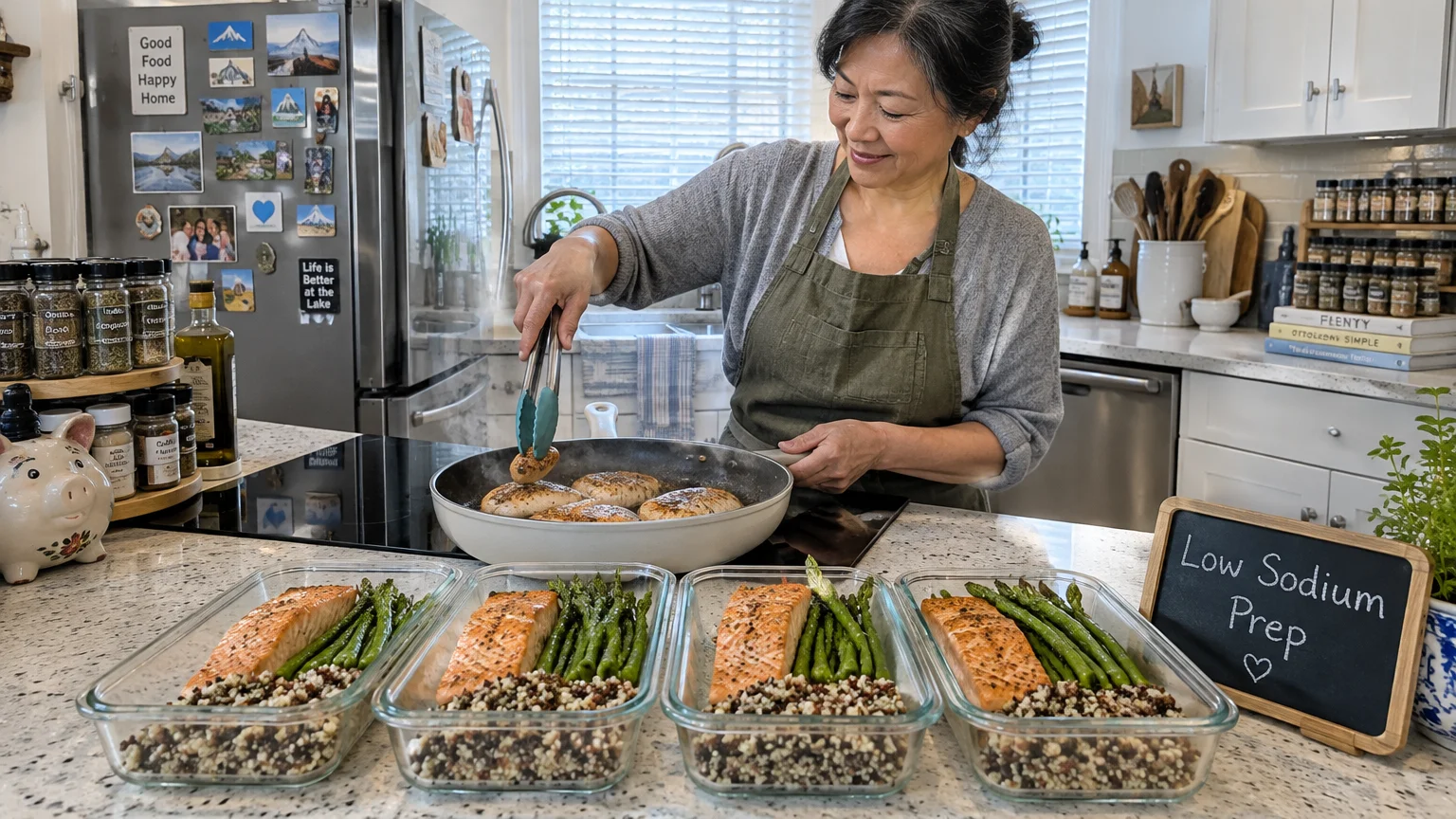
1. In-Home Personal Chef and Meal Prep Specialist
Personal chefs prepare customized meals directly inside a client’s private home or deliver packaged weekly portions. Busy working parents, busy professionals, and seniors recovering from medical procedures frequently hire independent culinary specialists.
According to the U.S. Bureau of Labor Statistics, private household cooks earn a median wage of $23.05 per hour. The agency projects 5.1 percent employment growth through 2035, producing roughly 5,000 openings each year.
You can set your own hourly or per-project rates, which often exceed general restaurant pay. Many independent home chefs charge between $35 and $55 per hour once they build a solid client roster.
The work structure is physically gentle compared to commercial kitchens. You work at your own pace in a quiet home kitchen, cooking three to five dishes in a single four-hour visit.
You can find clients through community message boards, local neighborhood groups, or referrals from eldercare managers. Focus on heart-healthy recipes, low-sodium meal plans, or diabetic diets to attract long-term regular customers.
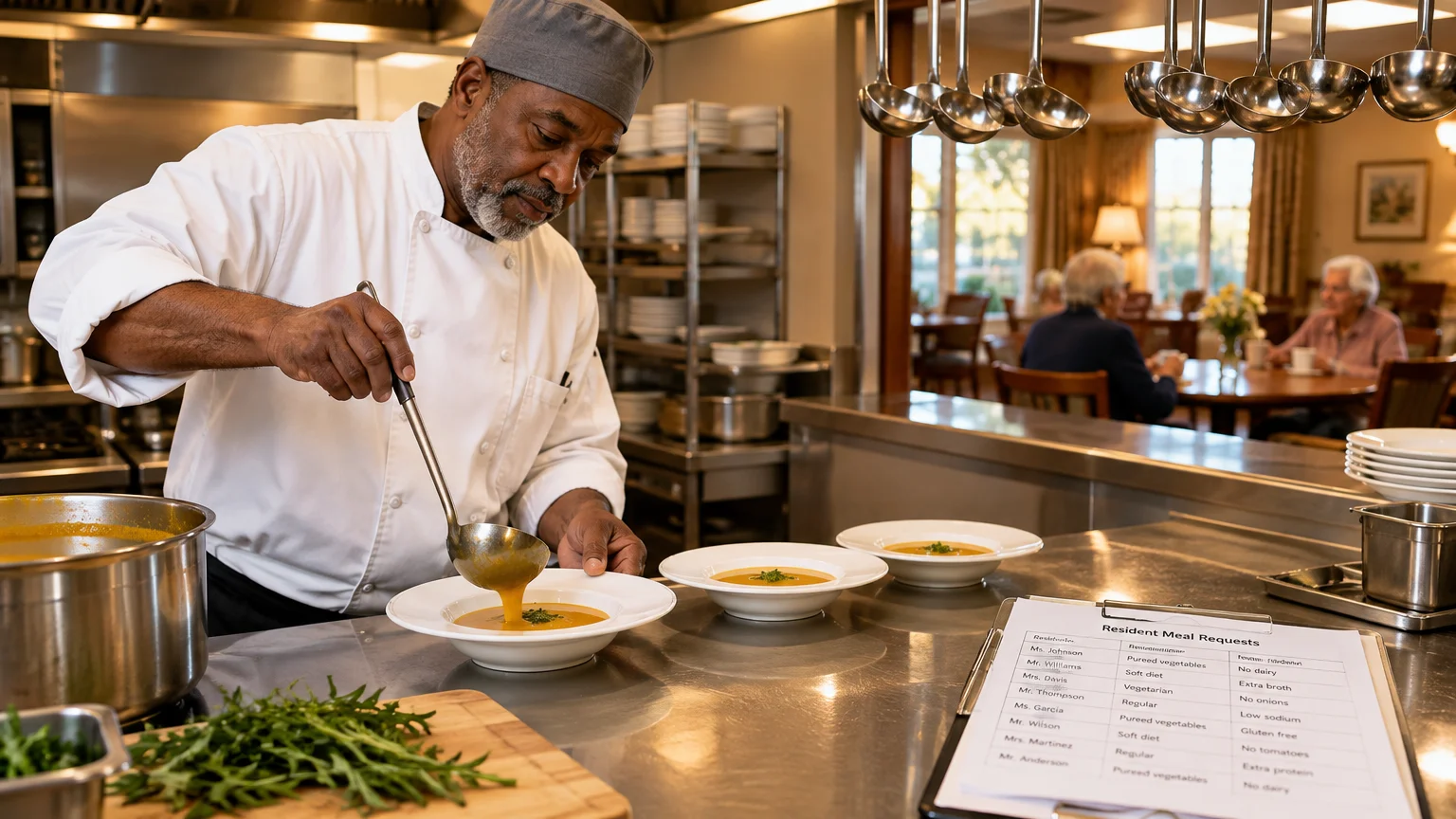
2. Senior Living Community Cook
Independent living centers and assisted living facilities employ cooks to serve nutritious, home-style meals to resident communities. These environments prioritize balanced nutrition, dietary modifications, and comforting flavors over fast-paced culinary trends.
The Bureau of Labor Statistics reports that institution and cafeteria cooks earn a median hourly wage of $18.01. Unlike traditional commercial restaurants, these senior living kitchens offer predictable daytime hours and set meal periods.
You generally work standard shifts, such as 7:00 a.m. to 1:00 p.m. or 11:00 a.m. to 4:00 p.m. You will not face late midnight closing times or chaotic rush-hour dining crowds.
Senior living kitchens emphasize team cooperation and compassionate interactions. Your cooking directly brightens the day of your peers, creating a profound sense of purpose.
Many senior communities offer flexible part-time positions with prorated benefits or paid time off. You can apply directly through community human resources departments or explore listings through organizations like AARP.

3. Artisan Baker or Bakery Assistant
Local retail bakeries, coffee houses, and specialty bagel shops regularly hire part-time morning bakers. These roles involve measuring bulk ingredients, mixing doughs, shaping pastries, and monitoring ovens.
Bakers earn a median wage of $17.87 per hour, according to the Bureau of Labor Statistics. The sector projects 6 percent employment growth through 2035, generating approximately 36,500 open positions annually.
Bakery shifts usually start early in the morning, often around 5:00 a.m., and conclude before midday. This schedule leaves your afternoons and evenings entirely open for hobbies, family, and relaxation.
Artisan baking relies heavily on precision, patience, and repetition. If you have spent years perfecting sourdough breads, pies, or cookies, your skills translate directly to commercial production.
You can start as an assistant baker handling pastry assembly and oven management. This lets you practice your craft without the administrative burden of running a commercial storefront.
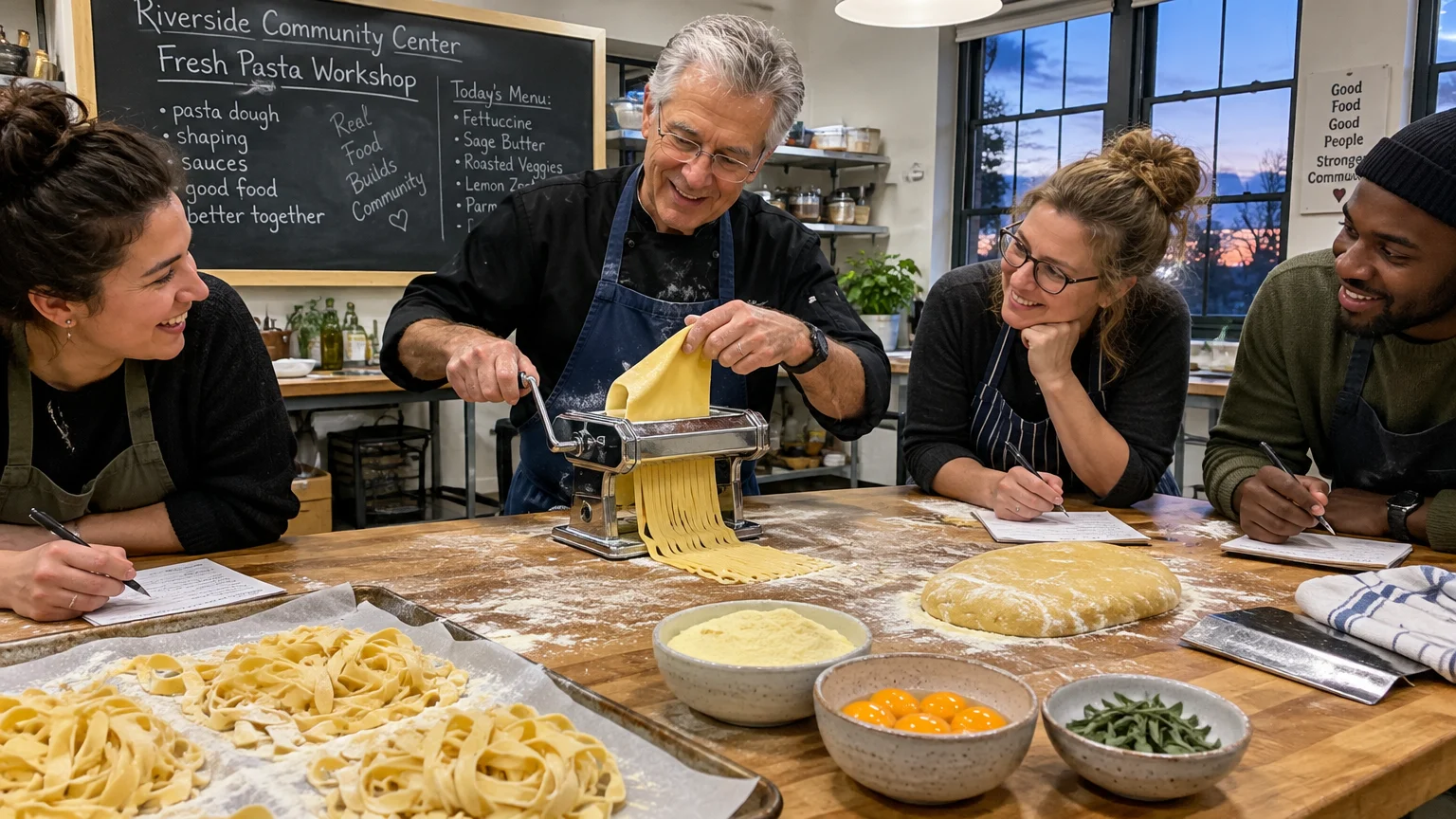
4. Recreational Cooking Class Instructor
Kitchenware stores, adult education centers, and community recreation centers hire culinary instructors for evening and weekend workshops. These classes teach fundamental techniques like knife handling, pasta making, bread baking, or regional global cuisines.
Cooking instructors often earn flat stipends ranging from $75 to $200 per three-hour class session. Retail culinary stores may also provide generous employee merchandise discounts alongside your hourly wages.
This role emphasizes culinary demonstration, storytelling, and teaching rather than continuous heavy manual labor. You guide small groups of eager hobbyists through a single meal while sharing your kitchen wisdom.
Older adults excel in this environment because patience and clear communication matter far more than speed. Your life experience and home cooking anecdotes make classes engaging and memorable.
To secure these teaching roles, assemble a portfolio of three distinct class syllabi. Present your course proposals to local community colleges, community centers, and specialty kitchen retailers.
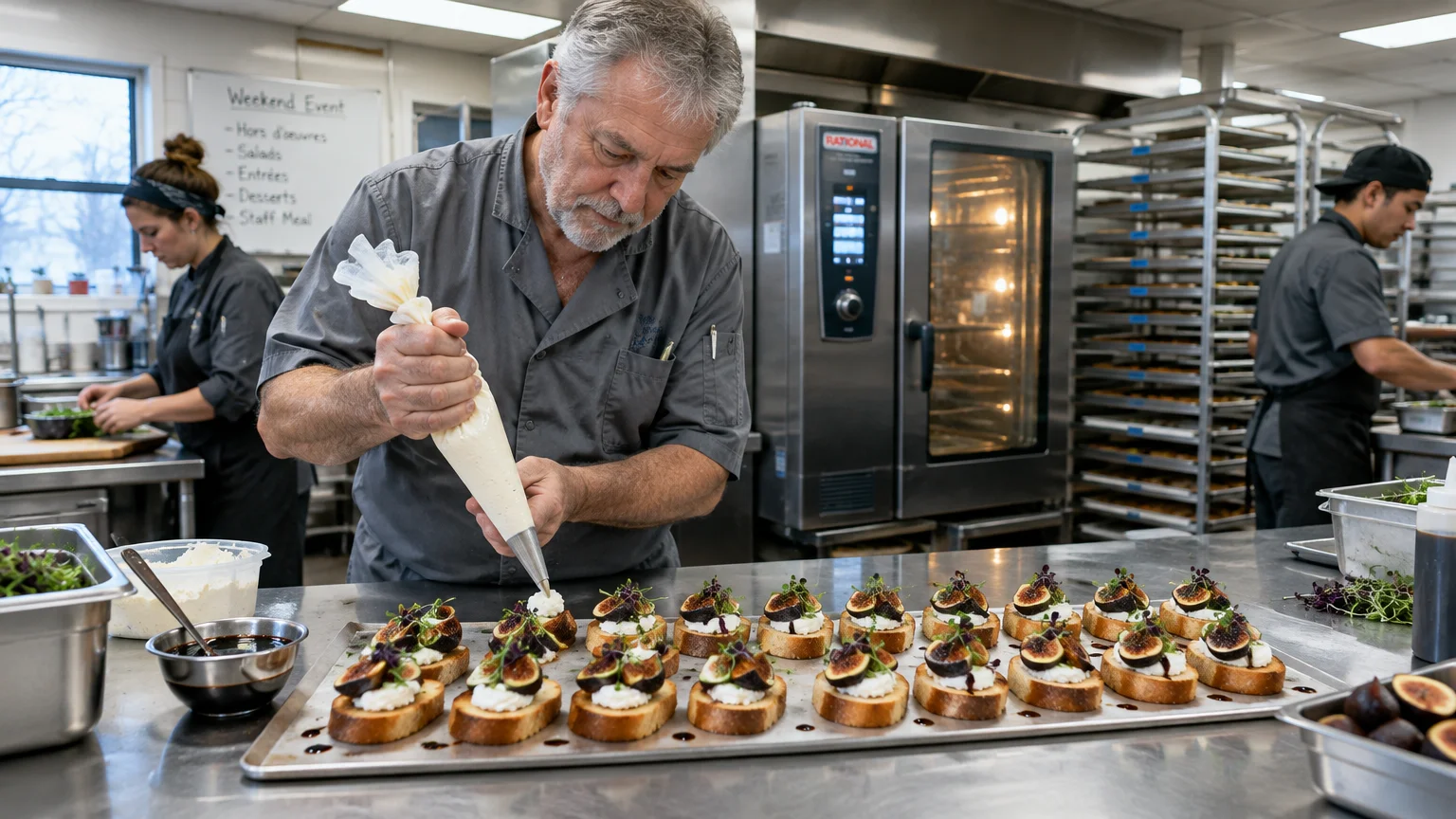
5. Event Catering Prep Cook
Catering companies experience huge demand spikes around weekend weddings, corporate luncheons, and holiday banquets. They hire part-time prep cooks to wash produce, butcher proteins, assemble hors d’oeuvres, and pack transportation warming units.
Food preparation workers earn a median wage of $16.98 per hour, according to the Bureau of Labor Statistics. The BLS projects 135,700 annual openings across the country through 2035.
Catering prep work offers ultimate calendar flexibility. You can accept shifts when your schedule permits and decline assignments when you travel or spend time with family.
Most prep work happens during quiet weekday morning or afternoon hours before event execution. You work at steady prep tables alongside an experienced culinary crew, preparing large batches of party dishes.
Catering work allows you to master commercial culinary techniques without committing to permanent weekly hours. Contact local caterers each spring and autumn, when their event booking calendars expand rapidly.

6. Bed-and-Breakfast Morning Cook
Boutique inns and bed-and-breakfasts rely on dedicated morning cooks to prepare fresh breakfasts for overnight guests. Typical menus feature made-to-order eggs, fresh baked quiches, artisanal pancakes, seasonal fruit platters, and specialty coffee service.
The Bureau of Labor Statistics reports that short-order cooks earn a median wage of $17.25 per hour. Many boutique inn owners also provide end-of-season bonuses or shared hospitality gratuities.
Shifts generally run from 6:30 a.m. to 11:30 a.m., allowing you to complete your workday before lunchtime. You cook for small dining rooms of ten to twenty guests rather than hundreds of restaurant covers.
The environment is personal, picturesque, and calm. You can interact directly with travelers who appreciate homemade, scratch-cooked food and warm morning hospitality.
Search for family-owned inns or historic boutique hotels within driving distance. Innkeepers frequently prefer hiring reliable older adults who arrive on time and take genuine pride in guest presentation.

7. Home-Based Cottage Food Baker
Every U.S. state and Washington, D.C. allows residents to sell approved, shelf-stable foods prepared inside home kitchens. These cottage food laws permit you to sell breads, cookies, jams, fruit pies, and dry spice blends directly to consumers.
Because you work for yourself, you keep the profits after subtracting the cost of ingredients and packaging. Skilled cottage bakers selling at weekend farmers markets can earn several hundred dollars in profit per week.
You control every single aspect of your work volume, kitchen schedule, and specialty recipes. You can bake twenty loaves of artisan sourdough on Thursday and sell them at the Saturday market.
State annual gross revenue caps range from $20,000 to $35,000 in stricter states like Alabama or Michigan. Other states have passed food freedom laws with no annual revenue caps at all.
Before selling, check your local health department guidelines and state Department of Agriculture rules. You will need clear ingredient labeling, allergy warnings, and compliance with home kitchen sanitary practices.
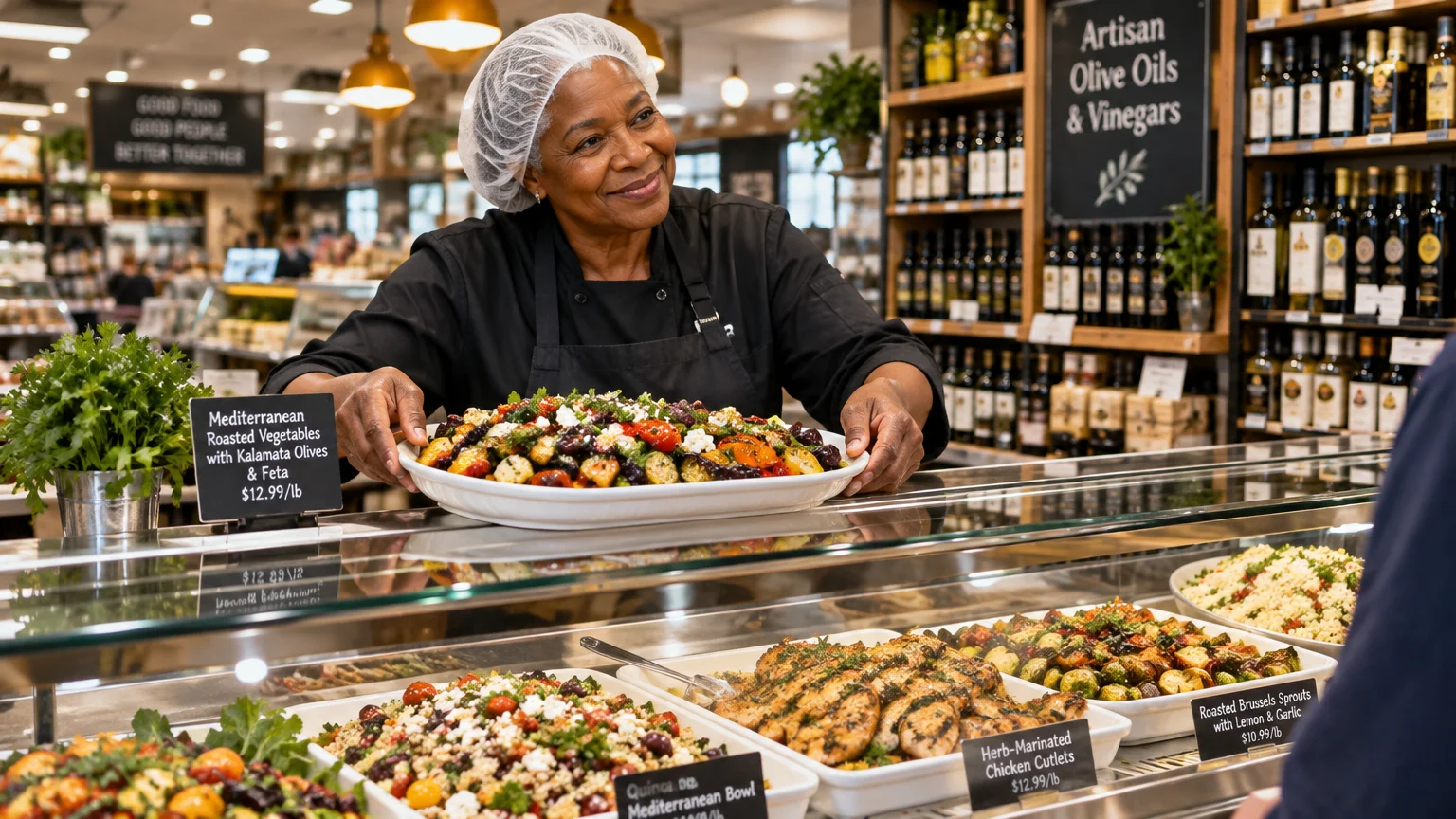
8. Prepared-Foods and Specialty Deli Cook
Upscale grocery stores, natural food co-ops, and neighborhood gourmet delis run large prepared-foods sections. They need experienced cooks to create grab-and-go salads, rotisserie items, hot soups, and artisan sandwich spreads.
General restaurant and deli cooks earn a median wage of $17.98 per hour, according to the Bureau of Labor Statistics. Many established supermarket chains also provide reliable grocery employee discounts that trim your household food budget.
These kitchens operate clean, brightly lit, and highly standardized prep stations. You prepare recipes using established recipe cards and high-grade commercial tools, minimizing physical guesswork.
Shifts are scheduled predictably several weeks in advance, making it simple to plan your social calendar. Most grocery retailers also provide ergonomic rubber anti-fatigue mats to protect your joints during standing shifts.
Check the employment career portals of local gourmet grocery stores or neighborhood food cooperatives. Emphasize your reliability, cleanliness, and comfort with basic batch cooking methods.
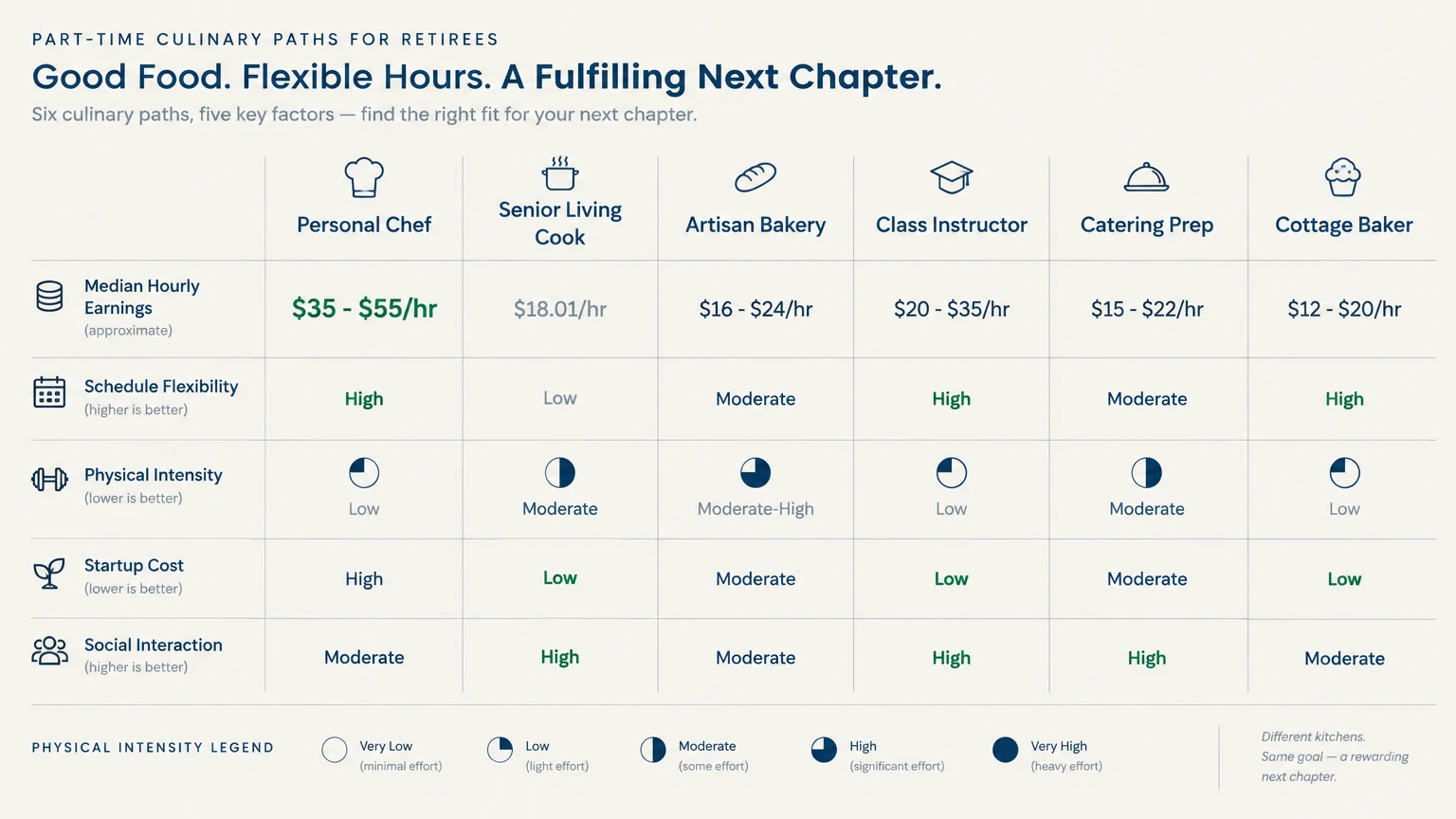
Comparing Part-Time Culinary Jobs for Older Adults
Selecting the ideal culinary side gig requires balancing hourly earnings against physical demands and schedule commitments. The following table compares median wages, physical intensity, and credential requirements across all eight roles.
| Job Title | Median Hourly Wage | Typical Work Schedule | Physical Demand Level | Primary Requirements |
|---|---|---|---|---|
| Personal Chef | $23.05 (BLS) | Flexible weekday blocks | Light to Moderate | Food Handler Card, Client References |
| Senior Living Cook | $18.01 (BLS) | Daytime & early evenings | Moderate | Food Handler Card, Background Check |
| Artisan Baker | $17.87 (BLS) | Early mornings (5 a.m.–11 a.m.) | Moderate to High | Commercial Baking Familiarity |
| Cooking Instructor | $25.00–$45.00 (Equiv.) | Evenings & weekends | Low to Moderate | Teaching Ability, Recipe Concepts |
| Catering Prep Cook | $16.98 (BLS) | On-call, weekend events | Moderate | Food Handler Card, Knife Skills |
| B&B Breakfast Cook | $17.25 (BLS) | Early mornings (6 a.m.–11 a.m.) | Light to Moderate | Short-Order Cooking, Reliability |
| Cottage Food Baker | Variable (Self-Employed) | Fully self-directed | Light to Moderate | Cottage Food Registration, Labels |
| Specialty Deli Cook | $17.98 (BLS) | Scheduled daytime shifts | Moderate | Food Handler Card, Batch Prep Skills |
Consider your personal stamina before accepting any culinary role. A personal chef assignment in a client’s kitchen is physically easier than five continuous hours lifting flour sacks in a bakery.
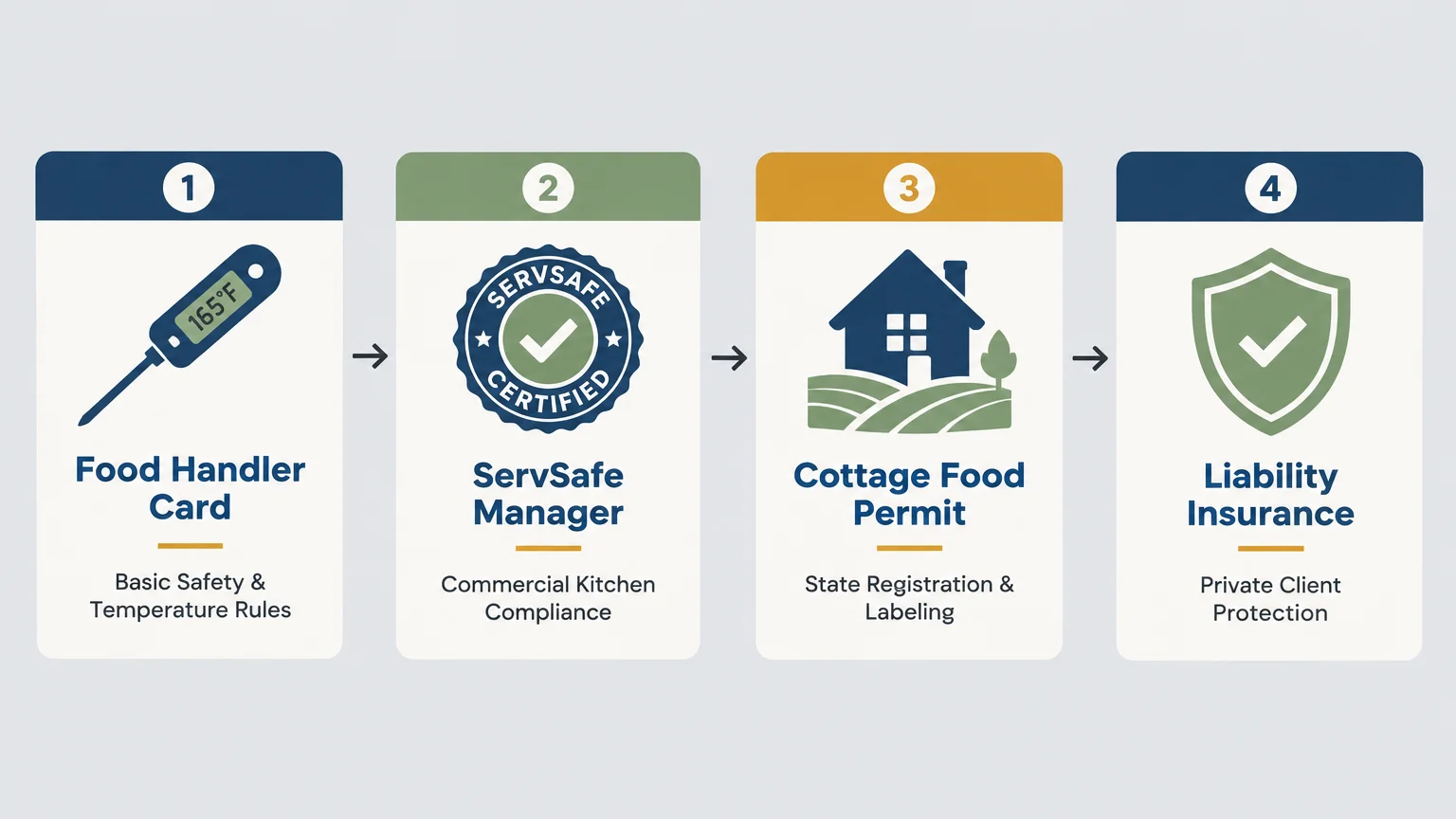
Essential Certifications and Kitchen Safety Essentials
Commercial kitchens and health inspectors require food service workers to understand basic sanitation, safe holding temperatures, and allergen control. Obtaining your credentials before applying makes you an immediate standout candidate.
Most employers require an ANSI-accredited Food Handler Certificate from providers like ServSafe, StateFoodSafety, or 360training. These online courses take 1.5 to 2 hours to complete and cost between $8 and $18.
ServSafe certificates cost roughly $15 and remain valid for three years in most jurisdictions. You learn vital rules regarding cross-contamination, rapid food chilling, and proper sanitizing chemical concentrations.
Proper footwear represents your most crucial safety investment. Commercial tile and residential kitchen floors become slick quickly, making high-traction slip-resistant shoes essential for preventing falls.
Consider bringing your own ergonomic chef knife or lightweight Japanese santoku to job assignments. Dull, heavy kitchen knives cause wrist strain, while sharp, well-balanced blades significantly reduce physical fatigue.
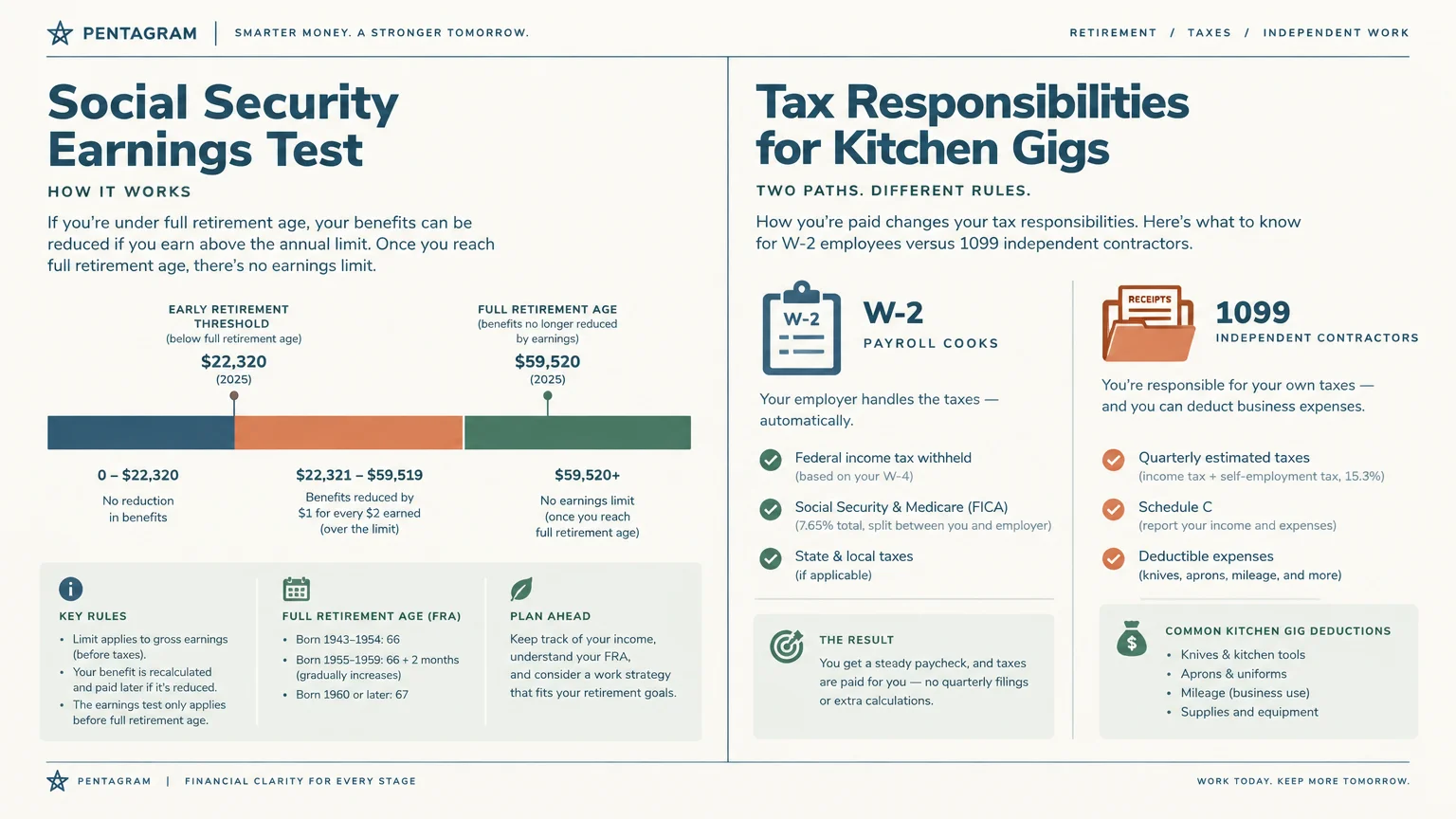
Social Security Earnings Limits and Tax Guidelines
Earning extra money through culinary jobs requires understanding federal tax rules and Social Security benefit thresholds. Generating wage income or running a home side gig impacts your tax filing obligations.
If you collect Social Security benefits before reaching your Full Retirement Age (FRA), your earnings are subject to the Retirement Earnings Test. For seniors under FRA for all of 2026, the annual earnings limit is $24,480 ($2,040 per month).
According to the Social Security Administration, the agency withholds $1 in benefits for every $2 earned above that ceiling. In the year you reach full retirement age, the limit rises to $65,160, with $1 withheld for every $3 over.
Once you reach your Full Retirement Age—age 67 for workers born in 1960 or later—the earnings ceiling vanishes entirely. You can earn an unlimited income from cooking without losing any Social Security benefit dollars.
“Retirement isn’t the end of work; for many people, it is the beginning of working on their own terms.” — Jean Chatzky, Financial Journalist and Author
If you operate an independent side gig, such as cottage baking or private chef services, different tax rules apply. According to the Internal Revenue Service, you must pay self-employment tax if net earnings reach $400 or more.
This 15.3 percent self-employment tax covers your Medicare and Social Security contributions as an independent operator. However, you can write off legitimate business expenses, including ingredients, parchment paper, aprons, and mileage.
Tracking your gross income and kitchen expenses throughout the year keeps your tax filing straightforward. Organizations like the National Council on Aging provide free guidance to help seniors manage earnings effectively.

Costly Errors to Sidestep
Transitioning into culinary work requires avoiding common financial and physical mistakes. Stepping around these pitfalls preserves your profits and safeguards your well-being.
- Exceeding Social Security earnings caps prematurely: Earning more than $24,480 before your Full Retirement Age triggers benefit withholding. Calculate your projected monthly cooking hours carefully to stay below annual thresholds if you rely on immediate benefit checks.
- Ignoring the self-employment tax threshold: Failing to report freelance earnings over $400 can trigger IRS interest charges and penalties. Set aside 25 to 30 percent of every private chef invoice to cover quarterly estimated taxes.
- Overestimating your physical standing tolerance: Commercial line cooking requires standing on hard surfaces for long stretches without breaks. Choose roles with anti-fatigue floor mats, or work in private homes where you can sit during prep tasks.
- Selling food without regulatory compliance: Selling homemade foods without proper cottage food registration or allergen labeling exposes you to local health department fines. Always review municipal health codes before selling food items to the public.
Avoiding these frequent traps ensures your part-time culinary venture remains enjoyable and financially profitable. Thoughtful planning protects both your body and your retirement bank accounts.

When DIY Isn’t Enough
While many part-time cooking gigs require little administrative setup, certain situations warrant professional guidance. Seeking expert counsel prevents costly legal or financial missteps down the road.
Consult a certified public accountant if your side gig earnings push your total household income into a higher federal tax bracket. A tax professional helps you calculate quarterly estimated taxes and identify legitimate kitchen expense write-offs.
Reach out to an elder law or financial planning attorney if you receive Medicaid or Supplemental Security Income (SSI). Extra culinary earnings could disqualify you from need-based programs with strict asset or monthly income limits.
Speak with an insurance broker if you plan to launch a private personal chef service. A basic commercial general liability policy protects your personal assets if a client experiences an allergic reaction or kitchen property damage.
Contact your local Small Business Development Center if you wish to scale a cottage food baking venture into a commercial kitchen space. These centers provide free counseling on commercial zoning, food licensing, and wholesale distribution agreements.
Frequently Asked Questions
Do I need a formal culinary degree to work as a part-time cook?
No, employers and private clients rarely require formal culinary degrees for part-time cooking roles. Practical cooking proficiency, sanitation awareness, reliability, and basic knife skills carry far more weight during hiring decisions.
How many hours per week do part-time cooking jobs typically require?
Most part-time culinary positions require between 10 and 25 hours per week. Private chef work and cottage food baking allow you to adjust hours weekly based on your personal preferences.
Can I deduct cooking supplies and knives on my tax return?
Yes, if you operate as an independent contractor or run a self-employed cottage food business. You can deduct professional knives, aprons, ingredients, packaging supplies, and mileage driven for business purposes.
What is the difference between a line cook and a prep cook?
Line cooks prepare customer orders to order during active dining service under rapid, high-pressure deadlines. Prep cooks work before service starts, chopping vegetables, preparing sauces, and portioning ingredients at a steady pace.
Practical Next Steps to Get Cooking
Turning your culinary passion into supplemental retirement cash begins with three practical actions. Start by completing an online ANSI-accredited food handler course to secure your safety certification.
Next, assemble a list of your culinary strengths, whether that includes scratch baking, diabetic meal prep, or batch soups. Print simple resumes or introductory flyers emphasizing your decades of kitchen reliability and organizational skills.
Finally, visit local senior centers, independent bakeries, or specialty grocers to inquire about flexible morning prep shifts. A modest commitment of twelve to fifteen hours per week will generate substantial extra retirement income while keeping your passion alive.
The information in this guide is meant for educational purposes. Your specific circumstances—including income, benefits, tax situation, and health needs—may require different approaches. When in doubt, consult a licensed financial advisor or tax professional.
Last updated: October 2026. Benefit amounts, tax rules, and program details change annually—verify current figures with official government sources.









Leave a Reply