

Fluctuating inflation rates mean your annual Cost-of-Living Adjustment (COLA) can shift unexpectedly, leaving your monthly Social Security benefit checks smaller than anticipated. While recent adjustments provided modest boosts—including 2.8% for 2026—preparing for a potential 2027 Social Security COLA drop protects your purchasing power before price changes impact your wallet. Relying solely on government adjustments leaves your fixed income vulnerable to rising healthcare costs, energy bills, and everyday household expenses. Taking proactive financial steps today ensures that a smaller bump in your benefit check never threatens your retirement lifestyle or financial independence. By adjusting your budget, optimizing tax strategies, and securing cash buffers now, you maintain total control over your economic security.
Understanding the 2027 Social Security COLA Landscape
The Social Security Administration (SSA) determines every annual Cost-of-Living Adjustment using a specific federal metric: the Consumer Price Index for Urban Wage Earners and Clerical Workers (CPI-W). The Bureau of Labor Statistics tracks this index monthly. To calculate your adjustment, the SSA compares the average CPI-W figures from the third quarter (July, August, and September) of the current year against the third quarter of the previous year. The government announces the final COLA percentage each October, which takes effect with your January benefit payment.
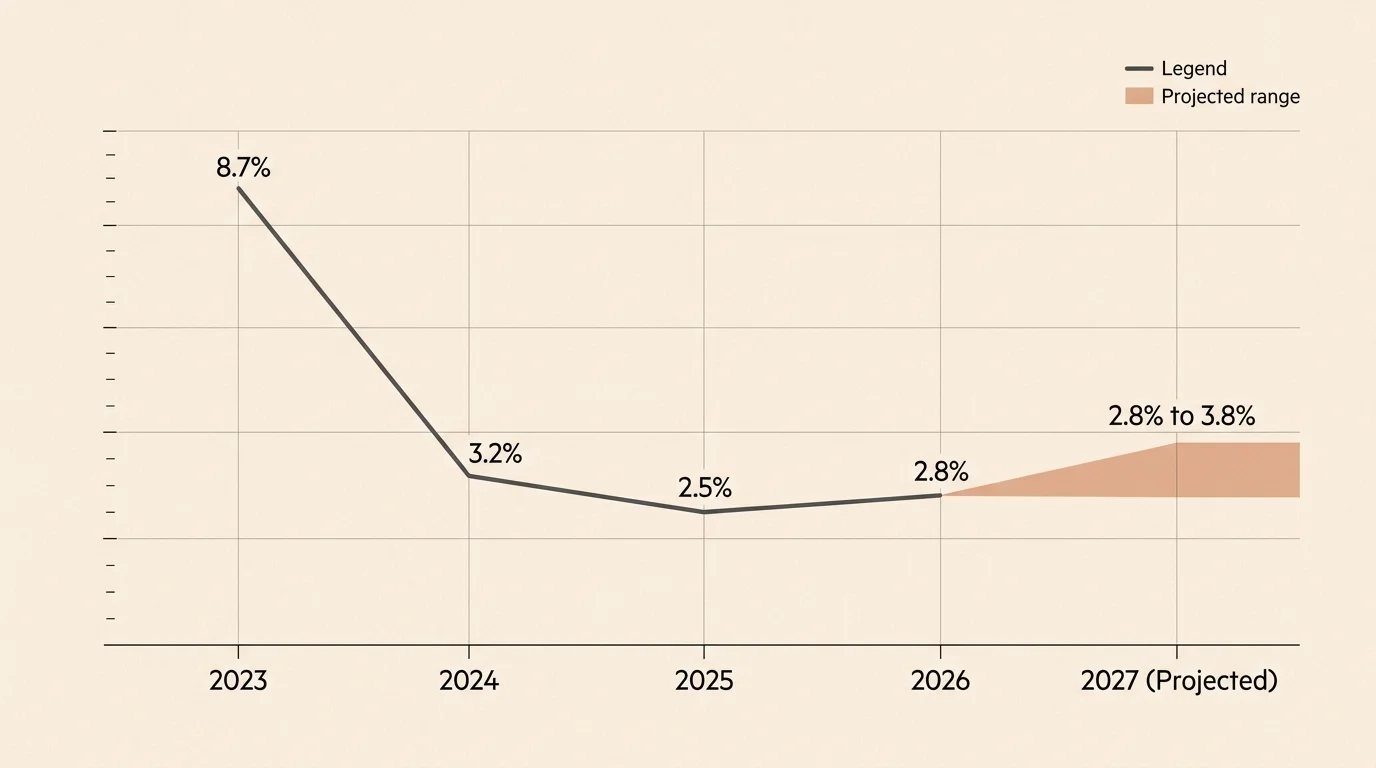
Retirees have experienced significant volatility in their annual adjustments over recent years. Driven by rapid post-pandemic inflation, the 2023 COLA surged to 8.7%. As inflation began moderating, adjustments adjusted downward to 3.2% for 2024, 2.5% for 2025, and 2.8% for 2026. According to the Social Security Administration (2026), the 2.8% increase raised the average monthly benefit for retired workers to approximately $2,071 per month, or roughly $24,852 annually.
When economic indicators point toward cooling inflation, financial analysts project lower COLA increases for upcoming cycles. While early projections for the 2027 Social Security COLA range between 2.8% and 3.8%, a sharp drop in third-quarter CPI-W data could easily push the final figure lower. A lower COLA does not mean prices are dropping; it simply means prices are rising at a slower pace. Because grocery stores, medical clinics, and utility companies rarely reduce their baseline rates, a smaller Social Security increase creates a genuine squeeze on household budgets. Understanding this economic dynamic gives you the advantage—you can adjust your financial strategy long before new rates take effect.
1. Conduct a COLA Stress-Test on Your Household Budget
Preparing for lower COLA numbers starts with a comprehensive stress test of your personal finances. Instead of waiting for the SSA to announce official figures in October, simulate how a smaller monthly increase affects your baseline spending today. By reviewing your income alongside non-negotiable living costs, you can make smooth, gradual lifestyle tweaks rather than drastic cuts later.
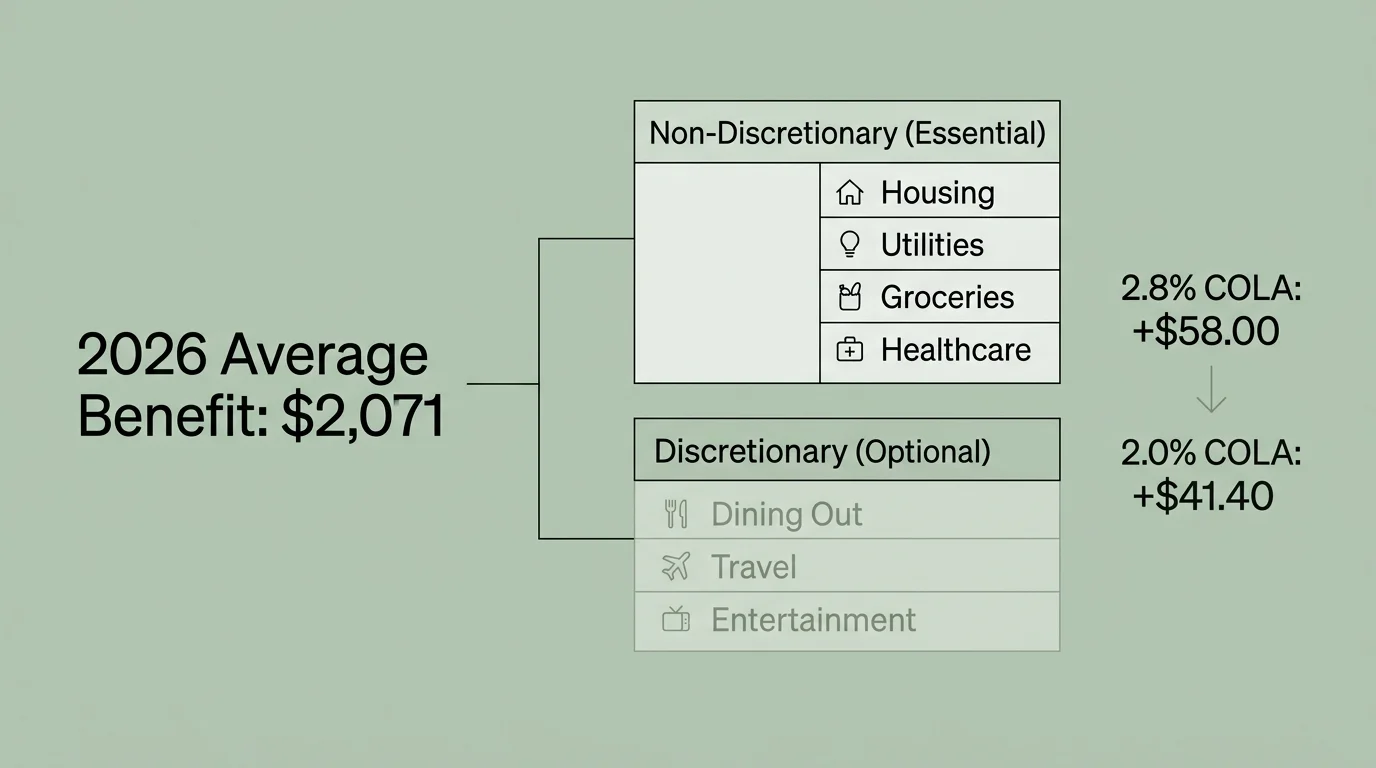
Begin by dividing your expenses into two distinct categories: non-discretionary (essential) and discretionary (optional). Non-discretionary costs include housing, property taxes, basic utilities, groceries, health insurance premiums, and prescription medications. Discretionary expenses encompass dining out, travel, subscriptions, and entertainment. When evaluating retiree budget COLA changes, analyze how much of your essential spending relies directly on your monthly Social Security check.
Consider a practical numeric example based on current benefit averages:
- If your current benefit matches the 2026 average of $2,071 per month, a 2.8% COLA added about $58 to your monthly check.
- If the 2027 COLA drops to 2.0%, your monthly increase will drop to roughly $41.40 per month.
- If the COLA falls further to 1.5%, your monthly increase equals just $31.06 per month.
That difference of $17 to $27 per month might seem modest at first glance, but it compounds to a shortfall of $200 to $320 over the course of a year. When elevated utility bills or rising insurance premiums hit simultaneously, that gap widens quickly. The table below illustrates how different COLA scenarios impact various monthly benefit amounts:
| Current Monthly Benefit | 1.5% COLA Increase | 2.0% COLA Increase | 2.5% COLA Increase | 3.0% COLA Increase |
|---|---|---|---|---|
| $1,500 | +$22.50 / mo | +$30.00 / mo | +$37.50 / mo | +$45.00 / mo |
| $2,071 (2026 Avg) | +$31.06 / mo | +$41.42 / mo | +$51.78 / mo | +$62.13 / mo |
| $2,500 | +$37.50 / mo | +$50.00 / mo | +$62.50 / mo | +$75.00 / mo |
| $3,000 | +$45.00 / mo | +$60.00 / mo | +$75.00 / mo | +$90.00 / mo |
To stress-test your budget effectively, subtract your projected essential expenses from the lowest COLA scenario in the table above. If your margin appears uncomfortably thin, identify two or three flexible expenses you can trim right away. Redirect those extra savings into a liquid reserve account to build an immediate safety net.

2. Build or Replenish a High-Yield Cash Reserve Buffer
A dedicated cash buffer serves as your absolute best defense against a Social Security COLA drop. When inflation stays elevated in sticky categories—such as healthcare and housing—a modest COLA can leave you short on monthly cash flow. Having liquid savings prevents you from selling investments during market downturns or accumulating high-interest debt on credit cards.
Target a cash reserve equal to 6 to 12 months of your essential living expenses. Keep these funds completely separate from your day-to-day checking account so you do not spend them accidentally. Modern financial tools allow you to earn solid returns on liquid savings without taking market risks:
- High-Yield Savings Accounts (HYSAs): Online banks offer competitive interest rates on FDIC-insured savings accounts, keeping your capital completely liquid while earning compound interest.
- Certificates of Deposit (CD) Ladders: By staggering maturity dates across 3-month, 6-month, 9-month, and 12-month CDs, you lock in favorable interest rates while guaranteeing regular cash payouts throughout the year.
- Short-Term U.S. Treasury Bills: Backed by the federal government, short-term T-bills offer low risk and state-tax-free interest income.
“Cash gives you options and peace of mind. When fixed benefits fluctuate, having a dedicated emergency fund keeps you from selling investments at the wrong time.” — Jean Chatzky, Financial Journalist and Author
Automate monthly transfers from your checking account into your high-yield cash account. Even transferring $50 or $100 per month builds momentum over time, ensuring you have cash readily available whenever your Social Security cost of living adjustment falls short of expectations.

3. Optimize Your Medicare and Healthcare Spending
Healthcare expenses represent one of the largest financial burdens in retirement, and they frequently erase annual Social Security raises. Medicare Part B premiums automatically deduct from your monthly Social Security benefit check before it reaches your bank account. Consequently, an increase in Medicare Part B rates can absorb a major portion of a smaller COLA increase.
Learn how federal rules protect or impact your net benefit payment:
- The Hold Harmless Provision: Under Section 1839(f) of the Social Security Act, federal law protects most beneficiaries from experiencing a net reduction in their Social Security benefits due to a Medicare Part B premium hike. If your COLA dollar increase is smaller than the Medicare Part B premium increase, the Social Security Administration reduces the Part B premium raise to match your COLA dollar increase. However, this protection does not apply to new enrollees, higher earners subject to income-adjusted premiums, or individuals whose premiums are paid by Medicaid.
- Income-Related Monthly Adjustment Amount (IRMAA): If your modified adjusted gross income (MAGI) from two years prior exceeds specific IRS thresholds, Medicare levies additional surcharges on your Part B and Part D premiums. Crossing an IRMAA bracket by even one dollar can trigger hundreds of dollars in additional annual fees, completely wiping out your COLA.
To audit your healthcare costs, visit Medicare.gov during the annual Open Enrollment Period (October 15 to December 7). Compare Medicare Advantage and Part D drug plans thoroughly. Review your plan’s Annual Notice of Change (ANOC) to verify prescription drug formularies, co-pays, and provider network changes. Switching to a plan tailored to your current medications can easily save you $500 to $1,500 annually—far offsetting any potential COLA reduction.
4. Diversify Income Streams with Tax-Smart Withdrawal Strategies
Over-relying on Social Security leaves you vulnerable to government policy shifts and inflation metrics. By creating reliable, tax-smart secondary income streams, you insulate your household balance sheet against lower COLA bumps. Managing your tax bracket effectively ensures you keep more of every dollar you withdraw from personal savings.
Tax handling dictates your true net retirement income. The Internal Revenue Service offers specific deductions for older adults; for instance, taxpayers age 65 and older qualify for an additional standard deduction amount. Verify current filing limits directly on IRS.gov to ensure you capture every available tax benefit.
Execute these strategic withdrawal steps to maintain tax efficiency:
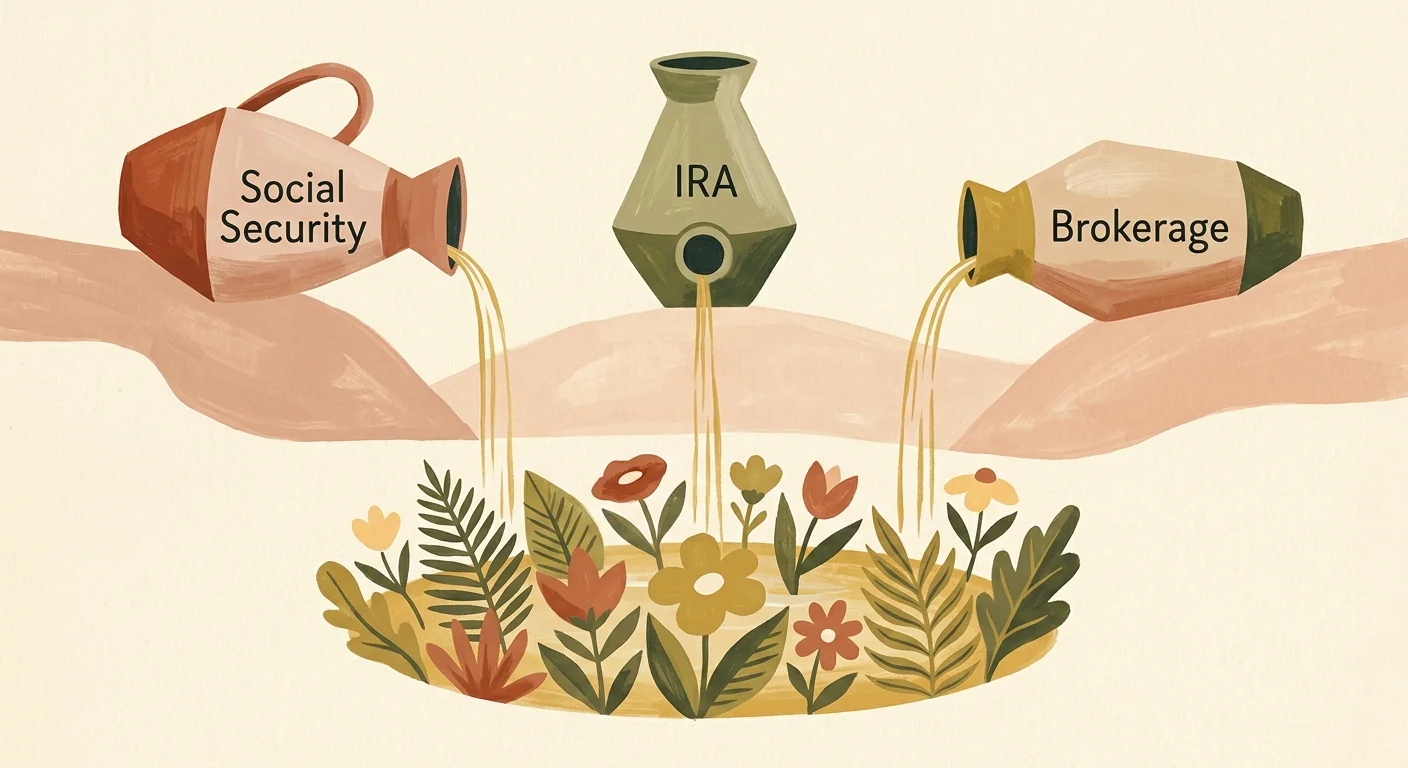
- Balance Your Income Sources: Combine distributions from tax-deferred accounts (traditional IRAs and 401(k)s), tax-free accounts (Roth IRAs), and taxable brokerage accounts. Drawing income from Roth accounts during lower COLA years raises your spendable cash without increasing your taxable income or pushing you into a higher tax bracket.
- Plan for Required Minimum Distributions (RMDs): Current tax laws mandate RMDs starting at age 73 (and age 75 starting in 2033). Calculate your upcoming mandatory distributions early in the year. If an RMD unexpectedly inflates your income, consider executing a Qualified Charitable Distribution (QCD). A QCD allows you to transfer up to $108,000 annually (for tax year 2026) directly from your IRA to a qualified charity, satisfying your RMD requirement without adding a single dollar to your taxable income.
- Consider Multi-Year Roth Conversions: If you expect low income in a specific tax year, convert a portion of your traditional IRA funds into a Roth IRA. You will pay income tax on the converted amount today, but all future growth and withdrawals will remain tax-free.
“The best time to manage your taxes in retirement is before you are forced to take required distributions. Strategic tax planning preserves more of your wealth than any single COLA increase ever could.” — Ed Slott, CPA and IRA Expert

5. Utilize Senior Discounts, Tax Credits, and Local Benefits Programs
When federal benefit adjustments cool off, local and state relief programs offer direct savings. Millions of seniors miss out on valuable financial support simply because they never apply for programs designed specifically to assist retirees on fixed incomes.
Explore these high-impact assistance avenues:
- Senior Property Tax Exemptions and Deferrals: Many state and county governments offer property tax freezes, homestead exemptions, or tax deferral programs for homeowners aged 65 and older. Lowering your local property tax bill by $1,000 per year equals a massive benefit boost without depending on Social Security adjustments.
- Medicare Savings Programs (MSPs) and Extra Help: If your monthly income fits specific state guidelines, state Medicaid programs can pay your Medicare Part B premiums and deductibles. Furthermore, the Social Security Administration’s Extra Help program lowers prescription drug costs significantly for eligible individuals.
- Energy and Utility Assistance: The Low-Income Home Energy Assistance Program (LIHEAP) provides direct grants to help eligible seniors manage seasonal heating and cooling bills. Many municipal utility companies also offer direct senior discounts upon request.
Use online screening tools provided by the National Council on Aging or visit Benefits.gov to identify local, state, and federal programs for which you qualify. Taking advantage of these resources creates instant wiggle room in your monthly budget.
Common Mistakes to Avoid When Preparing for COLA Changes
Proactive financial planning requires avoiding critical pitfalls that can derail your retirement lifestyle. Watch out for these four common mistakes seniors make when adjusting to COLA shifts:
- Confusing Lower Inflation with Falling Prices: A lower COLA indicates that the rate of inflation is slowing down, not that prices are dropping. Your grocery costs, medical expenses, and utility rates remain at their elevated baseline levels; they simply increase at a slower pace. Budgeting as if items will become cheaper creates immediate cash flow shortages.
- Ignoring the Impact of IRMAA Surcharges: Withdrawing extra cash from a traditional IRA to make up for a smaller COLA bump can accidentally push your income over an IRMAA threshold. This single mistake triggers higher Medicare Part B and Part D premiums two years down the road, completely erasing your withdrawals.
- Waiting Until January to Adjust Spending: The Social Security Administration announces the annual COLA in mid-October. Waiting until your first lower benefit check arrives in January leaves you scrambling. Adjust your savings and spending habits immediately following the autumn announcement.
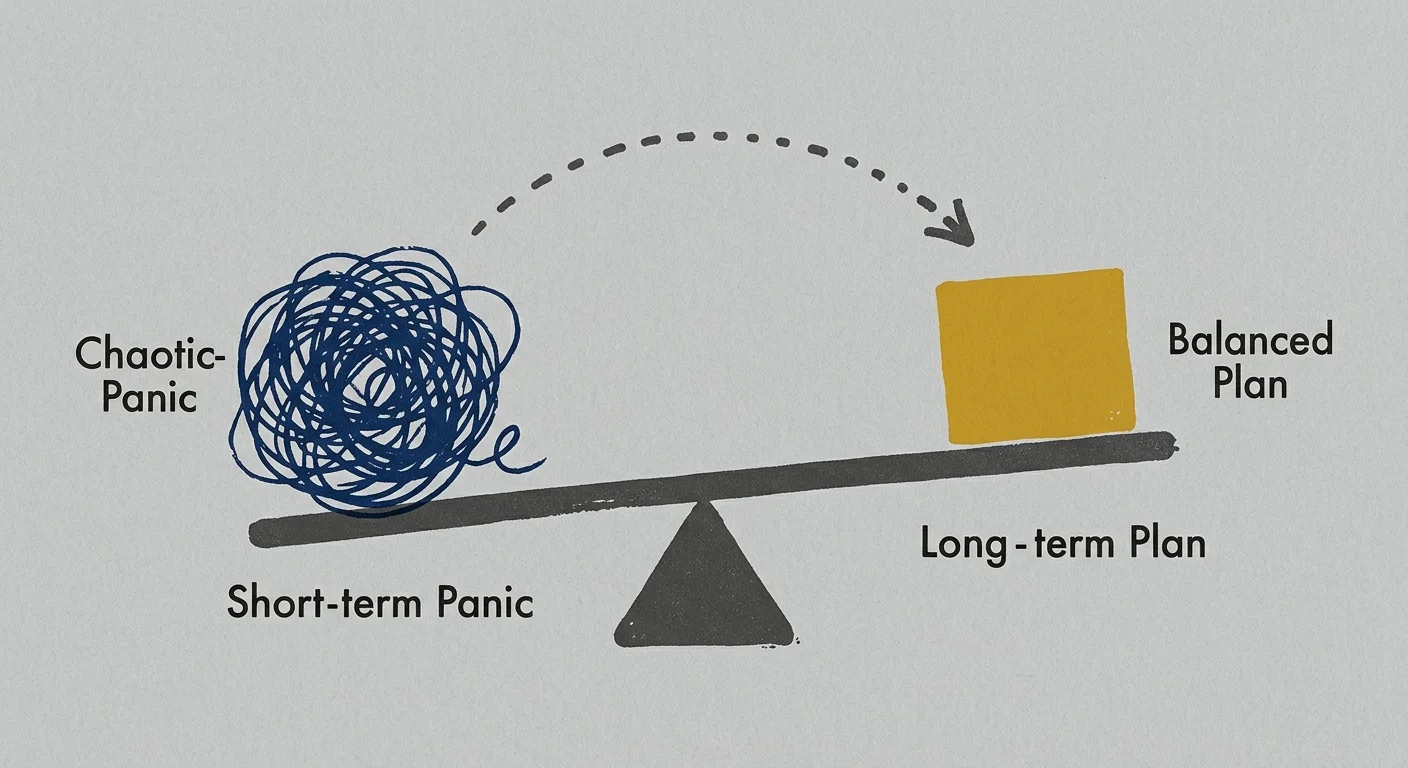
- Abandoning a Diversified Investment Strategy: Panic-selling stocks or moving all your assets into low-yielding cash out of fear over a smaller COLA exposes your portfolio to long-term purchasing power erosion. Maintain a balanced allocation that funds short-term cash needs while allowing equity investments to combat long-term inflation.

Finding the Right Advisor for Your Retirement Budget
While self-directed planning works well for many financial decisions, complex retirement scenarios benefit from professional guidance. Consider consulting a fee-only Certified Financial Planner (CFP) or Certified Public Accountant (CPA) if you encounter any of the following situations:
- Scenario A: Managing Complex IRA Withdrawal Tax Strategies: You hold substantial assets in tax-deferred IRAs or 401(k) accounts and need a structured, multi-year distribution strategy that minimizes income tax while supplementing lower COLA increases.
- Scenario B: Navigating Medicare IRMAA Bracket Thresholds: Your income sits near the edge of a Medicare Part B/Part D surcharge bracket, requiring precise tax forecasting before executing Roth conversions or selling taxable investments.
- Scenario C: Structuring a Sustainable Cash Flow Plan: Social Security represents your primary source of income, and you require a zero-based cash flow audit to align your fixed expenses with liquid emergency reserves.
Frequently Asked Questions About the 2027 COLA
How does the Social Security Administration calculate the annual COLA?
The Social Security Administration calculates the annual COLA by comparing the average Consumer Price Index for Urban Wage Earners and Clerical Workers (CPI-W) in the third quarter (July, August, and September) of the current year against the third quarter average of the prior year. If the index shows an increase, benefits increase by that exact percentage. If the index stays flat or declines, benefits remain unchanged.
Can a Social Security COLA ever be negative?
No, your Social Security benefit will never decrease due to a COLA calculation. Federal law dictates that if the CPI-W shows zero growth or deflation during the third quarter evaluation period, the COLA remains at 0.0%. Your monthly gross benefit amount remains identical to the previous year.
When will the Social Security Administration officially announce the 2027 COLA?
The Social Security Administration officially announces the annual COLA in mid-October, immediately following the Bureau of Labor Statistics’ release of the September CPI-W inflation report. The newly adjusted benefit payments begin in January of the following calendar year.
Will Medicare Part B increases eat up my entire COLA raise?
For some retirees, Medicare Part B premium increases do absorb a significant portion of a smaller COLA raise. However, the federal “Hold Harmless” provision protects most beneficiaries by capping Part B premium increases so they do not reduce net monthly Social Security benefit checks below the previous year’s level. This protection does not apply to high earners subject to IRMAA, new Medicare enrollees, or beneficiaries receiving Medicaid assistance.
Take Charge of Your Retirement Spending
Uncertainty surrounding annual Social Security COLA adjustments does not have to threaten your financial security. By stress-testing your household budget today, creating a resilient high-yield cash buffer, and optimizing your healthcare and tax strategies, you insulate your lifestyle against any economic shift. Taking small, actionable steps now empowers you to navigate changing economic conditions with absolute confidence.
Start by auditing your non-discretionary expenses this week and calculating your household cash flow under different COLA scenarios. Building financial independence means controlling what you can control today—ensuring that whatever figure the government announces each October, your retirement plans remain completely on track.
This article provides general financial education and information only. Everyone’s financial situation is unique—what works for others may not work for you. For personalized advice tailored to your retirement needs, consider consulting a qualified financial professional such as a CFP or CPA.
Last updated: February 2026. Benefit amounts, tax rules, and program details change annually—verify current figures with official government sources.









Leave a Reply