

Even after decades of diligent saving, simple portfolio blind spots can quietly drain your hard-earned nest egg. Spotting these red flags in retirement planning early allows you to protect your wealth before costly penalties strike.
Many seniors assume their cash flow is set in stone once they stop working. In reality, shifting tax laws and surprise medical bills frequently disrupt otherwise solid budgets.
By recognizing the common financial oversights retirees make, you can preserve your assets and maintain lasting peace of mind. Here are the top warnings advisors urge you to heed today.
The Essentials: Key Retirement Warnings
Retirement planning does not end on your final day of work. Instead, ongoing portfolio management becomes essential for your lasting financial security.
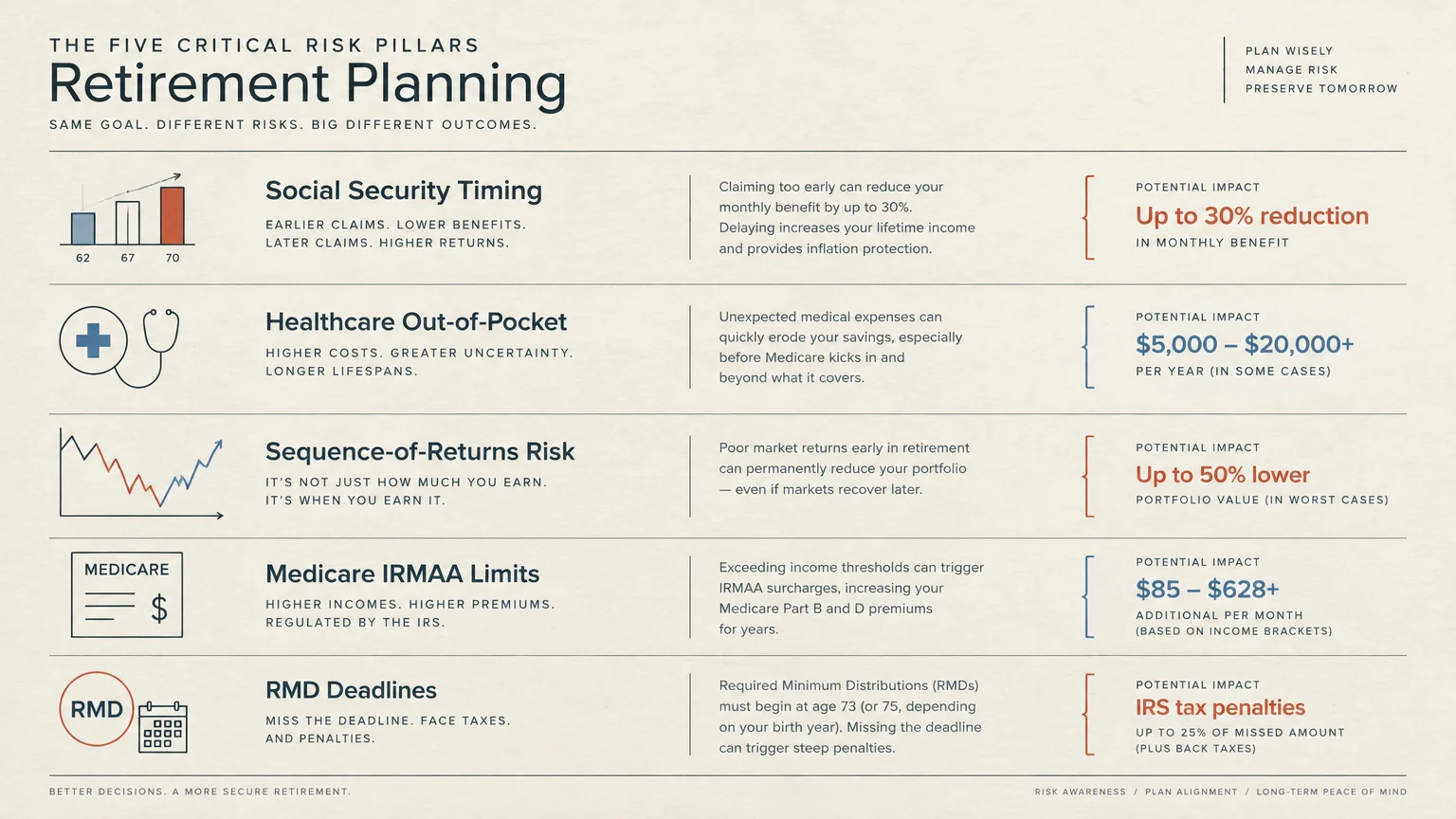
Financial advisor warnings for retirees frequently highlight distribution timing, unexpected taxes, and debt management as primary vulnerability points.
- Filing for Social Security too early locks in permanent reductions up to 30%.
- Failing to budget for out-of-pocket healthcare and long-term care can deplete savings rapidly.
- Withdrawing static portfolio amounts during down markets accelerates sequence-of-returns losses.
- Ignoring Medicare income thresholds triggers steep monthly premium surcharges.
- Missing required minimum distribution deadlines results in severe IRS tax penalties.
1. Claiming Social Security Early Without a Coordinating Strategy
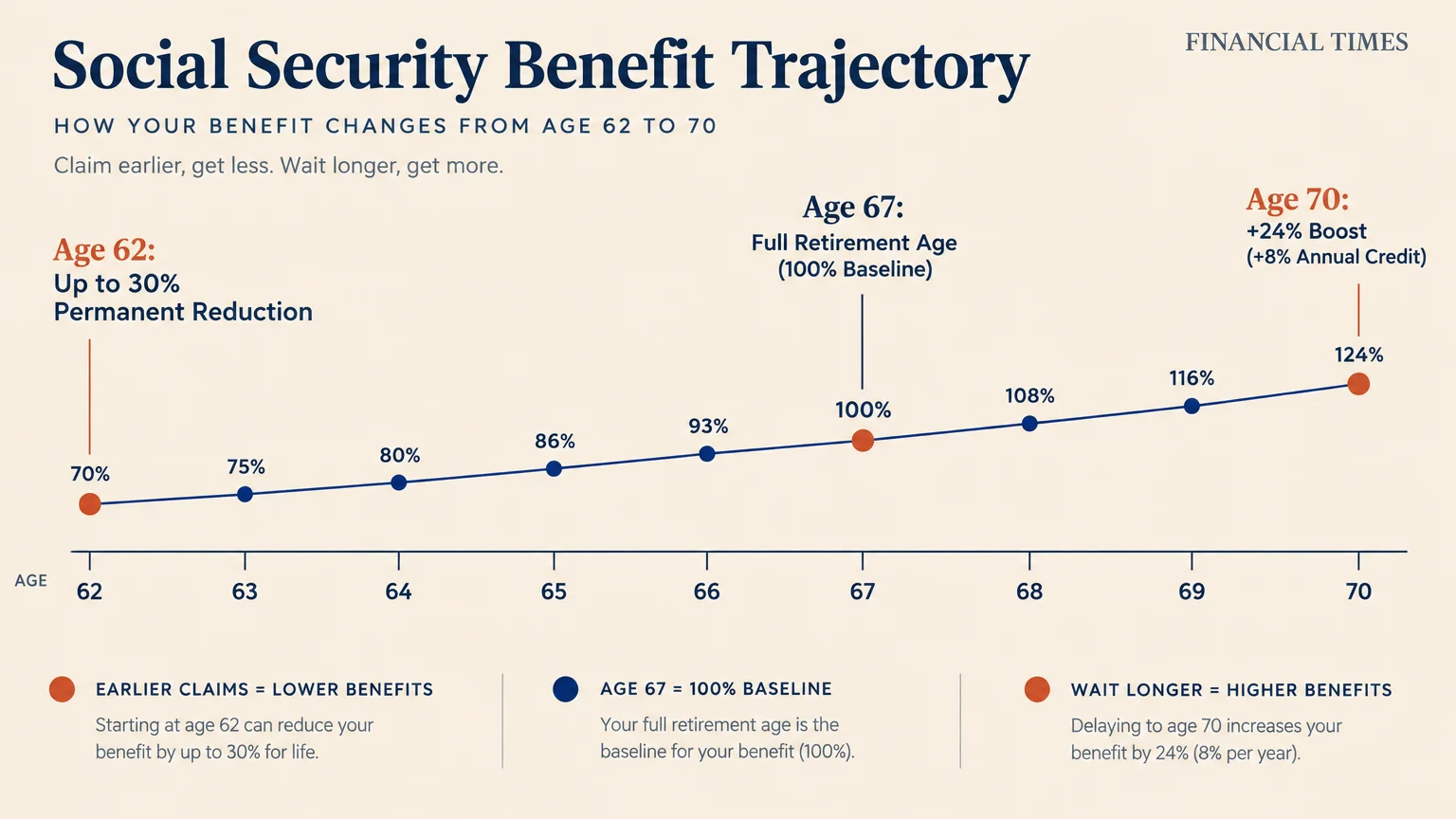
Filing for benefits the moment you turn 62 feels tempting after paying into the system for decades. However, this early claim permanently reduces your monthly check by up to 30%.
According to the Social Security Administration (SSA), full retirement age is 67 for anyone born in 1960 or later. Claiming at age 62 locks in that steep discount for life.
Conversely, waiting past your full retirement age earns an 8% annual delayed retirement credit until age 70. That delay delivers a guaranteed 24% boost to your baseline payment.
Retirement financial mistakes advisors see often involve claiming early out of fear rather than mathematical need. Evaluate your health, longevity expectations, and spousal needs before submitting your application.
2. Underestimating Healthcare and Long-Term Care Realities
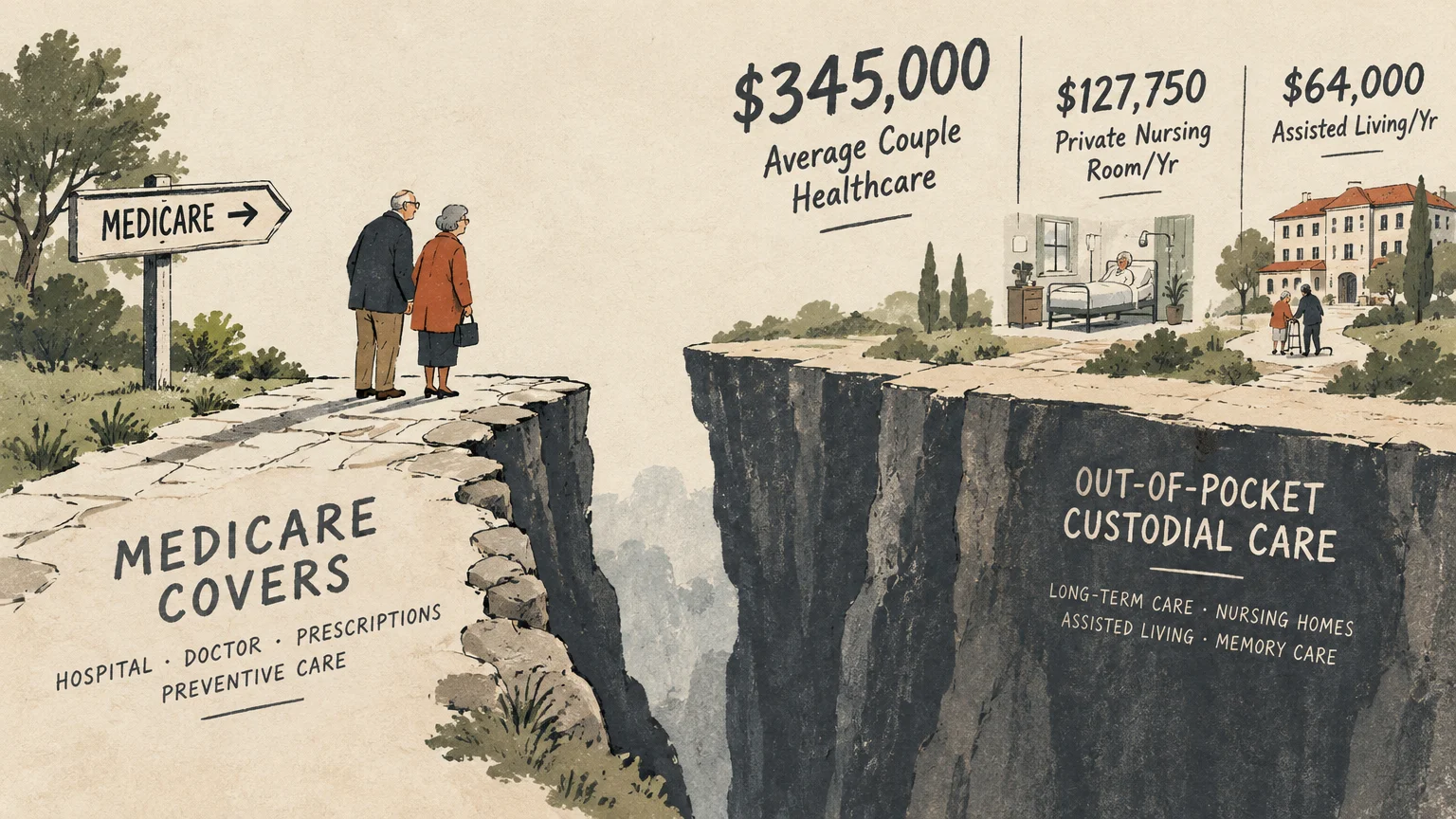
Medicare provides vital health coverage, but it does not pay for every medical necessity. Assuming healthcare is entirely covered remains one of the most pervasive mistakes retirees ignore.
According to Fidelity’s Retiree Health Care Cost Estimate, an average 65-year-old couple retiring needs approximately $345,000 in after-tax savings for medical costs. This substantial figure excludes long-term nursing assistance.
Custodial care presents an even larger financial hurdle for unprepared families. Medicare generally pays nothing for non-skilled daily living assistance in nursing facilities or private residences.
According to Genworth CareScout data, the national median annual cost for a private nursing home room tops $127,750, while assisted living averages over $64,000 annually. You must plan for these potential costs early.
3. Relying on an Outdated Withdrawal Rate
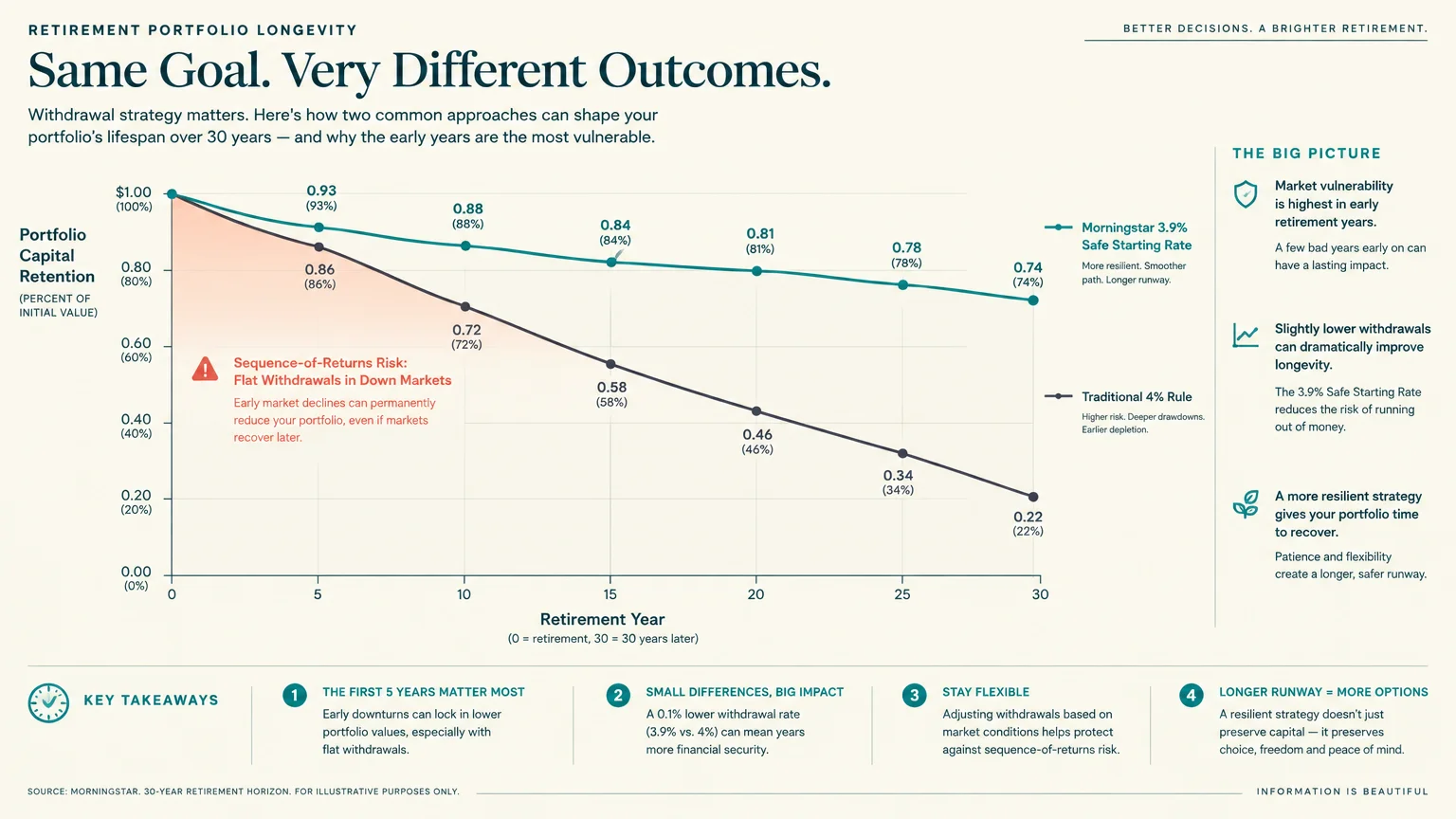
Many retirees still rely on the classic 4% withdrawal guideline formulated three decades ago. While historically helpful, rigid static rules can fail during volatile market cycles.
In recent retirement research, Morningstar estimated the safe starting withdrawal rate for a balanced portfolio at 3.9% over a 30-year horizon. Taking fixed sums during severe market downturns accelerates portfolio depletion.
This danger is known as sequence-of-returns risk. If your portfolio loses value during your early retirement years, withdrawing flat amounts permanently destroys compound growth potential.
“Risk comes from not knowing what you are doing.” — Warren Buffett, Chairman and CEO of Berkshire Hathaway
Advisors recommend adopting dynamic spending guardrails instead of rigid percentages. Lowering discretionary spending during market downturns significantly extends your portfolio longevity.
4. Triggering Medicare IRMAA Surcharges Unintentionally
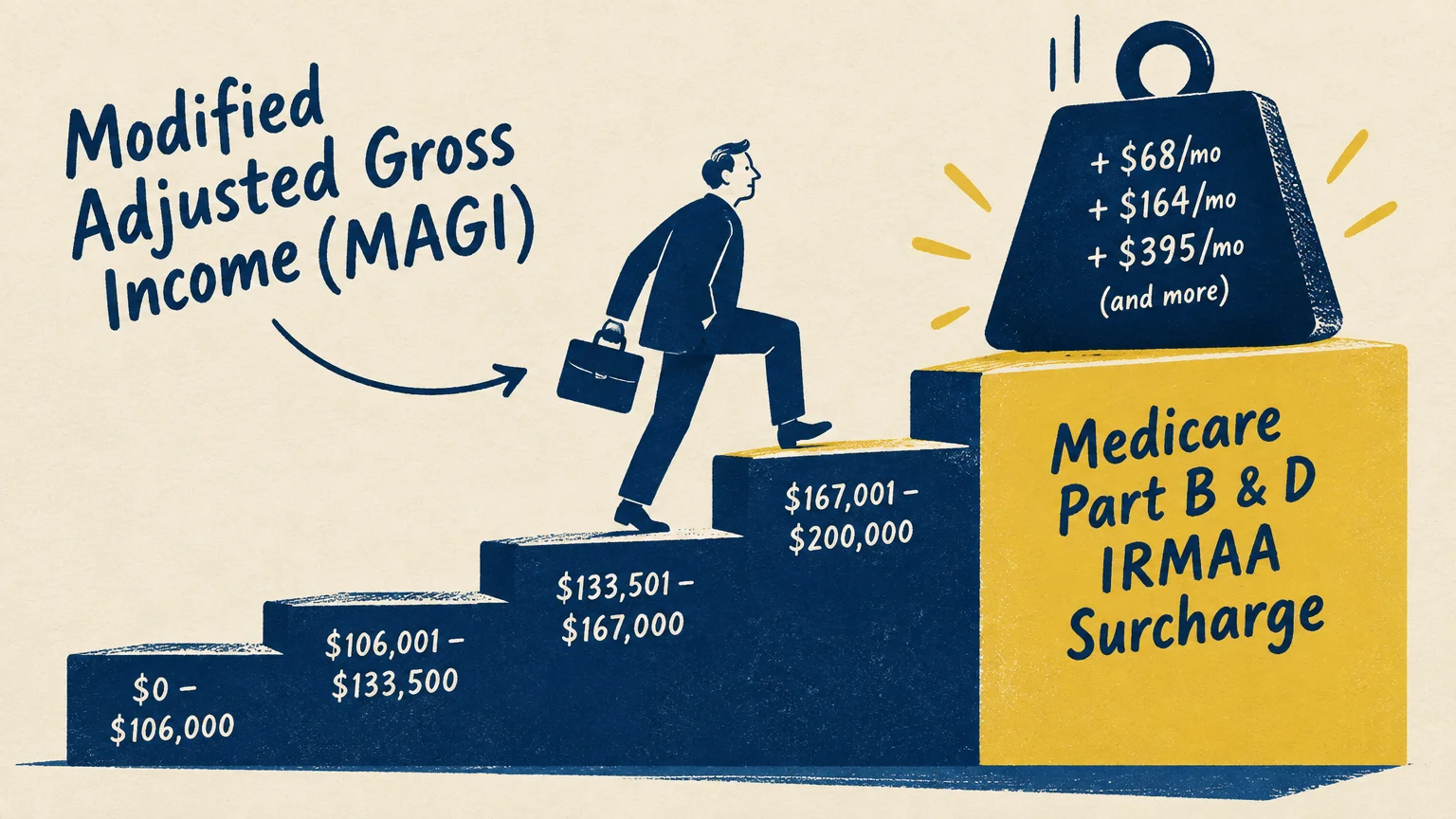
Withdrawing substantial lump sums from traditional retirement accounts can create an unpleasant surprise on your healthcare statements. High taxable income triggers Medicare Income-Related Monthly Adjustment Amount (IRMAA) surcharges.
For individuals with a modified adjusted gross income above $106,000, or $212,000 for married couples filing jointly, IRMAA surcharges automatically apply. The government bases these determinations on tax returns from two years prior.
According to the Centers for Medicare & Medicaid Services, the standard Part B premium is $185.00 per month. Crossing an IRMAA threshold adds surcharges ranging between $74.00 and $443.90 monthly per person.
You can review official baseline brackets at Medicare.gov before realizing taxable capital gains. Carefully timing IRA distributions and Roth conversions prevents you from falling into these costly surcharge brackets.

5. Overlooking Required Minimum Distribution (RMD) Schedules
Tax-deferred accounts like traditional IRAs and 401(k) plans cannot hold untaxed money indefinitely. The Internal Revenue Service mandates annual withdrawals once you reach a specific age threshold.
Under the SECURE 2.0 Act, the mandatory age to start taking RMDs is age 73, rising to age 75 in 2033. Notably, designated Roth employer accounts are now completely exempt from pre-death RMDs.
If you fail to withdraw the correct amount, the IRS imposes a stiff 25% excise tax penalty on the shortfall. That penalty drops to 10% only if you correct the oversight within two years.
“You have a partner in your retirement accounts, and that partner is the IRS.” — Ed Slott, CPA and Retirement Distribution Specialist
You can verify current distribution tables at the Internal Revenue Service (IRS) website. Planning distributions strategically reduces tax liability and prevents unexpected penalties.

6. Carrying High-Interest Consumer Debt into Retirement
Entering retirement with significant debt places intense pressure on fixed income streams. Diverting monthly living cash toward interest charges leaves little flexibility for sudden medical or household emergencies.
According to data from the Employee Benefit Research Institute, roughly 60% of retirees carry debt into their later years. Credit card balances represent the most widespread liability, held by 68% of indebted retirees.
Rising interest rates make revolving debt far more hazardous for fixed incomes. The Consumer Financial Protection Bureau (CFPB) offers free educational guides to help households manage and eliminate high-cost debt.
Prioritize retiring double-digit credit card balances before trimming essential retirement savings. Eliminating debt delivers a risk-free return equal to the interest rate you avoid paying.

7. Ignoring the Financial Impact on a Surviving Spouse
Married couples often build their retirement cash flow projections around two combined Social Security benefits and joint tax rates. Unfortunately, the passing of one spouse fundamentally alters that balance.
When a spouse passes away, the smaller of the two monthly Social Security payments permanently disappears. Meanwhile, the surviving partner must now file taxes under single filer rates, which feature narrower tax brackets.
This transition is often called the widow’s tax trap because higher tax brackets strike reduced income. Advisors caution couples to run projections simulating the budget of a surviving partner well in advance.
Life insurance, Roth IRA balances, and pension survivorship elections provide vital shields against this income drop. Ensuring the survivor inherits flexible, tax-efficient resources preserves their quality of life.
Comparing the Financial Impact of Common Retirement Oversights
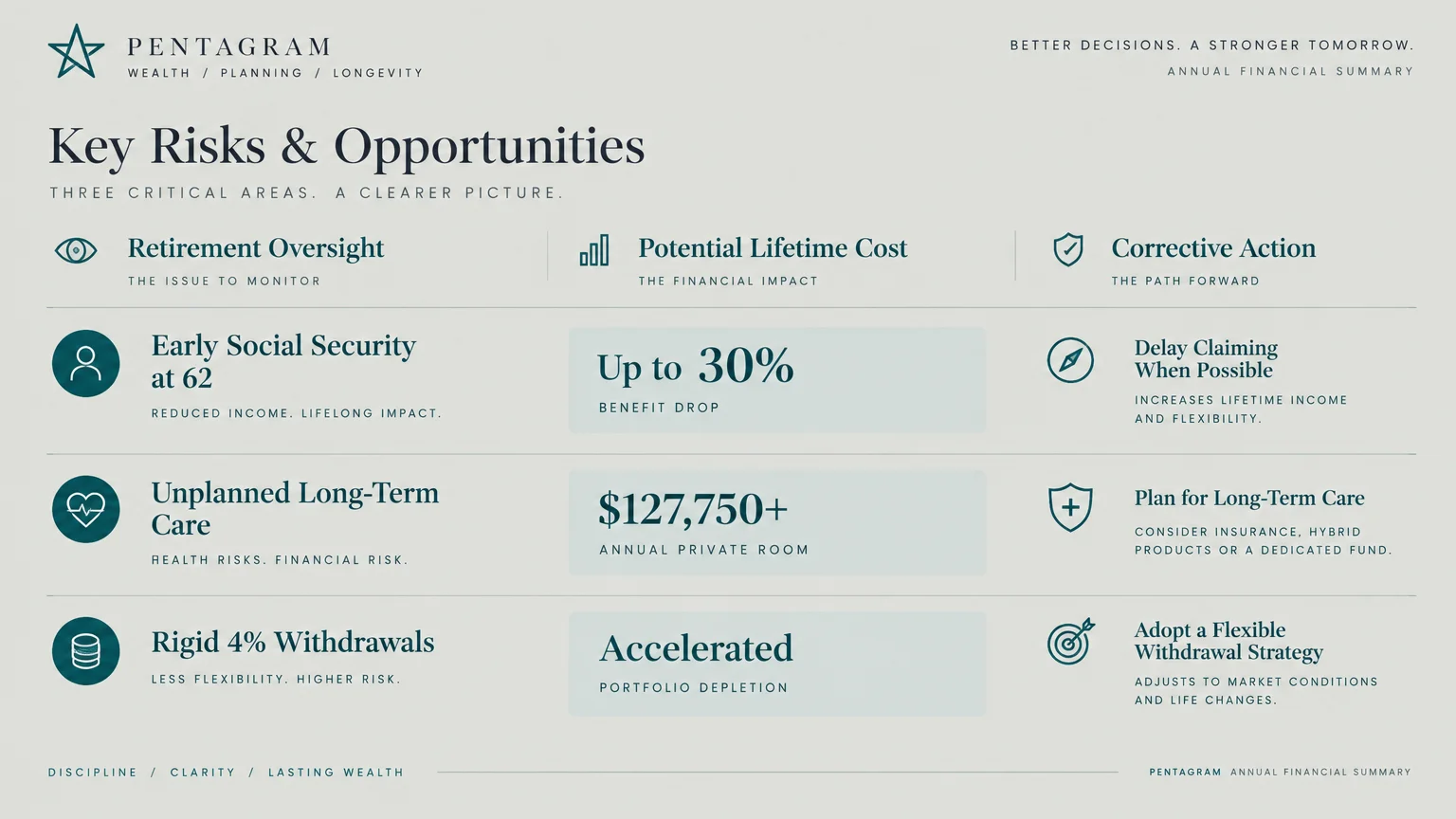
Understanding the exact financial consequences of common oversights helps you prioritize necessary adjustments. Review the side-by-side comparison below to see how proactive steps protect your savings.
| Financial Area | The Red Flag | Potential Financial Impact | Strategic Solution |
|---|---|---|---|
| Social Security | Claiming at age 62 | Permanent 30% benefit cut | Delay claims toward age 70 for an 8% annual credit |
| Healthcare | Relying solely on Medicare | $345,000+ out-of-pocket medical costs | Establish a dedicated Health Savings Account or reserve fund |
| Portfolio Drawdowns | Static 4% withdrawals | Premature asset depletion | Implement dynamic spending guardrails around 3.9% |
| Medicare Premiums | Unmanaged taxable income | IRMAA surcharges up to $443.90/month | Execute multi-year Roth conversions before age 63 |
| Tax-Deferred Accounts | Missing RMD deadlines | 25% IRS excise tax penalty | Automate annual distributions starting at age 73 |
| Revolving Debt | Carrying credit cards | Compounding interest drains fixed income | Eliminate high-interest debt prior to leaving work |
| Estate Planning | Overlooking surviving spouse needs | Widow’s tax bracket shift and lost Social Security | Elect higher survivor pension options and Roth accounts |
What Can Go Wrong: 4 Traps to Avoid
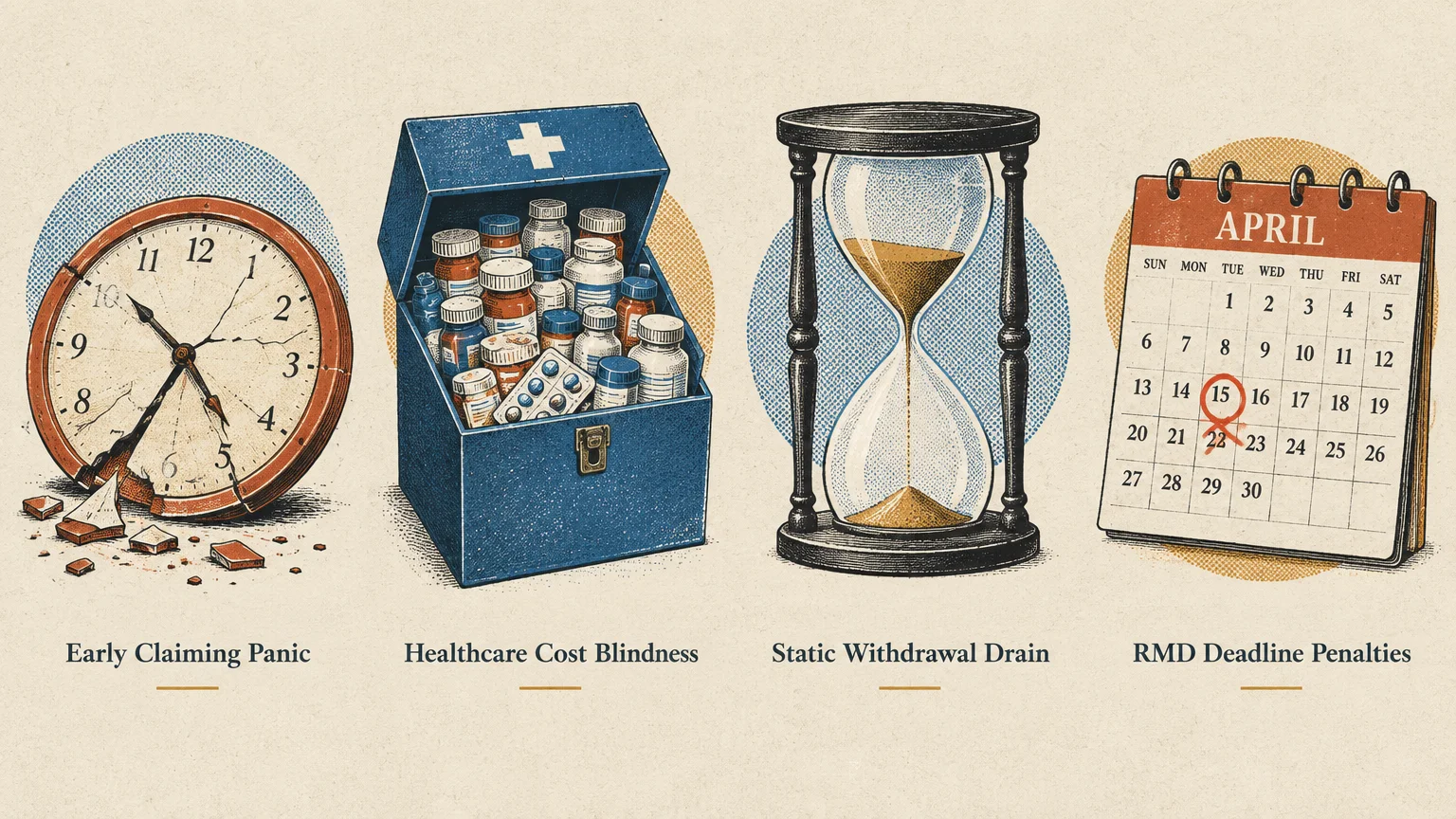
Even well-intentioned retirees encounter unexpected hurdles when transitioning from accumulation to spending. Watch out for these four frequent portfolio traps.
Trapping Too Much Wealth in Pre-Tax Accounts
Having all your savings in traditional IRAs creates massive taxable income when RMDs begin. Balance your portfolio with Roth accounts and taxable brokerage assets to maintain tax flexibility.
Supporting Adult Children at Your Own Expense
Providing recurring financial support to adult children can deplete your assets during critical compounding years. Remember that your children can borrow for life expenses, but nobody lends money for retirement.
Holding an Excessively Conservative Portfolio
Moving entirely to cash out of fear exposes your portfolio to purchasing power destruction from inflation. You need modest equity exposure to support a retirement that may span three decades.
Forgetting Annual Beneficiary Audits
Outdated beneficiary designations on retirement accounts override your will. Reviewing these forms annually ensures your hard-earned assets transfer directly to your intended heirs without probate delays.

When to Consult a Professional
Self-directed financial management works well for basic budgets, but complex milestones demand specialized guidance. Consider engaging a fee-only fiduciary advisor under these specific circumstances:
- You are approaching age 73 and need an integrated distribution strategy across multiple pre-tax accounts.
- You anticipate selling real estate or realizing large capital gains that could trigger Medicare IRMAA surcharges.
- You want to model surviving spouse income scenarios and optimize Social Security claiming choices.
- You are evaluating hybrid long-term care insurance policies to protect family assets from nursing care costs.
Working with a certified professional ensures that your withdrawal order minimizes lifetime taxes and maximizes benefit longevity.
Frequently Asked Questions
What is the most dangerous financial mistake retirees make?
Advisors frequently cite underestimating long-term healthcare expenses and claiming Social Security too early as the most damaging errors. Both choices permanently reduce income and deplete savings.
How can I avoid paying Medicare IRMAA surcharges?
Manage your modified adjusted gross income carefully two years prior to Medicare enrollment. Utilizing Roth conversions during low-income gap years keeps your future taxable income beneath the surcharge thresholds.
What happens if I forget to take my RMD this year?
The IRS imposes an excise penalty of 25% on the shortfall amount. However, if you file Form 5329 and correct the error within two years, the penalty drops to 10%.
Is the 4% withdrawal rule still safe for retirees?
Modern research suggests starting around 3.9% for balanced portfolios, accompanied by flexible spending adjustments. Being willing to cut discretionary expenses during down market years greatly reduces your failure risk.
Protecting Your Hard-Earned Nest Egg
Retirement security is not about timing the market or eliminating every expense. It requires identifying structural blind spots and correcting them before they erode your financial freedom.
Take time this month to audit your distribution plans, verify your tax projections, and review your healthcare reserves. Taking these proactive steps gives you the confidence to enjoy the retirement you earned.
This is educational content based on general financial principles for seniors. Individual results vary based on your situation. Always verify current benefit amounts, tax rules, and program eligibility with official government sources.
Last updated: February 2026. Benefit amounts, tax rules, and program details change annually—verify current figures with official government sources.









Leave a Reply