

If you receive $2,000 a month in Social Security benefits, a 3.5% cost-of-living adjustment delivers an extra $70 every month. That boosts your gross annual income by exactly $840.
However, your actual take-home check depends on rising Medicare premiums and fixed federal tax rules. What appears as a significant raise on paper often shrinks before it reaches your bank account.
Understanding this difference helps you build an accurate retirement budget and protect your monthly cash flow. Let us examine what happens to your benefit dollars once standard deductions take effect.
Breaking Down the Math: Gross Monthly and Annual Growth
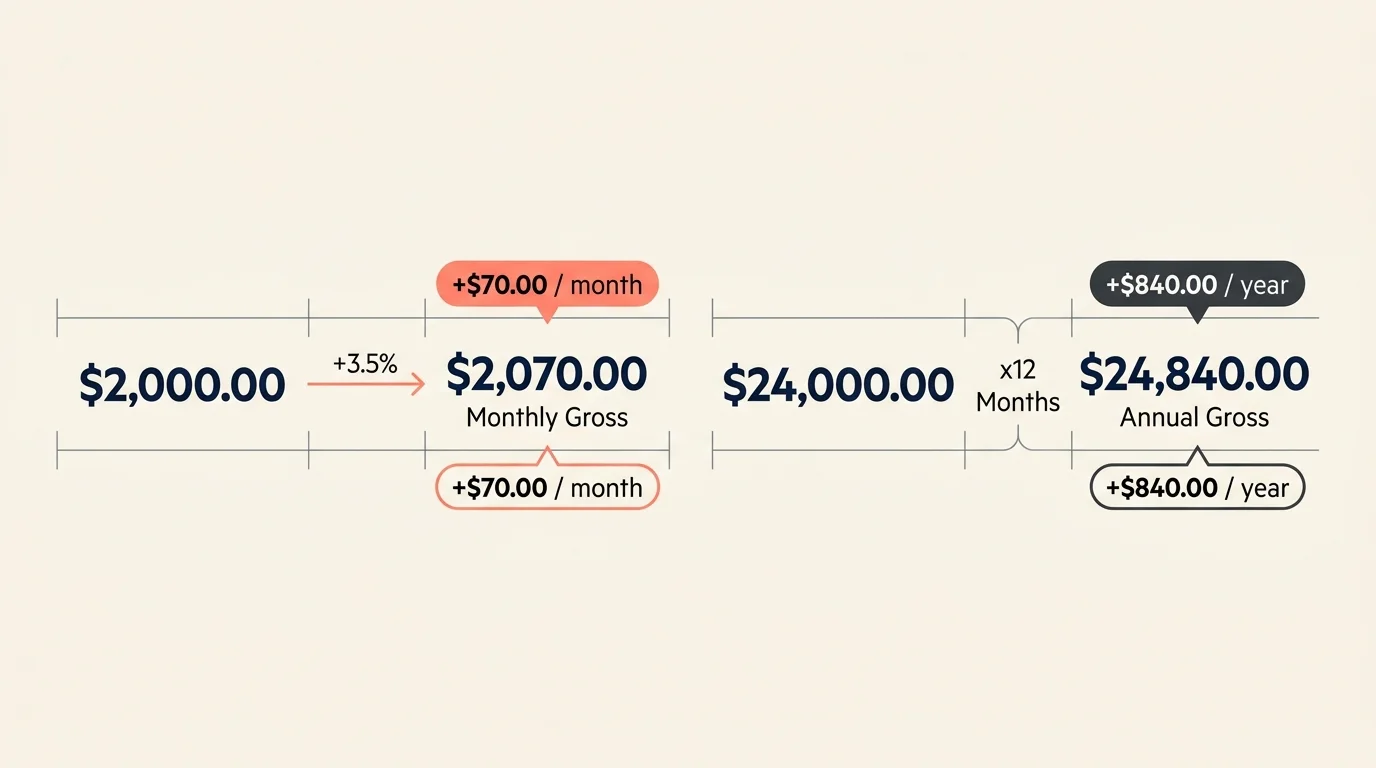
The headline percentage of an annual cost-of-living adjustment applies directly to your primary insurance amount. When the Social Security Administration applies a 3.5% increase to a $2,000 monthly benefit, the baseline calculation is straightforward.
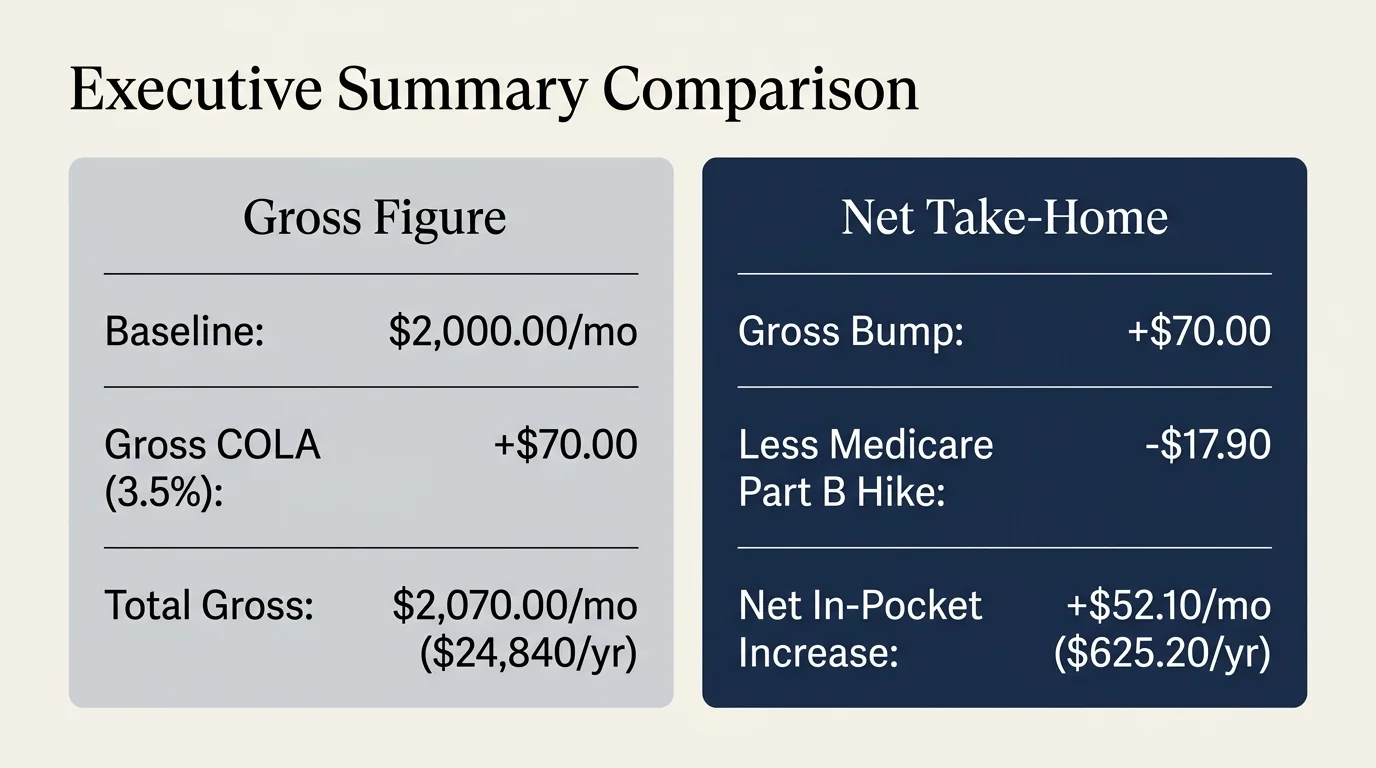
Your monthly gross benefit climbs from $2,000.00 to $2,070.00. That gives you an extra $70.00 in gross benefits each month.
Over a full 12-month calendar year, that $70 monthly bump adds up to $840.00 in gross income. Your total annual gross Social Security payment rises from $24,000.00 to $24,840.00.
Gross figures represent your baseline entitlement before any standard program deductions. To determine how much money you can actually spend, you must account for mandatory offsets.
The Medicare Part B Deduction and Your Net Take-Home Check
Most retirees do not receive their gross benefit amount in their bank accounts. The federal government automatically deducts Medicare Part B monthly premiums directly from your Social Security payment.
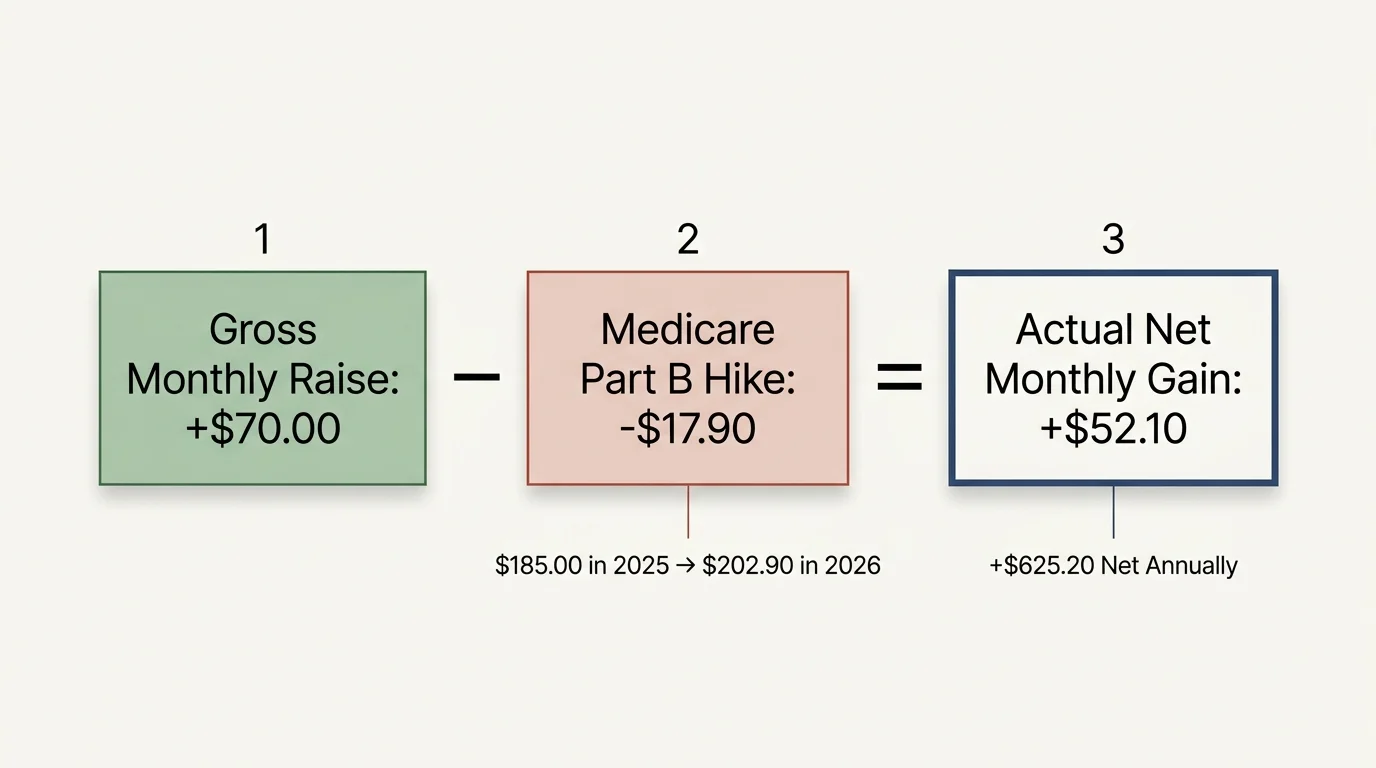
When Medicare Part B premiums rise, they consume a portion of your annual cost-of-living raise. In 2025, the standard Part B premium was $185.00 per month.
According to Medicare.gov, the standard Part B monthly premium increases to $202.90 in 2026. This represents a monthly premium hike of $17.90.
Because the SSA deducts this premium automatically, your net monthly raise is smaller than the gross $70 figure. You must subtract the $17.90 premium increase from your $70.00 gross gain.
Your actual net monthly increase equals $52.10. Instead of the full $840 annual raise, your net take-home pay grows by $625.20 over the course of the year.
“Never assume your gross Social Security raise is what will land in your bank account; rising healthcare costs often consume a portion before you ever see it.” — Suze Orman, Personal Finance Expert
How the Social Security Administration Determines the Annual COLA
The annual adjustment does not stem from arbitrary government estimates or political debates. The SSA relies on a specific mathematical formula established by federal law.
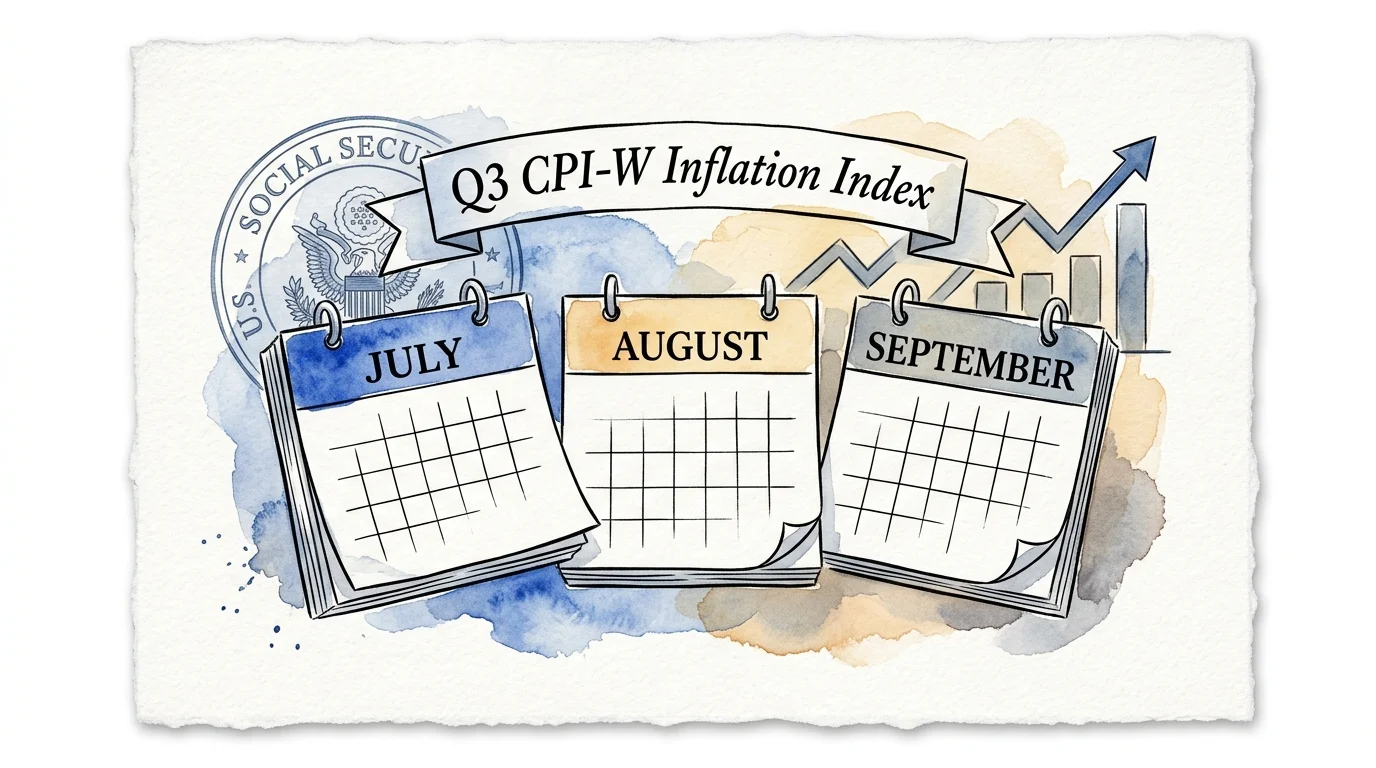
The calculation uses the Consumer Price Index for Urban Wage Earners and Clerical Workers, known as the CPI-W. The Bureau of Labor Statistics tracks this index monthly to measure consumer price inflation.
To establish the adjustment, the SSA compares third-quarter inflation data from July, August, and September against the third-quarter average from the previous year. The percentage difference determines the adjustment rate.
The agency announces the official percentage each year in mid-October. The updated payment schedule takes effect with December benefits, which arrive in bank accounts every January.
Recent Historical COLA Adjustments: Putting 3.5% in Perspective
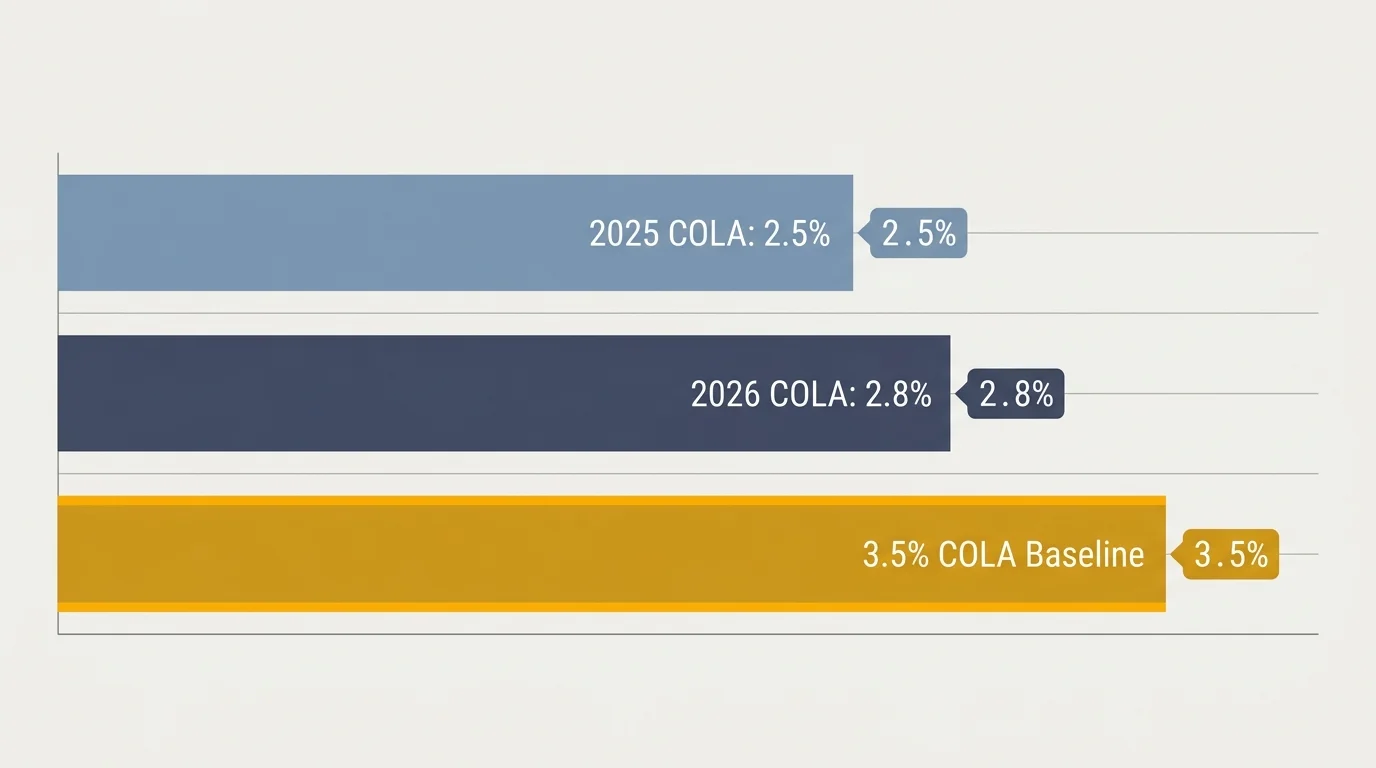
A 3.5% adjustment represents a moderate increase compared to recent historical benchmarks. Inflation trends over the past several years have created significant volatility in annual adjustments.
- 2026 COLA: 2.8% increase, reflecting cooling inflationary pressure across consumer sectors.
- 2025 COLA: 2.5% increase, matching moderate price changes in goods and services.
- 2024 COLA: 3.2% increase, providing modest relief after high inflation peaks.
- 2023 COLA: 8.7% increase, the highest single-year adjustment in over four decades.
While larger adjustments like 2023 provide bigger nominal dollar increases, they also signal rapid spikes in everyday living costs. A moderate 3.5% adjustment generally reflects steady, predictable consumer prices.
The Stealth Tax Trap: How Benefit Increases Trigger Federal Taxes
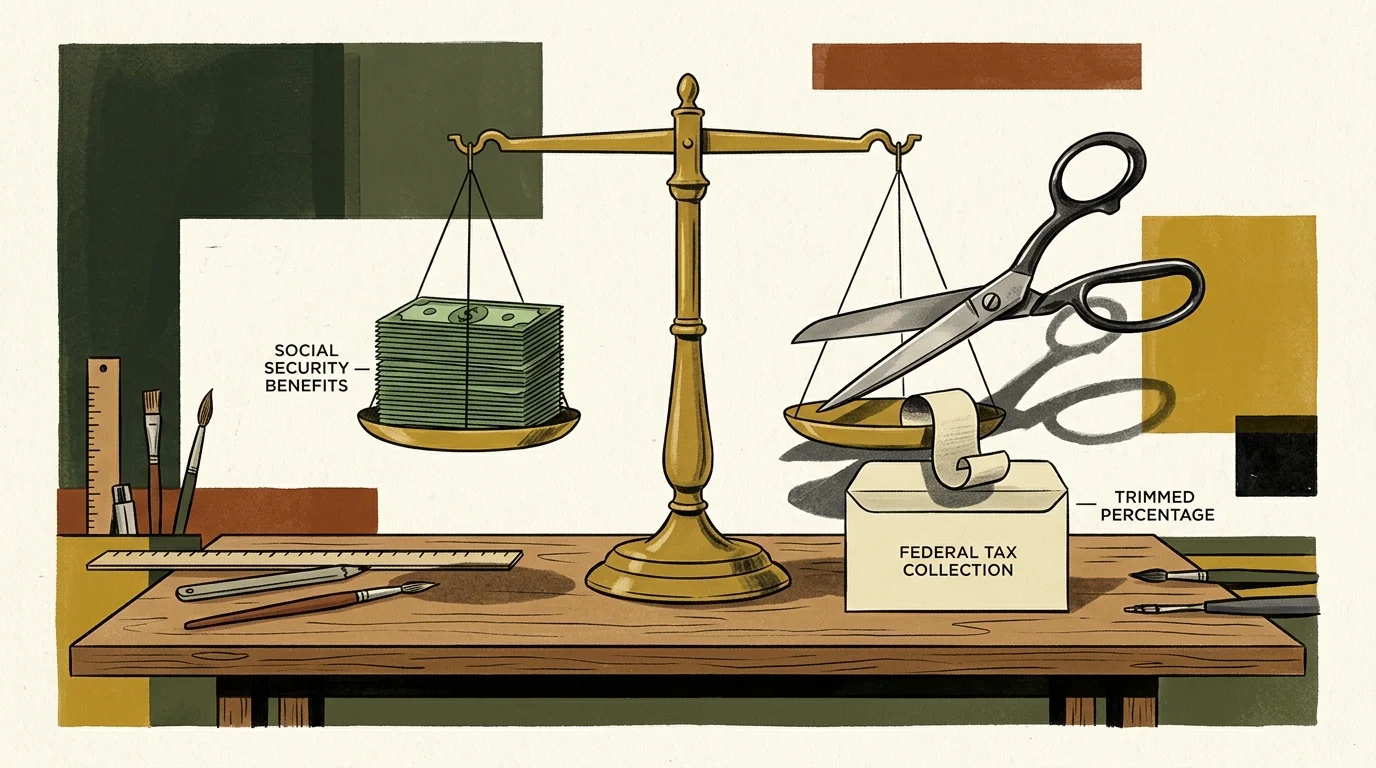
A higher monthly benefit can inadvertently trigger federal income taxes on your Social Security income. This happens because the federal income thresholds for taxing benefits have never been adjusted for inflation.
Congress established these fixed income limits in 1983. As your benefits grow through annual adjustments, your overall income climbs closer to these permanent thresholds.
The Internal Revenue Service calculates your tax liability using a metric called combined income. Your combined income equals your adjusted gross income plus non-taxable interest and half of your annual Social Security benefits.
If you file taxes as an individual, combined income between $25,000 and $34,000 makes up to 50% of your benefits taxable. Combined income above $34,000 exposes up to 85% of your benefits to taxation.
For married couples filing jointly, combined income between $32,000 and $44,000 exposes up to 50% of benefits to taxes. Income exceeding $44,000 makes up to 85% of your Social Security benefits taxable.
“Taxes on Social Security are a stealth tax because the income thresholds were never indexed to inflation. Every COLA increase pulls more retirees into the tax net.” — Ed Slott, CPA and Retirement Specialist
Complete Financial Breakdown: Gross vs. Net Growth for a $2,000 Benefit
Comparing your gross benefit against net income clarifies how standard deductions impact your final budget. The table below illustrates the exact shift from a 2025 baseline to a hypothetical 3.5% adjustment in 2026.
| Benefit Category | 2025 Baseline ($) | 2026 With 3.5% COLA ($) | Net Change ($) |
|---|---|---|---|
| Gross Monthly Benefit | $2,000.00 | $2,070.00 | +$70.00 / month |
| Medicare Part B Premium | $185.00 | $202.90 | +$17.90 / month |
| Net Monthly Check (Take-Home) | $1,815.00 | $1,867.10 | +$52.10 / month |
| Gross Annual Benefit | $24,000.00 | $24,840.00 | +$840.00 / year |
| Total Annual Part B Cost | $2,220.00 | $2,434.80 | +$214.80 / year |
| Net Annual Benefit Received | $21,780.00 | $22,405.20 | +$625.20 / year |
As the table demonstrates, healthcare deductions claim roughly 25.5% of your gross raise. Factoring this deduction into your household budget prevents unexpected cash shortages.
State Taxes on Social Security: What You Need to Know
Federal taxes are only one part of your overall retirement tax equation. Depending on where you live, state income taxes may also affect your final benefit growth.
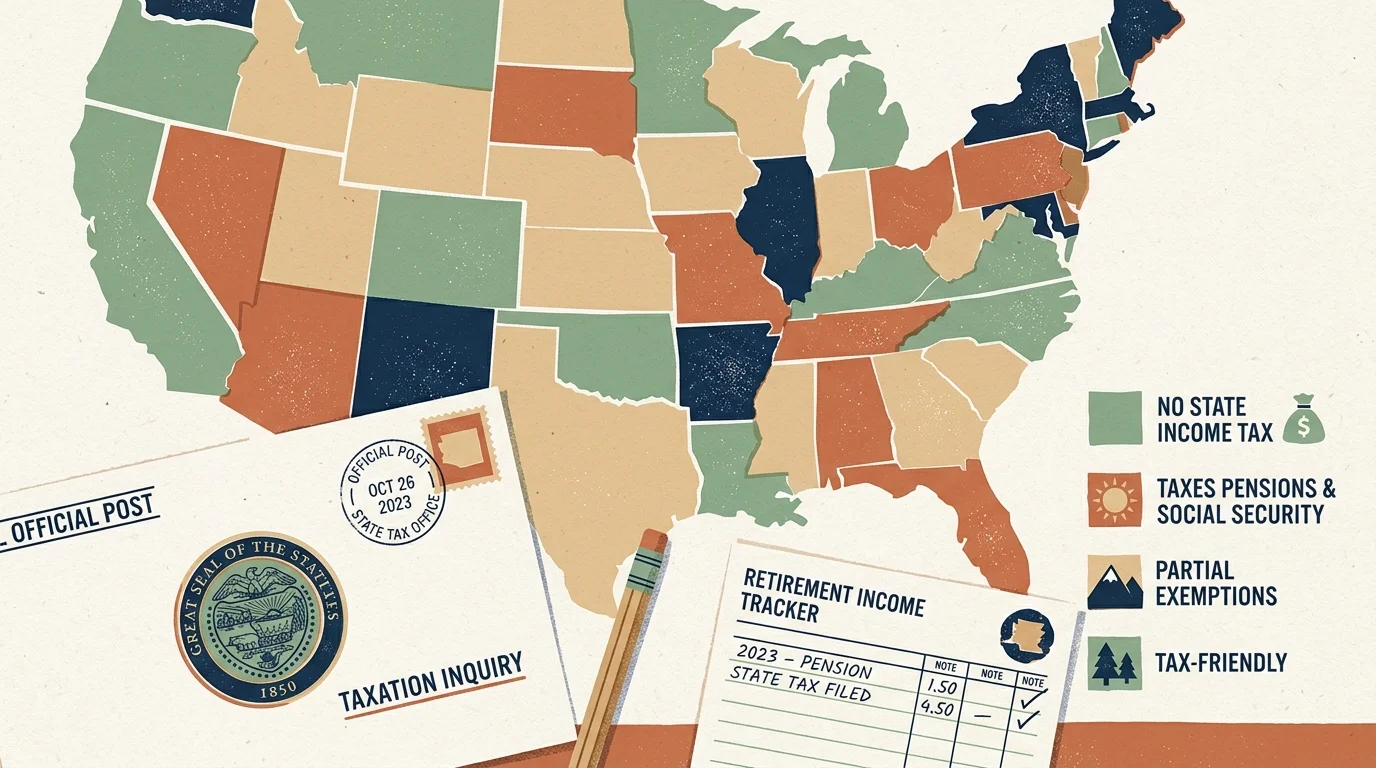
The vast majority of U.S. states do not tax Social Security benefits at all. These states allow you to keep your full benefit increase without state-level deductions.
However, a small number of states still tax a portion of retirement benefits based on age or income level. Checking your specific state revenue guidelines ensures you avoid unexpected tax liabilities at filing time.

Actionable Steps to Protect Your Social Security Purchasing Power
You can take proactive steps to ensure your annual benefit increase serves your overall retirement goals. Strategic planning prevents unexpected tax bills and optimizes your monthly cash flow.
First, review your tax withholding status directly with the SSA. You can submit IRS Form W-4V to have federal income taxes withheld automatically from your monthly checks.
Second, monitor your other income sources, such as traditional IRA withdrawals or part-time earnings. Keeping your combined income below federal thresholds helps protect your benefits from unnecessary taxation.
Third, consult resources from the Consumer Financial Protection Bureau to evaluate retirement expenses. Tracking fixed costs against net benefit gains keeps your spending aligned with actual income.
Common Mistakes to Avoid With Annual Benefit Increases
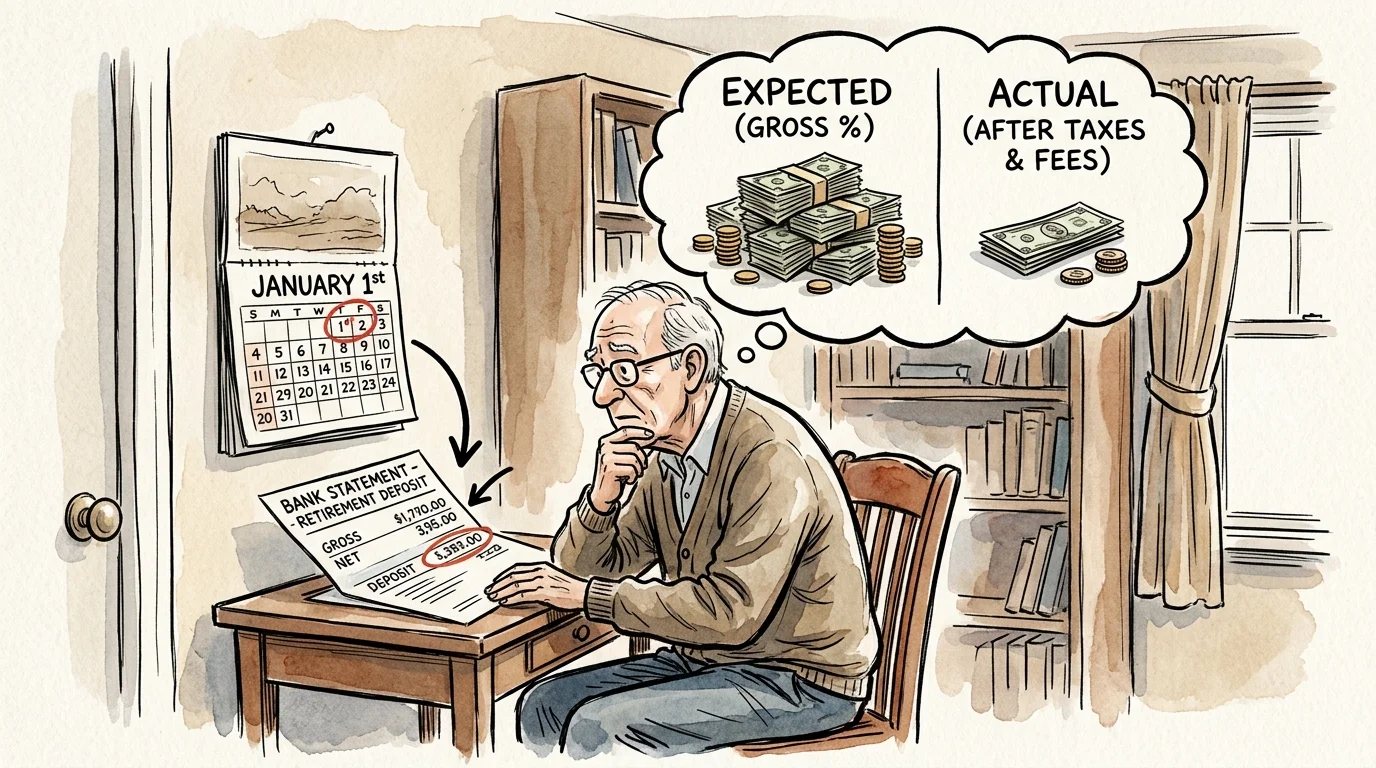
Many retirees mismanage their annual adjustments by overlooking hidden deductions and tax implications. Avoiding these common errors ensures you retain the maximum value from every raise.
1. Budgeting Around Gross Figures Rather Than Net Income: Assuming you will receive the full $70 monthly increase leads to cash shortfalls. Always calculate your budget using your net check after Medicare Part B deductions.
2. Overlooking the Combined Income Thresholds: Earning extra income from investments or retirement accounts can push your benefits into a taxable bracket. Monitor your total provisional income to avoid an unwelcome surprise in April.
3. Forgetting to Update Voluntary Tax Withholding: When gross benefits increase, your total tax liability may rise. Adjusting your Form W-4V withholding prevents underpayment penalties at tax time.
4. Misjudging Healthcare Cost Increases: Supplemental insurance premiums, prescription drug plans, and deductibles often rise annually alongside Part B. Review your entire healthcare package during Medicare open enrollment to control out-of-pocket costs.

Finding the Right Financial Advisor for Your Retirement Needs
Navigating benefit taxes, Medicare premiums, and investment drawdowns can become complex. Working with a qualified financial professional helps you design an efficient income strategy.
Consider seeking professional guidance in the following specific retirement scenarios:
- Managing Provisional Income: An advisor helps sequence distributions from taxable, tax-deferred, and Roth accounts to minimize taxes on Social Security.
- Navigating Medicare Surcharges (IRMAA): Higher-income retirees face additional Medicare surcharges; an advisor helps structure income to remain below IRMAA thresholds.
- Coordinating Spousal Benefits: If you and your spouse have different earnings histories, an advisor can determine optimal claiming timing for maximum lifetime income.
Frequently Asked Questions
When will I see the COLA increase reflected in my monthly payment?
The SSA applies annual adjustments to December benefits. Because Social Security pays benefits one month in arrears, you will receive your higher payment in January.
Does a 3.5% COLA apply to disability (SSDI) and Supplemental Security Income (SSI)?
Yes. The annual cost-of-living adjustment applies to Social Security Disability Insurance, retirement benefits, survivor benefits, and SSI payments alike.
Why did my monthly check increase by less than the advertised percentage?
Your net payment is adjusted for rising Medicare Part B premiums and any voluntary tax withholdings. These deductions reduce your final check amount.
Can an annual COLA reduce my monthly benefit amount?
No. Federal law protects beneficiaries by ensuring that annual adjustments cannot be negative, even during periods of economic deflation.
Moving Forward With Confidence
A 3.5% cost-of-living adjustment provides welcome financial support against rising household expenses. On a $2,000 monthly benefit, gross growth equals $70 monthly, while net gains after standard Medicare Part B deductions deliver roughly $52.10.
Take time each autumn to review your annual SSA notice and inspect your updated net payment. By budgeting with realistic net figures and managing taxable income streams, you protect your purchasing power throughout retirement.
This is educational content based on general financial principles for seniors. Individual results vary based on your situation. Always verify current benefit amounts, tax rules, and program eligibility with official government sources.
Last updated: February 2026. Benefit amounts, tax rules, and program details change annually—verify current figures with official government sources.









Leave a Reply