

You can protect your family from painful financial delays by organizing your bank accounts properly today. Simple account designations ensure your loved ones have immediate access to cash for groceries, utility bills, and funeral expenses.
When an account holder passes away, financial institutions routinely freeze single-owner accounts to prevent unauthorized withdrawals. Without advance planning, ordinary checking and savings balances remain locked behind legal probate barriers for months.
Establishing clear beneficiary designations and updated account titles keeps your cash moving without court intervention. Here is how you can secure your liquid assets and protect your family from administrative gridlock.

Why Banks Freeze Accounts Upon Death
Banks freeze accounts upon learning of a customer’s passing to shield assets from fraud and estate disputes. Financial institutions must follow strict state probate laws to ensure money goes only to lawful heirs.
Institutions uncover deaths through several reliable reporting channels. Relatives often notify local branch staff, or banks receive data feeds from state health agencies and credit bureaus.
Financial firms also cross-reference depositor records against the Death Master File maintained by the Social Security Administration. When a verified match occurs, the bank places an immediate administrative freeze on sole-ownership accounts.
Freezing the account halts automated debit payments, bill payments, and check clearings. It also deactivates all physical debit cards and online banking logins associated with your individual profile.
According to estate planning research from Caring.com, only 24% to 32% of American adults maintain a valid estate plan. Furthermore, 40% of adults without documents assume they do not own enough assets to warrant basic planning.
Failing to prepare your checking accounts can leave surviving relatives without immediate cash. Understanding how banking rules work gives you the power to avoid this disruption entirely.
The Power of Attorney Trap: Why It Expires When You Do
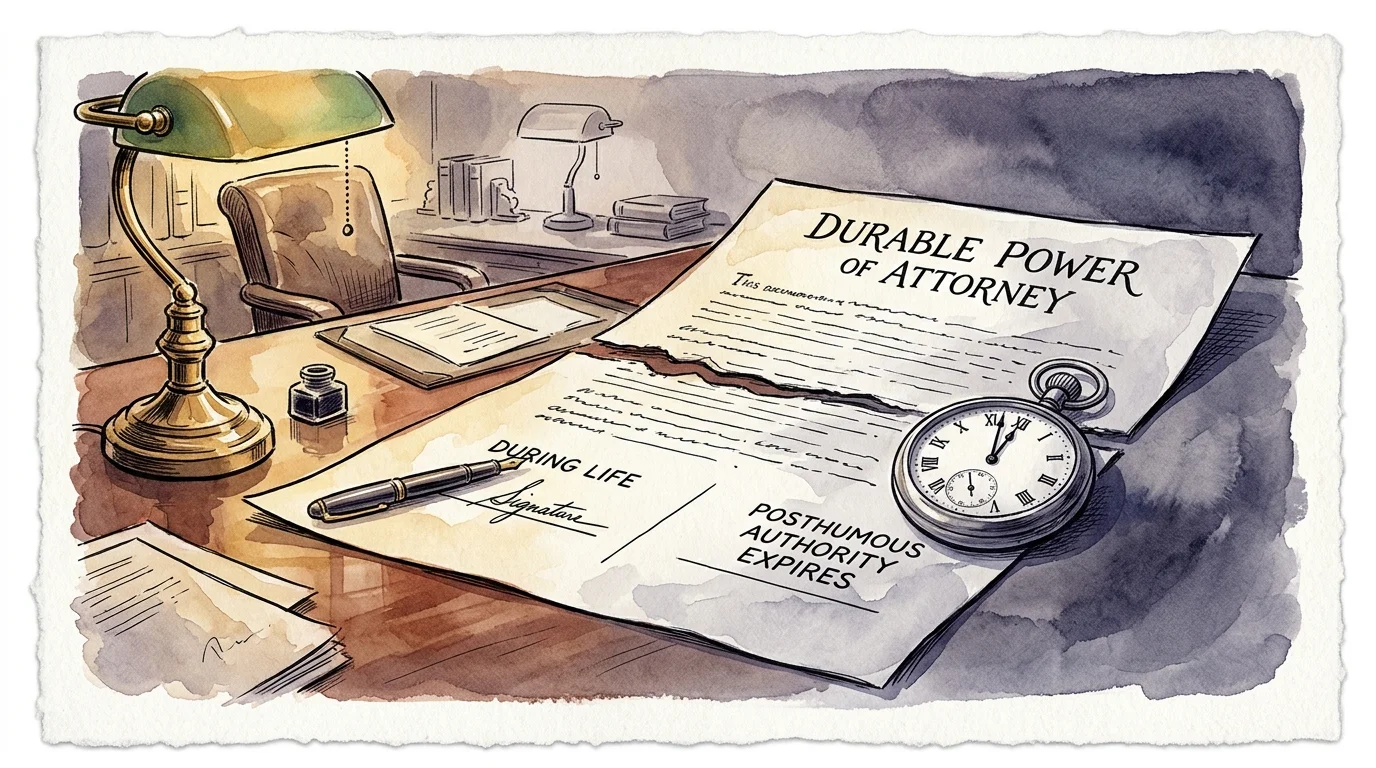
Many seniors believe granting a Power of Attorney (POA) allows an adult child or trusted friend to access money after death. Under American agency law in all 50 states, this assumption is completely incorrect.
A financial power of attorney grants legal authority to manage your money only while you remain alive. The document terminates permanently the exact moment you pass away.
An agent who signs checks or withdraws funds after your death commits unlawful financial transactions. Even well-meaning relatives attempting to pay hospital invoices or funeral deposits can face civil or criminal penalties.
The Consumer Financial Protection Bureau warns families that banks reject POA documentation instantly once death occurs. You must implement independent legal mechanisms to transfer funds after your lifetime.
The 10-Day Grace Period: Uniform Commercial Code Section 4-405
State banking statutes offer a narrow exception for transactions already in progress before a depositor dies. Section 4-405 of the Uniform Commercial Code (UCC) governs these specific transactions.
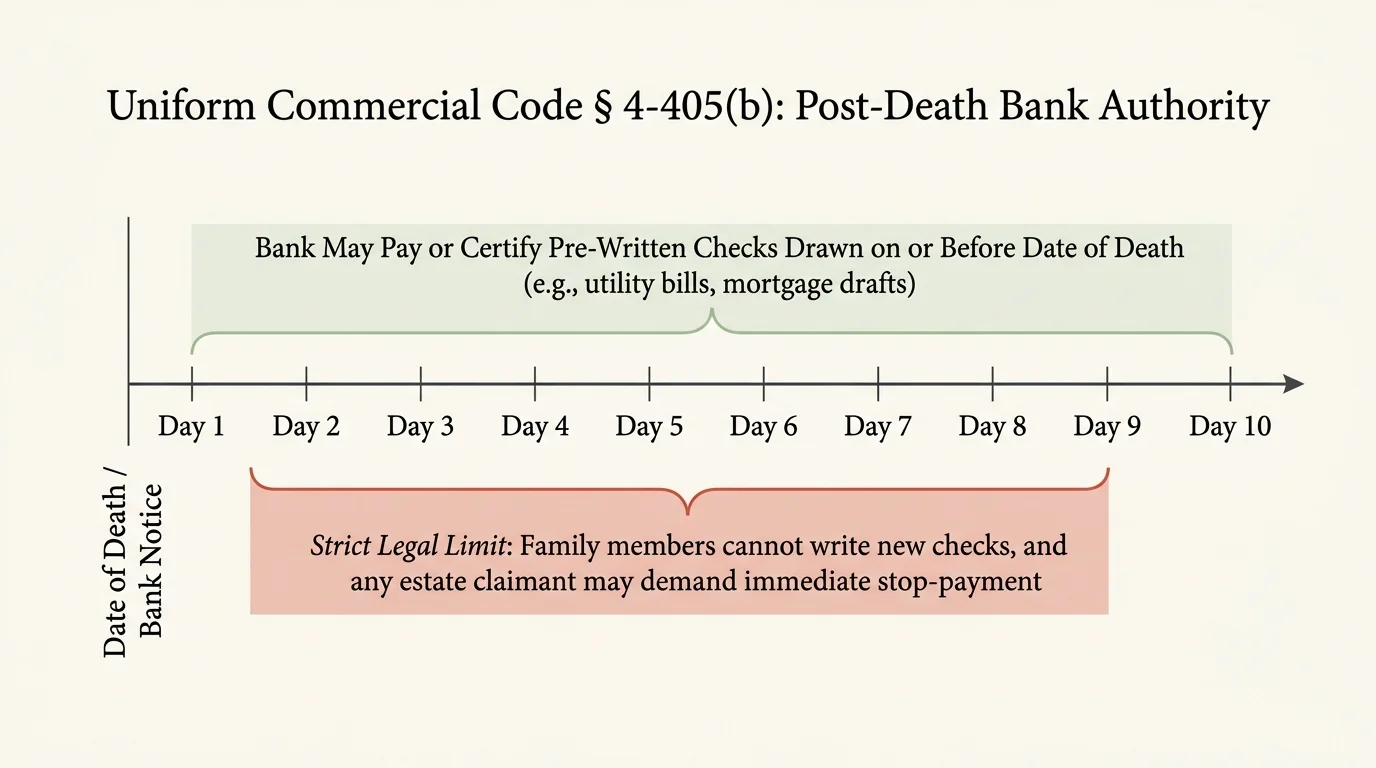
Under UCC § 4-405(b), a bank may pay or certify checks drawn on or before your date of death for up to 10 calendar days. This rule applies even after the bank learns of your death.
The 10-day grace period keeps vital household operations running smoothly. It prevents immediate utility shutoffs and honors mortgage checks written shortly before your passing.
However, this provision contains an important legal restriction. Any person claiming an interest in your estate can demand that the bank stop payment on outstanding checks immediately.
The 10-day window never permits family members to write fresh checks or make ATM withdrawals. It serves only as a temporary buffer to clear legitimate, existing paper transactions.
Payable on Death (POD) and Transfer on Death (TOD) Accounts
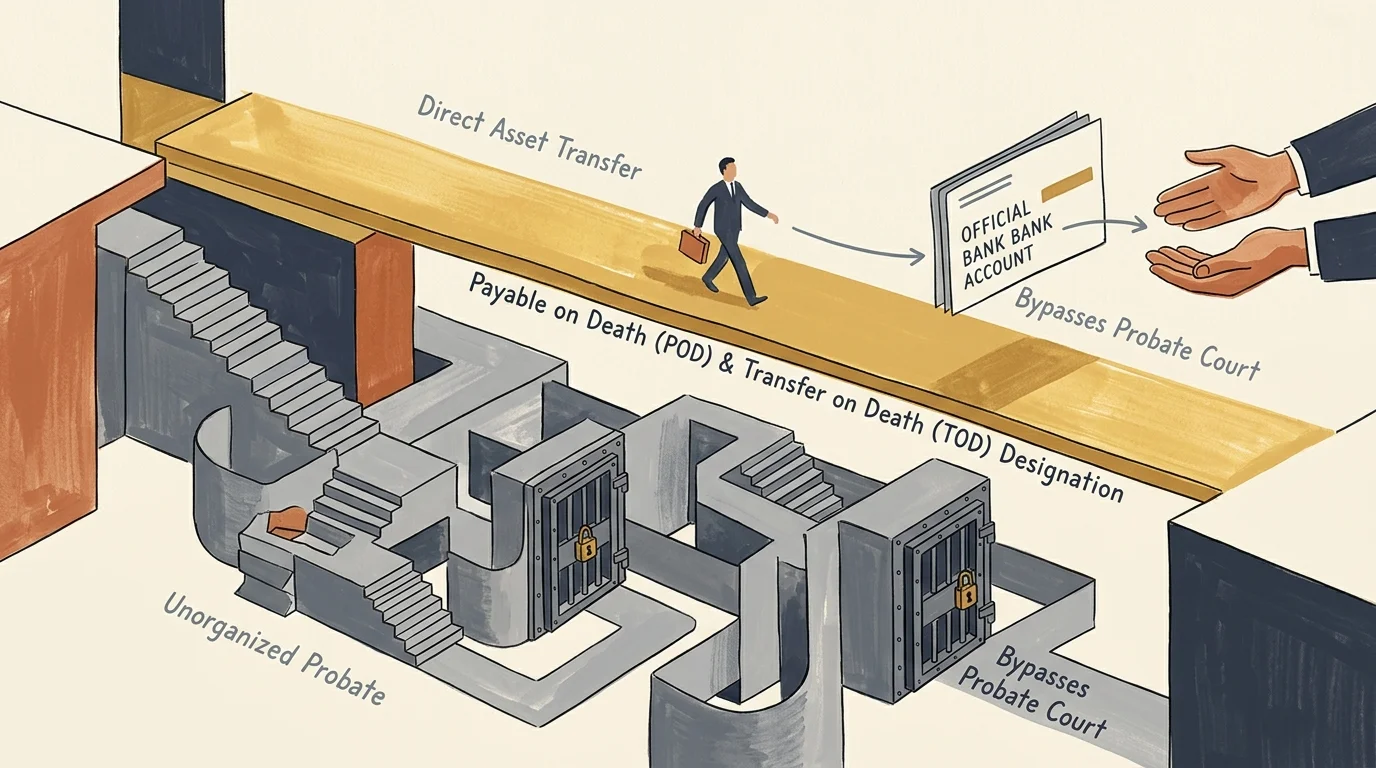
Payable on Death (POD) designations provide the fastest, simplest method to keep your cash flowing. Banks also refer to these arrangements as Totten trusts or In Trust For (ITF) designations.
Adding a POD beneficiary to a checking or savings account costs nothing and takes only minutes. While living, you retain total ownership, exclusive spending rights, and complete privacy over your balances.
Your chosen beneficiary possesses zero ownership rights while you are alive. They cannot see account balances, withdraw funds, or access your transaction histories.
Upon your passing, ownership transfers directly to the beneficiary outside the probate court system. The named individual visits the branch with a certified death certificate and government-issued identification to claim the balance.
Updated FDIC Insurance Rules for POD and Trust Accounts
The Federal Deposit Insurance Corporation implemented updated deposit rules under 12 C.F.R. § 330.10. Depositors should understand these limits when naming multiple beneficiaries.
The FDIC merged informal revocable trusts, such as POD accounts, with formal living trusts into a single insurance category. The agency insures up to $250,000 per unique beneficiary, up to a maximum of five beneficiaries.
This coverage allows a single depositor to secure up to $1,250,000 in FDIC coverage per financial institution across all trust accounts. Naming more than five beneficiaries does not increase your maximum deposit insurance limit.
Joint Accounts: Survivorship Rights vs. Convenience Signers
Opening a joint account with a spouse or child represents another common strategy to maintain liquidity. However, the exact phrasing on your signature card dictates whether the account freezes.
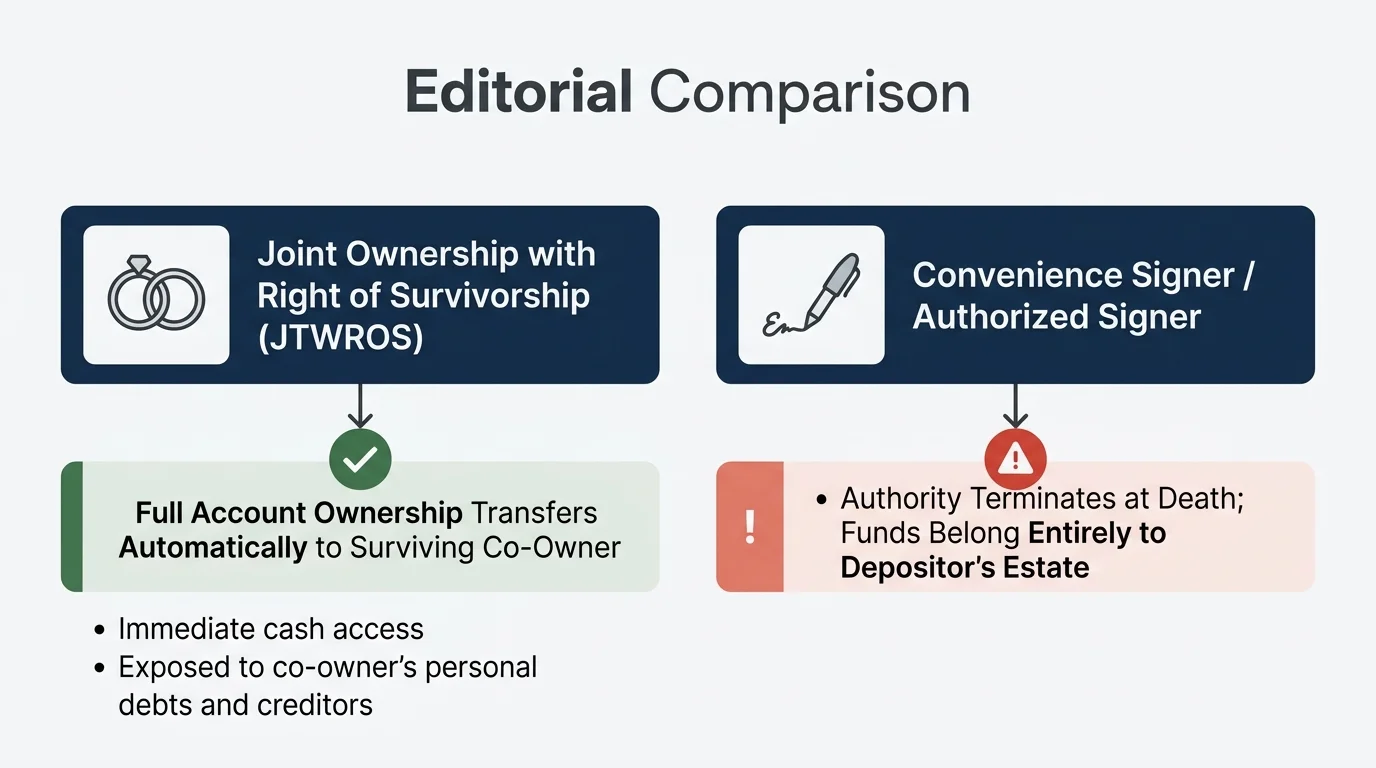
Joint Tenancy with Right of Survivorship (JTWROS) allows surviving owners to keep using the account uninterrupted. The surviving co-owner retains full legal access to the balance without going through probate court.
In contrast, many seniors unintentionally open “convenience accounts” or add family members as “authorized signers.” In these setups, the additional signer operates solely as an administrative helper.
An authorized signer’s legal authority vanishes the instant the primary account holder passes away. The bank freezes the account immediately, requiring probate clearance to distribute the remaining funds.
Adding an adult child as a co-owner on a JTWROS account also carries serious financial risks. The account assets become vulnerable to your child’s creditors, divorce proceedings, and civil lawsuits.
The Internal Revenue Service may also treat the initial balance transfer as a reportable gift. You must weigh these potential liabilities before adding non-spousal co-owners to personal accounts.

Comparing Account Structures for Estate Access
Different bank account ownership structures provide varying degrees of probate protection, asset security, and liquidity. Review how these arrangements perform when an account holder dies.
| Account Structure | Probate Required? | Immediate Access at Death? | Key Advantages | Primary Drawbacks or Risks |
|---|---|---|---|---|
| Single-Owner Account (No POD) | Yes | No (Frozen immediately) | Complete personal control; zero exposure to outside creditors. | Funds remain locked for months; court fees and delays. |
| Payable on Death (POD/TOD) | No | Yes (Within days of presenting death certificate) | Free to establish; bypasses probate; beneficiary has no access while you live. | Does not manage incapacity; contingent beneficiaries require regular updating. |
| Joint Account (JTWROS) | No | Yes (Uninterrupted access) | Surviving owner writes checks and pays bills without presentation of court letters. | Exposes funds to co-owner creditors, liens, and divorce claims. |
| Convenience / Authorized Signer | Yes | No (Authority ends at death) | Allows third-party bill paying during life without gifting ownership. | Account freezes at death; funds must clear probate court. |
| Revocable Living Trust Account | No | Yes (Successor trustee steps in) | Comprehensive control; seamless transition; handles incapacity gracefully. | Requires legal setup costs and retitling of bank accounts. |
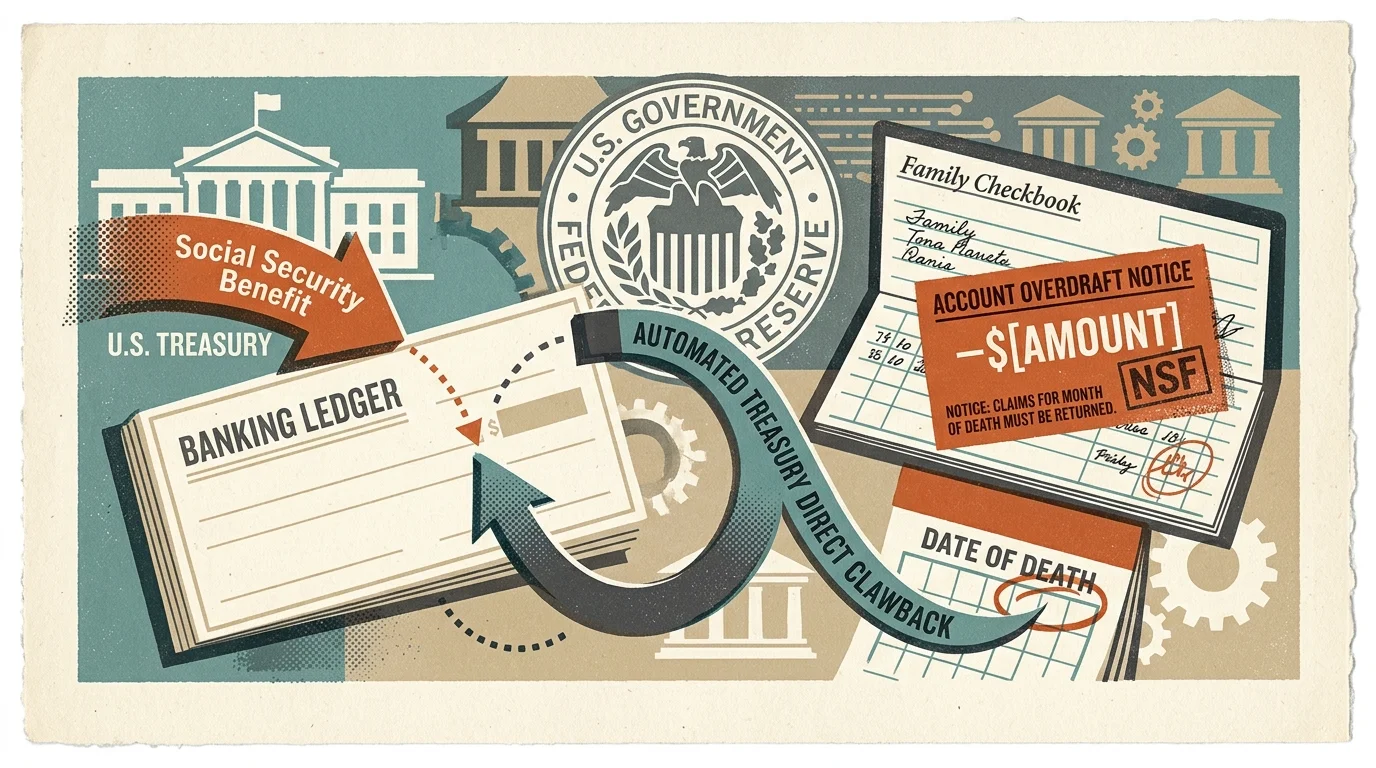
The Social Security Direct Deposit Clawback Hazard
Social Security benefit payments present a widespread hazard for surviving bank accounts. Misunderstanding federal rules can trigger automated reversals that overdraft your balances.
Under Section 202 of the Social Security Act, a recipient must survive the entire calendar month to earn that month’s payment. Because the agency pays benefits in arrears, July checks deposited in August belong to the July entitlement period.
If an individual passes away on August 28, they did not survive the entire month of August. The benefit deposited in September must be returned to the federal government in full.
The U.S. Treasury initiates an electronic clawback through the Automated Clearing House (ACH) network to reclaim unearned funds. If surviving relatives spend those funds, the clawback creates severe overdraft fees or administrative account freezes.
Surviving spouses should also know about the Title II Social Security lump-sum death benefit. The SSA provides a one-time cash payment of $255 to qualifying surviving spouses or dependent children.

Revocable Living Trusts: The Complete Solution
A revocable living trust offers robust protection against account freezing while keeping financial affairs completely private. It covers your assets during lifetime incapacity as well as after death.
You create the trust agreement and retitle your checking and savings accounts into the name of the trust. You serve as the primary trustee, maintaining full daily control over your deposits.
You designate a trusted successor trustee, such as an adult child or corporate fiduciary, to manage assets later. If you become incapacitated or die, the successor trustee assumes immediate legal authority.
The successor trustee presents the trust agreement and death certificate to the bank to gain immediate account access. The funds transfer without probate delays, court hearings, or public record filings.
“A revocable living trust is designed to keep your family out of probate court and ensure immediate access to your money when you are no longer here.” — Suze Orman, Personal Finance Author and Educator
Trust accounts also prevent complications when dealing with multiple beneficiaries or minor grandchildren. Your trust instructions govern precisely when and how successor trustees distribute funds.

Actionable Steps to Keep Cash Flowing to Your Family
You can safeguard your household finances by taking structured, proactive measures across your financial institutions. Complete these essential steps to prevent your family from experiencing a financial freeze.
- Conduct a Complete Account Inventory: List every checking, savings, money market, and certificate of deposit account across all banking institutions. Document branch locations and account numbers.
- Add POD Designations Everywhere: Request Payable on Death forms for every single-owner deposit account. Confirm that your bank records primary and contingent beneficiaries accurately.
- Verify Joint Account Classifications: Review your signature cards with branch managers to confirm true Right of Survivorship status. Upgrade convenience accounts if your co-owner requires uninterrupted survivorship access.
- Establish a Dedicated Transition Fund: Maintain an accessible secondary account with a trusted joint owner or clear POD designation. Keep two to three months of living expenses liquid.
- Secure Certified Death Certificates Early: Advise your family that institutions require original certified death certificates to release POD balances. Ordering 10 to 12 copies speeds up simultaneous asset transfers.
- Audit Automatic Debit Authorizations: Review all recurring utility, property tax, and insurance payments tied to your primary checking account. Ensure secondary owners know how to transfer essential billings quickly.
Common Mistakes to Avoid
Many well-intentioned seniors make administrative errors that unintentionally tie up liquid assets. Recognizing these hazards helps you avoid expensive estate pitfalls.
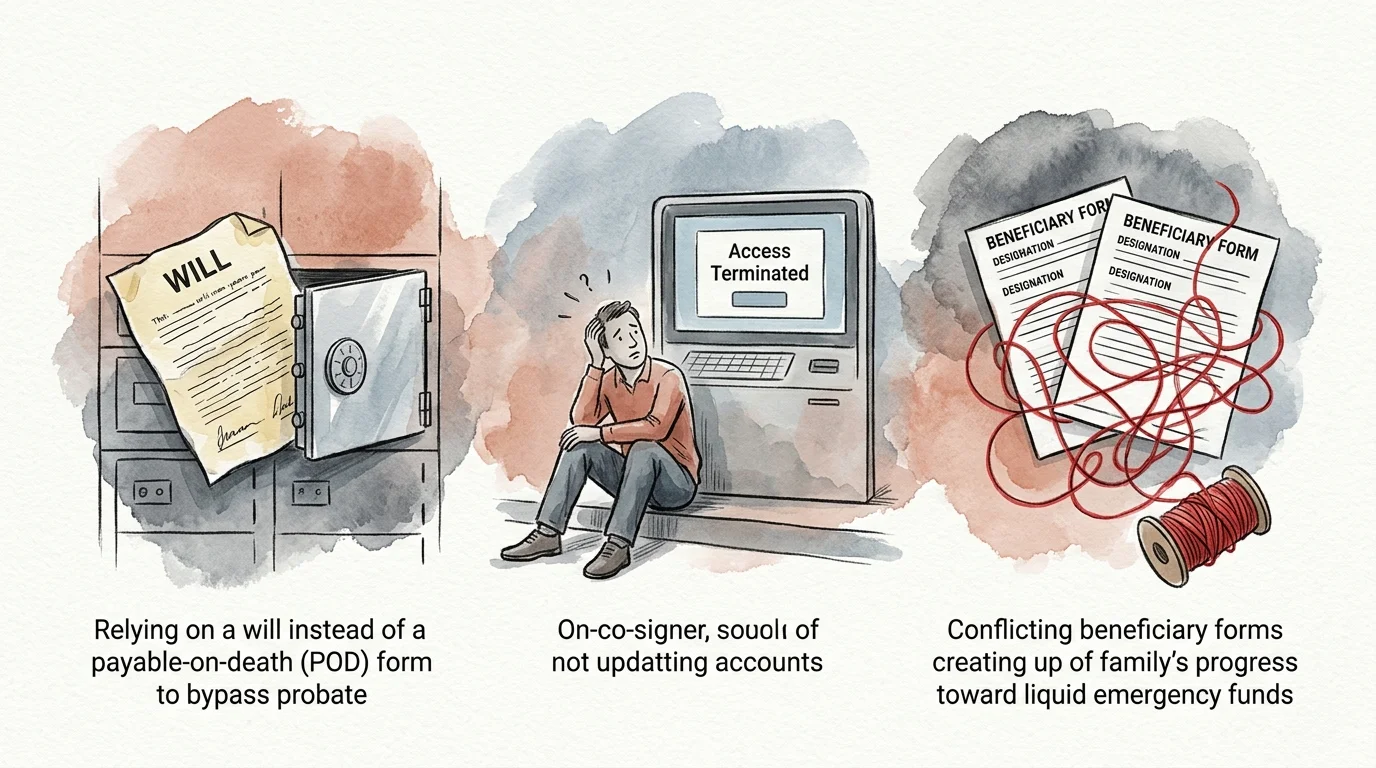
The first major mistake is relying on a last will and testament to govern daily checking accounts. A will does not provide immediate liquidity; it acts as an instruction letter to the probate judge.
Assets distributed through a will remain inaccessible until the court officially appoints an executor. That legal probate process routinely consumes four to twelve months depending on your state.
Another frequent error involves naming a single individual as POD beneficiary while intending them to split funds among siblings. Legally, the named beneficiary owns 100% of the money and has no obligation to share it.
If that beneficiary shares the money voluntarily, the IRS may classify those distributions as taxable gifts. Always name all intended recipients directly as percentage-based beneficiaries on the bank’s official paperwork.
Seniors also frequently forget to update POD designations following divorces, marriages, or the death of a beneficiary. An outdated beneficiary form overrides instructions left in your will or living trust.
According to advocacy guidance from AARP, conducting an annual beneficiary checkup prevents outdated documents from routing money to former spouses or deceased relatives.

Finding the Right Advisor
Navigating banking rules, trust documentation, and estate taxes can become complicated as family dynamics shift. Consulting a qualified professional ensures your plans remain legally sound and operationally effective.
You should consider seeking expert legal or financial counsel in several distinct situations:
- Blended Family Dynamics: If you have children from previous marriages, an estate planning attorney helps structure trust accounts to prevent accidental disinheritance.
- High Deposit Balances: If your cash reserves exceed FDIC insurance thresholds, a fee-only Certified Financial Planner (CFP) can optimize multi-institution coverage.
- Beneficiaries Receiving Government Assistance: If a family member relies on Medicaid or Supplemental Security Income, direct POD cash transfers can disqualify their benefits. A special needs attorney can establish a protective supplemental trust.
- Out-of-State Real Estate and Accounts: If you own property or bank accounts in multiple states, an estate attorney prevents multi-state probate complications.
Frequently Asked Questions
Can a bank freeze a joint account if one co-owner dies?
If the account is titled Joint Tenancy with Right of Survivorship (JTWROS), the bank will not freeze the balance. The surviving owner maintains continuous access to write checks and withdraw funds.
However, if the account lacks survivorship rights, the bank may freeze the deceased owner’s share. The institution must hold those funds until the probate court verifies the rightful distribution.
How quickly can a POD beneficiary withdraw funds?
A Payable on Death beneficiary can usually collect funds within a few business days. The process requires visiting the financial institution with a certified death certificate and valid government identification.
The beneficiary must complete a brief distribution application and tax certification form. The bank then issues a cashier’s check or transfers the money into a new account.
Does a will override a Payable on Death beneficiary?
No, a will never overrides a valid Payable on Death beneficiary designation on a deposit account. Bank beneficiary contracts take absolute legal precedence over instructions written in a will.
Even if your will leaves all property to your daughter, a bank account with your son listed as POD belongs entirely to your son.
What happens to pending checks when an account holder passes away?
Under UCC § 4-405, banks may continue paying checks drawn before the date of death for up to 10 calendar days. This grace period operates only until an interested party requests an immediate stop payment.
After the 10-day period expires or the bank completes an administrative freeze, all pending checks bounce. Unpaid merchants may then demand payment from the formal probate estate.
Next Steps for Securing Your Accounts
Protecting your liquid finances requires only an hour of dedicated organization at your local bank branch. Contact your financial institutions today to confirm the exact titling and beneficiary registrations on every account.
This is educational content based on general financial principles for seniors. Individual results vary based on your situation. Always verify current benefit amounts, tax rules, and program eligibility with official government sources.
Last updated: February 2026. Benefit amounts, tax rules, and program details change annually—verify current figures with official government sources.









Leave a Reply