

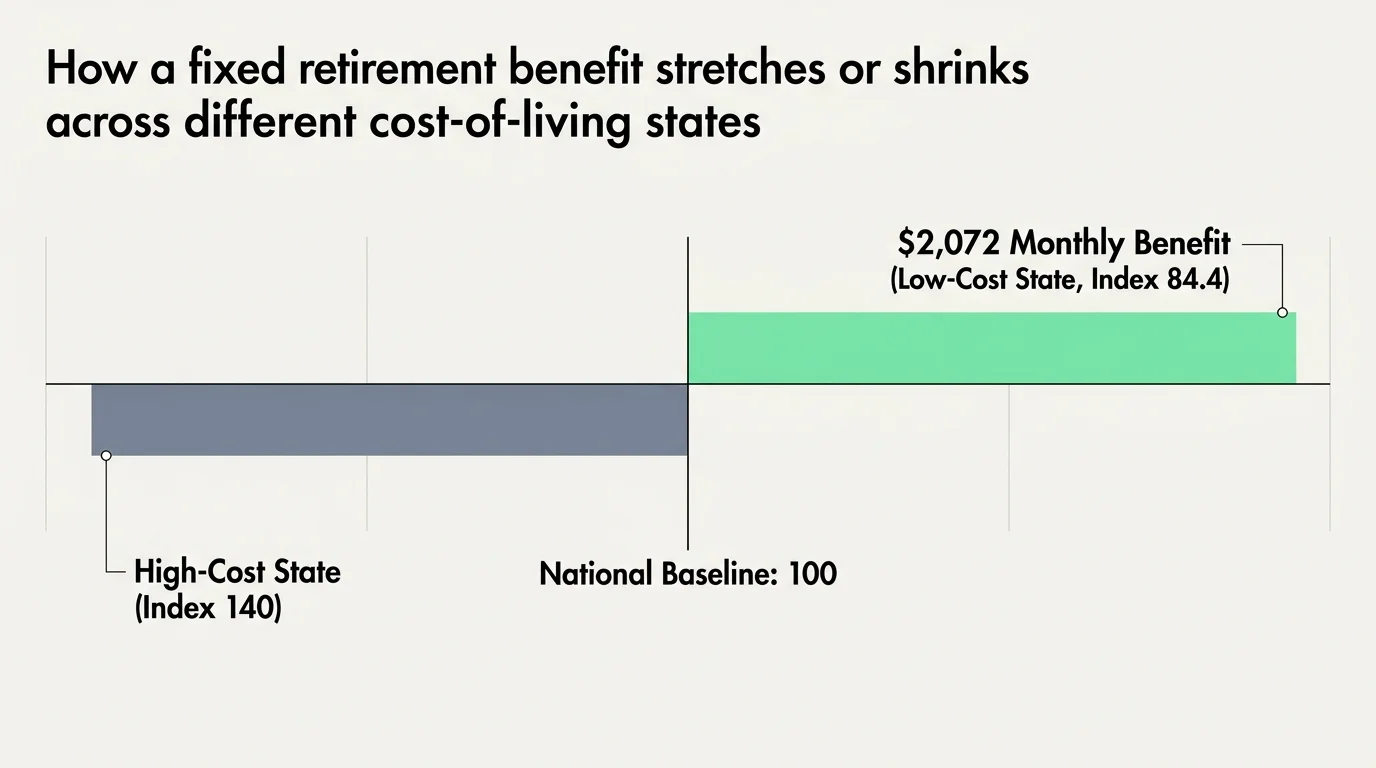
A Social Security cost-of-living adjustment (COLA) gives your monthly income a welcome boost, but local prices ultimately determine how far that money goes. In 2026, the Social Security Administration set a 2.8% COLA—raising the average monthly benefit for retired workers to $2,072. While inflation continues to pressure household budgets, moving your primary residence or planning a strategic retirement move to a low-cost state can stretch your purchasing power by up to 15% or more. Relocating to a state with affordable housing, lower grocery bills, and retiree-friendly tax rules ensures your hard-earned benefits cover essential expenses without depleting your retirement savings.
How COLA and Local Purchasing Power Impact Your Retirement
Every year, the Social Security Administration adjusts benefit checks to keep pace with inflation through a Cost-of-Living Adjustment. For 2026, beneficiaries received a 2.8% increase; this follows the 2.5% bump in 2025, which raised average retirement benefits to approximately $1,976 per month according to the Social Security Administration. While these annual increases help cushion the blow of rising consumer prices, they do not apply uniformly to your local expenses.
Your actual purchasing power depends heavily on where you unpack your bags. A monthly check of $2,072 covers basic living expenses far differently in Oklahoma than it does in California or Hawaii. In high-cost states, housing payments, localized sales taxes, and healthcare fees rapidly consume your raise. Conversely, living in a state with a Cost of Living Index significantly below the national baseline of 100 allows your standard COLA adjustment to function like a substantial raise.
According to economic data compiled by the Missouri Economic Research and Information Center (MERIC), regional price parities show a dramatic spread across the country. By aligning your living circumstances with favorable local economies and low-tax states, you maximize every dollar issued by the federal government.

The 10 Most Affordable States for Your Social Security Check
The following ten states offer the best combination of low overall cost of living, affordable housing, and favorable tax policies for seniors relying on Social Security and retirement distributions.
1. Oklahoma
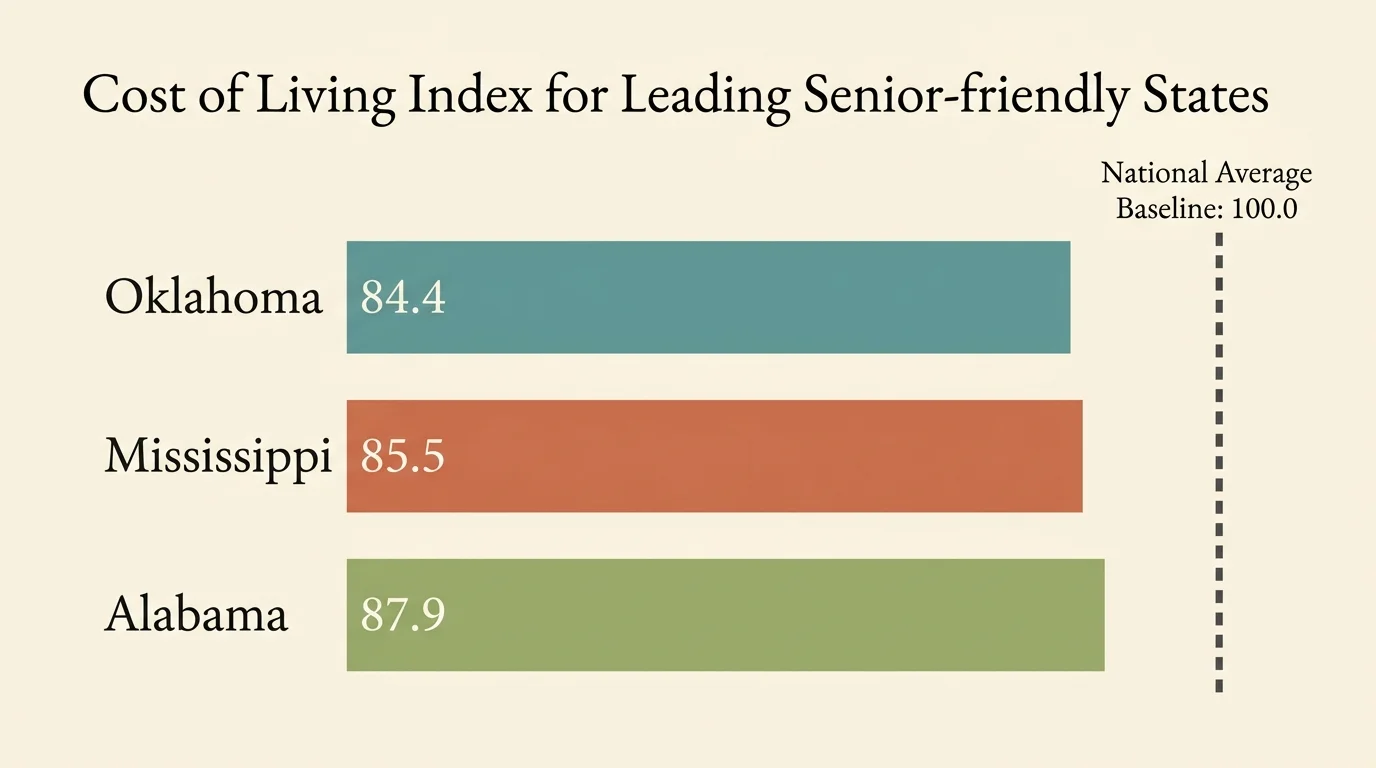
Oklahoma tops the list with an impressive Cost of Living Index of 84.4, meaning basic living expenses run 15.6% below the national average. Housing costs in the Sooner State are among the lowest in the nation; retirees often find quality single-family homes or modest maintenance-free properties at a fraction of national price benchmarks.
Additionally, Oklahoma does not tax Social Security benefits. The state also offers generous exemptions on public and private pension distributions, ensuring that your monthly COLA check retains maximum purchasing power when paying for groceries, utilities, and routine healthcare services.
2. Mississippi
Mississippi carries a cost-of-living score of 85.5, securing its spot as one of the most budget-friendly destinations for seniors on fixed incomes. Daily necessities like food, gas, and residential utilities cost considerably less than the national average.
From a tax perspective, Mississippi is exceptional for retirees. The state exempts all qualified retirement income from state personal income tax—including Social Security checks, IRA withdrawals, 401(k) distributions, and pension payments. This blanket exemption helps keep your overall tax liability exceptionally low throughout your golden years.
3. Alabama
Alabama offers an inviting mix of warm weather and affordability, featuring a cost-of-living benchmark of 87.9. The state boasts some of the lowest property tax rates in the United States, which protects senior homeowners from escalating housing expenses over time.
Social Security income is completely exempt from state taxation in Alabama. Furthermore, traditional defined-benefit pensions from government and private employers are tax-free at the state level. These tax breaks leave more cash in your wallet for leisure, medical care, and home upkeep.
4. West Virginia
West Virginia presents an attractive cost profile with an index score of 88.1. Senior citizens moving to the Mountain State enjoy remarkably affordable real estate and low baseline living costs across both rural communities and small cities.
West Virginia officially completed its multi-year phase-out of state income taxes on Social Security benefits. This milestone means that retirees no longer pay state income tax on their Social Security checks, allowing your entire federal COLA increase to go directly toward your living expenses.
5. Kansas
Kansas holds a cost-of-living index of 88.9, providing solid relief on everyday consumer goods, transportation, and health expenses. Housing options throughout the state remain accessible for retirees seeking to downsize or purchase a home outright using equity from a prior property.
The state has progressively relaxed its income tax rules for older residents. Kansas exempts Social Security benefits from state income tax for taxpayers whose federal adjusted gross income falls below established income thresholds, making it a competitive option for moderate-income retirees.
6. Missouri
With an index rating of 89.0, Missouri combines affordable central-U.S. living with robust medical networks and stable housing markets. Utilities and transportation costs run significantly below national standards across the state.
Missouri fully exempts Social Security retirement benefits from state income taxes for eligible taxpayers. By eliminating state taxation on benefit checks, Missouri ensures that federal COLA increases directly support your personal household budget rather than administrative tax coffers.
7. Arkansas
Arkansas features a cost-of-living rating of 89.3, appealing to seniors who enjoy outdoor recreation, temperate seasons, and lower overall overhead. Home prices and rental rates remain well below national midpoints.
The Natural State does not tax Social Security benefits. Furthermore, Arkansas grants an income tax exemption of up to $6,000 for employer-provided pensions and individual retirement account distributions, reducing tax friction for retirees drawing income from multiple sources.
8. Tennessee
Tennessee registers a cost-of-living index of 90.3 while offering a major tax advantage: it levies no state personal income tax whatsoever. This means your Social Security income, pension distributions, interest, and capital gains face zero state income tax charges.
Although sales taxes in Tennessee are slightly higher than in neighboring states, the lack of an income tax—combined with reasonable real estate pricing outside major urban centers—makes the state a prime magnet for seniors seeking long-term purchasing power.
9. Iowa
Iowa ties with Tennessee on overall cost of living at 90.3. The state has transformed into a highly friendly tax jurisdiction for older Americans after enacting comprehensive retirement tax reform legislation.
Iowa completely exempts Social Security benefits, private pensions, traditional IRA distributions, and 401(k) withdrawals from state income tax for residents age 55 and older. This comprehensive tax shield protects almost every major source of fixed retirement income.
10. Indiana
Indiana rounds out the top ten with a cost-of-living index score of 90.6. The Hoosier State maintains stable home values, modest utility expenses, and strong civic infrastructure in suburban and rural areas alike.
Indiana does not tax Social Security benefits at the state level. Additionally, the state enforces a low, flat personal income tax rate on other taxable income streams, helping retirees project their annual living expenses with clarity and confidence.
State Tax Rules: Where Does Your Social Security Get Taxed?
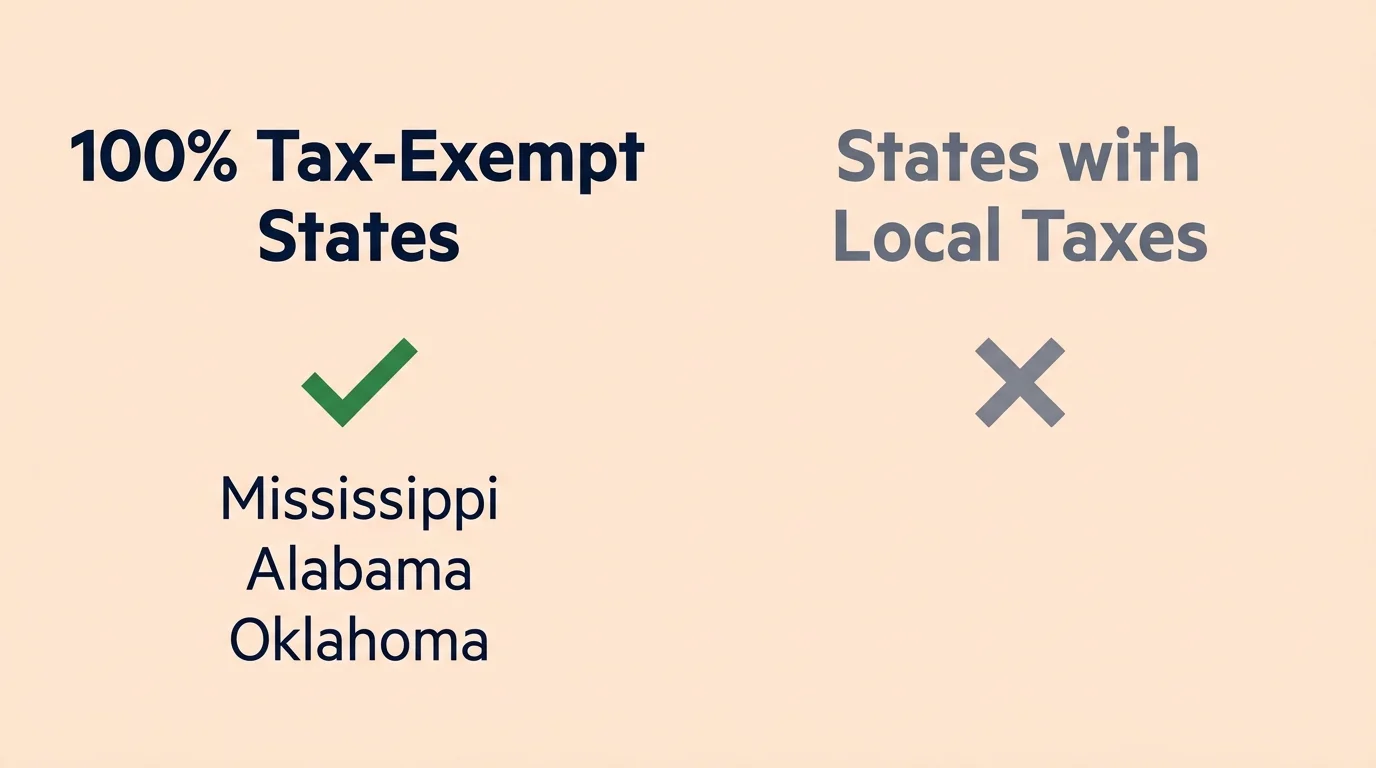
State taxes can quietly erode the benefits gained from an annual Social Security COLA raise. In 2026, 42 states and the District of Columbia do not tax Social Security benefits. Only 8 states continue to levy state-level income taxes on Social Security income: Colorado, Connecticut, Minnesota, Montana, New Mexico, Rhode Island, Utah, and Vermont. Most of these eight states offer income-based exemptions, but retirees living in these regions must carefully track state income thresholds.
At the federal level, rules set by the Internal Revenue Service (IRS) determine how much of your benefit is taxable. If your “combined income” (adjusted gross income + nontaxable interest + half of your Social Security benefits) exceeds specific thresholds, you must pay federal income tax on a portion of your benefits:
- Single filers: Combined income between $25,000 and $34,000 may trigger taxes on up to 50% of Social Security benefits. Above $34,000, up to 85% of benefits become taxable.
- Married couples filing jointly: Combined income between $32,000 and $44,000 may trigger taxes on up to 50% of benefits. Above $44,000, up to 85% of benefits become subject to federal income tax.
Under temporary tax legislation effective through 2028, eligible taxpayers aged 65 and older can also claim a federal bonus deduction of up to $6,000 in addition to the standard tax deduction. This deduction reduces your overall taxable income, helping to protect more of your Social Security COLA bump from federal taxes.
Purchasing Power Comparison Across Top Senior States
To see how far your income stretches across these low-cost destinations, review the side-by-side comparison below based on recent MERIC cost-of-living index data and current state tax structures.
| State | Cost of Living Index (US Avg = 100) | Social Security Taxed by State? | Key Senior Tax Advantage |
|---|---|---|---|
| Oklahoma | 84.4 | No | Lowest overall housing and living costs in the nation. |
| Mississippi | 85.5 | No | Fully exempts all qualified pension and IRA income. |
| Alabama | 87.9 | No | Exceptionally low property tax burden for homeowners. |
| West Virginia | 88.1 | No | Social Security income tax completely phased out. |
| Kansas | 88.9 | No (for most filers) | Income-based exemptions protect Social Security checks. |
| Missouri | 89.0 | No | Full tax exemption for Social Security benefits. |
| Arkansas | 89.3 | No | Exempts up to $6,000 of private retirement pensions. |
| Tennessee | 90.3 | No | Zero state personal income tax on all earnings. |
| Iowa | 90.3 | No | Exempts retirement income for residents 55+. |
| Indiana | 90.6 | No | Low flat state income tax on non-exempt income. |
Common Mistakes to Avoid When Relocating in Retirement
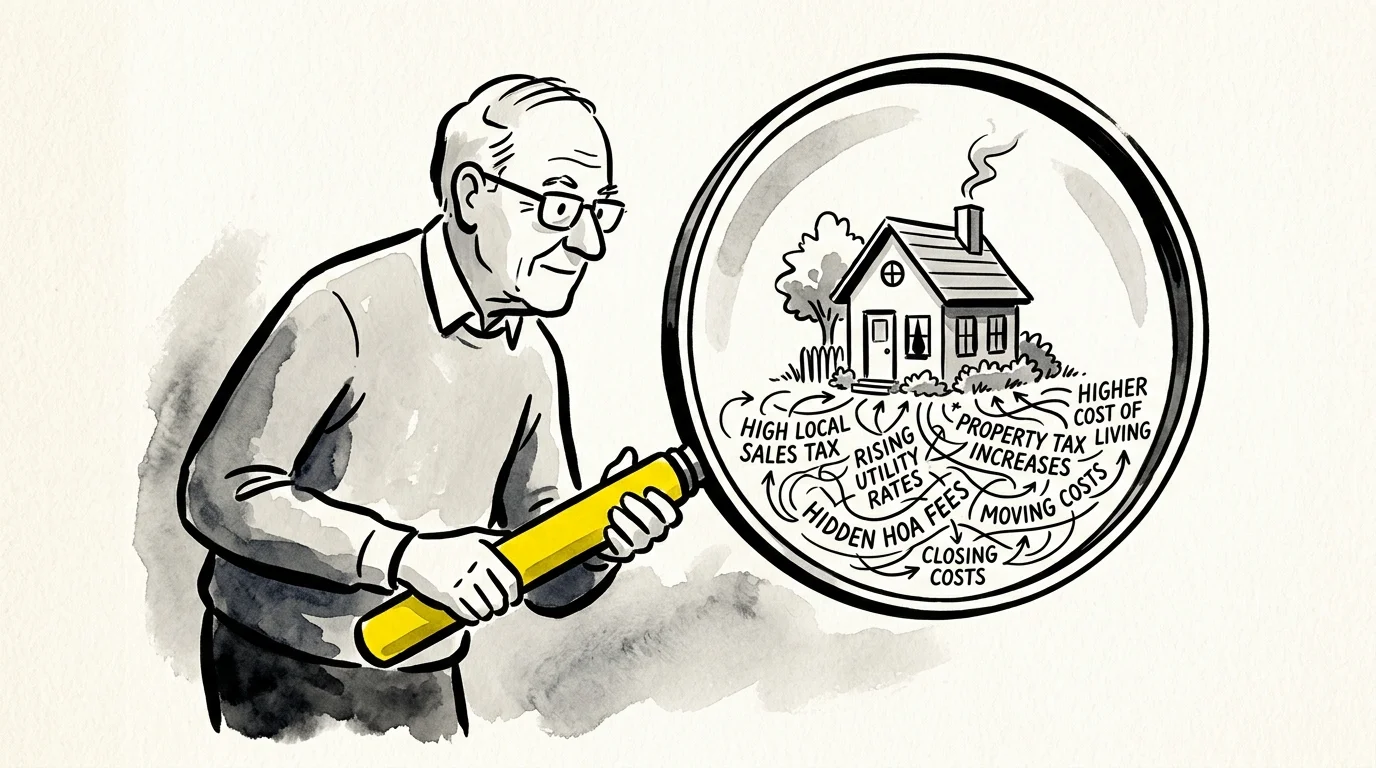
Moving to a lower-cost state can maximize your retirement income, but moving without thorough research can trigger unexpected expenses. Avoid these four common pitfalls when planning a move:
- Ignoring sales and property tax tradeoffs: A state without income tax might offset its revenue needs through higher local sales taxes or elevated property assessments. Always calculate your total tax footprint—including sales, property, and vehicle taxes—before making a decision.
- Overlooking healthcare networks and specialists: Low cost of living often coincides with rural or medically underserved areas. Verify that prospective communities offer adequate medical infrastructure, primary care doctors, and nearby hospital networks accepted by Original Medicare or your Medicare Advantage plan. You can research local coverage options using official tools on Medicare.gov.
- Underestimating moving and housing transition costs: Transporting belongings, selling a long-term home, paying agent commissions, and setting up a new household can cost thousands of dollars. Ensure that your projected long-term savings comfortably exceed these initial relocation expenses.
- Forgetting long-term support systems: Moving far from family, long-time friends, or established social networks can increase isolation over time. Consider the financial and personal cost of traveling back to visit loved ones or hiring in-home support services down the road. Local resources cataloged on the federal Eldercare Locator can help you evaluate community support in prospective cities.
“Making your money stretch in retirement isn’t just about cutting back; it’s about choosing an environment where every dollar works twice as hard.” — Jean Chatzky, Financial Journalist and Author

Finding the Right Advisor
Deciding to relocate or restructure your finances in retirement involves complex tax calculations, estate updates, and benefit coordination. Working with a qualified professional can protect your lifetime savings. Consider seeking professional guidance in the following scenarios:
- Cross-state tax planning: If you own real estate in multiple states or plan to move midway through the tax year, a Certified Public Accountant (CPA) or fee-only financial planner can prevent double taxation and ensure compliance with residency laws.
- Optimizing Social Security claiming strategies: Choosing when to claim benefits drastically affects your base income before COLA math even applies. An advisor can evaluate how spousal benefits, survivor rights, and delayed retirement credits interact with your moving strategy.
- Pension and tax-deferred withdrawal sequencing: Drawing funds from traditional IRAs, Roth accounts, and pensions in the wrong order can inadvertently push you into higher federal income tax brackets or trigger Medicare Part B income-related monthly adjustment amounts (IRMAA).
- Updating estate plans across state lines: Powers of attorney, healthcare directives, and living trusts must comply with the legal statutes of your new home state. A qualified elder law attorney ensures your legal documents remain valid after moving.
Frequently Asked Questions
Does the Social Security COLA increase change depending on where I live?
No. The Social Security Cost-of-Living Adjustment is calculated at the federal level based on national consumer price index data. Every beneficiary receives the exact same percentage increase regardless of state or city residence. However, local living costs determine how much purchasing power that raise actually provides.
How do I know if my Social Security benefit will be taxed at the federal level?
Your federal tax liability depends on your combined income, which equals your adjusted gross income plus non-taxable interest plus half of your annual Social Security benefits. If this total exceeds $25,000 for single filers or $32,000 for married couples filing jointly, up to 50% or 85% of your benefit may be subject to federal income tax.
Can a state tax my Social Security benefit if I move away?
No. Under federal law, states cannot tax the retirement income or Social Security benefits of former residents. Once you establish legal domicile and residency in a new state, only your new state of residence (and the federal government) holds taxing authority over your retirement streams.
What resources can help low-income seniors evaluate state assistance programs?
Seniors with limited income can research state-specific assistance programs, Medicare Savings Programs, and food subsidies through official government channels like Benefits.gov or non-profit support tools hosted by the National Council on Aging (NCOA).
Taking Strategic Steps for Your Retirement Security
Stretching your Social Security COLA check isn’t just about waiting for the federal government’s annual announcement. By evaluating your geographic expenses, understanding local tax exemptions, and keeping housing overhead low, you take direct control over your retirement budget. Whether you decide to move across the country or make targeted lifestyle adjustments where you currently live, aligning your income with affordable regional markets ensures long-term financial security.
The information in this guide is meant for educational purposes. Your specific circumstances—including income, benefits, tax situation, and health needs—may require different approaches. When in doubt, consult a licensed financial advisor or tax professional.
Last updated: February 2026. Benefit amounts, tax rules, and program details change annually—verify current figures with official government sources.









Leave a Reply