

If you plan to move into a high-quality retirement community over the next few years, waiting until you feel completely ready could leave you stuck on a multi-year waiting list. A historic surge in retiring Americans, paired with an unprecedented drop in senior housing construction, has tightened capacity across the country. According to industry data from the National Investment Center for Seniors Housing & Care, national occupancy rates reached nearly 90 percent in 2026, with premier communities filling up even faster. Securing your spot now ensures you retain control over your health care, location, and lifestyle while avoiding sudden housing panics down the road.
The Demographic Surge Driving Retirement Community Waitlists
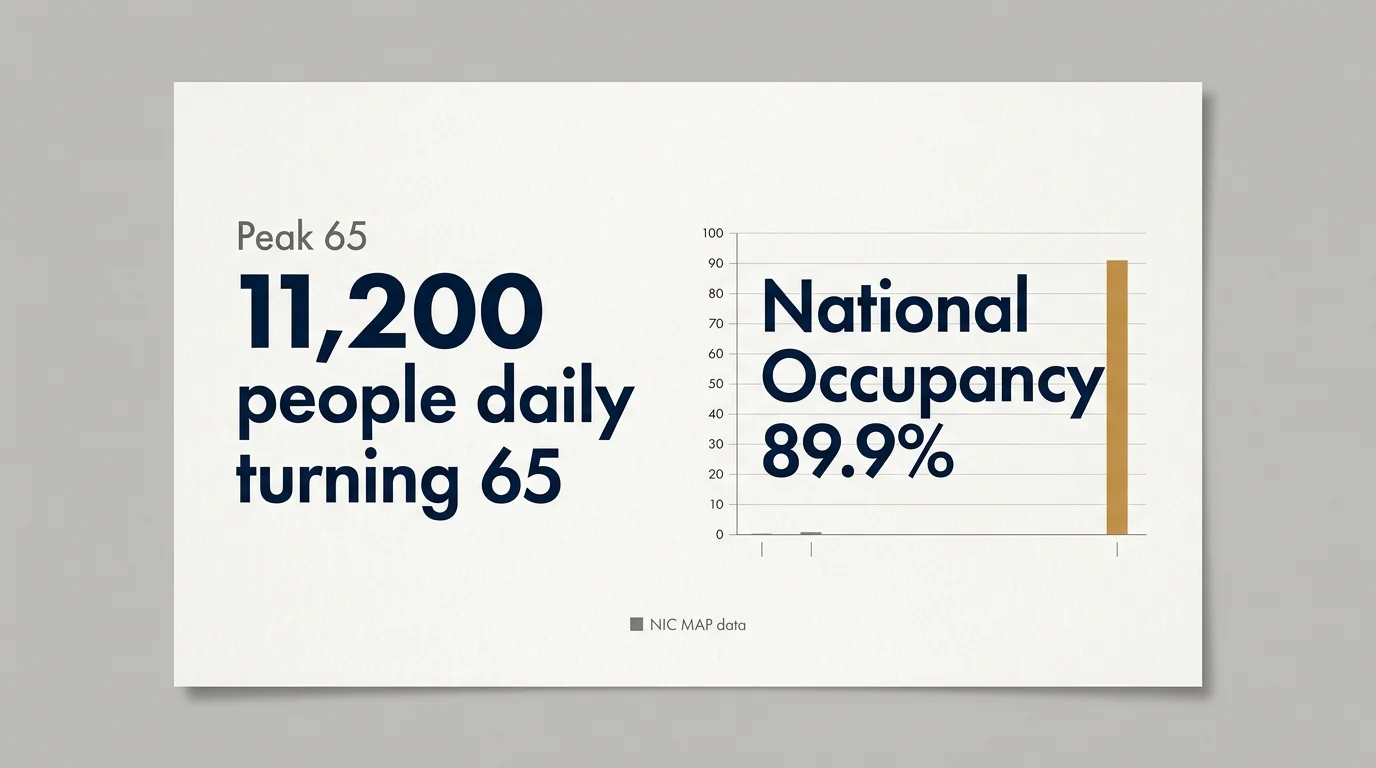
America is navigating a dramatic demographic shift; more than 4.1 million Americans are turning 65 every year, which equals over 11,200 people each day. Demographers call this period Peak 65, a cresting wave that is fundamentally reshaping real estate and retirement planning heading into 2027.
At the same time, the oldest Baby Boomers—those born in 1946—are reaching age 80. Statistically, age 80 is the key threshold where seniors transition from remaining in place to seeking structured housing models; this includes independent living apartments, active adult enclaves, and Continuing Care Retirement Communities (CCRCs). The simultaneous arrival of younger seniors boosting active adult community demand and older seniors seeking supportive care has created an unprecedented squeeze on inventory.
Data from the National Investment Center for Seniors Housing & Care (NIC MAP) highlights the reality of this demand. Overall senior housing occupancy climbed to 89.9% in the second quarter of 2026, marking 20 consecutive quarters of growth. Independent living occupancy reached 91.3%, while popular 55+ communities hovered between 91% and 92% occupancy. Half of the top 31 primary metropolitan markets in the United States have already passed the 90% occupancy mark, meaning premier options are operating near full capacity.
The Construction Bottleneck: Why Supply Cannot Keep Up
You might expect real estate developers to build new facilities rapidly to capture this demand. However, economic conditions over recent years—including high financing rates, elevated material costs, and severe labor shortages—have sharply restricted new development projects.
Senior living construction dropped to its lowest level since 2012. Annual national inventory growth slowed to a record low of just 0.4% in 2026; developers delivered roughly 4,000 new units nationwide, meeting only about one-third of the projected consumer demand through 2030.
This deficit is a primary catalyst behind retirement community trends 2027. Properties that once kept open units are now quietly adding long waitlists. For popular floor plans—such as spacious two-bedroom cottages or corner apartments with direct outdoor views—waitlists often span two to five years.
Regional Hotspots Where Capacity Is Deepest
While available space is shrinking across the entire country, specific geographic regions face severe inventory shortfalls. If you are choosing a retirement community in these high-demand regions, planning several years ahead is essential.
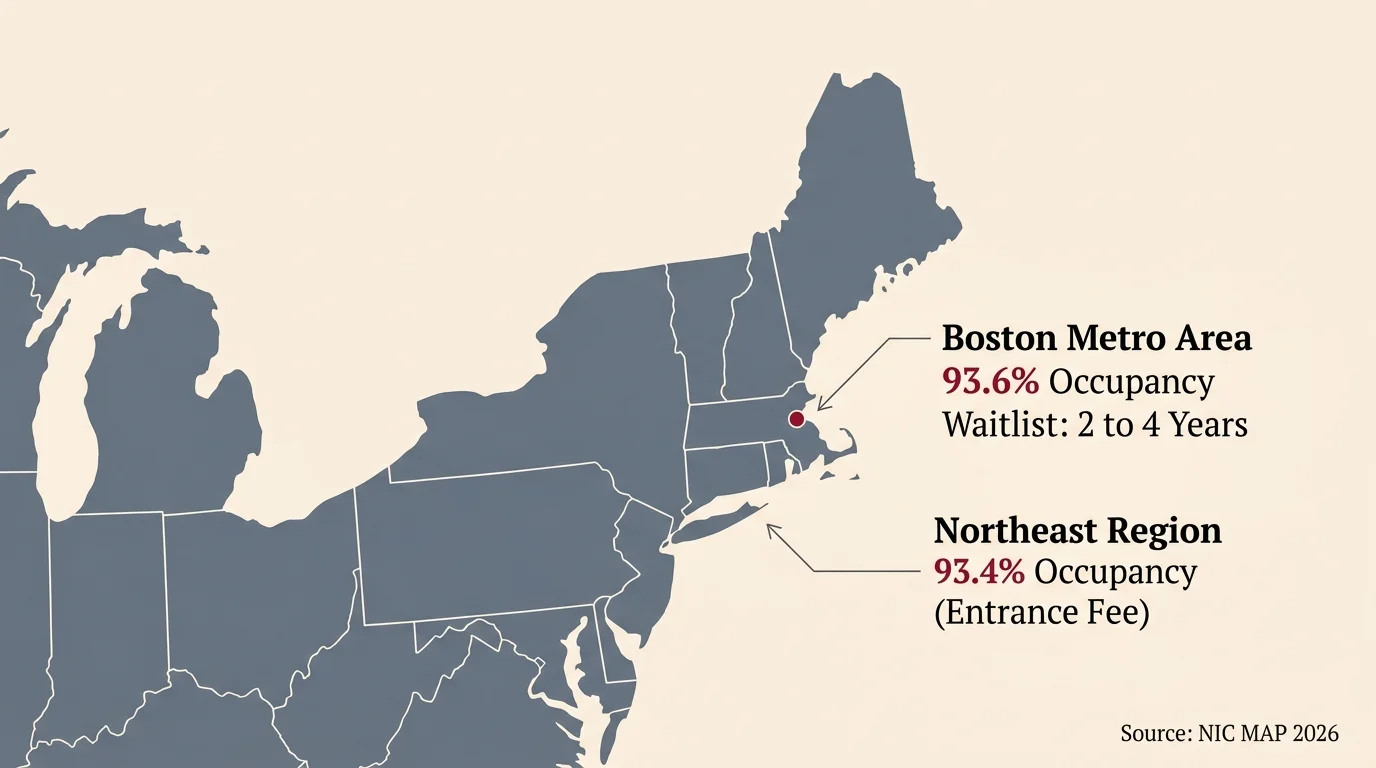
The Northeast leads the nation in capacity tightness; occupancy for entrance-fee communities in that region exceeds 93.4%. Dense coastal cities and established suburban hubs face severe land scarcity, which prevents new facilities from opening.
| Metropolitan Area / Region | 2026 Average Occupancy Rate | Estimated Waitlist Window | Key Market Drivers |
|---|---|---|---|
| Boston Metro Area | 93.6% | 2 to 4 Years | Access to world-class health systems; severe zoning and land constraints. |
| Northeast Region (Entrance Fee) | 93.4% | 3 to 5 Years | High demand for Life Care stability; historic lack of new inventory growth. |
| Baltimore Metro Area | 91.8% | 1.5 to 3 Years | Proximity to major medical research centers and desirable mid-Atlantic hubs. |
| San Francisco Bay Area | 91.6% | 2 to 4 Years | High land costs and tight local development regulations. |
| National Independent Living Avg. | 91.3% | 1 to 2 Years | Nationwide surge in adults aged 80+ prioritizing maintenance-free living. |
Understanding Contract Models: Entrance Fee vs. Rental CCRCs
As you evaluate retirement community waitlists, understanding financial contract structures will help you make an informed choice. The two primary models available are Entrance-Fee Life Plan Communities (CCRCs) and Rental Senior Living Communities.
Entrance-fee communities require a substantial upfront investment; nationwide, entrance fees average between $400,000 and $480,000. Luxury Type-A communities in high-cost coastal markets can require entrance fees exceeding $1 million to $2 million. In addition to this initial deposit, residents pay a monthly service charge that averages between $4,246 and $4,285 per month for independent living units.
Despite these high initial costs, entrance-fee communities carry higher national average occupancy rates (91.6%) than rental communities (88.7%). Financially prepared seniors favor entrance-fee models because they guarantee lifelong access to higher levels of care—such as assisted living or skilled nursing—often at predictable rates.
“The best time to make a major financial or housing transition is when you have choices, not when circumstances force your hand.” — Jean Chatzky, Financial Journalist and CEO of HerMoney
| Contract Type | Upfront Entrance Fee | Monthly Fee Adjustments | Long-Term Care Coverage |
|---|---|---|---|
| Type A (Life Care) | Highest ($400k – $1M+) | Predictable; aligns closely with independent living rates | Comprehensive coverage for assisted living and nursing care with minimal fee hikes. |
| Type B (Modified) | Moderate ($250k – $450k) | Mild increases when higher care levels are required | Includes a specific allocation of free or discounted care days per year. |
| Type C (Fee-for-Service) | Lower ($150k – $300k) | Increases to full daily market rates for advanced care | You pay market rate for higher care services as you need them. |
| Rental Contract | None ( refundable security deposit only ) | Adjusts annually based on community operating costs | No long-term care price guarantees; pay-as-you-go pricing. |

Tax Deductions and Financing Your Community Deposit
Joining a waitlist generally requires an initial deposit between $1,000 and $10,000. Communities usually credit this fee toward your total entrance fee when you move in. Managing this outlay requires looking closely at your available liquid assets and real estate holdings.
Most seniors fund their upfront entrance fee using net proceeds from selling a primary home. Because home equity remains strong across many U.S. housing markets, selling your house can often cover the entire entrance deposit.
A major financial advantage of entrance-fee communities involves potential tax deductions. Guidelines from the Internal Revenue Service (IRS) allow a portion of a CCRC entrance fee—and ongoing monthly fees—to qualify as a deductible medical expense under Schedule A. Because a percentage of your entrance fee pre-funds future healthcare services, you can deduct expenses that exceed 7.5% of your Adjusted Gross Income (AGI). Consult your CPA to ensure you maximize this deduction when liquidating investments or withdrawing traditional IRA funds.
“Failing to plan for medical and housing costs early in retirement is one of the most expensive errors a retiree can make.” — Ed Slott, CPA and Retirement Account Expert

Pitfalls to Watch For When Joining Retirement Community Waitlists
Navigating senior living options involves important contract details. Avoiding these four common mistakes will protect both your savings and your future housing choices:
- Waiting for a health decline before applying: Continuing Care Retirement Communities require medical underwriting for independent living; if you suffer a serious health event before securing your spot, you may lose eligibility for an independent unit.
- Misunderstanding deposit refund policies: Always check whether your waitlist deposit is 100% refundable if you change your mind, and confirm how quickly the community processes refunds.
- Ignoring monthly fee escalation clauses: Monthly service charges typically rise by 3% to 5% annually to cover operating inflation; factor these annual increases into your long-term retirement budget.
- Focusing strictly on current mobility needs: Selecting an active adult community without accessible health services may force you to move again later if your care needs change.

Getting Expert Help: Navigating Contracts and Timing
Because senior housing contracts are long-term commitments, working with specialized advisors helps ensure your financial security and peace of mind:
- Evaluating complex contracts: Hire an experienced elder law attorney to review CCRC agreements; they will verify refund mechanics, contract models, and resident property rights before you sign.
- Managing retirement liquidations: Consult a fee-only Certified Financial Planner (CFP) or tax advisor to structure house sales and IRA distributions efficiently while keeping your tax brackets manageable.
- Assessing community quality and safety: Use public resources such as the Eldercare Locator, operated by the U.S. Administration for Community Living, to connect with local Ombudsmen and review community safety records.
- Exploring veteran housing resources: If you or your spouse served in the military, contact the U.S. Department of Veterans Affairs (VA) or the U.S. Department of Housing and Urban Development (HUD) to learn about housing allowances and benefit support.
Frequently Asked Questions About 2027 Waitlists
How far in advance should I put my name on a retirement community waitlist?
You should join waitlists two to five years before your ideal move-in target. Joining early establishes priority status while giving you time to prepare your home sale without rushing.
Are waitlist deposits fully refundable if I choose not to move in?
Most reputable communities provide 90% to 100% refundable waitlist deposits if you decide not to move, charging only a small administrative fee. Always verify refund terms in writing before submitting a check.
Can I join waitlists at multiple retirement communities at once?
Yes. Joining two or three community waitlists is a practical strategy that allows you to evaluate different locations, price points, and floor plans while keeping your timing flexible.
What happens if my name reaches the top of the waitlist before I am ready to move?
Most communities offer a priority deferral option. If a unit opens and you decline it, you can move to an inactive status list or wait for the next available unit without losing your original priority position.
Practical Next Steps to Secure Your Future Residence
Taking control of your retirement housing timeline gives you flexibility, security, and peace of mind. Start by picking three top communities in your desired geographic area and scheduling detailed on-site tours. Ask sales directors directly about current occupancy levels, waitlist lengths for your preferred floor plans, and deposit refund terms.
Next, gather your financial records and review your strategy with a fee-only advisor to confirm how an entrance fee fits into your plan. Securing your spot early protects you from inventory shortages while keeping your retirement future fully under your control.
The information in this guide is meant for educational purposes. Your specific circumstances—including income, benefits, tax situation, and health needs—may require different approaches. When in doubt, consult a licensed financial advisor or tax professional.
Last updated: February 2026. Benefit amounts, tax rules, and program details change annually—verify current figures with official government sources.









Leave a Reply