

Trading city lights for a tranquil small town can stretch your retirement nest egg, but escaping urban prices does not eliminate living expenses altogether. While the national average cost for a comfortable retirement hovering between $57,000 and $62,000 per year drops to roughly $40,000 to $45,000 in affordable rural states, small-town living comes with its own financial trade-offs. Lower home prices and modest property taxes often mask higher utility burdens, increased transportation spending, and greater out-of-pocket healthcare expenses. Calculating an accurate small town retirement budget requires looking beyond housing costs so you can protect your long-term financial security and enjoy a comfortable, stress-free lifestyle away from the city.
The Real Numbers Behind Small Town Retirement Costs
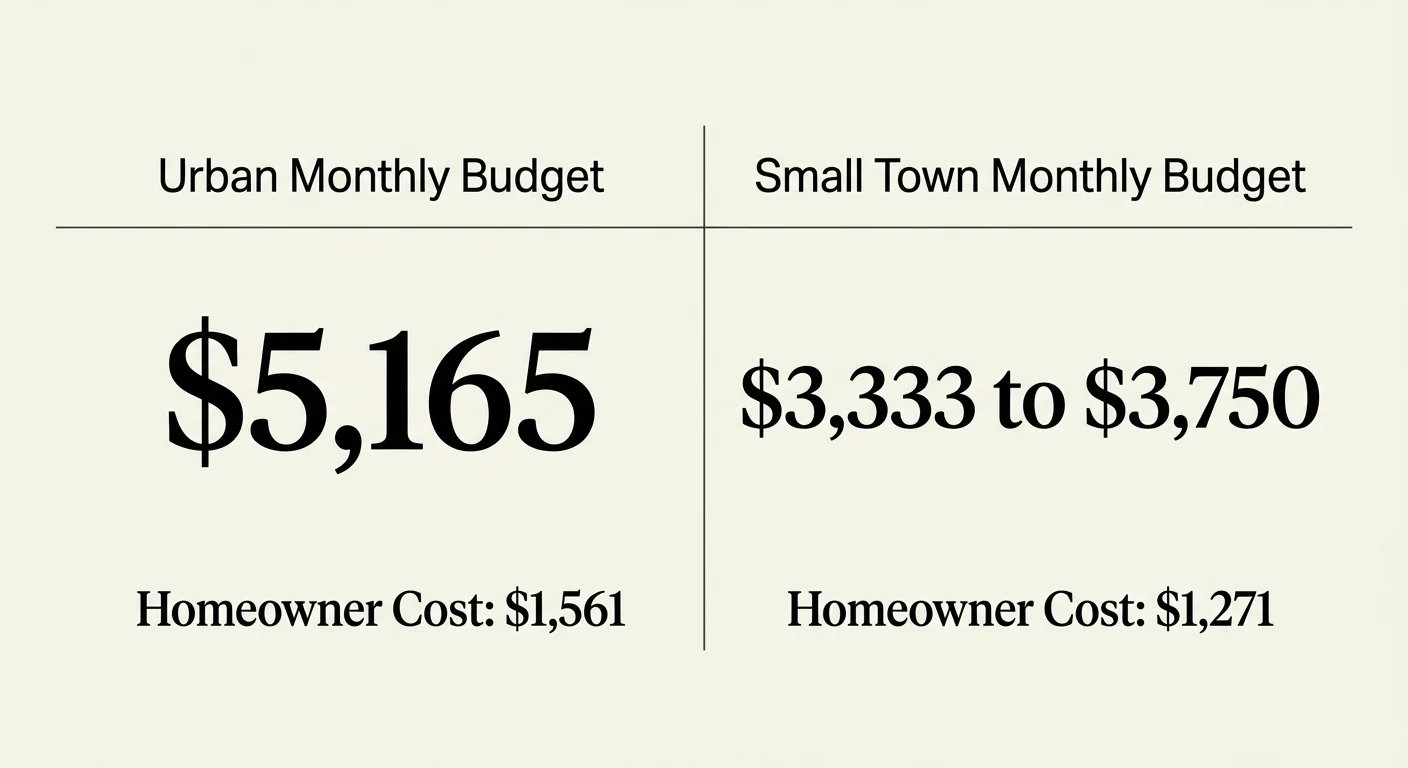
To evaluate affordable small town retirement, you need a realistic benchmark of what older Americans spend each year. According to the Bureau of Labor Statistics (BLS) Consumer Expenditure Survey, households headed by adults aged 70–79 spent an average of $61,977 annually, which translates to roughly $5,165 per month. Housing remains the single largest expense category at $21,185 per year, followed by transportation at $10,071, and healthcare at $7,387—which includes $5,318 spent specifically on health insurance premiums.
Moving away from major metropolitan centers shifts these cost categories significantly. In lower-cost states such as West Virginia, Mississippi, and Arkansas, retirees can live comfortably on $40,000 to $45,000 per year. In contrast, retiring in high-cost states like California or Hawaii requires upwards of $85,000 to $100,000 annually, regardless of whether you choose a rural or urban setting. State tax laws, regional energy prices, and geographic isolation dictate your true baseline expenses.
When planning your budget, remember that baseline living expenses only account for day-to-day essentials. A truly comfortable retirement budget leaves financial room for travel, hobbies, emergency home repairs, and gifts for family. Shrinking your fixed overhead by relocating gives you greater flexibility over your discretionary spending.
Housing Costs: Small Town Savings vs. Recent Market Shifts
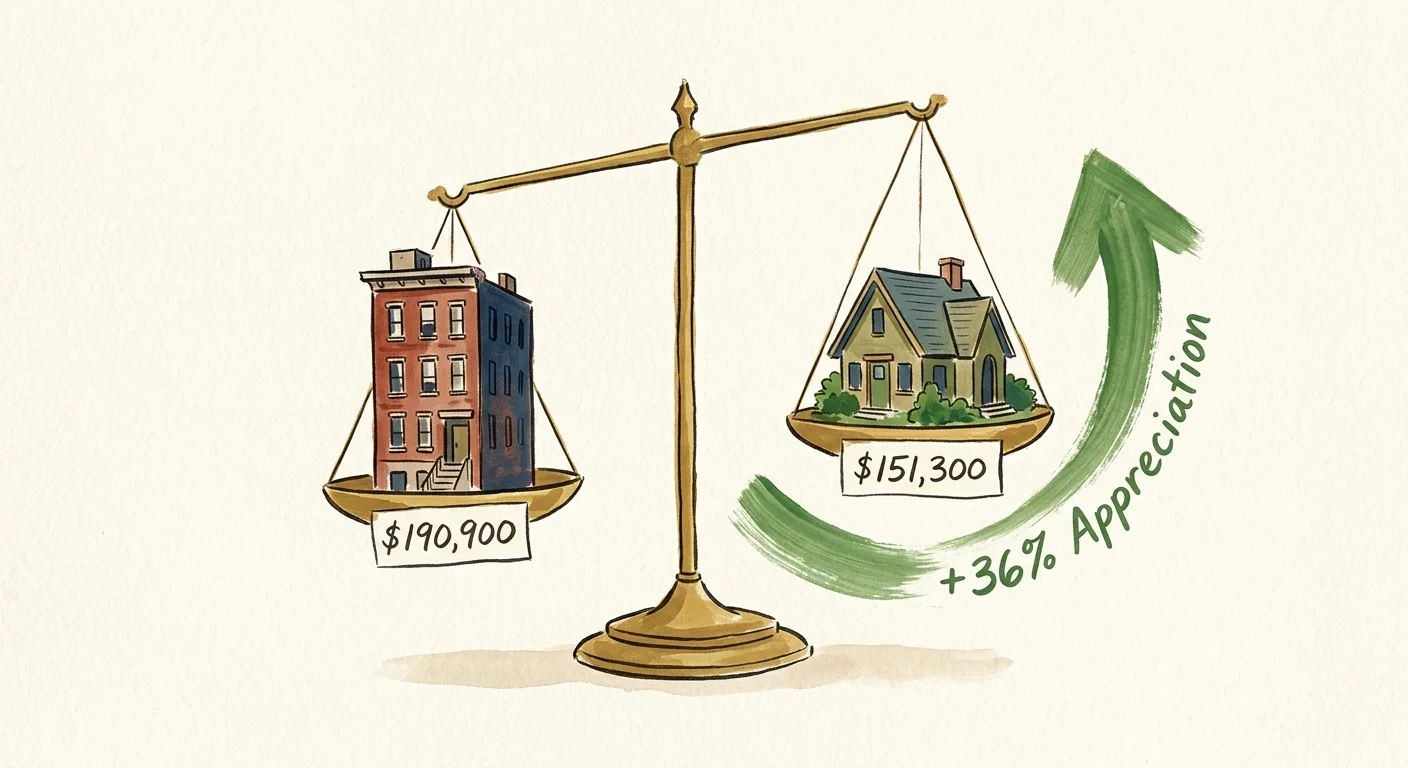
Housing represents the area where rural retirement living yields the most obvious savings. U.S. Census Bureau American Community Survey data indicates that the median home value in rural areas stands at approximately $151,300, compared to $190,900 in urban centers. Furthermore, median monthly homeowner costs in rural communities average $1,271, compared to $1,561 in major cities. Lower initial purchase prices mean smaller mortgages, reduced down payments, and smaller property tax assessments.
However, recent economic shifts have altered this historic dynamic. Research from the Harvard Joint Center for Housing Studies revealed that non-metropolitan home values surged 36% between March 2020 and March 2023. This rapid appreciation outpaced the 21% home value growth observed in dense urban counties during the same period. While small towns remain generally more affordable than major cities, post-pandemic demand narrowed the price gap.
If you plan to buy a home in a small town, evaluate local property tax trends and home insurance availability before making an offer. You can research regional mortgage rates and housing assistance programs through the U.S. Department of Housing and Urban Development (HUD) and the Consumer Financial Protection Bureau (CFPB) to protect your purchase power.
The Hidden Cost Drivers: Healthcare, Utilities, and Transportation
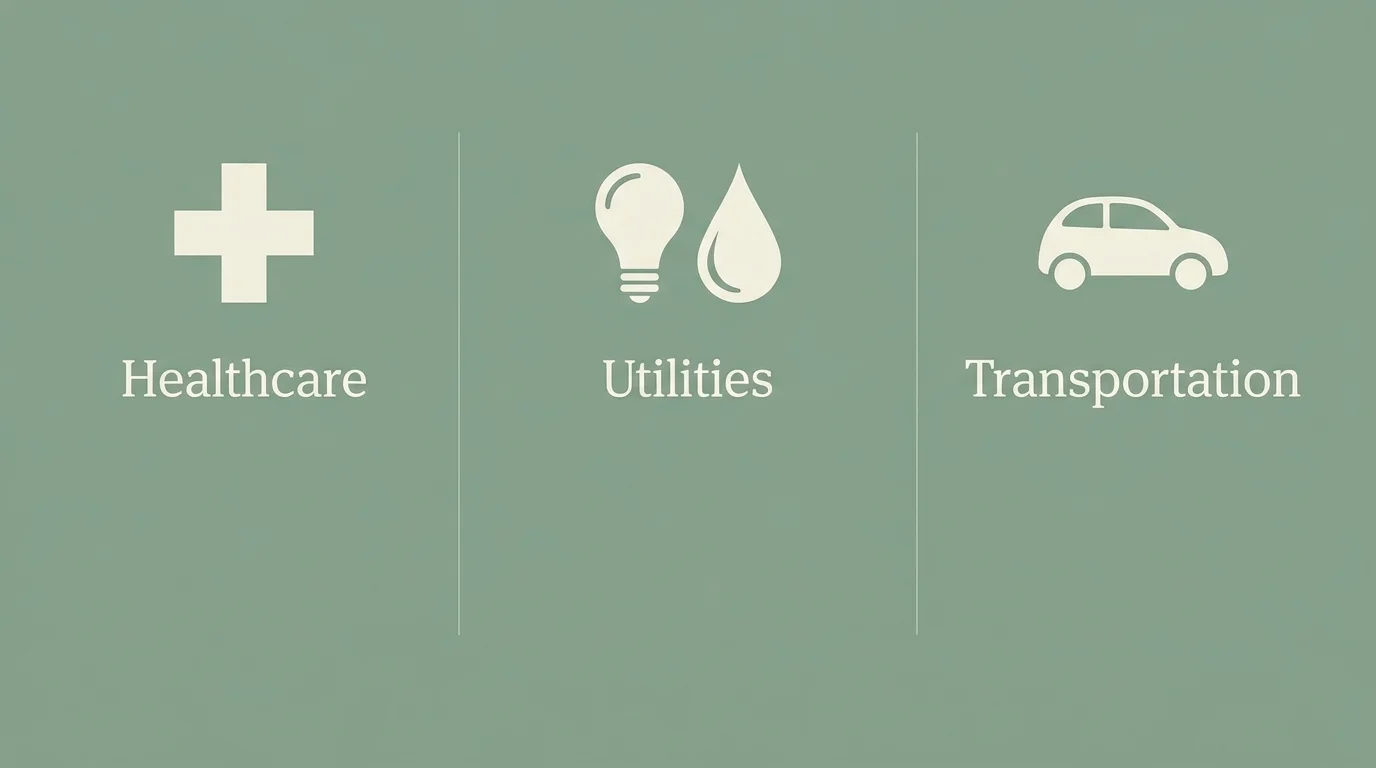
While housing expenses drop when you relocate, three critical categories often rise: healthcare out-of-pocket fees, utility bills, and transportation expenses. Failing to account for these line items can undermine your anticipated relocation savings.
- Out-of-Pocket Healthcare Expenses: Research from the Georgetown University Health Policy Institute shows that rural residents pay 29% of their healthcare costs out-of-pocket, compared to 23% for urban residents. Although nearly 20% of the U.S. population resides in rural communities, less than 11% of physicians practice there. You must budget for travel costs to see regional specialists, higher medical facility fees, and potential out-of-network charges. You can review network coverage rules through Medicare.gov before moving.
- Elevated Utility Burdens: Studies from the American Council for an Energy-Efficient Economy (ACEEE) show that rural households experience a higher median energy burden—the percentage of household income spent on electricity, heating oil, and propane—than urban households. Older rural properties often lack modern insulation, and reliance on delivered fuel propane can create volatile winter heating bills.
- Increased Transportation Spending: Data from the Bureau of Transportation Statistics shows that average U.S. household transportation spending reaches $13,318 per year ($1,110 per month). In small towns, public transit and rideshares are virtually non-existent. You will rely entirely on personal vehicles, driving longer distances for groceries, specialized medical care, and entertainment, which drives up fuel consumption and auto maintenance costs.
“Budgeting isn’t about limiting yourself; it’s about making choices that align with your long-term priorities and freedom.” — Jean Chatzky, Financial Journalist and Author
Comparing Monthly Budgets: Urban vs. Small Town Living
To visualize how expenses shift when retiring away from the city, review this typical monthly spending comparison for a retired single individual. The figures draw upon baseline estimates from federal expenditure surveys and rural cost benchmarks.
| Expense Category | Urban Monthly Average | Small Town Monthly Average | Key Cost Factors & Differences |
|---|---|---|---|
| Housing & Mortgage/Rent | $1,765 | $1,271 | Lower home values and modest property taxes yield substantial monthly savings in rural towns. |
| Healthcare & Insurance | $580 | $685 | Rural retirees face higher out-of-pocket costs and increased travel costs for specialty care. |
| Transportation & Gas | $890 | $1,110 | Total reliance on personal vehicles and longer driving distances increase fuel and maintenance. |
| Utilities & Heating Fuel | $320 | $410 | Propane, heating oil, and larger standalone home footprints lead to higher utility burdens. |
| Groceries & Daily Supplies | $520 | $480 | Local grocery staples cost slightly less, though specialty items require traveling to larger markets. |
| Entertainment & Dining | $350 | $200 | Fewer commercial dining and venue options naturally reduce discretionary spending. |
| Total Monthly Spending | $4,425 | $4,156 | Small town living saves roughly $269 per month ($3,228 annually), but spending shifts across lines. |

How to Build an Accurate Small Town Retirement Budget
Building a successful small town retirement budget requires analyzing specific geographic details rather than relying on broad national assumptions. Follow these concrete steps to construct a reliable financial plan:
- Analyze State and Local Tax Rules: State tax policies dramatically alter your spending power. Check whether your prospective state taxes Social Security benefits, private pensions, or traditional IRA withdrawals. You can review official state tax guidelines through the Internal Revenue Service (IRS) and state departments of revenue. Additionally, investigate county-level senior property tax exemptions available to homeowners age 65 and older.
- Audit Local Infrastructure Expenses: Rural homes often use private septic systems and water wells instead of municipal services. Budget money for periodic septic pumping, water filtration maintenance, and propane tank leases. Factor in private trash collection fees and winter snow removal services.
- Evaluate Healthcare Networks and Medigap Options: Verify that local primary care doctors accept your current health insurance. If you hold a Medicare Advantage plan, verify that regional hospitals fall inside your network. Transitioning to Original Medicare with a supplemental Medigap policy often provides broader protection when moving across county or state lines. Check your benefit status on the official Social Security Administration (SSA) website.
- Establish a Dedicated Vehicle Repair Fund: Because small-town living demands constant driving, set aside an emergency maintenance fund dedicated to vehicle repairs, tire replacements, and unexpected servicing.

What Can Go Wrong: 4 Common Small Town Retirement Mistakes
Moving away from the city offers peace and quiet, but planning mistakes can create financial friction. Avoid these four common pitfalls when preparing your relocation strategy:
- Assuming All Living Costs Drop Equally: Many retirees expect every expense line item to shrink upon moving. In reality, savings on housing often get partially offset by increased utility bills, higher vehicle wear-and-tear, and elevated out-of-pocket health fees.
- Ignoring Local Healthcare Limitations: Moving to a picturesque rural county without checking hospital proximity can lead to logistical headaches. If you require specialized care, traveling hours for routine appointments adds expense and stress.
- Buying Real Estate Immediately Without Testing the Area: Purchasing a home right away locks you into property taxes, maintenance, and community dynamics you may not enjoy long-term. Renting for six to twelve months allows you to experience the climate, seasonal utility costs, and local services before committing permanently.
- Overlooking Rural Home Maintenance Premiums: Tradespeople and specialized contractors are often scarce in small towns. Finding plumbers, electricians, or roofers can require paying higher trip fees or waiting weeks for repairs.

When to Consult a Professional
While self-directed research provides a foundation, complex decisions warrant professional financial guidance. Consider consulting a Certified Financial Planner (CFP) or Certified Public Accountant (CPA) in the following scenarios:
- Cross-State Relocation Tax Planning: Moving across state lines triggers changes in capital gains taxes, pension taxation, and estate planning laws. A tax professional can help structure asset distributions to minimize your overall tax burden.
- Selling a Primary Residence for Capital Gains: If selling your city home yields substantial profits above the federal tax exemption limits ($250,000 for single filers, $500,000 for married couples filing jointly), a CPA can guide you through strategies to manage your tax liability.
- Re-evaluating Medicare and Health Insurance Coverage: A licensed insurance specialist can evaluate regional Medicare Advantage networks versus Medigap policies to ensure you maintain adequate medical coverage in your new municipality.
Frequently Asked Questions About Retiring in a Small Town
What is the average annual cost to retire comfortably in a small town?
In lower-cost states across the South and Midwest, a comfortable small town retirement typically costs between $40,000 and $45,000 per year for a single retiree. However, national averages range from $57,000 to $62,000 annually when factoring in higher transportation and out-of-pocket medical expenses.
Does moving to a small town automatically lower my tax bill in retirement?
Not necessarily. While small towns often feature lower local property taxes, state-level tax policies on Social Security benefits, private pensions, and retirement account withdrawals vary widely. You must evaluate total state and municipal tax burdens before moving.
How does living in a rural area impact my Medicare coverage?
Original Medicare (Parts A and B) covers providers nationwide, making it highly portable. However, Medicare Advantage (Part C) plans rely on local regional networks, which may offer fewer choices or higher out-of-network costs in rural communities.
Why are transportation costs often higher in small towns for seniors?
Small towns generally lack robust public transit or rideshare infrastructure. Retirees must drive longer distances to access specialist healthcare, major grocery chains, and community services, which increases fuel, insurance, and vehicle maintenance expenses.
Taking Your Next Steps Toward Rural Retirement Living
Retiring in a small town offers a peaceful lifestyle, strong community ties, and lower baseline housing costs. By evaluating all financial factors—including energy burdens, travel distances, and out-of-pocket medical expenses—you can create a durable, balanced retirement budget. Take time to research target communities, test small-town living through a temporary rental, and structure your finances to support a long, comfortable retirement.
This article provides general financial education and information only. Everyone’s financial situation is unique—what works for others may not work for you. For personalized advice tailored to your retirement needs, consider consulting a qualified financial professional such as a CFP or CPA.
Last updated: February 2026. Benefit amounts, tax rules, and program details change annually—verify current figures with official government sources.









Leave a Reply