

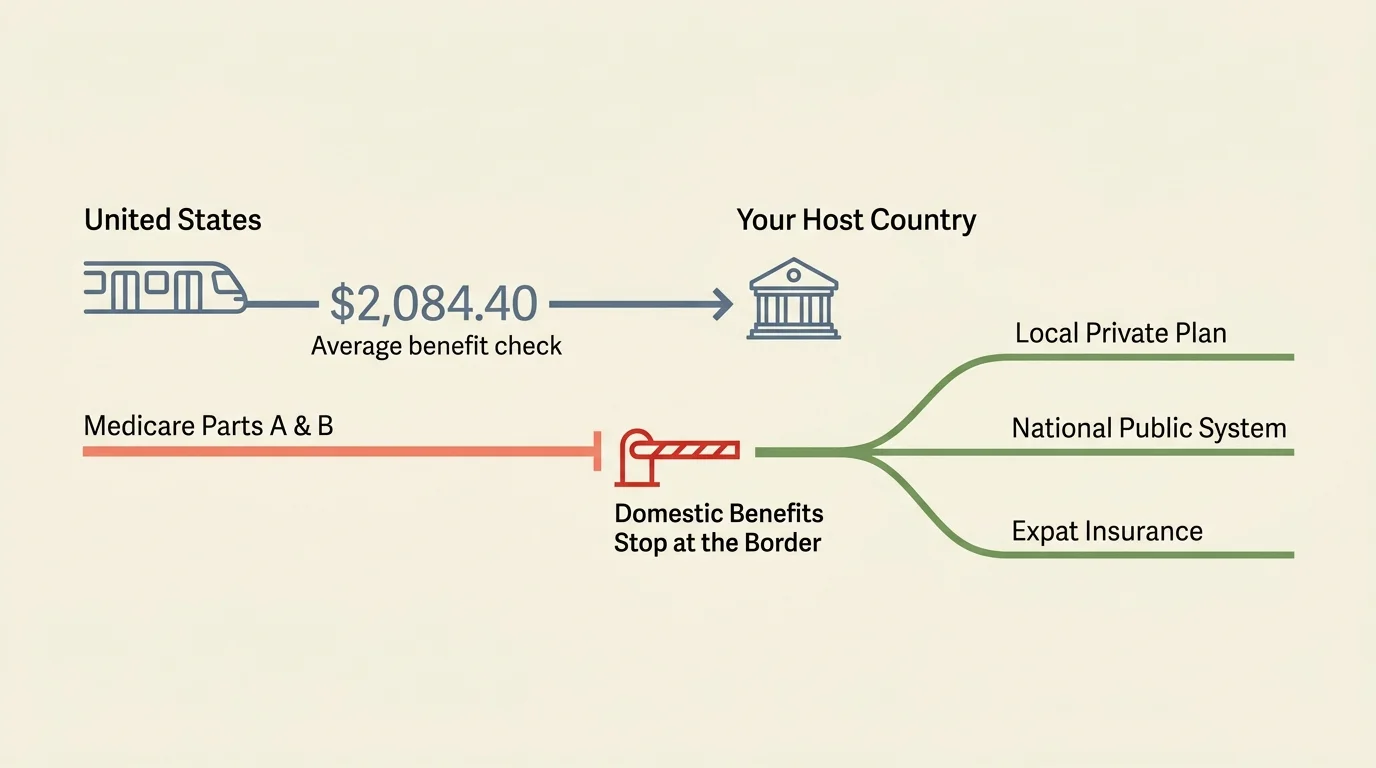
Stretching a fixed income in the United States gets harder every year as housing, medical bills, and groceries consume a massive chunk of your monthly budget. According to the Social Security Administration (2026), the average monthly benefit check for a retired worker sits at $2,084.40—an amount that barely covers basic rent in many American cities. By moving your foreign address abroad, that exact same payment can unlock a comfortable, high-quality retirement with reliable healthcare, oceanfront dining, and affordable housing. Choosing the best countries for Social Security abroad allows you to double or triple your purchasing power while enjoying warm climates, rich cultures, and welcoming international communities.
How Social Security and Healthcare Work Overseas
Receiving your monthly benefits while living abroad is straightforward, but you must understand specific federal regulations before packing your bags. The Social Security Administration sends electronic payments directly to bank accounts in most countries around the globe. You can choose to maintain a U.S. bank account and withdraw funds locally, or you can set up direct deposit into a financial institution in your new host country through international direct deposit programs.
Under U.S. Treasury rules, the federal government cannot send Social Security payments to Cuba or North Korea. Additionally, if you choose to retire in certain post-Soviet nations—including Azerbaijan, Belarus, Kazakhstan, Kyrgyzstan, Tajikistan, Turkmenistan, or Uzbekistan—you must fulfill strict periodic check-in requirements at a U.S. embassy to maintain your benefit distribution.
Healthcare requires careful planning because domestic medical benefits stop at the border. According to Medicare.gov, Original Medicare (Parts A and B) and Medicare Advantage plans do not cover healthcare treatments, prescription medications, or elective hospital stays outside the United States. To protect your well-being, you must enroll in a local private healthcare plan, join the national healthcare system of your host country, or purchase international expat health insurance.
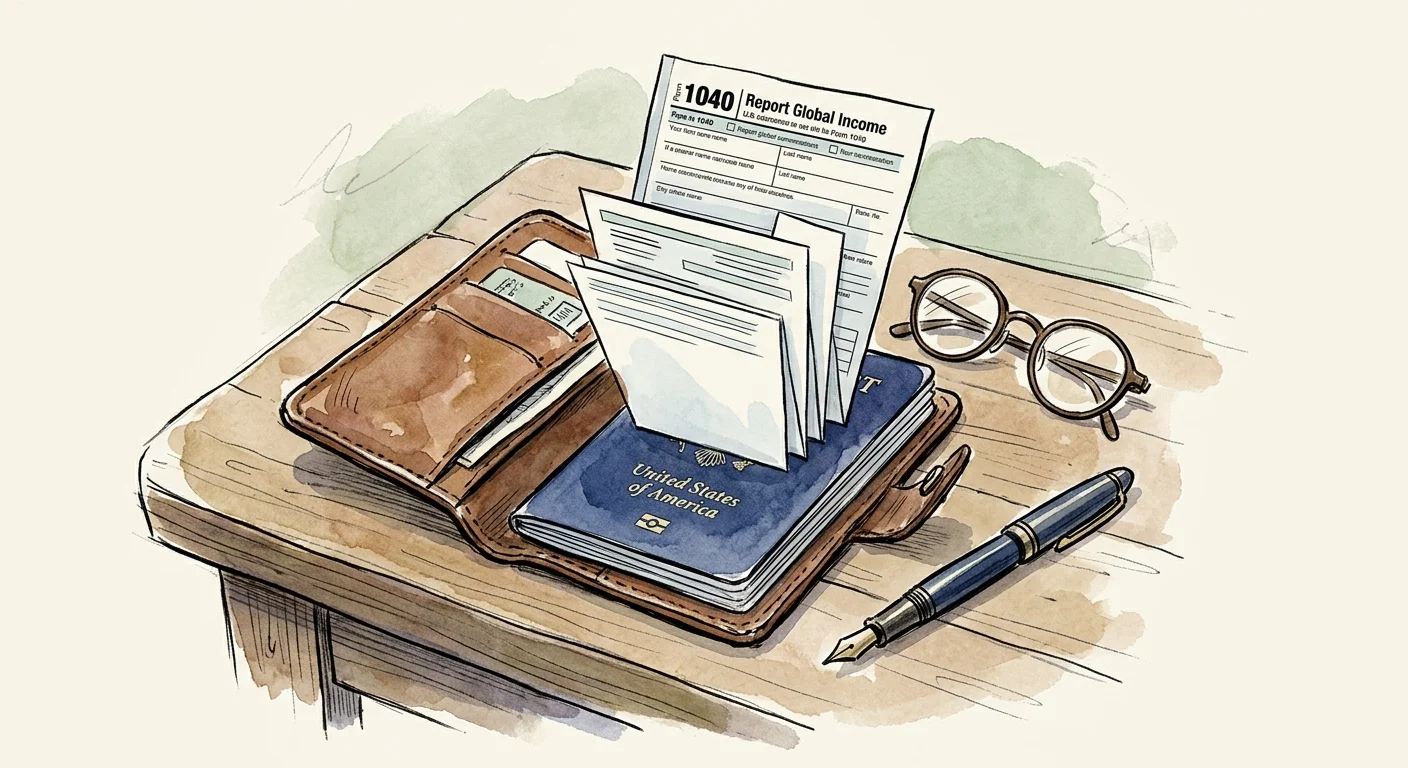
Your tax obligations also continue regardless of where you decide to retire abroad on Social Security. According to the Internal Revenue Service (IRS), U.S. citizens must file an annual federal tax return declaring global income, no matter where they establish primary legal residence.
The 10 Best Countries to Retire Abroad on Social Security
When selecting expat retirement destinations, you must evaluate the local cost of living, healthcare quality, legal residency pathways, and overall safety. The following ten countries offer exceptional value for American retirees seeking to maximize their Social Security overseas benefits.
1. Panama
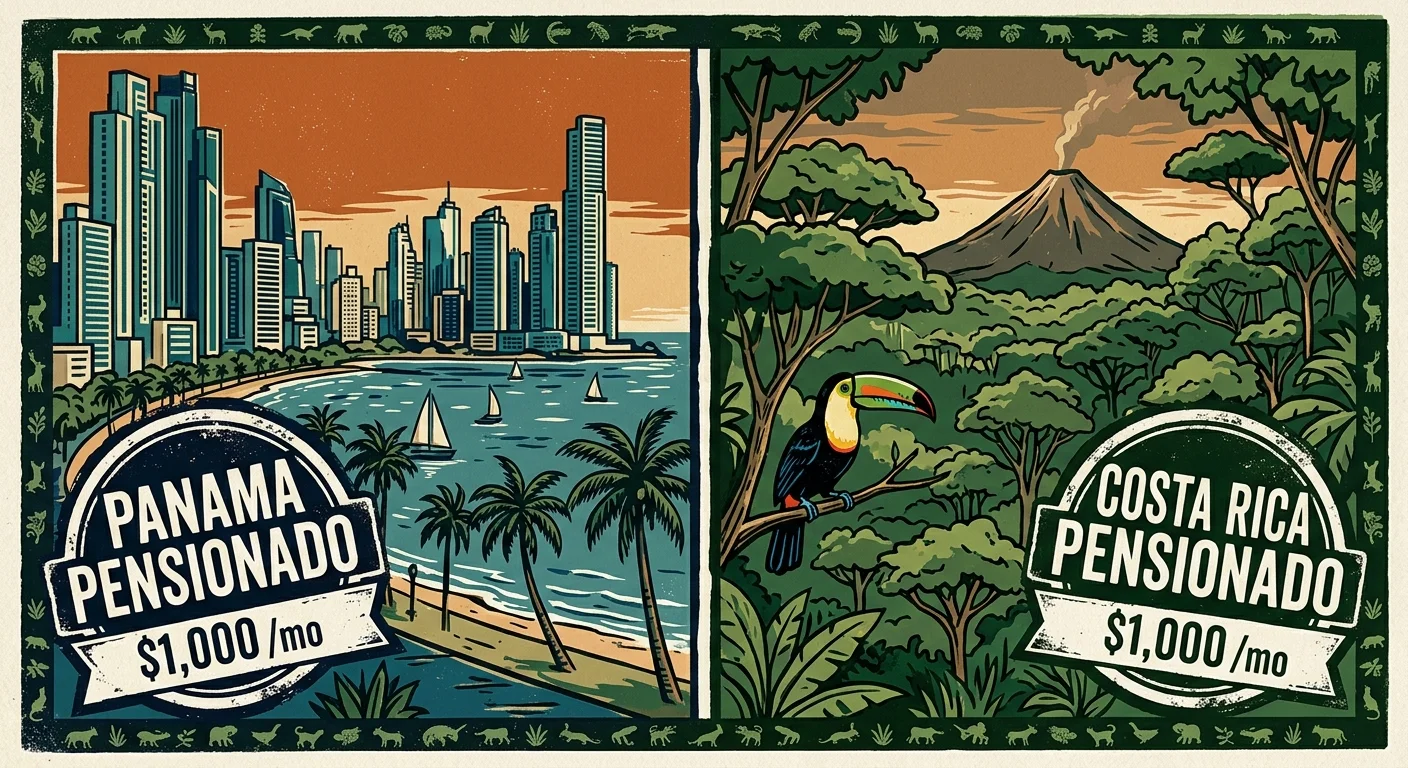
Panama remains a premier destination for American retirees thanks to its proximity to the United States, modern infrastructure, and official adoption of the U.S. dollar, which eliminates currency exchange risk. The country offers the world-renowned Pensionado Visa, which requires proof of a lifetime guaranteed pension of at least $1,000 USD per month.
Under Panama’s landmark Law 6, foreign retirees holding the Pensionado Visa receive legally mandated discounts across daily life: 50% off movie and theater tickets, 30% off bus and train fares, 25% off domestic flights, 25% off restaurant meals, and 20% off professional medical consultations. A retired couple can live comfortably in Panama City or beach towns like Coronado for $1,500 to $2,200 per month.
2. Costa Rica
Famous for its “Pura Vida” lifestyle, Costa Rica combines political stability, rich biodiversity, and high-quality medical care. The nation’s Pensionado Visa requires applicants to show a verified permanent lifetime pension of at least $1,000 USD per month from Social Security or an official pension fund.
Once you secure residency, you can join Costa Rica’s public healthcare system, known as the CAJA (Caja Costarricense de Seguro Social), by paying a monthly fee tied to your declared income. This grants you access to comprehensive medical treatment across the country. Private hospitals in San José also offer top-tier care at a fraction of U.S. prices. Expect a monthly living budget between $1,600 and $2,400 for a couple.
3. Portugal
Portugal stands out as one of Europe’s safest and most affordable countries. Its popular D7 Passive Income Visa caters directly to retirees living on fixed incomes, pensions, or investment payouts. In 2026, single applicants must demonstrate a stable monthly passive income of at least €920 (~$1,000 USD), along with a minimum liquid savings buffer of €11,040 maintained in a Portuguese bank account.
Residents enjoy access to Portugal’s excellent National Health Service (Serviço Nacional de Saúde), alongside modern highways, vibrant coastal towns in the Algarve, and world-class dining. A retired couple can enjoy a fulfilling lifestyle in smaller cities or coastal regions for $1,800 to $2,600 per month.
4. Colombia
Colombia delivers a remarkable climate, rich culture, and exceptional healthcare system featuring several of Latin America’s top-ranked hospitals. Colombia’s M-11 Pensioner Visa pegs its income requirement to three times the national monthly minimum wage. For 2026, this threshold requires showing approximately 5,252,715 Colombian Pesos per month—equivalent to roughly $1,380 to $1,450 USD per month, depending on prevailing foreign exchange rates.
Cities like Medellín, known as the “City of Eternal Spring,” and Manizales offer mild, year-round mountain temperatures that eliminate heating and cooling bills. A couple can easily manage high-end urban living, private health insurance, and frequent dining out for $1,200 to $1,800 per month.
5. Thailand
Thailand provides incredible purchasing power, rich cultural heritage, and warm tropical weather. To obtain a Thai Non-Immigrant O or O-A Retirement Visa (available to individuals aged 50 and older), you must demonstrate a verified monthly pension income of at least 65,000 Thai Baht (~$1,800 USD) or maintain a fixed security deposit of 800,000 Baht (~$22,500 USD) in a Thai bank account.
Thailand serves as a major hub for international medical tourism. Joint Commission International (JCI) accredited hospitals in Bangkok and Chiang Mai offer world-class treatment, immediate specialist access, and extremely affordable surgical procedures. Retirees can live comfortably in popular regions like Chiang Mai or Hua Hin on $1,200 to $1,900 per month.
6. Ecuador
Ecuador uses the U.S. dollar as its national currency, eliminating currency conversion fees and wild exchange rate fluctuations for American retirees. The Ecuadorian Jubilado Visa requires proof of a lifetime monthly pension equal to 3.5 times the national minimum wage, which translates to roughly $1,350 per month in 2026.
The mountain city of Cuenca features stunning colonial architecture, temperate weather, and a massive expat network. You can enroll in Ecuador’s public healthcare system (IESS) for around $80 to $100 per month, providing complete medical coverage without deductibles. A couple can retire comfortably in Ecuador on $1,100 to $1,700 per month.
7. Philippines
If you prefer an English-speaking destination with tropical islands and friendly locals, the Philippines ranks high on the list of cheapest countries to retire. The Philippine Retirement Authority manages the Special Resident Retiree’s Visa (SRRV). Pension holders aged 50 and older need a guaranteed monthly benefit of $800 USD, along with a modest $10,000 time deposit in an accredited local bank.
Modern medical care is readily available in major urban centers like Manila, Cebu, and Dumaguete. Moreover, hiring full-time, in-home personal care or household help costs a small fraction of domestic U.S. rates. A retired couple can maintain a high standard of living for $1,000 to $1,600 per month.
8. Dominican Republic
The Dominican Republic offers vibrant Caribbean living just a short flight away from Florida. The country’s Pensionado Visa requires proof of a guaranteed monthly pension of $1,500 USD. Holders enjoy substantial tax exemptions on foreign income, real estate transfer taxes, and imported personal household items.
Expat hubs like Las Terrenas and Sosúa provide beautiful white-sand beaches, modern private clinics, and high-speed internet. You can enjoy a relaxing Caribbean lifestyle, domestic household assistance, and private medical coverage for $1,400 to $2,100 per month.
9. Belize
Belize is the only English-speaking nation in Central America, eliminating language barriers for incoming American retirees. The Belizean Qualified Retirement Program (QRP) allows individuals aged 45 and older to establish residency by demonstrating a guaranteed foreign-source monthly income of at least $2,000 USD.
The Belize Dollar is officially pegged to the U.S. Dollar at a fixed 2:1 ratio, ensuring absolute price predictability. Coastal communities like Ambergris Caye and Placencia feature world-class scuba diving, fishing, and boating. A retired couple can maintain a comfortable beachside lifestyle for $1,600 to $2,300 per month.
10. Mexico
Mexico remains the single most popular international destination for American expats due to its geographical proximity, vibrant culture, and familiar retail brands. However, you must take note of recent legal shifts: Mexican consulate guidelines raised economic solvency requirements for new temporary residency applicants. In 2026, standard consulate income thresholds require demonstrating approximately $4,200 to $4,300 USD per month in verifiable income (or maintaining over $70,000 in liquid bank balances over 12 months).
While qualifying solely on a single average Social Security check is harder today, Mexico remains ideal for retired couples pooling two benefit checks or using savings from a U.S. home sale. Living near the border also lets you drive across to use your Medicare coverage for routine procedures. A couple living in Lake Chapala or Mérida can enjoy a wonderful lifestyle for $1,500 to $2,500 per month.

Comparison of Top Expat Retirement Destinations
Comparing international choices side by side helps you align your financial resources with your personal healthcare and lifestyle expectations.
| Country | Minimum Monthly Pension Requirement | Average Monthly Cost of Living (Couple) | Official Currency | Key Healthcare Highlight |
|---|---|---|---|---|
| Panama | $1,000 USD | $1,500 – $2,200 | U.S. Dollar (Balboa) | Law 6 mandated 20% discount on doctor fees |
| Costa Rica | $1,000 USD | $1,600 – $2,400 | Costa Rican Colón | Public CAJA system access for all residents |
| Portugal | ~€920 USD (~$1,000 USD) | $1,800 – $2,600 | Euro | High-ranking European universal healthcare system |
| Colombia | ~$1,380 – $1,450 USD | $1,200 – $1,800 | Colombian Peso | Top-tier hospital networks in Medellín and Bogotá |
| Thailand | ~$1,800 USD (65k THB) | $1,200 – $1,900 | Thai Baht | Global leader in JCI-accredited private hospitals |
| Ecuador | ~$1,350 USD | $1,100 – $1,700 | U.S. Dollar | Uses U.S. dollar; low-cost IESS public coverage |
| Philippines | $800 USD | $1,000 – $1,600 | Philippine Peso | English-speaking medical staff and low caregiving costs |
| Dominican Republic | $1,500 USD | $1,400 – $2,100 | Dominican Peso | Tax exemptions on imported goods and foreign income |
| Belize | $2,000 USD | $1,600 – $2,300 | Belize Dollar (2:1 USD) | Official language is English; currency tied to USD |
| Mexico | ~$4,200 – $4,300 USD | $1,500 – $2,500 | Mexican Peso | Proximity allows drive-across access to U.S. Medicare |
“Retirement isn’t the end of your financial life—it’s the beginning of a whole new budgeting framework where control over fixed expenses dictates your freedom.” — Jean Chatzky, Financial Journalist and Author
Tax and Legal Considerations for Overseas Retirees
Moving abroad alters your domestic routine, but it does not erase your tax reporting obligations to the U.S. government. You must maintain complete compliance with federal banking and reporting regulations to avoid costly financial penalties.
Under federal financial laws, if the aggregate balance of all your foreign financial accounts exceeds $10,000 USD at any point during the calendar year, you must file a Report of Foreign Bank and Financial Accounts (FBAR) via FinCEN Form 114. Additionally, under the Foreign Account Tax Compliance Act (FATCA), foreign banks routinely report financial accounts held by U.S. citizens back to the IRS.
You must also carefully consider your Medicare Part B status. If you drop Part B coverage while living abroad, you will face a permanent 10% late enrollment penalty for every 12-month period you were eligible but not enrolled if you ever return to the United States. Many expats elect to pay the base Part B monthly premium ($185.00+ in 2026) as an insurance policy in case they decide to return to America later in life for major medical treatments.

Common Mistakes Seniors Make When Retiring Abroad
Retiring overseas offers incredible adventure and substantial savings, but rushing into the process without adequate preparation creates unnecessary hardship. Avoid these four frequent missteps:
- Buying Real Estate Immediately: Never buy real estate right after stepping off the plane. Renting for at least 6 to 12 months allows you to experience seasonal weather changes, understand neighborhood dynamics, and confirm that you truly love living in that specific region before locking up capital.
- Assuming Medicare Works Overseas: Assuming emergency room visits or routine checkups in foreign countries will automatically bill Medicare leads to painful out-of-pocket costs. Secure private travel medical coverage or local host insurance from day one.
- Ignoring Currency Fluctuations: If your chosen retirement destination uses a local currency (such as the Euro or Thai Baht), budget for currency swings. Strengthened local currencies can temporarily reduce the buying power of your U.S. dollar benefit payments.
- Failing to Notify the SSA: You must update your legal address with the Social Security Administration when moving across borders. Failing to respond to SSA foreign enforcement questionnaires can cause a temporary suspension of benefit payments.

Finding the Right Advisor for Expat Retirement
Navigating cross-border finances requires specialized professional support. Depending on your situation, working with the right expert ensures a smooth international transition:
1. Seeking Cross-Border Tax Advice: Hire a certified public accountant (CPA) who specializes in expat returns and international double-taxation treaties. They will ensure you utilize Foreign Tax Credits effectively and meet all FBAR reporting rules.
2. Managing U.S. Brokerage Accounts Overseas: Many domestic brokerage firms restrict accounts or restrict trade executions if you declare a non-U.S. primary residence address. Consult a cross-border financial advisor to verify that your investment portfolio remains fully accessible while living abroad.
3. Coordinating Dual-Country Estate Plans: Estate planning laws differ wildly across international borders. You should work with a estate planning attorney who can structure legal wills in both the United States and your host country to protect your assets and heirs.
For official government guidance on managing state benefits and consumer protections, consult resources provided by the Consumer Financial Protection Bureau (CFPB) and the National Council on Aging (NCOA).
Frequently Asked Questions
Can the U.S. government stop sending my Social Security check if I move abroad?
As long as you are a U.S. citizen, the Social Security Administration will continue sending your monthly payments almost anywhere in the world. The only legal exclusions apply to restricted nations like Cuba and North Korea, along with specific administrative check-in requirements in select post-Soviet states.
Will my Social Security benefits be taxed while I live in another country?
Yes, your benefits remain subject to U.S. federal income tax rules regardless of where you live. Depending on your total combined global income, up to 85% of your Social Security benefits may be taxable by the IRS. Furthermore, your host nation may tax income under its local laws, though tax treaties often prevent double taxation.
How do I receive my monthly benefit check in a foreign bank?
You can maintain your existing U.S. checking account and withdraw cash using international ATMs, or you can set up Direct Deposit through the Social Security Administration’s International Direct Deposit (IDD) program. IDD transfers funds directly into approved bank accounts in over 100 foreign countries in local currency.
Should I cancel Medicare Part B if I plan to live abroad permanently?
If you are certain you will never move back to the United States, canceling Part B saves you the monthly premium. However, if you choose to return later, you will face lifetime late-enrollment financial penalties and delayed enrollment windows. Many retirees retain Part B as a safety net.
Your Next Steps to Retirement Freedom
Retiring abroad on Social Security gives you the power to redesign your golden years on your own financial terms. By choosing a country with favorable residency rules, reliable medical options, and low living costs, you can swap financial stress for comfort, exploration, and peace of mind.
Start your journey by selecting two or three target countries that fit your budget. Plan extended vacation stays, test the local medical options, and connect with established expat groups in those regions. With thoughtful planning, your Social Security check can fund the comfortable, rewarding retirement you worked a lifetime to earn.
The information in this guide is meant for educational purposes. Your specific circumstances—including income, benefits, tax situation, and health needs—may require different approaches. When in doubt, consult a licensed financial advisor or tax professional.
Last updated: February 2026. Benefit amounts, tax rules, and program details change annually—verify current figures with official government sources.








Leave a Reply