

Retiring well is not just about managing your nest egg; it is about savoring every single day. If you appreciate great food, your chosen hometown can turn routine meals into an ongoing culinary adventure.
Finding the best food towns to retire requires balancing vibrant dining with your fixed income and tax strategy. You deserve accessible farmers markets, award-winning neighborhood eateries, and affordable living all in one community.
These eleven standout culinary retirement destinations offer rich local food cultures alongside sensible living costs. Explore where your palate and your retirement budget can both thrive.

Why Food Culture Matters for Your Retirement
Retirement frees up your calendar, giving you time to explore local flavors and cooking traditions. Sharing meals also provides essential social connections that keep you active and engaged.
A thriving food scene indicates an economically vibrant city with strong community ties. Walkable downtowns, bustling neighborhood bakeries, and regional farmers markets directly enrich your day-to-day lifestyle.
Quality food also supports long-term wellness. Access to fresh, locally grown ingredients makes maintaining a healthy lifestyle much easier as you age.

1. Tucson, Arizona
Tucson holds the distinction of being the first UNESCO City of Gastronomy designated in the United States. Its culinary heritage stretches back thousands of years, blending indigenous traditions with classic Sonoran Mexican recipes.
You can savor world-famous Sonoran hot dogs, wood-fired heritage tortillas, and prickly pear specialties throughout the city. The Fourth Avenue district and downtown core feature dozens of independent, chef-driven bistros.
Arizona also treats your retirement income gently. The state exempts all Social Security benefits from state income taxes and maintains a flat individual income tax rate of 2.5%.
2. Greenville, South Carolina
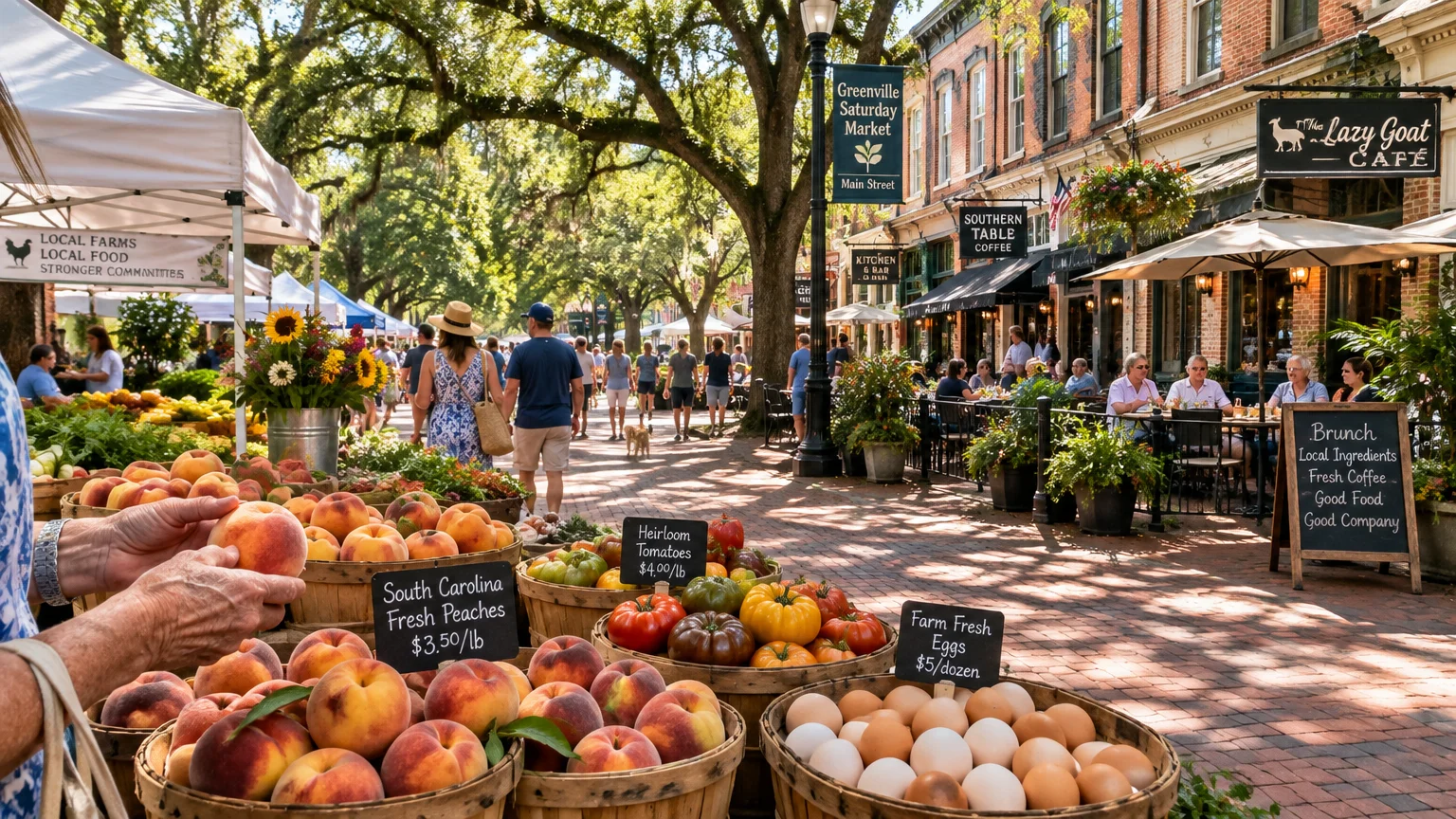
Greenville has transformed into one of the South’s most celebrated food capitals. Its tree-lined, pedestrian-friendly downtown hosts over one hundred independent restaurants within walking distance of Falls Park.
Local chefs combine traditional Lowcountry comfort recipes with modern French and Mediterranean techniques. You will find fresh peaches, heirloom vegetables, and pasture-raised meats at the weekly Saturday Market on Main Street.
South Carolina supports your retirement dollars by exempting Social Security benefits from state income tax. The state also offers a retirement income deduction of up to $10,000 for residents age 65 and older.

3. Portland, Maine
Portland consistently earns national acclaim as one of America’s premier culinary destinations. This historic coastal town boasts more restaurants per capita than almost any other city in the country.
You can purchase fresh lobster directly from harbor docks or sample award-winning sourdough bakeries in the Old Port. The city’s thriving farm-to-table culture relies heavily on organic Maine produce and artisanal cheese.
While coastal Maine real estate requires careful budgeting, the state does not tax Social Security benefits. Maine also provides a generous pension income deduction to help offset state income taxes.

4. San Antonio, Texas
San Antonio offers another prestigious UNESCO City of Gastronomy designation right in the American Southwest. Its rich culinary identity blends traditional Mexican cooking, German immigrant traditions, and classic Texas smokehouse barbecue.
The city’s historic Pearl District serves as a culinary hub packed with upscale eateries, food halls, and cooking schools. Meanwhile, family-owned neighborhood taquerias offer outstanding breakfast tacos that cost only a few dollars.
Texas provides significant financial benefits because it levies no personal state income tax. Your pensions, 401(k) withdrawals, and Social Security payments remain entirely tax-free at the state level.

5. Traverse City, Michigan
Traverse City serves as Michigan’s culinary and wine paradise along the shores of Lake Michigan. The surrounding peninsula produces world-class tart cherries, crisp apples, and renowned cool-climate Rieslings.
Retirees enjoy farm-fresh Great Lakes whitefish, roadside farm stands, and innovative bistro dining in the historic downtown district. The local culinary scene emphasizes seasonal eating rooted in Northern Michigan agriculture.
Michigan protects your wallet by exempting Social Security benefits from state taxes. The state has also phased in broad tax exemptions for public and private retirement pension distributions.

6. Savannah, Georgia
Savannah pairs historic charm and moss-draped squares with an unforgettable Lowcountry culinary tradition. The city’s coastal location ensures an endless supply of fresh Georgia shrimp, blue crab, and coastal oysters.
You can indulge in classic Southern staples like shrimp and grits alongside progressive fusion menus created by ambitious young chefs. The city’s walkable layout lets you stroll to cozy cafes and neighborhood markets every morning.
Georgia ranks among the most tax-friendly states for retirees. Taxpayers age 65 and older can exclude up to $65,000 of retirement income per person from state income taxes.

7. Santa Fe, New Mexico
Santa Fe delivers a bold, distinct food identity defined by native red and green Hatch chiles. Its centuries-old culinary heritage combines Native American, Spanish, and Mexican cooking methods.
You will discover upscale Southwestern dining alongside casual cantinas serving stacked blue corn enchiladas. The Santa Fe Farmers Market at the Railyard is celebrated as one of the best year-round markets in the country.
New Mexico exempts Social Security benefits from state taxation for single filers with adjusted gross incomes under $100,000. Joint filers qualify for the complete exemption with incomes under $150,000.

8. Asheville, North Carolina
Nestled in the Blue Ridge Mountains, Asheville has earned the nickname Foodtopia for its incredible concentration of culinary talent. The area features dozens of small organic family farms supplying local independent restaurants.
You can explore artisanal cheese trails, craft cider houses, and mountain trout smokehouses throughout Buncombe County. Asheville also leads the nation in craft breweries, offering lively community gathering spaces for casual weeknight dining.
North Carolina exempts Social Security income from state taxation. The state also levies a flat, competitive individual income tax rate that keeps retirement withdrawals manageable.

9. Providence, Rhode Island
Providence punches far above its weight in the culinary world thanks to Johnson and Wales University’s famed culinary school. Ambitious young chefs train locally and stay to open inventive neighborhood restaurants.
The city’s historic Federal Hill neighborhood remains a premier destination for traditional Italian dining, espresso bars, and imported specialty delis. You also enjoy quick access to Narragansett Bay oysters, stuffed quahogs, and fresh seafood.
Rhode Island provides state tax exemptions on Social Security benefits for seniors who meet modest income thresholds. You should review current state brackets to determine your exact tax liability.

10. New Orleans, Louisiana
New Orleans represents one of the world’s truly unique culinary destinations. Its native Creole and Cajun cuisines deliver historic flavors found nowhere else on the globe.
You can start your mornings with warm beignets and chicory coffee before sampling afternoon bowls of rich seafood gumbo. Neighborhood po’boy shops and oyster counters offer remarkable dining at modest price points.
Louisiana exempts Social Security benefits as well as military and federal civil service pensions from state income tax. Modest property tax assessments also help keep your ongoing housing expenses predictable.

11. Eugene, Oregon
Eugene sits at the southern end of the fertile Willamette Valley, one of the world’s premier Pinot Noir regions. The city’s food culture emphasizes organic agriculture, wild foraged mushrooms, and sustainable Pacific Northwest seafood.
You can browse expansive community markets, specialty food cooperatives, and casual farm-to-table diners throughout the metro area. Nearby vineyards and berry orchards provide fantastic day-trip tasting opportunities.
Oregon imposes no state sales tax, which immediately reduces the cost of restaurant checks and grocery purchases. While Oregon taxes retirement income, it completely exempts your federal Social Security benefits.
Comparing Culinary Retirement Destinations
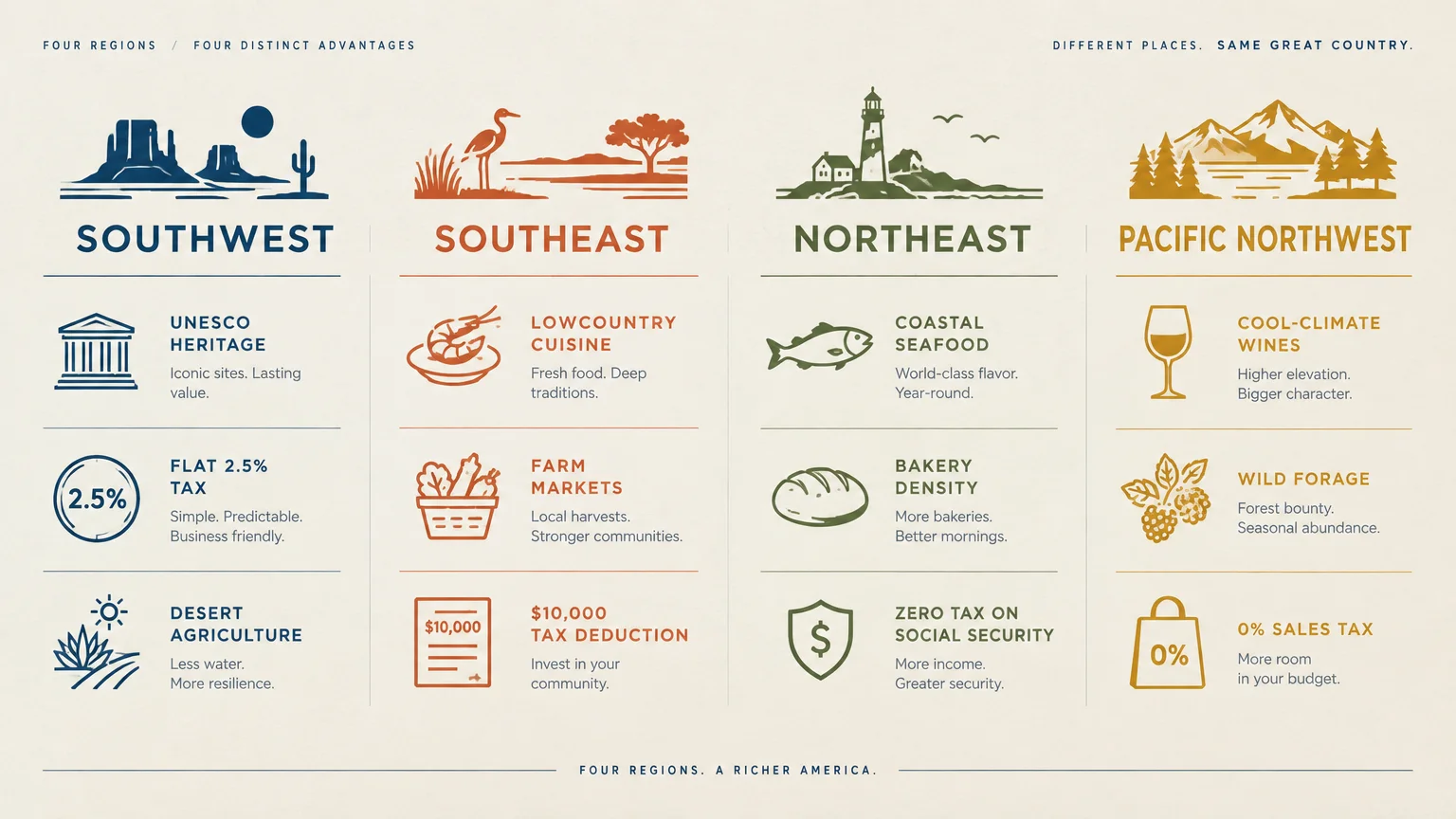
Evaluating destinations requires looking at both food offerings and your monthly financial commitments. Use this comparison table to weigh local taxes alongside culinary appeal.
| Destination | Signature Culinary Highlights | State Tax on Social Security | Key Financial Advantage |
|---|---|---|---|
| Tucson, AZ | Sonoran Mexican, heritage grains | Exempt | Flat 2.5% state income tax |
| Greenville, SC | Modern Southern, farm-to-table | Exempt | $10,000 senior retirement deduction |
| Portland, ME | Fresh lobster, craft bakeries | Exempt | Generous pension income deduction |
| San Antonio, TX | Tex-Mex, smokehouse barbecue | Exempt | Zero state personal income tax |
| Traverse City, MI | Tart cherries, Great Lakes fish | Exempt | Phased-in pension tax exemptions |
| Savannah, GA | Coastal Lowcountry, fresh shrimp | Exempt | Up to $65,000 retirement exclusion |
| Santa Fe, NM | Hatch red and green chile dishes | Exempt (income limits apply) | Income-based Social Security deduction |
| Asheville, NC | Mountain trout, artisanal cheese | Exempt | Flat state income tax rate |
| Providence, RI | Federal Hill Italian, Narragansett clams | Exempt (income limits apply) | Culinary school keeps dining competitive |
| New Orleans, LA | Creole gumbo, po’boys, crawfish | Exempt | Complete public pension exemptions |
| Eugene, OR | Pinot Noir, wild mushrooms | Exempt | Zero percent state sales tax |

Budgeting for a Food-Forward Retirement
Relocating to a culinary hub does not require you to blow your monthly budget on fine dining. Savvy retirees enjoy world-class food scenes while protecting their long-term nest eggs.
Start by establishing a dedicated dining out envelope in your monthly budget. Treating restaurants as a planned discretionary line item prevents impulse spending from straining your savings.
“Do not save what is left after spending, but spend what is left after saving.” — Warren Buffett, Chairman and CEO of Berkshire Hathaway
According to the Social Security Administration, the 2025 Cost-of-Living Adjustment (COLA) increased benefits by 2.5%, lifting the average monthly retirement benefit to roughly $1,976. Planning ahead ensures that small cost-of-living adjustments cover fun lifestyle upgrades.
Take advantage of lunch menus and early-bird seating. Many high-end restaurants feature identical dinner dishes at midday for a fraction of the evening price.
“Budgeting isn’t about limiting yourself; it’s about making the things that excite you possible.” — Jean Chatzky, Financial Journalist and Author
You can also cook premium local ingredients at home. Visiting community farmers markets lets you enjoy world-class produce and meats without paying restaurant markups or service fees.

What Can Go Wrong: Culinary Relocation Pitfalls
Moving primarily for food culture can lead to frustrating surprises if you ignore the broader financial picture. Here are four common traps to avoid before packing your boxes.
- Underestimating prepared food taxes: Many popular culinary cities charge steep hospitality and restaurant taxes. A city sales tax combined with a local meals tax can add 10% or more to your dining bill.
- Ignoring housing affordability: World-class food towns often attract affluent newcomers, driving up home values and property taxes. Review housing data with the Consumer Financial Protection Bureau to understand total borrowing costs.
- Sacrificing medical proximity: Rural farm towns may offer wonderful regional food but lack specialized healthcare facilities. Ensure your chosen food town provides easy access to top-rated hospitals and specialist networks.
- Overlooking federal tax brackets: Increased withdrawals from pre-tax IRAs to fund a dynamic social life can push you into higher federal tax brackets. Check your bracket limits with the Internal Revenue Service before increasing your spending.

When to Consult a Professional
Relocating across state lines involves intricate tax rules and financial adjustments. Seeking professional advice ensures you preserve your retirement assets while pursuing your culinary passions.
Consult a qualified Certified Financial Planner (CFP) or CPA under these specific circumstances:
- Multi-state retirement tax planning: If you receive pensions or retirement income from a former home state, an advisor will help you navigate state filing rules and deductions.
- Selling a primary residence: Relocating often involves selling a long-held home. A tax professional can help you navigate capital gains exclusions and 1031 exchange rules where applicable.
- Structuring tax-efficient withdrawals: An expert can build a withdrawal hierarchy across taxable, tax-deferred, and Roth accounts to keep your taxable income predictable.
- Evaluating long-term healthcare needs: Reliable retirement plans balance lifestyle splurges with future long-term care reserves. Explore practical planning resources through AARP and licensed elder-care specialists.
Frequently Asked Questions
Which retirement destination has the best food scene on a budget?
Tucson, Arizona and San Antonio, Texas offer exceptional dining at modest price points. Both cities celebrate rich street food cultures, affordable casual taquerias, and favorable state tax laws that benefit seniors.
Do all states tax restaurant meals the same way?
No, restaurant meal taxes vary dramatically by state and municipality. Some cities levy specialized food and beverage taxes on top of standard sales taxes, while states like Oregon charge no sales tax on dining.
How can retirees eat well without overspending?
Retirees can dine out during lunch service, explore restaurant week promotions, and cook with local farmers market produce. Prioritizing neighborhood eateries over tourist hotspots also cuts dining expenses significantly.
Does Social Security cover average monthly food costs for retirees?
Social Security provides steady baseline income, but rising food costs make dedicated budgeting essential. Planning your monthly grocery and dining allocations helps keep overall food spending well within your fixed benefit amount.
Savoring Your Next Chapter
Choosing a retirement destination that values great food brings daily joy, vibrant community life, and lifelong wellness. Balance your passion for local flavors with careful financial planning to make your dream move a reality.
This article provides general financial education and information only. Everyone’s financial situation is unique—what works for others may not work for you. For personalized advice tailored to your retirement needs, consider consulting a qualified financial professional such as a CFP or CPA.
Last updated: February 2026. Benefit amounts, tax rules, and program details change annually—verify current figures with official government sources.









Leave a Reply