

Relocating to be near your grandchildren can enrich your retirement years with precious milestones and daily memories, but a successful move requires careful financial and lifestyle planning.
According to data from the National Association of Realtors (NAR), moving closer to friends and family is the single most common reason older adults sell their homes. Yet trading your familiar community for a new zip code involves significant shifts in housing equity, state taxes, healthcare networks, and everyday routines.
Before packing your boxes and putting a “For Sale” sign in your front yard, walking through the practical realities ensures your heart and your finances stay in perfect alignment.

The Grandparent Relocation Wave: What the Numbers Tell Us
You are part of a massive demographic movement. According to research from AARP, roughly 65 million grandparents live in the United States today, and more than 50% live more than 200 miles away from at least one grandchild. Furthermore, about one-third live more than 50 miles away. That physical distance often means missing out on impromptu soccer games, school plays, and simple Sunday dinners.
Closing that gap sounds like an easy decision on paper. However, uprooting your established life involves complex financial decisions, emotional adjustments, and logistical hurdles. NAR reports that the typical senior home seller has lived in their residence for 15 to 16 years. Over that decade and a half, you have accumulated substantial home equity, established trusted healthcare providers, and developed daily routines. Moving closer to family requires you to balance your emotional desires with strict financial realities.
“A good financial plan is about more than numbers; it is about building a life that allows you to feel secure and connected to the people you love without sacrificing your future.” — Suze Orman, Personal Finance Author & Financial Educator

Question 1: What Is the True Difference in the Cost of Living and Taxes?
Relocating across town is one thing; moving across state lines is another. If your children live in an area with a higher cost of living, your monthly retirement budget could take an unexpected hit. You must evaluate property taxes, state income taxes, local sales taxes, and basic consumer costs like groceries and utilities.
Taxes represent one of the largest variables in senior relocation. Currently, nine states—Alaska, Florida, Nevada, New Hampshire, South Dakota, Tennessee, Texas, Washington, and Wyoming—levy no traditional state personal income tax on wages or pension distributions. If you move from a tax-friendly state to one that taxes retirement account withdrawals, pension income, or Social Security benefits, your spendable income will decrease.
Before committing to a move, research these specific financial factors:
- Property Tax Assessments: Some states freeze property taxes for seniors or offer generous homestead exemptions, while others reassess home values annually at full market rates.
- State Taxation of Social Security: While most states exempt Social Security benefits from state income tax, a minority still tax benefits based on federal adjusted gross income thresholds.
- Local Sales and Utility Rates: Everyday living expenses can vary by 20% to 40% between suburban, rural, and major metropolitan markets.

Question 2: How Will the Move Affect Your Home Equity and Capital Gains Taxes?
Selling a home you have owned for 15 or 20 years usually produces a substantial profit. However, you must account for real estate transaction fees, moving expenses, and potential capital gains taxes before calculating how much cash you will have to purchase your next property.
Under IRS Section 121, you can exclude up to $250,000 of capital gain on the sale of your primary home if you file taxes as a single individual, or up to $500,000 if you are married filing jointly. To qualify for this exclusion, you must have owned and lived in the property as your primary residence for at least two out of the five years preceding the sale date. If your home has appreciated beyond these limits, you may owe federal and state capital gains taxes on the remaining profit.
Additionally, professional moving costs can be substantial. According to industry estimates tracked by the Consumer Financial Protection Bureau (CFPB), professional long-distance moves average between $4,000 and $8,000. If you require full-service packing, storage, or specialized vehicle transport, costs can exceed $12,000 to $17,000. Real estate agent commissions, title insurance, and closing fees typically absorb another 6% to 8% of your home’s final selling price.

Question 3: How Will Your Medicare and Healthcare Networks Change?
Healthcare is one of the most critical elements of any retirement relocation. Moving outside your current county or state directly affects your health insurance coverage, your out-of-pocket costs, and your access to trusted physicians.
If you rely on Original Medicare (Part A and Part B), your core coverage travels with you nationwide because you can visit any provider that accepts Medicare. However, Medigap (Medicare Supplement) premiums and plan availability vary by zip code and state. If you move, your monthly Medigap premium may increase or decrease based on local rating systems.
If you have a Medicare Advantage (Part C) plan or a stand-alone Medicare Part D prescription drug plan, your coverage is tied to a specific geographic network. When you move outside your plan’s service area, you qualify for a Special Enrollment Period (SEP) through Medicare.gov. This SEP allows you to switch to a new Advantage plan, select a new Part D plan, or return to Original Medicare. The enrollment window opens the month before your move and continues for two full months after the month you relocate.
“Retirement is not a finish line—it is a major transition. When you relocate, you are not just changing your address; you are building an entirely new routine and budget from the ground up.” — Jean Chatzky, Financial Journalist & Author

Question 4: What Are the Realistic Expectations Around Childcare and Time?
Misaligned expectations between grandparents and adult children can create friction. Before packing your boxes, have an honest, transparent conversation with your adult children about how you envision spending your time together.
Do your children expect you to provide full-time, 40-hour-per-week infant or toddler daycare so they can save on nursery costs? Or do you envision yourself as an on-call babysitter for occasional date nights and weekend afternoon outings? Daily childcare is physically demanding and emotionally exhausting. If your health or energy levels cannot sustain active caregiving, setting clear boundaries in advance protects both your physical well-being and your family relationships.
Consider discussing these practical questions with your family:
- How many days per week do you want to see each other?
- Are you expected to manage school drop-offs, pickups, and extracurricular transportation?
- What plans are in place if a grandchild is sick or school is canceled?
- How will you protect your personal time for travel, hobbies, and rest?

Question 5: What Happens If Your Adult Children Move Away?
In today’s dynamic labor market, corporate transfers, remote work changes, and new career opportunities can cause young families to relocate unexpectedly. If you move across the country to be near your grandchildren, what happens if your adult children receive a job transfer three years from now?
You must evaluate whether you would enjoy living in the new community on your own merits. Ask yourself if the city offers the cultural amenities, climate, recreational activities, and medical facilities you desire. If your adult children moved away, would you stay in the new location, or would you feel stranded in an unfamiliar city? Choosing a location that satisfies your independent lifestyle preferences ensures you remain fulfilled regardless of future family relocations.

Question 6: How Will You Build Your Own Social Network and Identity?
One common pitfall for relocating retirees is relying exclusively on their children and grandchildren for social connection. Your adult children have demanding careers, household responsibilities, and active social circles; your grandchildren have school schedules, sports leagues, and peer groups. They cannot serve as your sole source of companionship.
To thrive in a new area, you need an independent social circle. Check whether the community offers active senior centers, volunteer opportunities, faith-based organizations, golf courses, gardening clubs, or pickleball leagues. You can locate community programs and social services through the Eldercare Locator, a public service supported by the U.S. Administration for Community Living. Cultivating your own friendships prevents feelings of isolation and relieves emotional pressure on your family.

Question 7: Have You Test-Driven the Move with an Extended Rental?
Visiting a city for a four-day holiday weekend feels vastly different from living there full-time. Before selling your home and committing hundreds of thousands of dollars to purchase a new house, consider test-driving the new location.
Renting a furnished apartment or home for three to six months gives you firsthand experience with the local climate, traffic congestion, medical facilities, and daily neighborhood rhythms. It also allows you to experience family interactions in real-time. If the arrangement feels overwhelming or the area does not meet your expectations, a short-term lease gives you the flexibility to pivot without paying hefty real estate commissions and moving costs twice.
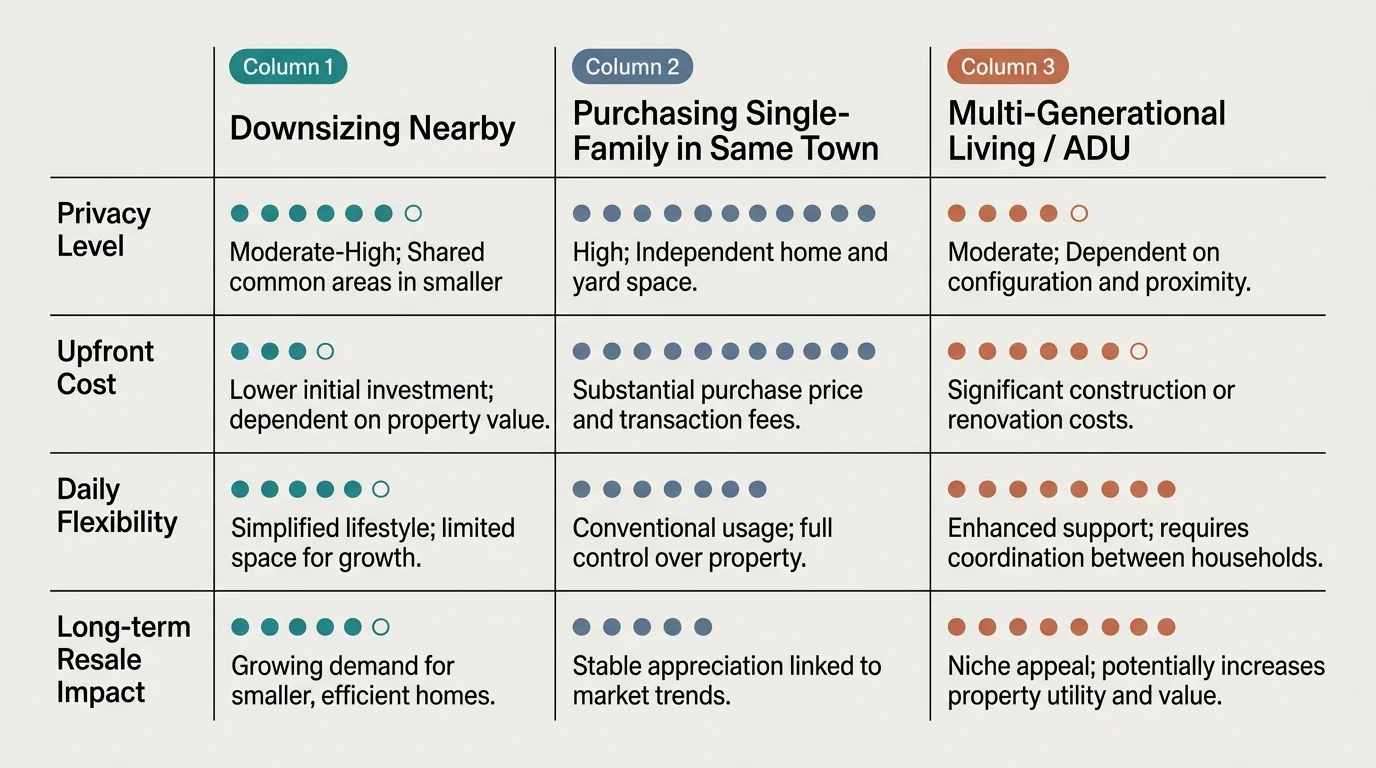
Comparing Your Relocation Options: At a Glance
To help organize your financial and lifestyle assessment, use this comparison framework to weigh your current home against your target location:
| Evaluation Factor | Current Location | Target Location Near Grandkids | Financial & Practical Impact |
|---|---|---|---|
| Housing Costs & Equity | Established mortgage or paid-off home; known property tax rate. | New purchase price, current mortgage rates, updated tax assessments. | Evaluate net sale proceeds after IRS Section 121 exclusions and moving fees. |
| State Tax Environment | Known state income tax, pension exclusions, and sales tax rates. | Potential changes in state tax rates on Social Security and retirement accounts. | A shift in state tax rules can change your annual disposable income by thousands of dollars. |
| Healthcare & Medicare | Established primary care physicians and specialist network. | New healthcare systems; potential shift to new Medicare Advantage/Part D plan. | Special Enrollment Period allows plan changes within 2 months of moving. |
| Social Independence | Longstanding friends, familiar routines, and community ties. | Proximity to family; need to establish a brand-new social circle. | Requires active effort to build friendships outside of family commitments. |
| Childcare Commitments | Occasional visits, holidays, and scheduled video calls. | Frequent in-person contact; potential daily caregiving responsibilities. | Saves adult children daycare costs but demands significant physical energy and time. |
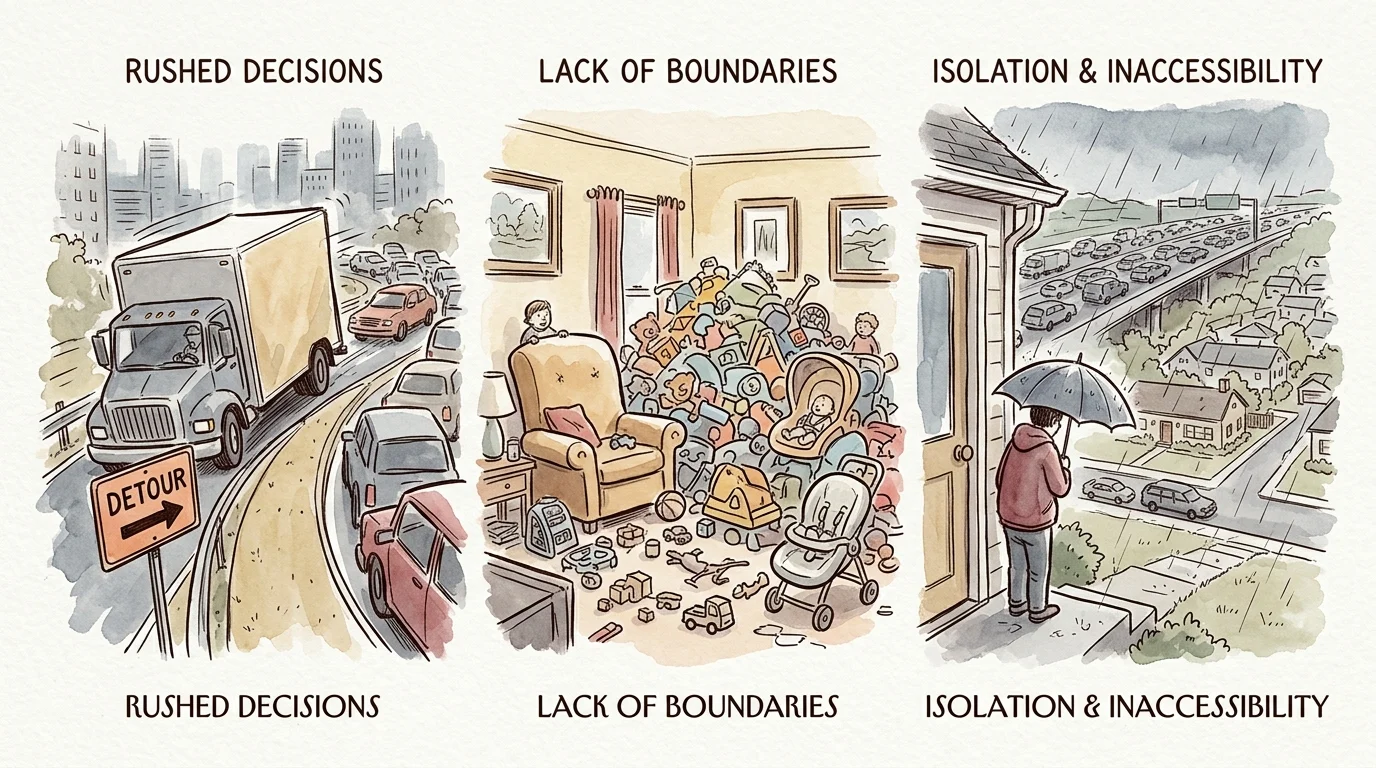
Common Mistakes to Avoid When Relocating Closer to Family
Seniors making this transition often encounter predictable financial and emotional roadblocks. Sidestep these frequent errors to protect your nest egg and your peace of mind:
- Buying Immediately Without Renting First: Rushing into a home purchase in an unfamiliar neighborhood can lead to buyer’s remorse. Renting first lets you study neighborhood traffic, proximity to amenities, and local lifestyle factors.
- Failing to Budget for Move-In Modifications: Downsizing or buying a new property often involves remodeling costs—such as adding walk-in showers, grab bars, or main-floor laundry—to ensure you can age in place safely.
- Neglecting Medicare Enrollment Deadlines: Forgetting to notify Medicare when changing zip codes can leave you without prescription drug coverage or out-of-network for specialized medical care.
- Overcommitting to Free Childcare: Agreeing to excessive babysitting hours without setting clear boundaries can lead to caregiver burnout and family resentment.

Finding the Right Advisor to Guide Your Relocation
A multi-state or cross-city move involves complex financial moving parts. Consulting qualified professionals before listing your property ensures you avoid costly missteps:
- Fee-Only Fiduciary Financial Planner: A CFP (Certified Financial Planner) can stress-test your retirement portfolio against the cost of living in your target city, modeling cash flows and tax implications.
- Certified Public Accountant (CPA): A tax professional can calculate your precise capital gains liability under IRS Section 121 rules and evaluate multi-state tax filing requirements during your moving year.
- State Health Insurance Assistance Program (SHIP) Counselor: SHIP provides free, unbiased counseling to help you navigate Medicare plan options and find doctors accepting new patients in your destination county.
- Senior Real Estate Specialist (SRES): A real estate agent with SRES certification understands the unique financial, downsizing, and physical considerations of older adults transitioning to new homes.
Frequently Asked Questions
How far in advance should I notify Medicare about an out-of-state move?
You should notify the Social Security Administration (which manages Medicare enrollment data) and your private Medicare Advantage or Part D plan provider as soon as you have an official move date and new address. Your Special Enrollment Period allows you to switch plans starting the month before your move and extends for two full months after your move month.
Can I exclude capital gains taxes if I sell my home to move near family?
Yes, as long as you meet the IRS Section 121 ownership and use tests. You must have owned and lived in the property as your primary residence for at least two out of the five years preceding the sale. Single filers can exclude up to $250,000 of gain, while married couples filing jointly can exclude up to $500,000.
How much does a typical long-distance senior move cost?
Professional cross-country moves generally range from $4,000 to $8,000 for standard household goods. If you opt for full-service packing, fragile item handling, vehicle transport, or short-term storage, total costs can reach $12,000 to $17,000. Always obtain at least three in-home estimates from licensed, insured movers.
How do I set healthy boundaries regarding babysitting expectations?
Schedule a dedicated, calm conversation with your adult children before you finalize your moving plans. Be honest about your physical stamina, your desire to travel or pursue hobbies, and the specific days or hours you are willing to watch your grandchildren. Clear communication prevents misunderstandings and preserves healthy family relationships.
Final Thoughts on Making the Move
Living near your grandchildren can provide some of the most rewarding experiences of your retirement years. Being present for spontaneous celebrations, school milestones, and weekend sports games builds bonds that last a lifetime. By answering these seven questions thoughtfully and running the numbers in advance, you ensure that your relocation supports both your emotional happiness and your long-term financial security.
The information in this guide is meant for educational purposes. Your specific circumstances—including income, benefits, tax situation, and health needs—may require different approaches. When in doubt, consult a licensed financial advisor or tax professional.
Last updated: February 2026. Benefit amounts, tax rules, and program details change annually—verify current figures with official government sources.









Leave a Reply