

Moving into an age-restricted community can simplify your retirement with resort-style amenities, low-maintenance living, and a vibrant peer network. However, buying into a 55-plus development involves far more than picking a floor plan and admiring the clubhouse pool. Federal regulations, Homeowners Association (HOA) financial health, restrictive bylaws, and escalating maintenance assessments can quickly derail your retirement budget if you do not perform rigorous due diligence. With over 4.1 million Americans reaching age 65 annually through 2027, demand for senior housing is surging. Asking targeted, strategic questions before signing a contract protects your nest egg, preserves your independence, and ensures your new neighborhood aligns with your long-term lifestyle goals.

The Essentials: Key Takeaways Before You Buy
- Federal Rules Matter: The Housing for Older Persons Act (HOPA) mandates that at least 80% of occupied units have at least one resident aged 55 or older, while 62+ communities require 100% compliance.
- Look Under the Financial Hood: A healthy HOA reserve fund is benchmarked at 70% to 100% funded; reserves below 30% pose a severe risk of unexpected special assessments.
- Lifestyle Restraints Are Binding: Rules governing visiting grandchildren, caregiver residency, exterior renovations, and pet sizes are legally enforceable.
- Plan for Aging in Place: Active adult communities do not provide assisted living or medical care; you must verify how the association accommodates home health aides and accessibility retrofits.

1. What Are the Specific Age and Guest Restrictions Under HOPA?
Under the Housing for Older Persons Act (HOPA)—an amendment to the federal Fair Housing Act administered by the U.S. Department of Housing and Urban Development (HUD)—qualifying 55-and-older communities must ensure that at least 80% of occupied units contain at least one person aged 55 or older. The remaining 20% cushion allows developers or boards flexibility for surviving spouses or specific demographic exceptions, but individual communities can legally enforce a stricter 100% rule if their covenants dictate.
You must determine how the association handles family members who do not meet the age threshold. Ask the following targeted questions:
- If you are married to a younger spouse, can they remain in the home if you pass away first?
- Can adult children in their twenties or thirties live with you permanently?
- What are the exact limits on guest visits for grandchildren (e.g., maximum limits of 30 or 60 days per calendar year)?
- Do visiting children have unrestricted access to community amenities like swimming pools, tennis courts, and fitness centers, or are their hours restricted?

2. How Financially Healthy Is the HOA Reserve Fund?
According to the Community Associations Institute (CAI), a sound association maintains a reserve fund funded at 70% to 100% of its projected long-term capital repair obligations. If an association’s reserve fund sits below 30%, you face a high risk of surprise “special assessments”—lump-sum bills charged to homeowners to repair roofs, resurface private roads, replace HVAC systems in shared clubhouses, or remediate stormwater basins.
Request a copy of the most recent independent Reserve Study (conducted within the last three to five years) and review the balance sheet. Reliable associations typically allocate 15% to 40% of their total annual dues collection directly into their reserve accounts. If the community relies on regular operating dues to fund major capital projects rather than dedicated reserves, expect substantial dues increases down the road.
“Retirement is not the end of the road. It is the beginning of the open highway. But before you step on the gas, make sure your recurring housing costs won’t drain your engine along the way.” — Jean Chatzky, Financial Journalist and Author
3. What Do Monthly Dues Cover, and How Fast Are They Escalating?
Data from the U.S. Census Bureau indicates that over 21.6 million U.S. households pay monthly association fees, with planned communities averaging between $200 and $400 per month, though extensive 55+ resort communities frequently exceed $600 to $900 per month. Never evaluate an age-restricted community based on the sticker price of the home alone; you must evaluate total monthly carrying costs.
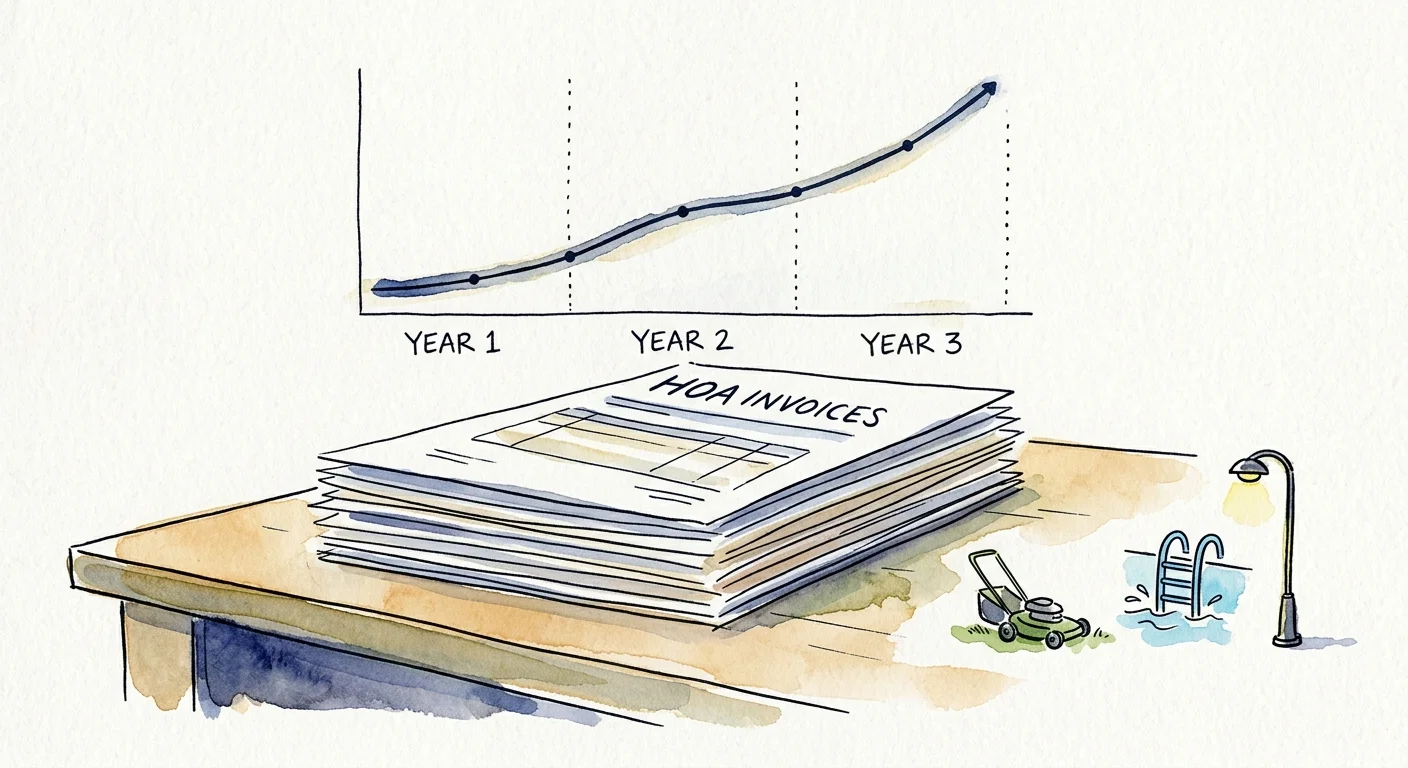
Ask the HOA board or management company for a five-year historical record of monthly dues increases. While modest annual adjustments of 2% to 5% are normal to track inflation, double-digit annual spikes indicate poor financial forecasting or escalating deferred maintenance. Clarify the breakdown of included services:
- Exterior Maintenance: Does the HOA handle roof replacements, exterior painting, siding repairs, and gutter cleaning, or only lawn mowing and snow removal?
- Utilities and Services: Are trash pickup, high-speed internet, cable television, sewer, and water bundled into the monthly dues?
- Master Insurance Policy: What does the master policy cover? In condo-style setups, you only need an HO-6 policy for interior walls, whereas single-family detached homes require standard HO-3 homeowner policies.
4. What Are the Rental Caps and Resale Restrictions?
Circumstances change during retirement. You might choose to downsize further, move closer to family, or spend winters elsewhere while renting out your property. Many 55+ communities enforce strict rental caps—such as permitting no more than 10% of total units to be leased at any given time—to maintain owner-occupancy ratios and preserve property values.
Review the community’s declaration of Covenants, Conditions, and Restrictions (CC&Rs) for mandatory minimum lease terms (e.g., 6 to 12 months), tenant age-verification screenings, and resale transfer fees. Some master-planned developments levy a “capital contribution fee” or “transfer assessment” of 0.5% to 1.5% of the purchase price whenever a home sells, which can surprise sellers at closing.
5. How Does the Community Accommodate Health Changes and In-Home Care?
Age-restricted active adult neighborhoods are independent living communities; they do not operate as assisted living facilities or continuous-care retirement communities (CCRCs). If your health or mobility declines, you will need to arrange external support. Check how community policies interact with home health services:
- Are live-in caregivers under the age of 55 permitted without lengthy board approval processes?
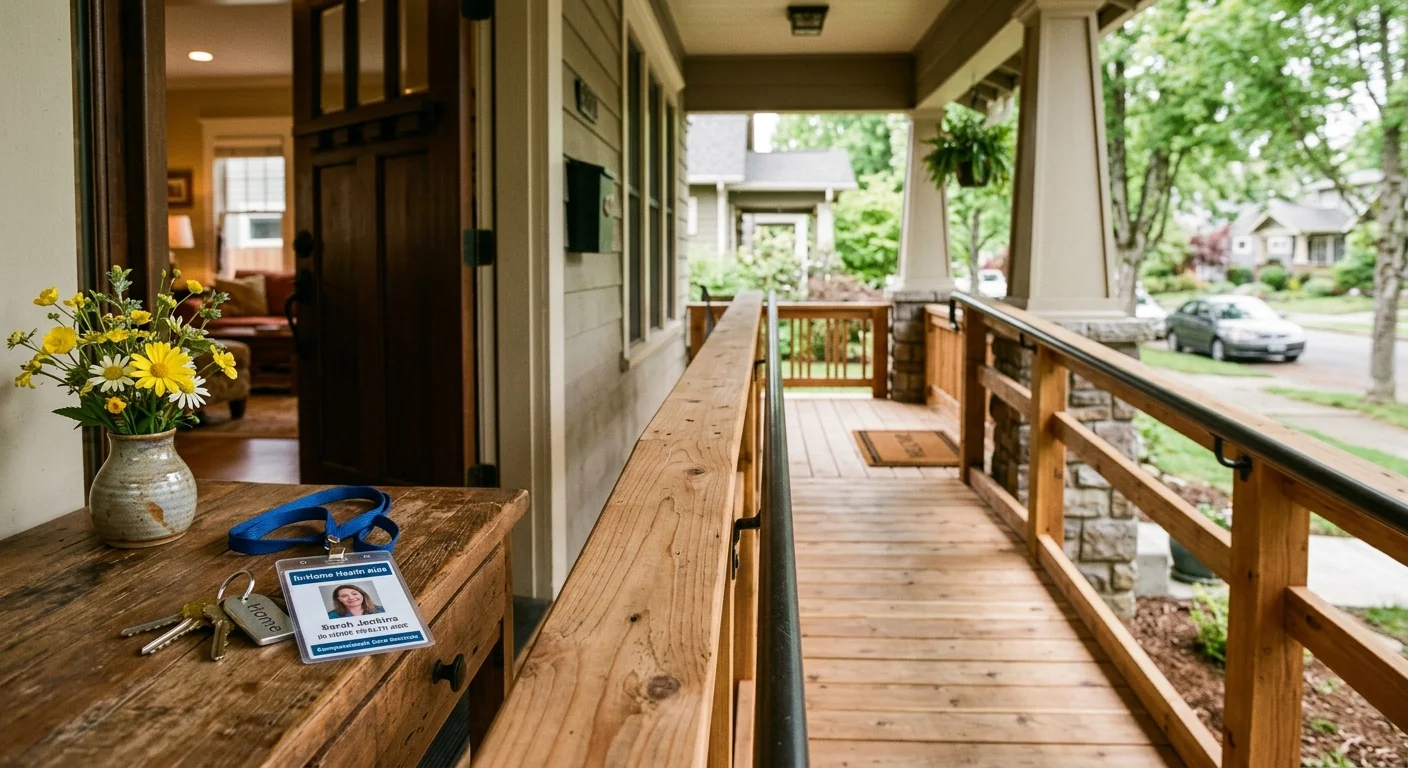
- Does the HOA allow necessary accessibility modifications, such as wheelchair ramps, grab rails, or wider exterior doorways, without unreasonable architectural pushback? Under the Fair Housing Act, associations must make reasonable accommodations for residents with disabilities.
- Does the layout of the property accommodate emergency response vehicles easily?
For independent resources on assessing long-term care needs alongside independent housing options, consult the Eldercare Locator, a public service of the U.S. Administration for Community Living.

6. Is the Community Involved in Pending Litigation or Developer Transitions?
If you purchase a home in a brand-new or expanding 55+ development, the original builder likely controls the HOA board until a specific percentage of homes (often 75% to 90%) are sold. During this phase, developers may artificially subsidize HOA fees to make properties more attractive to buyers. Once the transition occurs and residents assume control of the board, dues often rise steeply to reflect true operating expenses.
Ask whether the association is involved in any active litigation. Ongoing lawsuits between the HOA and the original builder over construction defects, drainage failures, or poor amenity construction can freeze mortgage financing options and consume vast sums in legal expenses.
7. What Are the Detailed Rules for Pets, Parking, and Exterior Alterations?
Lifestyle friction in age-restricted communities rarely stems from major legal battles; it usually arises from day-to-day CC&R enforcement. Before placing a deposit, obtain and review the full rules and regulations handbook:
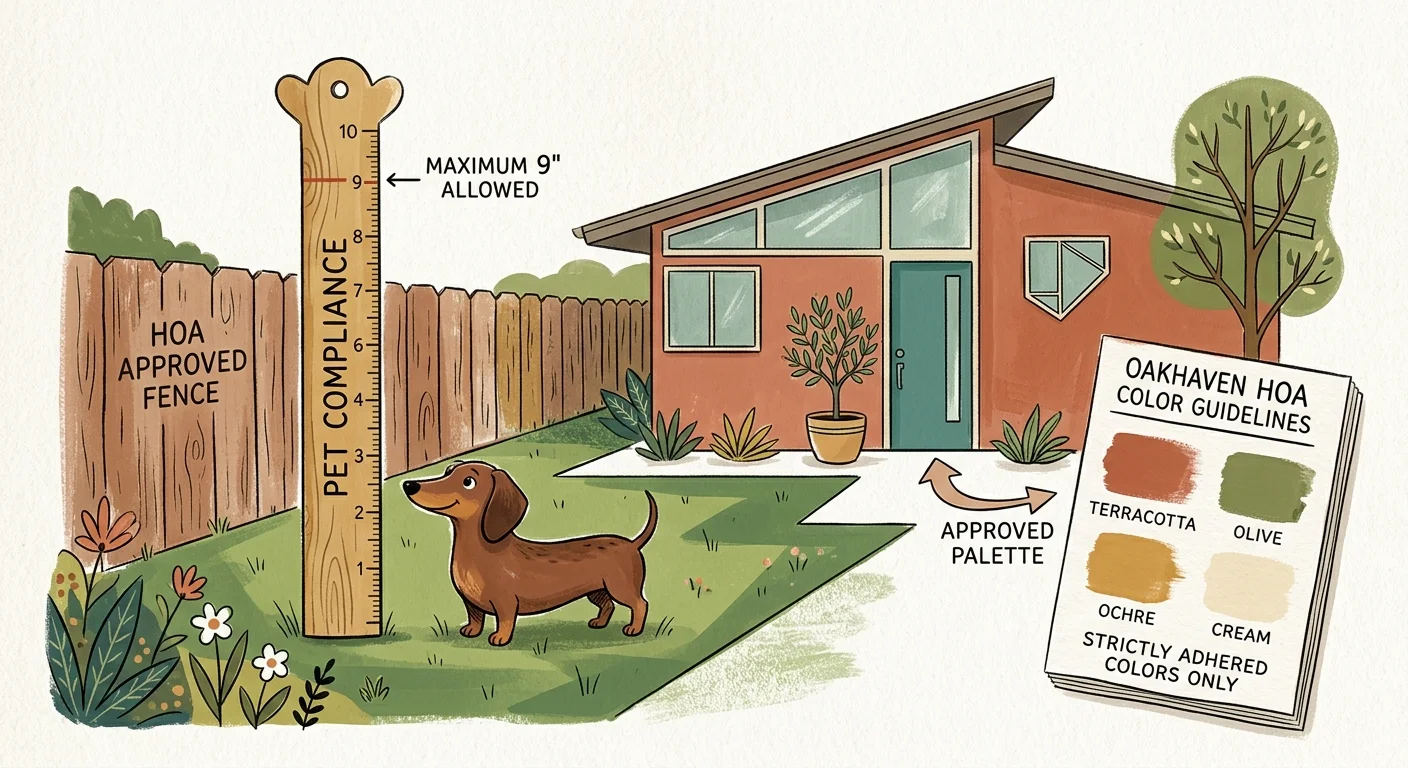
- Pet Restrictions: Are there strict caps on pet weight (e.g., maximum 30 pounds), breed restrictions, or a limit of one to two animals per household?
- Vehicle and Parking Limitations: Are recreational vehicles (RVs), boats, campers, or commercial work vans prohibited from parking in driveways for more than 24 hours? Are golf carts allowed on public roads within the gate?
- Architectural Controls: How strict is the Architectural Review Committee (ARC)? Can you install solar panels, plant specific flowers, screen in your back patio, or repaint your front door without months of committee review?
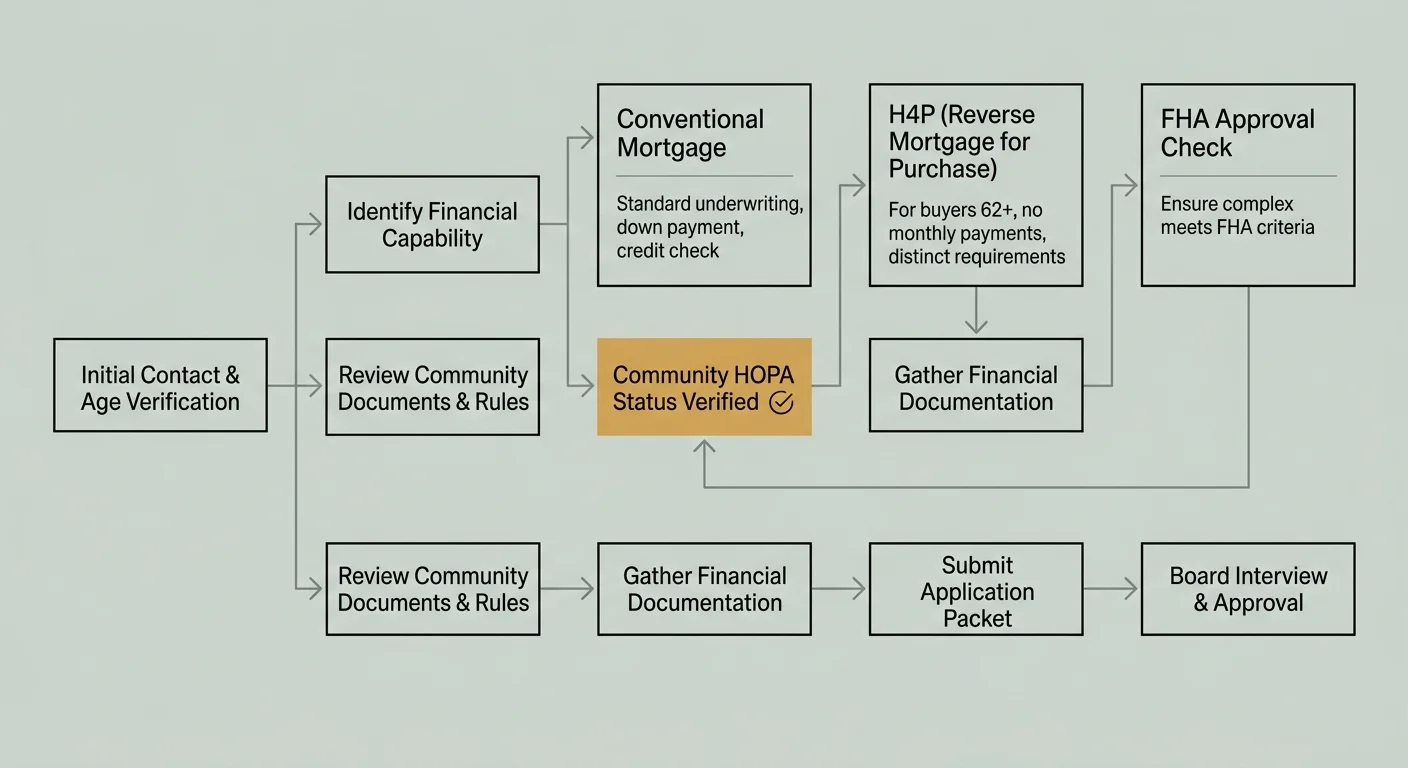
8. What Financing Methods Are Allowed, and Does the Property Qualify?
Financing an age-restricted property differs from purchasing a standard single-family home. If you plan to buy a condo unit within a 55+ community using a conventional loan or a government-insured product, the entire development must meet lender eligibility benchmarks, including owner-occupancy rates and commercial space limitations.
Many retirees aged 62 and older finance their purchase using an FHA-insured Home Equity Conversion Mortgage for Purchase (H4P), which allows buyers to acquire a primary residence using a single down payment without monthly principal and interest payments. To use this loan strategy, the property must meet strict FHA standards. Review guidance from the Consumer Financial Protection Bureau (CFPB) before committing to alternative mortgage structures.

9. Does the Social and Governance Culture Align with Your Daily Preferences?
While marketing brochures display bustling pickleball matches and wine-tasting clubs, day-to-day community dynamics vary significantly between neighborhoods. Some 55+ developments maintain a bustling, structured calendar with full-time lifestyle directors, while others function as quiet, low-interaction enclaves.
Spend time in the neighborhood before buying. Speak with current residents at the clubhouse or community cafe. Attend an open HOA board meeting if possible. This allows you to evaluate whether the board operates transparently and whether the resident culture aligns with your expectations for social connection, volunteerism, and peaceful living.
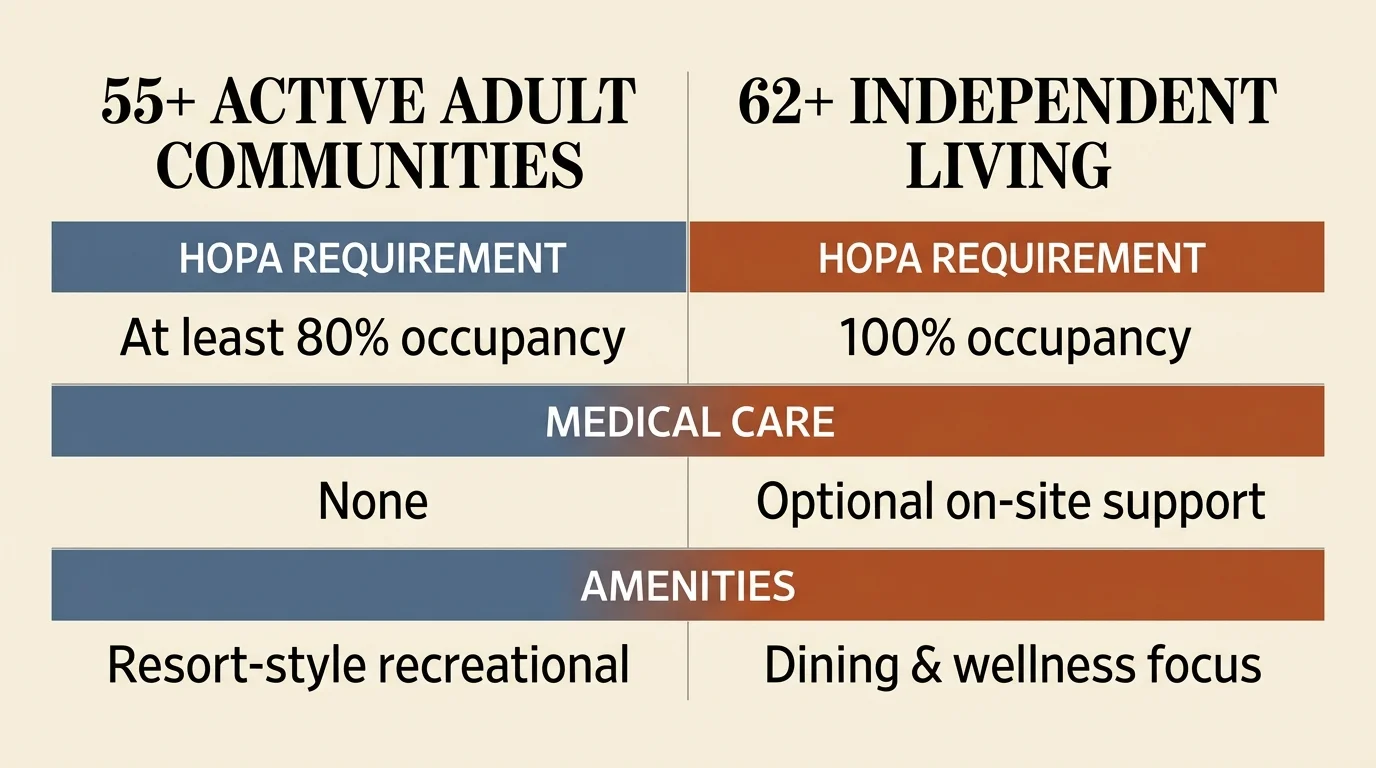
Understanding Age-Restricted Housing Models: A Direct Comparison
The table below summarizes key structural, operational, and demographic differences across the primary types of active senior and general housing arrangements:
| Feature / Rule | 55+ Community (HOPA 80/20) | 62+ Senior Community | Standard All-Age HOA Community |
|---|---|---|---|
| Age Minimum Requirement | At least 1 resident aged 55+ in ≥80% of units | 100% of residents must be 62 or older | No age restrictions permitted |
| Underage Dependents / Children | Subject to HOA bylaws; typically restricted | Prohibited under federal statute | Unrestricted (Fair Housing protection) |
| Guest Visit Limits | Strictly capped (e.g., 30–60 days/year) | Strictly capped; no permanent underage guests | Determined solely by local HOA rules |
| Reserve Fund Healthy Target | 70% to 100% fully funded | 70% to 100% fully funded | 70% to 100% fully funded |
| H4P / Reverse Mortgage Eligible | Yes (if age 62+ and FHA-approved) | Yes (property must meet FHA guidelines) | Yes (standard FHA eligibility) |

Costly Errors to Sidestep When Buying in a 55+ Community
Avoid these critical oversights that frequently trap new active-adult homebuyers:
- Failing to Read the CC&Rs Prior to Signing: Never rely on verbal statements from a real estate agent or builder representative regarding pet sizes, golf cart storage, or guest stays. Only the recorded covenants are legally binding.
- Assuming Children or Grandchildren Can Inherit and Reside: While heirs can legally inherit the title and equity of your property, they cannot reside in the home if doing so violates the community’s age-qualification ratio or minimum age bylaws. They may be forced to sell or lease the unit under strict HOA parameters.
- Overlooking Future Mobility Limitations: Many active adult homes feature multi-story layouts or sunken living rooms. Ensure the home incorporates single-level living, zero-threshold showers, and wide hallways so you will not need to relocate if your physical mobility changes. Organizations like AARP provide extensive resources on universal design and aging-in-place modifications.
- Ignoring Developer Transition Risks: In new developments, verify who pays for unsold lot dues. When the developer turns control over to homeowners, deferred operational costs can lead to immediate dues hikes.

When DIY Isn’t Enough: Professional Support to Seek
Navigating age-restricted real estate transactions involves unique legal, tax, and estate planning considerations. Engage specialized professional support under the following circumstances:
- Hiring a Real Estate Attorney: Have an independent attorney review the CC&Rs, HOA financial audit, and reserve study before waiving your contract contingencies. This confirms there are no restrictive deed provisions, pending lawsuits, or hidden transfer taxes.
- Working with a Seniors Real Estate Specialist (SRES): Partner with a real estate agent certified by the National Association of Realtors as an SRES. These professionals specialize in senior housing transitions, local 55+ developments, and HOPA compliance regulations.
- Consulting a CPA or Fee-Only CFP: A certified financial planner can model how escalating HOA dues, potential special assessments, and property tax reassessments will impact your cash flow and long-term retirement drawdowns over a 20- to 30-year time horizon.
Frequently Asked Questions
Can a 55-plus community reject buyers if they have children under 18?
Yes. The Housing for Older Persons Act explicitly exempts qualifying 55+ and 62+ communities from the Fair Housing Act’s prohibition against familial status discrimination. Associations can legally prohibit permanent residency by minor children.
What happens if my spouse is under 55 and I pass away?
In most 55+ communities operating under the 80/20 HOPA rule, a surviving younger spouse may remain in the home as long as the total community occupancy maintains the 80% threshold. However, you must confirm that the community’s specific bylaws do not require 100% of units to be occupied by someone 55 or older.
Are Homeowners Association fees tax-deductible?
For primary residences, standard HOA dues are not deductible on federal tax returns. However, if you run an eligible home office from the property, a proportional share of HOA dues may qualify as a business expense. Always verify current deduction rules with a qualified tax professional.
Can the HOA prevent me from hiring a live-in caregiver who is under 55?
Under the federal Fair Housing Act, associations must provide reasonable accommodations for individuals with documented medical needs and disabilities. A live-in healthcare aide is generally treated as an accommodation rather than an unauthorized permanent resident, though the HOA may require formal medical verification and background screening.
Final Thoughts on Choosing Your Retirement Community
Selecting the right age-restricted community requires balancing lifestyle amenities against strict governance and recurring carrying costs. By analyzing the reserve study, verifying HOPA guest rules, reviewing CC&Rs, and testing the neighborhood atmosphere, you can secure a low-maintenance home that supports your long-term independence and financial security.
This article provides general financial education and information only. Everyone’s financial situation is unique—what works for others may not work for you. For personalized advice tailored to your retirement needs, consider consulting a qualified financial professional such as a CFP or CPA.
Last updated: February 2026. Benefit amounts, tax rules, and program details change annually—verify current figures with official government sources.








Leave a Reply