

Deciding where to live on a fixed income ranks among the most impactful retirement housing decisions you will make. While conventional wisdom urges seniors to purchase a home immediately after relocating or retiring, renting before buying in retirement provides a crucial test drive that protects your nest egg from unexpected market shifts, hidden property expenses, and location regret. Leasing a property gives you immediate flexibility to explore a new city, test local healthcare access, and evaluate community amenities without locking your hard-earned savings into illiquid equity. Before signing a long-term mortgage or spending hundreds of thousands of dollars in cash, evaluate these seven clear signs that renting first represents your smartest financial move.
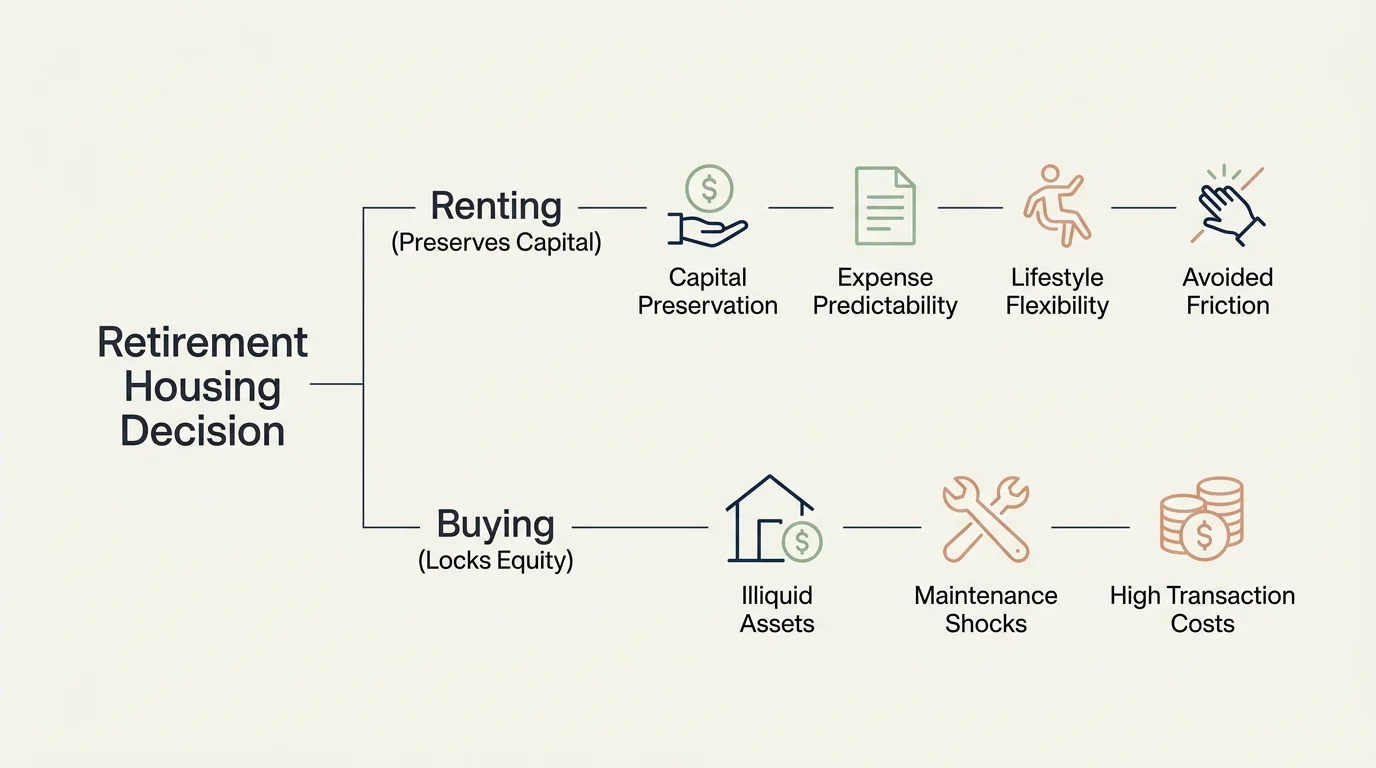
At a Glance: Why Test-Driving Your Move Makes Sense
Testing a new lifestyle before committing your equity protects both your peace of mind and your bank account. Here is what you need to keep in mind when evaluating renting vs buying in retirement:
- Capital Preservation: Unlocking equity from a home sale keeps liquid cash available for healthcare and unexpected living costs.
- Expense Predictability: Renting transfers variable maintenance shocks—like replacing a roof or HVAC system—to the landlord.
- Lifestyle Flexibility: Leasing lets you test-drive climate, local medical networks, and neighborhoods before buying permanent real estate.
- Avoided Friction: You eliminate real estate agent fees, closing costs, and transfer taxes if your needs change within a few years.

1. You Are Relocating to a New City or State
Moving to a sunnier climate or a lower-tax state sounds appealing on paper, but everyday living often differs from a two-week vacation. Living in a new region exposes you to local weather patterns, seasonal traffic variations, healthcare network realities, and community dynamics that you cannot fully grasp during a short visit. For instance, moving to the Sunbelt might offer warm winters, but extreme summer heat could keep you indoors for months at a time.
Renting for 12 to 24 months gives you a low-risk trial period. You can test different neighborhoods, gauge commute times to essential medical specialists, and discover whether the local social scene matches your expectations. If you discover that the region does not suit your lifestyle, breaking a lease or choosing not to renew is far simpler and cheaper than putting a home back on the market. According to housing research from AARP, overall living costs and neighborhood convenience rank as major drivers for senior moves, making a trial period essential before making a permanent commitment.
2. You Want to Preserve Liquid Capital for Healthcare and Living Expenses
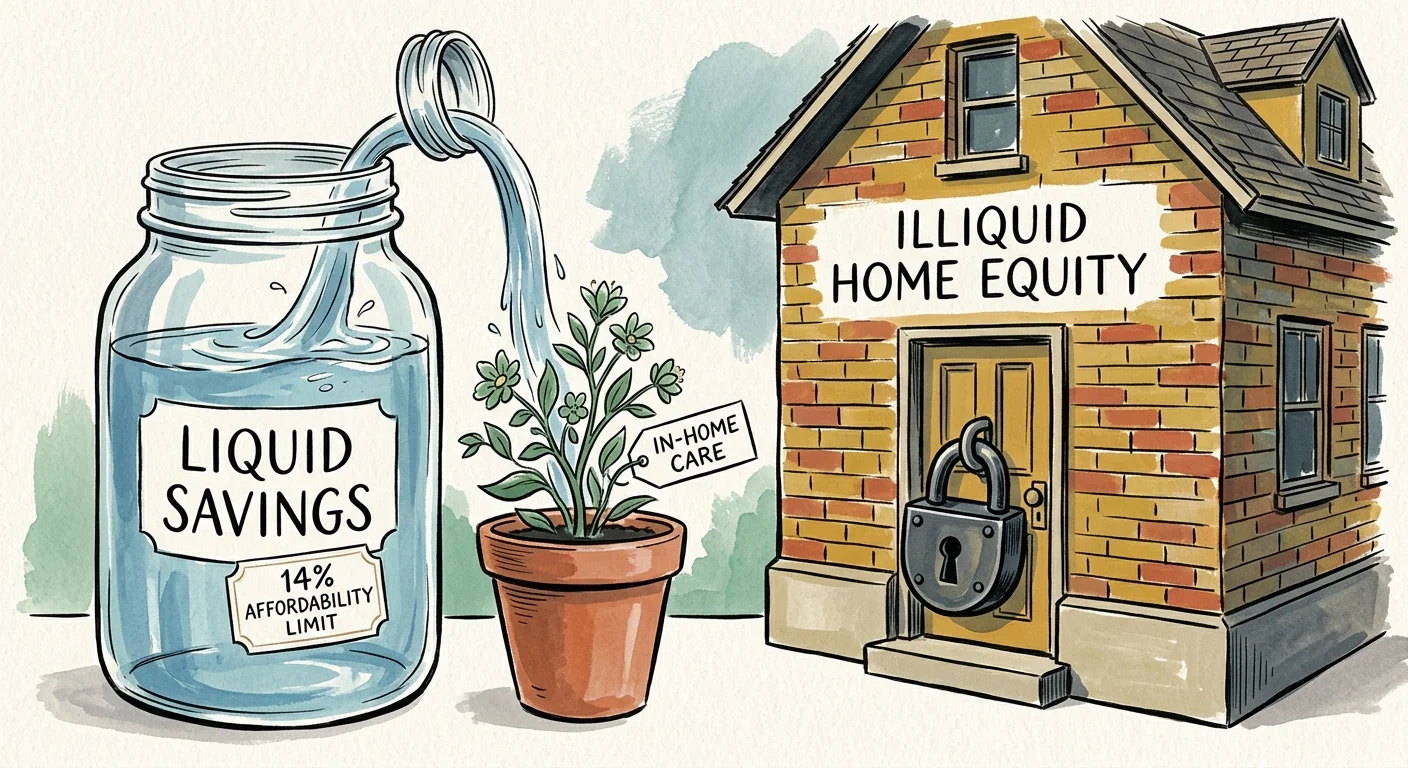
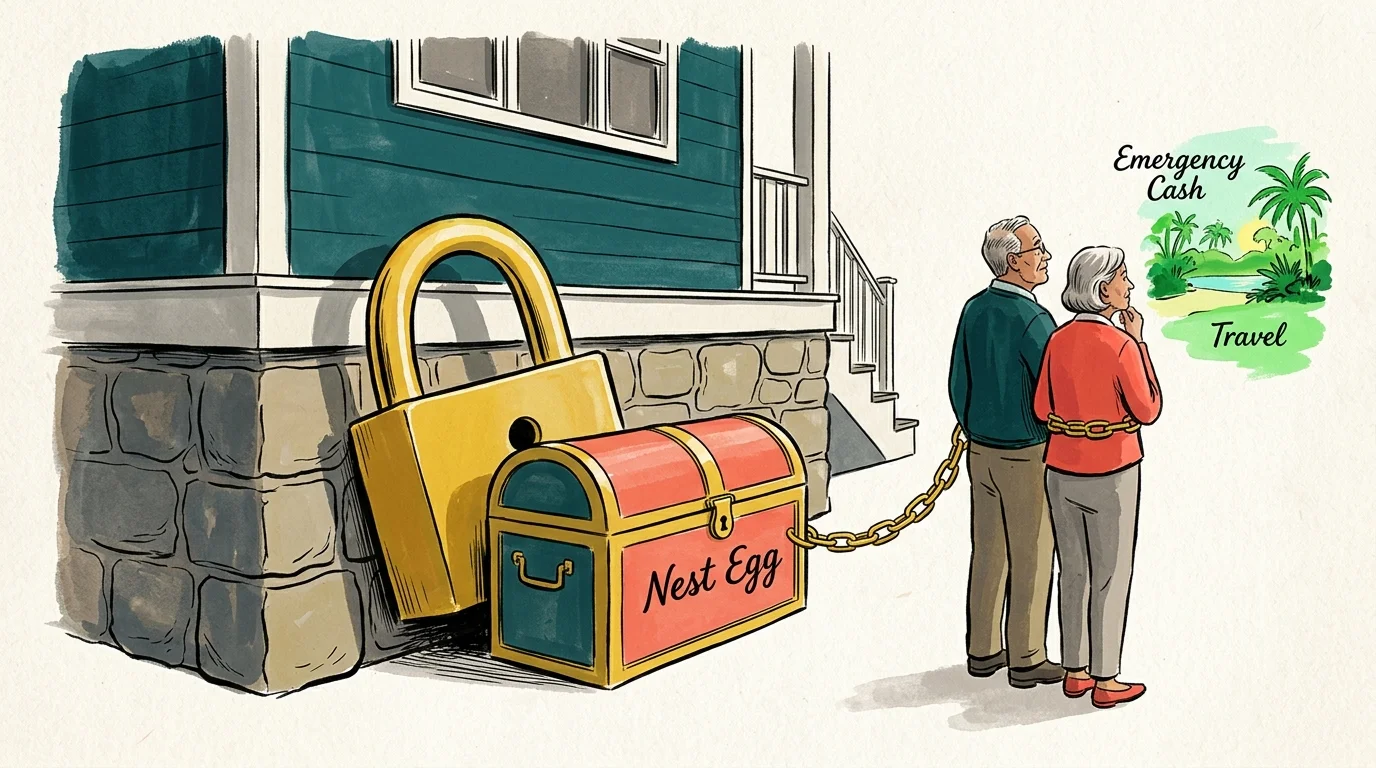
Tying up the majority of your savings in real estate equity can leave you “house rich and cash poor.” As you age, healthcare expenses and long-term care needs frequently increase. If your wealth remains locked in residential real estate, paying for sudden medical procedures or hiring in-home help requires taking out loans, refinancing, or selling the property under stressful conditions.
Data from the Harvard Joint Center for Housing Studies (JCHS) highlights a stark reality: only 14% of single-person households aged 75 and older with moderate incomes can afford just four hours of daily in-home care relying solely on their monthly income. Selling your primary residence and renting allows you to invest the sales proceeds into liquid, conservative financial instruments. This strategy keeps cash accessible for unexpected medical bills, prescription drug costs, and routine living expenses while keeping your capital working for you.
3. Unpredictable Maintenance and Property Taxes Strain Your Fixed Income
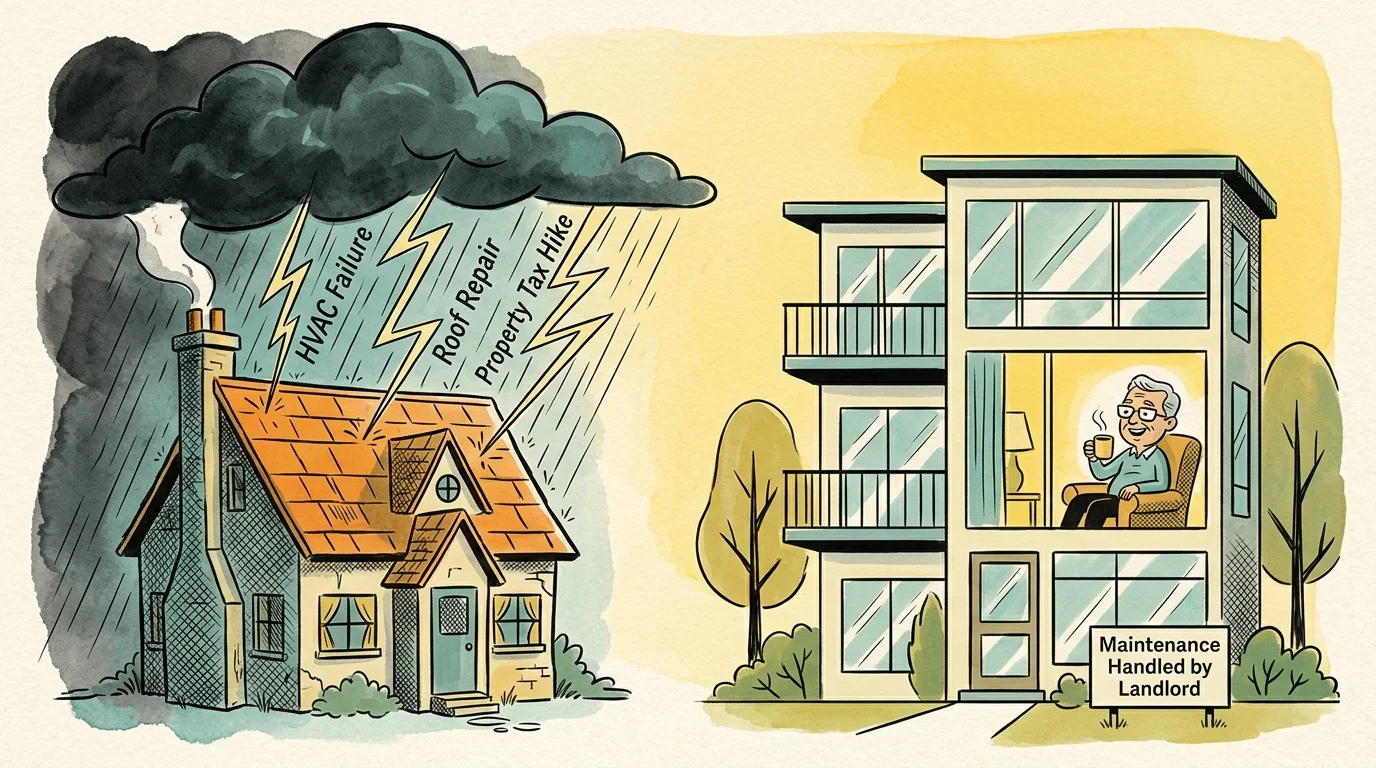
Homeownership comes with fluctuating, unpredictable overhead. Real estate guidelines recommend budgeting 1% to 3% of a home’s total market value annually for routine maintenance and repairs. On a $400,000 home, that equals $4,000 to $12,000 every single year in upkeep, property taxes, and home insurance premiums. A sudden roof failure, plumbing emergency, or sudden property tax assessment can ruin a carefully constructed retirement budget.
When you rent, your landlord absorbs repair bills and structural upkeep. Your rent payment creates a predictable baseline expense that simplifies monthly budgeting on a fixed income. A national survey by AARP revealed that 71% of older adults who move do so to manage housing costs, 60% move to lower maintenance demands, and 55% relocate due to rising property tax burdens. Renting eliminates tax shocks and sudden repair expenses entirely.

4. You Need Physical Accessibility Features Right Now (or Soon)
Aging in place comfortably requires housing designed for changing physical mobility. Features like main-floor primary bedrooms, zero-step entrances, wide doorways, and walk-in showers prevent fall hazards and support long-term independence. However, finding these features in older single-family housing stock is remarkably rare.
The Harvard Joint Center for Housing Studies reports that fewer than 4% of single-family homes in the United States offer all three core physical accessibility features: single-floor living, a no-step entry, and wide hallways or doorways. Retrofitting an standard single-family home with ramps, widened doors, and accessible bathrooms often costs between $10,000 and $30,000 or more. Renting a modern apartment, single-story townhome, or unit within an age-restricted active adult community gives you built-in accessibility without retrofitting expenses.

5. You Plan to Move or Downsize Again Within Five Years
Buying real estate incurs significant transaction costs. When purchasing a home, you pay closing costs, inspection fees, title insurance, and appraisal fees that equal 2% to 4% of the purchase price. Selling that same home later requires paying real estate agent commissions (typically 5% to 6%), seller closing fees, and potential state transfer taxes. To break even on these transaction costs, you generally need home equity to appreciate for at least five to seven years.
If you anticipate relocating within three to five years—perhaps to move closer to adult children, welcome new grandchildren, or transition into a continuing care facility—buying real estate exposes you to financial loss. Renting in retirement pros include dodging transaction fees and maintaining full mobility to pivot whenever your personal circumstances change.
6. You Want to Eliminate the Physical Burden of Homeownership
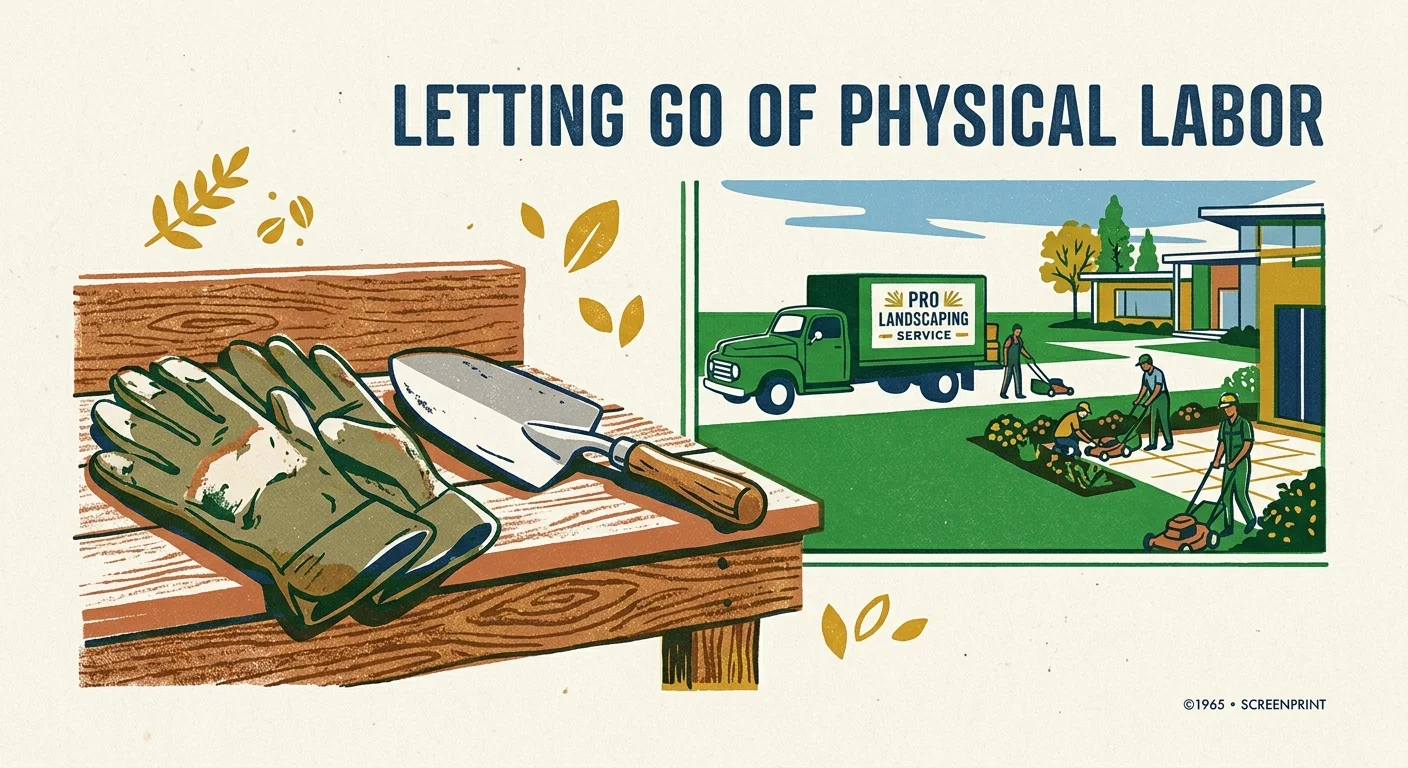
Owning a single-family home demands continuous physical effort. Mowing lawns, clearing snow, cleaning gutters, raking leaves, and painting trim require time and energy that you might prefer spending on travel, family, or personal hobbies. As physical stamina changes over time, managing home repairs turns from a source of pride into a stressful burden.
“Renting in retirement gives you the ultimate luxury: option value. It protects your liquid capital while giving you the freedom to pivot if your lifestyle, health, or family needs change.” — Jean Chatzky, Financial Journalist and CEO of HerMoney
Leasing allows you to delegate maintenance responsibilities to property managers. When an appliance stops working or a pipe leaks, you place a maintenance request instead of retrieving tools or hiring expensive contractors. This shift grants you time freedom to travel without worrying about home security or yard maintenance while you are away.

7. Your Retirement Budget Has Not Settled Yet
The transition into retirement involves adjusting to shifting income streams and expenses. During your first few years of retirement, your cash flow adapts as you file for Social Security benefits, manage Required Minimum Distributions (RMDs) from IRAs or 401(k)s, and adjust to Medicare premiums. For context, the standard Medicare Part B monthly premium is $185.00 in 2025, and tax rules like the standard deduction for seniors age 65 and older ($15,000 standard deduction plus $1,950 for single filers in 2025 according to the Internal Revenue Service) require careful strategy.
Committing to a long-term mortgage or spending a vast portion of your nest egg during this adjustment phase increases financial risk. Renting provides a stable temporary cushion while you establish your actual lifestyle baseline, calculate accurate tax obligations, and solidify your withdrawal strategies.
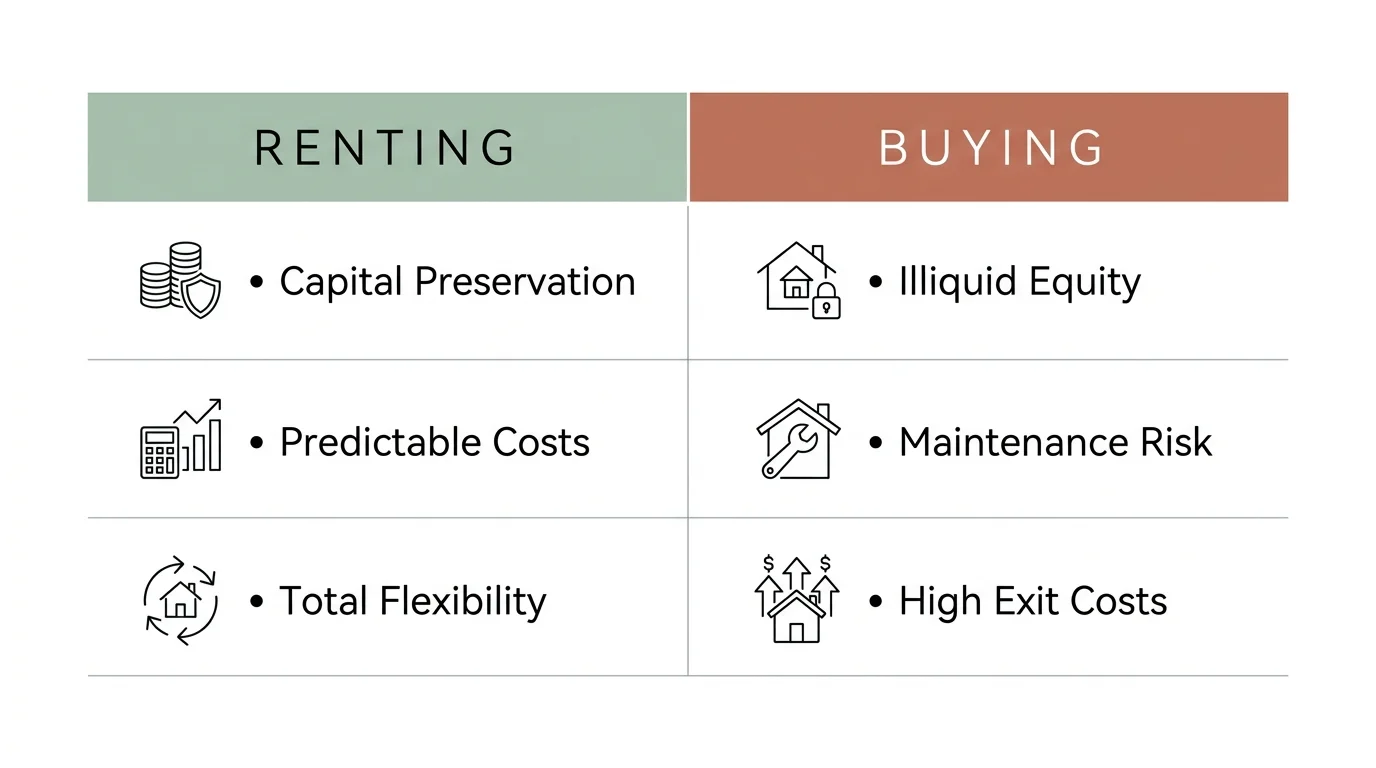
Renting vs. Buying in Retirement: Side-by-Side Comparison
Understanding how renting compares to purchasing real estate helps clarify which option aligns best with your financial goals and physical needs:
| Financial & Lifestyle Metric | Renting in Retirement | Buying in Retirement |
|---|---|---|
| Capital Liquidity | High; cash from home sales remains invested in liquid accounts. | Low; equity remains locked inside real estate asset. |
| Upfront Costs | Low; security deposit and first/last month rent. | High; down payment, closing costs (2%–4%), inspection fees. |
| Maintenance Responsibility | Zero; landlord handles all building and yard maintenance. | High; owner pays 1%–3% of home value annually in upkeep. |
| Monthly Expense Stability | Predictable fixed lease; subject to annual lease renewals. | Variable; fluctuating property taxes, insurance, and repairs. |
| Relocation Flexibility | High; move easily at the conclusion of a 12-month lease. | Low; subject to real estate market trends and sales timelines. |
| Physical Accessibility | Easy; choose units with elevators and zero-step entries. | Varies; retrofitting older homes costs tens of thousands. |
What Can Go Wrong: Common Retirement Housing Mistakes
When making retirement housing decisions, steering clear of common pitfalls keeps your retirement plan on track:
- Buying immediately in a vacation location: Purchasing property in a destination spot without living there through every season often leads to regret over extreme summer heat, severe winter weather, or off-season isolation.
- Ignoring future property tax hikes: Assuming property taxes remain flat can distort your budget. Municipalities frequently revalue real estate, raising annual tax liabilities significantly.
- Underestimating transaction fees: Buying and selling real estate rapidly eats away home equity through agent commissions, title fees, and transfer taxes.
- Overlooking rental rent control and lease terms: Failing to review rent increase clauses or local tenant protections can leave you vulnerable to unexpected lease increases upon renewal. Check guidance from the Consumer Financial Protection Bureau to understand tenant rights and lease disclosures.

When to Consult a Professional
Determining whether to rent before buying in retirement involves complex tax rules and financial trade-offs. Consider speaking with specialized professionals in the following scenarios:
- Calculating Capital Gains Taxes: If you expect substantial gains from selling your primary residence, consult a Certified Public Accountant (CPA) to leverage the IRS primary residence exclusion ($250,000 for single filers or $500,000 for married couples filing jointly).
- Modeling Long-Term Cash Flow: Work with a Certified Financial Planner (CFP) to simulate how investing your home proceeds impacts your retirement portfolio’s longevity compared to carrying real estate equity.
- Assessing Local Housing Support: Connect with housing advisors through the U.S. Department of Housing and Urban Development or local area agencies on aging via the National Council on Aging to evaluate senior-focused housing options and rental assistance programs.
- Updating Estate Plans: Consult an elder law attorney to ensure liquid assets derived from home sales align with your estate planning and asset protection goals.
Frequently Asked Questions About Renting in Retirement
Is renting in retirement a waste of money compared to building equity?
No, renting in retirement is not a waste of money. While buying builds real estate equity, renting provides liquid capital, eliminates expensive home repair risks, and offers lifestyle flexibility. In retirement, preserving liquid capital and controlling cash outflows is often far more valuable than accumulating non-liquid housing equity.
How can retirees protect themselves against rising rent prices?
You can protect yourself by signing multi-year leases with capped annual increase clauses, choosing properties governed by local rent stabilization rules, or selecting age-restricted independent living communities with transparent fee structures. Additionally, keeping your home sale proceeds invested in inflation-protected assets helps your capital grow alongside housing costs.
What should I do with proceeds from selling my home if I decide to rent?
Place proceeds into a diversified, low-risk investment strategy managed with a financial professional. Options include high-yield treasury securities, certificates of deposit (CDs), and dividend-paying portfolios that generate predictable monthly income to cover your rental payments while keeping cash liquid.
Does renting make transitioning to assisted living easier later?
Yes. Renting eliminates the burden of selling a home during a health crisis. Terminating a lease or opting not to renew requires far less effort and time than preparing, listing, and selling real estate when immediate medical or assisted care is required.
Taking Your Next Steps
Renting before buying in retirement offers a pragmatic, financial strategy to test-drive new locations, protect liquid capital, and eliminate maintenance worries. Take time to list your daily priorities, review your cash flow needs, and explore rental markets in your target destinations before committing your nest egg to real estate.
By prioritizing financial flexibility and peace of mind, you empower yourself to create a safe, comfortable, and liberating retirement lifestyle on your own terms.
This is educational content based on general financial principles for seniors. Individual results vary based on your situation. Always verify current benefit amounts, tax rules, and program eligibility with official government sources.
Last updated: February 2026. Benefit amounts, tax rules, and program details change annually—verify current figures with official government sources.









Leave a Reply