
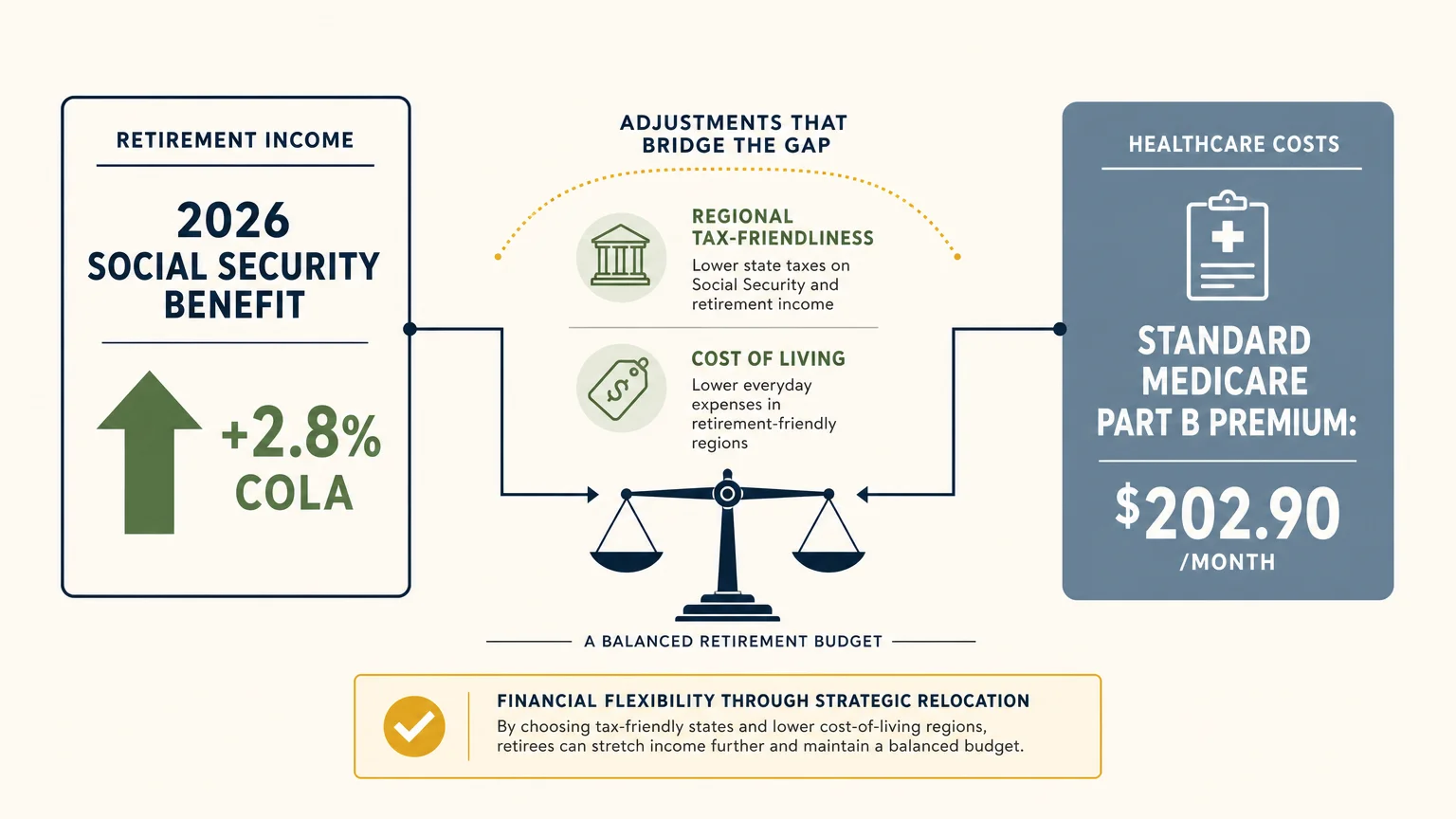
Evaluating the Financial Impact of Relocating
Before you pack your bags, you must perform a comprehensive financial analysis. A town with cheap housing might hide exorbitant property taxes, while a state with no income tax might have high sales taxes that quietly drain your budget. According to IRS.gov, your tax liability shifts dramatically the moment you establish residency in a new state.
Below is a general comparison of how different popular retirement states treat your income:
| State | Taxes Social Security? | Taxes Pensions & 401(k)s? | General Cost of Living |
|---|---|---|---|
| Florida | No | No | Moderate to High (Insurance) |
| Pennsylvania | No | No (for most qualifying plans) | Moderate |
| Michigan | No | Partially Exempt | Low to Moderate |
| Colorado | No | Generous Deductions | High |
| North Carolina | No | Yes (Standard Rate) | Moderate |
As Ed Slott points out, strategic tax planning is critical. If you are relocating to a state that taxes IRA withdrawals, you might want to consider executing Roth conversions before you move, depending on the tax brackets of your current state versus your destination.









The best places to retire are where there are no or few complainers. Naggers bring down anyplace they inhabit.
Been to Georgetown Texas every 6 months. Very ,very crowded now. To much building going on.