

Combining households with your adult children can dramatically reduce monthly living costs while keeping family close, but skipping financial planning beforehand often creates costly tax penalties and family friction. According to Pew Research Center demographic data, roughly 59.7 million Americans live in multigenerational homes, with shared finances serving as a primary driver. Before packing your boxes, you must structure your finances intentionally to preserve your personal independence, safeguard government benefits, and prevent sudden tax hits. Taking seven concrete financial steps—from establishing formal expense-sharing agreements to protecting your Medicaid eligibility—ensures your new living arrangement remains financially secure, legally protected, and mutually beneficial for years to come.

Step 1: Calculate and Compare Current vs. Future Living Costs
Before making any physical moves, sit down with your exact numbers. Living independently requires maintaining an entire household budget: mortgage or rent, property taxes, structural insurance, individual utility accounts, home maintenance, and standalone grocery bills. When you move in with your children, many of these line items merge, but others expand.
Start by calculating your current monthly burn rate. Review your bank and credit card statements from the past twelve months to determine your average baseline expenses. Next, review alternative senior living costs in your area to understand the broader financial picture. According to the Genworth Cost of Care survey, the national median cost for an assisted living facility is approximately $70,800 per year ($5,900 per month), while hiring a home health aide exceeds $77,000 annually. Multigenerational living offers immense savings compared to commercial facilities, but only if both generations clearly define their shared operating budget.
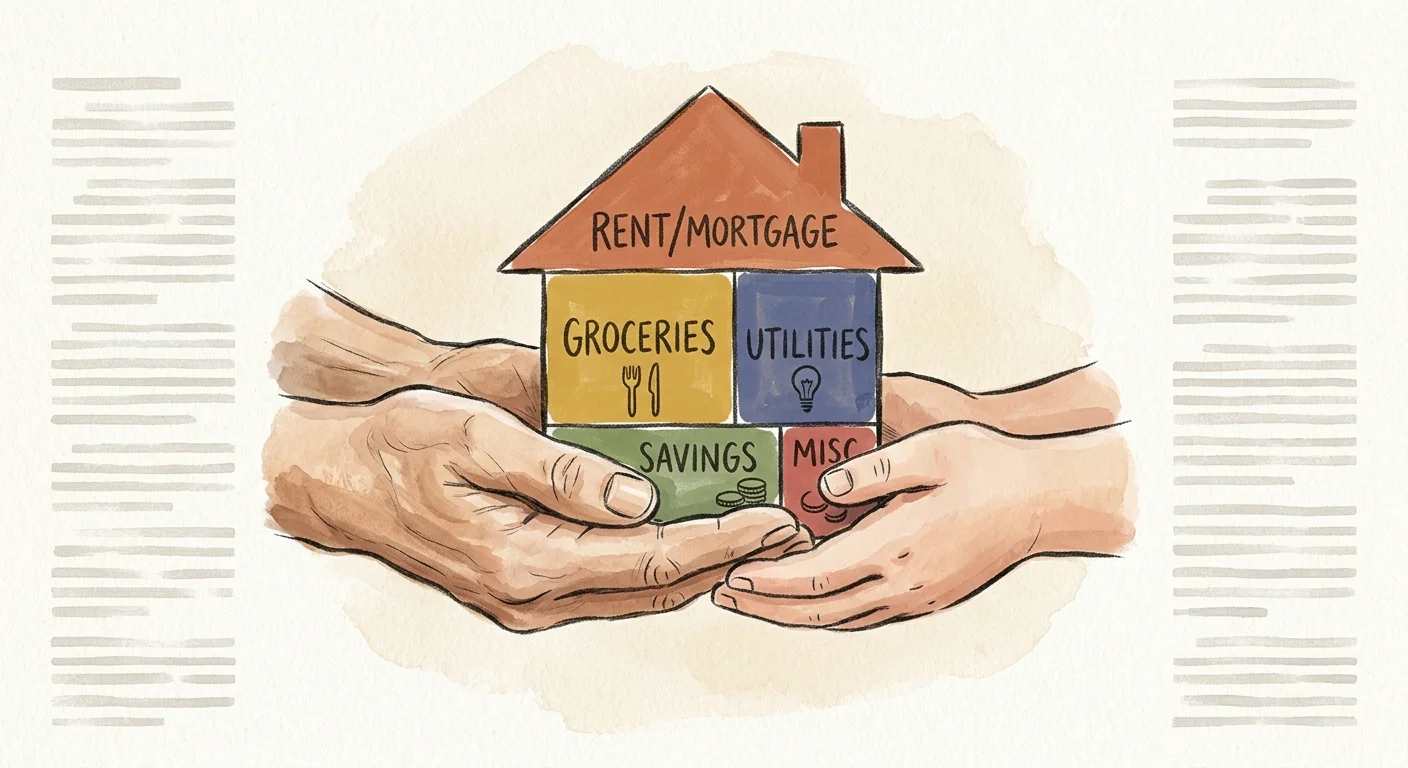
Build a projected shared budget with your adult children that lists fixed and variable household costs:
- Fixed housing expenses: Existing mortgage or rent, property taxes, homeowners or renters insurance, and municipal trash or sewer fees.
- Variable utilities: Electricity, natural gas, water, high-speed internet, and shared streaming bundles. An extra adult in the home typically increases electric and water usage by 15% to 25%.
- Consumables and food: Shared groceries, household cleaning supplies, bulk pantry items, and pet supplies.
- Incidental maintenance: Lawn care, snow removal, HVAC servicing, and general home repairs.
For example, if you currently spend $2,850 per month to maintain your standalone home and your projected pro-rata contribution to your child’s home is $950 per month, you free up $1,900 each month ($22,800 annually). Knowing these precise figures allows you to redirect surplus funds into liquid emergency savings, investments, or future healthcare reserves rather than absorbing unexpected costs blindly.
Step 2: Draft a Transparent Household Expense-Sharing Agreement
Vague verbal agreements like “I will just help out with groceries and utilities” frequently cause misunderstandings over time. One person may feel they carry an unfair burden, while the other feels treated like a guest rather than a contributing partner. Prevent this tension by creating a written, agreed-upon monthly financial contribution plan.
Families generally choose between two primary contribution models:
- The Proportional Income Method: Each generation contributes a percentage of household operating expenses matching their share of total household income. If your child earns $6,000 monthly and your retirement income is $3,000 monthly (a 2-to-1 ratio), you cover 33% of the shared living expenses while they cover 67%.
- The Per-Capita (Flat Share) Method: You divide total consumable and utility expenses evenly by the number of adults in the home. If the household consists of your adult child, their spouse, and you, you pay one-third of utility and grocery bills, plus an agreed flat rate for dedicated living space.
Establish a dedicated household checking account for shared expenses. Both you and your child can set up automated monthly transfers into this account on the first of each month. Pay all shared bills directly from this account. This transparent structure eliminates awkward conversations about specific electric bills or grocery receipts while providing a clear paper trail of your contributions.
“When it comes to money and family, clarity is kindness. If you don’t put agreements in writing before moving in together, assumptions will eventually turn into resentments.” — Suze Orman, Personal Finance Author & Host

Step 3: Strategically Manage Your Former Home and IRS Section 121 Rules
If you own your current residence, deciding whether to sell, rent, or transfer the property represents one of the largest financial decisions of your retirement. Each option carries distinct tax consequences and liquidity trade-offs.
Selling your home often provides a substantial lump sum to bolster your retirement security. Under Internal Revenue Code Section 121, you can exclude up to $250,000 of capital gains from federal income taxes if you are a single filer, or up to $500,000 if you are married filing jointly. To qualify for this exclusion through the Internal Revenue Service (IRS), you must have owned and occupied the property as your primary residence for at least two out of the five years immediately preceding the sale date.
If you move into your child’s home and leave your old house vacant or rent it out for more than three years, you risk losing this Section 121 exclusion. After three full years of non-residency, you no longer meet the “two-out-of-five-years” occupancy test, potentially exposing hundreds of thousands of dollars in accumulated appreciation to federal and state capital gains taxes.
If you choose to rent out your former home instead of selling it, you generate ongoing monthly cash flow, but you also take on landlord obligations, repair costs, and property management fees. Furthermore, rental income counts toward your adjusted gross income, which can trigger higher taxes on your Social Security benefits or increase your Medicare Part B and Part D premiums through Income-Related Monthly Adjustment Amount (IRMAA) surcharges.
Step 4: Safeguard SSI and Medicaid Eligibility from In-Kind Support Traps
Moving into an adult child’s home can directly affect your eligibility for need-based government assistance programs, specifically Supplemental Security Income (SSI) and Medicaid long-term care benefits. Understanding federal program definitions prevents sudden benefit reductions or eligibility disqualifications.
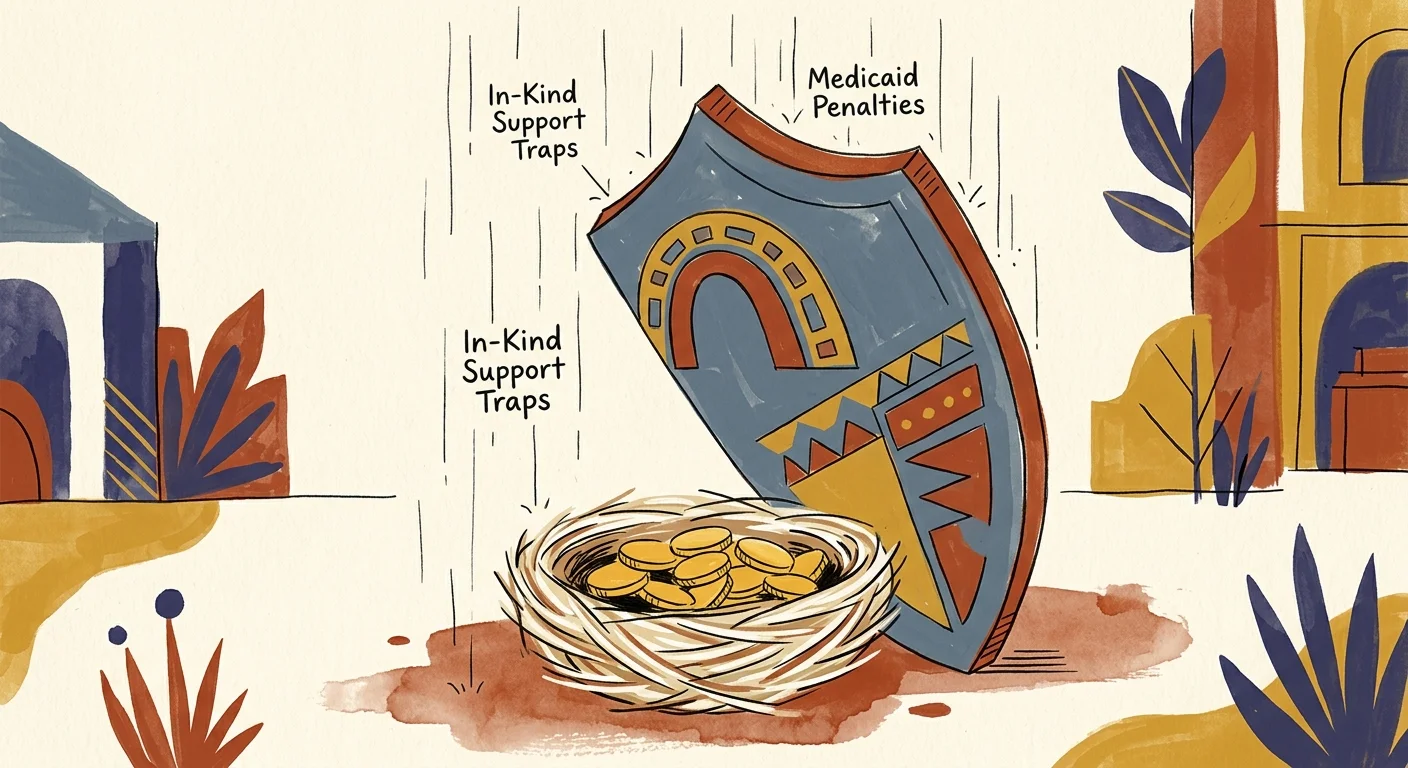
For seniors receiving SSI, the Social Security Administration (SSA) evaluates whether you receive “In-Kind Support and Maintenance” (ISM). Historically, receiving free food or shelter from family reduced SSI payments. Under updated SSA regulations, food assistance is no longer counted against your benefits; however, receiving free or subsidized shelter still triggers an automatic reduction of up to one-third of your maximum federal monthly SSI benefit. To maintain your full SSI payment, you must document that you pay your genuine pro-rata share of household shelter expenses or pay fair market rent under a formal lease agreement.
Medicaid eligibility requires even stricter scrutiny due to the 60-month (5-year) look-back rule. Medicaid reviews all financial transactions, asset transfers, and property sales conducted during the five years prior to your application for nursing home or home-based waiver care. If you transfer your house to your child for less than fair market value, or transfer large cash sums to help pay off their mortgage, Medicaid treats the transfer as an uncompensated gift. This triggers a penalty period during which Medicaid refuses to pay for your care, leaving the family responsible for massive out-of-pocket medical bills.
You can check your overall eligibility across various federal and state support programs through Benefits.gov to ensure your household changes comply with all program thresholds.
Step 5: Create a Formal Personal Care Agreement for Family Caregiving
If your adult child provides hands-on caregiving, transportation, meal preparation, or medication management, compensating them is entirely appropriate. However, handing your child informal cash payments or writing personal checks for caregiving can jeopardize your future Medicaid eligibility.
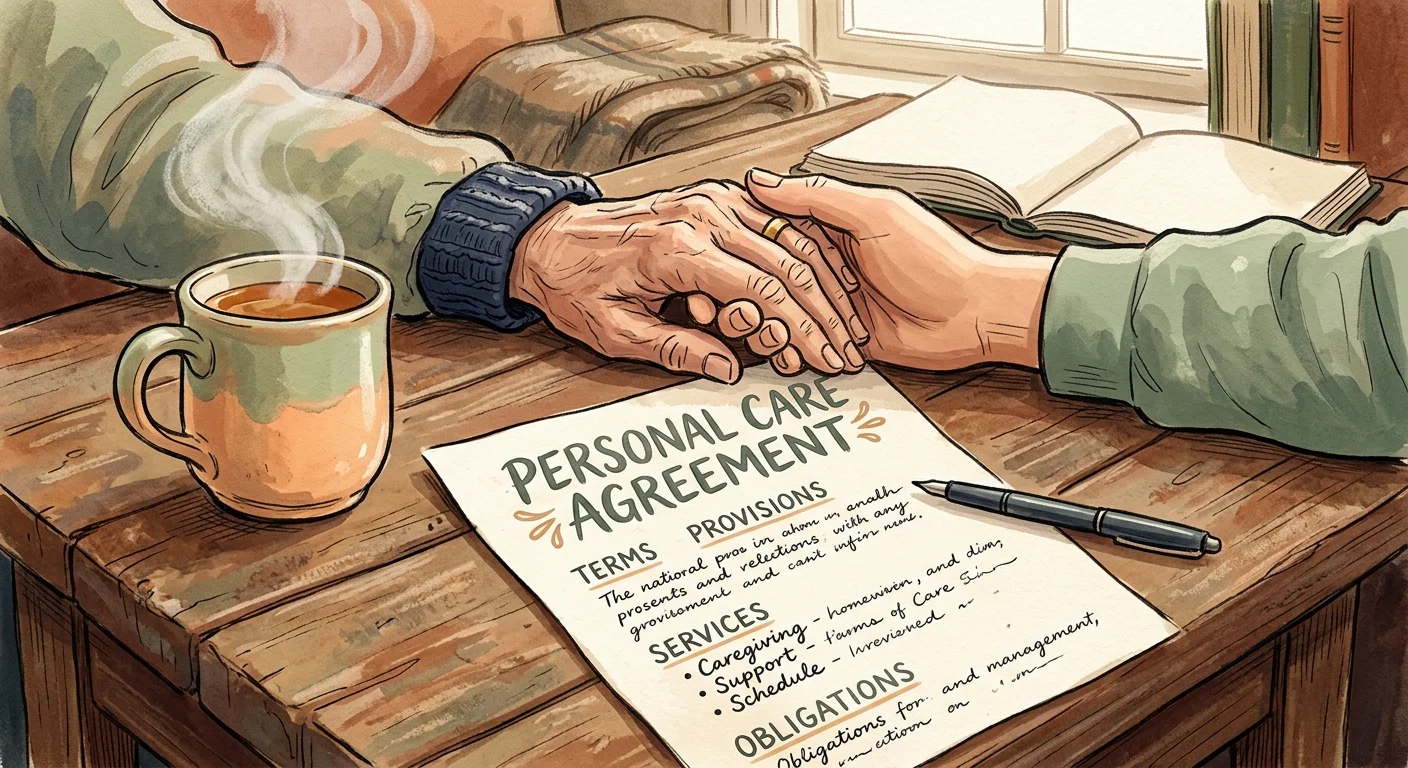
Medicaid caseworkers treat undocumented payments to family members as unauthorized gifts rather than legitimate medical or personal care expenses. To prevent this, hire an elder law attorney to draft a formal, written Personal Care Agreement (also known as a Caregiver Contract) before any payments occur.
A legally sound Personal Care Agreement must satisfy several criteria:
- Prospective execution: The contract must be signed before caregiving services begin; you cannot retroactively pay a child for past care.
- Detailed scope of duties: Clearly specify tasks, such as bathing assistance, cooking, driving to medical appointments, and managing finances.
- Market-rate compensation: Pay rates must align with prevailing local commercial wages for home health aides (typically $25 to $35 per hour depending on region). Paying an exorbitant rate—such as $100 per hour—will be flagged as a disguised gift.
- Meticulous daily logging: The caregiving child must maintain a detailed time log recording exact dates, hours worked, and specific services rendered.
Keep in mind that all compensation paid under a care agreement represents taxable earned income to your adult child. They must report these payments on their federal and state tax returns, and your household may need to handle payroll tax withholdings depending on local employment classifications.

Step 6: Plan Aging-in-Place Home Modifications and Capital Investments
Moving into an adult child’s home often requires physical modifications to support aging in place safely. Structural adjustments can range from minor updates—such as installing bathroom grab bars, comfort-height toilets, and stair lifts—to major renovations like converting a ground-floor garage into a private suite or adding an accessory dwelling unit (ADU).
Before spending significant capital on your child’s real estate, resolve two vital financial questions: who funds the renovation, and how is that capital treated legally?
If you pay $75,000 from your personal savings to build an addition onto your child’s home, that money immediately becomes part of their real estate equity. If you require nursing home care three years later, Medicaid may view that $75,000 renovation as an uncompensated gift to your child, triggering a penalty period unless you have properly structured the investment (such as purchasing a legal life estate interest or executing a formal promissory note).
On the tax side, certain home modifications made for medical reasons may qualify as deductible medical expenses on your federal tax return. Under IRS guidelines, capital improvements made to a home for medical care—such as constructing entry ramps, widening doorways, or modifying bathrooms for mobility equipment—can be deducted to the extent the cost exceeds any increase in the home’s market value, subject to the standard adjusted gross income (AGI) medical expense threshold.
Step 7: Update Estate Plans, Powers of Attorney, and Account Protections
Shared living alters daily logistics, but you must maintain firm legal and financial boundaries to protect both generations. Never combine personal checking, savings, or investment accounts simply to make bill paying easier. Joint bank accounts expose your assets to your child’s creditors, legal judgments, or potential divorce settlements, and can inadvertently complicate your estate distribution among other heirs.
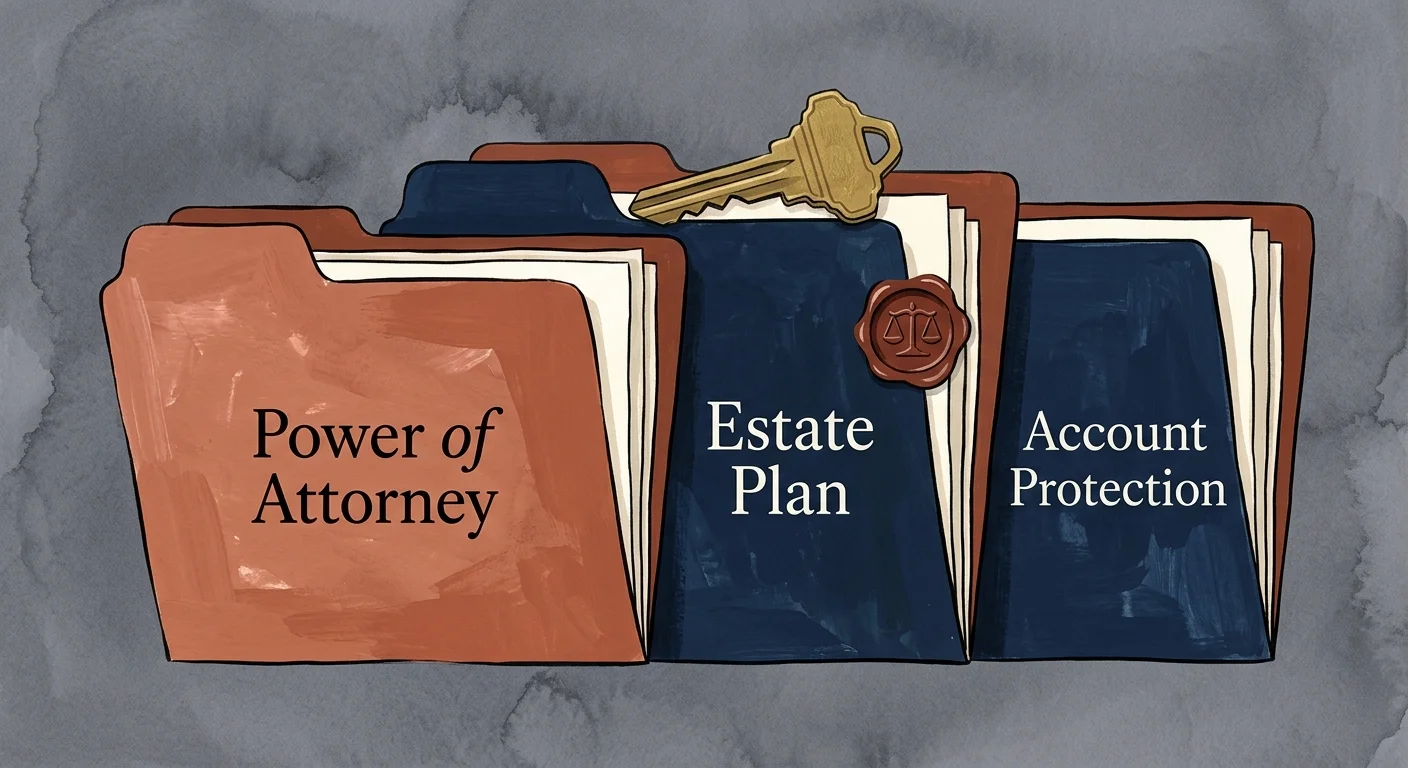
Instead of creating joint accounts, execute comprehensive, updated estate and legal documents:
- Durable Financial Power of Attorney: Grants your chosen child or trusted agent legal authority to manage bills, banking, and tax filings on your behalf without granting them personal ownership of your underlying assets.
- Healthcare Proxy and Advance Directives: Designates who makes medical decisions if you become incapacitated and outlines your specific care wishes.
- Updated Beneficiary Designations: Review named beneficiaries on IRAs, 401(k)s, life insurance policies, and Transfer on Death (TOD) bank accounts. Ensure your primary assets pass directly to your chosen heirs without entering probate.
Additionally, understand federal gift tax thresholds if you plan to provide financial support to your child. For 2026, the IRS annual gift tax exclusion is $19,000 per recipient ($38,000 for married couples splitting gifts). You can give up to this amount directly to your child, their spouse, or your grandchildren each calendar year without filing IRS Form 709 or reducing your lifetime estate and gift tax exemption.
You can research state-specific consumer financial safeguards and power of attorney guidelines through the Consumer Financial Protection Bureau (CFPB).

Comparing Multigenerational Living Financial Models
Selecting the right financial framework depends on your income, health status, and long-term care outlook. The table below outlines how common models compare across practical criteria:
| Arrangement Model | Best Suited For | Typical Cash Flow Impact | Key Tax & Legal Implications |
|---|---|---|---|
| Shared Expense Contributor | Independent seniors with stable pension or Social Security income moving into an existing bedroom. | You pay an agreed monthly flat-rate or pro-rata share for utilities, food, and maintenance. | Minimal tax impact; payments are pure expense reimbursement, not taxable income to your child. |
| Formal Care Recipient | Seniors requiring daily physical, medical, or mobility support from an adult child. | You pay hourly market-rate wages to your child under a written contract. | Caregiver child reports taxable earned income; protects future Medicaid eligibility against gift penalties. |
| Suite / ADU Capital Investor | Seniors selling a primary residence and funding an addition or detached mother-in-law suite. | Substantial initial capital outlay from home sale proceeds; low ongoing monthly contributions. | Requires legal life estate or equity documentation to prevent Medicaid look-back transfer penalties. |
| Tenant Under Formal Lease | Seniors receiving SSI or those wishing to establish completely independent financial boundaries. | You pay standard fair-market monthly rent directly to your adult child. | Prevents SSI shelter-reduction penalties; child must report rental income and can deduct depreciation. |

10: on
11: a
12: bridge
13: marked
14: with
15: a
16: risk
17: sign.
Total: 17 words.
Meets 10-18 words ma
Pitfalls to Watch For
Even families with deep love and mutual trust can encounter financial pitfalls when combining households. Avoiding these common missteps protects your financial security and preserves family relationships:
- Adding a child as a joint owner on your bank accounts: Many seniors add an adult child to their checking account for convenient check-writing. However, this grants the child total legal ownership of the funds. If the child faces a lawsuit, bankruptcy, or divorce, your savings can be seized by their creditors. Use a Durable Financial Power of Attorney instead.
- Failing to communicate with other siblings: If you move in with one child and compensate them through housing additions, living allowances, or estate adjustments, other siblings may perceive this as favoritism or financial exploitation. Hold an open family meeting to explain the financial terms clearly.
- Triggering unexpected Medicaid penalties through informal gifting: Handing your child large cash gifts, paying off their personal debts, or signing over car titles without fair compensation within 60 months of applying for Medicaid will trigger severe benefit disqualification periods.
- Ignoring local zoning and tax assessment rules for renovations: Building an in-law suite or detached unit can trigger a local property tax reassessment for your child, permanently increasing their annual real estate taxes. Factor these recurring tax increases into your long-term budget.

Getting Expert Help
Because multigenerational living intersects real estate, elder law, tax rules, and public benefit programs, professional guidance is critical. Consider engaging specialized advisors under the following circumstances:
- Consult an Elder Law Attorney: Seek counsel if you anticipate needing Medicaid long-term care within five years, if you plan to construct an in-law suite using personal capital, or if you need to draft a binding Personal Care Agreement. Locate vetted local professionals through the Eldercare Locator.
- Consult a Certified Public Accountant (CPA) or Tax Professional: Engage a tax specialist if you are selling a long-held primary residence to evaluate your Section 121 capital gains exclusion, or if your child is charging rent and needs to manage depreciation and rental income schedules.
- Consult a Fee-Only Certified Financial Planner (CFP): Work with a financial planner if you need to restructure an investment portfolio to generate dependable monthly cash flow for shared living expenses without incurring unnecessary withdrawal penalties.
Frequently Asked Questions
Does moving in with my adult children affect my Social Security retirement benefits?
No. Standard Social Security retirement and Social Security Disability Insurance (SSDI) benefits are based entirely on your lifetime work and earnings history. Your living arrangements, household composition, and shared family expenses will not reduce your monthly Social Security retirement checks. However, if you receive Supplemental Security Income (SSI), uncompensated shelter can reduce your monthly benefit payment.
Can my adult child claim me as a dependent on their tax return?
Your adult child may claim you as a qualifying relative dependent if they meet specific IRS requirements. They must provide more than 50% of your total financial support for the calendar year, and your gross income (excluding non-taxable Social Security benefits) must fall below the federal threshold ($5,050 for recent tax years). Claiming you grants your child access to the non-refundable Credit for Other Dependents.
How do we determine fair market value for a Caregiver Agreement?
To establish a defensible rate for a Personal Care Agreement, research the average hourly wages for non-medical home health aides in your specific metropolitan area or county. Gather written quotes from two or three local licensed home care agencies. Set your child’s hourly rate at or slightly below the local median average, and keep copies of your regional wage research in your legal files to prove fair market value to Medicaid caseworkers.
What happens if I fund an addition on my child’s home and need to move out later?
If your health deteriorates and you must transition to a skilled nursing facility, capital invested into your child’s home cannot easily be liquidated. Unless you structured the original investment as a formal loan secured by a deed of trust or purchased a registered life estate interest, the home addition remains the property of your child. Establishing legal documentation before construction begins ensures you have defined rights to repayment or equity if your living situation changes.
Taking the time to structure your finances before moving in with your adult children establishes clear boundaries, protects your hard-earned assets, and ensures a peaceful household transition. Open communication paired with legally sound agreements allows your family to enjoy the emotional and financial rewards of multigenerational living with complete peace of mind.
The information in this guide is meant for educational purposes. Your specific circumstances—including income, benefits, tax situation, and health needs—may require different approaches. When in doubt, consult a licensed financial advisor or tax professional.
Last updated: February 2026. Benefit amounts, tax rules, and program details change annually—verify current figures with official government sources.









Leave a Reply