
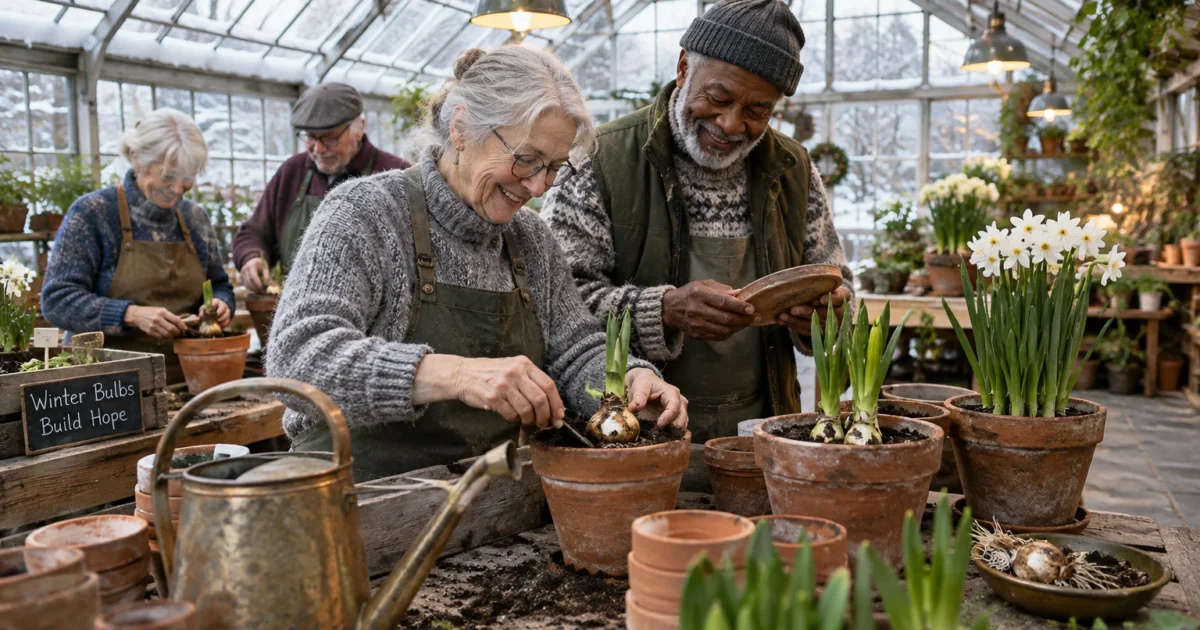
Shorter winter days and icy roads can quickly shrink your social circle. Maintaining meaningful connections during cold weather protects your mental sharpness, physical health, and everyday happiness.
According to the U.S. Census Bureau, nearly 3 in 10 adults aged 65 and older live alone. Winter storms make isolation an even greater risk for retirees across the country.
You can build an engaging winter routine without stretching your retirement budget. These practical strategies will help you stay active, meet new friends, and enjoy community all season long.
The Hidden Health and Financial Stakes of Winter Isolation
Winter social isolation carries serious risks that extend far beyond simple boredom. Prolonged isolation directly harms your cardiovascular health, immune response, and overall emotional well-being.
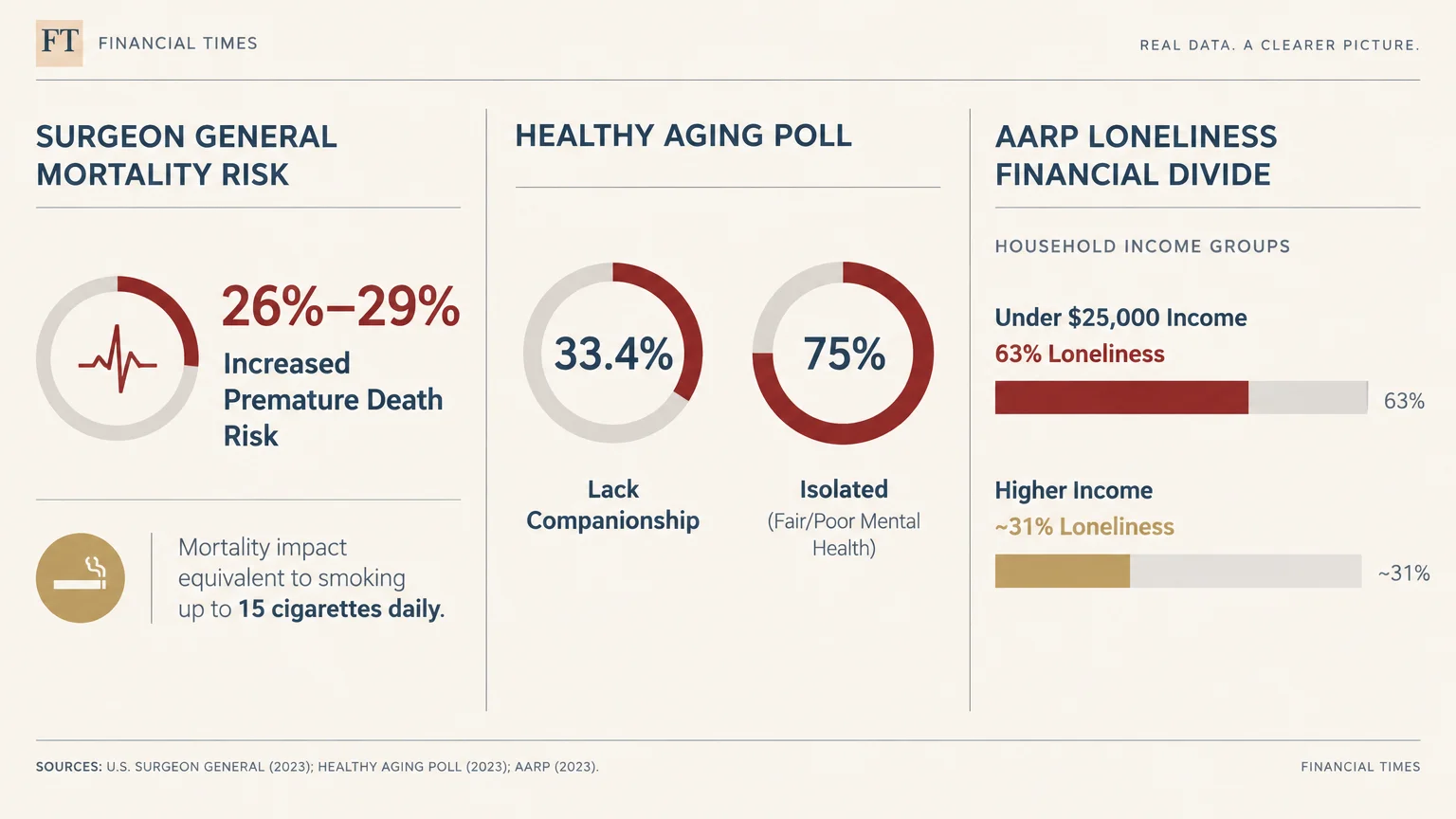
A landmark advisory from the U.S. Surgeon General revealed that social disconnection increases early mortality risk. In fact, lacking connection carries a premature death risk comparable to smoking up to 15 cigarettes daily.
The report also associated chronic social isolation with a 26% to 29% increase in premature death. Staying connected during harsh winter months is a medical necessity, not just a lifestyle preference.
Recent research highlights how widespread this challenge remains for older Americans. The University of Michigan National Poll on Healthy Aging reported that 33.4% of older adults feel a lack of companionship.
That same study found that 29% of adults aged 50 to 80 felt socially isolated. Among individuals reporting fair or poor mental health, that isolation figure surged to 75%.
Financial constraints often deepen winter loneliness. The 2025 AARP Loneliness Study revealed that 40% of adults aged 45 and older scored as lonely.
That study revealed a stark financial divide in social health. Among adults with household incomes under $25,000, 63% reported severe loneliness—roughly twice the rate of those earning $100,000 or more.
“A big part of financial freedom is having the freedom to live your life to the fullest with the people you care about.” — Suze Orman, Personal Finance Author
Protecting your social calendar does not require costly country clubs or pricey winter travel. You can find rich, rewarding companionship through affordable community resources right in your neighborhood.
1. Tap Into Medicare Advantage Fitness and Wellness Perks
Staying physically active in winter provides an immediate social outlet. Exercise classes offer predictable routines where you can visit with familiar faces multiple times each week.
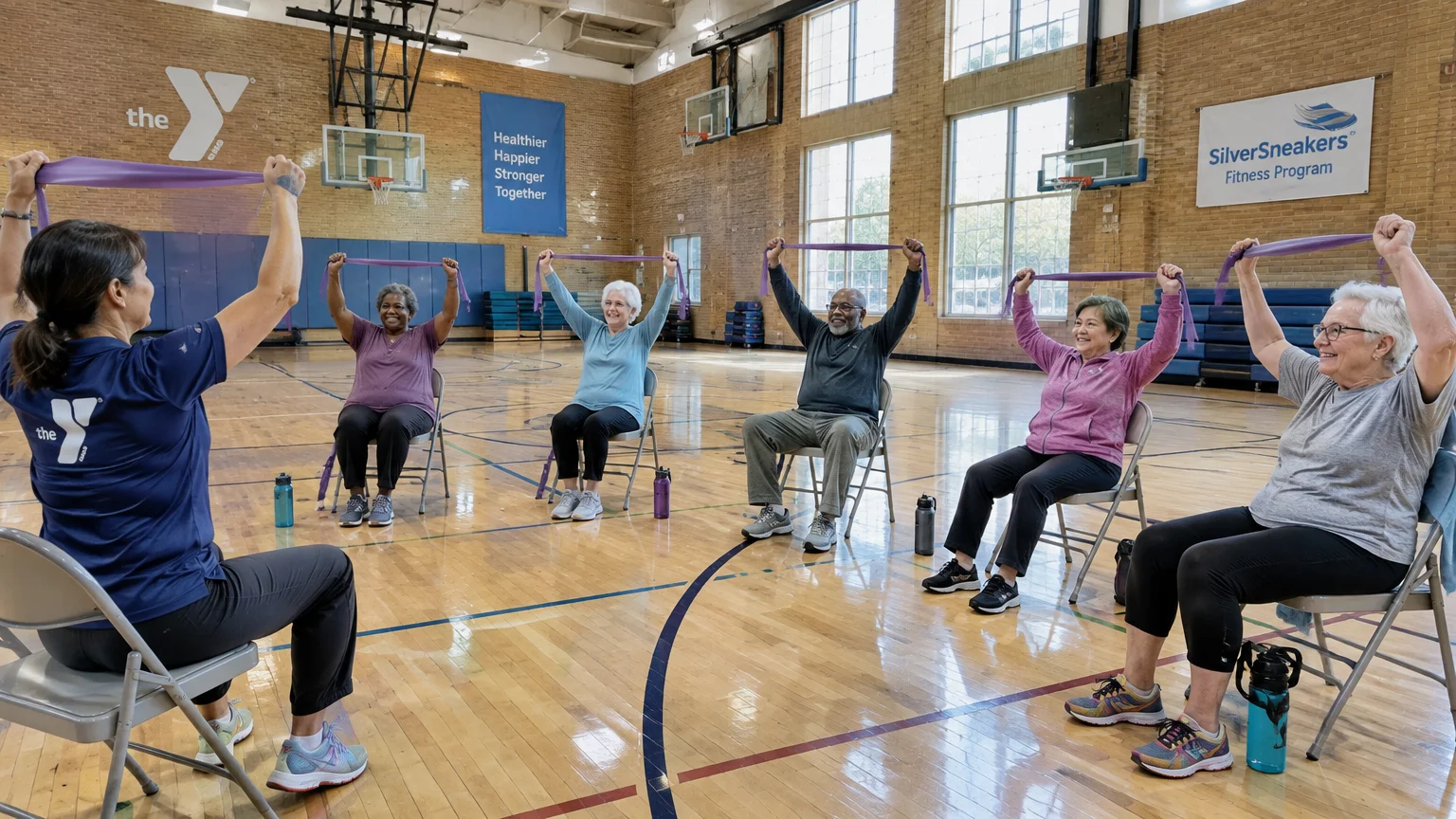
About 95% of Medicare Advantage plans include free health club memberships and social wellness perks. Programs like SilverSneakers grant eligible retirees no-cost access to more than 14,000 participating gym and YMCA locations nationwide.
Original Medicare Parts A and B do not cover gym memberships. You can check your private plan options through Medicare.gov to see if your coverage includes fitness benefits.
If you carry a UnitedHealthcare Medicare Advantage plan, your benefit is called Renew Active instead of SilverSneakers. Both programs offer free access to local fitness centers, walking tracks, and heated indoor pools.
Beyond weight rooms, these programs sponsor community FLEX classes at local community centers and recreation halls. You can join low-impact yoga, chair aerobics, or social walking clubs alongside fellow retirees.
Many participating YMCAs host complimentary morning coffee hours right after senior fitness classes. That routine transforms a simple workout into a dependable, budget-friendly social highlight.

2. Form an Indoor Walking Club at Local Malls
Freezing winds, sleet, and snow create dangerous fall hazards on neighborhood sidewalks. Falling on icy pavement can cause severe fractures that jeopardize your independence and retirement finances.
Enclosed shopping malls offer wide, flat, temperature-controlled walking tracks free of ice. Many suburban malls open their primary doors an hour before retail shops open for community walkers.
You can walk safely alongside peers while getting steady cardiovascular exercise. The bright, climate-controlled concourse also provides welcome natural light during gloomy winter mornings.
Ask a neighbor or former coworker to join you for two mornings each week. Committing to a walking partner keeps you accountable on cold mornings when staying under blankets feels tempting.
After finishing your laps, you can sit down together for a cup of coffee. This cost-effective habit provides regular conversation without the financial stress of dining out at expensive restaurants.

3. Volunteer Through AmeriCorps Seniors Programs
Volunteering provides a powerful sense of daily purpose while connecting you with civic-minded neighbors. AmeriCorps Seniors organizes three primary federally backed programs for adults aged 55 and older.
The Retired and Senior Volunteer Program (RSVP) matches your professional skills with local non-profit organizations. You can mentor youth, coordinate food distribution drives, or assist local environmental projects.
The Foster Grandparent program pairs experienced older adults with children who need academic tutoring or personal guidance. You serve in local schools or after-school care centers during regular weekday hours.
The Senior Companion program allows active retirees to visit homebound seniors who need companionship or light assistance. This compassionate program keeps both participants socially connected throughout freezing weather.
AmeriCorps Seniors offers extra financial assistance for eligible participants. Income-qualified volunteers in the Foster Grandparent and Senior Companion programs receive a tax-free hourly stipend of $4.00 per hour.
This modest stipend helps offset winter gasoline expenses while you provide vital community service. You can learn more about local opportunities through the National Council on Aging.

4. Leverage Free Workshops and Clubs at Your Public Library
Public libraries are vibrant social community hubs rather than quiet book repositories. Modern branch libraries curate extensive calendars of free winter events designed specifically for older adults.
You can participate in monthly fiction book clubs, non-fiction reading circles, or local history discussions. These regular literary gatherings spark engaging, intellectual dialogue with fellow community members.
Many library branches host weekly craft circles where attendees bring knitting, quilting, or watercolor projects. Working on a hobby around a shared table makes conversation feel easy and natural.
Libraries also offer free computer literacy classes, genealogy research workshops, and visiting author lectures. These events introduce you to local residents who share your specific intellectual curiosities.
Library activities cost absolutely nothing, protecting your monthly cash flow during high-heating-bill months. You can browse your county library system’s online events calendar to plan your weekly visits.
5. Audit Classes at Nearby Colleges and Universities
Winter offers the perfect opportunity to dive into subjects you never had time to explore while working. Lifelong intellectual engagement keeps your mind sharp and expands your social circle.
Many state university systems and community colleges allow older adults to audit undergraduate courses tuition-free. Auditing lets you attend lectures, participate in class debates, and skip stressful exams or grading.
The Osher Lifelong Learning Institute (OLLI) operates at more than 120 college campuses across the nation. OLLI courses cater to adults aged 50 and older, creating relaxed classroom discussions on history, science, and arts.
“Retirement is not the end of the road. It is the beginning of an open highway where your relationships matter more than ever.” — Jean Chatzky, Financial Journalist and Author
Campus environments offer lively, energetic spaces filled with libraries, student art galleries, and coffee shops. Walking across a collegiate campus provides natural exercise and regular opportunities for friendly, intergenerational conversation.
Check with your local community college registrar regarding senior citizen tuition waivers. Most programs require only proof of age and state residency to unlock free or deeply discounted enrollment.
6. Join Local AARP Chapters and Virtual Networks
Joining an organized senior advocacy network connects you instantly with thousands of older adults in your county. An annual membership with AARP costs just $20 per year.
If you enroll with automatic annual renewal, that membership fee drops to $15 for your first year. AARP also provides multi-year memberships at $55 for three years, $79 for five years, or $250 for a lifetime.
Every standard AARP membership includes a free secondary membership for an adult living in your household. That feature doubles the social value for married couples or cohabitating siblings.
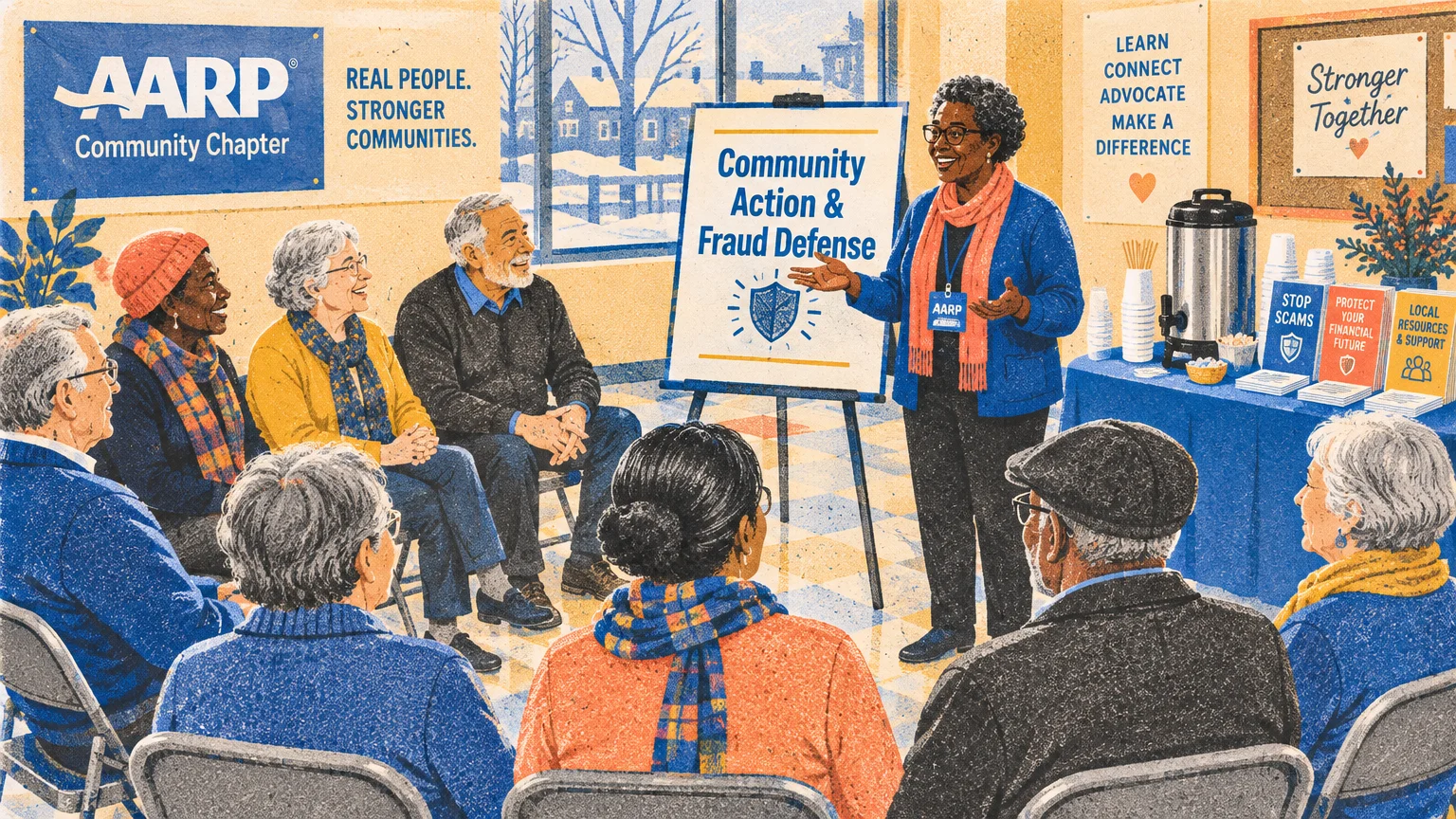
Local AARP chapters organize monthly breakfast meetings, charitable service committees, and civic advocacy trips. These chapters give you a direct platform to work on legislative issues that matter to retirees.
If winter weather prevents safe driving, AARP hosts daily interactive virtual events online. You can join virtual cooking demonstrations, guided museum tours, and interactive trivia nights from your living room.
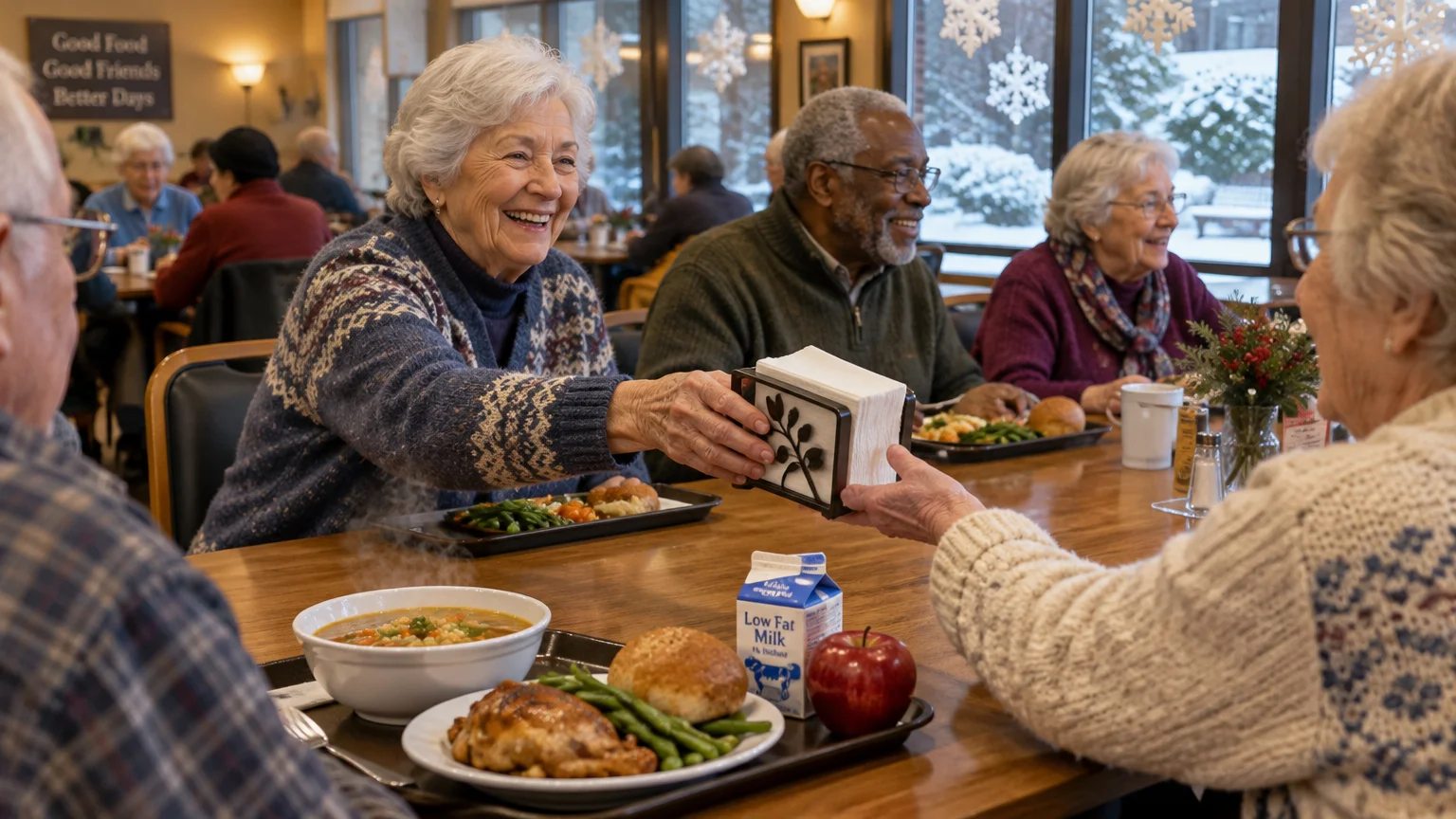
7. Enjoy Nutritious Communal Lunches at Senior Centers
Eating alone day after day can lead to poor dietary habits, skipped meals, and depressive symptoms. Sharing meals with friendly peers nourishes both your physical health and your social wellbeing.
Senior nutrition programs funded under the federal Older Americans Act serve balanced, hot lunches on weekdays. These congregate meal sites operate in senior centers, churches, and civic recreation buildings across America.
Congregate meals welcome any adult aged 60 or older, regardless of household income or assets. Centers request a modest voluntary contribution, often between $2 and $5, but never deny meals to anyone unable to pay.
You can locate your nearest congregate meal program through the federal Eldercare Locator directory. This nationwide public service connects older adults directly with local Area Agencies on Aging.
Many senior centers schedule afternoon activities immediately following lunch. You can stay for bingo games, musical performances, or health screenings, turning lunchtime into a pleasant afternoon outing.
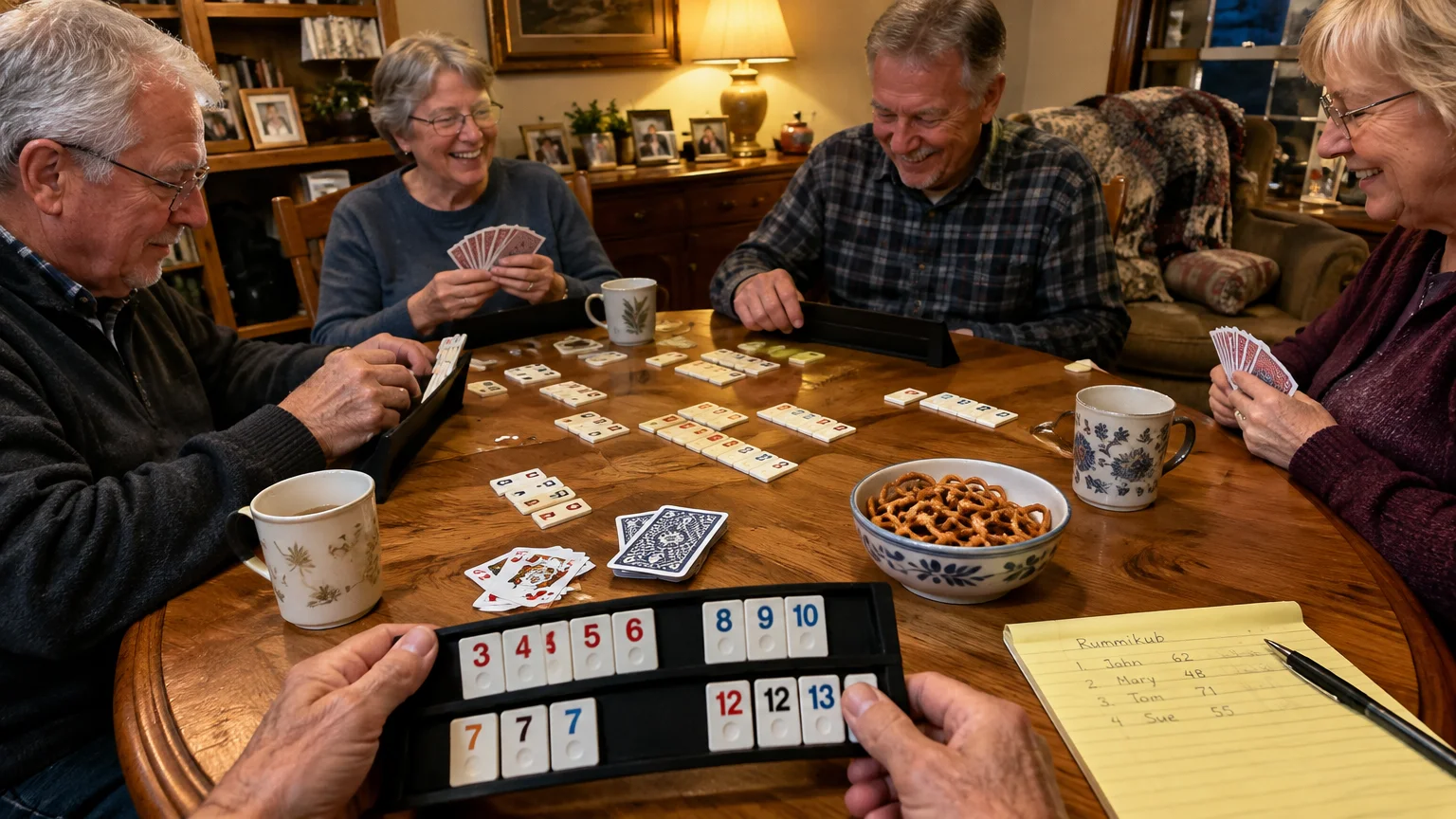
8. Organize a Weekly Board Game or Card Circle
Card games and classic board games provide an ideal foundation for affordable winter socializing. Games like bridge, canasta, mahjong, and pinochle require focus, strategic thinking, and friendly teamwork.
You can organize a regular game circle in your living room, condo clubhouse, or a neighborhood coffee shop. Having a fixed schedule—such as every Tuesday afternoon at two o’clock—builds lasting social habits.
Ask each player to bring a small snack, pot of tea, or dessert to share. Rotating hosting duties ensures no single participant shoulders excessive cleaning, preparation, or grocery expenses.
Playing cards regularly stimulates memory recall, pattern recognition, and executive function. These cognitive benefits help protect your neurological health as you age.
If you do not know enough local players, look for game meetups at local community centers. Many senior facilities maintain ongoing weekly bridge and chess clubs eager to welcome new members.

9. Serve on Civic, Cultural, or Faith-Based Committees
Community organizations rely heavily on the organizational talent, wisdom, and reliable schedules of retirees. Winter is often the busiest season for non-profit fundraising committees, arts councils, and faith communities.
You can join a welcoming committee at your place of worship, arrange floral displays, or help organize choir rehearsals. These regular commitments give you a structured reason to leave the house each week.
Local historical societies, community theaters, and botanical conservatories also recruit volunteer docents and ticket takers. Serving in these roles lets you share your love of arts and culture with visitors.
Town boards and homeowners associations frequently seek committee volunteers to oversee landscaping, financial audits, or community newsletters. Serving on these boards keeps you actively involved in local neighborhood decisions.
Committee work provides predictable, recurring meetings on your calendar. Knowing that fellow committee members rely on your attendance provides healthy motivation to stay engaged all winter long.
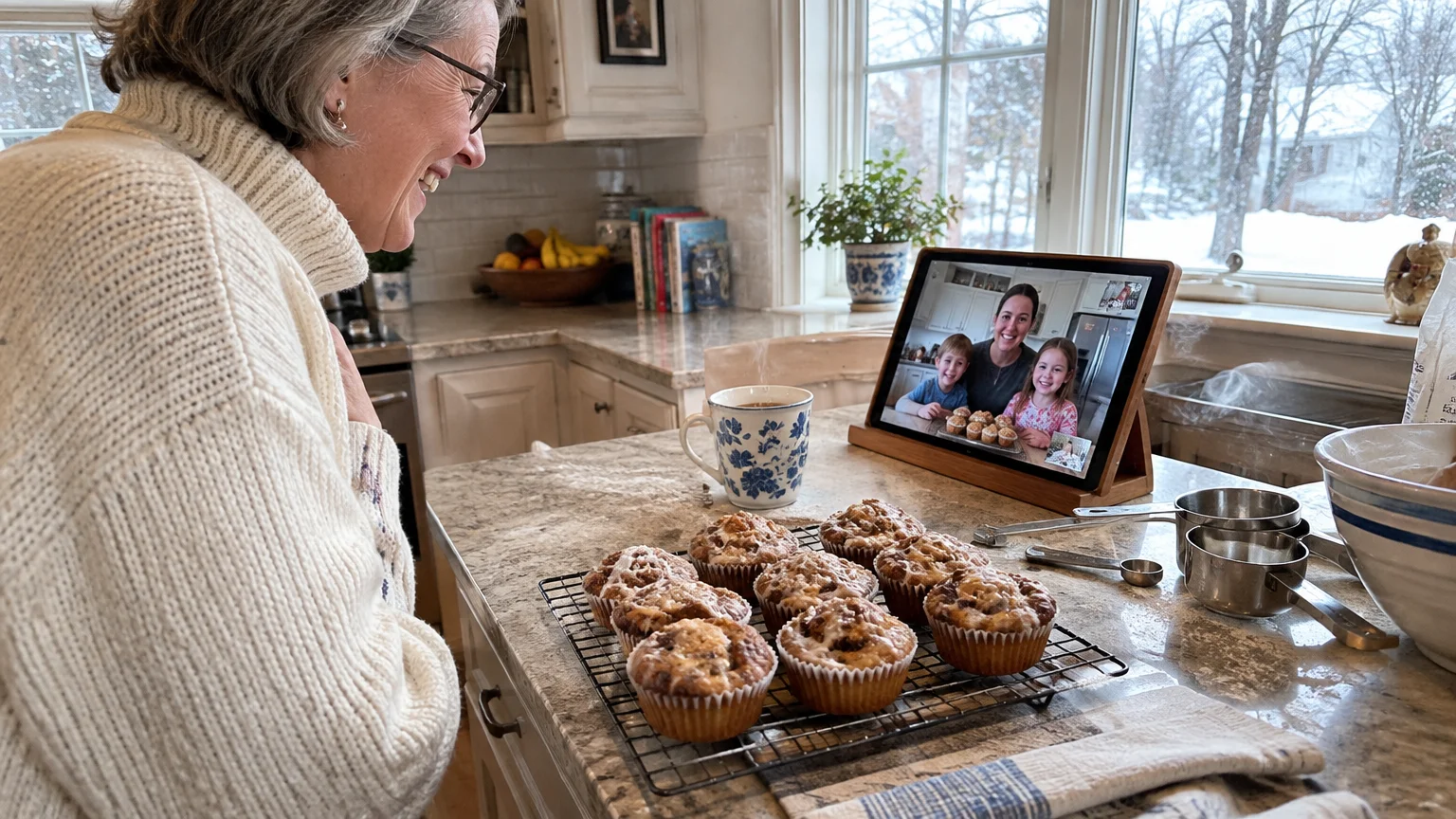
10. Schedule Structured Virtual Gatherings with Family and Friends
Severe blizzards, freezing rain, and bitter wind chill sometimes make outdoor travel genuinely dangerous. When winter storms lock you indoors, modern technology allows you to maintain vibrant social connections.
Casual phone calls often drift into brief updates about weather or health complaints. Setting up structured virtual video calls through Zoom, FaceTime, or Skype creates much more engaging interactions.
You can organize a weekly virtual Sunday coffee hour with grandchildren who live in distant states. Encourage them to show you their school art projects, musical instruments, or recent sports trophies.
Start a virtual book or recipe exchange with old high school or college friends across the country. Pick a common book chapter or soup recipe to prepare, then compare your experiences during a scheduled video call.
Online interaction should supplement, rather than fully replace, in-person human contact. However, when icy roads make driving hazardous, scheduled video gatherings keep winter isolation at bay.

11. Enroll in Municipal Parks and Recreation Programs
City and county parks and recreation departments offer extensive winter programming tailored specifically for active retirees. These municipal activities generally cost far less than private studios or commercial social clubs.
Recreation centers host indoor pickleball leagues, water aerobics classes, pottery workshops, and ballroom dance lessons. These programs emphasize friendly participation, low competition, and welcoming environments for newcomers.
Municipal departments also coordinate affordable day trips to regional museums, theaters, and holiday light shows. Group excursions take care of driving, parking, and tickets, removing winter travel anxiety.
Check your local municipal recreation brochure at the start of each winter season. Classes fill quickly, so registering early ensures you secure your spot in popular activities.
Participating in civic recreation connects you directly with people living in your immediate zip code. Those local connections often blossom into regular walking partnerships and coffee friendships.
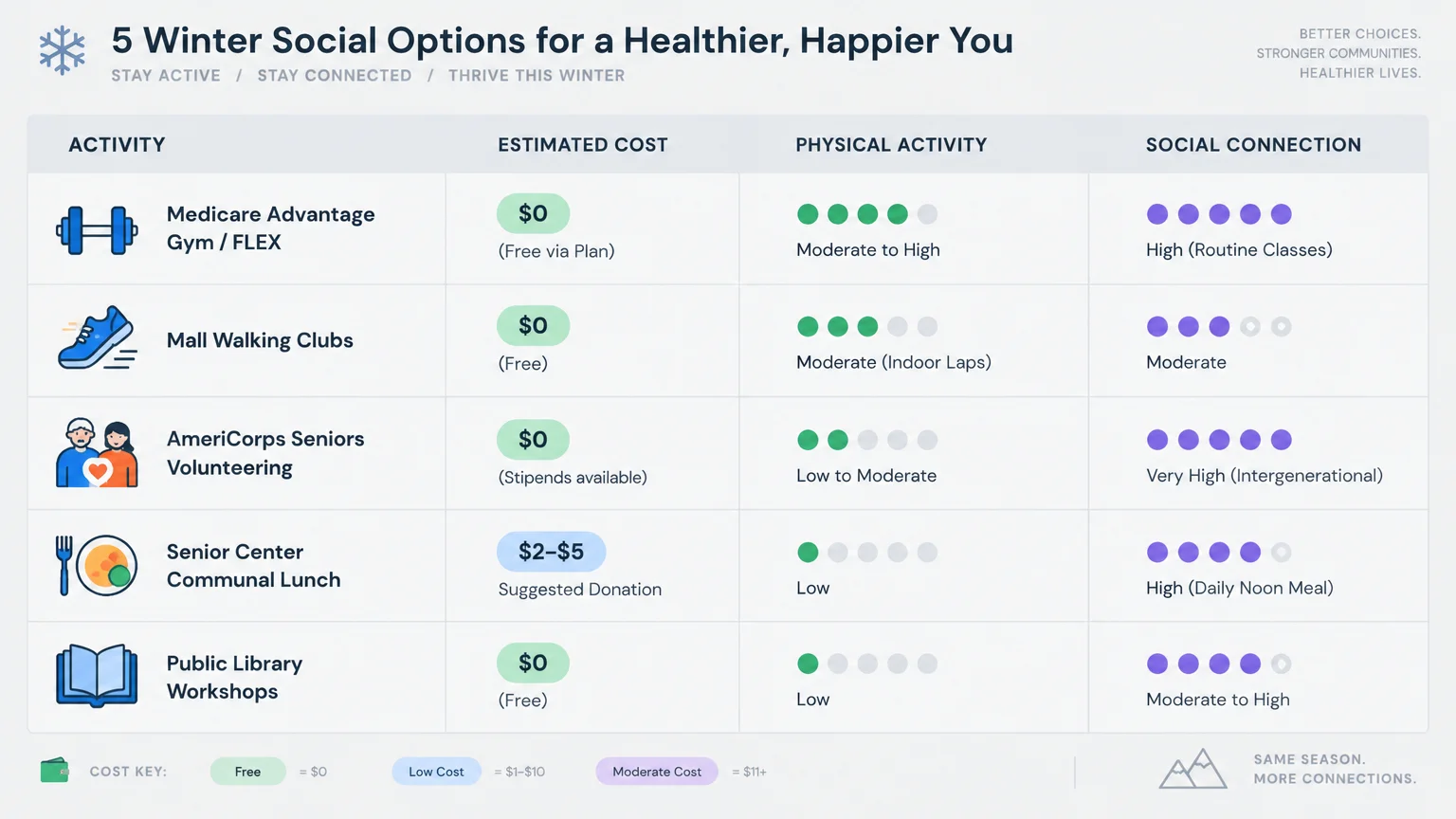
Comparing Winter Social Activities: Costs, Fitness, and Connection
Choosing the right winter activities depends on your physical mobility, personal interests, and household budget. Selecting a balanced mix of physical, intellectual, and community-focused activities delivers the best social outcomes.
The comparison table below details five popular winter social strategies. Review each option to determine which fits your retirement lifestyle and transportation capabilities best.
| Activity Strategy | Estimated Cost | Physical Activity Level | Primary Social Benefit |
|---|---|---|---|
| Medicare Advantage Fitness (SilverSneakers) | $0 (included in most MA plans) | Moderate to High | Weekly workout partners and YMCA social coffee hours |
| AmeriCorps Seniors Volunteering | $0 (stipends available for low-income roles) | Low to Moderate | Intergenerational mentoring and deep civic purpose |
| Public Library Clubs and Workshops | $0 (entirely free) | Low | Intellectual discussions and shared hobby circles |
| Senior Center Congregate Meals | $2 to $5 voluntary donation per meal | Low | Daily shared hot meals and casual afternoon games |
| Local AARP Chapter Activities | $15 to $20 annual membership | Low to Moderate | Advocacy committees, educational talks, and social trips |
Notice that nearly all of these activities cost very little money. You can maintain a full, enriching winter social calendar without draining your fixed retirement income.
Combine one physically active option with one seated, intellectual activity each week. That combination keeps your muscles moving while challenging your brain and expanding your circle of acquaintances.
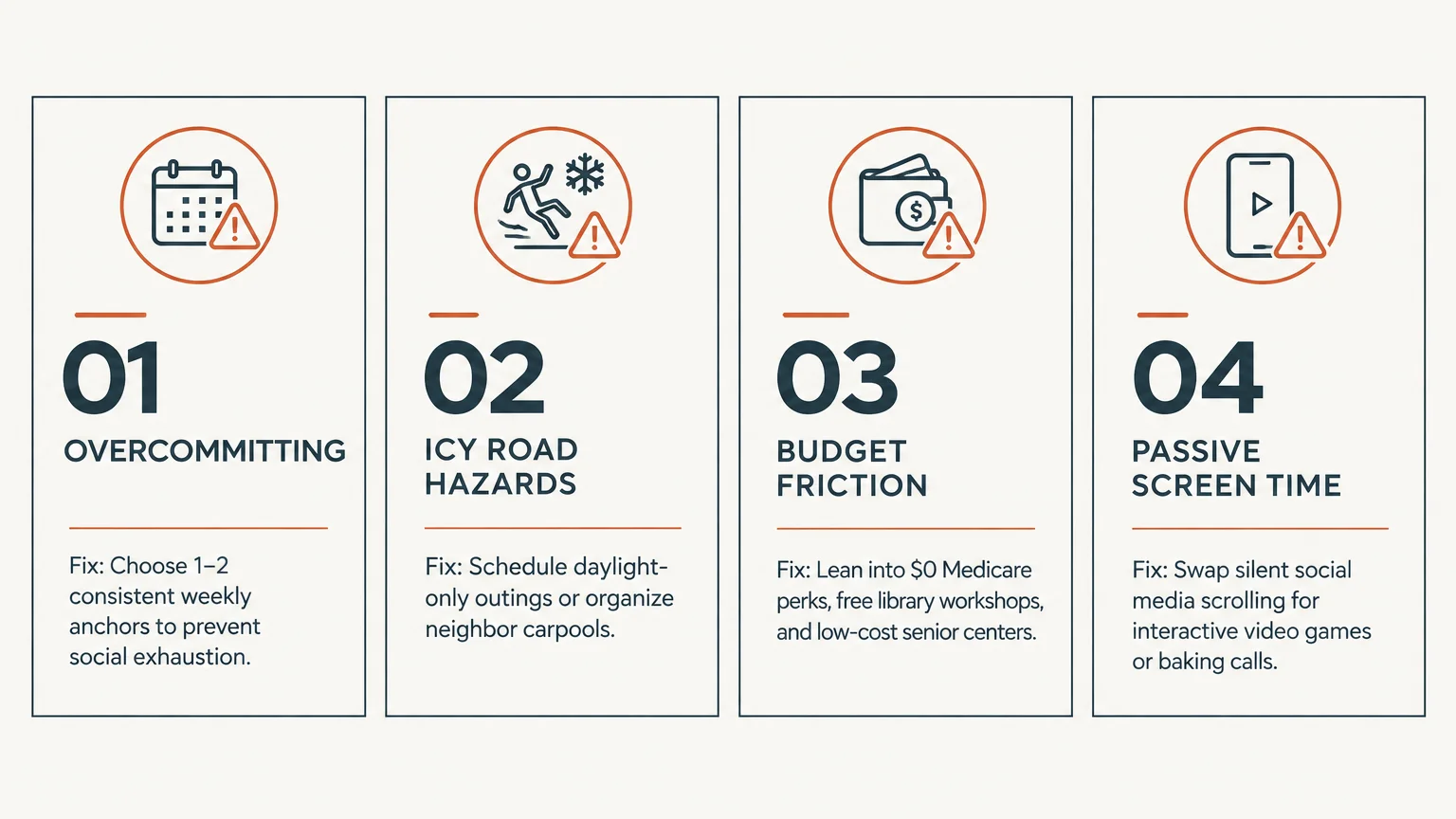
What Can Go Wrong: 4 Winter Social Pitfalls to Avoid
Even with good intentions, older adults often fall into predictable traps during cold weather months. Recognizing these common stumbling blocks early allows you to build proactive workarounds.
1. Allowing Transportation Hurdles to Stop You
Fears of driving in dusk, fog, or snow cause many seniors to cancel all winter plans. Isolating yourself at home out of driving anxiety quickly leads to chronic loneliness and muscle deconditioning.
Instead of driving yourself, research local public senior transportation services. Many municipal transit agencies and Area Agencies on Aging provide low-cost curb-to-curb shuttle vans for older adults.
You can also organize a carpool with neighbors who attend the same fitness classes or library clubs. Sharing rides reduces winter driving stress and turns the trip itself into a pleasant social journey.
2. Overspending on Costly Social Outings
Some retirees attempt to escape loneliness by frequenting restaurants, commercial shopping centers, or expensive entertainment venues. Dining out multiple times each week can rapidly strain a fixed retirement budget.
According to research from the Administration for Community Living, financial insecurity directly worsens social isolation. Straining your budget on costly outings creates anxiety that ultimately discourages you from socializing.
Focus your energy on free and heavily subsidized community programs instead. Senior centers, libraries, and volunteer groups offer rich social connections without threatening your monthly budget.
3. Waiting for Others to Reach Out First
Many isolated retirees assume that friends and family members are too busy to visit. Waiting passively for someone else to make the first phone call often results in weeks of silence.
Remember that your peers are likely experiencing the exact same winter isolation. Taking the initiative to send a friendly text message, card, or phone invitation breaks the ice for everyone.
Make it your personal goal to reach out to one friend or acquaintance every Tuesday and Thursday. Small, consistent efforts prevent casual friendships from drifting away during the long winter months.
4. Mistaking Seasonal Slumps for Normal Aging
Diminished sunlight and freezing temperatures can trigger Seasonal Affective Disorder (SAD) or clinical depression. Persistent low energy, sadness, and withdrawal from hobbies are medical symptoms rather than inevitable parts of aging.
If you experience profound fatigue, appetite changes, or persistent hopelessness, contact your primary care physician promptly. Effective medical treatments, including light therapy and counseling, can restore your vitality.
If you or an older loved one experiences severe emotional distress or overwhelming despair, immediate help is available. You can call or text the national 988 Suicide & Crisis Lifeline at 988 for free, confidential support 24 hours a day.
Frequently Asked Questions About Staying Social in Retirement
Does Original Medicare pay for gym memberships and social fitness classes?
No, Original Medicare Parts A and B do not cover gym memberships or commercial fitness classes. However, about 95% of private Medicare Advantage plans include fitness perks like SilverSneakers or Renew Active at no extra cost.
What if I cannot afford transportation to local senior centers?
Many local Area Agencies on Aging coordinate volunteer driver networks and subsidized dial-a-ride shuttles. Call the federal Eldercare Locator at 1-800-677-1116 to discover affordable senior transportation options in your immediate community.
How do I start socializing if I am naturally introverted?
Introverts often thrive in task-oriented volunteer roles, library book clubs, or quiet craft circles. These structured activities provide clear conversational topics, removing the uncomfortable pressure of unstructured small talk.
Can volunteering through AmeriCorps Seniors affect my Social Security benefits?
No, stipends received through AmeriCorps Seniors Foster Grandparent or Senior Companion programs are completely non-taxable. By federal law, these stipends do not reduce your Social Security benefits or disqualify you from assistance programs like SNAP.
Taking Your Next Steps Toward a Connected Winter
Cold weather does not have to mean months of quiet isolation inside your home. By leaning on local libraries, senior centers, volunteer programs, and Medicare fitness benefits, you can build an active winter community.
Pick just one activity from this guide to explore over the next seven days. Take the first step today by visiting your local library, registering for an indoor walking group, or checking your Medicare fitness eligibility.
The information in this guide is meant for educational purposes. Your specific circumstances—including income, benefits, tax situation, and health needs—may require different approaches. When in doubt, consult a licensed financial advisor or tax professional.
Last updated: February 2026. Benefit amounts, tax rules, and program details change annually—verify current figures with official government sources.








Leave a Reply