

A sudden furnace failure or hospital bill can quickly destabilize your monthly budget. If your emergency savings have not kept pace with rising prices, your financial safety net may be smaller than you realize.
Many retirees assume the old rule of saving three months of living expenses still protects them. In reality, leaving the traditional workforce changes your risk profile and demands a significantly larger cash reserve.
Evaluating your liquid cash today prevents you from selling investments during unexpected market downturns. Let us examine seven clear signs that your emergency fund needs a prompt upgrade.
The Essentials: What You Need to Know
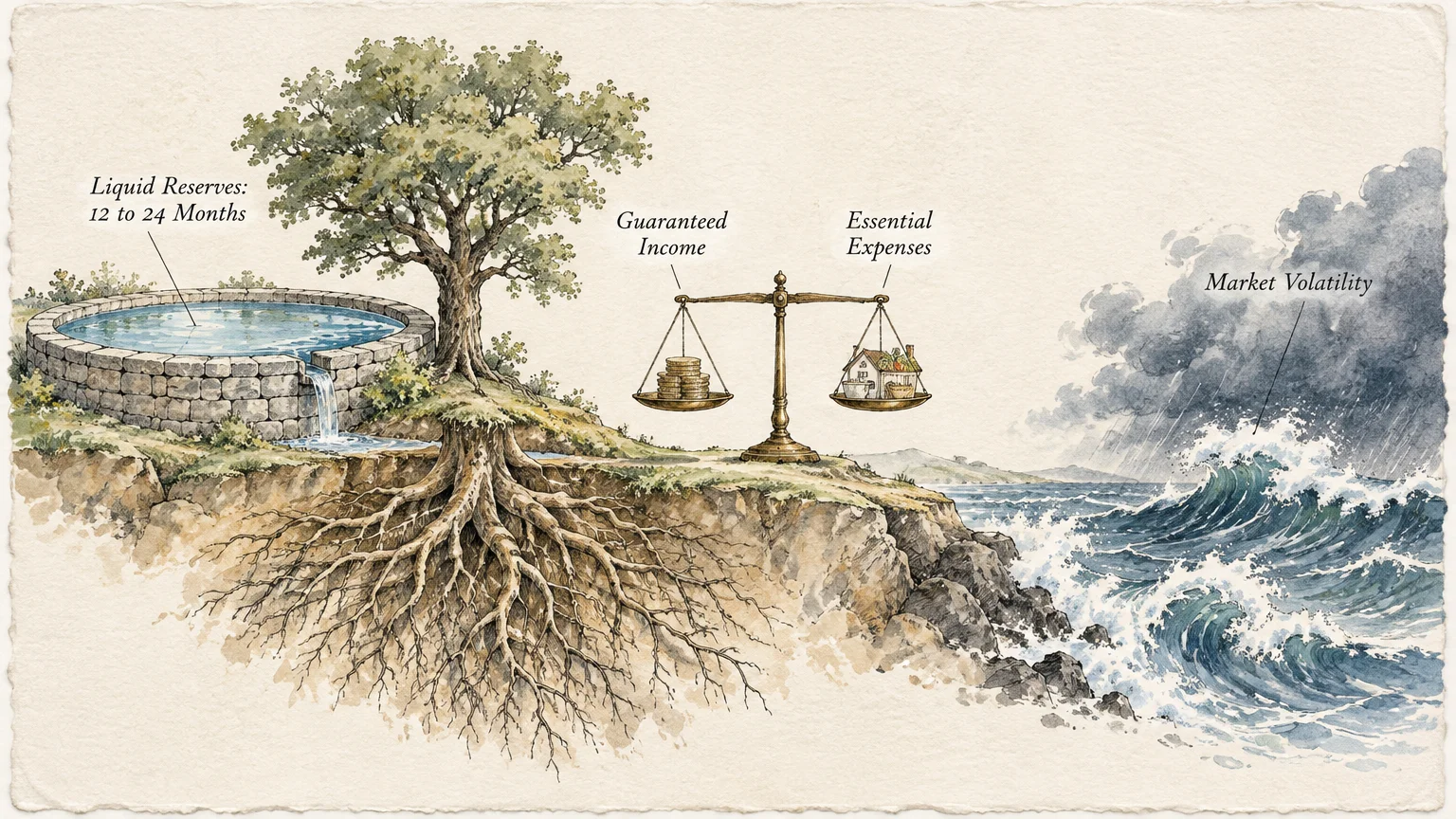
Retirement shifts how you manage liquid money. Before reviewing the warning signs, consider these core principles regarding senior emergency funds:
- The Target Multiplier: Retirees generally need 12 to 24 months of essential expenses in cash, rather than the standard 3 to 6 months recommended for younger workers.
- The Spending Gap: You do not need to replace your entire budget; you only need to cover the gap between guaranteed income and necessary costs.
- Preservation Over Growth: Liquid reserves protect your invested capital from sequence-of-returns risk during volatile market cycles.
- Inflation Realities: Stashing cash in non-interest checking accounts erodes your purchasing power each year.
Why the Old Emergency Fund Rules Fail in Retirement
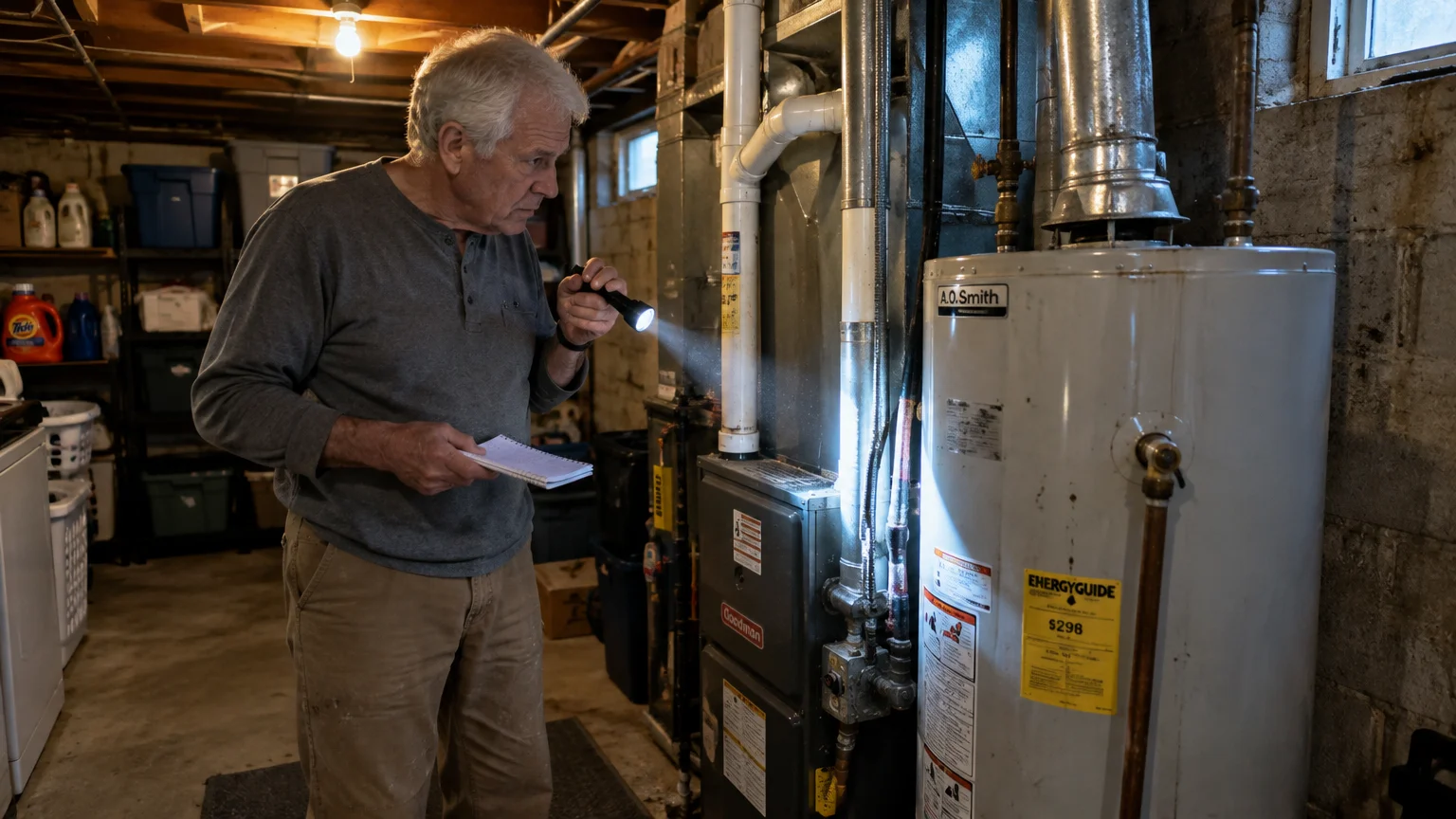
Traditional finance advice urges workers to set aside three to six months of expenses. That benchmark assumes you can replace lost cash through overtime, bonuses, or a new job.
Retirees no longer have a corporate paycheck to absorb sudden financial shocks. If an unexpected emergency strikes, you cannot easily increase your labor income to cover the bills.
According to survey data from the Federal Reserve, 37% of American adults cannot cover an unexpected $400 expense using cash alone. That vulnerability becomes magnified when you live on a fixed income.
Without adequate liquid reserves, retirees often turn to credit cards or retirement account withdrawals. Selling equities during a market downturn locks in painful portfolio losses that you may never recover.
“An emergency fund is not an investment to make you money; it is an insurance policy to keep you from going into debt.” — Suze Orman, Financial Author and Personal Finance Expert

Comparing Emergency Fund Guidelines: Workers vs. Retirees
Your stage of life directly dictates how much cash you should keep within arm’s reach. The table below outlines how emergency savings strategies diverge once you stop working.
| Factor | Working Years Strategy | Retirement Strategy |
|---|---|---|
| Recommended Buffer | 3 to 6 months of living expenses | 12 to 24 months of essential spending gaps |
| Primary Financial Threat | Sudden job loss or temporary disability | Sequence-of-returns risk and out-of-pocket healthcare |
| Calculation Metric | Total monthly net income | Essential costs minus guaranteed pension and Social Security |
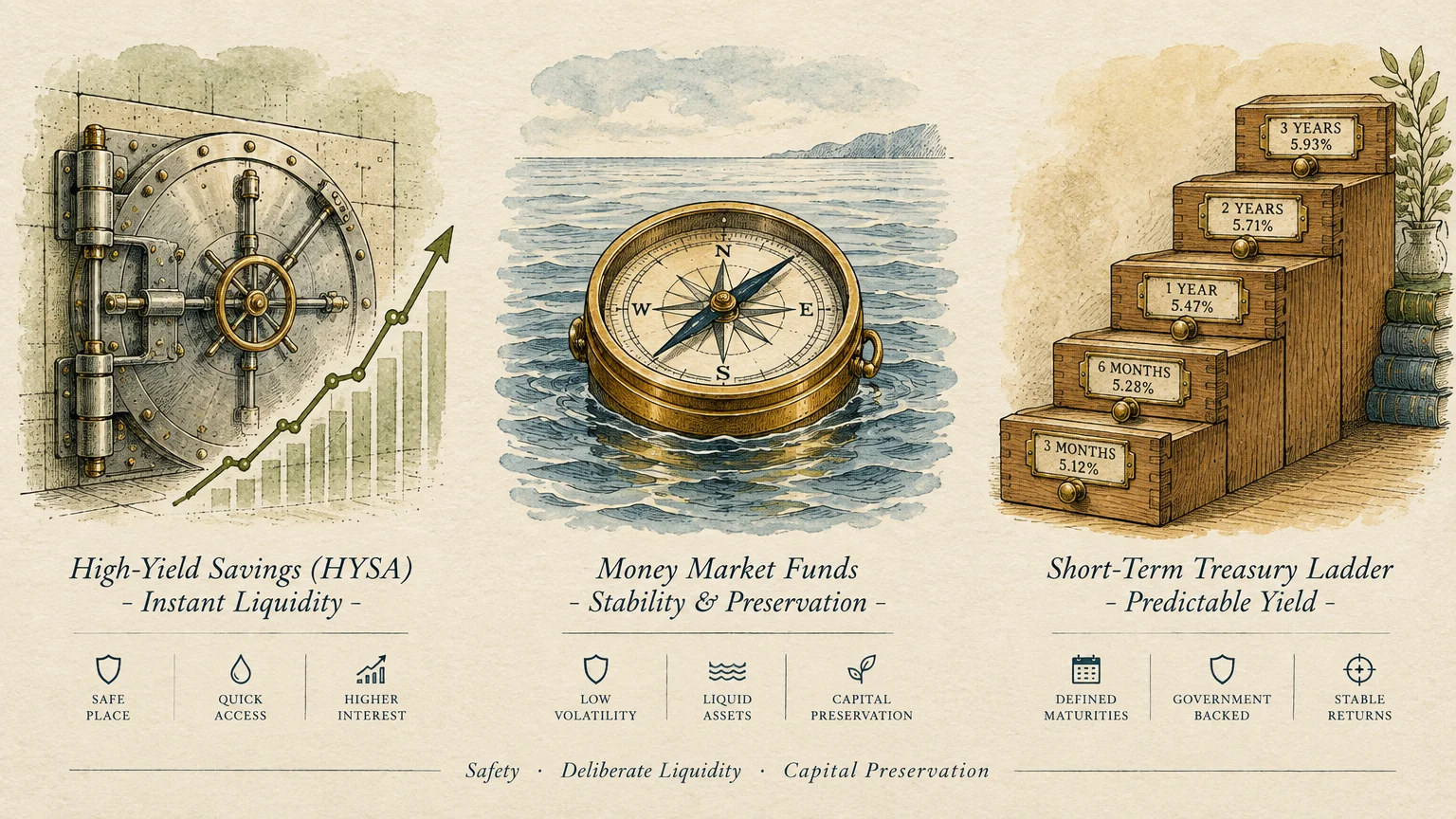
| Preferred Vehicles | High-yield savings accounts | HYSAs, money market funds, and short-term Treasury ladders |
| Replenishment Source | Active payroll income and bonuses | Planned portfolio withdrawals and required minimum distributions |
7 Signs Your Emergency Fund Isn’t Big Enough Anymore
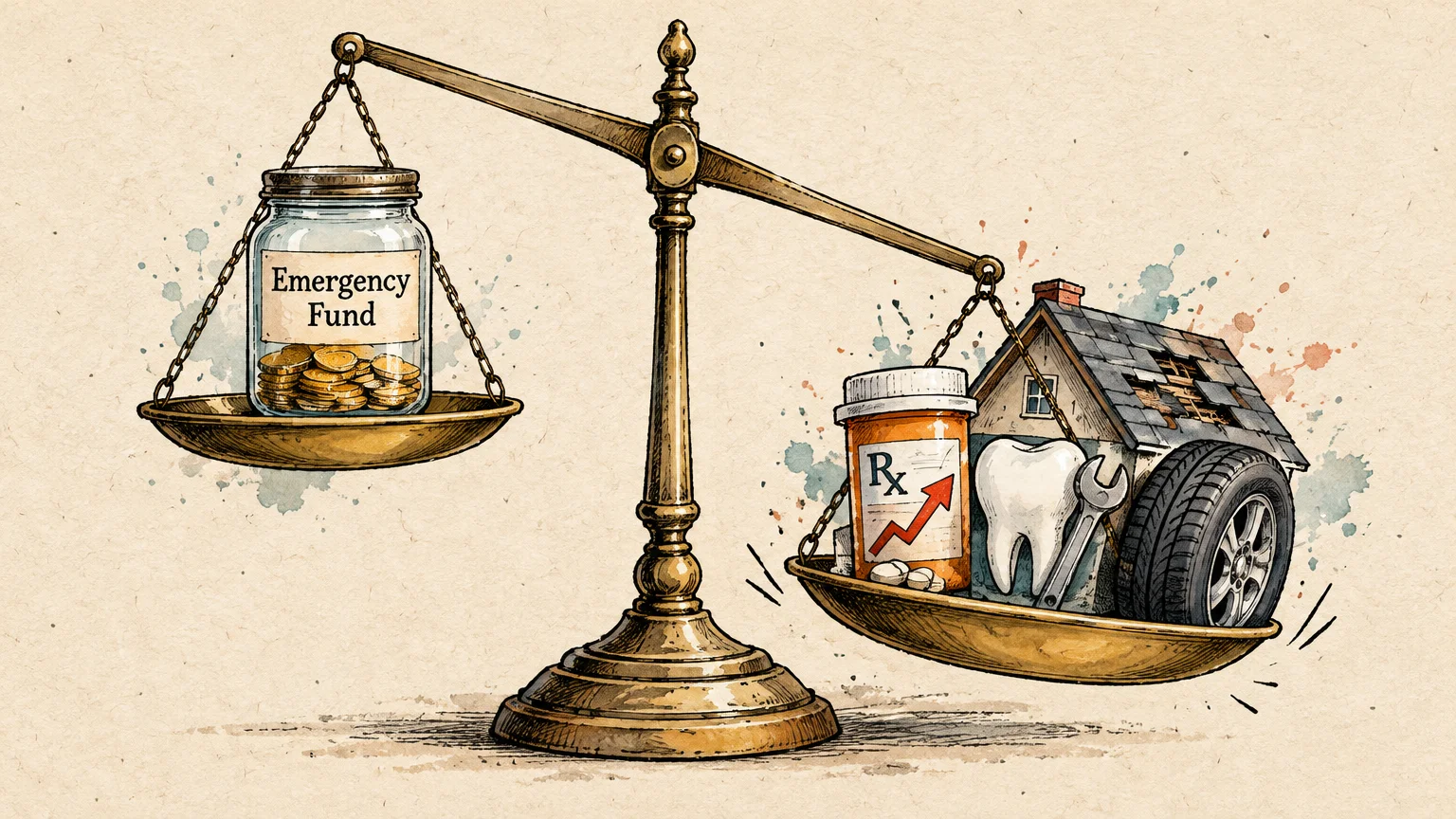
Economic shifts and personal milestones alter your financial requirements over time. Look out for these seven warning signs indicating that your cash reserves need attention.
1. You Rely on Credit Cards for Out-of-Pocket Healthcare Costs
Medical emergencies represent one of the fastest drains on retirement capital. If a specialist visit or prescription copay forces you to reach for high-interest plastic, your fund is insufficient.
According to Medicare.gov, the Medicare Part A hospital inpatient deductible is $1,676 per benefit period in 2025. An unexpected hospitalization triggers that expense immediately before standard coverage begins.
Additionally, the 2025 Medicare Part B annual deductible stands at $257, alongside ongoing 20% coinsurance charges. Fidelity estimates that an average 65-year-old couple retiring today needs approximately $345,000 just for lifetime medical expenses.
Dental emergencies, prescription hearing aids, and specialized vision care frequently arrive without warning. A solid cash reserve absorbs these health expenses without generating toxic credit card debt.
2. Your Living Costs Increased, but Your Savings Remained Flat
Many seniors set aside a fixed sum years ago and never reconsidered the total balance. If your account holds the same $10,000 it held a decade ago, inflation has reduced its real purchasing power.
Utility bills, homeowner insurance premiums, and grocery bills have climbed significantly across the United States. Your emergency cash balance must increase proportionally to cover those elevated baseline bills.
The Social Security Administration provides annual cost-of-living adjustments to keep pace with inflation. Your emergency reserve demands an identical periodic reassessment to maintain its protective strength.
3. A Market Dip Leaves You Panicked About Daily Cash Needs
When stock markets experience volatility, your emotional comfort often reflects your cash position. If market drops cause severe anxiety, your portfolio may be carrying too much day-to-day burden.
Financial planners describe this danger as sequence-of-returns risk. Liquidating mutual funds or stocks while asset values are depressed accelerates the depletion of your lifetime nest egg.
Maintaining one to two years of liquid expenses allows you to ride out extended market corrections comfortably. You can leave your investments alone to recover while spending safe cash reserves.
“Predicting rain doesn’t count, building arks does.” — Warren Buffett, Chairman and CEO of Berkshire Hathaway
4. A Single Home or Vehicle Repair Would Drain Your Balance
Major home maintenance items do not wait for convenient moments to break down. A broken heat pump, a leaking roof, or an engine failure can demand thousands of dollars overnight.
Contractors recommend budgeting 1% to 3% of your home’s total value each year for routine upkeep and structural repairs. For older properties, actual maintenance expenses frequently trend toward the higher end of that bracket.
Furthermore, sudden health changes might require rapid accessibility upgrades to your living space. Installing wheelchair ramps or walk-in showers costs anywhere from $3,000 to $15,000 according to home modification data.
If paying a contractor leaves your savings account near zero, you are carrying dangerous exposure. Your fund should comfortably absorb a major structural repair while still retaining a cushion for other emergencies.
5. Your Emergency Cash Doubles as Your Discretionary Spending Account
Commingling your rainy-day reserves with your holiday travel or discretionary spending creates dangerous confusion. When money moves freely between everyday desires and genuine crises, emergency buffers quickly evaporate.
You might intend to pay back the money you pulled for a family cruise or anniversary gift. Unfortunately, unexpected household crises rarely wait until you restore those withdrawn funds.
Keep your true emergency money completely separate from your vacation or hobby savings accounts. Clearly defined financial boundaries prevent you from spending dedicated security reserves on temporary lifestyle desires.
6. You Provide Ongoing Financial Support to Adult Family Members
Supporting adult children or grandchildren through tough times is a compassionate instinct shared by many parents. However, regularly writing checks to assist family members can quietly hollow out your safety net.
Data from financial research groups indicates that nearly half of older Americans provide financial aid to adult children. When an emergency strikes their household, it frequently becomes an expense that hits your bank account.
If you regularly help family with rent, tuition, or car loans, your fund must account for those recurring possibilities. Failing to factor in family support leaves both generations vulnerable to unexpected financial shocks.
7. Your Entire Cash Cushion Sits in a Zero-Interest Account
Keeping your rainy-day capital in a standard brick-and-mortar checking account costs you meaningful money every month. Traditional checking accounts frequently pay a negligible interest rate near 0.01%.
By contrast, top federally insured high-yield savings accounts pay between 4.0% and 5.0% annual percentage yield. That difference represents hundreds or even thousands of dollars in risk-free annual income.
The Consumer Financial Protection Bureau (CFPB) encourages consumers to compare deposit yields across banking institutions. Earning a competitive yield helps your cash defend itself against ongoing inflation.
How to Calculate Your Senior “Spending Gap”
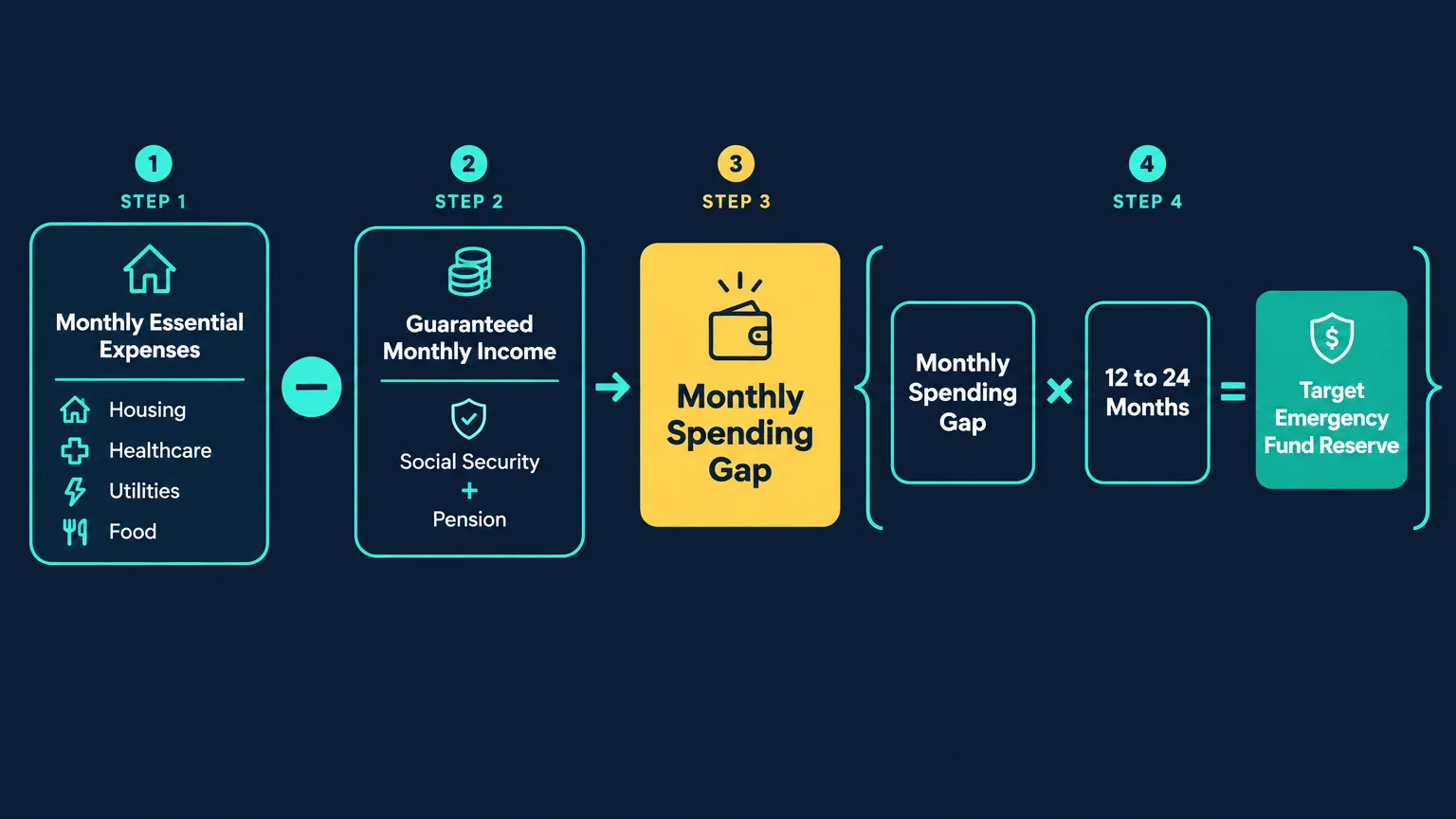
Determining your exact cash reserve target does not require guesswork. Use this step-by-step method to find your household’s actual spending gap.
- Tally Essential Monthly Needs: Add up housing, groceries, utilities, supplemental insurance premiums, vehicle costs, and baseline medical expenses.
- Total Your Guaranteed Income: Combine your monthly Social Security benefit, government or corporate pensions, and any stable lifetime annuity payouts.
- Subtract Income from Expenses: Deduct guaranteed income from essential monthly needs to reveal your net monthly shortfall.
- Multiply by Your Target Horizon: Multiply that shortfall by 12 or 24 months to arrive at your recommended emergency reserve figure.
For example, assume your household needs $4,200 each month to cover basic nondiscretionary expenses. If Social Security and a small pension provide $3,000 in monthly income, your shortfall is $1,200.
Multiplying that $1,200 gap by 18 months produces an emergency fund goal of $21,600. That targeted sum shields your broader investment accounts without requiring you to hold excessive idle cash.
Where to Keep Your Emergency Cash Safely
Your emergency reserves must remain completely liquid and free from market risk. Never place dedicated rainy-day cash into speculative investments, corporate bonds, or illiquid private assets.
Modern banking options allow you to generate respectable interest while maintaining instant access to your money. Consider these three proven holding vehicles for your reserves:
- High-Yield Savings Accounts (HYSAs): Online banking platforms offer competitive interest rates alongside convenient electronic transfer options to your local checking account.
- Money Market Deposit Accounts: These accounts provide check-writing privileges and debit card access while offering yields far higher than standard accounts.
- Short-Term Treasury Bills: Backed by the full faith and credit of the U.S. government, Treasury bills offer strong state-tax-exempt yields across 4-week to 26-week terms.
Always verify that your financial institution carries protection from the Federal Deposit Insurance Corporation (FDIC) or National Credit Union Administration (NCUA). Standard coverage protects up to $250,000 per depositor, per institution, for each ownership category.

What Can Go Wrong: 4 Mistakes Seniors Make With Cash Reserves
Managing liquid money sounds straightforward, but retirees often stumble into common traps. Avoid these four missteps to keep your emergency fund effective.
1. Hoarding Excessive Cash Out of Fear
While having too little cash creates immediate panic, holding too much cash creates silent long-term damage. Stashing hundreds of thousands of dollars in low-yield cash guarantees that inflation erodes your future purchasing power.
Keep only the cash needed to navigate emergencies and near-term spending gaps. Money earmarked for expenses five to ten years away belongs in balanced investments designed to outpace inflation.
2. Locking Emergency Money in Long-Term CDs
Multi-year certificates of deposit offer guaranteed interest, but they lock up your principal behind penalty walls. If you break a five-year CD early to cover medical costs, early withdrawal penalties reduce your earnings.
If you prefer certificates of deposit, build a rolling CD ladder with short maturities instead. That arrangement ensures a portion of your capital matures every few months for easy liquidity.
3. Treating a HELOC as Your Primary Safety Net
Some homeowners bypass cash savings entirely, intending to tap a Home Equity Line of Credit during emergencies. However, financial institutions maintain legal authority to freeze or reduce credit lines during broader economic recessions.
Relying on a lender during a nationwide financial crunch leaves you vulnerable when assistance matters most. A genuine emergency reserve consists of actual money you own outright, not borrowed debt.
4. Forgetting Dental, Vision, and Hearing Gaps
Original Medicare does not cover routine dental cleanings, dentures, eyeglasses, or hearing aids. Many seniors neglect to include these frequent out-of-pocket health costs when sizing their reserves.
A single dental implant or set of advanced hearing aids can cost several thousand dollars. Make sure your emergency calculations include an explicit allocation for non-covered physical care.

When to Consult a Professional
Certain personal circumstances warrant personalized guidance from an accredited financial planner or tax advisor. Reach out to a qualified professional if you encounter any of the following situations:
- Coordinating Required Minimum Distributions (RMDs): If you must withdraw money from tax-deferred accounts, a planner can help route distributions directly into cash reserves efficiently.
- Navigating Chronic Health Diagnoses: An advisor helps structure liquid funds to pay for assisted living or home aides without triggering adverse tax consequences.
- Downsizing or Relocating: Transitioning between properties involves significant real estate transaction fees, moving expenses, and timing gaps that demand careful cash buffering.
- Balancing Cash with Social Security Timing: If you delay Social Security benefits until age 70, you may need a larger short-term cash bridge to fund initial living costs.
Look for fee-only professionals holding the Certified Financial Planner (CFP) or CPA designation. These advisors operate under a strict fiduciary standard, ensuring recommendations match your best interests.
Frequently Asked Questions
How many months of emergency savings should a retiree hold?
Most financial planners suggest keeping 12 to 24 months of your non-discretionary spending gap in liquid cash. This larger cushion shields you from selling portfolio assets during market declines.
What is the senior “spending gap” formula?
Calculate your monthly essential expenses and subtract guaranteed monthly income like Social Security or pensions. Multiply that remaining gap by 12 or 24 to determine your target cash reserve.
Where should I keep my retirement emergency fund?
Keep your funds in FDIC-insured high-yield savings accounts, money market deposit accounts, or short-term Treasury bills. These options provide immediate liquidity while earning competitive interest.
Can I rely on a home equity line of credit instead of cash?
Relying solely on a line of credit poses significant risks. Banks can freeze or reduce home equity lines during economic downturns, leaving you without access when you need cash most.
Take Control of Your Cash Security Today
Reviewing your emergency fund today gives you peace of mind against life’s unpredictable events. Start by calculating your actual monthly spending gap and checking whether your current cash balance provides a comfortable safety net.
If your reserves fall short, reallocate modest amounts from monthly cash flow or incoming distributions until you meet your target. Building a sturdy cash cushion preserves your independence and ensures a resilient retirement.
This article provides general financial education and information only. Everyone’s financial situation is unique—what works for others may not work for you. For personalized advice tailored to your retirement needs, consider consulting a qualified financial professional such as a CFP or CPA.
Last updated: February 2026. Benefit amounts, tax rules, and program details change annually—verify current figures with official government sources.






Leave a Reply