

Retiring comfortably requires far more than saving a sizable nest egg; you must distribute your money strategically. A single account error can cost you thousands of dollars in unnecessary taxes and penalties.
Many retirees assume their accumulation habits carry seamlessly into retirement, but withdrawal rules follow an entirely different playbook. Coordinating tax brackets, Medicare thresholds, and distribution deadlines requires careful timing.
Learning to navigate these distribution rules protects your hard-earned wealth. Here are nine critical retirement account mistakes to avoid so you keep more money in your pocket.
1. Missing or Miscalculating Required Minimum Distribution Deadlines
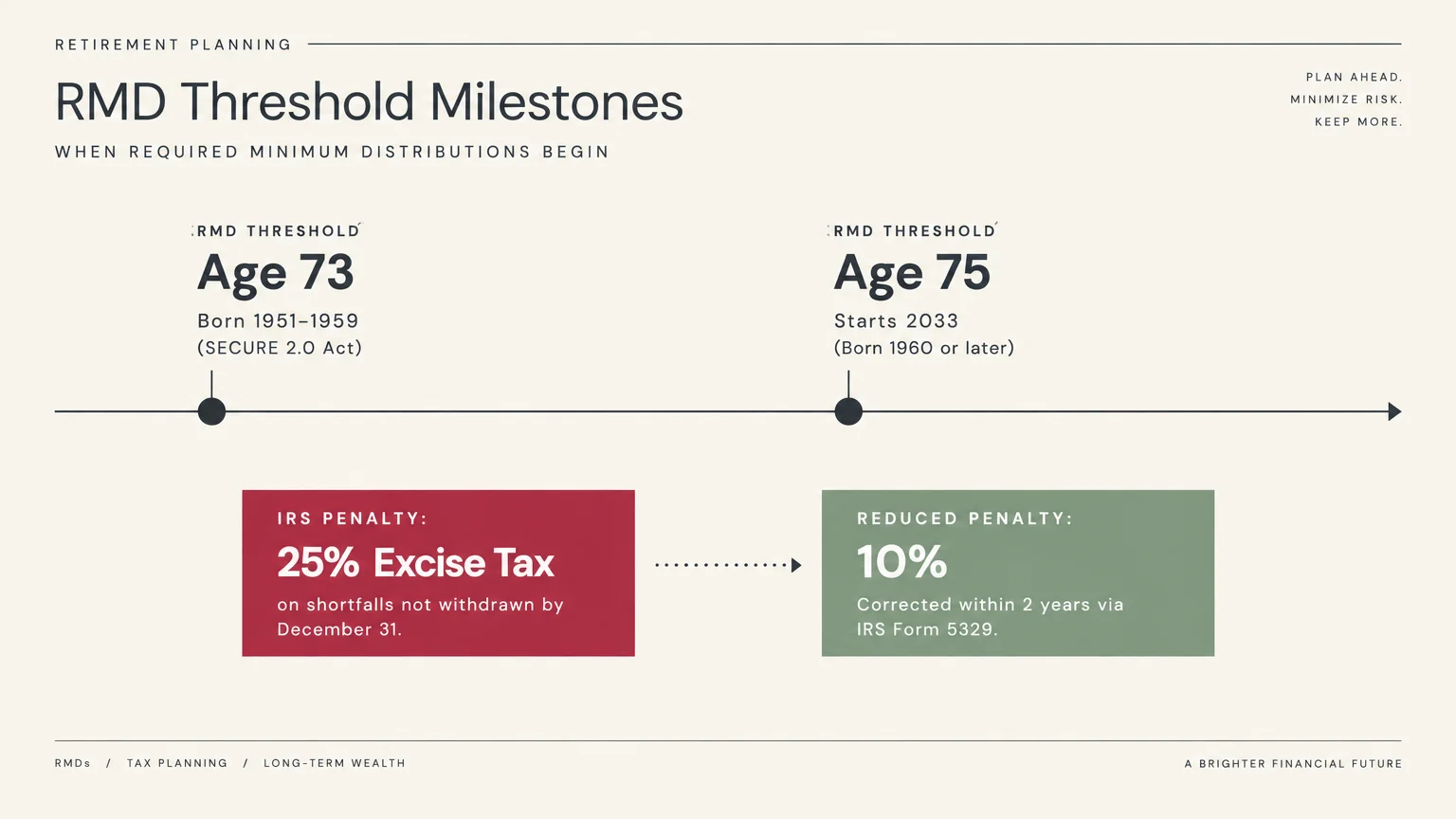
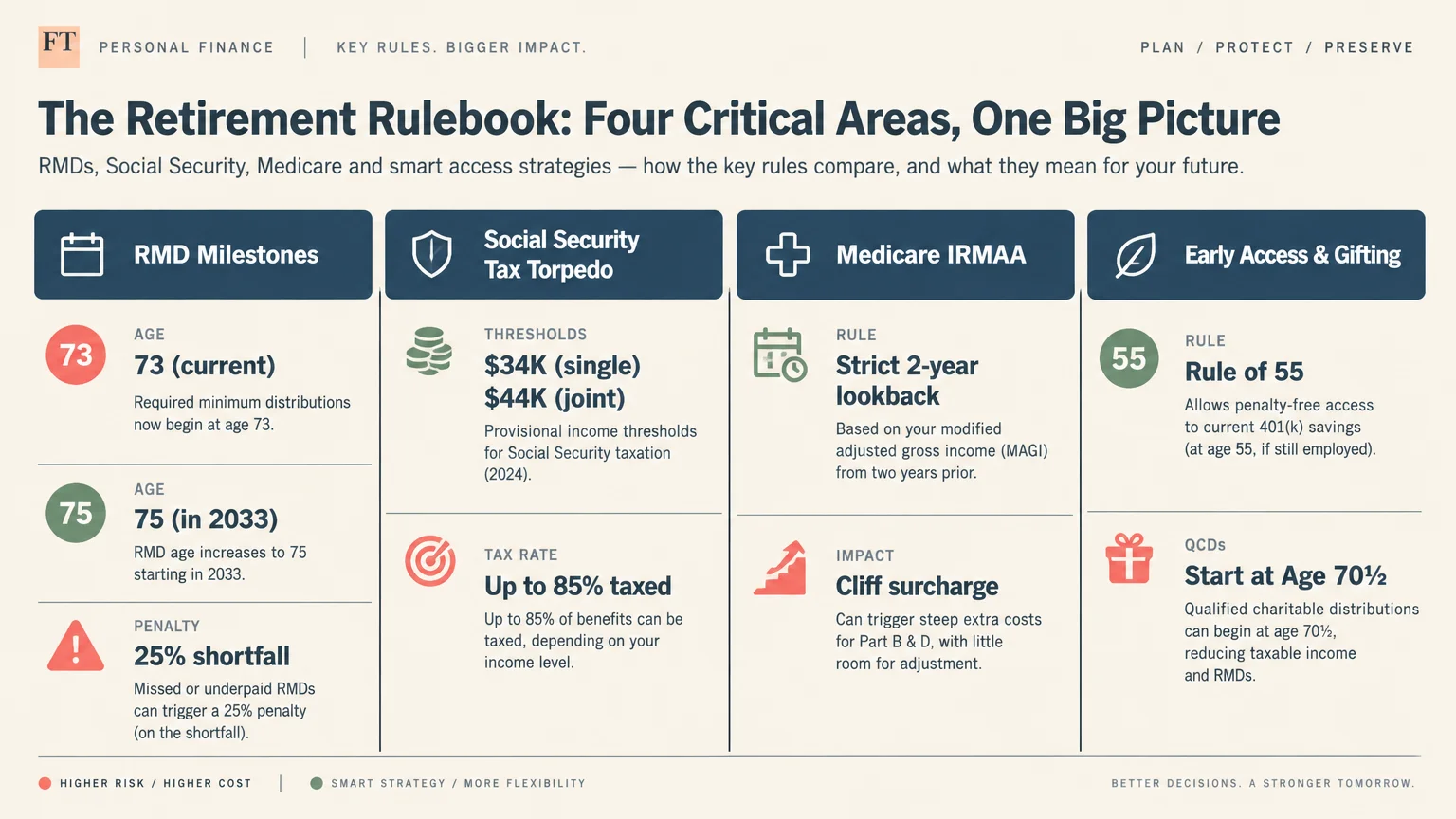
Under the SECURE 2.0 Act, your Required Minimum Distribution (RMD) starting age is now 73 if you were born between 1951 and 1959. This threshold increases to age 75 in 2033 for anyone born in 1960 or later.
If you fail to withdraw your full RMD by December 31 each year, the IRS imposes a 25% excise tax on the shortfall. However, if you correct the error within two years using IRS Form 5329, the penalty drops to 10%.
You can check the latest RMD calculation worksheets directly with the Internal Revenue Service (IRS) to confirm your exact required amount.
2. Mixing Up 401(k) and IRA Aggregation Rules
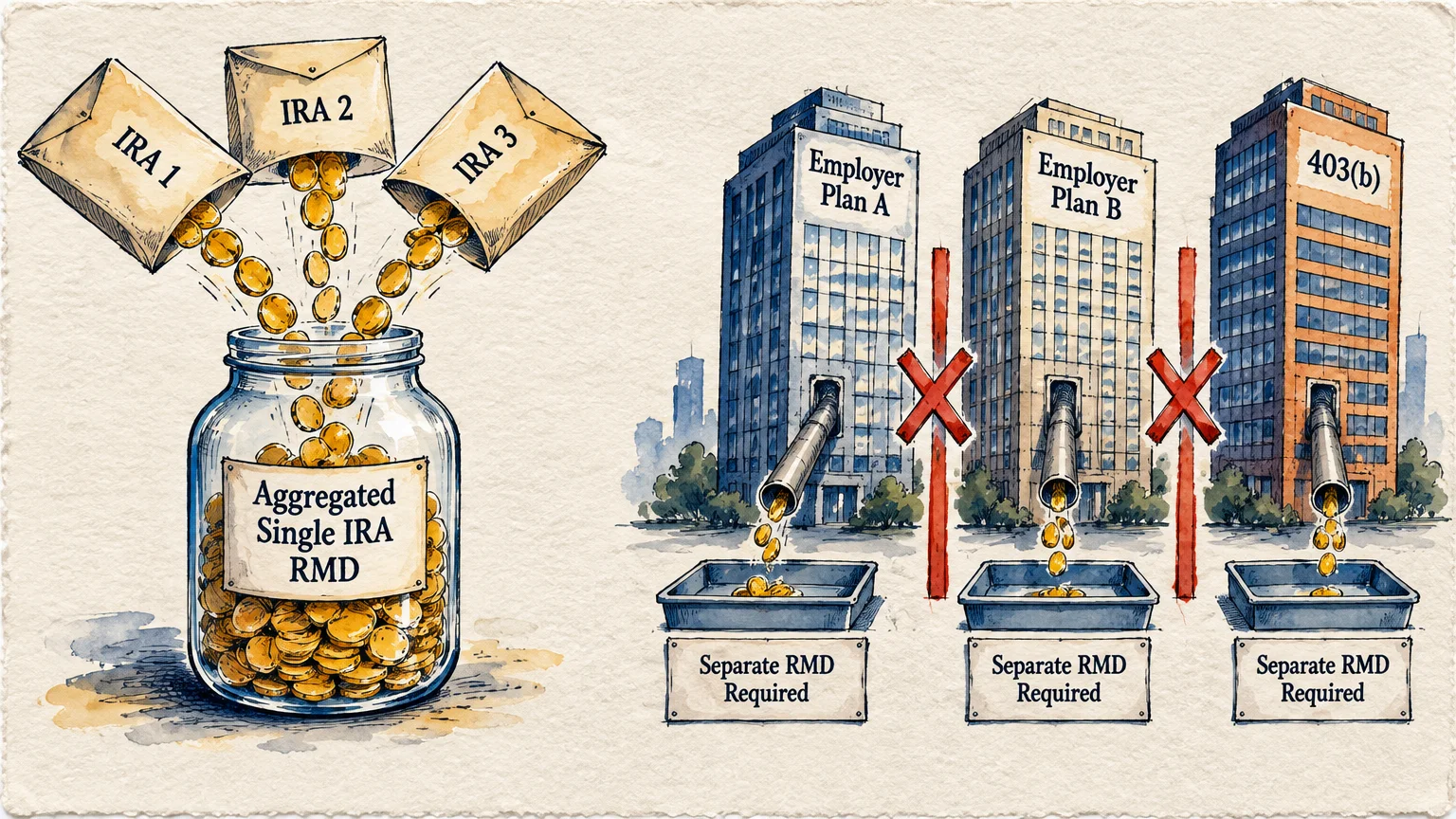
You can calculate total RMDs across all your traditional IRAs and withdraw the combined sum from a single IRA. Many retirees mistakenly assume employer workplace plans follow this identical aggregation rule.
You cannot aggregate workplace 401(k) or 403(b) distributions with IRAs, nor can you combine distributions across multiple 401(k) accounts. You must calculate and withdraw a separate RMD from each individual employer plan.
Failing to take an RMD from each distinct 401(k) plan triggers IRS missed-distribution penalties—even if your total annual withdrawals exceeded your cumulative RMD requirement.
3. Triggering the Social Security “Tax Torpedo”
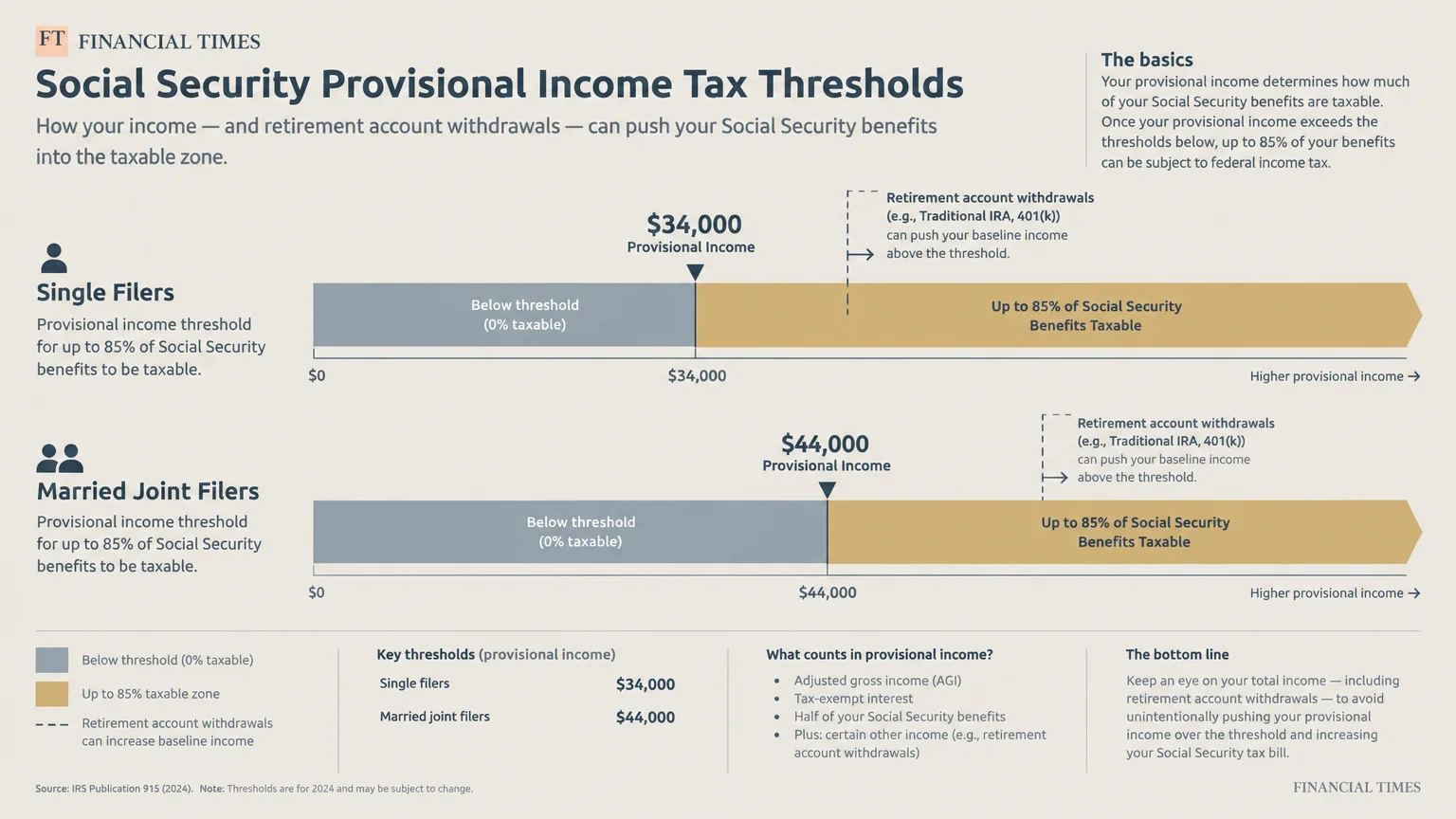
Distributions from traditional retirement accounts count directly toward your “provisional income.” When provisional income exceeds modest thresholds, the federal government taxes up to 85% of your Social Security benefits.
For single filers, provisional income above $34,000 exposes 85% of benefits to taxation. For married couples filing jointly, that threshold sits at just $44,000.
Because Congress never indexed these thresholds to inflation, routine retirement account withdrawals often pull seniors into this costly tax trap. You can review your baseline benefit records through the Social Security Administration (SSA) to model your potential tax exposure.
4. Overlooking the Two-Year Medicare IRMAA Surcharge Lookback
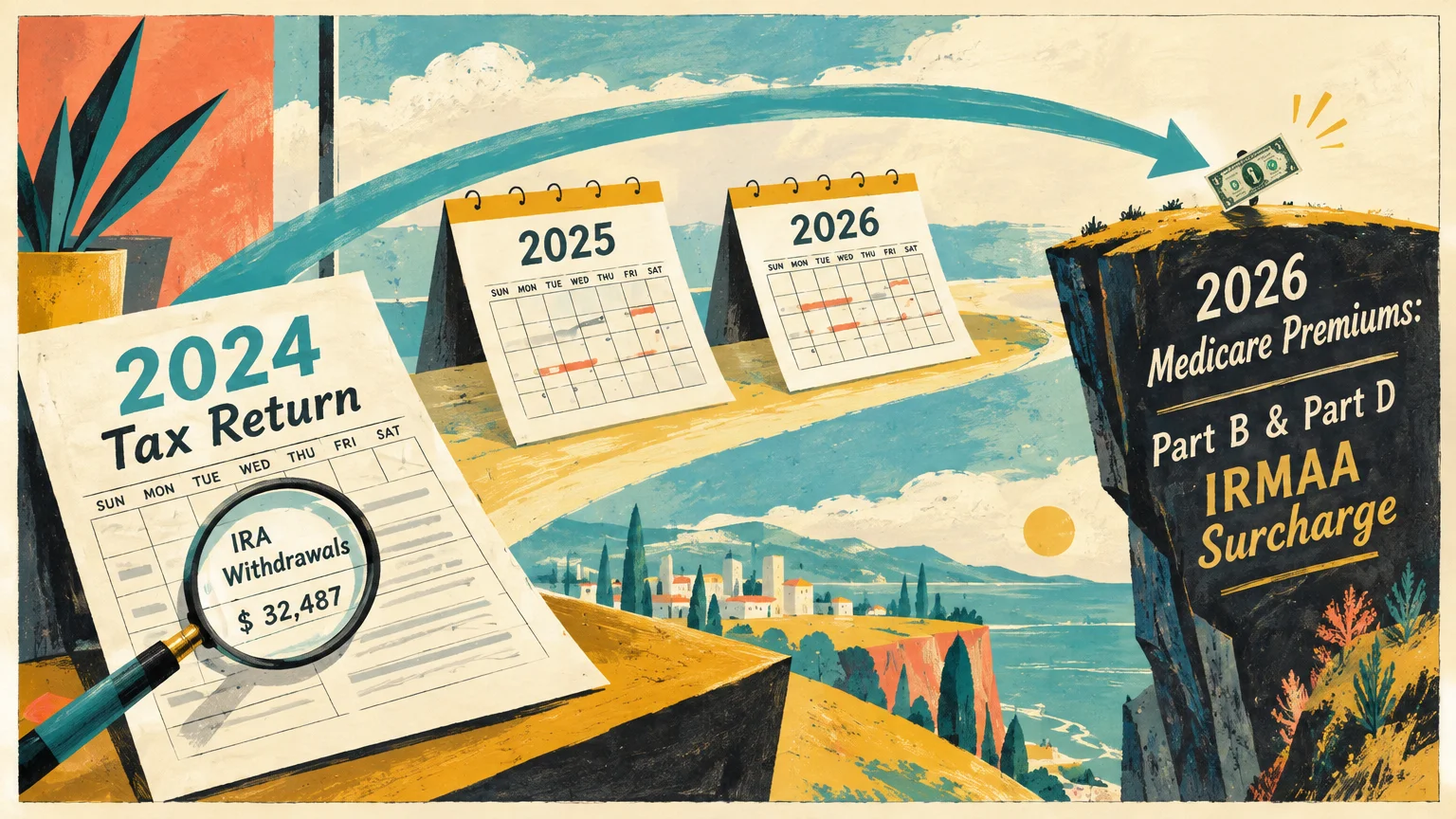
Substantial traditional IRA withdrawals or aggressive Roth conversions can trigger an Income-Related Monthly Adjustment Amount (IRMAA). This surcharge significantly increases your monthly Medicare Part B and Part D premiums.
Medicare determines your premium surcharges using a strict two-year lookback period. For example, taxable income reported on your 2024 tax return determines your actual Medicare premium costs for 2026.
IRMAA operates as a sharp cliff rather than a gradual slope. Exceeding an income bracket threshold by just one dollar triggers the full premium surcharge for the entire calendar year.
Always verify current income brackets on Medicare.gov before scheduling large year-end retirement account distributions.

5. Forfeiting the “Rule of 55” Through Hasty Rollovers
If you leave your job during or after the calendar year you reach age 55, you can access your current 401(k) penalty-free. Qualifying public safety employees can utilize this provision starting at age 50.
Many early retirees hastily roll their employer 401(k) balance into a traditional IRA upon separation. This immediate transfer permanently forfeits your Rule of 55 protection.
Once transferred into an IRA, your funds remain locked under standard early withdrawal rules until you reach age 59½. Leaving the money inside your former employer’s plan preserves penalty-free liquidity.
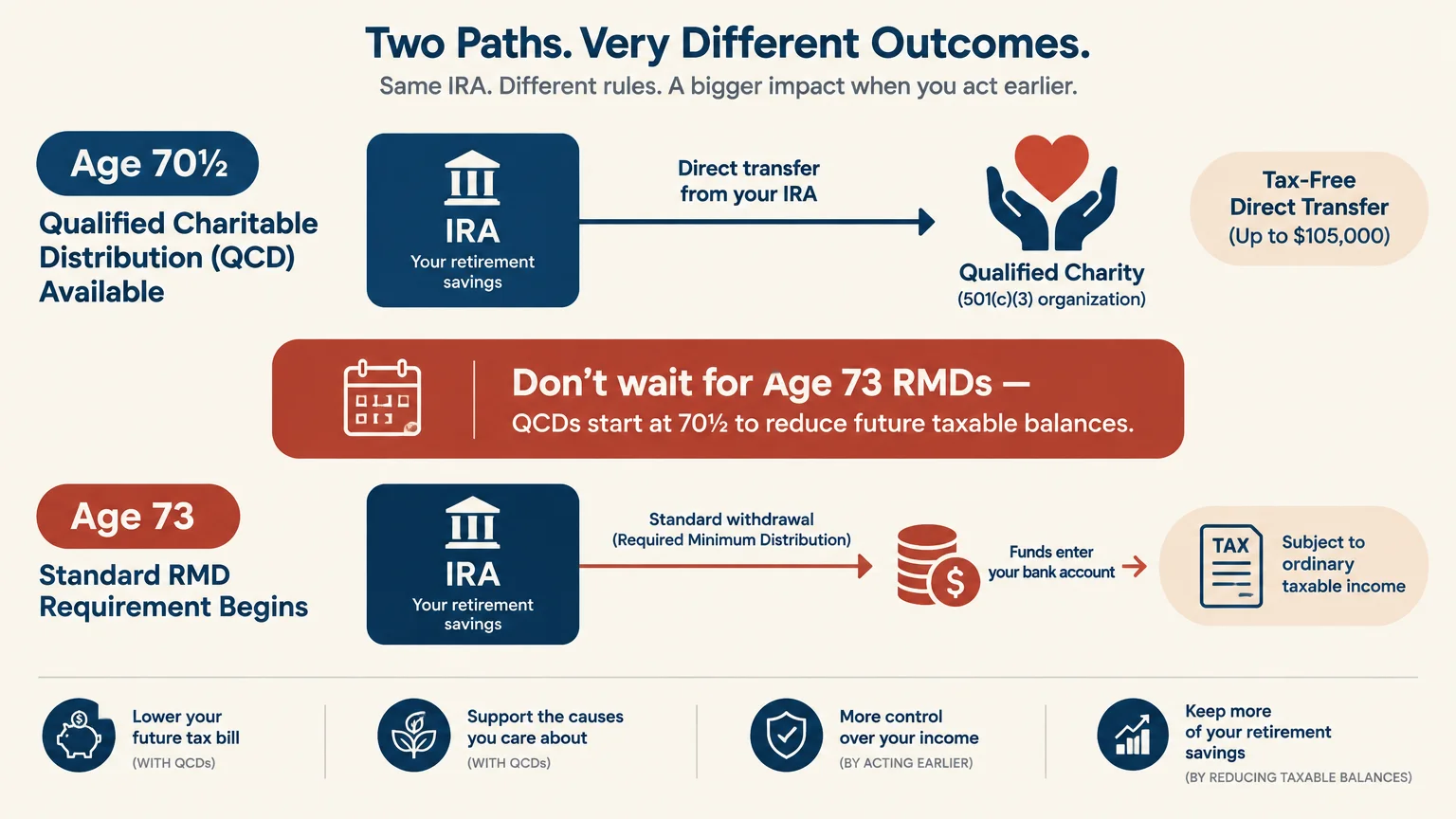
6. Delaying Qualified Charitable Distributions Until Age 73
While recent legislation pushed the standard RMD starting age to 73, the Qualified Charitable Distribution (QCD) eligibility age remains fixed at 70½. You do not need to wait for mandatory RMDs to use this tool.
According to the IRS, traditional IRA owners can transfer up to $108,000 in 2025 and $111,000 in 2026 directly to a qualified charity tax-free. These transfers satisfy your RMD without raising your Adjusted Gross Income (AGI).
Waiting until age 73 wastes years of potential tax savings. Lowering your AGI earlier through QCDs helps keep your Medicare premiums and taxable income in lower tiers.
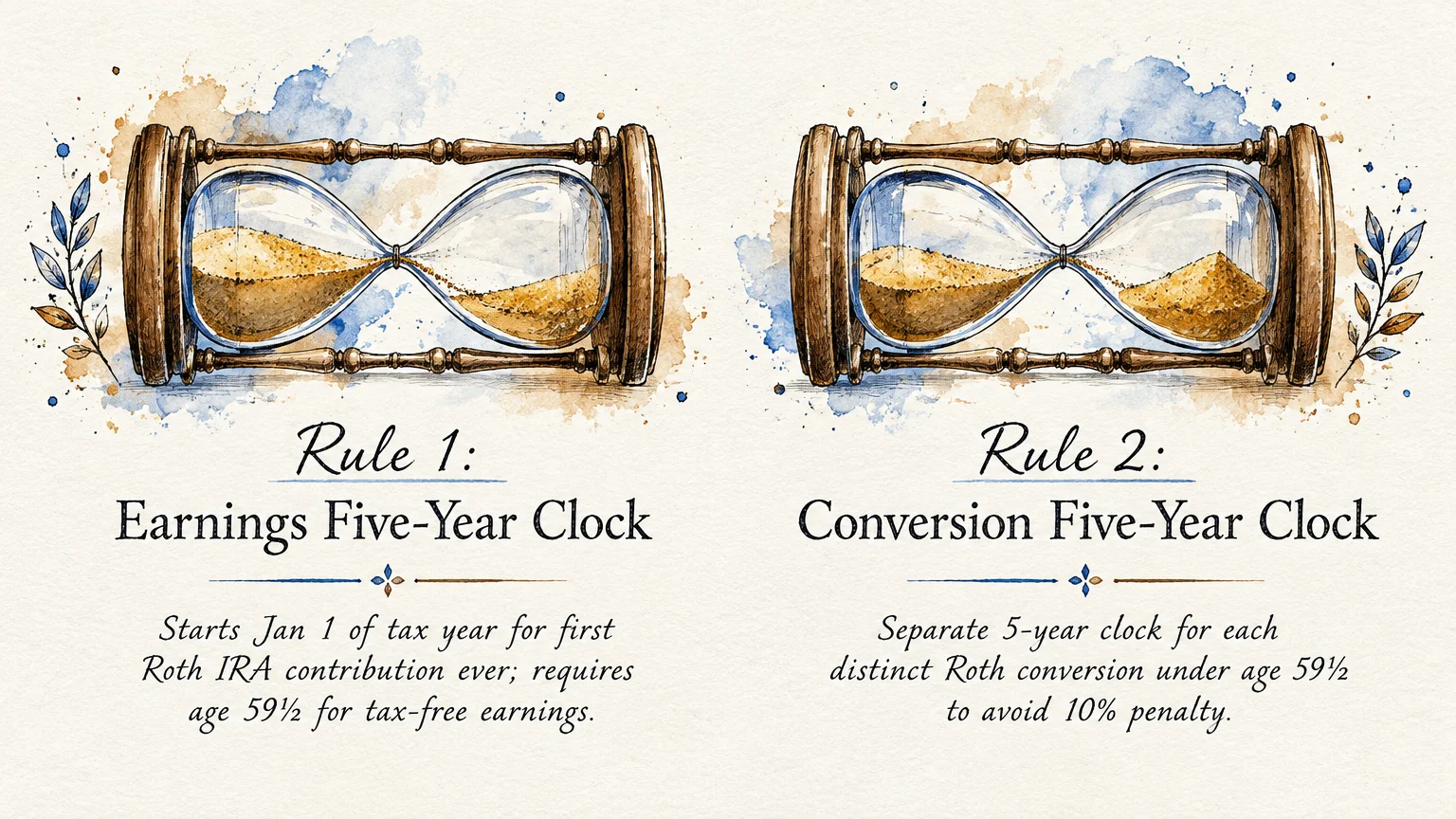
7. Misunderstanding the Dual Roth IRA Five-Year Rules
Roth IRAs provide tax-free growth, but accessing earnings requires satisfying two separate conditions. You must reach age 59½, and your account must satisfy the five-tax-year aging rule.
This five-year clock begins on January 1 of the tax year you made your first contribution. Withdrawing earnings before satisfying both conditions subjects those earnings to standard income taxes and potential penalties.
Separately, every taxable Roth conversion carries its own independent five-year holding clock. Converted funds withdrawn prior to five years may incur a 10% penalty if you are under age 59½.
Fortunately, employer-sponsored Roth 401(k) plans no longer require lifetime RMDs as of 2024, eliminating the mandatory rollover step for workplace Roth balances.
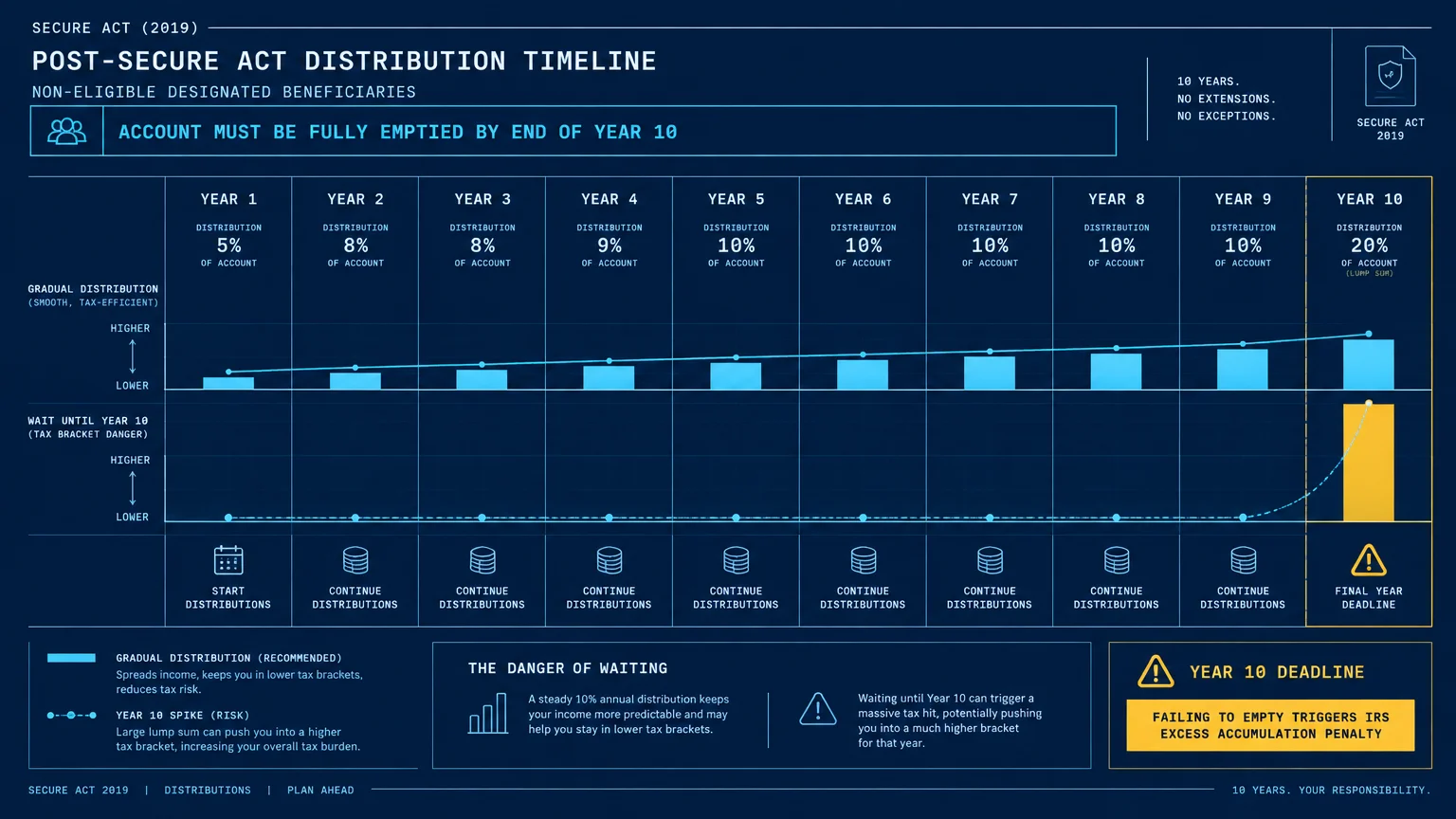
8. Mismanaging Inherited IRAs Under the 10-Year Rule
The SECURE Act eliminated the traditional “stretch IRA” for most non-spouse beneficiaries. Non-eligible designated heirs must now withdraw the entire balance of an inherited IRA within 10 years.
If the original owner passed away on or after their Required Beginning Date, beneficiaries cannot simply wait until year 10. The IRS requires annual RMDs during years one through nine, with the full balance emptied by year 10.
Waiting until the tenth year to liquidate an inherited account can push beneficiaries into top federal tax brackets. Spreading distributions evenly across the decade minimizes the collective tax impact.
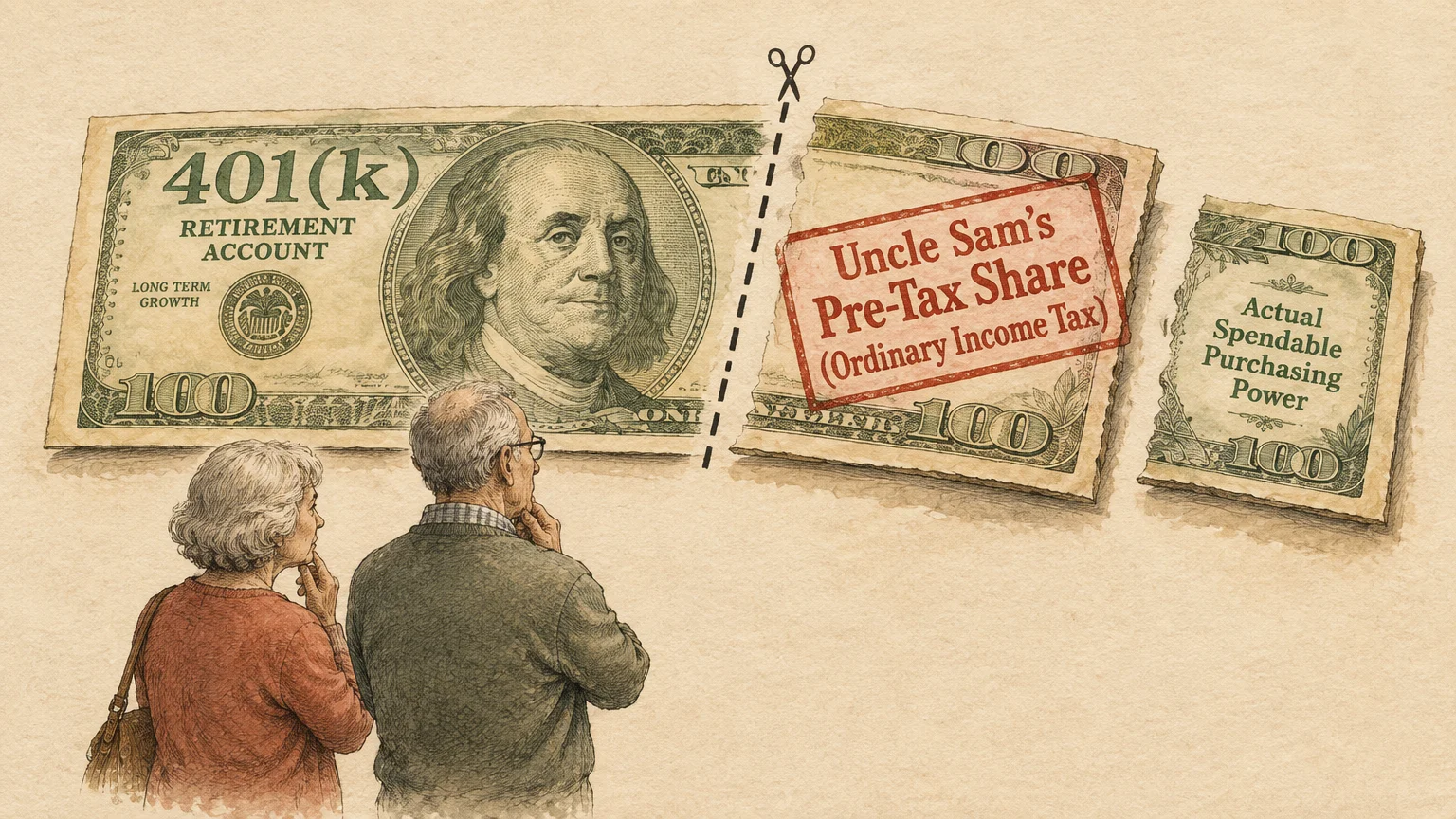
9. Treating Pre-Tax Account Balances as Spendable Cash
Every dollar inside a traditional 401(k) or traditional IRA carries an embedded deferred tax liability. When reviewing your monthly statements, remember that the IRS owns a substantial portion of that balance.
If your traditional IRA holds $500,000 and your blended retirement tax rate is 22%, your actual spending power is only $390,000. Planning your lifestyle around the gross account balance creates severe budget deficits.
Building tax diversification across taxable, tax-deferred, and Roth accounts gives you control over taxable income every year. This balance lets you harvest income strategically without triggering steep tax spikes.
“The biggest mistake retirees make is assuming that because they built wealth successfully, they know how to distribute it. Distribution planning is an entirely different game with unforgiving tax rules.” — Ed Slott, CPA and IRA Distribution Expert
Retirement Account Rules at a Glance
Reviewing how distribution rules vary across common account types helps you avoid costly operational errors:
| Account Type | RMD Age Requirement | Aggregation Allowed? | Key Withdrawal Pitfall |
|---|---|---|---|
| Traditional IRA | Age 73 (Age 75 in 2033) | Yes (across other IRAs) | Forgetting that withdrawals increase provisional income and IRMAA |
| Traditional 401(k) | Age 73 (Age 75 in 2033) | No (must take from each plan) | Attempting to satisfy distribution requirements from an IRA |
| Roth IRA | No lifetime RMDs | Not applicable | Withdrawing earnings before meeting the 5-year aging rule |
| Roth 401(k) | No lifetime RMDs (as of 2024) | Not applicable | Assuming older mandatory workplace withdrawal rules still apply |
| Inherited IRA (Non-Spouse) | Empty within 10 years | No (account-specific) | Skipping annual distributions during years 1 through 9 |

When to Consult a Professional
Retirement distribution rules intersect with tax laws and healthcare costs in complex ways. You should consider working with a fee-only fiduciary advisor or CPA during several specific milestones.
First, seek guidance when planning large Roth conversions that could inadvertently push you over Medicare IRMAA cliffs. A professional can help you calculate the exact dollar threshold to avoid premium spikes.
Second, consult an advisor if you inherit an IRA from someone who was already taking RMDs. Navigating the overlapping IRS 10-year rule and annual distribution mandates requires precise scheduling.
Finally, obtain professional support if you retire between ages 55 and 59½ and need income immediately. You can review advisor credentials and regulatory histories through Investor.gov before hiring financial help.
Frequently Asked Questions
What happens if I miss my RMD deadline?
The IRS charges a 25% excise tax on the amount not withdrawn. You can reduce this penalty to 10% by taking the distribution and filing IRS Form 5329 within the two-year correction window.
Can I return an accidental or unwanted RMD back to my account?
No, the IRS strictly prohibits rolling an RMD back into a qualified retirement account. Once distributed, an RMD remains taxable income for that calendar year.
Does a Qualified Charitable Distribution count toward my RMD?
Yes, a QCD satisfies your annual RMD up to statutory annual caps ($108,000 in 2025; $111,000 in 2026). The transfer moves directly to the charity without increasing your Adjusted Gross Income.
Do Roth 401(k) workplace accounts still require RMDs?
No, the SECURE 2.0 Act officially eliminated lifetime RMDs for employer-sponsored designated Roth accounts starting in 2024. Your workplace Roth funds can remain untouched for life.
Next Steps for Your Retirement Strategy
Take time this week to list all your retirement accounts, their tax structures, and your custodian details. Verifying beneficiary designations and upcoming RMD dates prevents costly surprises later.
Coordinating withdrawals across all your accounts protects your Social Security income and keeps Medicare premiums manageable. A proactive distribution plan ensures your savings serve you effectively for decades to come.
This is educational content based on general financial principles for seniors. Individual results vary based on your situation. Always verify current benefit amounts, tax rules, and program eligibility with official government sources.
Last updated: February 2026. Benefit amounts, tax rules, and program details change annually—verify current figures with official government sources.









Leave a Reply