

Moving to a lower-cost state shouldn’t come with unexpected tax bills, yet millions of seniors are stunned to learn their state taxes Social Security benefits. While federal taxes on your monthly checks are a well-known hurdle, the rules change drastically at the state border. As of 2026, eight states still take a cut of your hard-earned benefits. However, a patchwork of new income limits, age brackets, and legislative phase-outs means you might not owe a dime if you plan ahead. Knowing exactly where your state stands—and how recent tax changes impact your bottom line—can save you thousands of dollars this year and preserve the income you need for a comfortable retirement.
Understanding the Federal Tax Hurdle First
Before looking at what your state might charge, you need a firm grasp of how the federal government taxes your retirement income. State tax codes often piggyback on federal calculations, meaning if your benefits are shielded at the federal level, they might naturally escape state taxation as well.
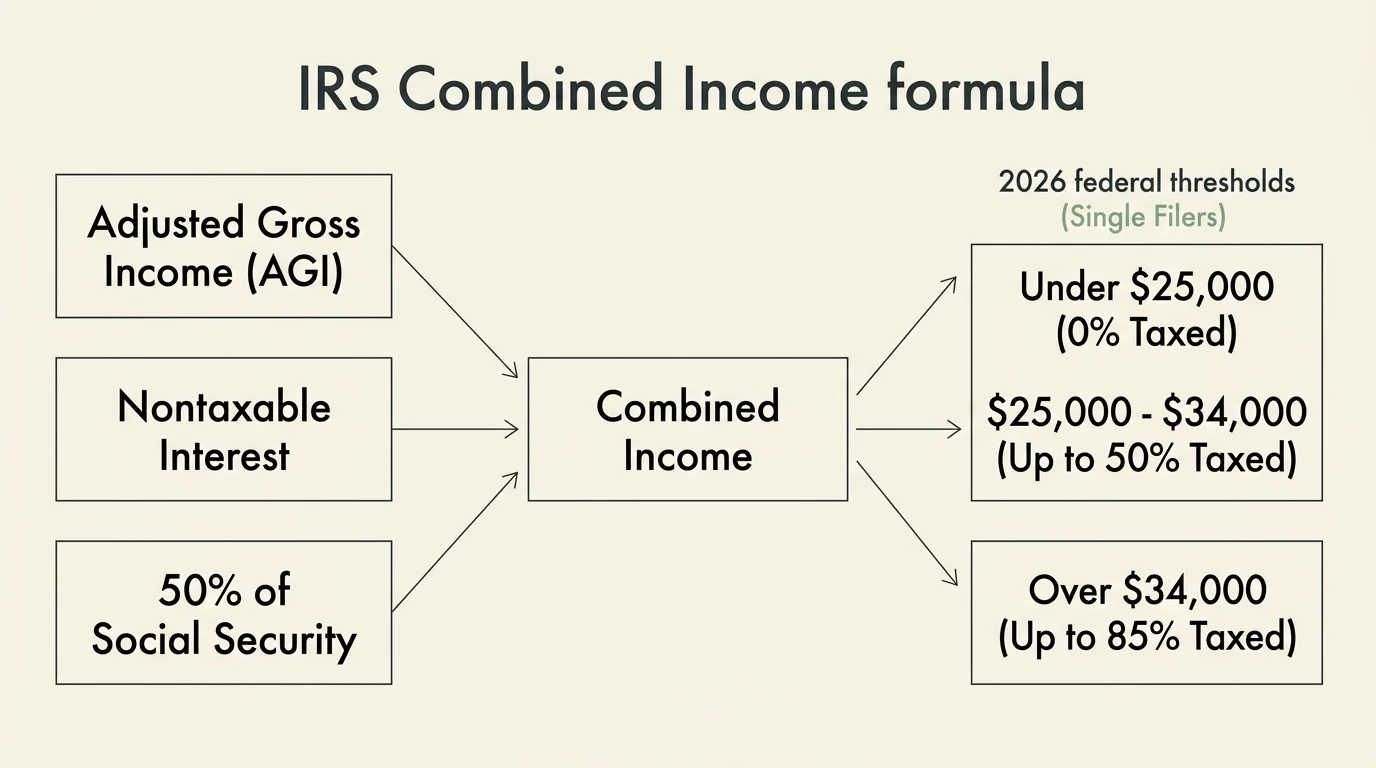
The IRS uses a specific formula called “Combined Income” (sometimes referred to as provisional income) to determine if your benefits are taxable. Your Combined Income is calculated by adding up your Adjusted Gross Income (AGI), any nontaxable interest you earn (such as from municipal bonds), and exactly half of your yearly Social Security benefits.
For the 2026 tax year, the federal thresholds remain fixed at levels established decades ago:
- Single Filers: If your combined income is under $25,000, you pay no federal tax on your benefits. If it falls between $25,000 and $34,000, up to 50% of your benefits may be taxable. If it exceeds $34,000, up to 85% of your benefits can be taxed.
- Married Filing Jointly: Couples with a combined income under $32,000 owe no federal tax on their benefits. Income between $32,000 and $44,000 means up to 50% is taxable, and anything over $44,000 exposes up to 85% of your benefits to federal income tax.
Let’s look at a practical example. Suppose you and your spouse have $35,000 in adjusted gross income from a 401(k) and part-time work, zero nontaxable interest, and you receive $24,000 annually in Social Security benefits. You would add half of your benefits ($12,000) to your AGI ($35,000) for a combined income of $47,000. Because that number sits above the $44,000 ceiling, up to 85% of your Social Security benefits will be subject to federal income tax. You can find more details on calculating this through the Social Security Administration (SSA).
“The biggest surprise for new retirees is that their tax rate can actually increase in retirement. Every dollar you pull from a traditional retirement account can trigger stealth taxes on your Social Security benefits.” — Ed Slott, CPA and Retirement Tax Expert
The 8 States Still Taxing Social Security in 2026
Retiree finances require playing defense against stealth taxes. While 41 states and the District of Columbia leave your Social Security checks completely alone, the remaining states maintain their own rules. The good news for retirees is that the list of taxing states continues to shrink.
Recently, states like Kansas, Missouri, and Nebraska eliminated their taxes on benefits entirely. Starting with the 2026 tax year, West Virginia joins them, fully phasing out its Social Security tax after implementing partial exemptions in 2025.
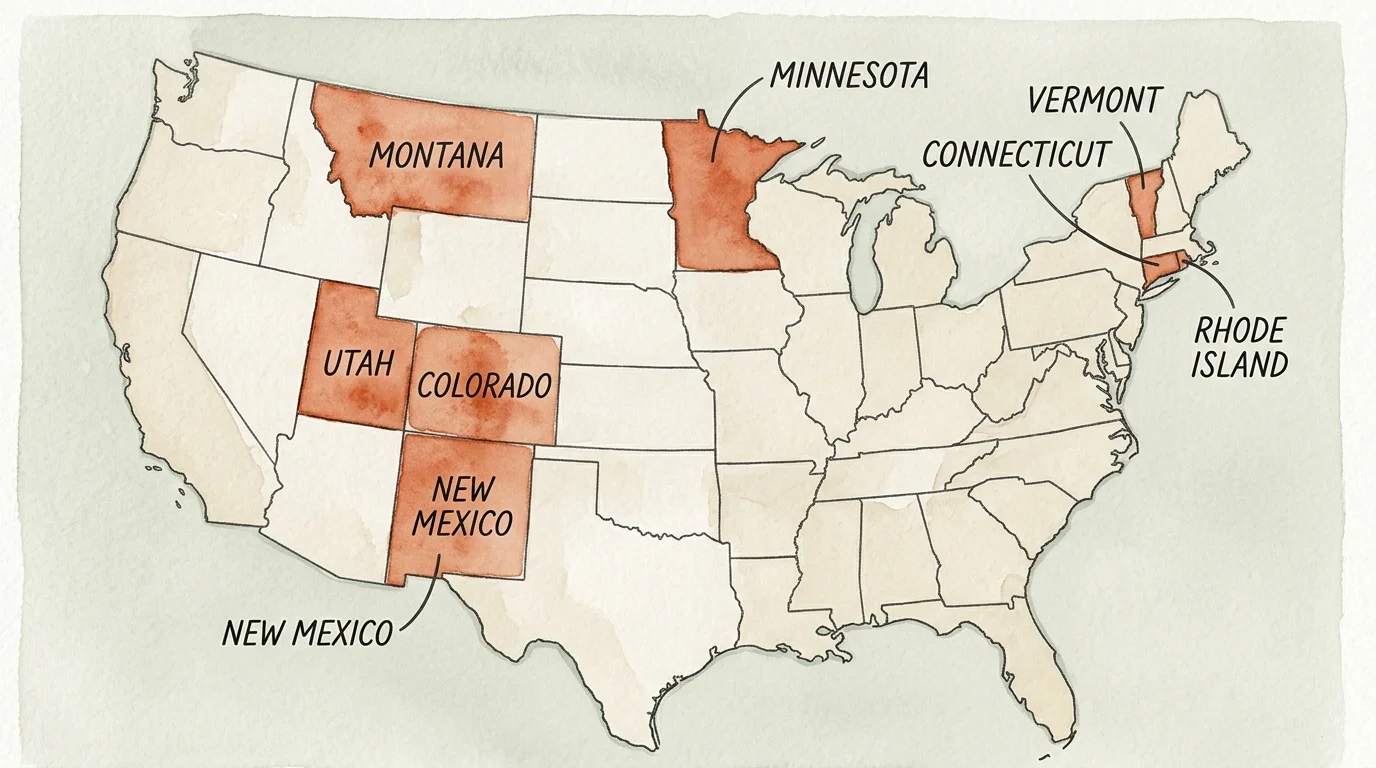
As of 2026, only these eight states levy a tax on Social Security benefits:
- Colorado
- Connecticut
- Minnesota
- Montana
- New Mexico
- Rhode Island
- Utah
- Vermont
Living in one of these states does not guarantee you will write a check to the state revenue department. Almost all of these states provide generous income exemptions, age-based waivers, or offsetting tax credits that protect low- to middle-income seniors.

State-by-State Breakdown: What You Need to Know
State tax codes are highly specific. If you plan to retire in any of the eight states listed above, here is how they calculate their cut in 2026. Keep in mind that “Adjusted Gross Income” (AGI) generally dictates your eligibility for these state-level exemptions.
| State | 2026 Exemption Rules & Income Limits | Tax Rate on Unexempt Benefits |
|---|---|---|
| Colorado | Residents age 65 and older can deduct 100% of their federally taxable Social Security. For ages 55–64, benefits are fully exempt if AGI is $75,000 or less (Single) or $95,000 or less (Joint). | Flat 4.40% |
| Connecticut | Benefits are 100% exempt if federal AGI is under $75,000 (Single) or under $100,000 (Joint). Above these limits, retirees still receive a 75% exemption on their benefits. | Graduated (3.0% to 6.99%) |
| Minnesota | Full exemption applies if AGI is up to $84,490 (Single/Head of Household) or $108,320 (Joint). Partial exemptions phase out for higher earners. | Graduated (5.35% to 9.85%) |
| Montana | No tax applies if AGI is below $25,000 (Single) or $32,000 (Joint). Above these levels, benefits become partially taxable based on state-specific phase-outs. | Graduated (4.7% to 5.9%) |
| New Mexico | Benefits are fully exempt for residents with an AGI up to $100,000 (Single) or $150,000 (Joint). High earners exceeding these caps will see their benefits taxed. | Graduated (1.7% to 5.9%) |
| Rhode Island | For those who have reached their Full Retirement Age (FRA), benefits are exempt if AGI is below approximately $101,000 (Single) or $126,250 (Joint). | Graduated (3.75% to 5.99%) |
| Utah | Taxes benefits at the state’s flat rate but offers a Social Security Benefits Credit. The credit completely offsets the tax for Modified AGI up to $54,000 (Single) or $90,000 (Joint), phasing out above those amounts. | Flat 4.45% |
| Vermont | Full exemption applies for AGI below $50,000 (Single) or $65,000 (Joint). A partial exemption is available for incomes slightly above these thresholds. | Graduated (3.35% to 8.75%) |
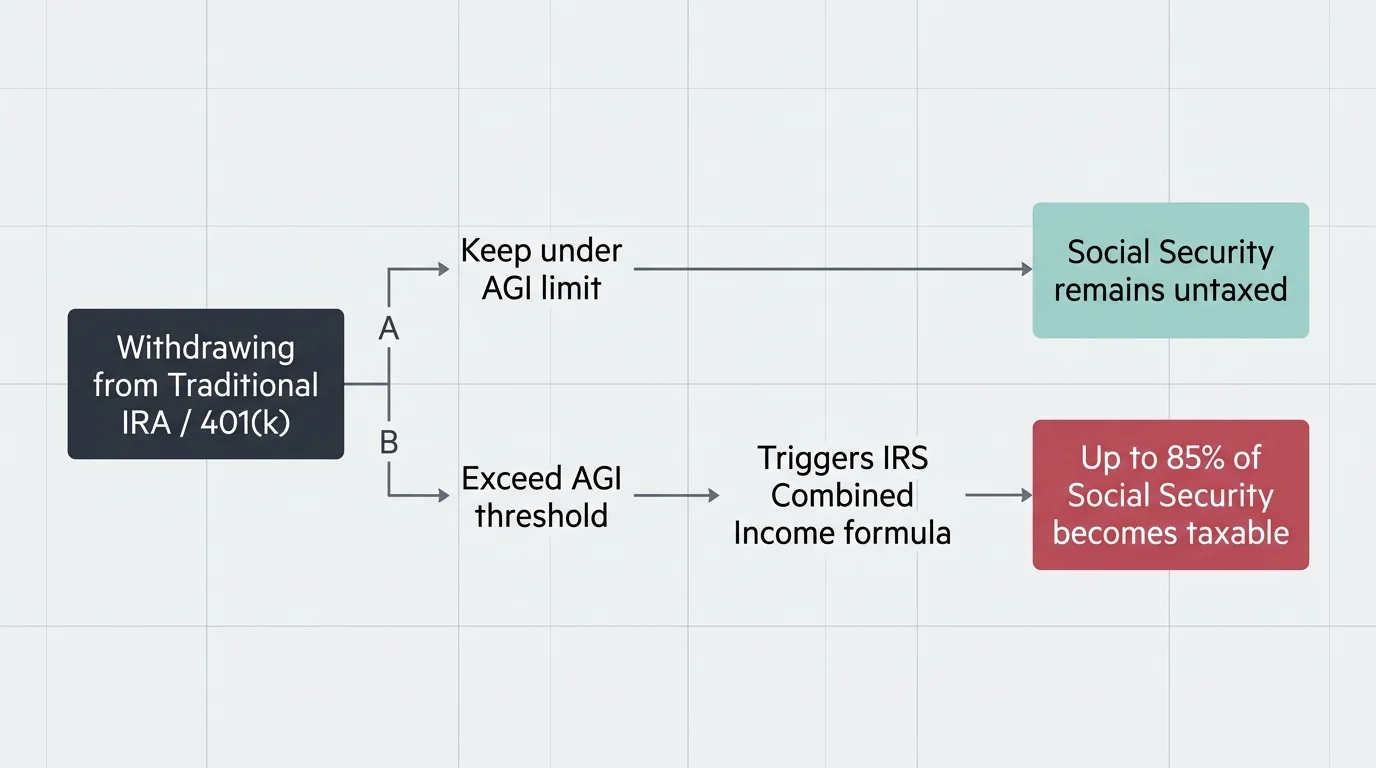
These thresholds emphasize how heavily state taxation relies on your other income sources. Withdrawing heavily from a traditional IRA or taking significant capital gains in a single year can push your AGI over these state limits, suddenly exposing your Social Security checks to state taxation.
How the 2026 Tax Rules and COLA Affect Your Finances
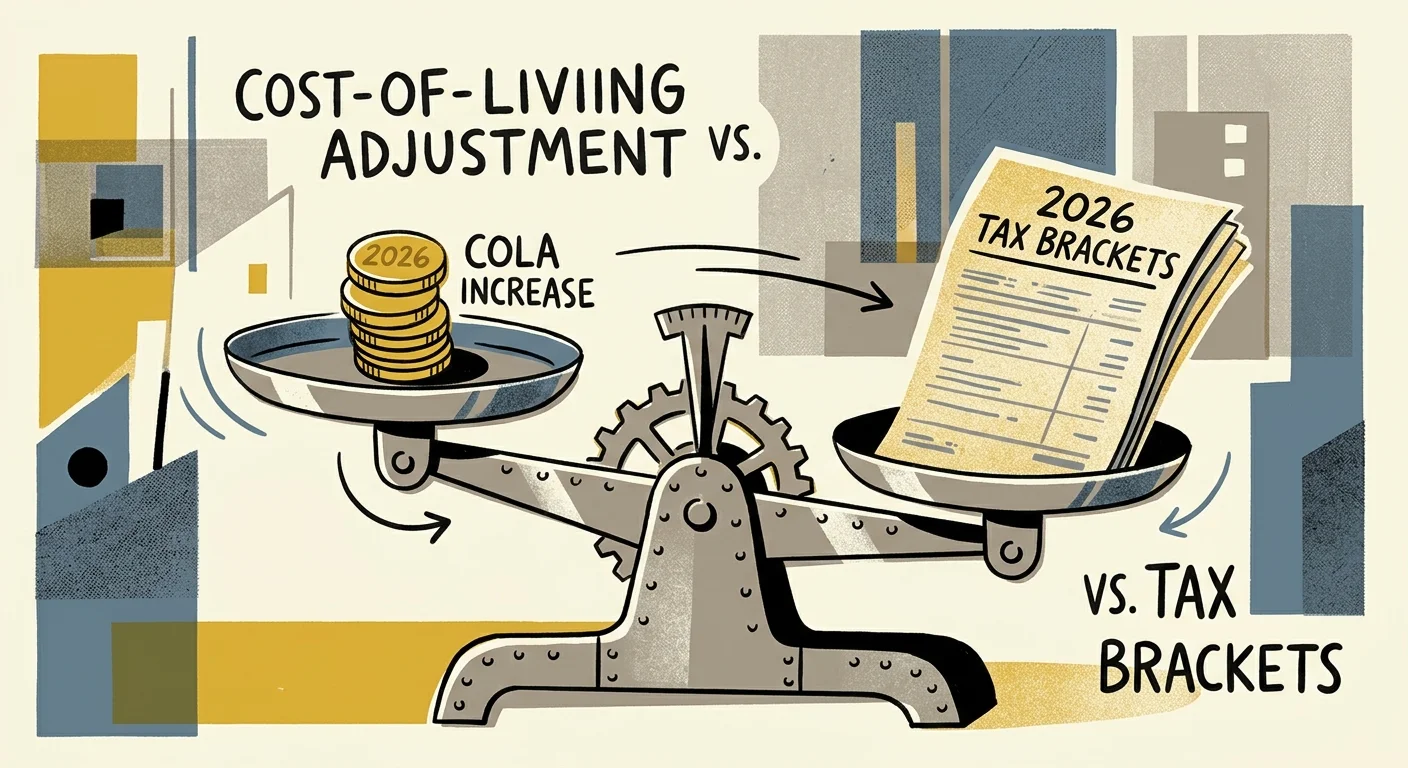
When planning your retirement taxes, you have to account for annual adjustments. The SSA announced a 2.8% Cost-of-Living Adjustment (COLA) for 2026. While higher monthly checks help combat inflation, they also inch you closer to both federal and state tax thresholds, which generally do not adjust for inflation at the federal level.
However, recent federal tax legislation provides a strong buffer for seniors. For the 2026 tax year, the IRS increased the standard deduction to $16,100 for single filers and $32,200 for married couples filing jointly. You can verify these current standard deduction limits with the Internal Revenue Service (IRS).
On top of this baseline, the recently enacted One Big Beautiful Bill Act gives taxpayers aged 65 and older an expanded bonus deduction. Seniors can claim up to an additional $6,000 on top of their normal standard deduction. This strategic buffer can help you keep your taxable income lower, directly reducing the likelihood that your state AGI exceeds the limits for Social Security taxation.

Strategic Moves to Protect Your Benefits
Navigating states taxing Social Security requires a proactive approach. You do not have to simply accept the tax bill; you can manage your income streams to stay under the critical thresholds.
Optimize Your Withdrawal Sequence
Instead of taking all your living expenses from a traditional, tax-deferred 401(k) or IRA, consider mixing your withdrawals. Pulling funds from a Roth IRA or a standard savings account does not increase your AGI. By managing where your money comes from, you can keep your AGI below the exemption thresholds in states like Connecticut, Minnesota, and New Mexico.
Consider Roth Conversions Early
If you retire in your early 60s and delay claiming Social Security until age 67 or 70, you have a window of low-income years. Executing strategic Roth conversions during this gap means you pay taxes now at a lower rate. Later, when you are collecting Social Security, your Roth withdrawals will be completely tax-free and will not drive up your combined income.
Watch Your Capital Gains
Selling a secondary property or a large chunk of stock generates capital gains. This spike in your AGI for a single tax year can strip away your state Social Security exemptions. If possible, spread large asset sales across multiple tax years.
Common Mistakes to Avoid
Retirement taxes can be unforgiving if you miss a minor detail. Avoid these frequent pitfalls that trap new retirees:
- Forgetting About Required Minimum Distributions (RMDs): At age 73 (or 75, depending on your birth year), the IRS forces you to withdraw money from your traditional retirement accounts. These RMDs count as ordinary income, drastically increasing your AGI. Many seniors fail to realize that their first RMD can push them over their state’s Social Security tax exemption limit.
- Assuming All Spouses Are Treated Equally: If you are married but file separately, the federal tax rules become punitive. You lose the base exemptions, meaning up to 85% of your benefits are almost immediately taxable. State rules often mirror this harsh treatment for separate filers.
- Relocating Based Solely on Income Tax: Fleeing a state that taxes Social Security for one that doesn’t might sound smart until you look at the big picture. Texas and Florida don’t tax income, but they have some of the highest property taxes and insurance premiums in the country. Always calculate your total tax burden before calling the moving company.
- Ignoring Medicare IRMAA Surcharges: The same AGI that dictates your state taxes also dictates your Medicare premiums. Pushing your income too high can trigger the Income-Related Monthly Adjustment Amount (IRMAA), forcing you to pay hundreds of dollars more for Medicare Part B and Part D. You can review current IRMAA brackets at Medicare.gov.

Finding the Right Advisor
Handling state and federal tax codes simultaneously is rarely a DIY project once your assets reach a certain level. Consider hiring a fiduciary financial planner or a Certified Public Accountant (CPA) if you fall into any of these scenarios:
You plan to relocate across state lines: A professional can project your exact tax liability in your new home state versus your current one, factoring in property, sales, and inheritance taxes alongside income tax.
You have large traditional IRA balances: If you face massive RMDs in the future, an advisor can build a multi-year Roth conversion ladder to slowly drain those accounts before they blow up your tax brackets.
You are coordinating multiple income streams: When balancing a pension, part-time work, Social Security, and investment dividends, a CPA can pinpoint the exact dollar amount you can safely withdraw each year without losing your state tax exemptions.
Frequently Asked Questions
Does moving to a state with no income tax automatically save me money?
Not necessarily. While states like Nevada, Florida, and Texas have no state income tax (and therefore no tax on Social Security), they make up for that lost revenue elsewhere. You might face significantly higher property taxes, sales taxes, or vehicle registration fees. You must evaluate the total cost of living.
At what age does Colorado stop taxing Social Security?
As of 2026, Colorado allows residents who are 65 and older to deduct 100% of their federally taxable Social Security benefits, completely shielding them from state income tax regardless of how high their AGI is. Residents aged 55 to 64 have income caps applied to their exemptions.
Can I have taxes withheld directly from my Social Security check?
Yes. If you know you will owe federal taxes on your benefits, you can file IRS Form W-4V with the Social Security Administration to request voluntary withholding. You can choose to have 7%, 10%, 12%, or 22% of your monthly benefit withheld to avoid a massive tax bill in April. Check with your state’s revenue department to see if they offer a similar withholding option for state taxes.
Is Supplemental Security Income (SSI) ever taxed?
No. Supplemental Security Income (SSI) is a needs-based program and is never subject to federal or state income taxes. Only traditional Social Security retirement, survivor, and disability (SSDI) benefits fall under these tax rules.
As you transition into your retirement years, proactive tax planning shifts from being a luxury to a necessity. Knowing how your specific state handles retiree finances empowers you to make smarter choices about where you live, how you invest, and when you withdraw your money. Take the time to map out your income streams this year so you can keep more of what you have rightfully earned.
This is educational content based on general financial principles for seniors. Individual results vary based on your situation. Always verify current benefit amounts, tax rules, and program eligibility with official government sources.
Last updated: February 2026. Benefit amounts, tax rules, and program details change annually—verify current figures with official government sources.









Leave a Reply