

You do not need four years of medical school and a decade of residency to build a high-paying career in medicine. Across the United States, healthcare practitioners and technical workers earned a median annual wage of $86,530 in May 2025, compared with $50,980 across all occupations.
Many of these well-compensated roles are open to adults 55 and older through two-year degrees or focused training programs. With roughly 1.9 million healthcare openings projected each year from 2025 to 2035, experienced workers hold real leverage.
This guide breaks down 10 medical jobs without medical school that pay $70,000 or more, along with practical steps to protect your Social Security and retirement savings.

Why Healthcare Careers Fit Second-Act Workers Over 55
Physicians and surgeons earned a median annual wage of $275,930 in May 2025, according to the U.S. Bureau of Labor Statistics (BLS). However, reaching that income typically requires a bachelor’s degree, four years of medical school, three to nine years of residency, and often a fellowship.
At age 55 or 60, spending a decade in training rarely makes financial sense. Instead, you can step into clinical, diagnostic, or management roles that reward your reliability and life experience far sooner.
Older Americans are already reshaping the medical workforce. In 2025, 19.1% of Americans age 65 and older—representing 11.8 million people—participated in the labor force, up from 12.9% in 2000.
Hospitals and clinics value seasoned employees because they stick around. In January 2026, BLS data showed workers ages 55 to 64 had a median tenure of 9.6 years with their current employer, more than triple the 3.0-year median for workers ages 25 to 34.
Research from the AARP Public Policy Institute (October 2025) also confirms that health services ranks among the largest employers of workers ages 50 and older, with steady employment growth from 2004 through 2024.
High hourly pay gives you flexibility as you transition toward retirement. When a career pays $45 to $60 an hour, working just two or three shifts a week can cover living expenses while letting you delay claiming Social Security.
The Truth About Health Care Jobs With No Degree
Before choosing a training program, you deserve an honest look at how education affects pay. Many people search for health care jobs with no degree expecting to cross $70,000 immediately after high school.
According to BLS May 2025 wage data, medical roles entered with only a high school diploma or a brief nondegree certificate generally have median salaries below $70,000. Healthcare support occupations as a whole earned a median of $38,340.
That does not mean certificate roles lack value, especially if you want to enter the workforce quickly. Still, knowing the realistic ceiling helps you pick the right path:
- Hearing Aid Specialists: Earned a median of $65,160 in May 2025 with 19% projected growth through 2035.
- Surgical Technologists: Earned a median of $64,650 with a postsecondary nondegree award and 5% projected growth.
- Licensed Practical and Vocational Nurses (LPNs/LVNs): Earned a median of $64,400 with a nondegree award, though the highest-earning 10% made more than $83,440.
- Paramedics: Earned a median of $60,600 (combined EMTs and paramedics earned $48,150).
- Pharmacy Technicians, Opticians, and Dental Assistants: Earned medians of $45,750, $47,260, and $48,070, respectively.
Several associate’s-degree and certificate roles sit right below the $70,000 mark today and can clear it with overtime or experience. Physical therapist assistants earned a $68,380 median (23% growth), while health information technologists earned $68,020 (16% growth).
Clinical laboratory technologists earned $62,930, and medical equipment repairers earned $61,660. If your goal is a reliable $70,000-plus baseline, however, an accredited two-year associate’s degree or specialized certificate is usually the sweet spot.
10 High-Paying Medical Jobs That Pay $70K or More
The 10 roles below combine strong compensation with achievable entry timelines. Nine require an associate’s degree, diploma, or certificate, while the tenth leverages prior administrative or business experience you may already have.
1. Radiation Therapists
Radiation therapists operate linear accelerators and imaging systems to deliver targeted cancer treatments alongside oncologists. In May 2025, they earned a median annual wage of $105,310, or $50.63 per hour, per the BLS.
Even entry-level earners do well, with the lowest 10% earning up to $80,560 and the top 10% exceeding $156,710. Outpatient care centers paid the highest median at $127,680.
You typically need an associate’s or bachelor’s degree in radiation therapy plus state licensure or certification. The BLS projects 3% job growth from 2025 to 2035, creating about 700 openings annually—many in calm, daytime outpatient clinics ideal for older workers.
2. Nuclear Medicine Technologists
Nuclear medicine technologists prepare and administer small doses of radioactive drugs, then operate scanners to track how organs function. They earned a median salary of $101,370 in May 2025.
An associate’s degree from an accredited program is the standard entry requirement, paired with certification and state licensing. Employment is projected to grow 4% between 2025 and 2035, generating roughly 800 openings per year.
Because procedures are largely scheduled in advance, this field rarely involves unpredictable emergency shifts. Careful attention to safety protocols and patient reassurance makes mature workers stand out in this specialty.
3. Dental Hygienists
Dental hygienists clean teeth, take X-rays, screen for oral disease, and educate patients on preventive care. They earned a median pay of $98,100 in May 2025, and the BLS projects 8% growth—producing about 15,000 openings each year.
You can qualify with an associate’s degree in dental hygiene, which typically takes two to three years including prerequisites, followed by state licensure. Many community colleges offer well-respected programs at modest tuition rates.
Dental hygiene is arguably one of the best jobs over 70k for semi-retired professionals. Practices routinely hire part-time hygienists for two or three days a week, letting you control your workload while keeping your clinical skills sharp.
4. Registered Nurses (RNs)
Registered nurses coordinate patient care, administer medications, and support families across hospitals, clinics, and home health agencies. With 3,465,400 jobs in 2025, nursing offers unmatched geographic flexibility and a May 2025 median wage of $97,550 ($46.90 per hour).
While many hospitals prefer a bachelor’s degree (BSN), the BLS notes three active entry paths: a BSN, an associate’s degree in nursing (ADN), or an approved nursing diploma. Every path requires passing the NCLEX-RN exam and obtaining a state license.
The BLS projects 6% growth from 2025 to 2035, adding 194,700 new RN jobs and roughly 180,800 total openings annually. If you plan to test soon, factor in an upcoming fee change from the National Council of State Boards of Nursing (NCSBN).
On August 21, 2026, the NCSBN announced that the U.S. registration fee for both the NCLEX-RN and NCLEX-PN exams will rise from $200 to $350 starting February 1, 2027. Your registration completion date—not your test date—locks in the fee, and state board fees apply separately.
Also note that the updated NCLEX-RN test plan took effect April 1, 2026, featuring 85 to 150 questions over up to five hours. Eligible U.S. veterans and dependents can claim exam fee reimbursement through the Department of Veterans Affairs using VA Form 22-0803.
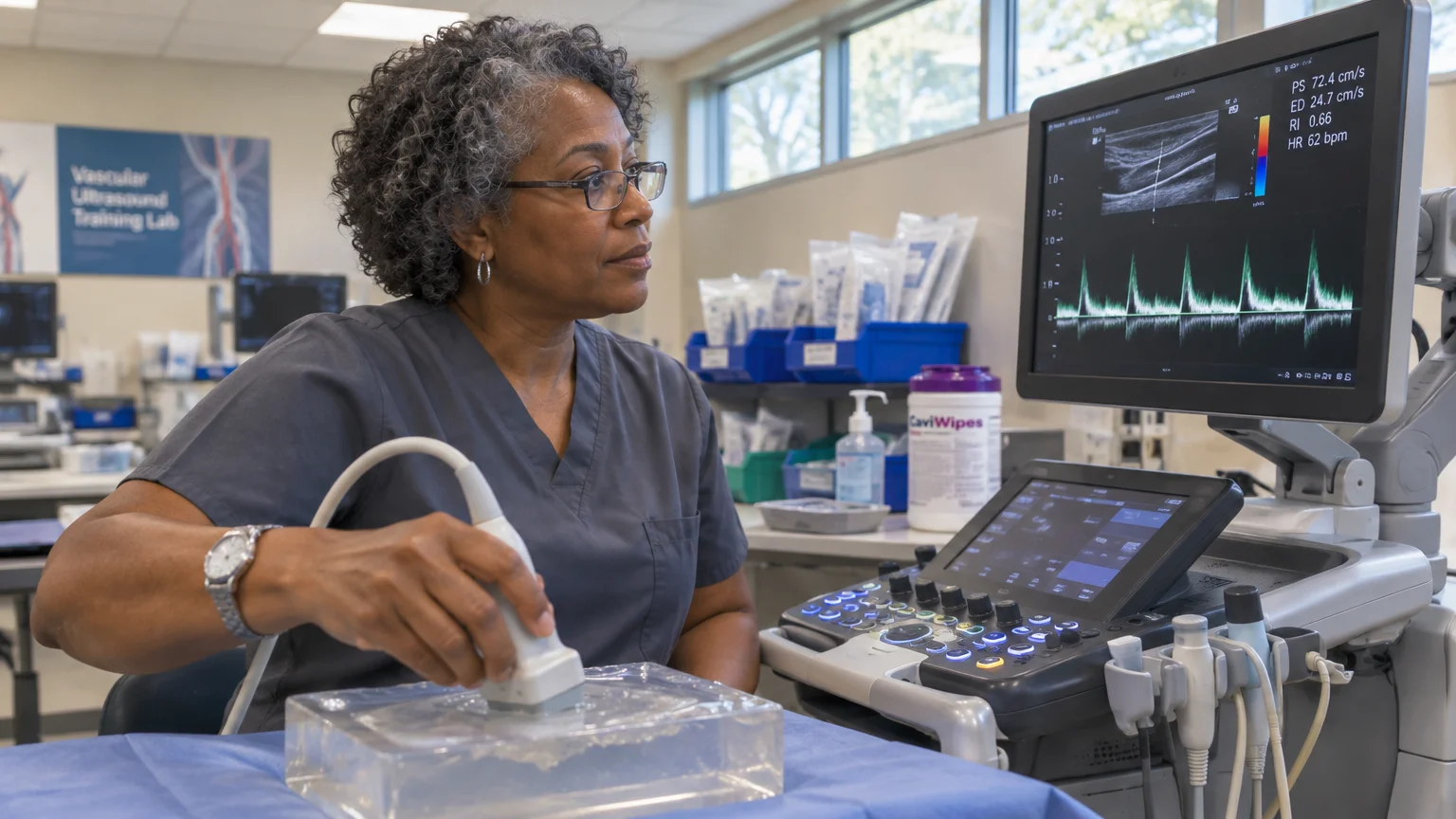
5. Diagnostic Medical Sonographers
Diagnostic medical sonographers use ultrasound equipment to capture real-time images of organs, blood vessels, and developing pregnancies. They earned a median salary of $96,590 ($46.44 per hour) in May 2025.
You can enter this field with an associate’s degree or, if you already hold a related healthcare credential, a one-year postsecondary certificate. Projected growth stands at 14% from 2025 to 2035, adding 12,900 jobs and around 6,000 annual openings.
Because sonography does not use ionizing radiation, many clinics and imaging centers employ sonographers on steady weekday schedules. Maintaining good wrist and shoulder ergonomics helps ensure a comfortable career well into your late 60s.
6. Respiratory Therapists
Respiratory therapists treat patients with chronic asthma, COPD, sleep apnea, and acute breathing emergencies. They earned a median annual wage of $82,280 in May 2025, with 9% projected growth delivering about 8,600 openings per year.
An associate’s degree in respiratory care is the typical entry credential, followed by national board certification and state licensure. An aging U.S. population keeps demand steady across hospitals, sleep clinics, and rehabilitation centers.
If hospital intensive care units feel too fast-paced, look toward pulmonary function labs or outpatient clinics. Those settings rely heavily on patient coaching and diagnostic testing rather than heavy physical lifting.
7. Radiologic and MRI Technologists
Radiologic technologists perform X-rays and CT scans, while MRI technologists operate magnetic resonance imaging scanners. Combined, these imaging specialists earned a May 2025 median of $81,390, while radiologic technologists alone earned $80,110.
An associate’s degree prepares you for certification, and many techs cross-train into MRI or CT scanning to boost their pay. Employment is projected to grow 5% from 2025 to 2035, faster than the national average.
Working as an outpatient imaging technologist involves short, structured patient interactions. Clear communication puts anxious patients at ease, a strength many older workers bring naturally.
8. Cardiovascular Technologists and Technicians
Cardiovascular technologists assist physicians with cardiac catheterizations, echocardiograms, and vascular imaging tests. In May 2025, the BLS reported a median wage of $74,310, with 4% projected growth and roughly 3,400 annual openings.
Most candidates complete a two-year associate’s degree, though one-year certificate programs exist for individuals with prior healthcare credentials. Employers value steady hands and calm focus during detailed diagnostic exams.
Noninvasive specialties like echocardiography allow you to work closely with patients without standing through long surgical procedures. This distinction makes the role sustainable for workers prioritizing joint health.
9. Occupational Therapy Assistants
Occupational therapy assistants help patients recover everyday skills—such as dressing, cooking, or returning to work—after illness or injury. They earned a median salary of $72,300 in May 2025.
Pay climbs even higher in certain settings: home healthcare services offered a $77,310 median, while skilled nursing facilities paid $76,780. With 21% projected growth from 2025 to 2035, this ranks among the 20 fastest-growing U.S. occupations.
An associate’s degree from an accredited program and state licensure are required. Patience, empathy, and practical problem-solving matter far more than youth when helping older adults regain independence.
10. Medical and Health Services Managers
If you spent decades managing teams, budgets, or operations in another industry, you do not need to start at the bedside. Medical and health services managers plan and coordinate care delivery across clinics, nursing homes, and hospital departments.
They earned a median wage of $123,860 ($59.55 per hour) in May 2025. The BLS projects 24% growth through 2035—making it the fifth fastest-growing occupation—adding 155,100 new jobs.
Entry typically requires a bachelor’s degree plus less than five years of administrative or clinical work experience. Pairing a general business or management background with a short healthcare administration certificate can open doors quickly.
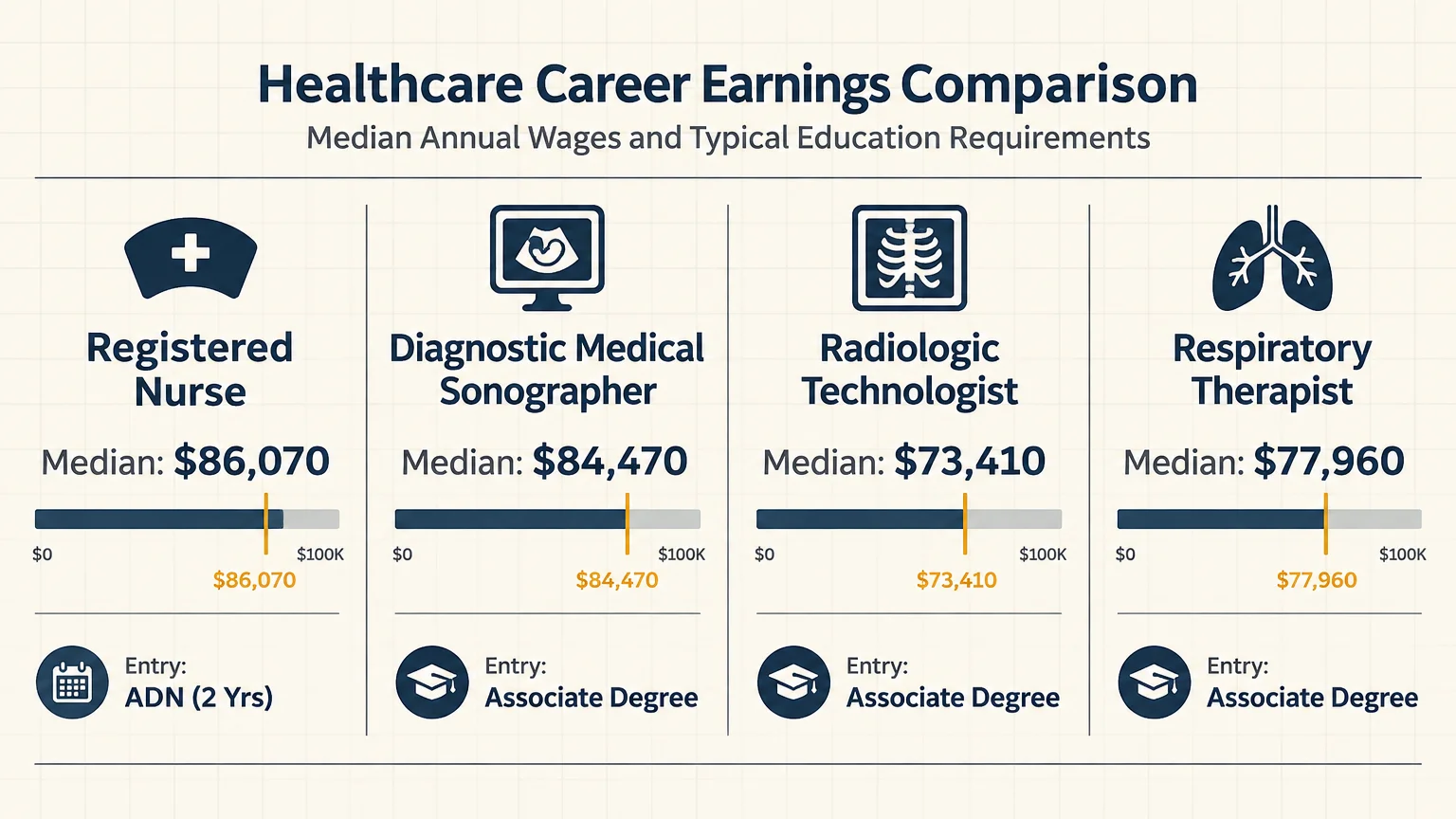
Side-by-Side Comparison of Top Health Care Careers Over $70K
Comparing salary, schooling, and job demand side by side makes it easier to narrow down your best fit. Every wage and growth figure below reflects May 2025 BLS data and 2025–2035 projections.
| Career Title | Median Annual Pay (May 2025) | Typical Entry Education | Projected Growth (2025–2035) |
|---|---|---|---|
| Medical and Health Services Managers | $123,860 | Bachelor’s degree plus experience | 24% |
| Radiation Therapists | $105,310 | Associate’s or bachelor’s degree | 3% |
| Nuclear Medicine Technologists | $101,370 | Associate’s degree | 4% |
| Dental Hygienists | $98,100 | Associate’s degree | 8% |
| Registered Nurses (RNs) | $97,550 | Associate’s, diploma, or bachelor’s | 6% |
| Diagnostic Medical Sonographers | $96,590 | Associate’s or certificate | 14% |
| Respiratory Therapists | $82,280 | Associate’s degree | 9% |
| Radiologic and MRI Technologists | $81,390 | Associate’s degree | 5% |
| Cardiovascular Technologists | $74,310 | Associate’s or certificate | 4% |
| Occupational Therapy Assistants | $72,300 | Associate’s degree | 21% |
Notice how many associate’s-degree roles sit near or above $80,000 a year. For a worker in their late 50s, spending two years at a public community college often delivers a faster return on tuition than a four-year degree.
Higher-Paying Pathways If You Already Hold a Degree
If you already hold a bachelor’s degree—or currently work as a registered nurse—several advanced medical roles push median compensation well past $100,000 without medical school. Here is what the BLS reports for May 2025 and 2025–2035 projections:
- Medical Dosimetrists: Earned a $147,470 median with a bachelor’s degree and 5% projected growth, designing radiation treatment plans for cancer patients.
- Physician Assistants (PAs): Earned a $135,880 median ($65.33 per hour) with a master’s degree and 21% projected growth (35,700 new jobs).
- Nurse Practitioners (NPs): Earned a $132,300 median with a master’s degree and the #1 fastest projected growth rate in the U.S. at 41%, adding 137,800 new jobs (all advanced practice RNs combined earned $134,920).
- Occupational Therapists: Earned a $100,330 median ($48.24 per hour) with a master’s degree and 15% projected growth.
- Speech-Language Pathologists: Earned a $97,870 median with a master’s degree and 17% projected growth.
- Occupational Health and Safety Specialists: Earned a $90,150 median with 18% projected growth, focusing on workplace compliance and hazard prevention.
- Epidemiologists: Earned an $87,220 median with a master’s degree and 19% projected growth.
- Dietitians and Nutritionists: Earned a $76,400 median ($36.73 per hour) with a bachelor’s or master’s degree, supervised internship, and 8% projected growth.
Accelerated post-baccalaureate programs can shorten the path into nursing, occupational therapy, or nutrition if you already completed general college coursework years ago. Check whether your previous science credits remain valid before applying.

Protecting Your Retirement Benefits When Earning $70K+
Stepping into a high-paying medical job in your late 50s or 60s affects far more than your monthly checking account. Higher earnings interact directly with Social Security, Medicare, and your federal tax return.
First, if you have already claimed Social Security before reaching your full retirement age, earning $70,000 or more will trigger the retirement earnings test. Part of your benefit may be temporarily withheld until you reach full retirement age, though benefits are recalculated upward later.
Check the current-year earnings limits on the Social Security Administration (SSA) website before accepting full-time hours. Higher total income can also cause a larger portion of your Social Security benefits to become taxable at the federal level.
Second, watch how a sudden jump in modified adjusted gross income affects healthcare premiums once you reach age 65. Earning $70,000 to $120,000—especially alongside a spouse’s income or retirement account withdrawals—can push you into higher Medicare Part B and Part D surcharge tiers.
Review current income-related monthly adjustment rules directly on Medicare.gov and tax brackets on IRS.gov. If you work for a hospital before age 65, employer-sponsored health insurance can also bridge the gap until Medicare starts.
Earning $70,000 or more late in your career works best when you protect your retirement nest egg: fund new credentials with community college aid, employer tuition programs, or veteran benefits rather than draining tax-advantaged accounts.
Avoid pulling money out of a traditional IRA or 401(k) to pay tuition, since early or oversized withdrawals can trigger income taxes and push up Medicare premiums two years later. Veterans and eligible family members should explore education and licensing support—including NCLEX reimbursement—through the U.S. Department of Veterans Affairs (VA).
You can also search AARP career resources for age-friendly employers, resume workshops, and local workforce training grants designed for older job seekers. Many hospitals also offer tuition assistance once you start working in an entry-level support role.

Pitfalls to Watch For
Transitioning into healthcare careers later in life requires careful planning so you do not waste time or tuition dollars. Watch out for these four common mistakes:
- Confusing assistants with aides: Titles sound alike, but pay differs sharply. For example, occupational therapy assistants earned a $72,300 median in May 2025, whereas occupational therapy aides—who need only a high school diploma—earned $39,160.
- Overpaying for unaccredited programs: Some private for-profit schools charge tens of thousands of dollars for certificates that do not qualify you to sit for state licensing exams. Always verify program accreditation with your state licensing board first.
- Ignoring physical ergonomics: Bedside nursing and inpatient respiratory therapy can require standing for 12-hour shifts and lifting patients. If you have back or knee concerns, focus on outpatient clinics, sonography, dental hygiene, or health services management.
- Missing licensing deadlines and fee changes: Waiting until the last minute to register for board exams can cost you extra money. Nursing graduates should mark February 1, 2027 on their calendars, when the NCLEX registration fee jumps from $200 to $350.
Shadowing a working professional for half a day before enrolling can reveal physical demands or shift schedules you might otherwise overlook. Most outpatient clinics welcome polite requests from prospective career-changers.
Getting Expert Help
Adding a $70,000-plus paycheck in your late 50s or 60s creates welcome cash flow, yet coordinating taxes and benefits takes precision. Consider consulting a qualified professional in these situations:
- Deciding when to claim Social Security: A fee-only certified financial planner (CFP) can model whether delaying benefits while working boosts your lifetime income more than claiming early.
- Managing taxes and Medicare surcharges: A certified public accountant (CPA) or enrolled agent can project how your new salary, Roth conversions, or required minimum distributions interact on your tax return.
- Choosing an affordable training path: A community college academic advisor can evaluate old college credits so you skip redundant classes and graduate faster.
- Using military education benefits: A VA certifying official at your school can confirm whether tuition assistance and VA Form 22-0803 exam reimbursement apply to your program.
Spending a couple of hundred dollars for a one-hour tax or financial checkup before starting a new job can easily save thousands in avoidable penalties or lost benefits.
Frequently Asked Questions
Can you really get a healthcare job paying $70,000 with no college degree?
Most roles entered solely with a high school diploma or brief certificate pay below $70,000 at the median, such as surgical technologists ($64,650) or LPNs ($64,400). However, top earners in those fields can exceed $70,000, and an associate’s degree unlocks many $72,000 to $105,000 roles.
Which $70K+ healthcare job is fastest to enter after age 55?
If you already hold a bachelor’s degree in business or leadership, moving into medical and health services management ($123,860 median) may require only a short healthcare certificate. For clinical roles, diagnostic medical sonography ($96,590) and cardiovascular technology ($74,310) offer one-year certificates for prior healthcare workers and two-year associate’s paths for newcomers.
Will earning $70,000 a year reduce my Social Security benefits?
If you have already reached your full retirement age, earning $70,000 does not reduce your monthly Social Security check. If you claim benefits earlier than full retirement age, earning above the annual limit on SSA.gov triggers temporary benefit withholding and can increase the taxable share of your benefits.
Are healthcare employers actually hiring workers over 55?
Yes, health services ranks among the top employers of workers ages 50 and older, and older workers boast more than triple the job tenure of younger peers. With roughly 1.9 million annual healthcare job openings projected through 2035, clinics and hospitals actively recruit reliable, experienced adults.
Your Next Steps Toward a Second-Act Healthcare Career
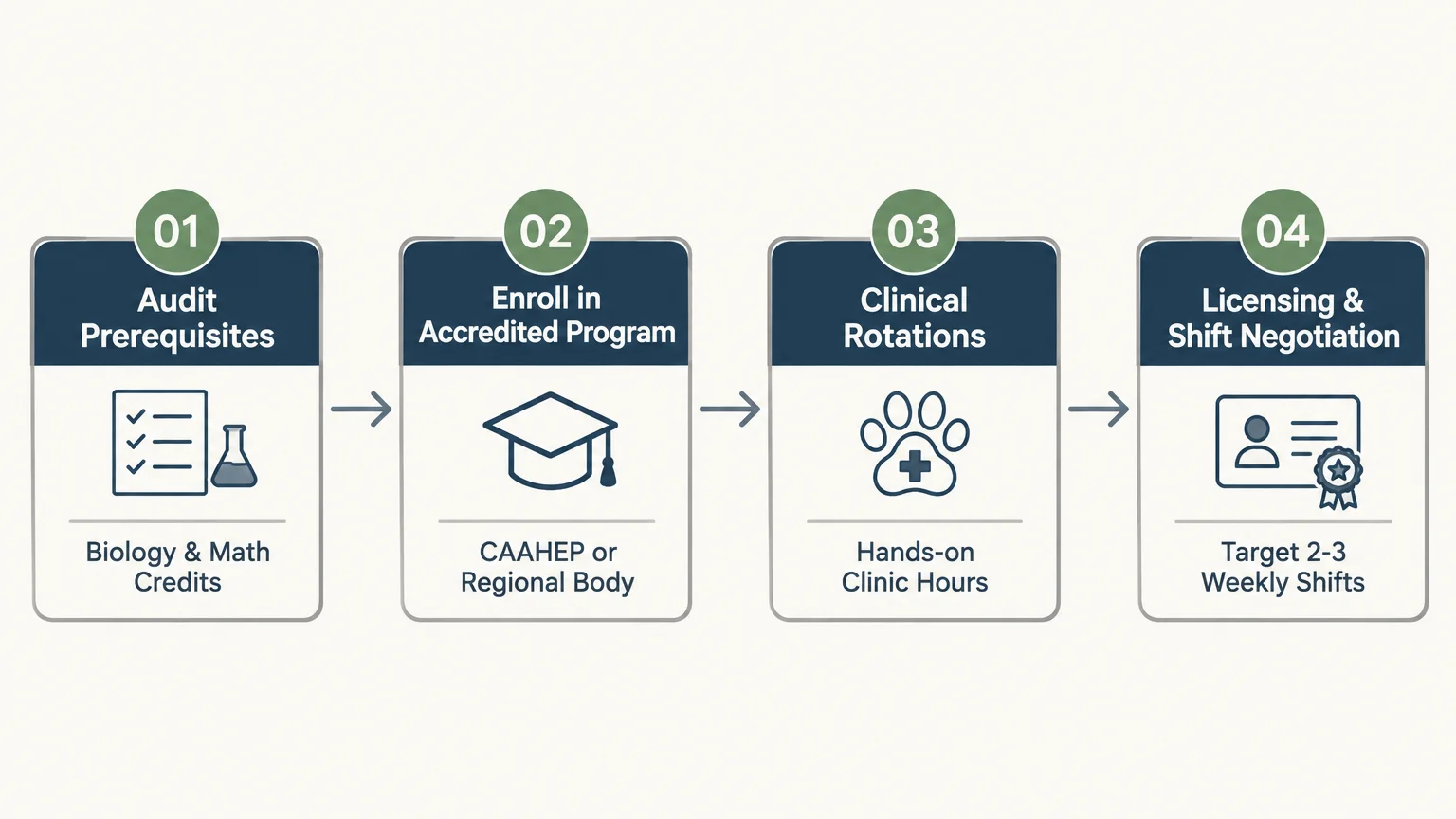
Start by picking two roles from the comparison table that match your physical comfort level, preferred schedule, and local job market. Contact a nearby public community college to ask about prerequisite credits, program waitlists, and total tuition costs.
Before submitting an enrollment deposit, verify how extra income will affect your Social Security timing, taxes, and Medicare premiums. With the right match, you can build steady income, meaningful daily work, and stronger financial security well into retirement.
The information in this guide is meant for educational purposes. Your specific circumstances—including income, benefits, tax situation, and health needs—may require different approaches. When in doubt, consult a licensed financial advisor or tax professional.
Last updated: November 2026. Benefit amounts, tax rules, and program details change annually—verify current figures with official government sources.





Leave a Reply