

Submitting your Social Security retirement claim too early will not put you ahead in line. If you submit paperwork more than four months before your chosen start date, the Social Security Administration will formally deny your claim.
Federal policy strictly limits retirement submissions to a four-month advance window. Filing prior to this window triggers an administrative disallowance that forces you to restart the entire process.
Understanding the rules prevents unexpected disruptions when you transition into retirement. Here is how the advance filing window works and how to time your application correctly.
Understanding the Four-Month Advance Window
Under Social Security Administration (SSA) Program Operations Manual System (POMS) guidelines GN 00204.007 and GN 00201.005, you can apply up to four calendar months before your benefits begin.
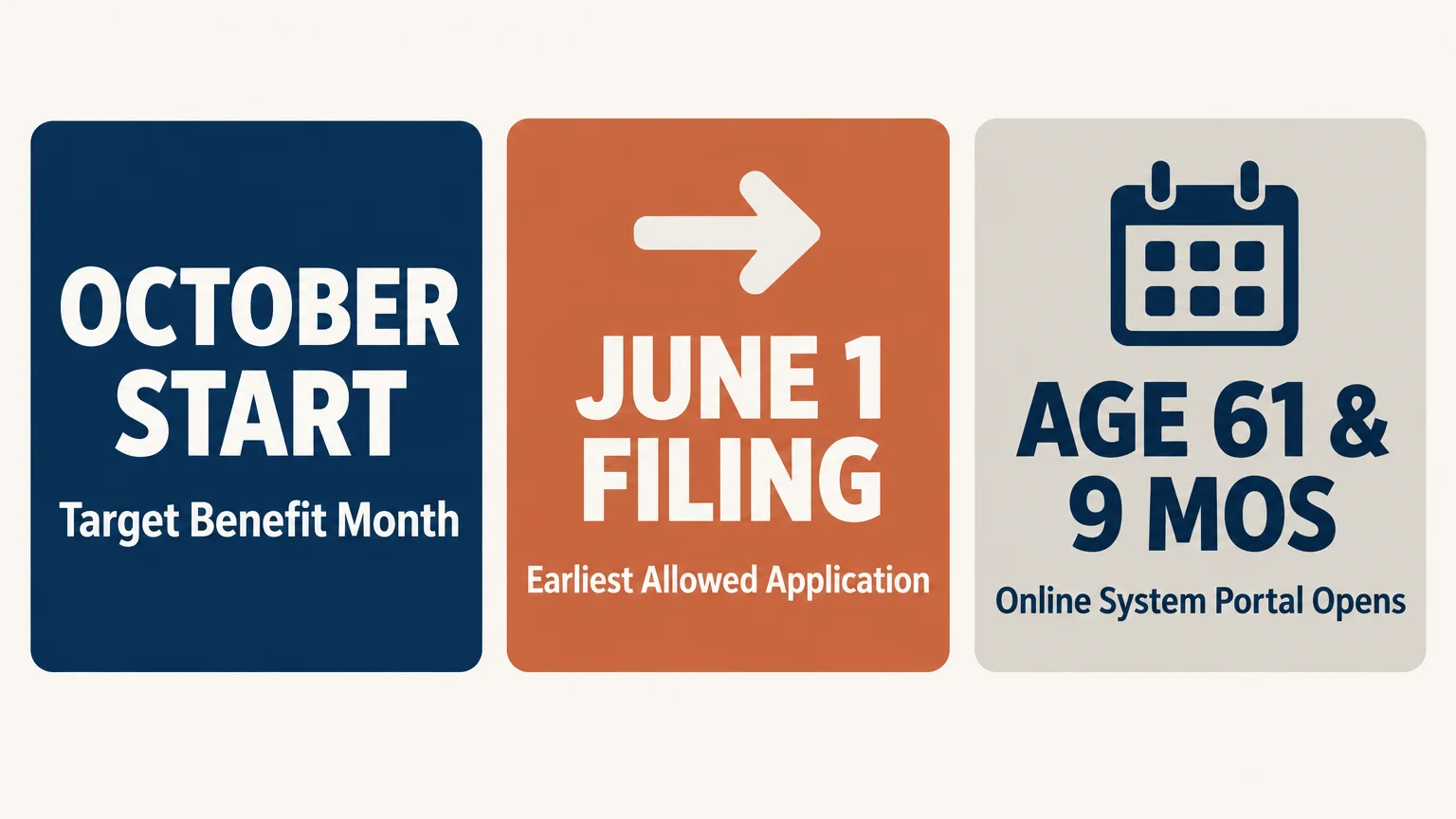
This guideline uses full calendar months rather than a strict 120-day count. For example, if you want your benefits to start in October, you can submit your paperwork as early as June 1.
You must also be at least 61 years and 9 months old to access the online retirement application. The system will automatically reject submissions attempted before that exact milestone.
Why Early Filing Does Not Protect Your Start Date
Many workers believe that filing early locks in their place in line. In reality, federal regulation 20 CFR 404.620 states that an application remains valid only until agency staff issue a formal decision.
If an applicant insists on filing earlier than four months before eligibility, staff must accept and immediately deny the claim. You cannot reserve a future start date months ahead of time.
POMS GN 00204.010 confirms that protective filing statements cannot establish a future retirement entitlement date outside this four-month boundary. When the agency disallows an early claim, your file closes completely.

The Financial Risk of Forfeited Monthly Checks
Premature filing can trigger unexpected financial losses if you miss your true refiling window. Under 20 CFR 404.621, the agency cannot pay retroactive retirement benefits to anyone claiming before Full Retirement Age (FRA).
For workers born in 1960 or later, Full Retirement Age is 67. If you file at age 62, your permanent benefit drops to 70.0% of your primary insurance amount.
While claimants at or past FRA can recover up to six months of retroactive payments, early retirees cannot. If an early denial distracts you and you delay reapplying, those missed monthly payments disappear permanently.
Birthdate Rules and the First Benefit Check
Calculating your eligibility requires strict attention to federal age rules. Under 20 CFR 404.311, you must be 62 for the entire month to receive benefits for that month.
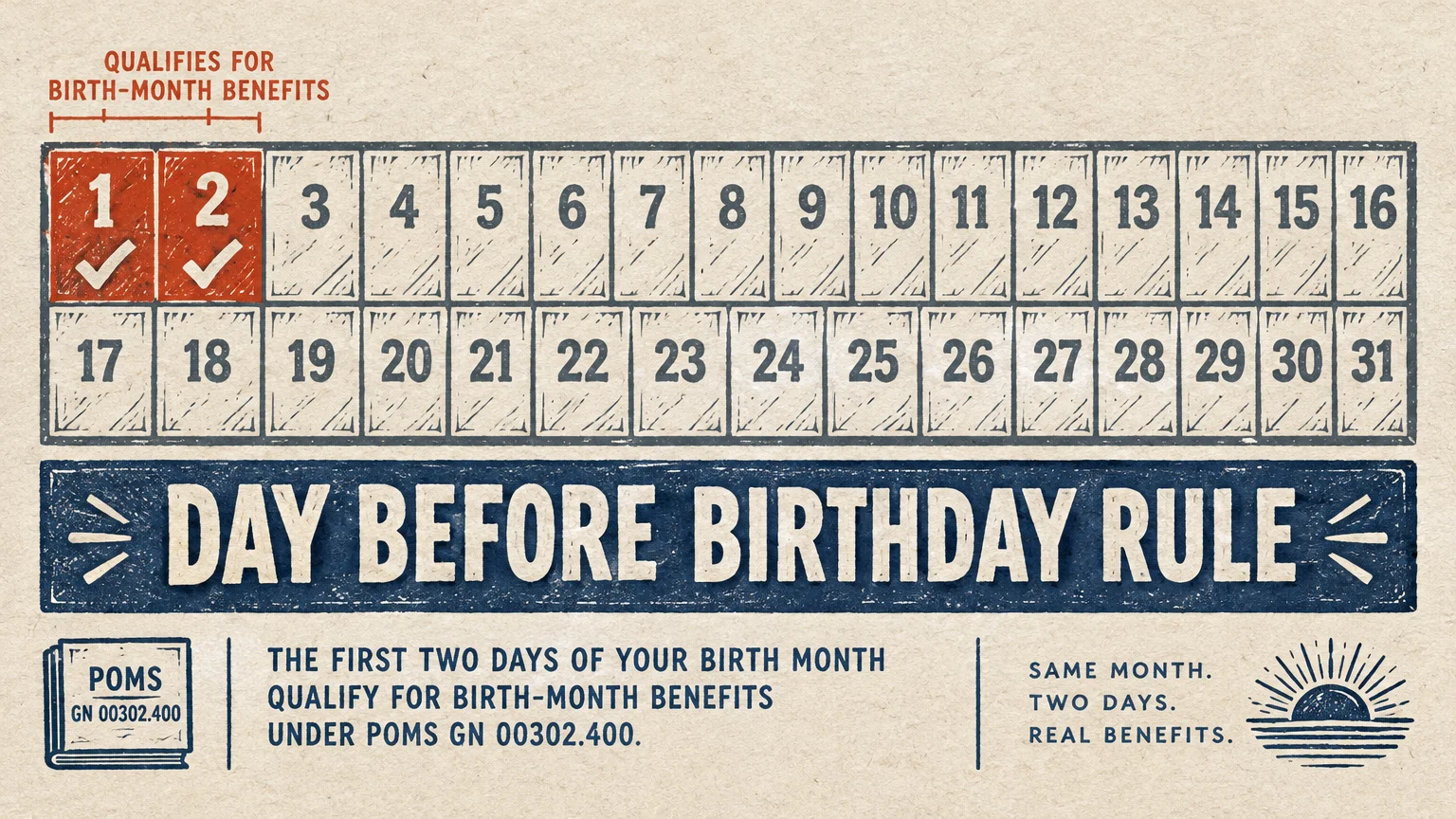
Under POMS GN 00302.400, Social Security considers you to attain your age on the day before your actual birthday. Therefore, only individuals born on the 1st or 2nd of a month qualify during their birth month.
If you were born on the 3rd or later, your first entitlement month is the month following your 62nd birthday. Furthermore, the agency pays benefits one month in arrears, meaning June benefits arrive in July.
Advance Filing Rules Across Federal Benefit Programs
The four-month advance limit applies specifically to Title II retirement, spousal, and survivor benefits. Other federal programs operate under distinct statutory timelines that require separate planning.
| Benefit Program | Advance Filing Window | Key Governing Rule | Consequence of Filing Early |
|---|---|---|---|
| Social Security Retirement | Up to 4 calendar months | POMS GN 00204.007 | Administrative denial and mandatory refiling |
| Spousal & Survivor Claims | Up to 4 calendar months | POMS GN 00201.005 | Disallowance; no future date held |
| Social Security Disability (SSDI) | No 4-month advance limit | 20 CFR 404.315 | Claims accepted based on qualifying disability onset |
| Medicare Parts A & B | 3 months before turning 65 | CMS Initial Enrollment | Online system blocks premature enrollment attempts |
Understanding these differences prevents confusion when coordinating Medicare coverage with your retirement checks.
Costly Errors to Sidestep
Submitting paperwork too early is just one of several costly pitfalls near-retirees encounter. Watch out for these four common traps when preparing your claim:
- Miscalculating the calendar window: Counting 120 days rather than tracking four full calendar months can cause you to apply days too soon.
- Overlooking earnings limits: Earning above the annual threshold ($24,480 in 2026; $25,560 in 2027) while claiming before FRA withholds $1 for every $2 earned above the limit.
- Delaying due to missing documents: Postponing an application because you cannot find a tax document or birth certificate creates unnecessary backlog; SSA can assist in obtaining records.
- Ignoring verification rules: Failing to verify your identity through your personal online account forces you to complete the identity-proofing process in person at a field office.
As personal finance author Jean Chatzky explains:
“Taking control of your retirement means understanding the mechanics of how and when your income actually starts.” — Jean Chatzky, Financial Journalist and Author
Avoiding these filing mistakes protects both your monthly cash flow and your long-term benefit totals.
Step-by-Step Guide to Filing on Time
Following an orderly schedule keeps your retirement application moving smoothly through the system. Complete these practical steps as your target date approaches:
- Confirm your work credits: Review your earnings record on SSA.gov to ensure you have at least 40 credits ($1,890 per credit in 2026; $1,970 in 2027).
- Establish your identity: Set up your online account early to streamline identity proofing and avoid an unnecessary in-person office visit.
- Pinpoint your entitlement month: Remember the birthdate rule so that your start month aligns with full-month age requirements.
- Apply inside the window: Submit your online form three to four calendar months before your selected start month.
- Track your adjudication: Check your claim status online while agency staff complete review processing, which typically takes six to twelve weeks.
Submitting your claim three to four months ahead gives agency staff adequate time to finalize your records without risking premature rejection.
When DIY Isn’t Enough
While straightforward claims are simple to file online, certain financial circumstances warrant professional guidance. You should consult a qualified financial planner or elder law attorney in these situations:
- Coordinating spousal, divorced-spouse, or survivor benefits alongside your own work record.
- Managing public pensions affected by the Windfall Elimination Provision (WEP) or Government Pension Offset (GPO).
- Balancing active employment income with benefits before reaching your Full Retirement Age.
- Structuring retirement draws alongside debt strategies through tools provided by the Consumer Financial Protection Bureau.
Frequently Asked Questions
Can I submit my claim six months early if I apply at a field office?
No, field office staff must follow the exact same four-month rule as the online system. If you insist on filing early, staff must accept and disallow your claim.
How long does the Social Security Administration take to process a claim?
Most straightforward retirement claims take between six weeks and three months to process. Filing three to four months ahead ensures your first payment arrives on schedule.
What should I do if my claim is denied for filing too early?
You must wait until you enter the official four-month window and submit a new application. Appealing an early denial does not override the four-month advance filing regulation.
Does early filing affect Medicare enrollment?
No, Medicare follows an Initial Enrollment Period that begins three months before your 65th birthday. You can enroll in Medicare through Medicare.gov even if you delay Social Security retirement.
Proper timing gives you complete control over your retirement transition and prevents administrative setbacks. Mark your calendar four months ahead of your chosen start date to ensure a smooth, worry-free filing experience.
This is educational content based on general financial principles for seniors; individual results vary based on your situation. Always verify current benefit amounts, tax rules, and program eligibility with official government sources.
Last updated: November 2026. Benefit amounts, tax rules, and program details change annually—verify current figures with official government sources.





Leave a Reply