

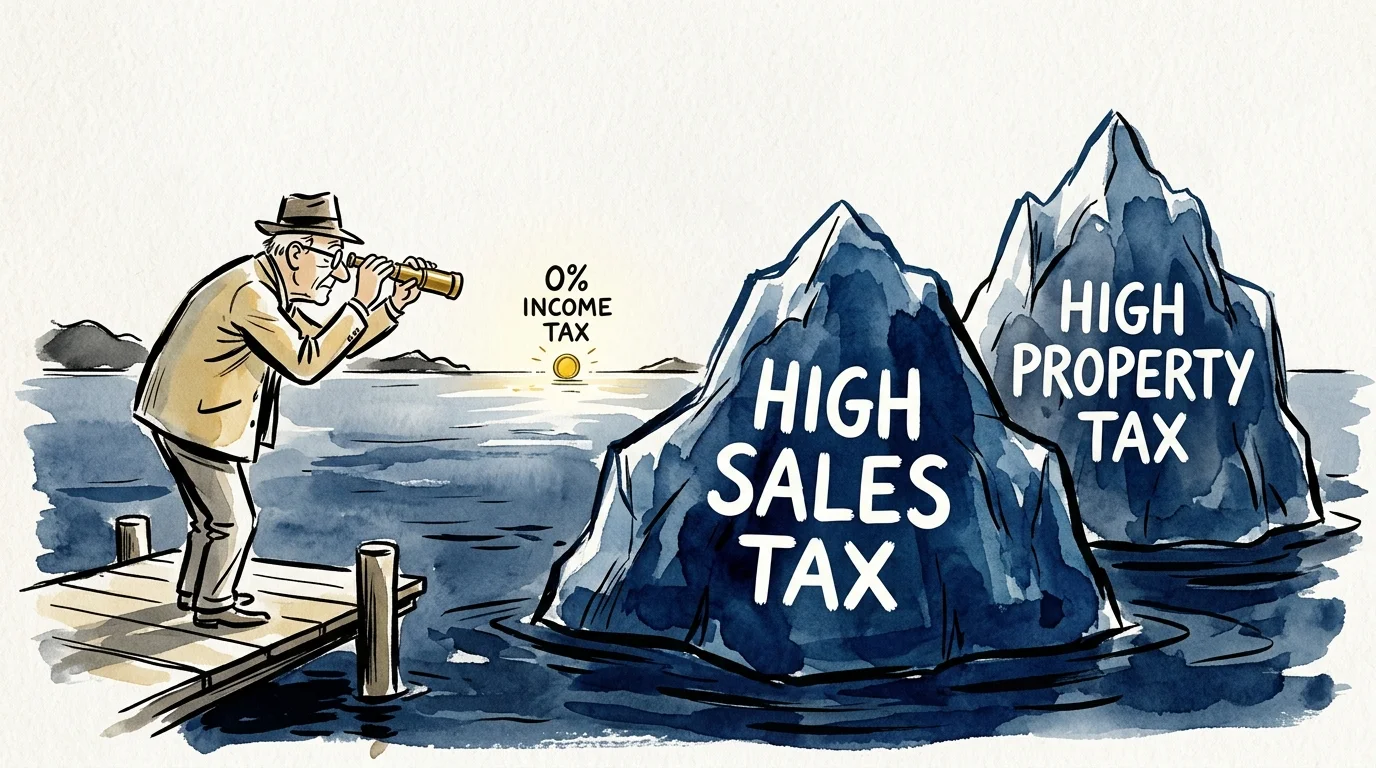
Moving to a state with zero income tax sounds like an instant raise for your retirement budget, but state governments always collect their revenue somehow. While headline tax rates lure thousands of retirees southward and westward every year, secondary costs like soaring property taxes, sky-high homeowners insurance, and steep sales taxes on daily essentials quickly devour those income tax savings. If you only look at tax brackets, you risk stepping into a severe financial trap that drains your nest egg faster than anticipated. Before packing your bags, you must evaluate the complete cost of living to protect your hard-earned retirement savings.

Why “No Income Tax” Doesn’t Equal Low Cost of Living
State governments require revenue to build roads, fund emergency services, maintain infrastructure, and support public institutions. When a state legislature decides not to tax individual income, it must shift that financial burden onto other buckets; primarily real estate taxes, consumer sales taxes, excise fees, and public utility surcharges.
For working professionals, avoiding state income tax often yields a net financial gain because earned wages make up the largest portion of their tax exposure. For retirees, however, the economic math changes drastically. In retirement, your taxable income often drops as you transition from reliance on a high salary to drawing down structured retirement accounts, taking Social Security, or utilizing pension funds. Meanwhile, fixed living expenses—such as groceries, property maintenance, home insurance, and medical care—consume a much larger percentage of your monthly cash flow.
When a state shifts its tax burden onto sales and real estate, retirees on fixed incomes end up paying a disproportionately high price. A zero-percent income tax policy offers zero relief on a high grocery bill or a massive property tax assessment; instead, it forces you to spend more of your fixed savings on basic living requirements.
“A state with no income tax won’t save your retirement if your fixed monthly expenses double because of property taxes and insurance.” — Suze Orman, Financial Author and Podcast Host

The 7 Tax-Friendly States With Surprising Hidden Costs
Before you commit to a long-distance move, examine these seven popular states where low income taxes mask heavy secondary expenses.
1. Florida: Skyrocketing Insurance and HOA Fees
Florida remains a top destination for retirees due to its complete lack of state personal income tax and warm climate. However, keeping your home standing and insured in the Sunshine State has become extraordinarily expensive.
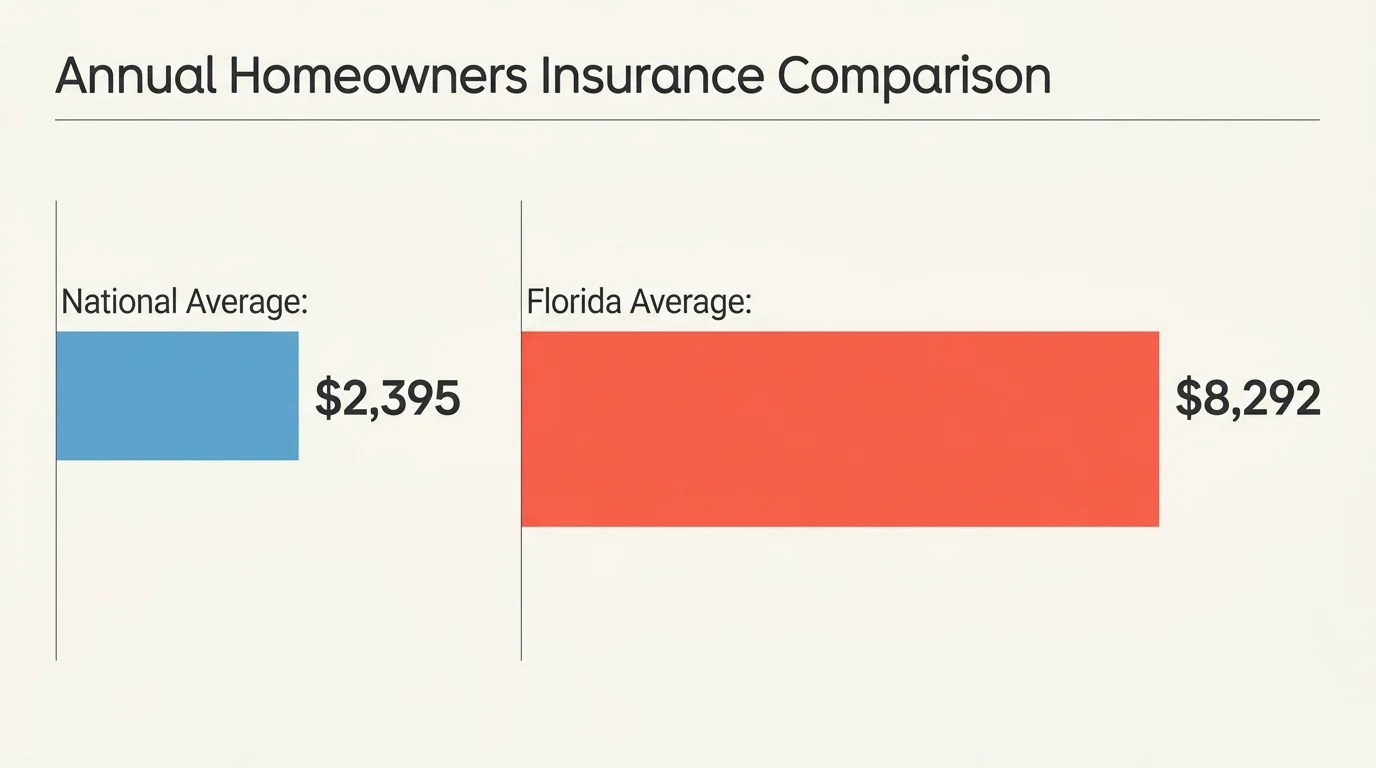
According to an analysis by Insurify, the average annual cost of homeowners insurance in Florida reached $8,292 in 2025—nearly 3.5 times the national average of $2,395. Severe weather risks, climate events, and litigation overhead have pushed insurance carriers to hike rates or exit the state market entirely. If you purchase a median-priced home, your monthly property insurance premium could easily equal or exceed your principal and interest payment.
If you prefer low-maintenance living in a condominium, post-Surfside safety legislation mandates that Florida condo associations perform regular structural integrity reserve studies. HOA boards must maintain fully funded reserves to fix structural defects, forcing many older complexes to levy massive special assessments—often ranging from $10,000 to over $50,000 per unit—alongside rapidly climbing monthly HOA fees.
2. Texas: Substantial Property and Sales Taxes
Texas vigorously advertises its lack of state personal income tax, attracting retirees looking to protect their pensions and retirement account distributions. Yet, Texas has some of the highest property taxes in the United States.
The state carries an effective property tax rate sitting between 1.40% and 1.49%, placing it firmly among the ten highest property tax states in the country. Local governments and school districts rely almost exclusively on real estate levies for funding. On a $400,000 home in Texas, you could easily pay between $5,600 and $6,000 per year in property taxes alone—and periodic re-assessments can push those bills higher as home values appreciate.
To compound the issue, Texas collects an average combined state and local sales tax rate of 8.20%. Whenever you purchase retail goods, furniture, home repairs, or dining services, you pay a substantial surcharge to fund local municipalities.
3. New Hampshire: Heavy Reliance on Property Taxes
New Hampshire fully repealed its Interest and Dividends Tax effective January 1, 2025. This move made the state completely free of wage and investment income taxes, creating an enticing destination for retirees with substantial taxable dividend portfolios. Furthermore, New Hampshire levies zero state sales tax.
However, local municipalities in New Hampshire fund public operations through aggressive property taxes. The state maintains an effective property tax rate of 1.50% to 1.66%, ranking four to five highest in the entire nation. Median annual property tax bills in New Hampshire frequently exceed $6,200.
If you own a modest home valued at $450,000, your annual property tax bill could easily top $7,000. For a retiree relying on fixed IRA withdrawals, this high baseline tax bill creates an unavoidable annual hurdle regardless of your income level in a given year.
4. Washington: High Sales Tax and Capital Gains Penalties
Washington state does not tax wages, pensions, or Social Security distributions, making it look highly attractive at first glance. However, state tax laws create unique traps for higher-net-worth retirees and everyday consumers alike.
First, Washington levies a 7% state capital gains tax on taxable long-term capital gains that exceed its standard deduction of $278,000 (for the 2025 tax year). If you decide to sell appreciated investment real estate, rebalance a large taxable portfolio, or liquidate private business stock to fund your retirement, Washington takes a significant cut of those realized gains.
Second, Washington relies heavily on sales tax revenue. The state features an average combined state and local sales tax rate of 9.47%, one of the highest in the country. From buying a vehicle to shopping at local retail establishments, high sales taxes reduce your purchasing power on everyday consumer transactions.
5. Tennessee: Steep Sales Taxes and Grocery Levies
Tennessee offers a 0% personal income tax environment, but it features the second-highest combined state and local sales tax rate in the country, averaging between 9.55% and 9.61%. In certain municipalities, total sales taxes reach close to 10% on every taxable purchase.
Crucially for senior citizens, Tennessee taxes essential food purchases. While many states exempt grocery items entirely, Tennessee levies a 4% state sales tax rate on groceries, plus local municipal add-on taxes. Paying nearly 10% on general retail goods and over 4% on daily groceries imposes an ongoing tax tax burden that directly reduces your monthly spending power.
For retirees who spend a large proportion of their income on day-to-day living expenses, Tennessee’s tax structure can actually extract more total tax dollars than a state with a modest income tax and lower consumption taxes.
6. Nevada: Consumer Sales Taxes and Medical Costs
Nevada’s state constitution strictly prohibits personal income tax, making cities like Las Vegas, Henderson, and Reno magnetic hubs for retirees. However, funding municipal infrastructure requires high consumption taxes, leading to an average combined state and local sales tax rate of 8.24%.
Beyond sales taxes, Nevada poses a hidden risk to retirees in the form of healthcare availability and costs. Rapid population growth in Nevada’s primary urban centers has outpaced local medical infrastructure, creating doctor shortages in specialized fields like cardiology, rheumatology, and oncology.
When local specialist access is restricted, retirees often face longer wait times, higher out-of-network spending, or expensive medical travel to neighboring states for specialized care. High out-of-pocket medical expenses quickly eclipse the savings gained from zero state income tax.
7. Alaska: Geographical Isolation and Healthcare Overhead
Alaska charges no state income tax, levies no statewide sales tax, and actually pays its residents an annual dividend through the Alaska Permanent Fund Dividend (PFD). On paper, it looks like the ultimate tax refuge for retirees.
In practice, Alaska’s extreme geographical isolation creates an exceptionally high cost of living. Transporting fresh groceries, household consumer goods, fuel, and construction materials thousands of miles drives retail prices up significantly. Heating a home during long, severe winters requires substantial utility expenditures that dwarf typical southern heating bills.
Furthermore, per-capita healthcare expenditure in Alaska ranks among the highest nationwide. The limited number of medical providers, coupled with high administrative overhead, leads to expensive out-of-pocket health fees, private insurance premiums, and specialized medical transportation costs.
“You can’t just look at one piece of the tax puzzle. Retirement income planning requires analyzing how state taxes, federal taxes, and local living costs interact with your specific distribution strategy.” — Ed Slott, Certified Public Accountant and IRA Expert
Comparing the Hidden Costs Side-by-Side
To help you evaluate these trade-offs, the following matrix breaks down how each state balances its tax exemptions against secondary cost drivers.
| State | Headline Tax Advantage | Primary Hidden Cost Driver | Impact on Retiree Budget |
|---|---|---|---|
| Florida | 0% State Income Tax | Homeowners Insurance ($8,292 avg in 2025) & Special Condo HOA Assessments | High mandatory property maintenance and insurance costs squeeze fixed monthly cash flow. |
| Texas | 0% State Income Tax | High Property Tax Rates (1.40%–1.49%) & 8.20% Combined Sales Tax | Large annual tax bills due on real estate, regardless of income level. |
| New Hampshire | 0% Wage & Investment Tax (as of 2025) | Steep Property Tax Rates (1.50%–1.66%) | High property tax burdens create steep baseline housing overhead ($6,200+ median). |
| Washington | 0% Income Tax on Wages & Pensions | 7% Capital Gains Tax over $278k & 9.47% Avg Combined Sales Tax | Liquidating large taxable investments or making major consumer purchases triggers high fees. |
| Tennessee | 0% Personal Income Tax | 9.55%–9.61% Combined Sales Tax & 4% State Grocery Tax | Daily lifestyle items and essential groceries carry high consumption taxes. |
| Nevada | 0% Personal Income Tax | 8.24% Avg Combined Sales Tax & Healthcare Infrastructure Deficits | Elevated everyday shopping costs paired with rising out-of-pocket medical spending. |
| Alaska | 0% Income & Sales Tax + Annual PFD Dividend | Geographical Freight Overhead & High Per-Capita Healthcare Costs | Expensive daily commodities, utilities, and high medical expenses eat into savings. |
Common Mistakes to Avoid When Choosing a Retirement State
Relocating during retirement involves major life changes and financial commitments. Avoid these four frequent oversights when comparing state destinations:
- Fixating Exclusively on Income Tax: Do not choose a location based solely on state income tax brackets. Run a comprehensive budget calculation that includes state, local, property, sales, and fuel taxes. The Consumer Financial Protection Bureau provides detailed budgeting tools to help calculate complete household cost projections.
- Underestimating Property Insurance Rate Hikes: Regional weather patterns, wildfire risks, and coastal flooding heavily influence insurance premiums. Always secure detailed insurance quotes on specific prospective properties before signing a purchase contract, rather than relying on national averages.
- Ignoring Regional Healthcare Quality and Access: Evaluate the distance to major hospital networks, primary care physicians, and board-certified specialists. Use resources from Medicare.gov to inspect coverage zones and evaluate participating provider networks in prospective retirement towns.
- Failing to Account for State-Level Estate and Inheritance Taxes: While a state might offer zero income tax, some states levy separate state-level estate taxes or inheritance taxes that could affect wealth transfers to your heirs. Consult current tax schedules at the Internal Revenue Service and target state departments of revenue to avoid surprises.

Finding the Right Advisor for Your State Relocation
Every senior’s tax picture differs depending on your mix of traditional IRAs, Roth accounts, taxable brokerage assets, pensions, and real estate holdings. Partnering with a qualified financial advisor or Certified Public Accountant (CPA) localized in your target state can save you thousands of dollars.
Consider seeking professional tax guidance in these specific relocation scenarios:
- You Hold Large Traditional IRA/401(k) Balances: An advisor can help model whether state-level income taxes on your required minimum distributions (RMDs) outweigh high property taxes in zero-income-tax states. You can research non-profit guidance through the National Council on Aging to better understand fixed-income budgeting.
- You Own Significant Real Estate or Taxable Portfolios: A localized CPA can help you structure capital gains timing and real estate sales to minimize state-level tax triggers, such as Washington’s capital gains tax threshold.
- You Plan to Snowbird Between Two States: Establishing primary legal residency (domicile) requires strict adherence to physical presence rules, driver licensing, voter registration, and asset tracking. A professional ensures you satisfy state-level audit standard rules without risking dual taxation.
- You Have Ongoing Chronic Medical Conditions: A fee-only financial planner can help model out-of-pocket medical insurance costs, Medigap policy pricing differences across states, and long-term care tax deductions. Learn more about navigating senior services using the AARP financial resource centers.
Frequently Asked Questions
Does moving to a state with no income tax automatically lower my taxes?
No, moving to a state with no income tax does not automatically reduce your overall tax burden. States with zero income tax typically collect missing revenue through high local property taxes, elevated retail sales taxes, excise duties, or specialized capital gains taxes. You must evaluate your complete tax profile—including real estate ownership and daily spending habits—to determine net savings.
How do high state sales taxes hurt retirees on a fixed income?
High sales taxes hurt retirees because seniors spend a large percentage of their monthly income on consumer goods, home upkeep materials, utilities, and daily essentials. Unlike earned income tax—which drops when your taxable earnings decline—sales taxes are unavoidable consumption charges that take an equal percentage from your wallet regardless of your retirement income level.
Can senior property tax exemptions offset high rates in places like Texas?
Senior property tax exemptions, homestead exemptions, and property tax freezes help mitigate housing tax burdens, but they rarely eliminate them. In states with high effective property tax rates like Texas or New Hampshire, even a reduced tax bill can still exceed several thousand dollars per year, particularly as local property market values rise over time.
What is legal domicile, and why does it matter when moving for tax reasons?
Legal domicile is the place you maintain as your official, primary, and permanent home for legal and tax purposes. If you attempt to claim primary residency in a zero-income-tax state while maintaining significant ties, physical presence, or real estate in a high-tax state, the high-tax state may audit you and levy retroactive back taxes and interest penalties.
Smart Next Steps for Your Retirement Budget
Before packing your boxes and moving across state lines, run a full cash flow model comparing your current town against your target location. Request actual real estate tax histories on prospective homes, obtain precise homeowners and flood insurance quotes, and compute local municipal sales taxes on your baseline budget. By evaluating the complete cost of living rather than focusing on headline tax rates, you protect your independence and keep your retirement nest egg secure.
This is educational content based on general financial principles for seniors. Individual results vary based on your situation. Always verify current benefit amounts, tax rules, and program eligibility with official government sources.
Last updated: February 2026. Benefit amounts, tax rules, and program details change annually—verify current figures with official government sources.








Leave a Reply