

Your 3.6% Social Security cost-of-living adjustment officially kicks off in January 2027, but your actual take-home pay will likely fall short. Rising Medicare premiums and hidden retirement expenses will eat away at that headline increase before you ever see it.
While the average monthly retirement benefit increases by $75 to reach $2,170, automatic deductions quickly reduce your net gain. Knowing what gets subtracted allows you to safeguard your monthly cash flow ahead of time.
Here is the breakdown of why your net raise will be smaller than expected, along with concrete steps to protect your retirement income.
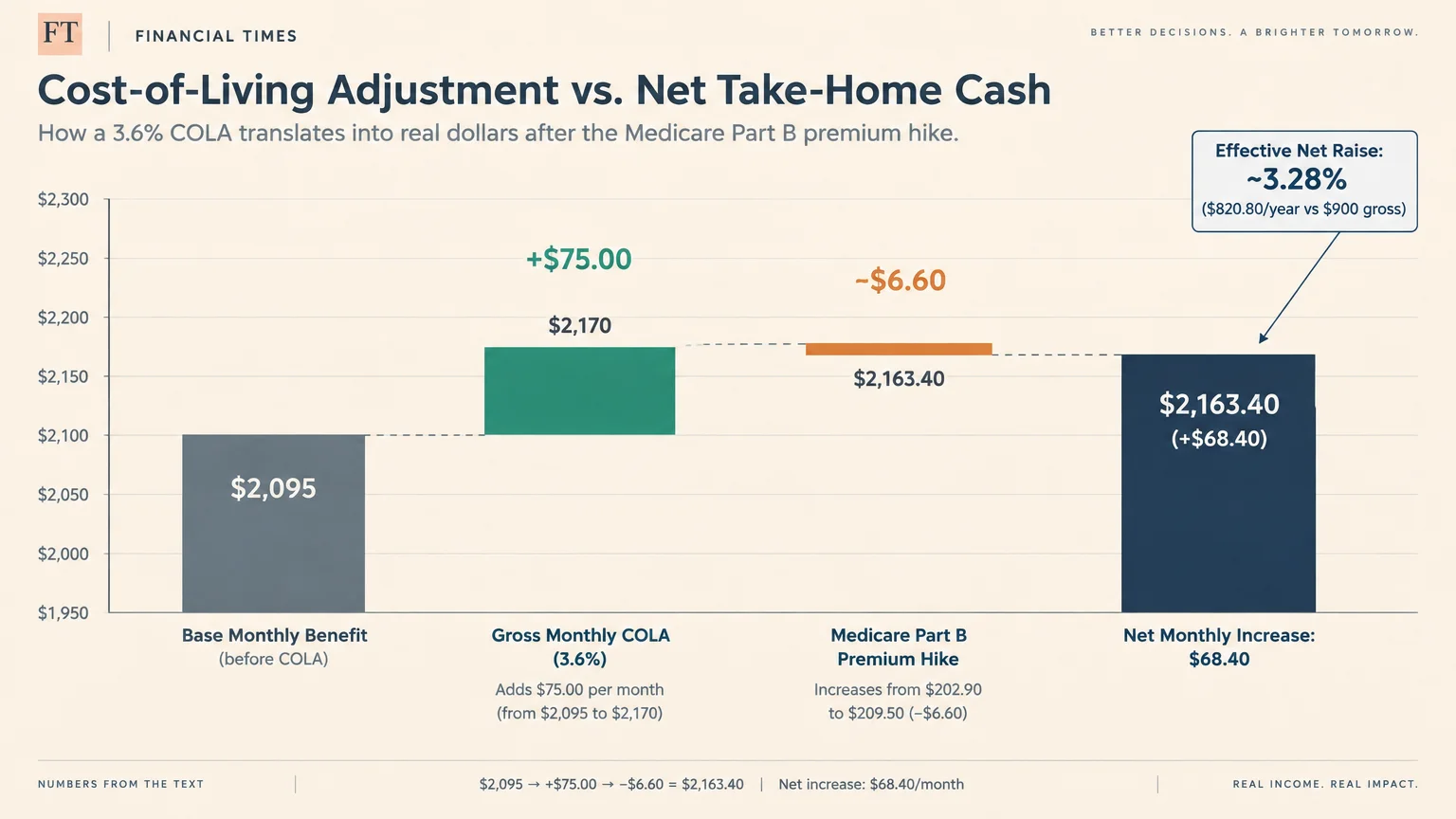
The 2027 COLA Math: Gross Increase Versus Take-Home Cash
The Social Security Administration (SSA) announced on October 14, 2026, that the 2027 Cost-of-Living Adjustment (COLA) is 3.6%. This bump raises the average monthly Social Security retirement benefit from $2,095 to $2,170.
On paper, an extra $75 per month amounts to $900 across the entire calendar year. However, headline figures rarely reflect what lands in your personal bank account.
The federal government automatically deducts Medicare Part B premiums directly from Social Security checks for most beneficiaries. According to the 2026 Medicare Trustees Report, the standard monthly Part B premium rises by $6.60 in 2027, jumping from $202.90 to $209.50.
When you subtract that $6.60 premium increase, the average retiree’s monthly net gain drops from $75 to $68.40. Over twelve months, you pocket $820.80 instead of $900.
That premium adjustment alone shaves your effective raise down from 3.6% to roughly 3.28% of your previous gross benefit. If your check is smaller than average, the percentage you lose to healthcare deductions is significantly larger.
“A cost-of-living adjustment is not a bonus; it is an attempt to keep you from falling behind. When healthcare costs rise faster than your check, you have to be proactive about every dollar.” — Suze Orman, Personal Finance Author and Expert
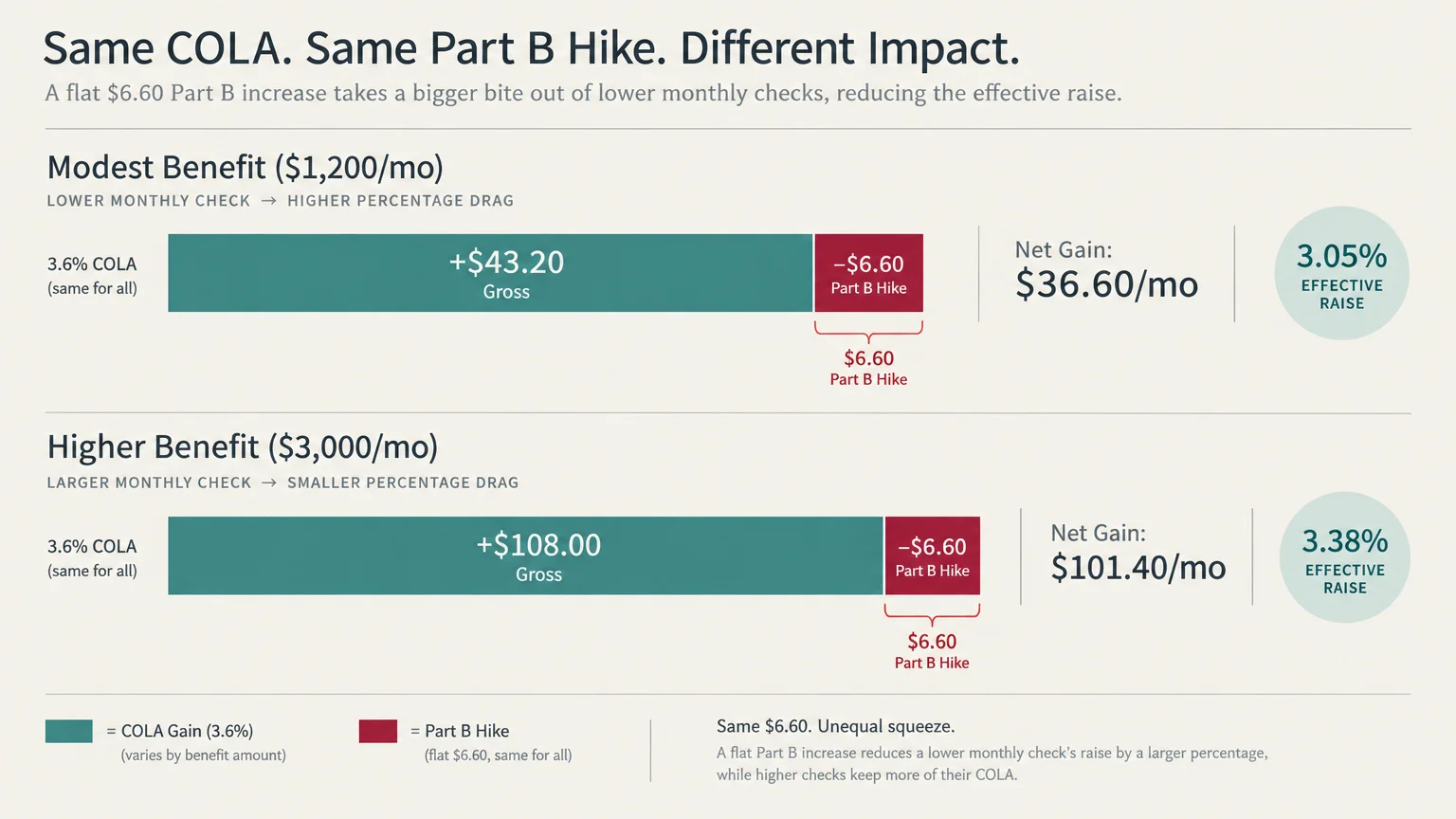
1. The Flat Part B Premium Hike Disproportionately Hits Lower Benefits
The standard Part B premium hike is a flat dollar amount rather than a proportional percentage. Every standard beneficiary pays the identical projected $6.60 monthly increase regardless of whether their monthly benefit is $900 or $3,500.
This flat subtraction causes an unequal financial drag on seniors with lower baseline benefits. While a high earner barely feels the difference, a modest benefit sees a noticeable slice disappear.
Consider a retiree receiving $1,200 per month in 2026. A 3.6% COLA adds exactly $43.20 to their monthly gross entitlement.
Subtracting the projected $6.60 Part B hike leaves that retiree with a net increase of $36.60 per month. That reduces their actual take-home raise from 3.6% to just 3.05%.
By contrast, someone collecting $3,000 monthly receives a gross raise of $108. After the $6.60 premium deduction, their net gain is $101.40, maintaining an effective raise of 3.38%.
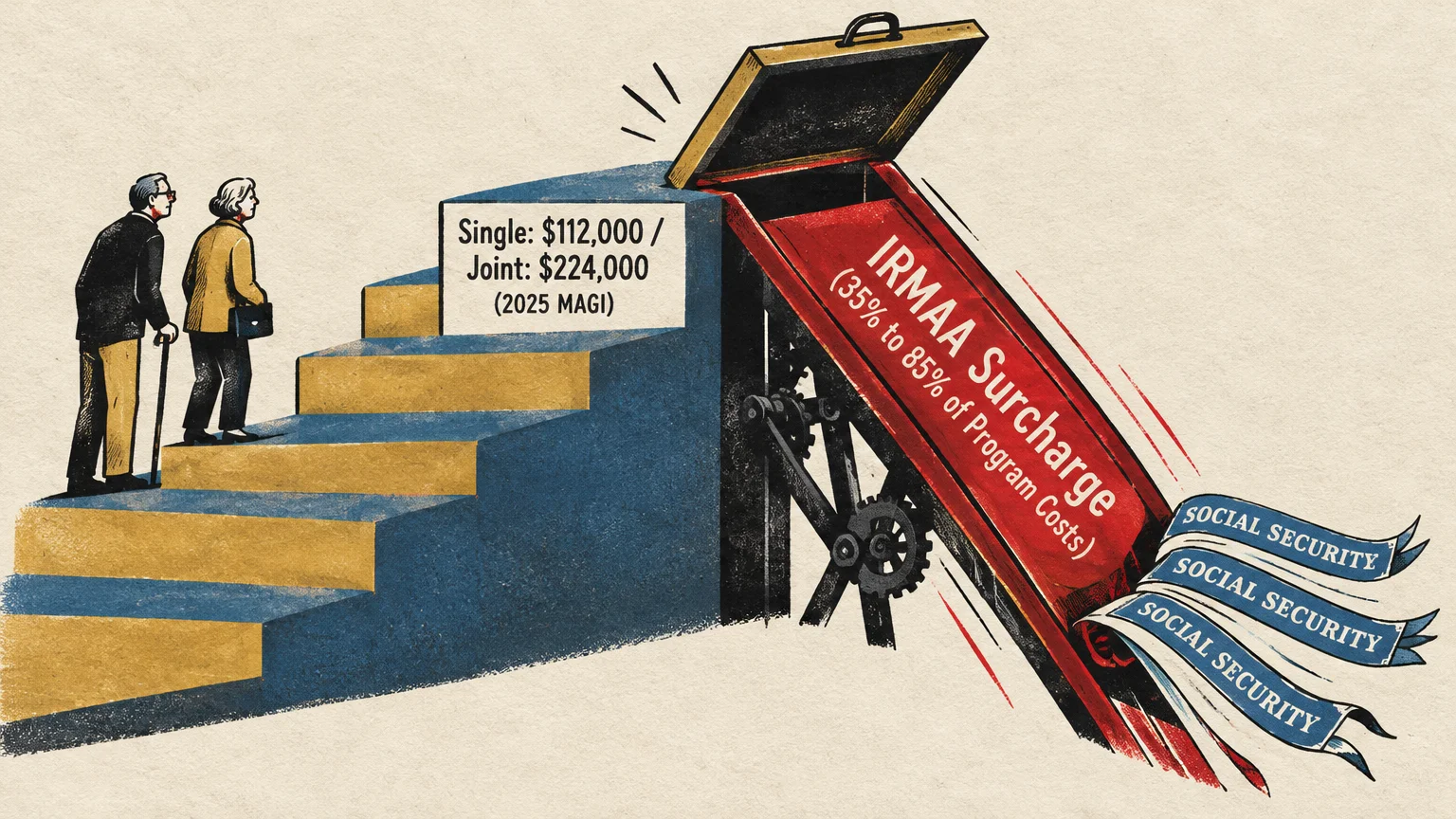
2. High-Income Surcharges (IRMAA) Take an Aggressive Bite
If your past income crosses specific thresholds, you face the Income-Related Monthly Adjustment Amount (IRMAA). This surcharge drastically increases your Part B and Part D premiums, wiping out your COLA increase entirely.
IRMAA surcharges in 2027 depend on the Modified Adjusted Gross Income (MAGI) reported on your 2025 federal tax return. The system uses a strict two-year lookback period to establish your bracket.
For 2027, the initial IRMAA surcharge triggers when MAGI exceeds $112,000 for single tax filers or $224,000 for married couples filing jointly. Crossing that threshold by even one dollar subjects you to the higher tier.
Standard enrollees pay 25% of total Part B program costs, but IRMAA enrollees pay between 35% and 85%. Projected 2027 monthly Part B payments span five distinct income tiers:
- Tier 1: $293.30 per month for singles earning $112,001 to $140,000 (joint filers $224,001 to $280,000)
- Tier 2: $419.00 per month for singles earning $140,001 to $175,000 (joint filers $280,001 to $350,000)
- Tier 3: $544.70 per month for singles earning $175,001 to $210,000 (joint filers $350,001 to $420,000)
- Tier 4: $670.40 per month for singles earning $210,001 to $500,000 (joint filers $420,001 to $750,000)
- Tier 5: $712.30 per month for singles earning over $500,000 (joint filers over $750,000)
Moving up a single IRMAA tier can cost you an additional $83.80 to $125.70 each month in Part B alone. That surcharge will erase your entire 3.6% gross COLA raise instantly.
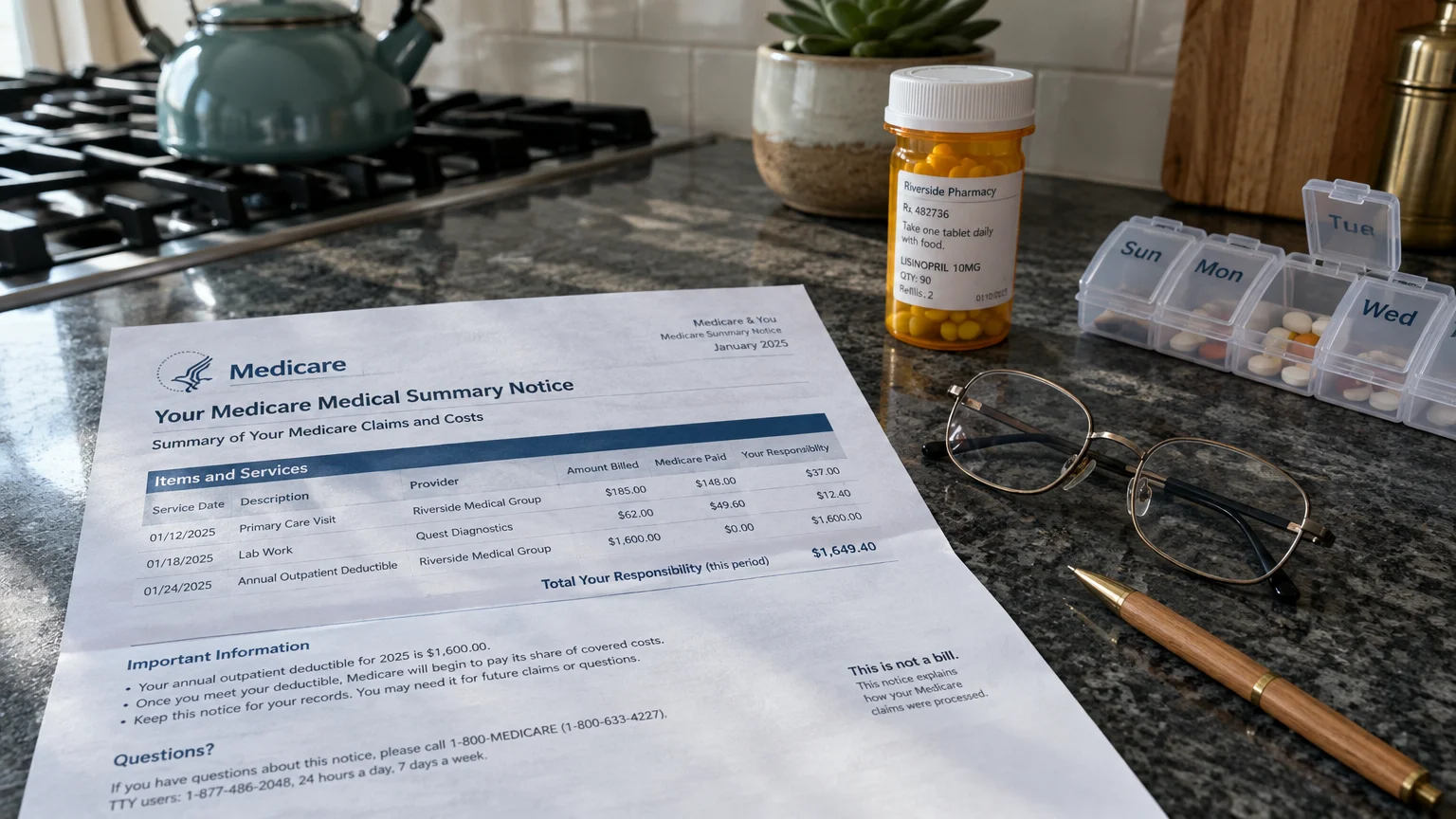
3. Rising Medical Deductibles Siphon Off Early-Year Cash Gains
A higher monthly check does not help your budget if your upfront out-of-pocket medical expenses increase simultaneously. You must satisfy your annual deductibles before insurance benefits start paying your bills.
According to Medicare projections, the annual Part B deductible rises from $283 in 2026 to $292 in 2027. This $9 increase must be paid out-of-pocket for doctor visits and outpatient care starting every January.
Prescription drug deductibles are also rising under standard benefit designs. The maximum annual deductible for Medicare Part D plans increases from $615 in 2026 to $700 in 2027.
Between these two changes, seniors face up to $94 in additional front-loaded medical deductibles in early 2027. That early-year burden completely absorbs the first month and a half of an average $68.40 net raise.
While the annual Part D out-of-pocket spending cap is $2,400 in 2027, those savings only help beneficiaries with substantial medication needs later in the year. The initial deductible hike hits your wallet immediately.
4. Expiration of the Part D Premium Stabilization Program
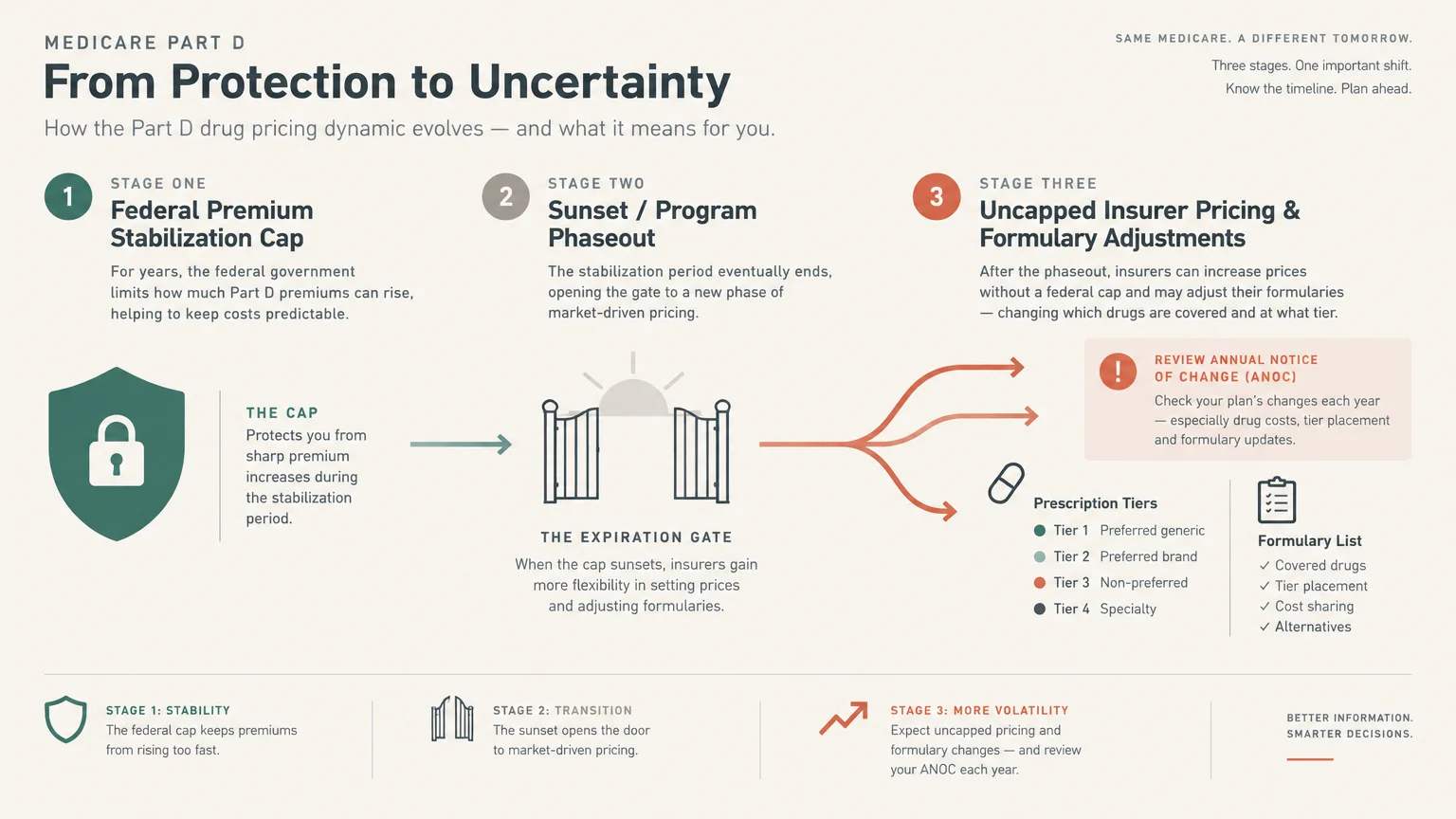
Medicare Part D prescription drug coverage is undergoing major structural shifts that directly impact monthly deductions. A temporary federal demonstration project created to cap stand-alone Part D premium increases expires at the end of 2026.
Without this stabilization program, private insurance carriers offering stand-alone drug plans may hike monthly premiums for 2027. Many seniors have these premiums deducted automatically from their monthly benefit check.
The Part D base beneficiary premium is set at $41.33 for 2027. However, individual plan pricing varies widely based on carrier, formulary design, and regional market competition.
If your stand-alone drug plan raises its monthly rate by $15 or $25, that charge subtracts from your Social Security payment. An unexpected Part D price spike can swallow more than a third of your gross COLA adjustment.
You can review and switch drug plans during Medicare Open Enrollment, which runs from October 15 through December 7, 2026. Reviewing options on Medicare.gov is essential to stop unnecessary premium drains.

5. The “Tax Torpedo” and Unindexed Federal Benefit Thresholds
Higher gross benefits inadvertently expose a larger portion of your retirement income to federal income taxes. This trap occurs because the IRS rules governing Social Security benefit taxation are permanently frozen in place.
The IRS uses your “provisional income” to evaluate whether your benefits are taxable. You calculate this by adding your non-Social Security income, tax-exempt municipal interest, and exactly 50% of your annual Social Security benefits.
Federal law established these provisional income thresholds in 1983 and 1993, and Congress never indexed them to inflation. The static thresholds remain fixed at:
- Single Filers: Benefits remain tax-free under $25,000; up to 50% is taxable between $25,000 and $34,000; up to 85% is taxable above $34,000.
- Married Joint Filers: Benefits remain tax-free under $32,000; up to 50% is taxable between $32,000 and $44,000; up to 85% is taxable above $44,000.
Because these brackets do not adjust upward, a 3.6% COLA routinely pushes retirees over the line into higher tax exposure. You might receive extra benefit dollars only to surrender a substantial portion back to the IRS.
Eligible seniors currently benefit from a temporary $6,000 deduction enacted under the One Big Beautiful Bill Act through 2028. Even with this provision, moving across a taxation boundary creates an unexpected tax bill when filing your returns at IRS.gov.
“Taxes can be the single biggest factor eroding your retirement income. Without careful planning around thresholds, a small raise can easily trigger a disproportionately larger tax bill.” — Ed Slott, CPA and Retirement Specialist
6. The Retirement Earnings Test Penalizes Working Early Claimers
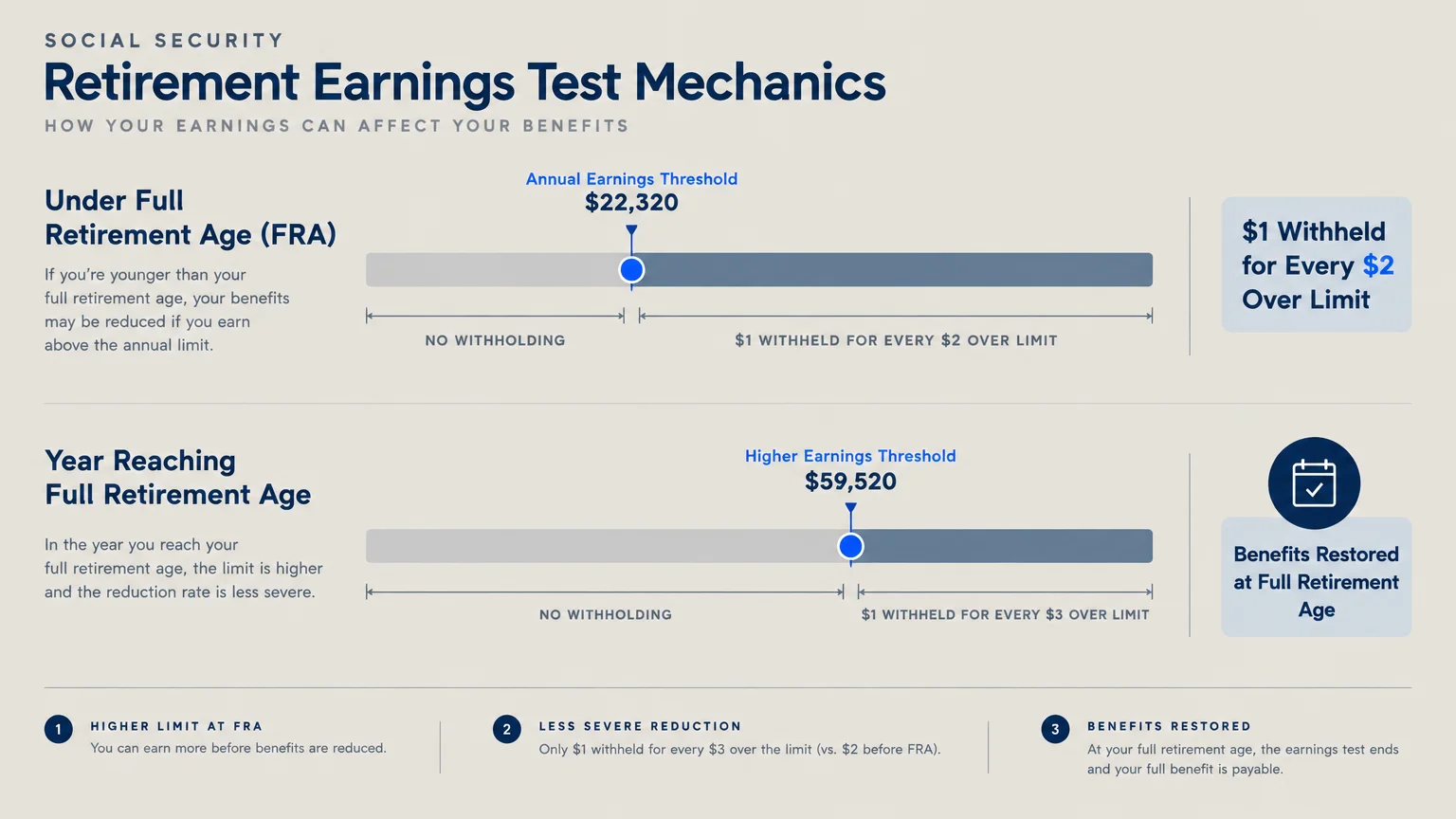
If you claim Social Security before reaching your Full Retirement Age (FRA) and continue working, earning too much money triggers benefit withholding. This mechanism is known as the Retirement Earnings Test.
The Social Security Administration temporarily holds back benefits once your annual earned wages exceed statutory limits. For 2027, the exempt earnings limit for beneficiaries who remain under FRA all year rises to $25,560.
For every $2 you earn above $25,560, the SSA withholds $1 in Social Security benefits. If you work part-time and earn $31,560, you exceed the limit by $6,000, causing $3,000 in benefits to be withheld.
A higher limit applies during the specific calendar year you reach your Full Retirement Age. In 2027, that threshold is $67,920, with $1 withheld for every $3 earned above the cap up until the month you reach FRA.
While the SSA recalculates your monthly benefit upward once you hit Full Retirement Age to credit withheld payments, your current cash flow takes an immediate beating. Extra wages can erase your 3.6% COLA check increase during your active working years.
7. Federal FERS Retirees Receive a Reduced “Diet COLA”
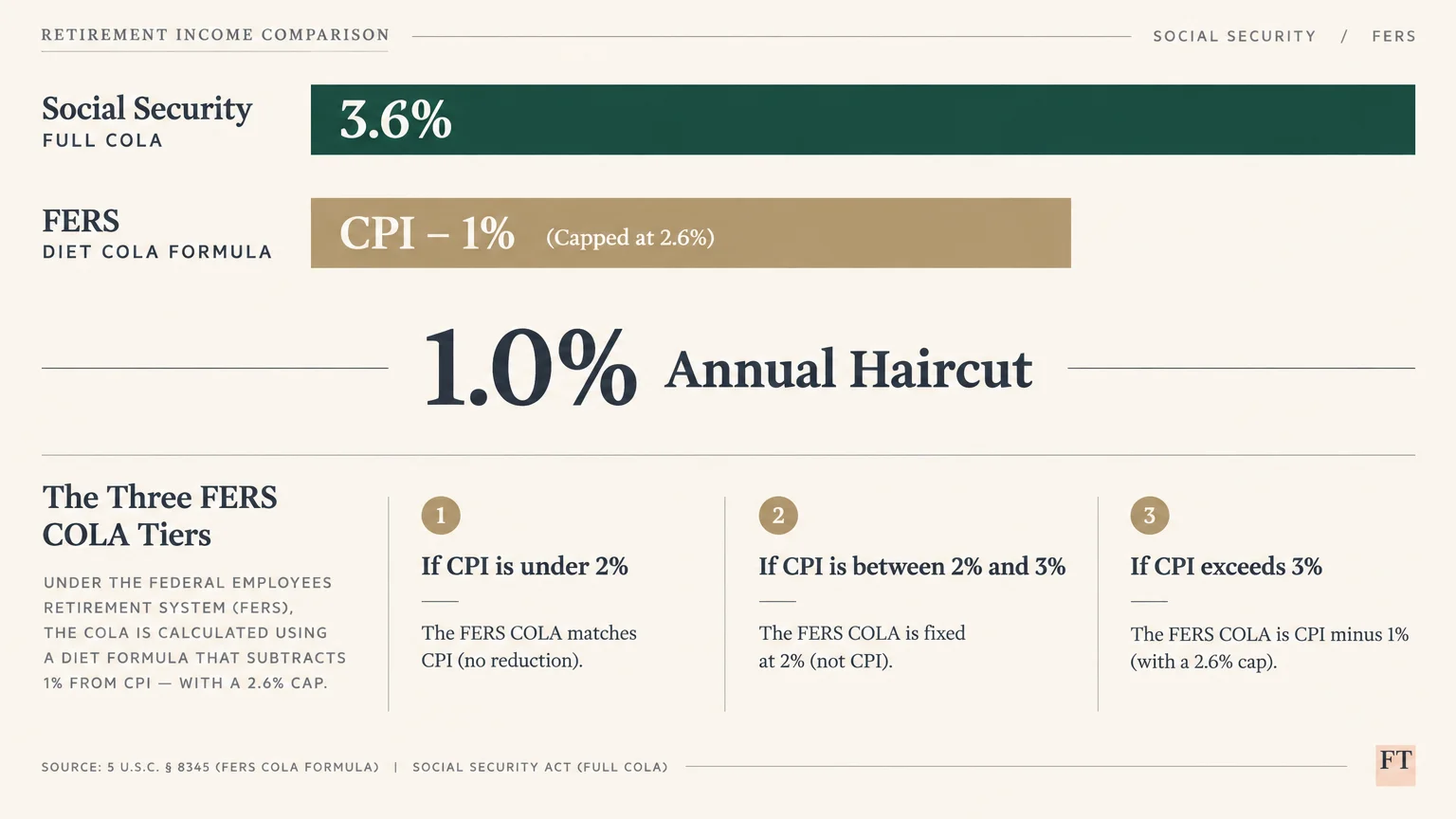
If you retired from federal civil service under the Federal Employees Retirement System (FERS), your pension does not receive the full 3.6% increase. FERS statutory rules mandate a reduced adjustment known as a “Diet COLA.”
When inflation measured by the consumer price index runs between 2% and 3%, FERS retirees receive a flat 2% raise. When inflation surpasses 3%, the law caps the FERS increase at exactly one percentage point below the official rate.
Because the calculated 2027 adjustment is 3.6%, federal retirees covered by FERS receive only a 2.6% pension increase. Meanwhile, retirees under the older Civil Service Retirement System (CSRS) and standard Social Security recipients receive the full 3.6%.
This 1% reduction compounds over time, steadily eroding the purchasing power of your federal annuity. When you combine a 2.6% pension raise with higher Medicare Part B deductions, your retirement cash flow experiences real downward pressure.
8. The CPI-W Index Undercounts Actual Senior Living Costs
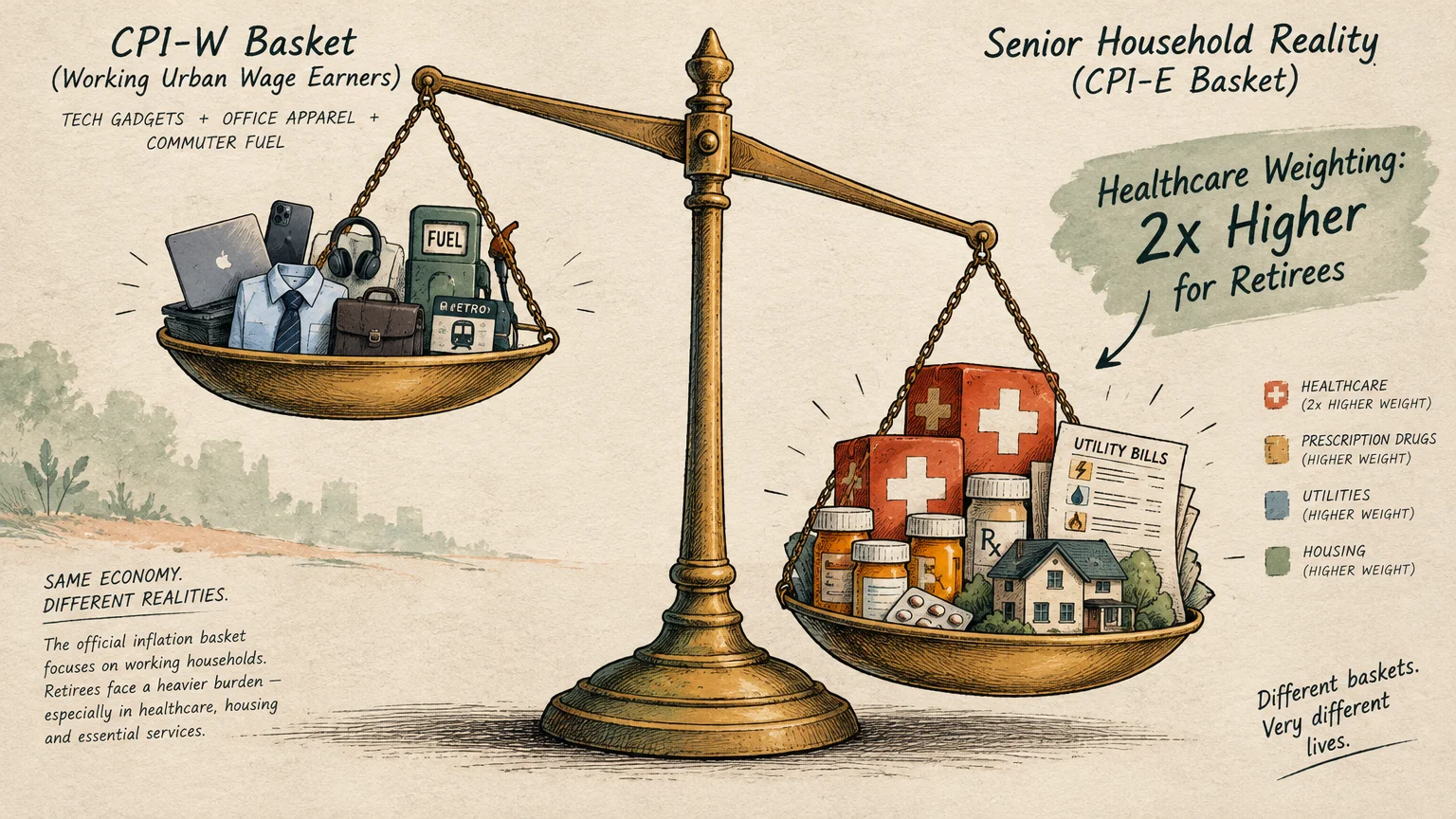
By law, annual COLAs are calculated using the Consumer Price Index for Urban Wage Earners and Clerical Workers (CPI-W). The SSA measures average inflation during the third quarter—July, August, and September—against the same period from the prior year.
The core problem is that the CPI-W monitors spending patterns of working-age urban employees. It heavily weights commuting expenses, technology, gasoline, and workplace apparel.
Retirees spend money very differently than younger workers. Older Americans allocate a much larger percentage of their monthly budgets toward medical appointments, prescription drugs, dental care, and home heating.
Advocacy groups like the National Council on Aging (NCOA) frequently point out that healthcare inflation consistently outpaces broad consumer inflation. An alternative measure, the CPI-E (Consumer Price Index for the Elderly), places twice as much weight on medical expenses.
Because official raises follow the CPI-W instead of senior-specific price changes, your 3.6% adjustment may lag behind your genuine cost increases. You end up with a raise that fails to cover the exact bills that expanded the most.

9. State Income Taxes and Withholding Adjustments Shrink Your Deposit
While federal income tax rules affect everyone, your state of residence also dictates how much of your raise you actually keep. Several states still tax Social Security benefits to varying degrees based on adjusted gross income.
If you live in a state that taxes retirement benefits, an automatic gross raise can push you past state-specific income exemptions. A small bump in your federal check can trigger a state tax liability that cancels your net gain.
Additionally, voluntary tax withholding from your monthly Social Security check does not adjust upward automatically when COLAs occur. Beneficiaries must submit Form W-4V to modify their flat-percentage tax withholding.
If you do not proactively adjust withholding, your annual tax obligations may creep upward unnoticed throughout the year. You could end up with an unexpected tax bill when completing state and federal returns the following spring.
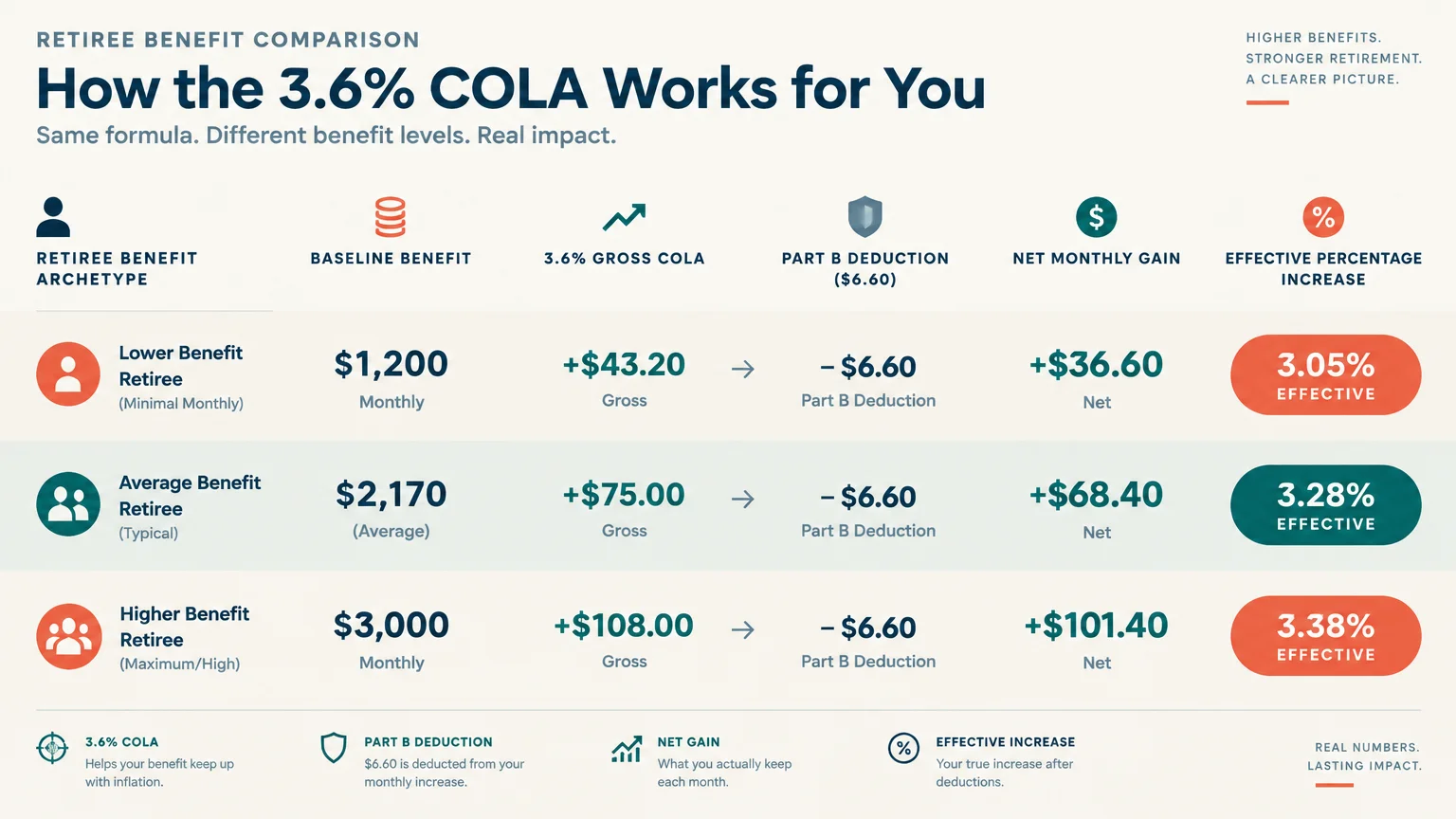
Comparing Benefit Levels: How Deductions Erode the 2027 Raise
To see how the projected $6.60 Part B premium deduction impacts different income levels, examine the monthly numbers below. Retirees with smaller benefits experience a far steeper percentage loss.
| 2026 Monthly Benefit | Gross 3.6% COLA Raise | 2027 Gross Benefit | Part B Hike ($6.60) | 2027 Net Monthly Check | Effective Net Raise (%) |
|---|---|---|---|---|---|
| $1,200.00 | $43.20 | $1,243.20 | -$6.60 | $1,033.70 | 3.05% |
| $1,600.00 | $57.60 | $1,657.60 | -$6.60 | $1,448.10 | 3.19% |
| $2,095.00 (Avg) | $75.40 | $2,170.40 | -$6.60 | $1,960.90 | 3.28% |
| $2,800.00 | $100.80 | $2,900.80 | -$6.60 | $2,691.30 | 3.36% |
| $3,500.00 | $126.00 | $3,626.00 | -$6.60 | $3,416.50 | 3.41% |
As the table demonstrates, lower-income beneficiaries lose nearly triple the relative percentage of their raise compared to higher earners. This mathematical reality makes careful budget management critical for modest households.
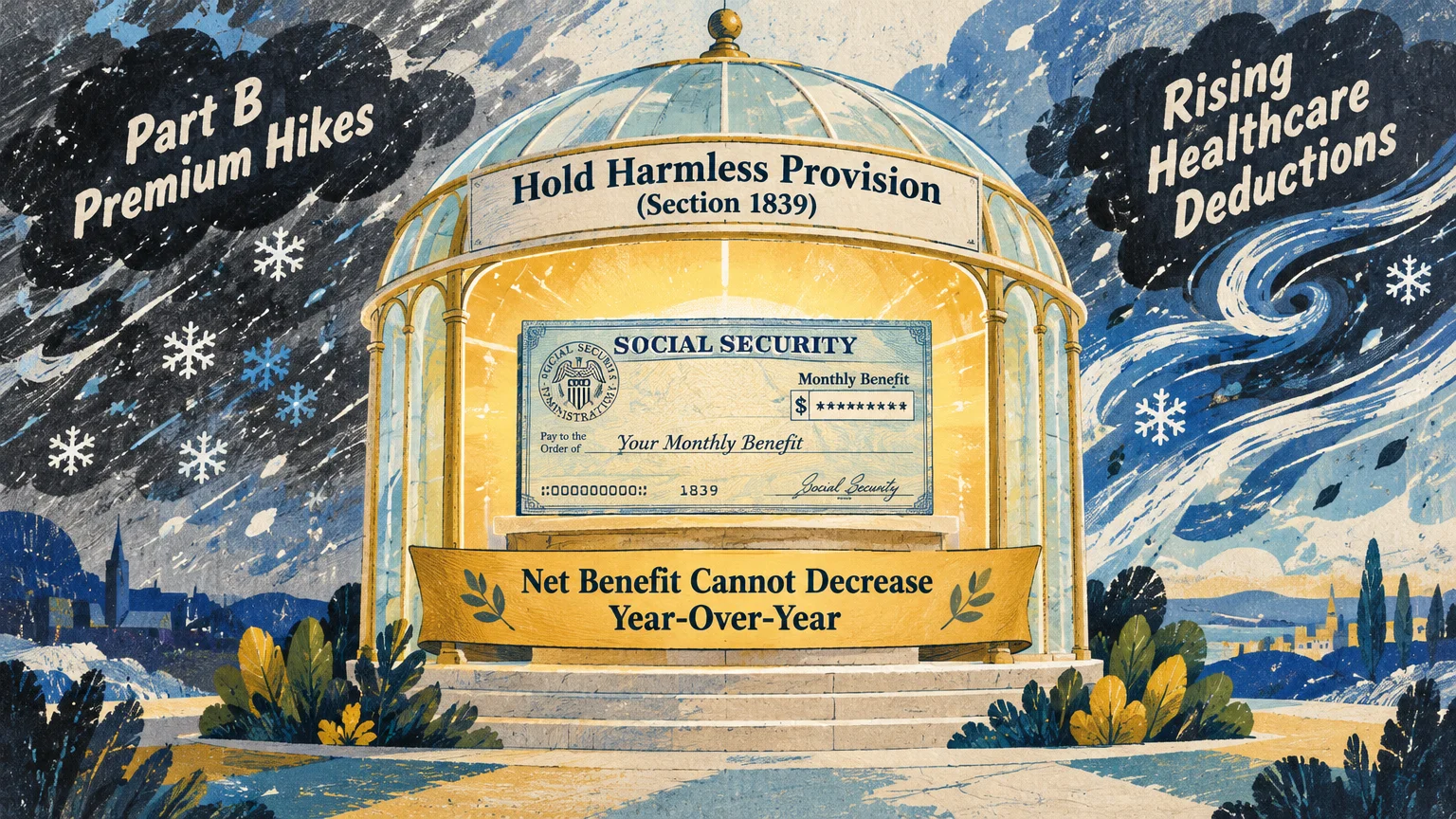
How the “Hold Harmless” Provision Protects Your Check
Federal law contains a key safeguard designed to protect Social Security beneficiaries from medical premium shocks. This regulation is called the “Hold Harmless” provision.
Under Section 1839(f) of the Social Security Act, your net monthly check cannot decline from one year to the next due solely to an increase in Medicare Part B. The dollar increase in Part B is strictly capped at the dollar increase of your COLA.
This protection applies to approximately 70% of all Medicare Part B enrollees. However, several specific groups of beneficiaries are entirely excluded from this rule:
- New Medicare enrollees who enroll in Part B for the first time in 2027.
- Beneficiaries who do not have their Part B premiums withheld directly from Social Security checks.
- Dual-eligible beneficiaries whose Part B premiums are fully covered by state Medicaid programs.
- High-income retirees who are subject to IRMAA surcharges.
For standard enrollees in 2027, the 3.6% COLA comfortably covers the projected $6.60 Part B premium hike across all benefit levels. As a result, the Hold Harmless rule will not be widely triggered this year.
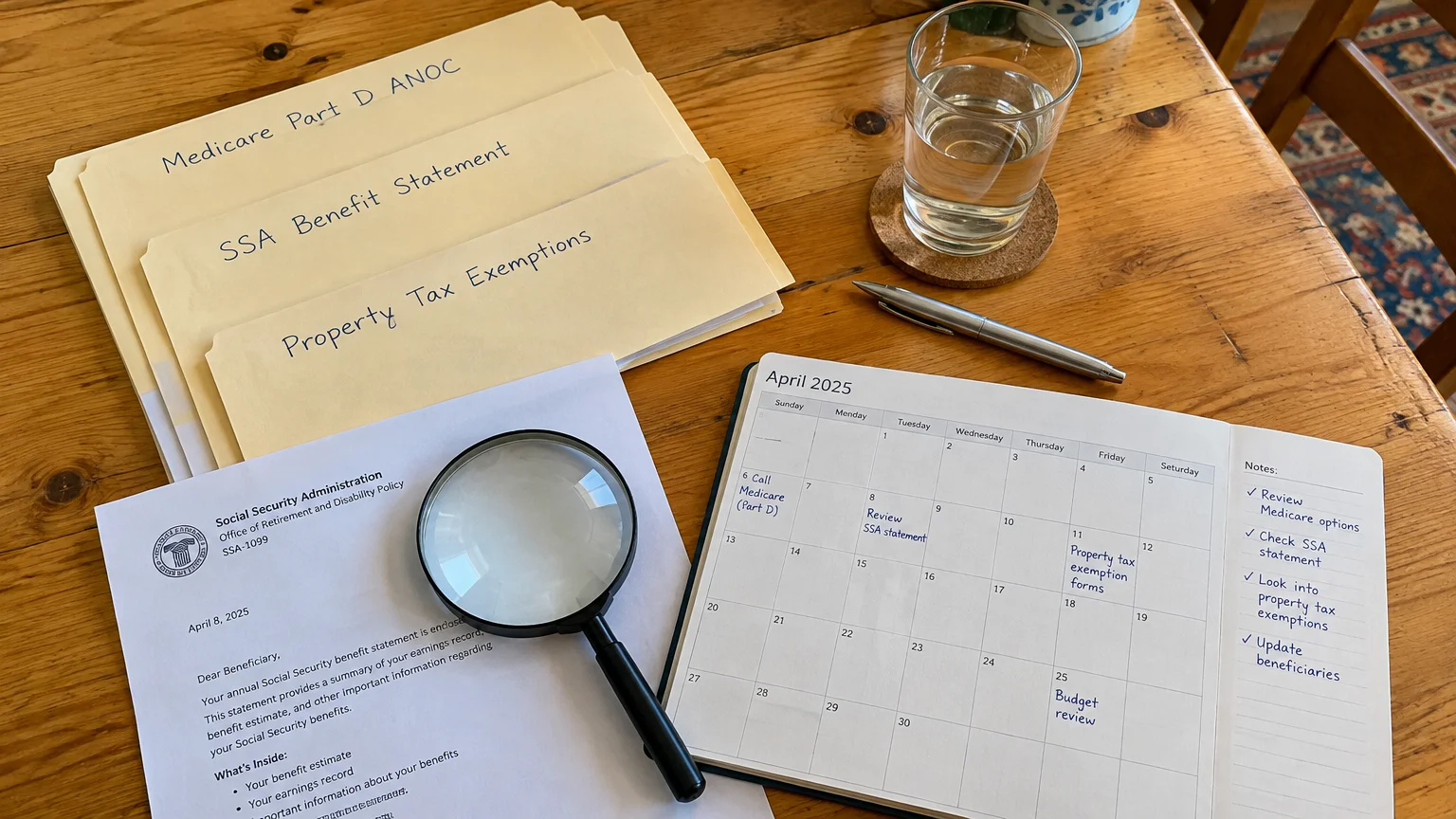
Pitfalls to Watch For
Protecting your monthly retirement income requires avoiding common administrative and tax missteps. Keep these major pitfalls in mind as the new year approaches:
1. Missing the Online COLA Notice Deadline
The Social Security Administration notifies beneficiaries of their exact 2027 payment amounts in late November. To view your customized statement online, you must create a personal my Social Security account and opt into paperless notices by November 18, 2026. Beneficiaries who miss this date must wait for standard paper notices mailed throughout December.
2. Ignoring Medicare Open Enrollment
Medicare Open Enrollment runs from October 15 through December 7, 2026. Failing to compare Part D and Medicare Advantage options can lock you into plans with rising premiums and restrictive formularies. Using the Medicare Plan Finder tool helps you identify drug coverage that protects your net monthly benefit.
3. Failing to Appeal IRMAA After Life Events
If your 2025 income was high due to work, but you recently retired or lost a spouse, you can appeal your 2027 IRMAA surcharge. File Form SSA-44 with proof of your life-changing event to request that the SSA recalculate your premiums based on current, lower income.
4. Neglecting Voluntary Tax Withholding Adjustments
Social Security does not automatically recalculate tax withholding when your gross payment increases. If you want federal taxes taken from your benefit to prevent year-end surprises, submit an updated Form W-4V to your local SSA office to set an accurate withholding percentage.

Getting Expert Help
Managing the intersection of Social Security rules, Medicare rules, and federal tax laws can get overwhelming. Here are four specific situations where consulting a qualified financial professional or benefits counselor makes sense:
Navigating an IRMAA Surcharge Spike
If you recently sold real estate, converted a traditional IRA to a Roth IRA, or experienced a major income event, consult a Certified Financial Planner (CFP) or CPA. They can help you structure future income withdrawals to avoid continuous surcharge tiers.
Balancing Early Benefits with Part-Time Work
If you collect benefits before Full Retirement Age while remaining employed, work with a retirement specialist. They can calculate your exact earnings thresholds and help you pace your income to avoid unexpected benefit clawbacks.
Selecting Prescription Drug Coverage
Navigating standalone Part D plans after the expiration of the premium stabilization program requires careful analysis. Reach out to your local State Health Insurance Assistance Program (SHIP) for free, unbiased counseling from trained Medicare specialists.
Managing RMDs to Prevent Benefit Taxation
Required Minimum Distributions (RMDs) from traditional retirement accounts can push your provisional income over federal tax thresholds. A tax planner can design a coordinated distribution strategy that keeps your Social Security income in lower tax brackets.
Frequently Asked Questions
What is the projected Medicare Part B premium for 2027?
According to the 2026 Medicare Trustees Report, the standard monthly Part B premium is projected to be $209.50 in 2027. This represents a $6.60 monthly increase over the 2026 standard premium of $202.90.
Why is my net Social Security raise smaller than 3.6%?
The 3.6% COLA applies to your gross benefit before deductions. Because Medicare Part B premiums are deducted directly from your check as a flat dollar amount, they reduce your net cash increase.
Can Medicare premiums make my Social Security check smaller than last year?
No, most beneficiaries are protected by the federal “Hold Harmless” provision. This law prevents standard Part B premium increases from reducing your net monthly benefit below what you received the previous year.
When will I find out my exact 2027 monthly Social Security check amount?
You can view your personalized COLA notice online in late November 2026 by logging into your personal my Social Security account. Paper notices are mailed to beneficiaries throughout the month of December.
Practical Steps to Maximize Your Net Income
While you cannot control the official COLA rate or Medicare Part B increases, you can manage your retirement cash flow proactively. Review your Medicare coverage choices before the December 7 open enrollment deadline to keep health expenses low.
Take time to review your retirement account withdrawals and tax withholdings with a financial professional. Staying informed about program thresholds ensures you hold onto the maximum amount of your monthly raise throughout 2027.
This is educational content based on general financial principles for seniors. Individual results vary based on your situation. Always verify current benefit amounts, tax rules, and program eligibility with official government sources.
Last updated: October 2026. Benefit amounts, tax rules, and program details change annually—verify current figures with official government sources.









Leave a Reply