
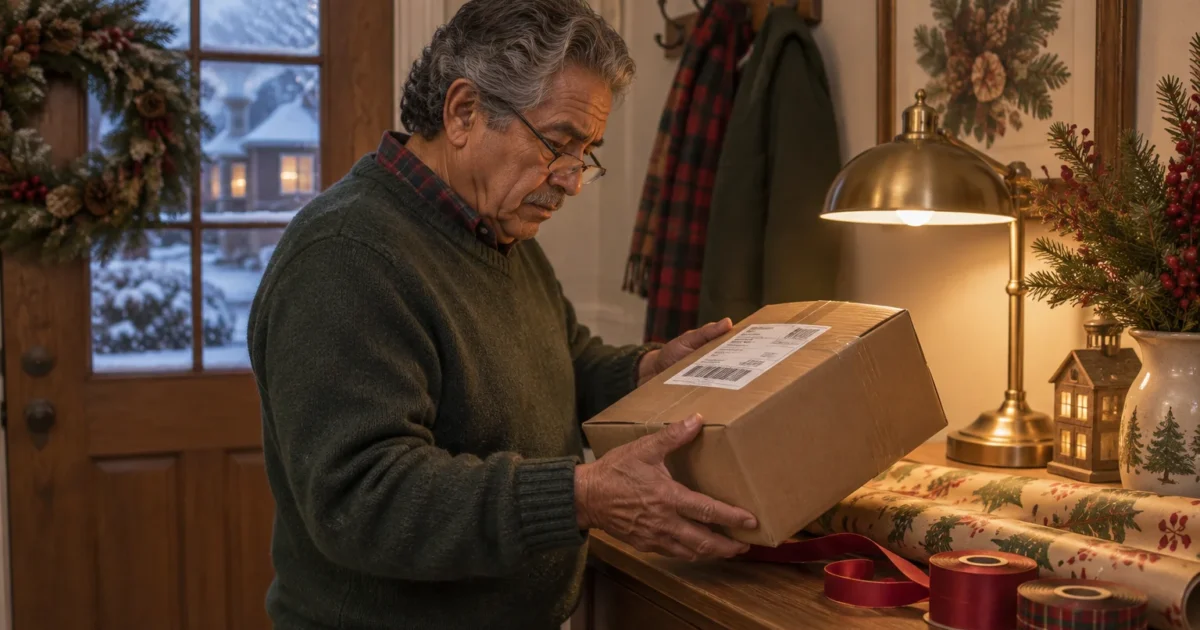
Holiday shopping brings joy, yet scammers count on your busy schedule to steal your money and personal details. Learning how to spot modern fraud tactics keeps your holiday budget safe.
You can prevent most holiday shopping scams by choosing protected payment methods, verifying unfamiliar links, and watching for rushed requests. Even better, federal consumer laws give you strong ways to recover lost funds when you act fast.
This guide walks you through the top scam warning signs seen in 2026, smart online shopping safety steps, and exactly where to turn for free help.
At a Glance
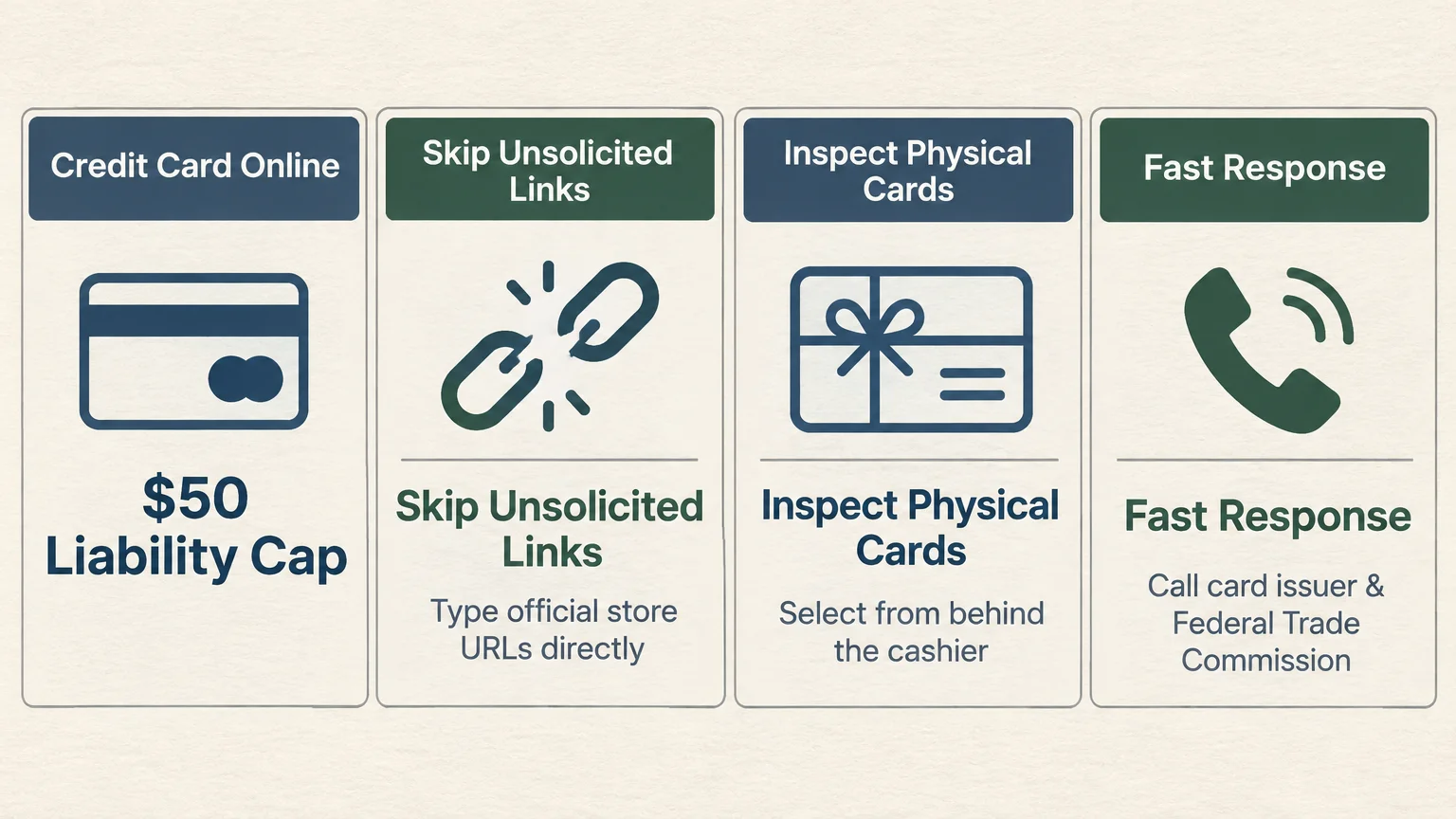
- Pay with a credit card online: Federal law caps your unauthorized charge liability at $50, whereas debit cards leave your checking account exposed.
- Skip links in texts and ads: Open a new browser tab and type a store’s official web address yourself instead of tapping urgent shipping or recall alerts.
- Inspect physical gift cards: Buy cards kept behind the register or purchase e-gift cards directly from official retailers so thieves cannot drain the balance.
- Save key recovery numbers: Contact your card issuer immediately if fraud strikes, then report the crime to the Federal Trade Commission or the National Elder Fraud Hotline.
Why Holiday Shopping Scams Target Older Shoppers This Season
Shoppers are spending record amounts online as Black Friday arrives on November 27, Cyber Monday follows on November 30, and Giving Tuesday lands on December 1, 2026.
Deloitte projects U.S. holiday retail sales from November through January will reach $1.70 trillion to $1.71 trillion, with online spending climbing to between $316.1 billion and $318.9 billion.
According to the National Retail Federation, 64% of shoppers plan to do most of their holiday buying on Cyber Monday alone. Criminals flood inboxes, text messages, and social feeds during these peak days because busy buyers have less time to verify deals.
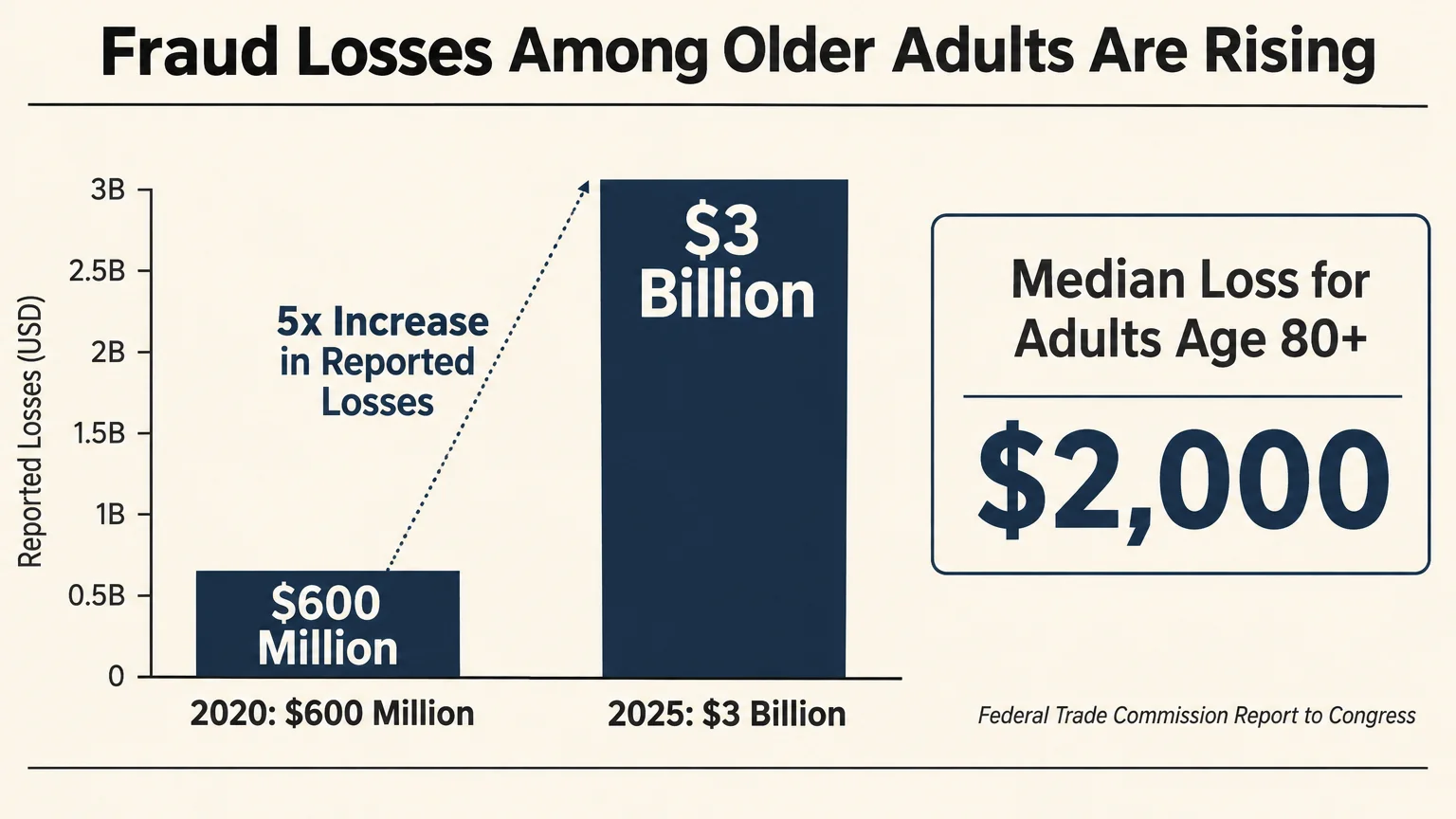
Older adults face steep financial risks from this surge. In an October 2026 report to Congress, the Federal Trade Commission (FTC) found that adults age 60 and older reported roughly $3 billion in fraud losses in 2025—a fivefold jump from about $600 million in 2020.
Because many victims never report a crime, the FTC estimates actual 2025 losses for older Americans ranged between $13.3 billion and $119.5 billion. Adults age 80 and older reported a median loss of $2,000.
Data from the FBI Internet Crime Complaint Center (IC3) shows a similar spike. Americans age 60 and older filed 201,266 complaints totaling $7.748 billion in 2025, averaging $38,500 per complaint and rising 59% from 2024.
Fraudsters do not just target massive retirement accounts, either. In a November 2026 AARP survey of 1,801 holiday shoppers, 84% reported being targeted by scammers or experiencing common fraud tactics.
McAfee research released in late 2026 also found that 48% of Americans encountered a holiday deal or ad they initially thought was real before realizing it was fake. Among victims who lost money, 60% lost $100 or more, and 48% recovered nothing.
Top Holiday Shopping Scams and Scam Warning Signs to Watch For
Recognizing how modern christmas scams operate makes it much easier to shut them down before you share a credit card number or password. Watch closely for these five major threats during the 2026 season.
Fake Storefronts and Impersonated Brands
Online purchase scams accounted for 28.4% of all reports to the Better Business Bureau (BBB) Scam Tracker in 2025, ranking as the third riskiest scam overall. Across all ages, non-payment and non-delivery scams cost victims more than $503 million in 2025, according to FBI IC3 data.
An analysis of FTC figures also showed that online shopping scam reports rose in every U.S. state from the first half of 2025 to the first half of 2026. Only Washington, D.C., saw a decline of nearly 2%.
Cybersecurity firm Check Point tracked newly registered Amazon-themed web domains rising from 905 in July 2026 to 1,284 in September 2026. BBB data shows PayPal, Amazon, and Target were the top three organizations impersonated in 2025, while McAfee found shoppers frequently spotted fake ads mimicking Amazon, Temu, Nike, Apple, and SHEIN.
Criminals now use artificial intelligence to build polished websites in minutes and fake celebrity endorsements in social media ads. Scammers also impersonate loved ones using AI voice cloning in urgent emergency calls.
In 2025, the FBI IC3 logged 22,364 complaints citing artificial intelligence as a fraud tool. Those AI-assisted crimes caused more than $893 million in total losses, including $352 million stolen from adults age 60 and older.
Social Media Ad Traps
According to the FTC, social media was the contact method responsible for the largest total dollar losses among older adults in 2025. Fraudsters buy legitimate-looking sponsored posts promising steep holiday markdowns on popular electronics, winter coats, or toys.
In AARP’s November 2026 survey, 47% of shoppers bought an item after seeing an online ad, and 39% of those buyers experienced fraud afterward. Either the item never arrives, or a cheap knockoff shows up weeks later.
Fake Shipping, Toll, and Recall Text Messages
Text message scams climbed to 14.9% of all BBB Scam Tracker reports in 2025, up from 9.8% the year before. AARP found that 47% of holiday shoppers received a fake shipping alert, while 44% received a fake toll payment text.
The AARP Fraud Watch Network Helpline also warns about a wave of fake product recall texts and emails impersonating Amazon, Costco, and Walmart. These messages claim you qualify for a quick refund if you click a link and log into your account.
Once you enter your username and password on that lookalike page, thieves take over your real retail account. They then use your saved credit cards to order expensive gift cards or electronics.
Drained Retail Gift Cards
Gift cards remain a holiday staple, with 71% of shoppers in the AARP survey planning to buy them this season. Yet 35% of respondents say they have given or received a gift card with a zero balance.
Thieves walk into stores, peel open card packaging on open racks, record the card numbers and PINs, or swap barcodes before resealing the sleeve. As soon as you load money onto that card at the register, automated software drains the balance.
Phony Holiday Charities
Generosity peaks around Giving Tuesday and year-end tax deadlines, and scammers know it. In AARP’s 2026 survey, 31% of shoppers reported receiving a suspicious charity donation request.
Fake charities often use names that sound nearly identical to well-known organizations. They also pressure donors to give right away over the phone or through peer-to-peer payment apps.
Red Flags That Signal a Scam Immediately
Keep this checklist near your computer or phone while browsing holiday sales:
- Unbelievable markdowns: High-demand brand-name gifts priced far below every major store usually signal counterfeit goods or a non-delivery trap.
- Unusual payment demands: No legitimate store, charity, or government agency will ever demand payment by gift card, wire transfer, cryptocurrency, or payment app to a stranger.
- Rushed deadlines: Messages claiming your account will close, a package will return to sender, or a recall refund expires today aim to stop you from thinking clearly.
- Misspelled web addresses: Extra hyphens, odd letter swaps, or unfamiliar domain endings indicate a lookalike storefront rather than an official retailer.
- Missing contact details: Trustworthy merchants list a working customer service phone number, a physical business address, and clear return and shipping policies.
How to Protect Personal Information and Shop Safely Online
Strong online shopping safety habits close the door on most seasonal fraud. Follow these practical steps from federal cybersecurity agencies, the FTC, and the BBB every time you browse for gifts.
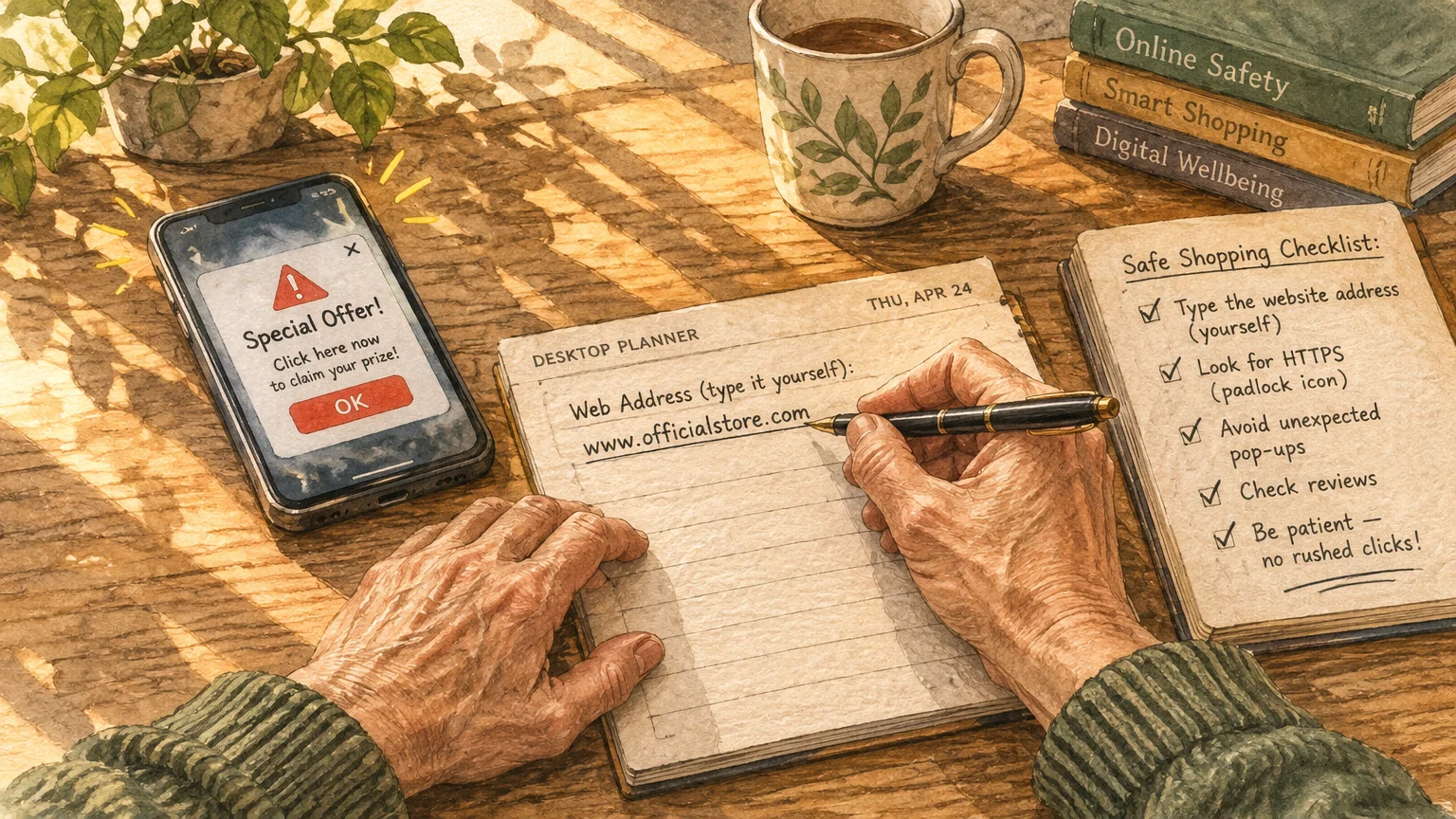
- Type web addresses yourself: Never tap links inside unexpected texts, emails, or social media ads; open a fresh browser window and enter the store’s official address manually.
- Check encryption before typing card numbers: Confirm the browser address bar starts with https:// and shows a closed padlock icon before you enter any payment or login details.
- Skip public Wi-Fi for purchases: Never enter banking passwords or credit card numbers on free coffee shop, airport, or hotel networks; wait until you reach a secure home network or use your phone’s cellular data.
- Lock down accounts with strong logins: Keep your phone and computer updated, use a unique password for every retail site, and turn on multi-factor authentication (MFA) whenever available.
- Save every order confirmation: Take a screenshot or save confirmation emails showing the item description, total price, promised delivery date, and seller contact information.
- Vet unfamiliar stores and charities first: Search a store’s name alongside words like scam or complaint before buying, and verify nonprofits on the Internal Revenue Service (IRS) Tax Exempt Organization Search, Give.org, CharityWatch.org, or CharityNavigator.org.
- Buy gift cards carefully: Pick physical cards stored behind the customer service counter or order e-gift cards straight from official company websites, inspect seals for tampering, and hand the buyer the activation receipt.
Checking your credit file regularly also helps you protect personal information year-round. You can pull free weekly credit reports from Equifax, Experian, and TransUnion through AnnualCreditReport.com or by calling 1-877-322-8228.
You can also place and lift a security freeze at all three credit bureaus for free without hurting your credit score. A freeze blocks identity thieves from opening new credit cards or loans in your name even if they steal your Social Security number.
Choose the Safest Payment Method Before You Check Out
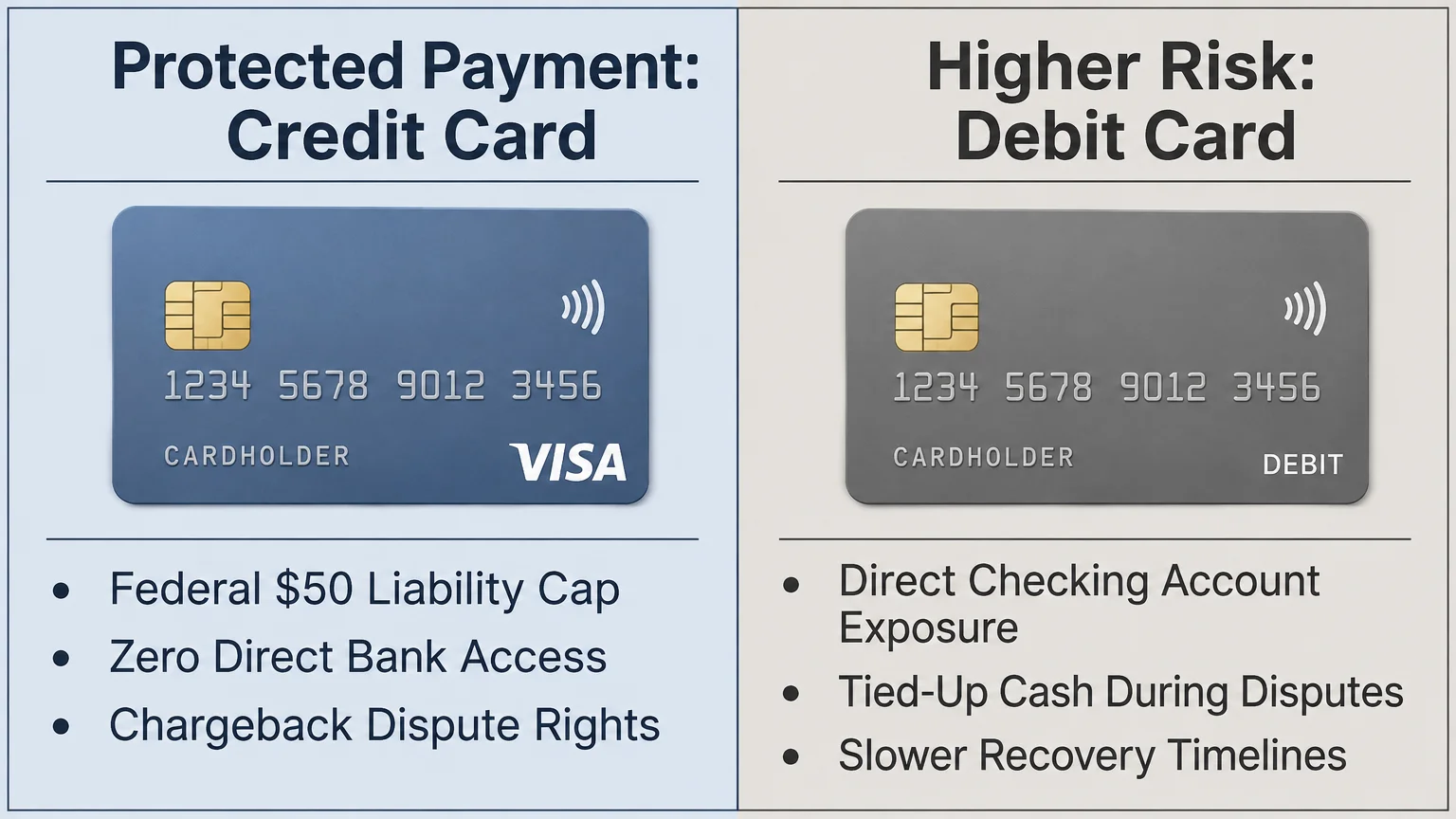
How you pay matters just as much as where you shop. Federal laws give credit card users far stronger fraud and delivery protections than people who pay with debit cards, cash apps, or gift cards.
Credit card fraud still accounted for $282 million in FBI IC3 reports during 2025. However, the Fair Credit Billing Act (FCBA) shields credit card holders from bearing those losses.
Under the FCBA, your maximum liability for unauthorized credit card charges is $50, and it drops to $0 for charges made after you report a card lost or stolen. Many major credit card issuers also guarantee $0 fraud liability from the start.
You also get 60 days from the date your billing statement is mailed to dispute billing errors—including unauthorized charges and goods that never arrive—in writing. Once notified, the card issuer must acknowledge your dispute within 30 days and resolve it within two billing cycles, or no more than 90 days.
Debit cards fall under a different federal law called the Electronic Fund Transfer Act (EFTA), and its deadlines are much stricter. Your debit card liability is capped at $50 only if you report a lost or stolen card within two business days of learning about it.
If you report a missing debit card after two business days but within 60 days of your statement being sent, you could lose up to $500. Wait longer than 60 days, and you face unlimited liability for unauthorized transfers—meaning thieves could empty your entire checking account.
| Payment Method | Your Legal Fraud Liability | Key Reporting Deadlines | Protection for Undelivered Goods |
|---|---|---|---|
| Credit Card (FCBA) | Capped at $50 ($0 after reporting loss or theft; many issuers waive the $50) | Dispute billing errors in writing within 60 days of statement mailing date | Strong chargeback rights if an online order never arrives or differs wildly from the ad |
| Debit Card (EFTA) | $50 within 2 business days; up to $500 within 60 days; unlimited after 60 days | Report lost or stolen card within 2 business days to keep the $50 cap | Bank funds leave your checking account right away and take longer to recover |
| Gift Cards, Wire Transfers, Crypto, P2P Apps | Virtually no federal fraud recovery protections | Funds are typically gone permanently within minutes | No chargeback rights when paying strangers or fake storefronts |
Consider a quick example of how this difference plays out. Suppose you spend $300 on a holiday tablet from a website that turns out to be fake and never ships the order.
If you paid with a credit card, your own bank money never left your checking account, and you can file a formal FCBA dispute to wipe away the $300 charge. If you paid with a debit card and wait two weeks to check your statement, your rent or utility cash stays tied up while the bank investigates.
You also have strong shipping protections under the FTC Mail, Internet, or Telephone Order Merchandise Rule. Sellers must ship your online, phone, or mail order within the timeframe promised in their ad, or within 30 days if no shipping date was stated.
When you apply for in-house credit with the seller at checkout, that default window stretches to 50 days. If a merchant cannot meet the deadline, they must notify you and give you a chance to cancel for a full refund.
For shipping delays longer than 30 days—or any second delay—the seller must get your explicit consent to wait. Otherwise, they must automatically cancel your order and issue a prompt refund, which means within seven working days if you paid by cash, check, or money order.
Costly Errors to Sidestep During the Holidays
Even careful shoppers sometimes slip up when holiday packages start piling up on the porch. Avoiding these four common mistakes keeps your money and personal data out of reach.
Tapping Links in Delivery or Recall Alerts
Because real carriers send genuine shipping updates, scammers mimic those alerts to slip past your guard. Clicking a link inside an unexpected text can take you straight to a fake login page designed to steal your store password.
Instead, open the official Amazon, UPS, FedEx, or USPS website or app directly to check your real delivery status. Treat any unexpected product recall text the exact same way.
Using a Debit Card at Unfamiliar Online Stores
Using a debit card feels convenient because it pulls straight from your checking balance without creating a monthly bill. Yet giving an untested website direct access to your checking account puts your everyday bill money at risk.
Reserve your debit card for ATM withdrawals and trusted local errands. Use a dedicated credit card with strong fraud alerts for every online purchase.
Grabbing Gift Cards Without Checking the Packaging
Picking the top card off a busy front-of-store display rack makes it easy to hand a loved one an empty gift. Thieves target high-traffic racks because store clerks cannot watch every shopper.
Run your fingers across the back security strip, check the edges for glue residue, and confirm no sticker covers the original barcode. Better yet, ask a cashier for cards stored behind the counter or send an e-gift card directly from the brand’s site.
Waiting Too Long to Read Monthly Statements
During a hectic December, many people set paper statements aside until late January or February. Under both credit and debit rules, missing the 60-day reporting window can strip away your strongest legal protections.
Turn on free transaction alerts through your bank’s mobile app or website so every charge over $1 sends you a text or email. Review your full statements within a few days of receiving them.

When DIY Isn’t Enough: Free Official Help If You Spot Fraud
Changing a password and deleting a spam text works well when you catch a scam before losing money. However, you should bring in official experts right away in these four scenarios.
Unauthorized Charges Appear on Your Accounts
If you spot unfamiliar charges or a store refuses to refund an undelivered item, call the customer service number on the back of your card immediately. Follow up your credit card dispute in writing within 60 days to lock in your full FCBA rights.
You can also learn about your banking and dispute rights through the Consumer Financial Protection Bureau (CFPB).
You Shared Your Social Security Number or Passwords
If you accidentally entered sensitive personal details on a fake site, visit IdentityTheft.gov right away to build a free, step-by-step recovery plan. Place free security freezes at Equifax, Experian, and TransUnion immediately so criminals cannot open new accounts in your name.
You Lost Money or Feel Pressured by a Caller
If you are age 60 or older and lost money to a scam—or feel unsure about a suspicious call—reach out to the Department of Justice National Elder Fraud Hotline at 1-833-FRAUD-11 (833-372-8311). Trained case managers offer free, confidential support and help you file official reports.
You can also call the AARP Fraud Watch Network Helpline at 877-908-3360. Their trained specialists provide free fraud guidance to people of all ages, whether or not you are an AARP member.
You Want to Report a Fake Website or Scam Text
Reporting scams—even if you did not lose money—helps federal investigators shut down criminal networks faster. File complaints with the FTC at ReportFraud.ftc.gov (or call 1-877-382-4357), submit online crime reports to the FBI at IC3.gov, and warn neighbors via the BBB Scam Tracker at BBB.org.
Frequently Asked Questions About Holiday Shopping Scams
What should I do if I already clicked a link in a fake shipping text?
Close the browser window immediately without entering any passwords, credit card numbers, or home addresses. If you did type a password, log into your real account through a new browser tab, change that password right away, and turn on multi-factor authentication.
Can I get my money back if I paid a scammer with a gift card?
Recovering money sent by gift card is very difficult, though acting within minutes gives you the best chance. Save the physical card and purchase receipt, contact the gift card company’s fraud line immediately to ask them to freeze any remaining balance, and report the theft at ReportFraud.ftc.gov.
Does freezing my credit or checking weekly credit reports lower my score?
No, checking your own reports at AnnualCreditReport.com or placing a free security freeze with Equifax, Experian, and TransUnion has zero impact on your credit score. You can temporarily lift a freeze online or by phone in minutes whenever you apply for a new loan or credit card.
How long does an online store have to ship my holiday order?
Under the FTC Mail, Internet, or Telephone Order Merchandise Rule, a seller must ship within the timeframe advertised on its website or within 30 days if no shipping timeframe was stated. If the company misses that window and you do not agree to wait longer, it must cancel the order and refund your money promptly.
Next Steps for a Safer Holiday Season
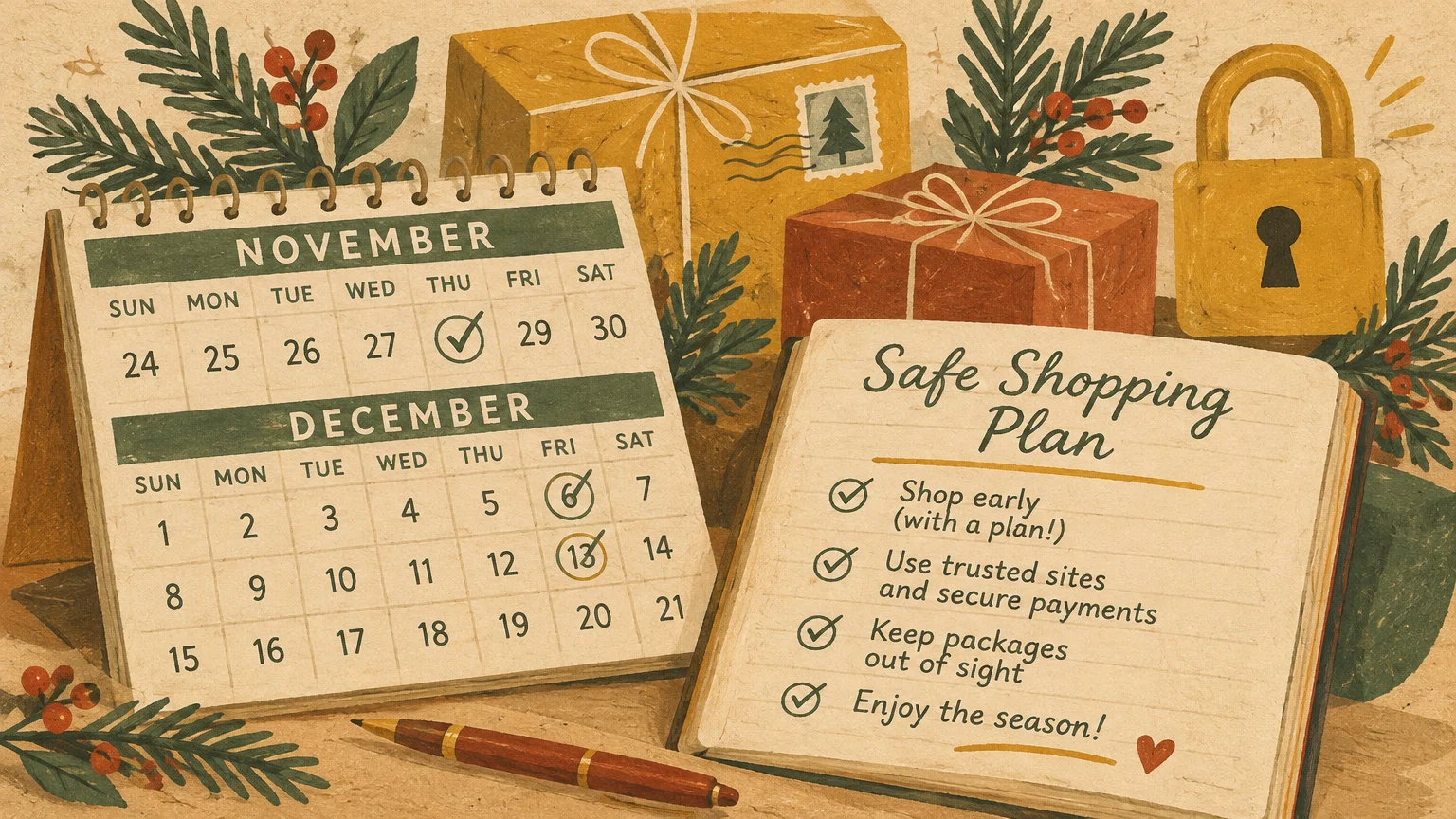
Before you shop for Black Friday or Cyber Monday deals, take ten minutes to set up transaction alerts on your main credit card, bookmark your favorite stores directly, and save key fraud hotlines in your phone. A few simple precautions let you focus on celebrating with family instead of fighting unauthorized charges.
This article provides general financial education and information only. Everyone’s financial situation is unique—what works for others may not work for you. For personalized advice tailored to your retirement needs, consider consulting a qualified financial professional such as a CFP or CPA.
Last updated: November 2026. Benefit amounts, tax rules, and program details change annually—verify current figures with official government sources.





Leave a Reply