
Leaving an inheritance should brighten your grandchildren’s future rather than burden them with legal hurdles and surprise tax bills. You can protect their financial well-being by avoiding common will mistakes that trigger probate battles or shrink their inheritances.
A poorly structured bequest can unintentionally disrupt college financial aid, disqualify a disabled family member from vital government benefits, or hand an 18-year-old an unmanageable windfall.
Understanding what to keep out of your last will and testament ensures your hard-earned assets truly support the next generation. Here are seven items you should never transfer directly through a will.
1. Traditional Retirement Accounts (IRAs and 401(k)s)
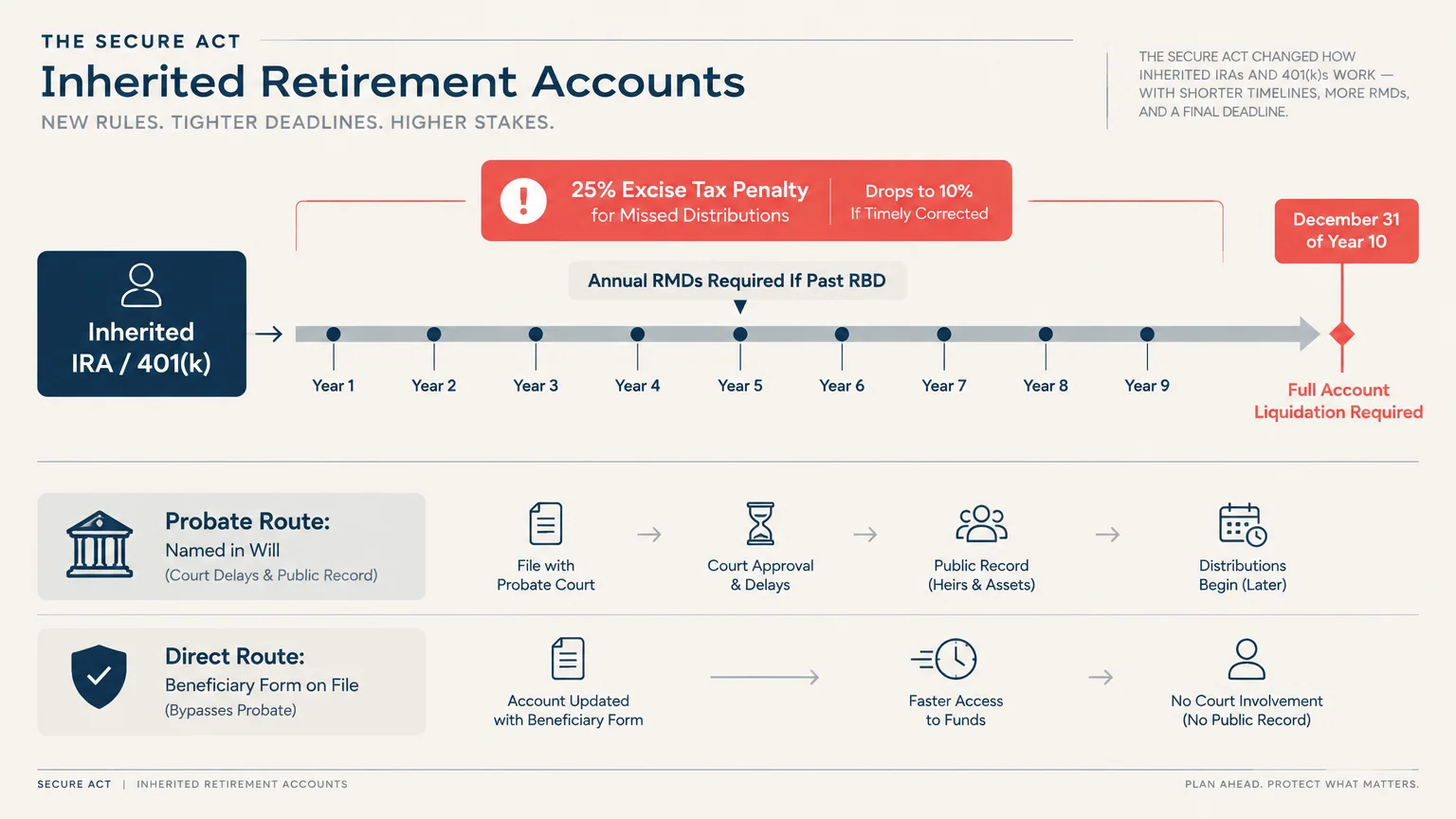
Retirement accounts should never pass through your last will and testament. Beneficiary designation forms on file with your account custodian dictate who inherits these accounts, completely overriding any instructions written in your will.
Naming an IRA or 401(k) inside your will forces the asset into probate court. This error creates unnecessary legal fees, public court filings, and costly administrative delays for your heirs.
Grandchildren are rarely considered “Eligible Designated Beneficiaries” under federal tax regulations. Because of this classification, the SECURE Act requires non-spouse beneficiaries to withdraw the entire account balance by December 31 of the tenth year following your death.
If you die on or after your Required Beginning Date for minimum distributions, your grandchild must take annual required minimum distributions during years one through nine. Missing a required distribution triggers a painful 25% excise tax penalty from the Internal Revenue Service.
That penalty drops to 10% only if they correct the mistake in a timely manner. Pushing substantial distributions onto young adults during their peak earning years can also push them into much higher tax brackets.
“An inherited IRA is a tax bomb wrapped in a financial gift if you do not plan ahead.” — Ed Slott, CPA and Retirement Distribution Expert
You can verify current distribution guidelines directly through the Internal Revenue Service. Rather than mentioning retirement accounts in your will, update your primary beneficiary designations and consider naming a dedicated trust.
Establishing a trust or executing lifetime Roth IRA conversions allows your grandchildren to receive distributions tax-free. These proactive moves shield your heirs from compressed withdrawal timetables and unexpected income tax spikes.

2. Direct Lump-Sum Cash Bequests to Minor Grandchildren
Leaving substantial cash directly to a minor grandchild in your will causes immediate legal gridlock. In most states, minors under the age of 18 cannot legally own or control significant sums of money.
If you leave an outright bequest to an underage grandchild, a probate judge must step in to appoint a legal property guardian or conservator. That conservator manages the money under strict judicial oversight until the child turns 18.
This court-supervised conservatorship demands recurring legal representation, annual financial accountings, and court-mandated surety bond premiums. These continuous administrative expenses steadily drain the inheritance you worked hard to build.
The Consumer Financial Protection Bureau provides guidance on navigating fiduciary responsibilities, but avoiding court involvement altogether remains the superior strategy.
Even worse, court supervision ends the moment your grandchild reaches the state age of majority. At age 18, that young adult receives total, unrestricted access to the entire inheritance with zero financial guidance.
Most 18-year-olds lack the financial maturity required to manage a large cash windfall responsibly. Instead of direct bequests, establish a revocable living trust or a testamentary trust that names a trusted adult as trustee.
A trust lets you distribute funds gradually for college tuition, medical needs, and basic living expenses. You can also specify distribution milestones at ages 25, 30, or beyond to encourage long-term financial security.
3. Direct Inheritances to Grandchildren with Special Needs
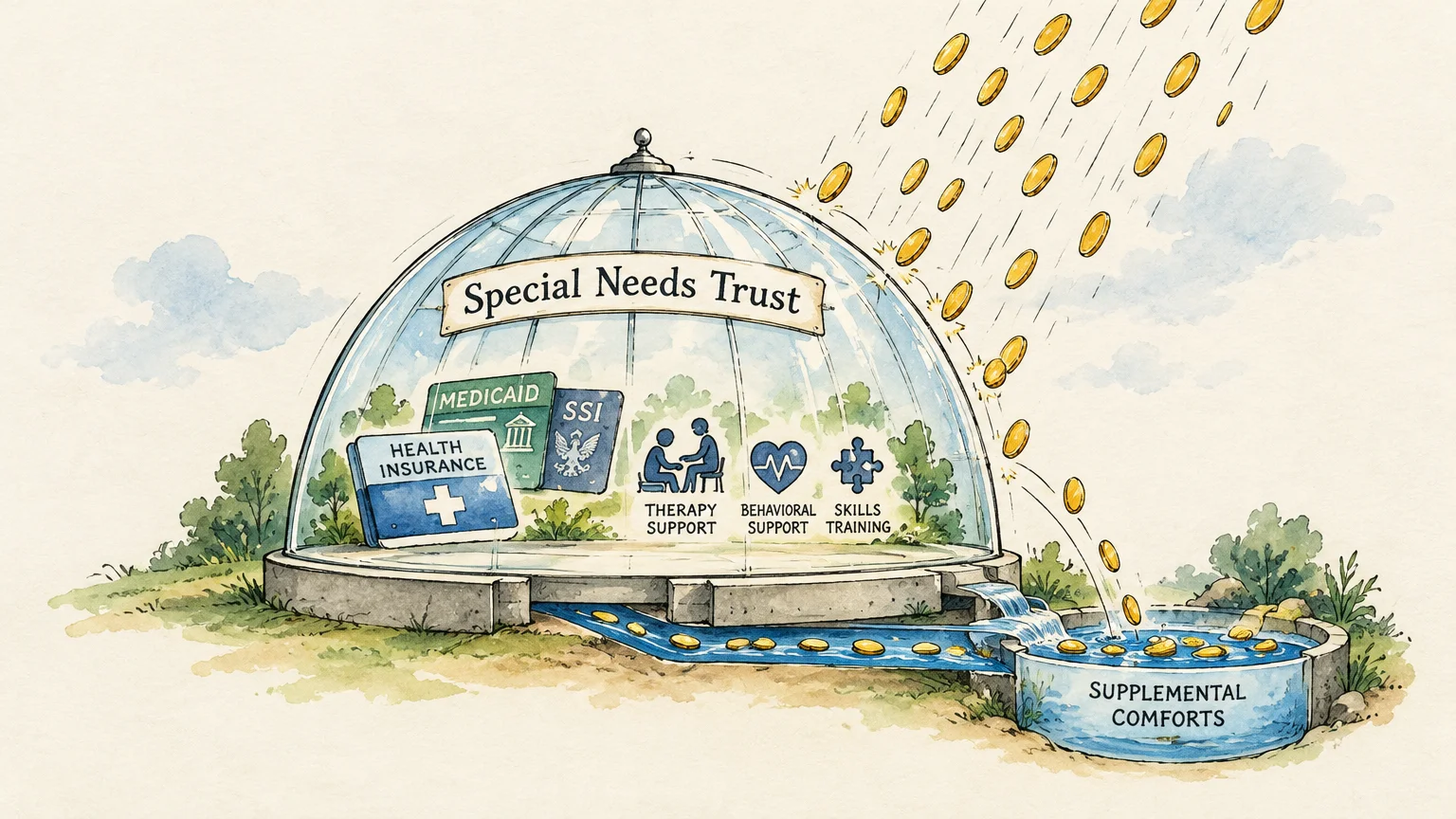
A direct bequest to a grandchild with a disability can trigger an immediate financial disaster. Receiving cash outright can instantly disqualify them from vital government assistance programs they rely on for daily care.
Programs like Supplemental Security Income and Medicaid enforce strict financial eligibility limits. Under federal rules monitored by the Social Security Administration, the individual countable resource limit is strictly capped at $2,000.
Receiving an inheritance above $2,000 immediately halts monthly SSI benefits, which provide up to $994 per month for eligible individuals. More critically, losing SSI often causes a catastrophic loss of Medicaid health coverage.
Your well-intentioned gift might force your grandchild to exhaust the entire inheritance on basic medical care before regaining public benefits. Fortunately, you can leave assets safely without jeopardizing their eligibility.
A third-party Special Needs Trust holds assets for your grandchild’s benefit while preserving their eligibility for public assistance. The trustee uses trust funds to pay for supplemental needs like recreation, education, and specialized equipment.
You can also utilize an ABLE account. The ABLE Age Adjustment Act expanded eligibility to individuals who acquired their disability before age 46, permitting annual contributions up to $20,000 while shielding up to $100,000 from SSI asset limits.
Directing gifts into an ABLE account or Special Needs Trust guarantees your grandchild receives ongoing financial support without forfeiting vital public benefits.
4. Cash or Custodial Accounts for College-Bound Grandchildren
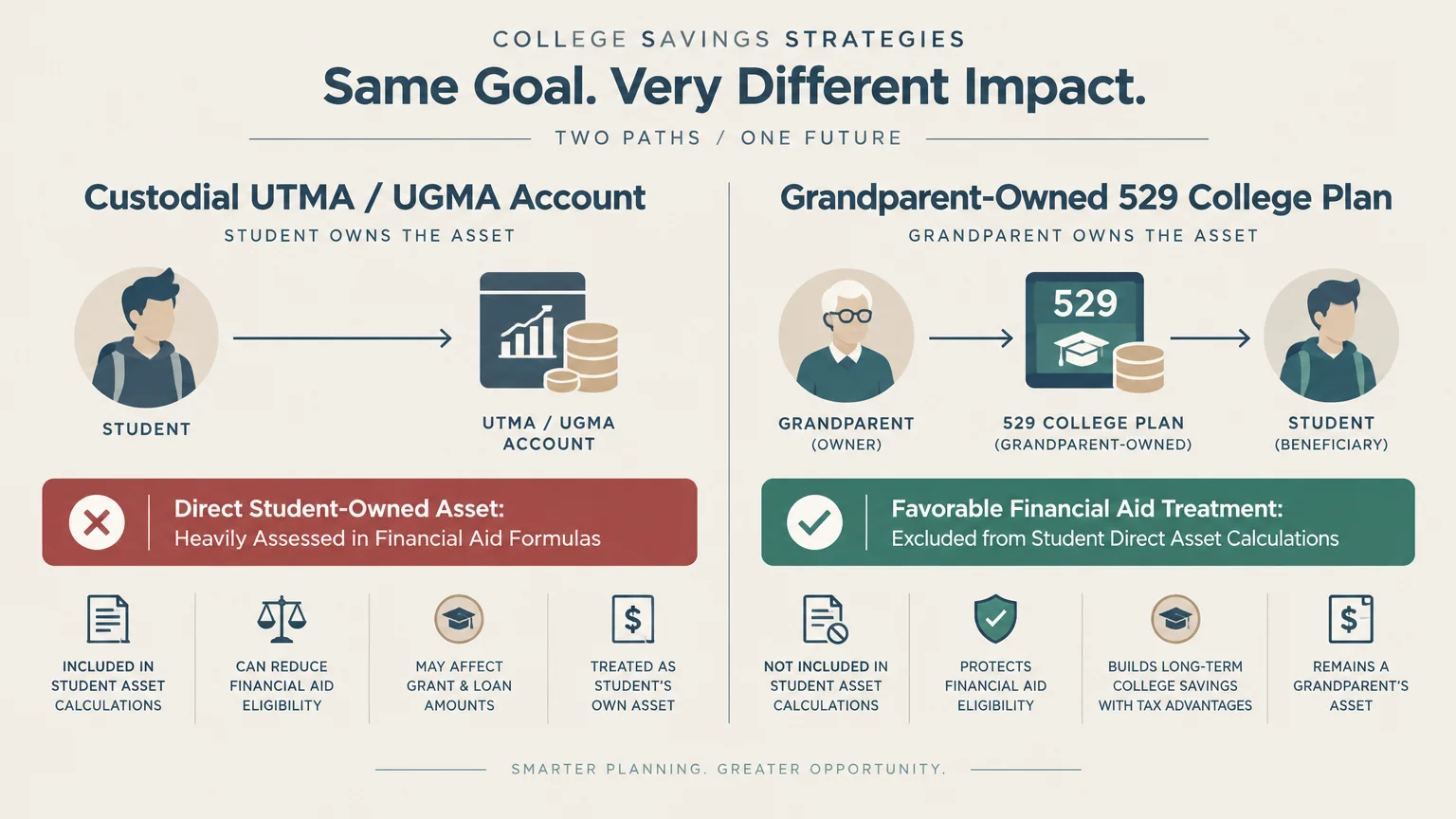
Leaving outright cash or Uniform Transfers to Minors Act accounts directly to college-bound grandchildren can decimate their financial aid packages. The federal financial aid formula treats student-owned assets far more harshly than family-owned assets.
Under the Free Application for Federal Student Aid Student Aid Index formula, student-owned assets reduce aid eligibility by 20% of the total asset value. By comparison, parent-owned assets reduce eligibility by a maximum of 5.64%.
A $30,000 direct inheritance held in your grandchild’s name slashes their federal aid eligibility by $6,000 every single academic year. That reduction wipes out grants, subsidized student loans, and work-study opportunities.
A far superior alternative is funding a 529 college savings plan. Grandparent-owned 529 plans are completely omitted from the FAFSA asset calculation, protecting your grandchild’s aid package.
Additionally, withdrawals from grandparent-owned 529 plans no longer count as untaxed student income on federal aid forms. This modern rule change allows your college funds to flow directly toward tuition without triggering financial aid penalties.
Transferring college savings through a 529 plan or educational trust maximizes both your gift and your grandchild’s financial aid eligibility.

5. Shared Real Estate or Fractional Property Ownership
Leaving a family home, vacation cabin, or rental property jointly to multiple grandchildren is a classic estate planning trap. While leaving real estate sounds generous, fractional ownership creates immediate logistical and financial friction among siblings and cousins.
Your grandchildren likely live in different cities, pursue different careers, and maintain distinct financial priorities. One grandchild may want to keep the property for family getaways, while another desperately needs cash to buy their first home.
Every co-owner must contribute equally to property taxes, homeowner association dues, routine maintenance, and insurance premiums. When one grandchild cannot afford their share of upkeep, deep family resentment inevitably follows.
Resolving these disputes often requires expensive partition lawsuits where a judge forces a public property sale. Furthermore, outstanding mortgages complicate matters if lenders enforce due-on-sale clauses upon title transfer.
If you want to pass real estate value to grandchildren, direct your executor to sell the property upon your death. Distributing the net cash proceeds equally eliminates disputes and grants each grandchild complete financial flexibility.
Alternatively, transfer the home into an LLC or trust equipped with a dedicated cash reserve to cover taxes and maintenance for years to come.
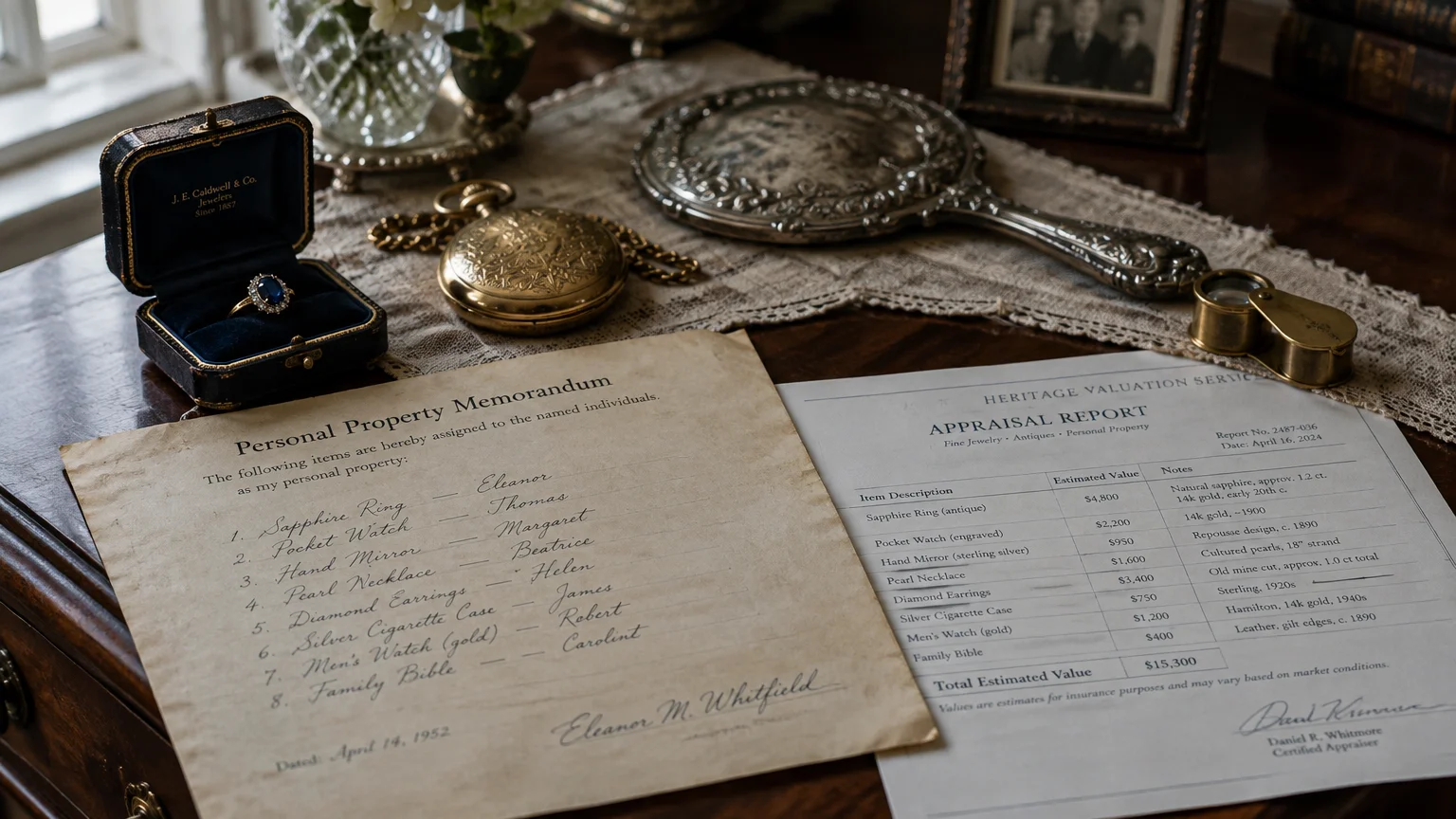
6. Unappraised Heirlooms Without Specific Distribution Instructions
Vague will provisions regarding tangible personal property spark bitter family feuds faster than almost any other asset. Bequeathing all your jewelry and art to be divided equally among your grandchildren invites confusion and heartbreak.
Personal heirlooms carry profound emotional value that cannot simply be sliced into equal financial pieces. Two grandchildren may treasure the exact same antique watch or painting, leaving your executor in an impossible mediator position.
Valuable collectibles, rare coins, and fine jewelry also require certified appraisals for estate tax reporting. Leaving valuable items without documented valuations can draw scrutiny from state tax authorities or lead to contentious probate disputes.
“Do not leave your family to guess what you wanted. Ambiguity in estate planning is the greatest gift you can give to probate litigators.” — Suze Orman, Personal Finance Author
Instead of relying on vague will clauses, draft a legally binding tangible personal property memorandum. Most states allow you to update this separate list periodically to assign specific items to designated grandchildren.
Even better, consider gifting sentimental items to your grandchildren during your lifetime. Giving gifts today lets you share the family history behind each item and enjoy seeing their appreciation firsthand.
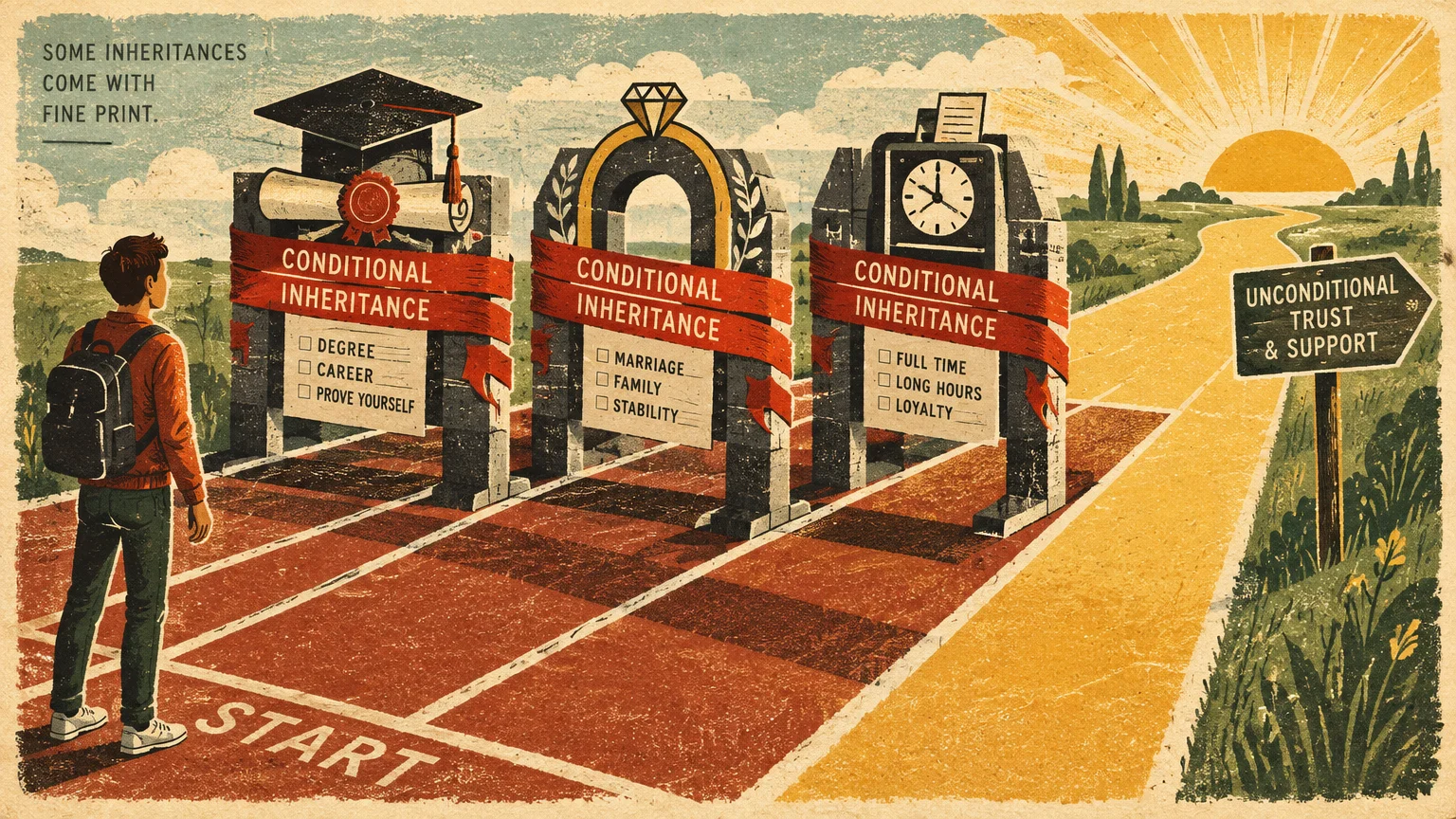
7. Conditional Gifts Tied to Personal Milestones
Attempting to govern your grandchildren’s personal choices from beyond the grave rarely yields positive results. Wills that tie inheritances to marriage, religious practices, or career paths frequently backfire.
Courts routinely strike down inheritance conditions that violate public policy, such as forcing a beneficiary to marry within a specific faith or divorce a spouse. Defending or challenging these clauses forces your estate into costly legal battles.
Even legally permissible conditions, such as graduating from college by a certain age, can cause profound hardship. An unexpected medical crisis or disability could prevent a hardworking grandchild from meeting an arbitrary deadline.
Micromanaging life choices through a will creates lasting bitterness and damages family relationships. Your grandchildren may feel manipulated rather than supported by your legacy.
If you want to promote responsible financial habits, use an incentive trust rather than conditional will bequests. An incentive trust can provide dollar-for-dollar matches on earned income or reward completing higher education degrees.
A professional trustee manages an incentive trust with the flexibility to adapt to unforeseen illnesses, career pivots, or economic emergencies.
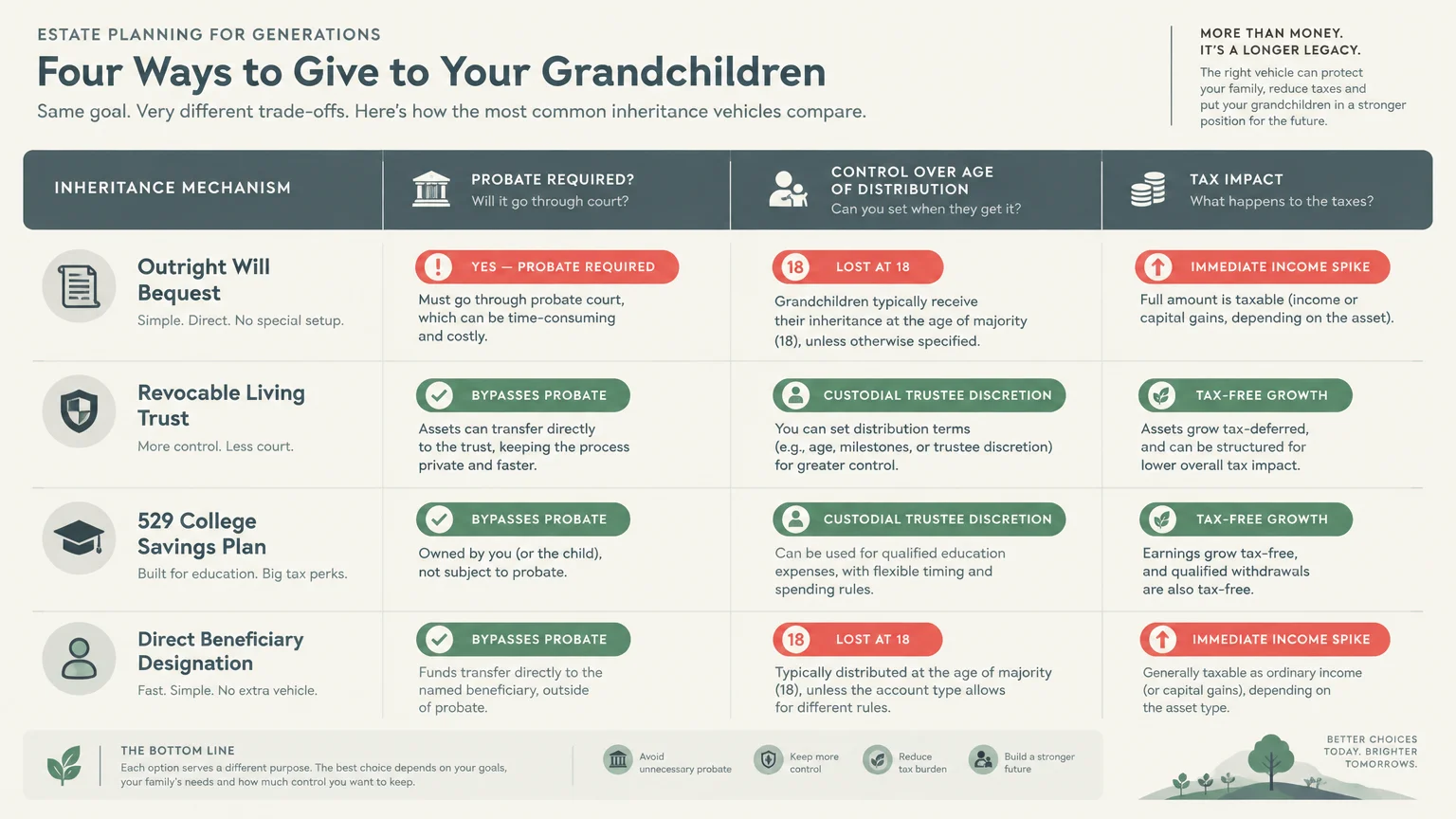
Inheritance Methods for Grandchildren Compared
Choosing the correct financial vehicle ensures your legacy reaches your grandchildren efficiently. Here is how common transfer methods compare across probate, financial aid, and tax efficiency.
| Strategy | Probate Required? | FAFSA Impact | Special Needs Safe? | Primary Advantage |
|---|---|---|---|---|
| Direct Will Bequest | Yes | High (Assessed at 20%) | No (Risks SSI Loss) | Simple to write |
| Revocable Trust | No | Moderate | Yes (With proper terms) | Controls timing and age |
| Grandparent 529 Plan | No | None (Not reported) | Neutral | Tax-free college growth |
| ABLE Account | No | None | Yes (Shields $100,000) | Preserves Medicaid and SSI |
| Beneficiary Form | No | High (Upon payout) | No (Unless trust named) | Fast transfer of funds |
Selecting the appropriate legal structure safeguards your family from court costs, delays, and lost benefits. Consulting an estate planning attorney clarifies which strategy fits your estate size and family dynamics.
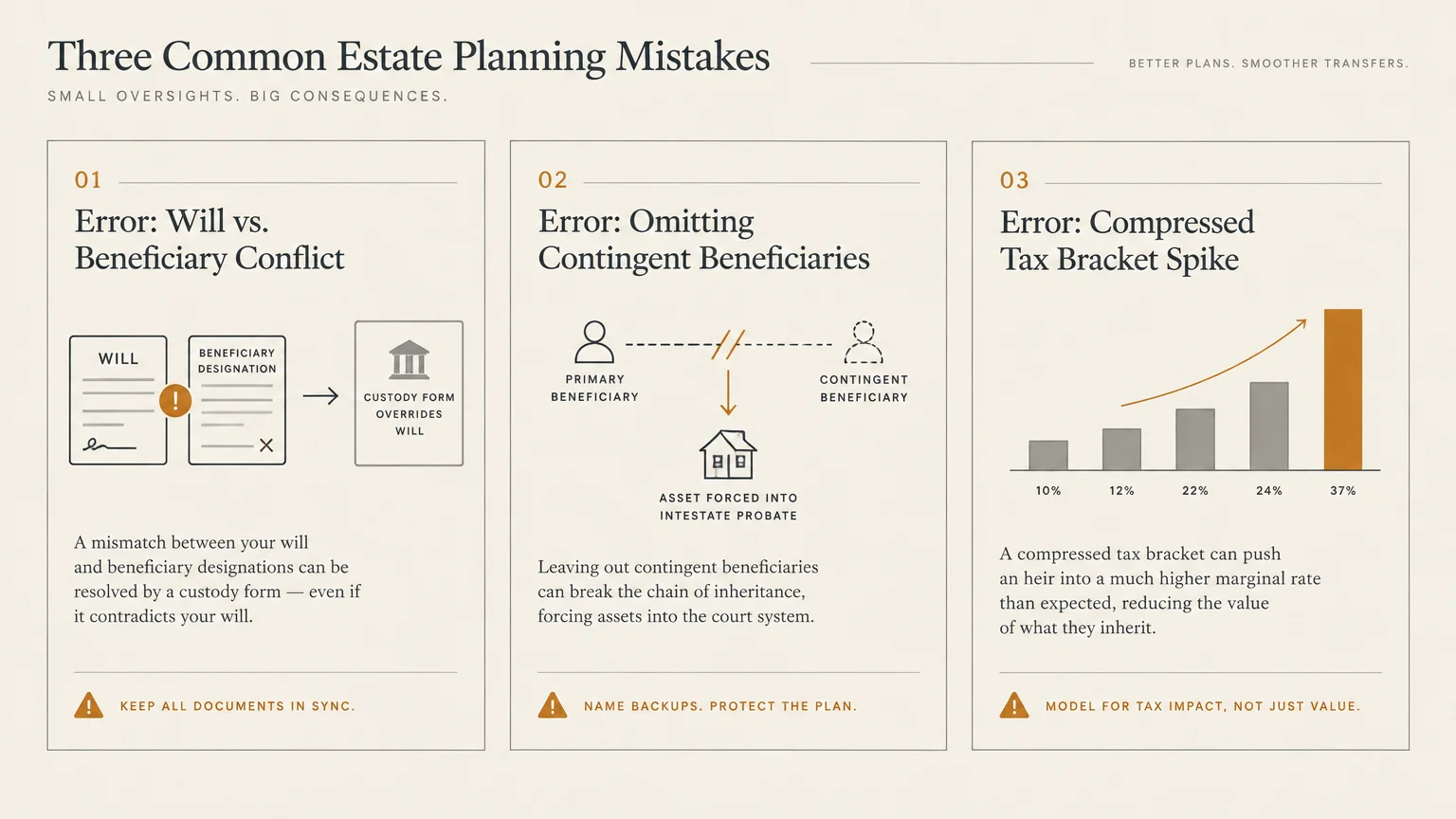
Costly Errors to Sidestep
Even well-intentioned grandparents make fundamental estate planning missteps that undermine their legacy. Avoiding these four common errors protects your assets and spares your heirs unnecessary grief.
Overlooking the Generation-Skipping Transfer Tax
Direct transfers to grandchildren skip a generation, which can trigger the federal Generation-Skipping Transfer tax. Under federal tax legislation, the lifetime exemption is $15 million per individual or $30 million for married couples.
Any transfers exceeding that lifetime threshold face a flat 40% federal tax rate. Unlike the standard estate tax exemption, your unused GST tax exemption is not portable between spouses after death.
Failing to Coordinate Beneficiary Designations
Writing will provisions that contradict your account beneficiary forms creates instant confusion. A will cannot override a valid beneficiary designation on life insurance policies, brokerage accounts, or bank accounts.
Review your Transfer on Death and Payable on Death designations every two to three years. Ensure your account forms align seamlessly with your broader estate planning documents.
Ignoring Lifetime Annual Gift Opportunities
Waiting until death to transfer assets deprives you of watching your grandchildren thrive. Under IRS rules, you can gift up to $19,000 per recipient annually without paying gift taxes or filing Form 709.
Married couples can combine their annual exclusions to give up to $38,000 per grandchild each year. Lifetime gifts remove growth from your taxable estate while providing immediate financial assistance to your family.
Neglecting Contingent Beneficiaries
Failing to name secondary or contingent beneficiaries in your will and accounts creates serious probate vulnerabilities. If your primary beneficiary passes away before you, the asset may default straight into probate court.
Always name secondary beneficiaries for every significant asset. Specify whether inherited shares pass per stirpes down to great-grandchildren or revert to other surviving heirs.

When DIY Isn’t Enough
While online legal software works for simple situations, planning an inheritance for grandchildren often demands professional legal counsel. Here are four scenarios where consulting an experienced estate planning attorney is essential.
Navigating Blended Families
Blended family structures require careful drafting to avoid unintentionally disinheriting step-grandchildren. Standard wills often define children and grandchildren through biological or formal adoption lines, accidentally excluding beloved step-family members.
An estate attorney creates clear language that honors your unique family dynamics and prevents contested wills.
Protecting Grandchildren with Debt or Addiction
Leaving direct inheritances to grandchildren facing bankruptcy, divorce, or substance abuse issues puts your wealth in jeopardy. Creditors and former spouses can seize outright bequests before your grandchild ever receives them.
Attorneys can establish spendthrift trusts that shield assets from lawsuits, debt collection, and predatory relationships while funding essential recovery care.
Handling Multi-State Real Estate
Owning property in multiple states forces your estate into ancillary probate, multiplying legal fees and court timelines. If you leave real estate in Florida and a primary residence in Ohio, your heirs must navigate two separate probate courts.
An attorney can consolidate your real property inside a revocable living trust, bypassing probate in every state.
Managing High-Value Estates
Families approaching federal estate or GST tax thresholds require sophisticated wealth preservation techniques. Advanced vehicles like dynasty trusts, irrevocable life insurance trusts, and charitable remainder trusts preserve multi-generational wealth.
You can research certified wealth advisors through the Securities and Exchange Commission to evaluate qualified professionals.
Frequently Asked Questions
Can I leave money directly to a minor grandchild in my will?
You can, but doing so forces a probate court to appoint a property guardian until the child turns 18. Setting up a trust or naming a custodian under state UTMA laws is far more effective.
How does an inheritance affect my grandchild’s college financial aid?
Direct cash or custodial accounts count as student assets on the FAFSA, reducing federal aid eligibility by 20% of their value. Grandparent-owned 529 plans avoid this penalty entirely.
What is the generation-skipping transfer tax threshold?
Under federal tax laws, the GST tax exemption is $15 million per individual or $30 million for married couples. Transfers beyond this threshold face a flat 40% federal tax rate.
Should I give money to my grandchildren now or leave it in my will?
Lifetime giving allows you to witness the impact of your support while utilizing the $19,000 annual gift tax exclusion. Direct gifts can reduce your taxable estate without court involvement.
Securing Your Family Legacy
Estate planning is ultimately an act of love and guidance. By keeping these seven problematic assets out of your will, you protect your grandchildren from needless taxation, court supervision, and family conflict.
Take time this month to review your beneficiary designations, assess your family’s unique needs, and speak with a qualified estate planning attorney. Small adjustments made today guarantee your legacy provides genuine support for generations to come.
This is educational content based on general financial principles for seniors. Individual results vary based on your situation.
Always verify current benefit amounts, tax rules, and program eligibility with official government sources.
Last updated: October 2026. Benefit amounts, tax rules, and program details change annually—verify current figures with official government sources.








Leave a Reply