
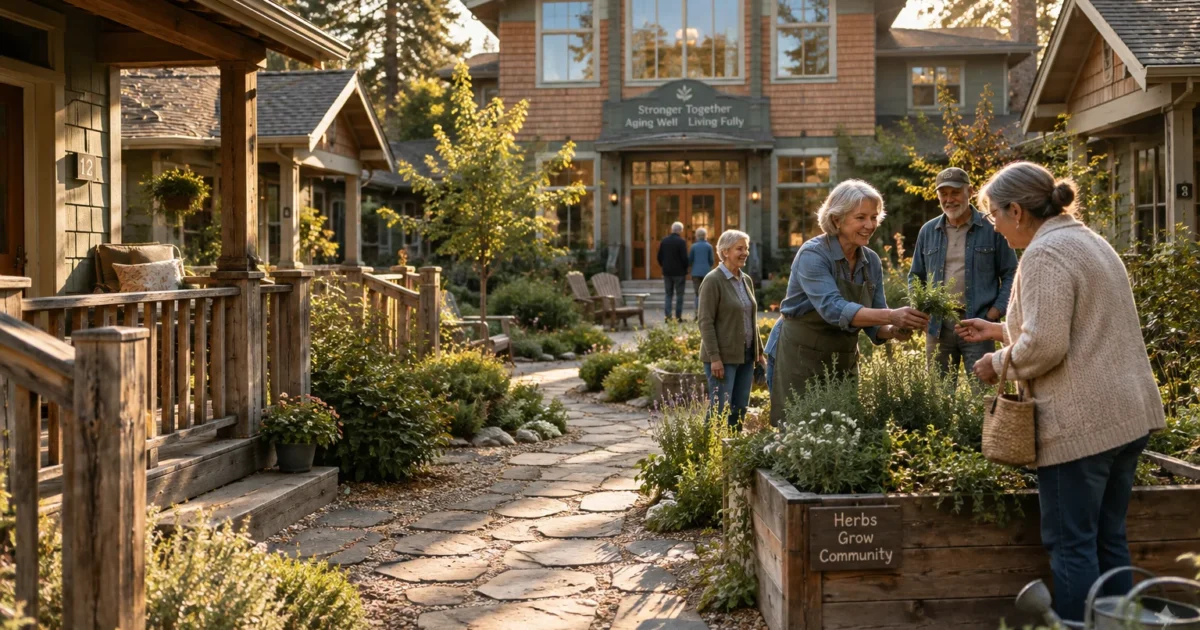
Rising property taxes and maintenance bills force millions of older adults to rethink traditional retirement. Senior co-housing offers private homeownership paired with shared community spaces that significantly slash everyday living expenses.
According to the Harvard Joint Center for Housing Studies, over 11 million older households spend more than 30% of their income on housing. Sharing resources with like-minded neighbors helps retirees preserve their savings without sacrificing privacy.
Across the country, proactive retirees are pooling resources to eliminate costly yard maintenance, reduce utility bills, and prevent social isolation. Here are ten states leading the charge with thriving senior co-housing communities.

How Senior Co-Housing Cuts Retirement Living Expenses
Senior co-housing combines privately owned, self-sufficient dwellings with substantial shared amenities. You own your home, but you co-own a large common house with your neighbors.
This central common building features a commercial-grade kitchen, laundry facilities, guest suites, and communal workshop spaces.
Residents cook shared group dinners several times a week. Cooking in bulk saves hundreds of dollars on monthly groceries and reduces household food waste.
According to the Genworth Cost of Care Survey, national median assisted living expenses reach $5,350 to $5,900 per month. That equals over $64,000 annually.
Home health aides now average $33 to $34 per hour. These steep figures quickly deplete fixed retirement incomes.
Senior co-housing addresses this crisis through informal neighbor-to-neighbor mutual support. Community members drive one another to medical visits and coordinate daily check-ins.
This informal safety net lets seniors age in place safely for years. As a result, many avoid moving into expensive institutional nursing facilities.
“Downsizing in retirement isn’t just about moving into a smaller house; it’s about rightsizing your expenses so your nest egg lasts as long as you do.” — Jean Chatzky, Financial Journalist and Author
Legal Rights and Age Restrictions Under Federal Law
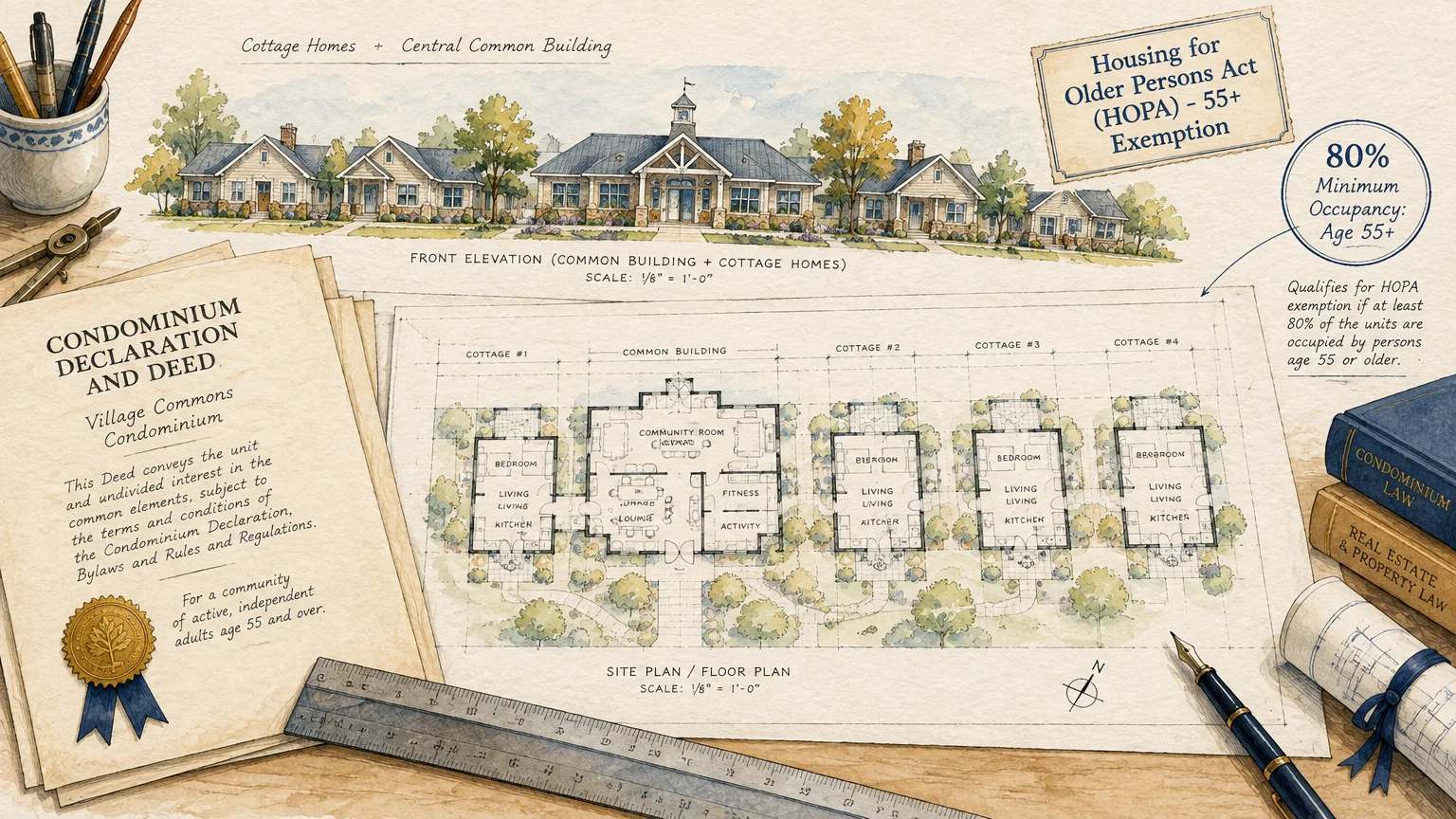
Most senior co-housing groups organize legally as residential condominiums or planned unit developments. You hold a standard deed to your private interior living space.
Under the Housing for Older Persons Act of 1995 (HOPA), communities can legally restrict residency to adults aged 55 and older.
Federal guidelines from the U.S. Department of Housing and Urban Development (HUD) mandate that at least 80% of occupied homes contain a resident age 55 or above.
This federal exemption shields senior cooperatives from age-discrimination lawsuits. It ensures that community members share similar life stages, priorities, and lifestyle rhythms.
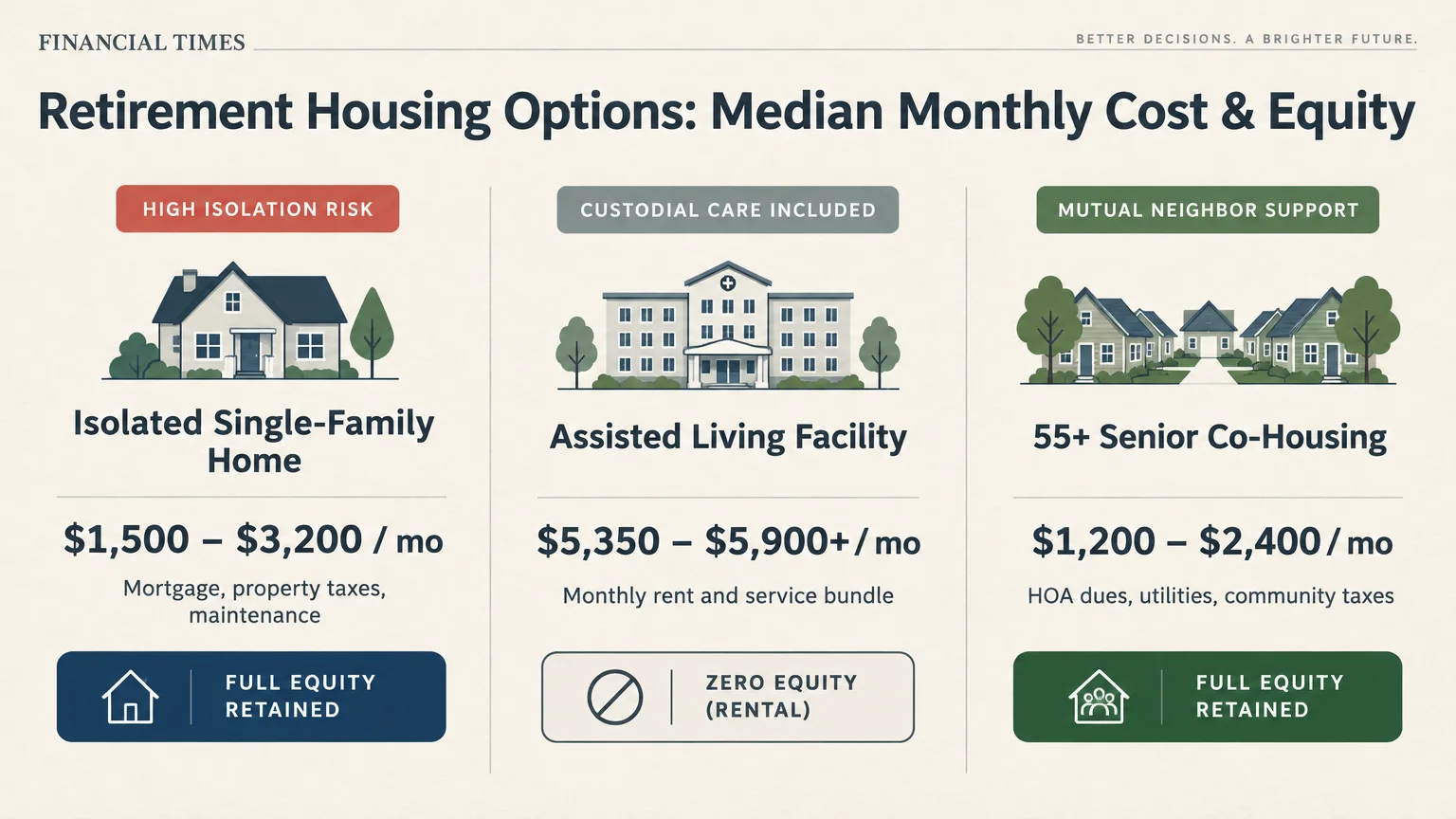
Comparing Retirement Housing Options: Monthly Costs and Equity
Choosing where to live in retirement directly impacts your portfolio longevity. Evaluating the structural differences between traditional homes, assisted living, and co-housing clarifies the long-term savings.
| Housing Model | Median Monthly Cost | Real Estate Equity | Social and Care Structure |
|---|---|---|---|
| Isolated Single-Family Home | $1,500 – $3,200 (mortgage, taxes, maintenance) | Full equity retained | High isolation risk; all care must be purchased independently |
| Assisted Living Facility | $5,350 – $5,900+ per month | Zero equity (monthly rent/service fee) | Professional medical and custodial care provided on-site |
| 55+ Senior Co-Housing | $1,200 – $2,400 (HOA dues, utilities, taxes) | Full equity retained | Informal neighbor support; shared resources delay formal care |
By retaining real estate equity while lowering operational overhead, retirees keep capital working in their personal estates rather than surrendering it to institutional operators.
“A big part of financial freedom is having your heart and mind free from worry about what-ifs of life. When you reduce your fixed overhead, you immediately regain control over your future.” — Suze Orman, Personal Finance Author
10 States Where Retirees Are Building Co-Housing Communities
1. California
California launched the modern American senior co-housing movement with Glacier Circle in Davis. This pioneering community opened in 2005.
Today, hubs like Wolf Creek Lodge in Grass Valley and Phoenix Commons in Oakland provide vibrant coastal and foothills living.
Residents share landscaping equipment, commercial kitchens, and community electric vehicles. These shared tools offset high local living expenses.
2. Colorado
Silver Sage Village in Boulder proves that high-cost mountain towns can remain accessible for retirees. The 16-unit village opened in 2007.
The community partnered with the Boulder Housing Authority under local affordable housing rules. This agreement established deed-restricted, permanently affordable units for lower-income seniors.
By combining market-rate homes with subsidized units, Silver Sage keeps diverse socioeconomic neighbors together in one walkable neighborhood.
3. Virginia
ElderSpirit Community in Abingdon was the nation’s second elder co-housing development, opening in 2006.
The group intentionally created 29 mixed-income units nestled along the scenic Virginia highlands.
The community combines 16 private equity cottages with 13 subsidized rental apartments. This hybrid framework ensures low-income retirees remain financially secure.
4. North Carolina
North Carolina boasts several pioneering communities, including Village Hearth Cohousing in Durham. This 28-home single-story enclave opened in 2020.
It was designed specifically for LGBTQ+ seniors, friends, and allies seeking mutual support. Every cottage features single-level universal design.
Further north in Rougemont, Elderberry offers 18 homes surrounded by farmland. Shared solar arrays and agricultural plots cut utility and grocery bills.
5. Oregon
Portland is home to PDX Commons, a four-story, 27-unit urban condominium built for adults 55 and older.
Residents enjoy shared guest rooms, an elevator-equipped common building, and shared electric-vehicle chargers.
By sharing guest bedrooms in the common house, members downsize into smaller private condos without losing space for visiting family.
6. Washington
Quimper Village in Port Townsend features 28 universal-design patio homes situated across six wooded acres.
Residents manage property maintenance cooperatively rather than hiring expensive third-party management firms.
Volunteer committees handle landscaping, minor plumbing, and exterior painting. This self-governance model keeps monthly homeowner dues remarkably low.
7. New Mexico
New Mexico has emerged as a premier Southwest elder co-housing hub. Popular locations include Sand River in Santa Fe and Valverde Commons in Taos.
In Albuquerque, Acequia Jardin provides an intimate 10-unit cluster centered around shared organic gardens.
These communities utilize passive solar architecture, thick adobe insulation, and rainwater harvesting. These features dramatically lower summer cooling and winter heating expenses.
8. Oklahoma
Oakcreek Community in Stillwater established an affordable Midwestern model near Oklahoma State University. The 24-home neighborhood opened in 2012.
Heartwood Commons later expanded this concept into Tulsa, opening 34 fully accessible homes on a serene wooded property.
Oklahoma’s low baseline cost of living combined with shared maintenance costs allows retirees to live comfortably on basic Social Security benefits.
9. Massachusetts
Hager Homestead in Littleton opened in recent years as New England’s first dedicated 55+ senior co-housing project.
The 26 single-level homes sit on 15 acres of conserved agricultural land adjacent to the Boston commuter rail.
The community relies on all-electric heat pumps, rooftop solar power, and sociocratic governance to streamline operational decisions and curb inflation.
10. West Virginia
Shepherd Village in Shepherdstown features 19 universal-design homes situated in a compact, pedestrianized village setting.
The neighborhood lies within easy walking distance of local shops, clinics, and university lectures.
Neighbors practice informal care coordination and bulk food purchasing. These cooperative habits help members stretch modest retirement pensions and savings.
Pitfalls to Watch For
While shared housing offers substantial savings, you should evaluate several financial and personal realities before investing.
Forming a community from scratch often takes five to seven years. Pre-development costs require significant upfront capital from members before construction even begins.
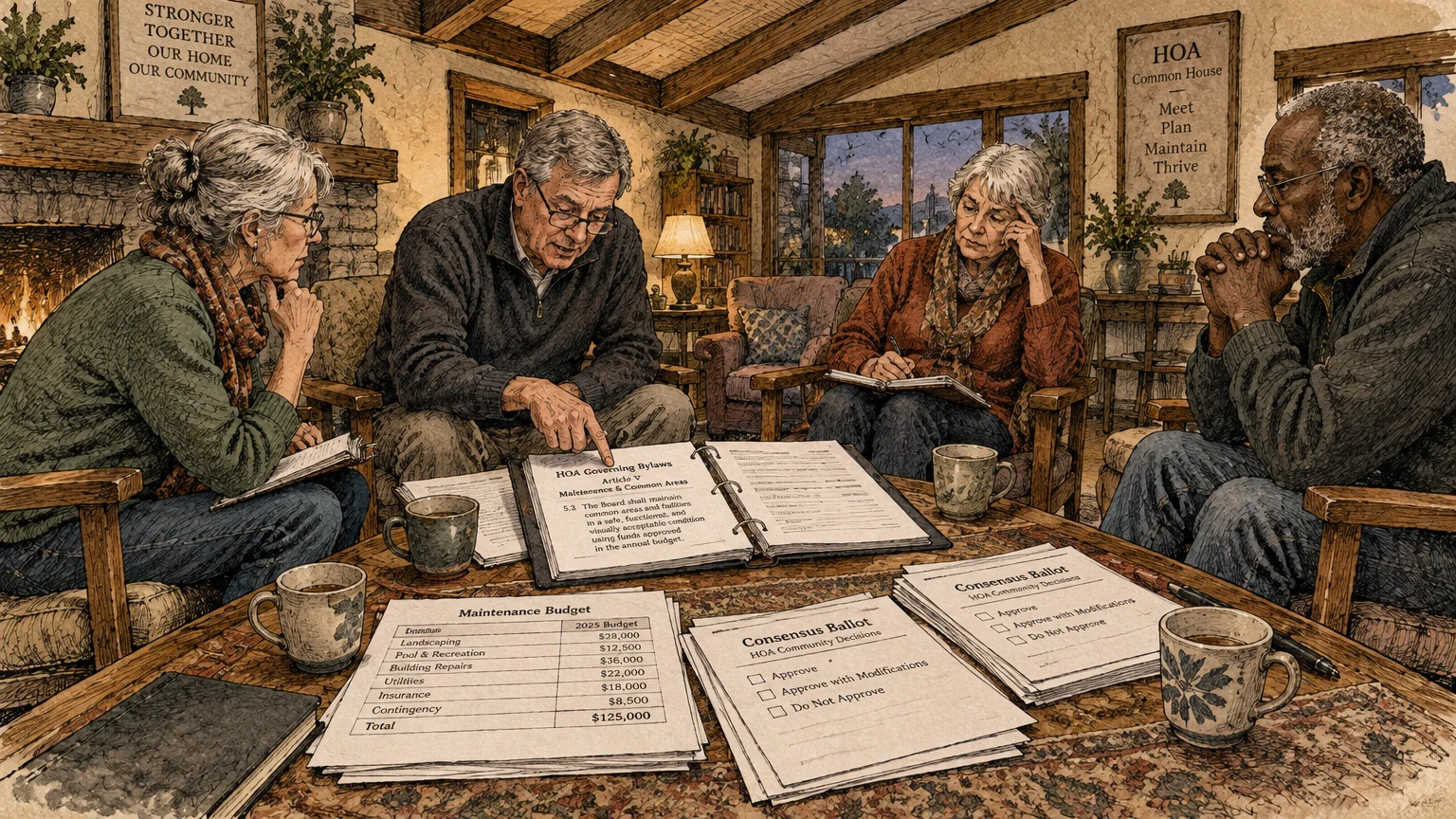
Co-housing communities operate through consensus or sociocracy. If you dislike attending monthly committee meetings or discussing budget line items with neighbors, group governance can feel draining.
Neighbors gladly bring soup when you are ill, but they cannot replace licensed memory care or skilled nursing. You must maintain a backup plan for advanced medical needs.
Reselling a co-housing home can take longer than selling a standard suburban tract house. Buyers must embrace shared community values and committee responsibilities.
Getting Expert Help
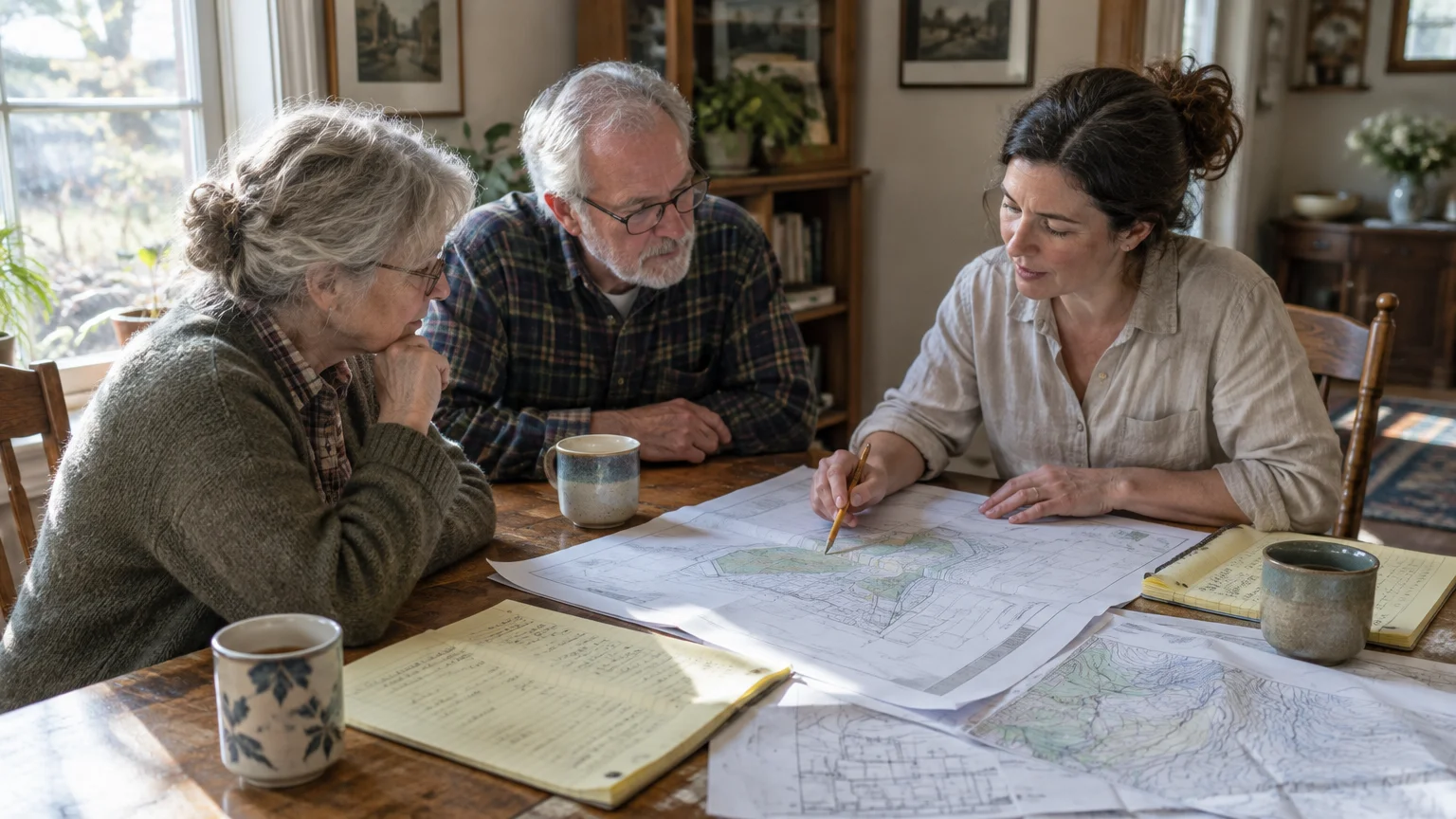
Navigating shared real estate requires specialized legal and financial advice. Consult qualified experts in these common situations:
- Hire a real estate attorney familiar with common interest developments to examine HOA covenants, bylaws, and reserve funds.
- Work with a Certified Financial Planner to balance the proceeds from selling your previous home against monthly community assessments.
- Consult an elder law attorney to protect your property rights and structure your estate plan without jeopardizing future Medicaid eligibility.
- Connect with a counselor through the Eldercare Locator to explore local supportive aging programs that complement your co-housing arrangement.
Frequently Asked Questions About Senior Co-Housing
Do I own real equity in a senior co-housing community?
Yes, you hold real property equity. Most communities operate as fee-simple condominiums where you own your private home and share title to the common property.
How does co-housing differ from a traditional 55+ active adult community?
Standard 55+ subdivisions are built by commercial developers with minimal resident input. In co-housing, residents co-design the property, manage operations democratically, and share frequent communal meals.
What happens when a resident needs skilled nursing care?
Neighbors provide informal assistance with shopping and check-ins, but co-housing is not an assisted living facility. Residents hire outside private caregivers or transition to specialized care when medical needs escalate.
Can I finance a co-housing unit with a standard mortgage?
Yes, buyers can use conventional mortgages if the development meets standard condominium lending criteria. According to the Consumer Financial Protection Bureau (CFPB), you should verify lender approval early in your purchase process.
Taking Your Next Steps Toward Shared Senior Living
Senior co-housing transforms the economics of aging by replacing isolation with mutual support and shared purchasing power.
Before committing, attend community open houses, participate in shared meals, and review neighborhood budgets carefully.
You can find comprehensive national housing and retirement resources through AARP and local housing coalitions.
This article provides general financial education and information only. Everyone’s financial situation is unique—what works for others may not work for you.
For personalized advice tailored to your retirement needs, consider consulting a qualified financial professional such as a CFP or CPA.
Last updated: February 2026. Benefit amounts, tax rules, and program details change annually—verify current figures with official government sources.






Leave a Reply