

Outliving your retirement savings becomes a real risk when your body ages slower than the calendar suggests. Recognizing the signs you’re aging well helps you celebrate your vitality while adjusting your financial plan for a longer, richer life.
Doctors often distinguish between your chronological age—the birthdays you have celebrated—and your inner cellular health. When people say you seem younger than your biological age, they mean you boast a younger biological age than your birth certificate indicates.
Discovering where you stand on the aging spectrum empowers you to optimize Social Security, healthcare budgets, and investment withdrawals for decades to come.
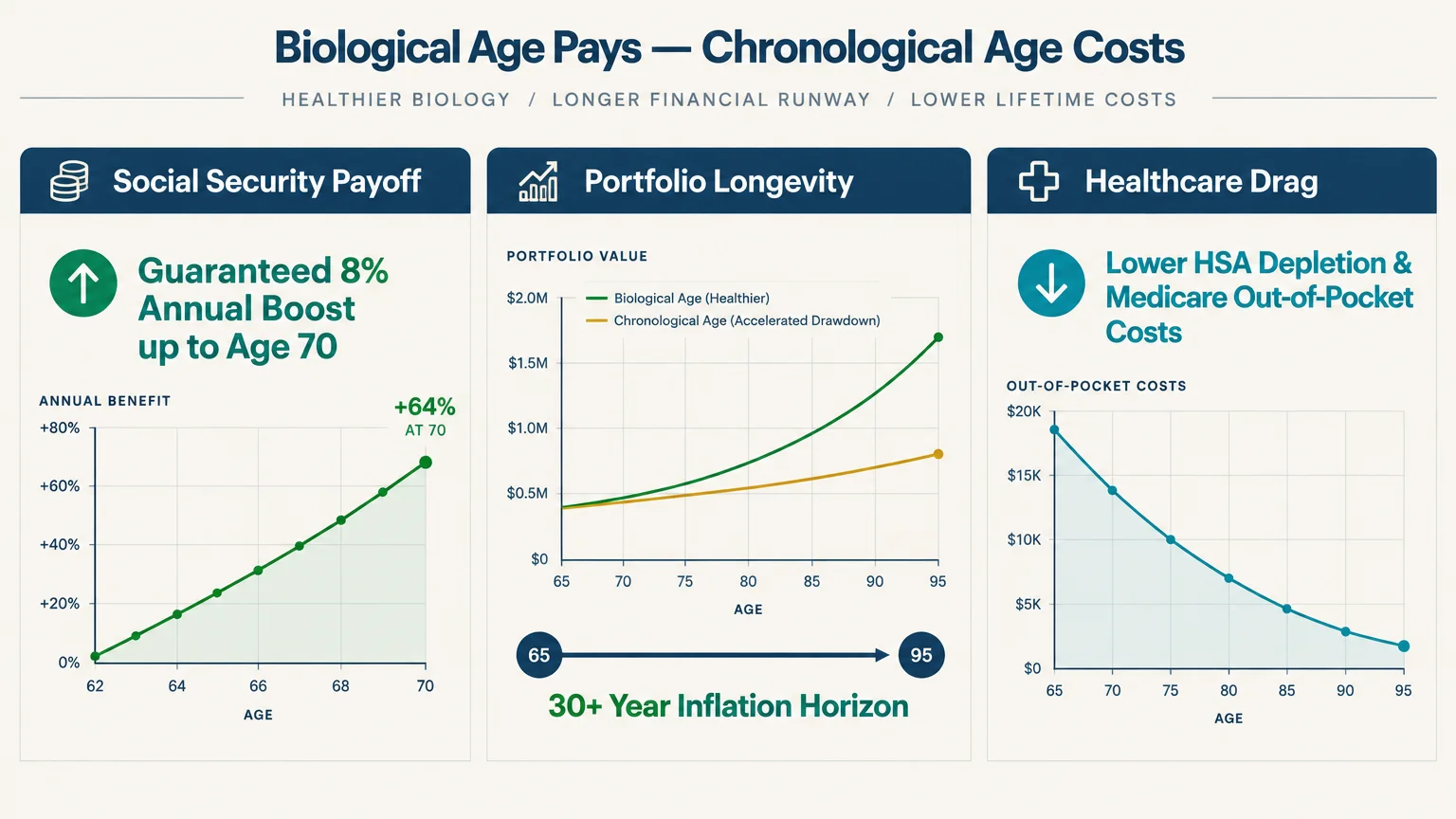
At a Glance: How Vitality Shapes Your Retirement
Your physical resilience directly impacts how long your nest egg must last and how much you will spend on medical care. Before evaluating your daily biomarkers, review these essential connections between your health and your wealth:
- The Terminology Shift: Chronological age counts your years alive, while biological age measures how well your cells, organs, and tissues function compared to clinical averages.
- Everyday Physical Clues: Simple at-home benchmarks—like walking speed, grip strength, and single-leg balance—predict long-term vitality better than expensive lab tests.
- The Social Security Payoff: If you exhibit healthy aging signs, delaying Social Security past your Full Retirement Age earns you a guaranteed 8% annual benefit boost up to age 70.
- Portfolio Longevity: A 65-year-old with the cardiovascular and metabolic health of a 50-year-old needs an investment strategy built for 30 or more years of inflation.
- Lower Healthcare Drag: Daily longevity habits reduce chronic illness, preserving your Health Savings Account (HSA) and minimizing Medicare out-of-pocket costs.

Understanding Biological Age vs Chronological Age
You have likely met a 70-year-old who hikes mountain trails and manages a thriving consulting business, as well as a 58-year-old who struggles to climb a flight of stairs. This gap illustrates the critical difference in biological age vs chronological age.
Your chronological age is simply the number of years since you were born. It governs legal and financial milestones, such as qualifying for Medicare at age 65 or taking Required Minimum Distributions (RMDs) at age 73.
Your biological age, by contrast, reflects the physiological condition of your arteries, muscles, brain, and immune system. When friends say you look or act younger than your biological age, they are observing that your body resists typical cellular wear and tear.
Scientists measure this internal clock using biomarkers like blood pressure, inflammation levels, lung capacity, and DNA methylation. You do not need a $500 epigenetic blood test to gauge your standing, however.
Geriatricians rely on practical, everyday functional tests to assess whether a patient possesses a younger biological age. Passing these tests is thrilling news for your quality of life, yet it requires a fresh look at your retirement math.
Most basic retirement calculators assume you will pass away in your early-to-mid 80s. If your body is ten years younger than your driver’s license claims, you could easily thrive well into your 90s.
Planning for an extra decade of active living—traveling, spoiling grandchildren, and maintaining your home—requires smart adjustments to your income streams today.

1. Your Walking Speed Is Brisk and Effortless
Doctors often call walking speed the “sixth vital sign” because it requires seamless coordination between your heart, lungs, nervous system, and muscles. If you naturally walk at a brisk pace without feeling winded, your internal systems are firing like those of a much younger adult.
Clinical studies cited by the National Institutes of Health via MedlinePlus consistently link a normal walking speed of 3 miles per hour or faster to exceptional life expectancy. Moving at roughly 1.3 to 1.4 meters per second shows that your cardiovascular system delivers oxygen efficiently.
You can test your natural gait speed during your next neighborhood stroll. Pick a flat, measured quarter-mile stretch—such as one lap around a standard high school running track—and walk at your comfortable, everyday brisk pace.
If you complete that quarter-mile in five minutes or less without gasping for air, you are demonstrating one of the strongest signs you’re aging well. Your joints, stride length, and aerobic capacity are operating at a remarkably youthful level.
From a financial perspective, preserving a brisk stride translates into massive long-term savings. Seniors who maintain strong mobility rarely need expensive home modifications like stairlifts, walk-in tubs, or wheelchair ramps during their 70s.
Furthermore, brisk walkers can navigate airports, public transit, and walkable cities with ease. You can enjoy lower-cost, active travel in retirement rather than paying hefty premiums for specialized, low-mobility tour packages.

2. You Have a Strong, Firm Grip
Opening a stubborn pickle jar or carrying two heavy bags of groceries from the car in one trip might seem mundane. In reality, your hand grip strength serves as a reliable proxy for your total-body muscle mass and bone density.
Adults naturally lose 3% to 8% of their muscle mass per decade after age 30, a condition doctors call sarcopenia. When you maintain a firm handshake and strong forearms into your 60s and 70s, you prove that you are beating that curve.
Researchers have found that grip strength predicts cardiovascular resilience and surgical recovery rates more accurately than systolic blood pressure alone. A strong grip signals robust neuromuscular signaling and healthy protein synthesis throughout your body.
Think about how physical strength protects your monthly cash flow in retirement. Homeowners with strong upper-body endurance can handle their own light yard work, gardening, snow shoveling, and basic household repairs.
Hiring professionals for lawn care, gutter cleaning, and minor handyman tasks easily costs $250 to $400 per month. By keeping your muscles capable for an extra ten years, you keep $3,000 to $4,800 per year inside your retirement accounts.
Even more importantly, muscular strength is the primary ticket to independent living. Avoiding or delaying assisted living—which frequently exceeds $5,000 per month nationally—is the single largest health-related windfall available to seniors.

3. You Balance on One Leg for Over 10 Seconds
Balance integrates visual cues, inner-ear vestibular function, and rapid micro-adjustments from the small muscles in your ankles and core. Because balance declines faster than aerobic fitness in most people, maintaining steady equilibrium points directly to a younger biological age.
A widely publicized study in the British Journal of Sports Medicine evaluated adults aged 51 to 75 who attempted to stand on one leg for 10 seconds. Those who completed the test smoothly had a dramatically higher survival rate over the following decade.
Try this test safely at home by standing next to a sturdy kitchen counter or heavy chair that you can grab if needed. Keep your eyes open, place your hands on your hips, and lift one foot a few inches off the floor.
If you can hold that position steadily for 10 to 20 seconds on each leg, your neurological pathways and stabilizing muscles are functioning splendidly. You possess a physical safeguard against one of retirement’s greatest financial disruptors: accidental falls.
According to the National Council on Aging (NCOA), falls are the leading cause of fatal and nonfatal injuries among older Americans. A single serious fall often triggers a domino effect of ambulance rides, hip surgeries, and months of physical rehabilitation.
Even with good insurance, a major hospitalization carries steep out-of-pocket costs. Under Original Medicare in 2025, the Part A inpatient hospital deductible was $1,676 per benefit period, and you should verify current annual deductibles at Medicare.gov.
If you use a Medicare Advantage plan, a fall followed by three weeks in a skilled nursing facility can trigger daily copayments of $200 or more after the first 20 days. Good balance literally protects your emergency fund from sudden medical bills.
4. Your Resting Heart Rate and Recovery Are Optimal
Your heart beats roughly 100,000 times a day, pumping nutrient-rich blood through miles of blood vessels. When your heart muscle is strong and your arteries remain flexible, your cardiovascular system does not have to work overtime while you rest.
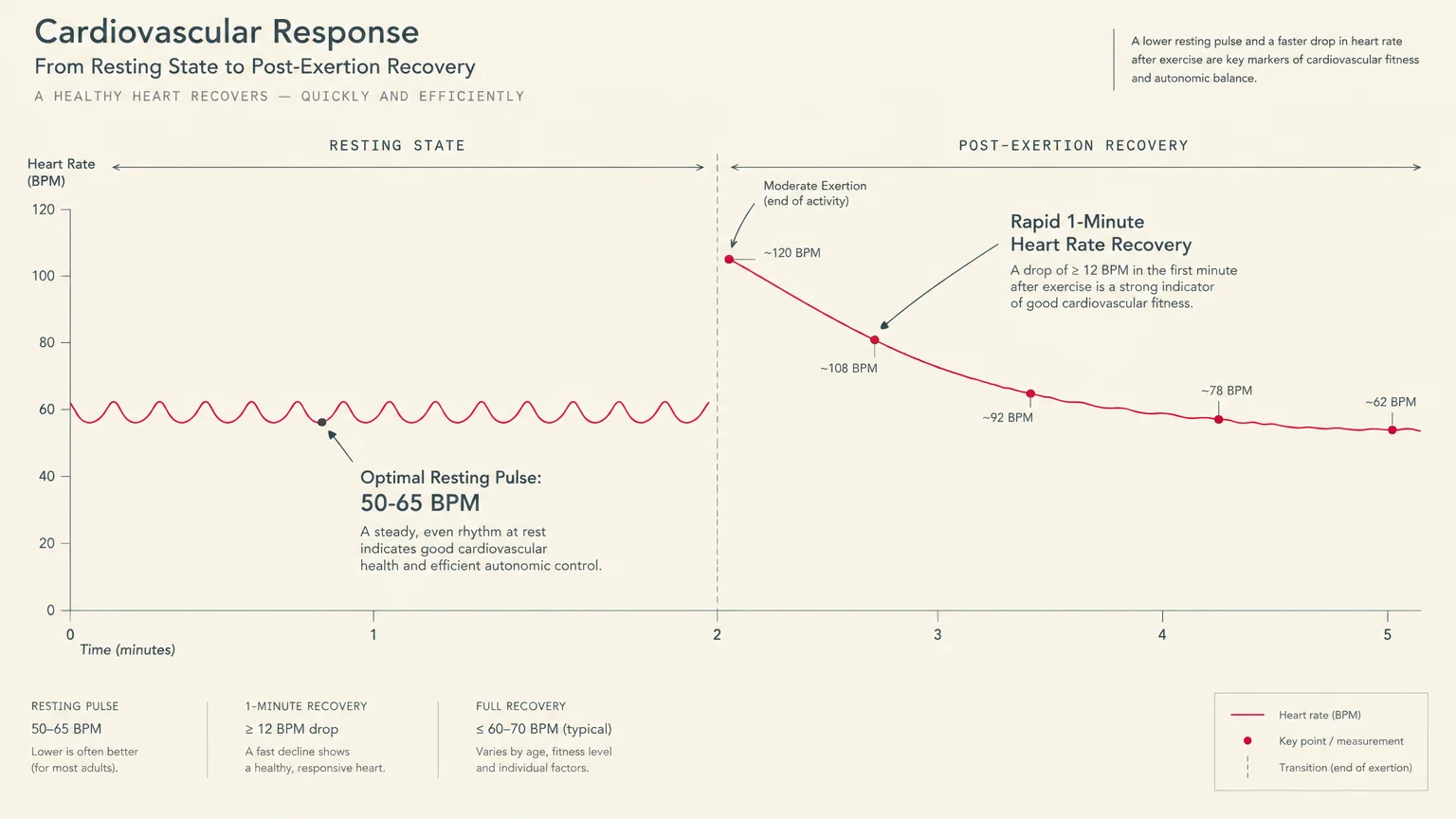
While a normal adult resting heart rate ranges from 60 to 100 beats per minute, most healthy seniors with a younger biological age sit comfortably between 55 and 70 beats per minute. Equally telling is how quickly your pulse drops after moderate exertion.
When you climb two flights of stairs or walk briskly up a hill, your heart rate naturally spikes. If your pulse drops by at least 15 to 20 beats within the first minute of stopping to rest, your autonomic nervous system is highly responsive.
Fast heart rate recovery indicates high vagal tone and low arterial stiffness. Your blood vessels expand and contract like those of someone ten or fifteen years younger.
Cardiovascular health sits at the center of retirement healthcare budgeting. High blood pressure, high cholesterol, and arrhythmias are the primary drivers of recurring prescription costs and specialist copays for retirees.
When your heart stays young, you spend far less under Medicare Part D prescription drug plans. Furthermore, if you contributed to a Health Savings Account (HSA) before enrolling in Medicare, strong heart health lets you leave those funds invested tax-free for future decades.

5. You Sleep Deeply and Wake Up Refreshed
Many people assume that fragmented, restless sleep is an inevitable burden of getting older. While sleep architecture changes slightly over the decades, consistently sleeping seven to eight hours and waking up energized is a hallmark of healthy aging signs.
During deep slow-wave sleep, your brain activates its glymphatic system—a microscopic waste-clearance network that flushes out metabolic toxins and beta-amyloid plaques. Restorative sleep literally washes your brain each night, preserving memory and executive function.
Deep sleep also regulates cortisol and insulin sensitivity, keeping your daytime energy steady without relying on afternoon naps or endless cups of coffee. If you fall asleep within 20 minutes and sleep soundly through most nights, your circadian rhythm is remarkably youthful.
From a personal finance perspective, protecting your brain through deep sleep is invaluable. Cognitive decline often appears in a person’s checkbook years before a doctor makes a clinical diagnosis.
Seniors suffering from chronic sleep deprivation or early cognitive fatigue are far more likely to miss bill payments, misunderstand tax rules, or fall prey to sophisticated financial scams. Sharp sleep habits keep you firmly in command of your household finances.
When your mind remains crisp at age 75 or 80, you can confidently manage your own portfolio rebalancing, compare Medicare Part D plans during Open Enrollment, and avoid paying high fees for daily money management services.

6. You Maintain Strong Social Ties and Mental Curiosity
Biological aging is not confined to your muscles and joints; your brain’s neuroplasticity plays an equal role in how young you truly are. If you eagerly learn new technology, pick up new hobbies, and maintain a vibrant circle of friends, your brain is resisting age-related shrinkage.
Chronic loneliness and mental stagnation elevate stress hormones and trigger systemic inflammation, accelerating cellular aging on par with smoking. Conversely, laughing with friends, volunteering, or learning a new game stimulates fresh neural pathways and boosts immune function.
Ask yourself when you last tackled a frustrating new skill—such as filing taxes online, learning pickleball rules, or editing digital photos on your phone. Approaching unfamiliar tasks with curiosity rather than frustration is a premier sign of a younger biological age.
Mental agility and social connectedness also open lucrative doors in retirement. Many vibrant seniors in their 60s and 70s launch “encore careers,” doing part-time consulting, tutoring, seasonal tax prep, or turning a woodworking hobby into weekend income.
Earning just $10,000 to $15,000 a year from an enjoyable part-time pursuit dramatically reduces the strain on your 401(k) or IRA. Every dollar you earn through active engagement is a dollar that stays compounded inside your retirement accounts.
If you claim Social Security before your Full Retirement Age while working, remember to check the annual earnings test limit with the Social Security Administration (SSA). Once you reach Full Retirement Age, however, you can earn an unlimited salary without any reduction in your monthly benefits.
7. Your Skin, Posture, and Muscle Tone Bounce Back
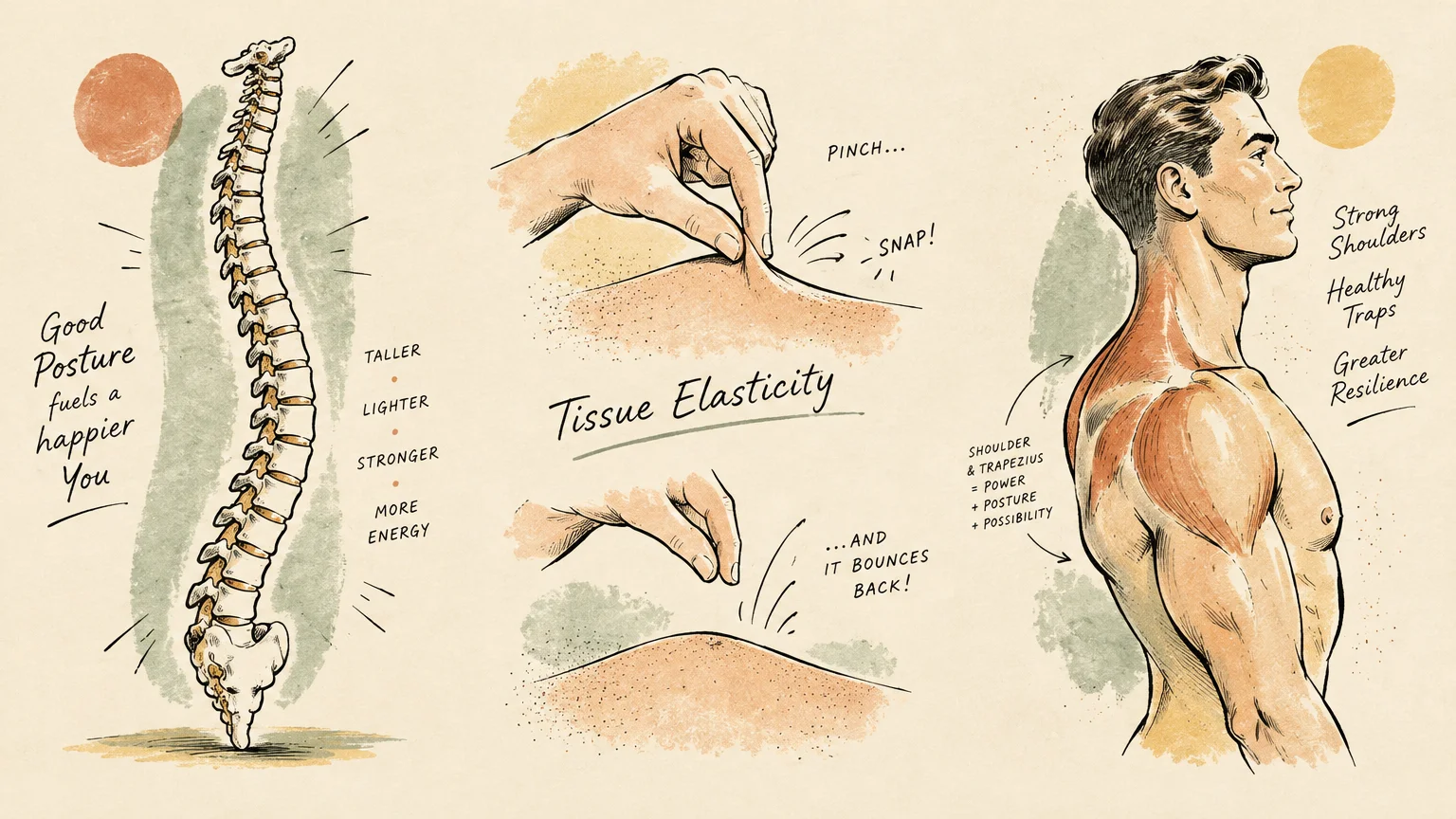
Look in the mirror at how you stand when you are not consciously trying to straighten up. Standing tall with your ears aligned over your shoulders, rather than stooped forward, signals strong spinal erector muscles and healthy intervertebral discs.
Pay attention as well to how quickly your body recovers from minor everyday scrapes, bruises, or a tough afternoon of gardening. Rapid wound healing and minimal next-day muscle soreness indicate robust cellular turnover and strong microcirculation.
Gerontologists study a phenomenon called “inflammaging”—the chronic, low-grade systemic inflammation that stiffens joints, slows healing, and drains energy as people grow older. When you recover quickly from physical work and maintain stable blood sugar, your inflammatory markers are low.
This metabolic youthfulness pays immediate dividends if you are in your late 50s or early 60s and shopping for insurance. Insurers underwriting life insurance, hybrid long-term care policies, or Medigap plans (outside of guaranteed issue periods) scrutinize your height-to-weight ratio, blood pressure, and blood glucose.
Qualifying for “Preferred” rather than “Standard” health ratings can slash insurance premiums by 20% to 35% every single year. Your healthy biomarkers literally translate into lower fixed monthly bills.
How a Younger Biological Age Changes Your Retirement Math
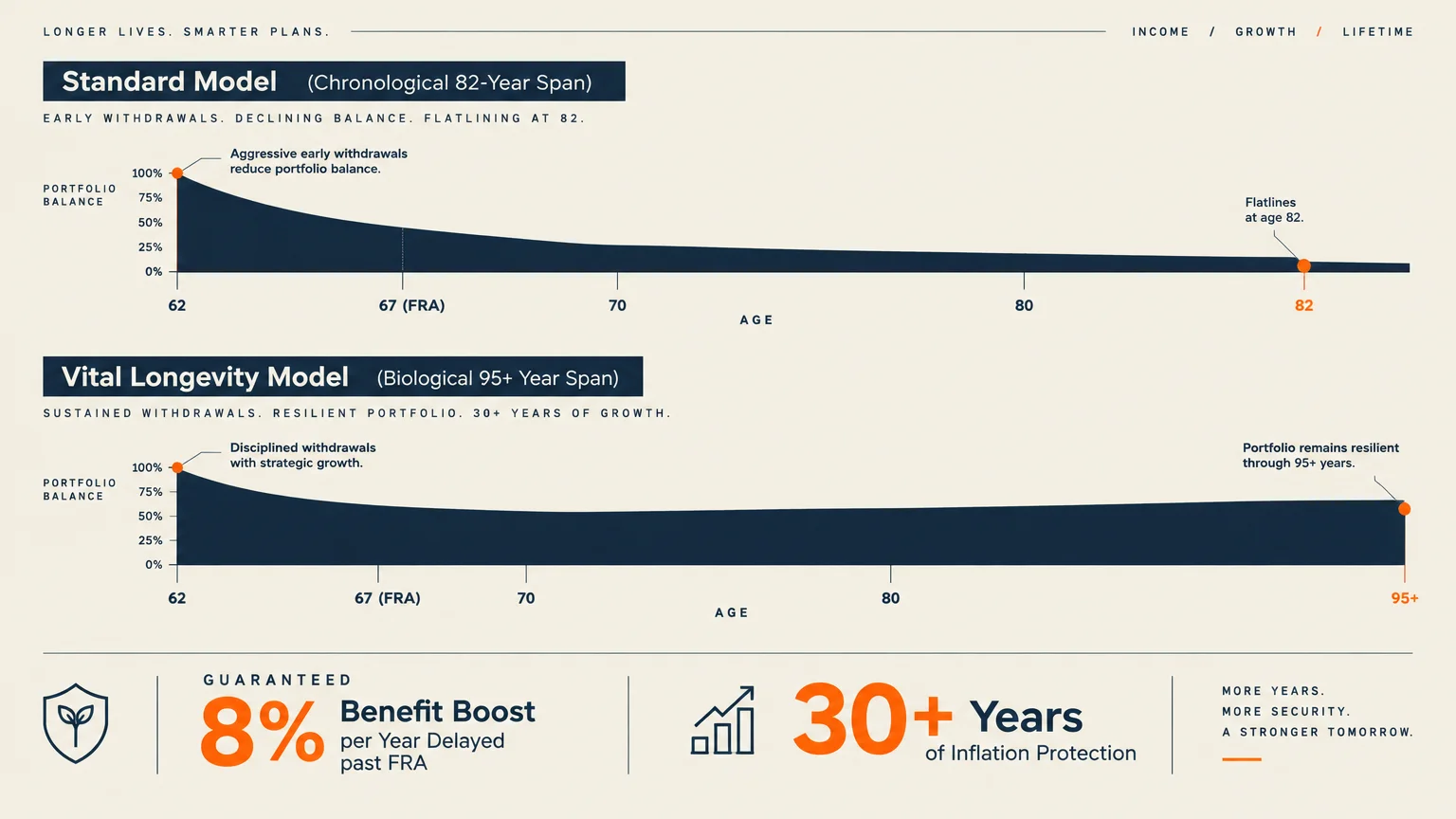
Recognizing these seven healthy aging signs is cause for celebration, but it also demands a strategic review of your financial timeline. If you are 64 years old chronologically with a biological age closer to 52, a standard 20-year retirement plan could leave you short of cash in your late 80s.
“Someone’s sitting in the shade today because someone planted a tree a long time ago.” — Warren Buffett, CEO of Berkshire Hathaway
Just as decades of healthy habits planted the tree of your physical vitality, smart financial adjustments today will provide shade when you are 90. The first and most powerful lever you can pull is your Social Security claiming age.
For anyone born in 1960 or later, Full Retirement Age (FRA) is 67. While you can claim retirement benefits as early as age 62, doing so permanently slashes your monthly check by 30%.
Conversely, for every year you delay claiming past your FRA up to age 70, the Social Security Administration rewards you with a guaranteed 8% delayed retirement credit. Waiting from age 67 to 70 produces a permanent 24% increase in your baseline benefit.
Consider a concrete example: suppose your benefit at your Full Retirement Age of 67 is $2,200 per month. If you claim early at 62, you receive just $1,540 per month; if you delay until age 70, your benefit jumps to $2,728 per month—a difference of $1,188 every month for life.
Even better, annual cost-of-living adjustments (COLAs)—such as the 2.5% COLA implemented in 2025—compound on top of that larger base amount. If you have a younger biological age and expect to live past age 82, delaying Social Security is the best longevity insurance money can buy.
Your investment withdrawal rate and asset allocation also require tuning when you expect a longer life. The classic “4% rule” was designed to make a portfolio last 30 years, which works well for a 65-year-old living to 95.
However, if you retire early at 58 or 60 with exceptional health, your money may need to last 35 to 40 years. Using a slightly more conservative 3.5% initial withdrawal rate—and keeping 50% to 60% of your portfolio in diversified equities—helps your nest egg outpace inflation.
| Planning Area | Standard Retirement Plan (20-Year Horizon) | Younger Biological Age Plan (30+ Year Horizon) |
|---|---|---|
| Social Security Timing | Claim between ages 62 and 67 to maximize early cash flow. | Delay main earner’s benefit to age 70 to lock in 24% higher lifetime income. |
| Portfolio Stock Allocation | Shift heavily into bonds and cash (30%–40% stocks) to reduce short-term volatility. | Maintain 50%–65% in diversified stocks to beat inflation over three decades. |
| Safe Withdrawal Rate | Withdraw 4.0% to 4.5% of initial portfolio value, adjusted annually for inflation. | Start with a 3.5% to 3.8% flexible withdrawal rate that adjusts during market dips. |
| Medicare Strategy | Choose based on immediate current doctor needs and lowest monthly premium. | Prioritize Original Medicare plus Medigap for nationwide provider flexibility in your 80s and 90s. |
| Tax & Roth Conversions | Take minimum withdrawals and pay taxes as Required Minimum Distributions arise. | Execute multi-year Roth conversions in your 60s to create decades of tax-free compounding. |

Longevity Habits That Protect Both Your Body and Your Bank Account
You do not need expensive gym memberships, boutique supplements, or luxury wellness retreats to maintain a younger biological age. The most effective longevity habits are remarkably affordable—and many are subsidized directly by your existing benefits.
- Use Your Free Medicare Preventive Benefits: Once you enroll in Medicare Part B ($185.00 standard monthly premium in 2025; verify current annual rates at Medicare.gov), you qualify for a yearly “Wellness” visit at zero out-of-pocket cost. Use this appointment to track blood pressure, body mass index, cognitive function, and free preventive screenings for cardiovascular disease and diabetes.
- Practice Progressive Resistance Training at Home: Muscle mass is the currency of aging well. Lifting simple hand weights, using inexpensive resistance bands, or doing bodyweight squats and push-ups twice a week prevents sarcopenia and protects your balance without costing a dime.
- Tap Into SilverSneakers or Renew Active: Many Medicare Advantage plans and select Medigap policies include free fitness memberships like SilverSneakers. These programs grant complimentary access to thousands of local gyms, swimming pools, and senior community classes across the country.
- Cook Whole, Anti-Inflammatory Meals at Home: Shifting away from ultra-processed convenience foods toward beans, leafy greens, berries, olive oil, and lean proteins slashes systemic inflammation. Cooking at home also cuts your food budget by 50% compared to dining out, freeing up cash for travel or savings.
- Join Local Walking or Hobby Groups: Combine brisk walking with social engagement by joining a local hiking club, master gardener program, or community center group. You reinforce your gait speed and brain neuroplasticity simultaneously for free.
Costly Errors to Sidestep When You Are Aging Well
Feeling energetic and youthful in your 60s is a wonderful blessing, yet it can tempt you into making financial miscalculations. Avoid these four costly mistakes that trip up healthy retirees:
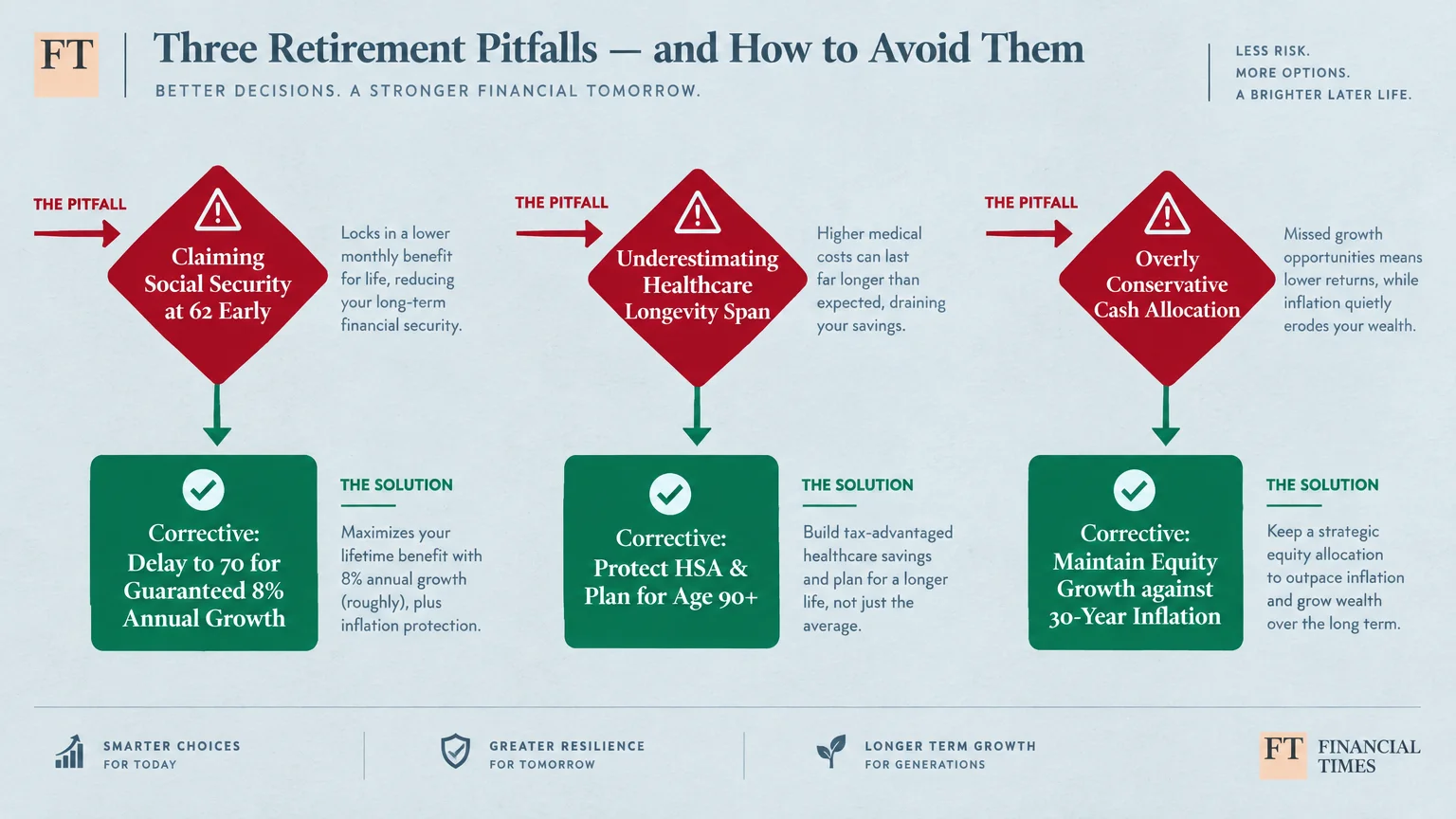
1. Claiming Social Security Early Just to “Get Your Money Back”: Healthy seniors sometimes claim at 62 because they worry about dying early or want to invest the checks themselves. When you boast a younger biological age, you are far more likely to live into your late 80s or 90s—where the permanent 30% early-claiming penalty costs you tens of thousands of dollars in lost lifetime income.
2. Assuming You Will Never Need Long-Term Care: Being fit at 68 does not mean you will never need help at 92. In fact, super-agers often live long enough to experience frailty in their tenth decade, when assisted living or home health aides will cost significantly more due to inflation.
“A big part of financial freedom is having your heart and mind free from worry about the what-ifs of life.” — Suze Orman, Personal Finance Expert and Author
3. Investing Too Conservatively Too Soon: Moving your entire 401(k) into certificates of deposit (CDs) or money market funds at age 65 feels safe in the short term. Over a 30-year retirement, however, even a modest 3% annual inflation rate cuts the purchasing power of stagnant cash by more than half.
4. Ignoring Required Minimum Distributions (RMDs) and Tax Brackets: Under SECURE 2.0 rules administered by the Internal Revenue Service (IRS), you must begin taking RMDs from traditional IRAs and 401(k)s at age 73 (rising to age 75 in 2033). If you let a large pre-tax portfolio grow untouched until 73, your forced withdrawals could push you into a higher tax bracket and trigger Medicare Income-Related Monthly Adjustment Amount (IRMAA) surcharges.
Remember that taxpayers age 65 and older receive an additional standard deduction on their federal income tax return—check IRS.gov for the exact current tax year deduction amounts. Taking advantage of this higher standard deduction to convert slices of your traditional IRA to a Roth IRA during your 60s can save you a fortune over a long lifespan.

When DIY Isn’t Enough
Managing your own retirement plan works well when your finances are straightforward, but exceptional longevity adds extra moving parts. Consider sitting down with a credentialed professional—such as a fee-only Certified Financial Planner (CFP) or an elder law attorney—in these four scenarios:
- Stress-Testing a 35-Year Retirement Horizon: A CFP can run Monte Carlo computer simulations across thousands of market scenarios to ensure your withdrawal rate survives multiple recessions and high inflation through age 95 or 100.
- Coordinating Spousal Health Disparities: If you exhibit all seven healthy aging signs while your spouse manages chronic health challenges, you need a customized plan for spousal Social Security survivor benefits and Medicaid asset protection rules.
- Designing a Multi-Year Tax and IRMAA Strategy: A tax professional or financial planner can map out exact Roth conversion amounts between ages 60 and 72 so you minimize lifetime taxes without accidentally triggering Medicare Part B and Part D premium surcharges.
- Refreshing Decades-Old Estate Documents: When you live into your 90s, the executors, trustees, or healthcare proxies you named at age 60 may pass away or retire before you do. An estate attorney helps you build resilient, multi-generational powers of attorney and living trusts.
Frequently Asked Questions
What does it actually mean to be younger than your biological age?
In everyday conversation, people use this phrase to mean your biological age is lower than your chronological age. While your birth certificate says you are 68, your cellular health, heart function, and physical stamina match the clinical average of a 55-year-old.
Can I reverse my biological age after turning 60?
Yes, clinical studies show that adopting consistent longevity habits—especially strength training, brisk walking, restorative sleep, and an anti-inflammatory diet—can lower epigenetic biological age markers within six to twelve months. Your body retains the ability to build muscle and improve vascular elasticity well into your 70s and 80s.
Does Medicare cover biological age testing?
Medicare does not cover commercial consumer epigenetic tests or direct-to-consumer “biological age clocks” because they are not considered medically necessary diagnostic tools. However, Medicare Part B covers your annual Wellness visit and vital biomarker screenings—like lipid panels and fasting glucose tests—at 100% with no deductible.
At what age does delaying Social Security pay off if I am aging well?
The “break-even age” for delaying Social Security from age 67 to age 70 is typically around age 80 to 82. If your healthy aging signs and family history suggest you will live past 82, waiting until 70 delivers significantly higher total lifetime income and inflation protection.
How should I adjust my 401(k) or IRA if I expect to live past 90?
Avoid draining your growth assets too early; many longevity-focused retirees keep 50% to 60% of their portfolio in low-cost stock index funds while holding two to three years of living expenses in safe cash or short-term bonds. Additionally, consider converting portions of pre-tax accounts into Roth IRAs so your money can compound tax-free for an extra decade.
Take Action on Your Vitality Today
Discovering that your body operates like someone ten years younger is one of the greatest rewards of a well-lived life. Celebrate your brisk stride, steady balance, and sharp mind by giving your retirement plan the same care you give your health—log into your Social Security account at SSA.gov to compare your age-70 benefit projections and schedule your free annual Medicare Wellness visit today.
This is educational content based on general financial principles for seniors. Individual results vary based on your situation. Always verify current benefit amounts, tax rules, and program eligibility with official government sources.
Last updated: February 2026. Benefit amounts, tax rules, and program details change annually—verify current figures with official government sources.








Leave a Reply