
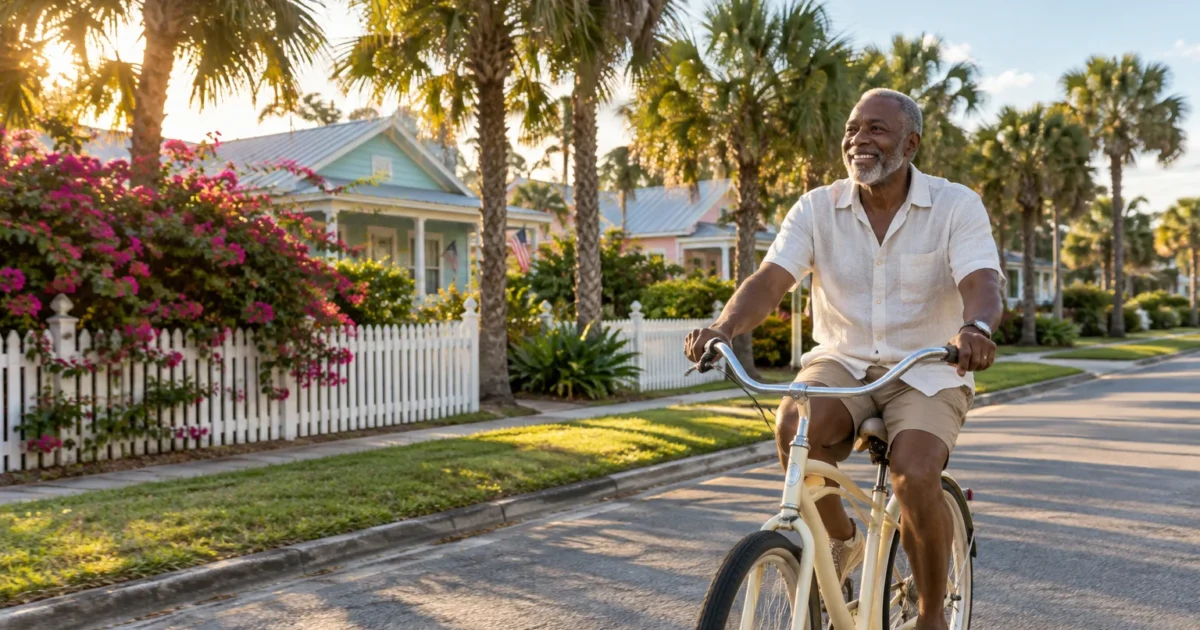
Freezing temperatures and icy driveways can turn daily retirement living into a stressful chore. Choosing a destination where winters stay temperate preserves your physical mobility and slashes seasonal heating bills.
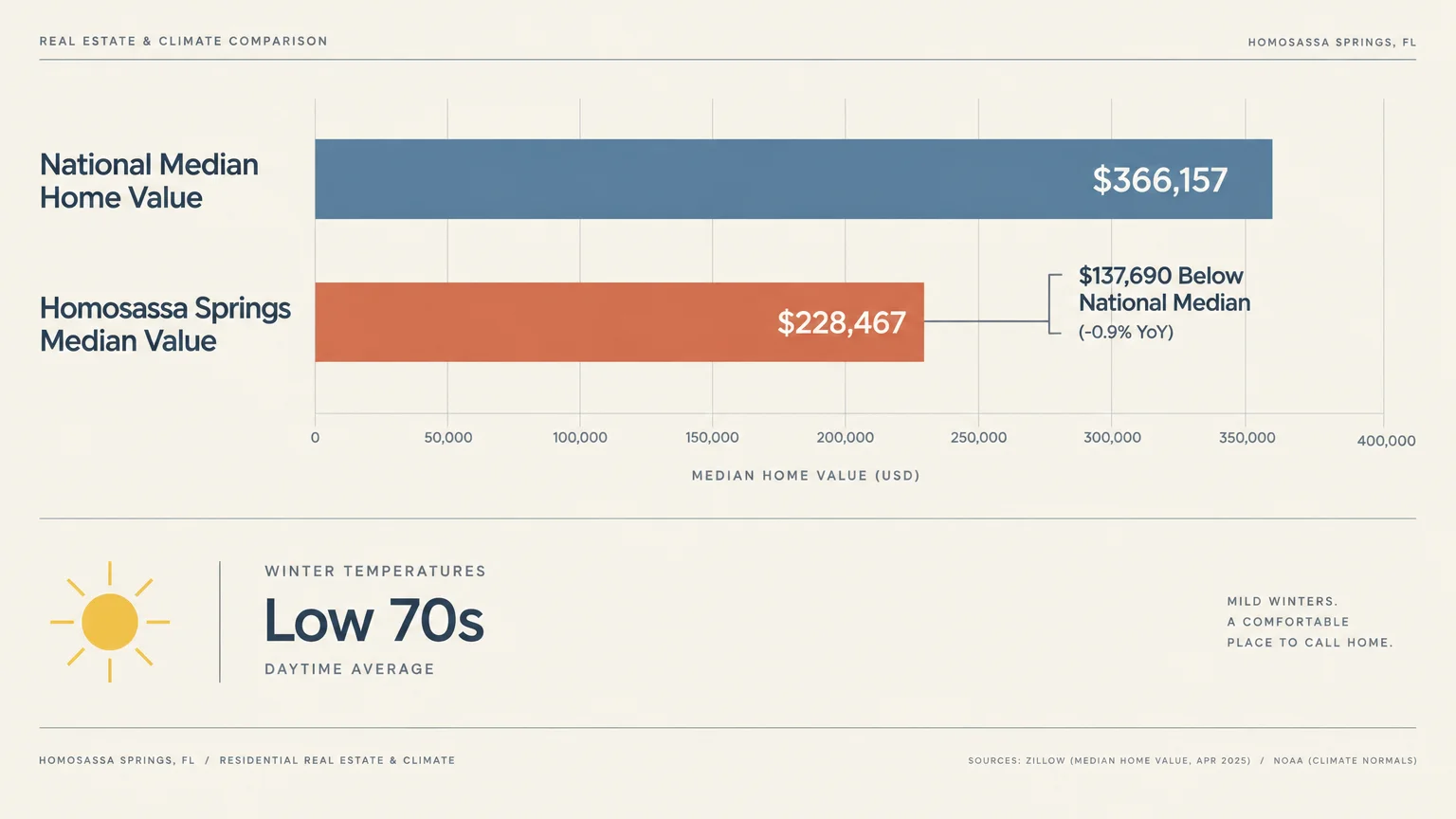
Mild winter retirement towns offer outdoor recreation year-round without the physical hazards of heavy snowfall. Many gentle climate towns also feature housing costs well below the national median home value of $366,157.
Finding your ideal haven requires balancing pleasant winter temperatures with practical financial factors like property taxes and healthcare access. These twelve standout communities deliver comforting weather alongside sustainable retirement living costs.

The Financial and Health Perks of Gentle Winters
Harsh winters pose genuine physical hazards for older adults. Snow removal strains cardiovascular health, while slick walkways dramatically increase the risk of dangerous falls.
Escaping extreme cold protects both your joints and your budget. You bypass expensive heating spikes that routinely drain fixed incomes during January and February.
Warmer temperatures also encourage daily physical activity. Walking outdoors through sunny afternoons supports cardiovascular fitness and provides natural vitamin D.
Mild conditions lower home maintenance headaches as well. You avoid frozen water pipes, roof ice dams, and exterior siding degradation caused by freeze-thaw cycles.
Tax Rules and Retirement Income in Warmer States
Relocating across state lines impacts your monthly budget beyond utility bills. State income tax policies vary sharply and affect how much retirement money you keep.
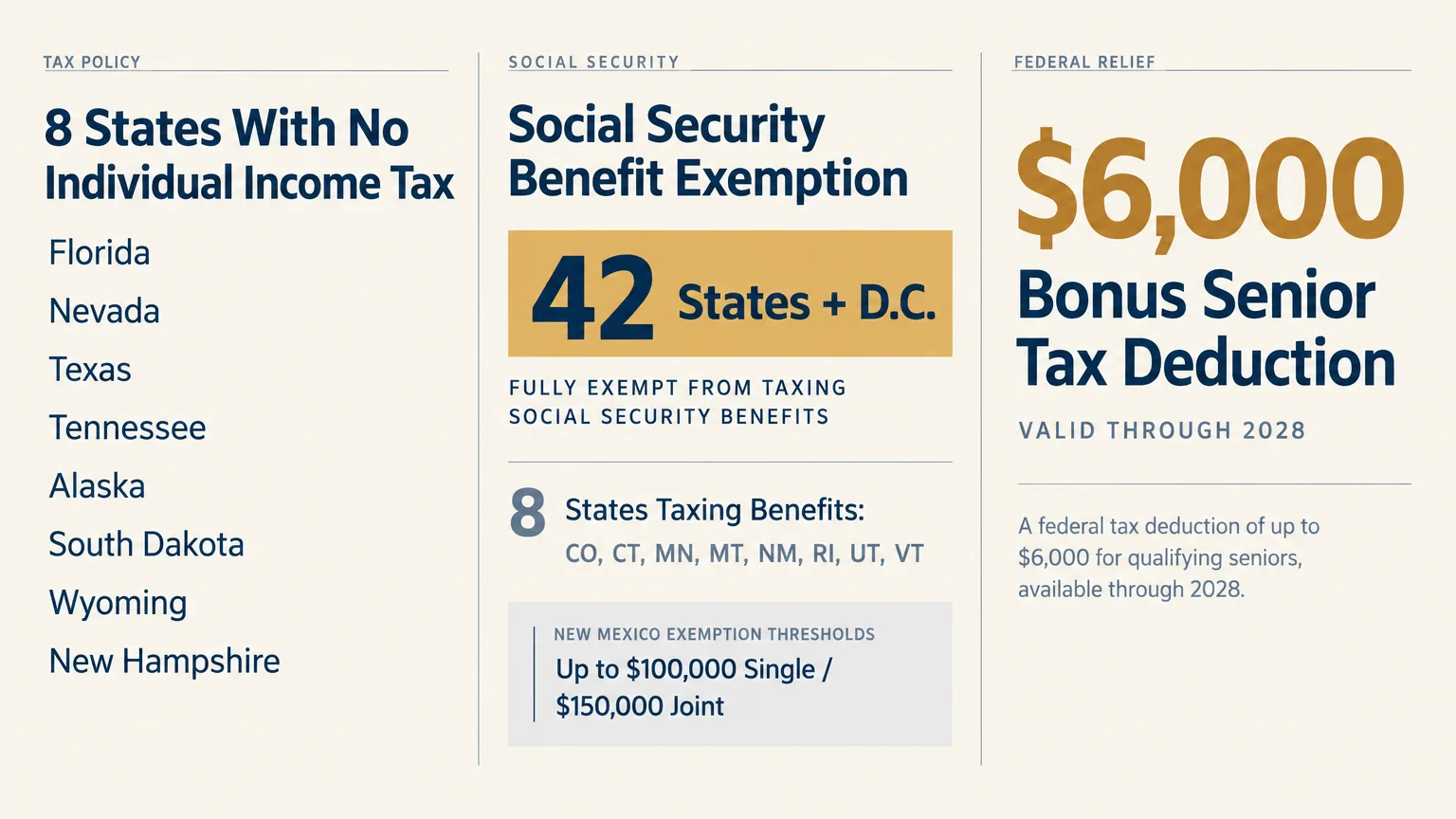
Currently, eight states levy no individual state income tax: Alaska, Florida, Nevada, New Hampshire, South Dakota, Tennessee, Texas, and Wyoming. Retiring in Florida, Nevada, or Texas shields your pension and investment distributions from state-level deductions.
Your Social Security benefits also receive favorable treatment in most parts of the country. According to the Social Security Administration, forty-two states plus Washington, D.C., completely exempt Social Security checks from state income tax.
Only eight states currently tax benefits to any extent: Colorado, Connecticut, Minnesota, Montana, New Mexico, Rhode Island, Utah, and Vermont. Many of these states offer generous income thresholds.
New Mexico exempts single filers earning up to $100,000 and joint filers earning up to $150,000 from state taxation on Social Security. You can confirm filing thresholds directly with the Internal Revenue Service.
Federal tax relief currently assists older Americans through 2028 with a temporary $6,000 bonus senior tax deduction under the One Big Beautiful Bill Act. This deduction helps you keep more income below federal taxation lines.
“Price is what you pay. Value is what you get.” — Warren Buffett, Chairman and CEO of Berkshire Hathaway
12 Warm Winter Towns for a Comfortable Retirement
Each of the following twelve communities offers mild winter conditions alongside unique lifestyle benefits. Median home values reflect September 2026 Zillow Home Value Index benchmarks.
1. Homosassa Springs, Florida
Located along Florida’s Nature Coast, Homosassa Springs delivers genuine tranquility away from crowded tourist corridors. Daytime winter temperatures reliably hover in the low 70s.
U.S. News & World Report ranked Homosassa Springs third overall in its 2026 Best Places to Retire rankings. The town scored exceptionally high for senior migration and everyday affordability.
The median home value sits at $228,467, down 0.9% year-over-year. This price point remains nearly $138,000 below the national median home value.
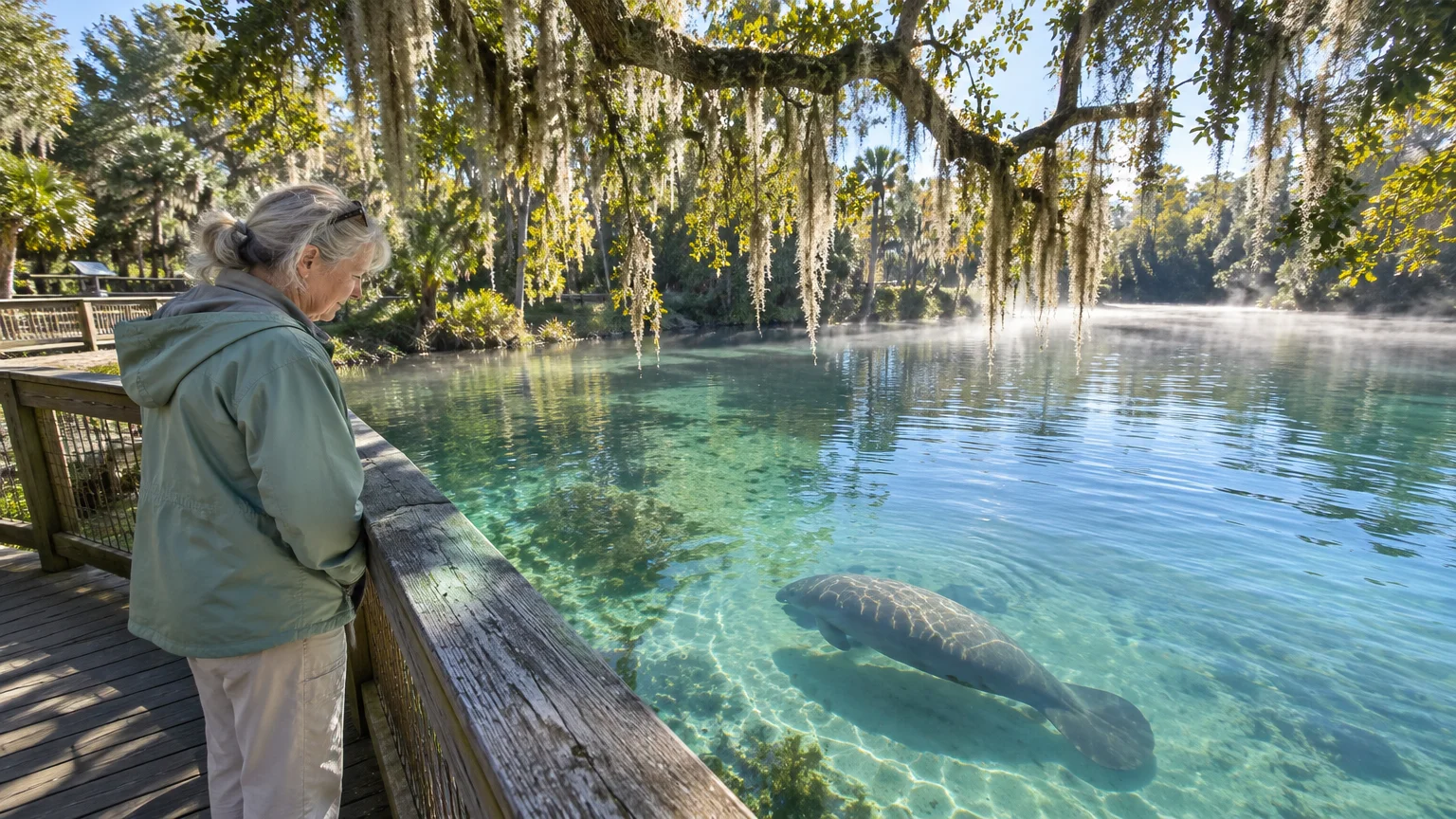
Retirees enjoy warm freshwater springs that attract gentle West Indian manatees all winter long. Florida levies zero state income tax, preserving your retirement distributions.
2. Green Valley, Arizona
Green Valley nestles in southern Arizona’s historic Santa Cruz Valley, roughly twenty-five miles south of Tucson. High winter temperatures average around 68 degrees under crisp, dry skies.
Forbes highlighted Green Valley on its 2026 list of the 25 Best Places to Retire. The town caters specifically to older adults with world-class community centers.
The median home value rests at $276,015, reflecting a 2.4% year-over-year decline. That makes Green Valley one of the most cost-effective desert havens in the American Southwest.
Green Valley Recreation operates over a dozen recreation facilities featuring heated pools, fitness centers, and pickleball courts. Low desert humidity brings soothing relief to retirees coping with arthritis.
3. Spring Hill, Florida
Spring Hill sits on Florida’s Gulf Coast, offering warm Gulf breezes and convenient access to the Tampa metropolitan area. Winter afternoons consistently reach the low 70s.
The community earned the seventh spot on the U.S. News 2026 Best Places to Retire evaluation. Plentiful healthcare infrastructure and safe neighborhoods drove that stellar standing.
Local home values average $303,307, resting far below Florida’s statewide median home value of $375,361. The local rental market also offers competitive alternatives for downsizing seniors.
You can kayak the crystal-clear waters of the Weeki Wachee River throughout December and January. Excellent regional hospital networks provide specialized geriatric care nearby.
4. Savannah, Georgia
Savannah combines rich antebellum architecture with coastal Georgia charm. Winter days average in the low 60s, offering pleasant conditions for walking through historic city squares.
Forbes recognized Savannah in its 2026 retirement rankings for its vibrant cultural fabric and tax-friendly environment. Georgia provides substantial retirement income exclusions for seniors aged 62 and older.
The median home value stands at $318,893, comparing favorably to Georgia’s statewide median of $329,115. Modest property tax structures help retirees maintain reasonable housing overhead.
Savannah delivers an engaging dining scene, shaded waterfront promenades, and world-class regional hospitals. St. Joseph’s/Candler Health System provides comprehensive cardiology and oncology services.
5. Greenville, South Carolina
Greenville sits in the scenic foothills of the Blue Ridge Mountains, providing a mild four-season climate. January daytime highs average in the low 50s, with snow being exceptionally rare.
Forbes selected Greenville among the premier places to retire in 2026, praising its thriving arts economy. Greenville also avoids the intense, prolonged summer humidity found along the coast.
The median home value sits at $328,460, remaining stable year-over-year. South Carolina provides generous income tax deductions on private pensions and retirement account withdrawals for residents 65 and older.
Falls Park on the Reedy offers paved, scenic walking trails right through the center of downtown. Prisma Health operates extensive medical networks and research facilities across the region.
6. Palm Coast, Florida
Positioned along northeast Florida’s Atlantic shoreline, Palm Coast provides steady sea breezes and winter highs in the upper 60s. The town features planned neighborhoods surrounded by maritime forests.
Palm Coast captured the ninth position on the U.S. News 2026 Best Places to Retire list. High marks for outdoor recreation and environmental quality lifted the town into the national spotlight.
The median home value rests at $343,894, sitting slightly below Flagler County’s overall benchmark of $350,266. Master-planned layouts include extensive networks of saltwater canals and walking trails.
Golfers and boaters can pursue their passions twelve months a year without winter interruptions. Zero state income taxes make your monthly retirement budget stretch further.
7. Rio Rancho, New Mexico
Rio Rancho borders Albuquerque along the scenic high desert plateau. Winters stay brisk yet mild, with daytime highs averaging in the low 50s under brilliant sunshine.
U.S. News ranked Rio Rancho sixth nationally on its 2026 retirement list. The town boasts low crime rates, majestic Sandia Mountain views, and excellent municipal services.
The median home value stands at $360,463, up 0.7% over the past year. While slightly higher than New Mexico’s state median of $315,812, it remains below the national average.
New Mexico exempts Social Security benefits from state income taxes for single filers earning up to $100,000. Over three hundred sunny days each year support an active, outdoors-focused lifestyle.
8. The Woodlands, Texas
Situated just north of Houston, The Woodlands provides a lush forested setting with mild, temperate winters. Afternoon temperatures consistently range between 62 and 66 degrees from December through February.
U.S. News awarded The Woodlands fourth place in its 2026 retirement ratings. The master-planned town offers championship golf, pedestrian waterways, and world-class hospital centers.
The median home value in the central 77380 area code is $390,045, up 1.0% year-over-year. Neighboring Spring, Texas, provides an adjacent option where median home values average $361,360.
Texas levies no state income tax on wage income, pensions, or investment gains. Major medical campuses, including Memorial Hermann and Houston Methodist, operate state-of-the-art facilities directly inside the township.
9. Dunedin, Florida
Dunedin sits directly along Saint Joseph Sound on Florida’s Pinellas County coast. Mild Gulf waters moderate the climate, producing winter highs in the low to mid-70s.
This walkable community celebrates Scottish heritage and features a vibrant, golf-cart-friendly downtown. Dunedin avoids the high-rise congestion found in neighboring commercial beach cities.
The median home value sits at $410,947, with homes in the 34698 ZIP code averaging $415,106. The lifestyle perks and walkability justify the premium for many active retirees.
The Fred Marquis Pinellas Trail cuts directly through the heart of town, encouraging cycling and morning strolls. Honeymoon Island State Park provides undisturbed white-sand beaches just minutes from downtown.
10. Beaufort, South Carolina
Beaufort rests on Port Royal Island in South Carolina’s Lowcountry, surrounded by tidal estuaries and moss-draped live oaks. Winter temperatures average in the low 60s with ample sunshine.
The town delivers historic southern elegance, fresh seafood markets, and an intimate small-town pace. Coastal breezes prevent the lingering chill common to inland communities.
The median home value stands at $412,433, showing a 1.1% gain year-over-year. South Carolina provides substantial property tax homestead exemptions for qualifying seniors aged 65 and older.
The Spanish Moss Trail provides miles of paved greenway for walking and cycling without vehicle traffic. Beaufort Memorial Hospital offers award-winning emergency and orthopedic care along the waterfront.
11. Florence, Oregon
Florence occupies a sheltered position along Oregon’s central coast where the Siuslaw River meets the Pacific Ocean. The temperate marine climate keeps winter days in the 50s, rarely dropping below freezing.
Retirees who dislike southern summer humidity often prefer Florence’s cool, coastal conditions. The town experiences crisp, rain-refreshed winters followed by mild, comfortable summers.
The median home value rests at $445,173, positioning Florence well below Oregon’s statewide median of $492,753. Oregon levies zero sales tax, cutting your everyday out-of-pocket expenses on groceries and consumer goods.
PeaceHealth Peace Harbor Medical Center provides full-service hospital care directly within the community. Beautiful freshwater lakes, rolling coastal sand dunes, and old-growth pine forests surround the city.
12. Henderson, Nevada
Henderson borders the southern rim of the Las Vegas Valley, nestled against the McCullough Mountain Range. Winter daytime highs consistently reach the comfortable low 60s under sunny desert skies.
The city routinely ranks among the safest large municipalities in the United States. Master-planned neighborhoods like Green Valley Ranch provide quiet parks, golf courses, and paved walking trails.
The median home value sits at $478,064, down 2.3% year-over-year. Nevada levies no personal state income tax, allowing you to maximize pension distributions and IRA withdrawals.
Henderson Hospital and Dignity Health St. Rose Dominican deliver advanced medical care without requiring long travel times. The desert environment minimizes winter joint stiffness for active seniors.
Comparing Housing Costs and Climate Across All 12 Towns
Evaluating potential destinations side-by-side helps you identify the best intersection of weather, housing affordability, and tax policies. The table below outlines key metrics for all twelve featured communities.
| Retirement Town | Median Home Value (ZHVI) | Winter Climate Profile | State Income Tax Status |
|---|---|---|---|
| Homosassa Springs, FL | $228,467 | Subtropical / 70s Highs | No State Income Tax |
| Green Valley, AZ | $276,015 | Sonoran Desert / Dry & Sunny | Flat 2.5% Tax Rate |
| Spring Hill, FL | $303,307 | Warm Gulf Coast / Low 70s | No State Income Tax |
| Savannah, GA | $318,893 | Mild Coastal / Low 60s | Senior Exclusions Apply |
| Greenville, SC | $328,460 | Foothills / Low 50s | Senior Deductions Apply |
| Palm Coast, FL | $343,894 | Atlantic Coast / Breezy 60s | No State Income Tax |
| Rio Rancho, NM | $360,463 | High Desert / Sunny 50s | Exempts Most Social Security |
| The Woodlands, TX | $390,045 | Piney Woods / Mid 60s | No State Income Tax |
| Dunedin, FL | $410,947 | Coastal Gulf / Mid 70s | No State Income Tax |
| Beaufort, SC | $412,433 | Lowcountry / Low 60s | Senior Deductions Apply |
| Florence, OR | $445,173 | Pacific Marine / 50s | No State Sales Tax |
| Henderson, NV | $478,064 | Mojave Desert / Low 60s | No State Income Tax |
Home values in half of these communities remain below the national median of $366,157. Selecting a lower-cost market frees up equity to fund your emergency reserves or healthcare costs.
Renters also find competitive pricing in several of these towns. Comparing local leases against the national average rent of $1,932 reveals substantial savings opportunities in Florida and Georgia.

Evaluating Healthcare Infrastructure in Warm Weather Towns
Gentle weather loses its appeal if you cannot access dependable medical specialists. Healthcare accessibility must serve as a foundational pillar during your relocation search.
Reviewing provider networks under Medicare ensures your preferred physicians participate in local hospital systems. Communities like The Woodlands and Henderson offer hospital networks directly inside town limits.
Check the distance from potential neighborhoods to the nearest emergency room and cardiac specialty center. Rural towns may offer lower home prices but require lengthy drives for routine oncology or orthopedic appointments.
Resources from advocacy organizations like AARP provide tools to assess community livability and transport access. Towns with dedicated public transit and senior ride programs make aging in place practical.
“A big part of financial freedom is having your heart and mind free from worry about the what-ifs of life.” — Suze Orman, Personal Finance Author
Common Mistakes to Avoid When Moving for Warmer Weather
Relocating during retirement involves emotional enthusiasm, which can occasionally cloud financial judgment. Avoiding common pitfalls protects your nest egg from costly moving reversals.
- Ignoring Summer Climate Extremes: Towns with idyllic winters may experience intense summer heat or relentless humidity. Spending July or August in your prospective town reveals whether you can tolerate the opposite season.
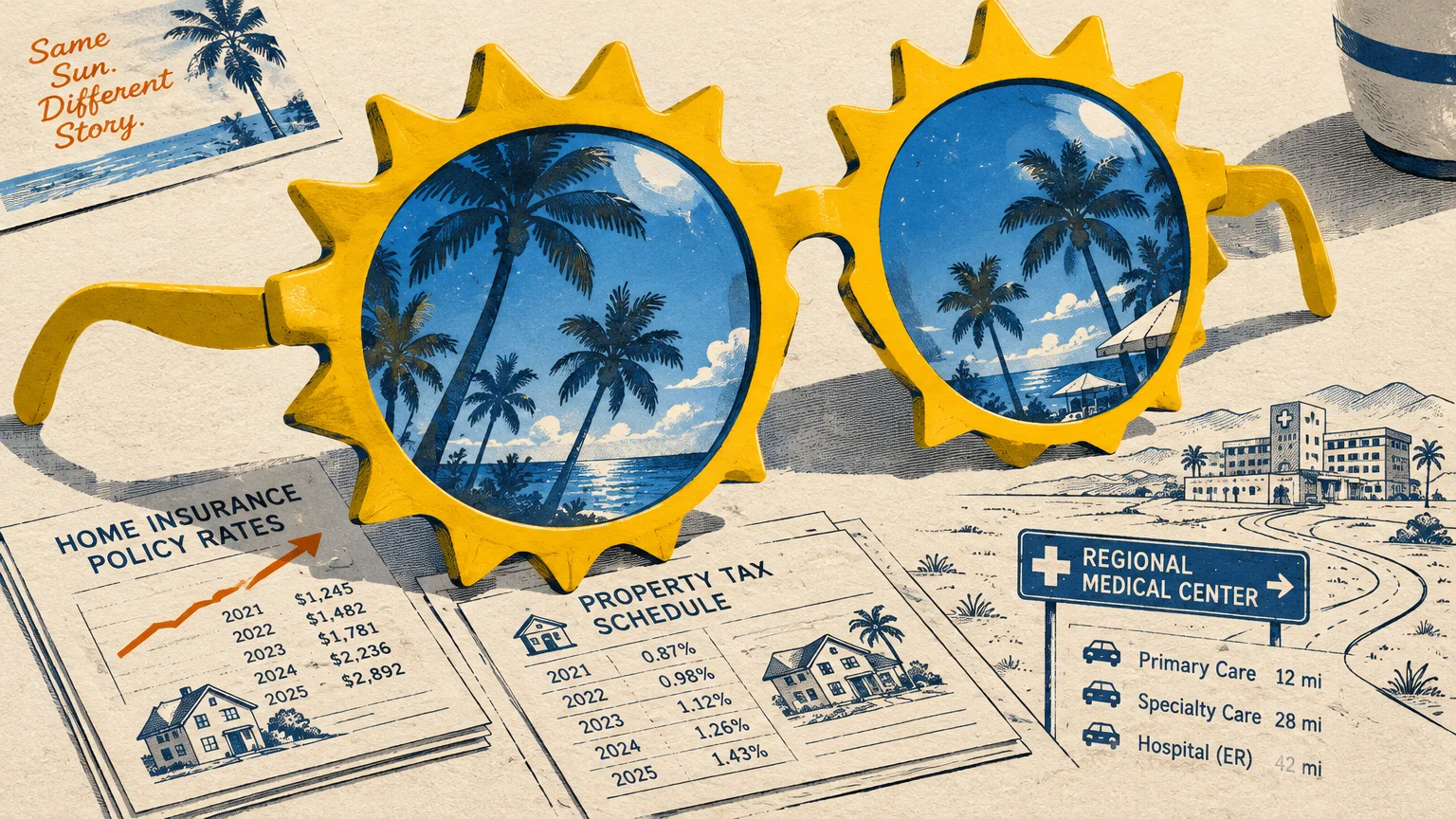
- Underestimating Property Insurance and Taxes: Moving to coastal or desert regions can bring higher property insurance premiums or flood assessments. Check insurance estimates through the U.S. Department of Housing and Urban Development housing counselors before making an offer.
- Failing to Rent Before Purchasing: Buying a home immediately locks you into neighborhood dynamics you may not enjoy. Renting for six to twelve months provides a risk-free trial period to experience daily traffic and social networks.
- Overlooking Distance to Family: Relocating far across the country increases air travel expenses and travel fatigue. Ensure travel corridors between your new community and your family remain accessible and budget-friendly.
Carefully evaluating these trade-offs guarantees your chosen retirement town supports both your lifestyle desires and your long-term balance sheet.
Frequently Asked Questions About Mild Winter Retirement
Which warm winter state is the most tax-friendly for retirees?
Florida, Texas, and Nevada rank among the most tax-friendly states because they charge no state personal income tax. They exempt pension income, Social Security, and 401(k) withdrawals from state tax.
Do mild winter towns have higher property insurance costs?
Coastal communities in states like Florida may carry higher homeowners insurance premiums due to tropical storm exposure. Inland or desert towns like Green Valley, Arizona, generally experience lower property insurance rates.
Are high desert towns considered warm winter destinations?
High desert communities like Rio Rancho, New Mexico, feature daytime temperatures in the 50s with abundant sunshine. While nighttime temperatures drop, sunny daytime conditions allow comfortable daily outdoor recreation.
Does Medicare cover medical care if I move to a new state?
Original Medicare provides identical nationwide coverage regardless of which state you call home. If you utilize a Medicare Advantage plan, you must switch to a plan within your new geographic service area upon moving.
Next Steps for Your Retirement Relocation
Transitioning to a mild winter community begins with thorough, methodical research. List your non-negotiable personal priorities, such as proximity to specialized healthcare, budget parameters, and desired outdoor activities.
Schedule an extended visit during both January and August to observe seasonal extremes firsthand. Talking with local residents at community centers provides realistic insight into municipal services and community culture.
The information in this guide is meant for educational purposes. Your specific circumstances—including income, benefits, tax situation, and health needs—may require different approaches. When in doubt, consult a licensed financial advisor or tax professional.
Last updated: October 2026. Benefit amounts, tax rules, and program details change annually—verify current figures with official government sources.








Leave a Reply