
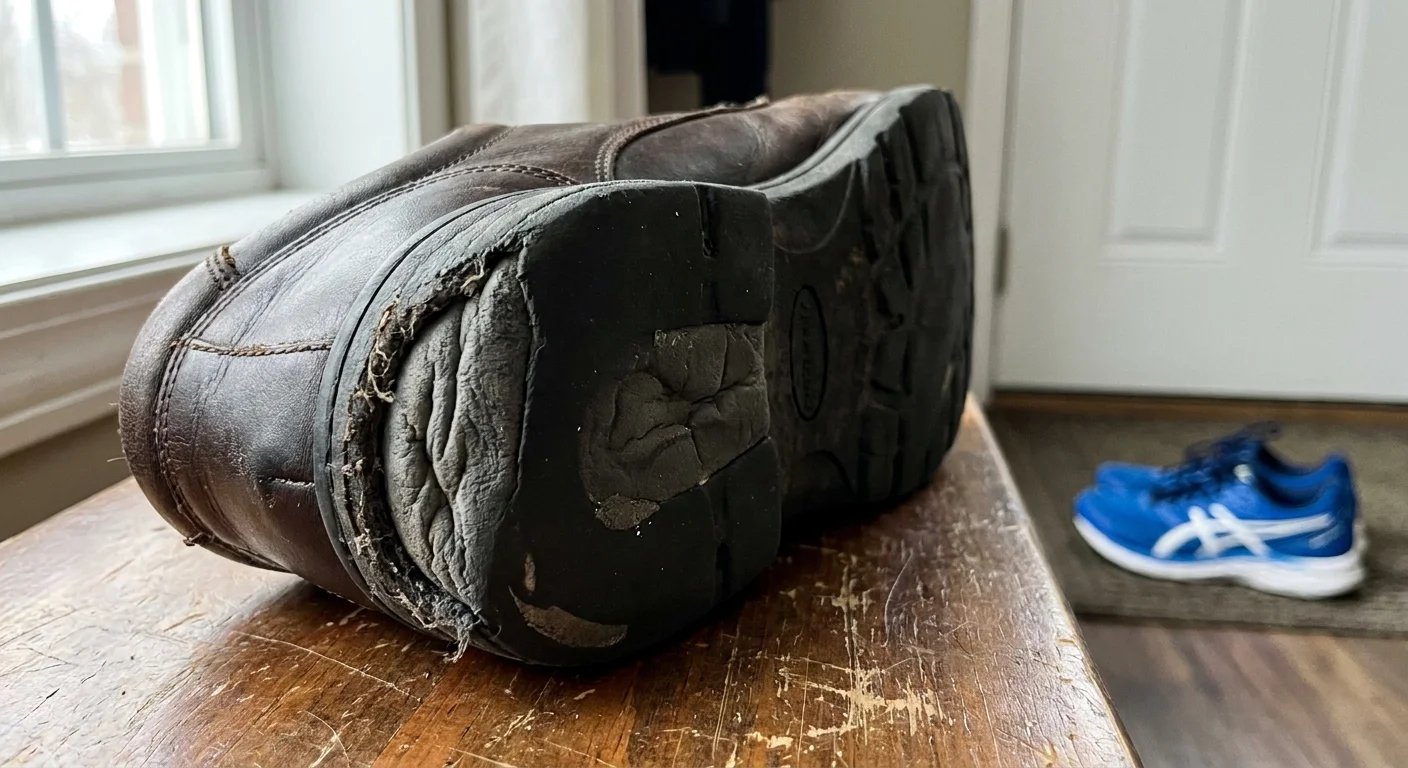
Mistake 3: Wearing Shoes Long Past Their Lifespan
Many seniors wait until their shoes look visibly frayed or torn before replacing them. By the time a walking shoe looks worn out on the outside, its structural integrity collapsed months ago. As you age, your joints naturally lose some of their internal cushioning, making you highly reliant on external support to absorb the shock of walking on hard pavement.
Every step you take sends a small shockwave up from the ground, through your foot and ankle, straight into your knee and lower back. Quality walking shoes feature specialized foam midsoles designed to absorb this impact. However, that foam compresses and breaks down with regular use. Walking in exhausted shoes allows those harsh shockwaves to travel freely into your fragile joints.
Make it a priority to replace your primary walking shoes every 300 to 500 miles, or roughly every six to eight months if you walk daily. Look for footwear that offers substantial cushioning, proper arch support to prevent your feet from rolling inward, and a flexible sole. Treating your footwear as medical equipment rather than a fashion accessory represents one of the simplest investments you can make in your long-term mobility.










One Response
This article about effective walking was the best I have ever read on the topic.