
Mistake 4: Taking Strides That Are Too Long
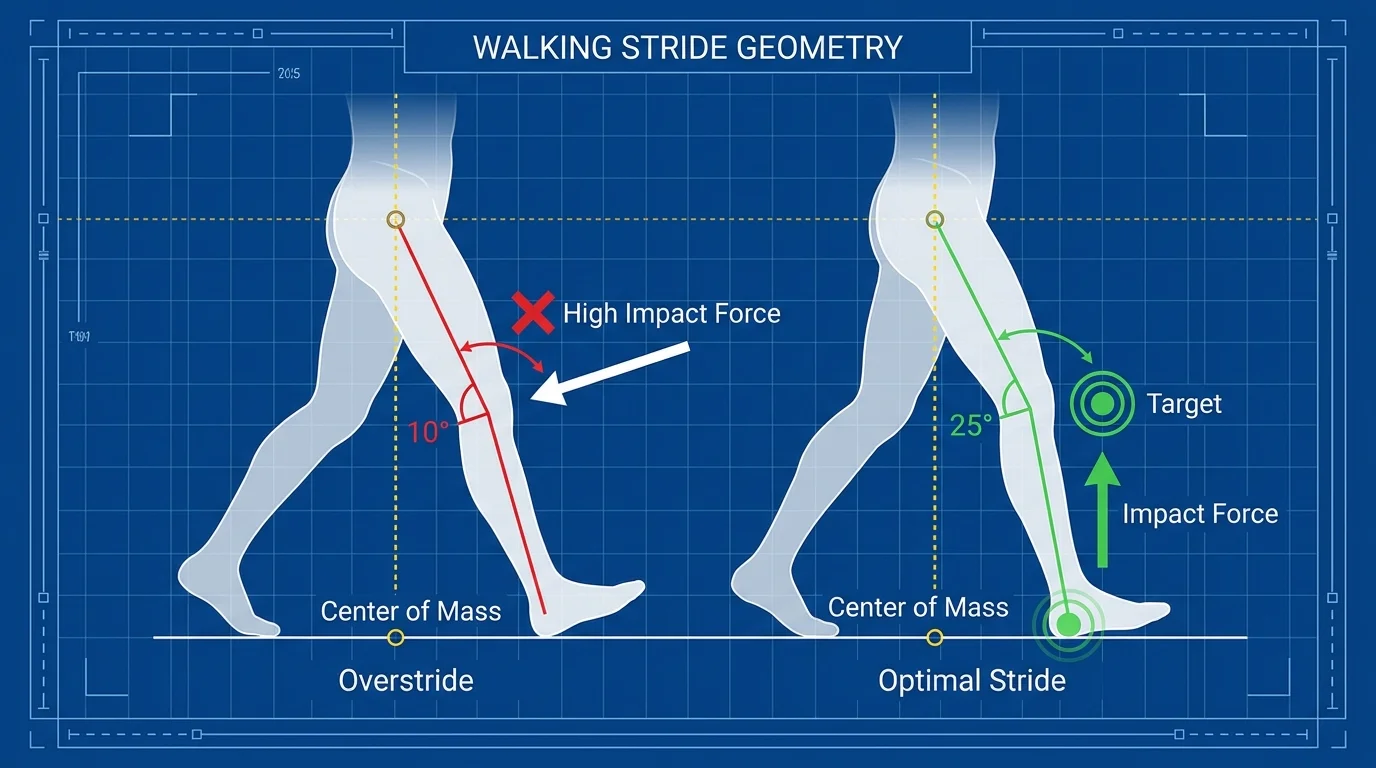
When you want to walk faster for a better cardiovascular workout, your instinct probably tells you to stretch your legs out and take longer strides. Reaching forward with your leading leg straightens your knee and forces your heel to strike the ground forcefully, well in front of your body’s center of gravity.
This movement pattern is known as overstriding, and it effectively acts as a braking mechanism. Instead of smoothly rolling through your step, a harsh heel strike sends a jarring force straight up your shin bone into your kneecap. Repeating this motion thousands of times during a neighborhood stroll places an enormous, destructive burden on your knee joints and lower back.
If you want to increase your walking speed, increase your cadence—the number of steps you take per minute—rather than the length of your steps. Keep your strides short and quick, ensuring your foot lands naturally under your body rather than far out in front. This technique promotes a softer landing, utilizes your glutes effectively, and spares your knees from repetitive trauma.










One Response
This article about effective walking was the best I have ever read on the topic.