
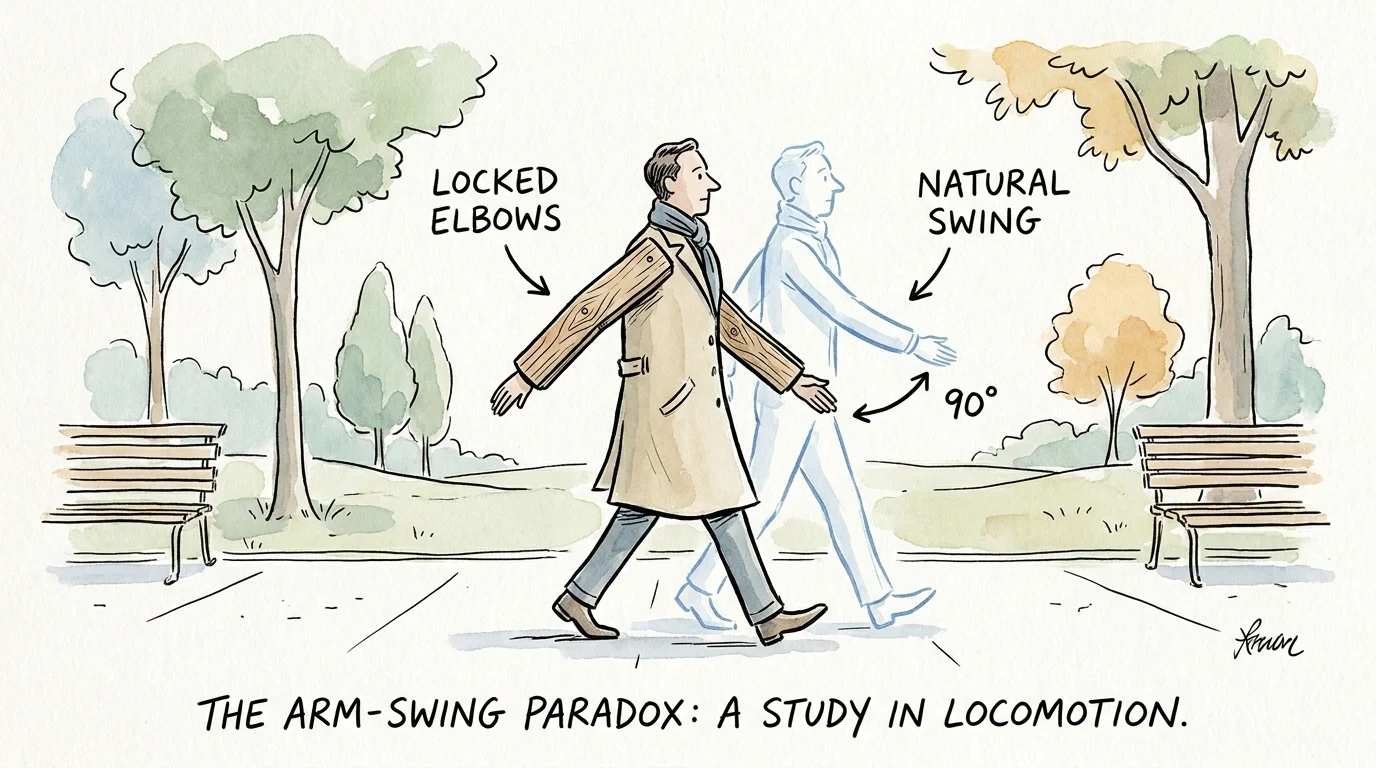
Mistake 5: Keeping Your Arms Stiff and Locked
Walking is not just a lower-body exercise; it requires fluid coordination across your entire body. Many walkers instinctively jam their hands into their pockets, cross their arms, or let them hang stiffly by their sides. Immobilizing your upper body in this way disrupts your natural biomechanics.
The human body moves efficiently through a contralateral pattern, meaning that as your left leg steps forward, your right arm should naturally swing forward to counterbalance it. This arm swing acts as a pendulum that drives the subtle, healthy rotation of your spine. When you lock your arms, you force your hips and lower back to work overtime to generate momentum and maintain stability.
Take your hands out of your pockets, bend your elbows slightly, and allow your arms to swing naturally from your shoulders. You do not need to march rigidly; simply let your upper body move in a relaxed rhythm that matches your footsteps. This takes significant tension off your lower back and hip flexors.










One Response
This article about effective walking was the best I have ever read on the topic.