
Habit 2: Prioritize “Posture Walking” Over Speed
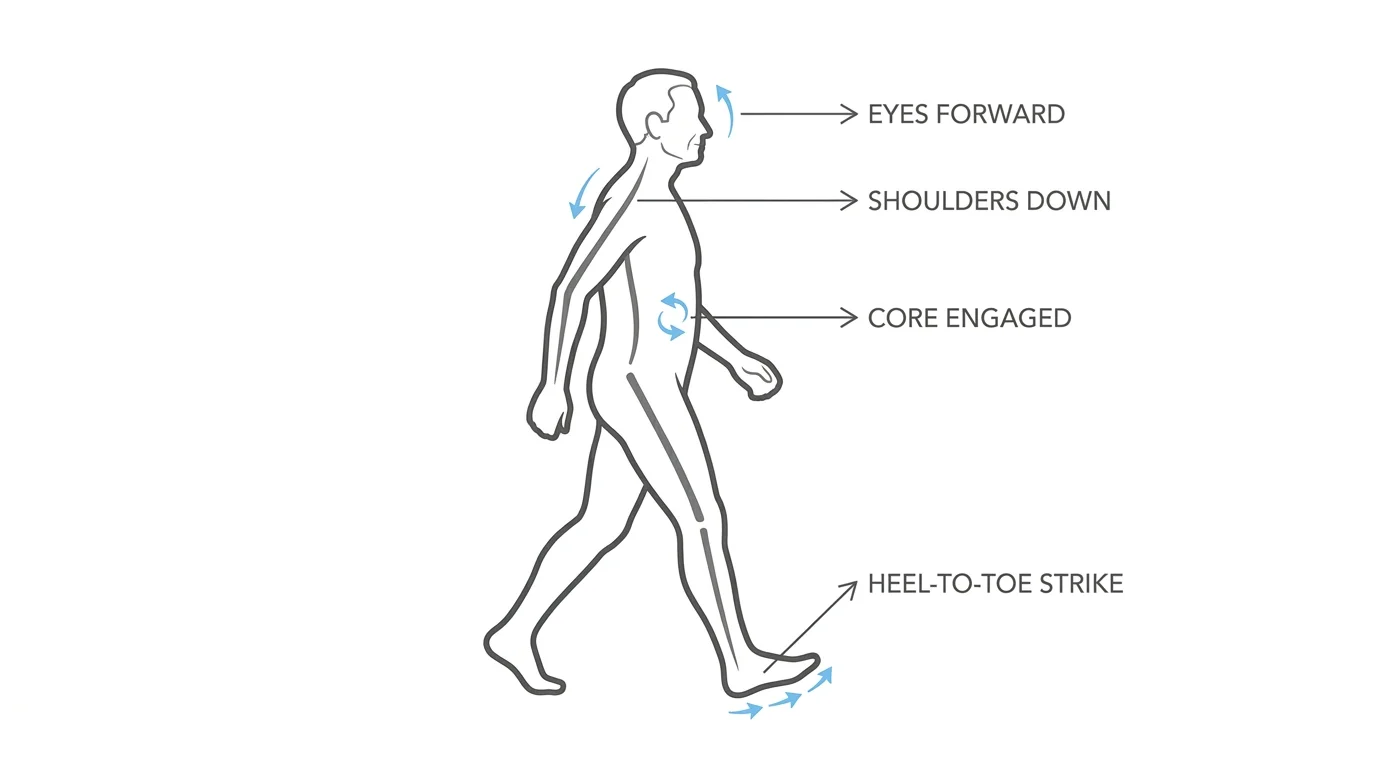
Many seniors mistakenly believe that walking only “counts” as exercise if they are moving at a blistering pace. In reality, how you walk is far more important than how fast you walk. Poor posture places unnatural stress on your lower back, knees, and hips, which can cause painful inflammation and discourage you from walking altogether.
Make a conscious effort to practice “posture walking” every time you step out the door. Follow these biomechanical guidelines:
- Keep your gaze forward: Look 15 to 20 feet ahead of you rather than staring straight down at your toes. This naturally aligns your neck and spine.
- Hinge at the hips: Avoid slouching forward from your shoulders. If you need to lean into a hill, lean from your ankles and hips.
- Roll your feet: Strike the ground gently with your heel, roll through the arch, and push off cleanly with your toes. This absorbs the impact of the pavement.
- Swing your arms: Let your arms swing naturally from your shoulders, not your elbows. This counter-rotation helps propel you forward and maintains your balance.
By prioritizing your skeletal alignment, you distribute your body weight evenly across your joints, allowing you to walk longer distances without unnecessary pain.






3 Responses
I enjoyed the article, it is very helpful. I have been walking for a while and I do have more confidence in my balance and stamina.
I have been walking for a while, and I do feel a difference in my balance and stamina.
Using walking sticks could add upper body exercise.