
Getting Expert Help: Maximizing Your Medicare Benefits
If you are experiencing pain that prevents you from walking, you should not try to self-diagnose. Lean on the healthcare benefits you have earned to get professional guidance.
For 2026, the standard Medicare Part B premium sits at $202.90 per month, according to the Centers for Medicare & Medicaid Services (CMS) (2026). If you are paying this premium, take full advantage of the services it provides to keep your body moving.
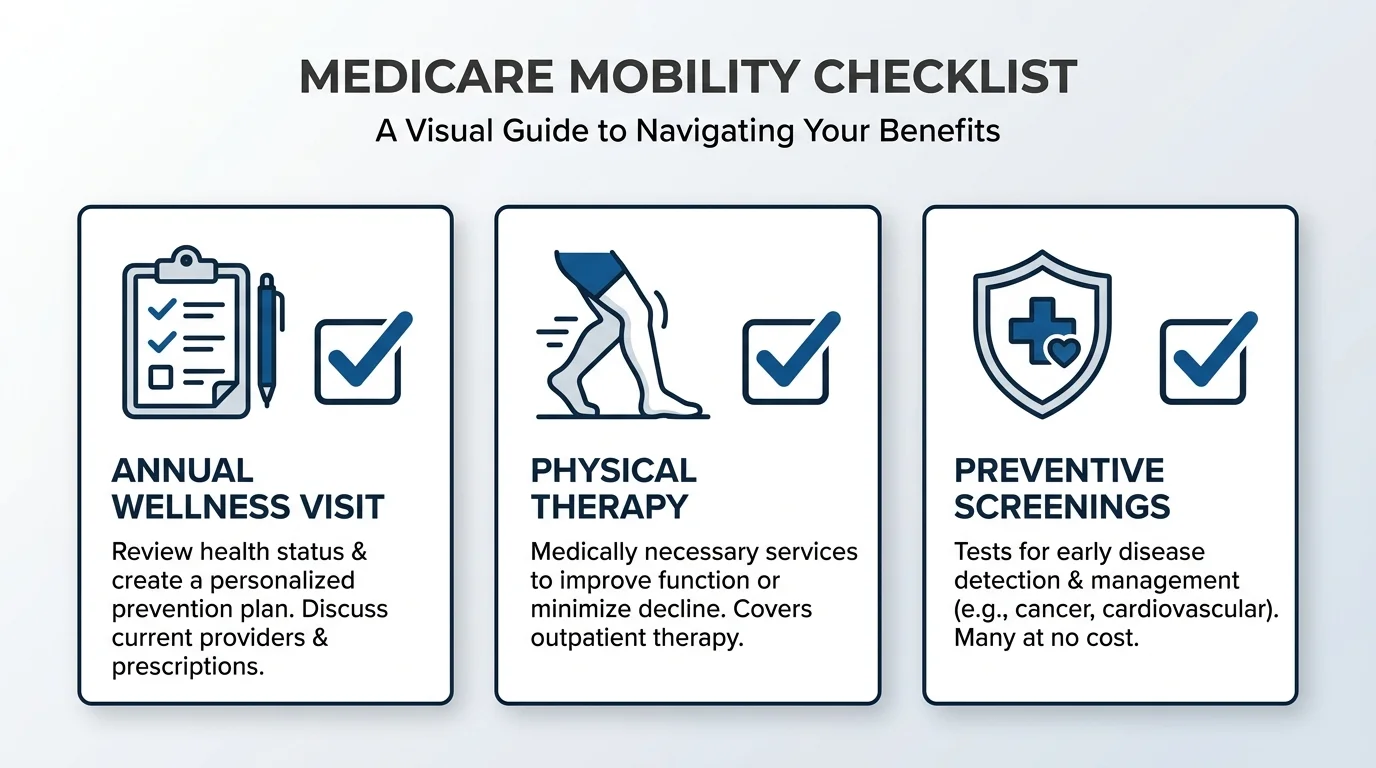
Medicare Part B covers a comprehensive Annual Wellness Visit at no out-of-pocket cost to you. This is the perfect time to ask your physician for a fall risk assessment and to discuss a personalized walking plan. If your doctor determines that you need physical therapy to address a gait issue or joint pain, Medicare Part B covers outpatient physical therapy. According to CMS (2026), the KX modifier threshold for physical and speech therapy combined is $2,480. This is not a hard cap; it simply means your provider must confirm the medical necessity of your care if your treatment costs exceed that amount.
| Mobility & Fitness Service | Medicare Part B (Original Medicare) Coverage | Medicare Advantage (Part C) Coverage |
|---|---|---|
| Outpatient Physical Therapy | Covered. You pay a 20% coinsurance after meeting your Part B deductible. | Covered. You typically pay a fixed copay per visit; check your specific plan summary. |
| Fitness Programs (e.g., SilverSneakers) | Not covered. You pay 100% out of pocket for gym memberships. | Frequently covered at no extra premium cost, offering access to walking tracks and pools. |
| Annual Wellness Visit | 100% covered once every 12 months. | 100% covered once every 12 months. |
| Orthopedic Walking Shoes | Covered only if you have severe diabetic foot disease. Not covered for general fitness. | Typically not covered, though some plans offer an over-the-counter (OTC) allowance for orthotic inserts. |

Pitfalls to Watch For
Even with the best intentions, certain walking mistakes can set your mobility back. Avoid these three common pitfalls to ensure your walking routine remains a healthy habit:
- Pushing Through Sharp Joint Pain: There is a distinct difference between muscle fatigue and joint damage. Muscle soreness usually presents as a dull, widespread ache that improves as you warm up. Sharp, localized pain in a knee, hip, or ankle is a warning sign. Never push through sharp pain; rest the joint and consult a physical therapist.
- Walking Without Hydration: As you age, your body’s natural thirst response diminishes, and the overall water content in your body decreases. You can easily become dehydrated during a 30-minute walk without ever feeling thirsty. Drink a glass of water before you head out, and carry a small bottle with you if you walk in warm weather.
- Relying Solely on Walking for Exercise: Walking is phenomenal for cardiovascular health and lower-body endurance, but it is not a complete fitness program. It does not build upper body strength or significantly challenge your core. To stay fully mobile, supplement your walking habit with two days of light resistance training or yoga each week.
Frequently Asked Questions
How many minutes a day should seniors walk?
The National Council on Aging (NCOA) and the CDC recommend that older adults aim for at least 150 minutes of moderate-intensity aerobic activity per week. This breaks down to about 30 minutes a day, five days a week. You can also break this into smaller chunks, such as two 15-minute walks per day.
Does Medicare pay for walking shoes?
Original Medicare (Part B) does not cover standard walking or running shoes for general fitness. Medicare only covers therapeutic shoes and inserts if you have diabetes and suffer from severe diabetic foot disease. You will need to budget for your own fitness footwear.
Can walking help reverse mobility loss?
Yes. According to MedlinePlus, physical activity like walking helps lubricate joints, strengthens the muscles supporting your skeleton, and improves balance. While it cannot cure structural joint damage, regular movement often prevents further decline and can significantly reduce stiffness associated with osteoarthritis.
Is it better to walk in the morning or evening?
The best time to walk is whenever you can do it consistently. However, walking in the morning exposes your eyes to natural sunlight early in the day, which helps regulate your circadian rhythm and can vastly improve your nighttime sleep quality.
Take the Next Step Today
You do not need to walk three miles tomorrow to start reaping the benefits of movement. Begin simply. Set your shoes by the door tonight, commit to a 10-minute stroll after breakfast, and focus on keeping your posture tall. By treating your daily walk as a non-negotiable appointment with your health, you actively defend your independence and protect the retirement savings you worked so hard to build.
This article provides general financial education and information only. Everyone’s financial situation is unique—what works for others may not work for you. For personalized advice tailored to your retirement needs, consider consulting a qualified financial professional such as a CFP or CPA.
Last updated: May 2026. Benefit amounts, tax rules, and program details change annually—verify current figures with official government sources.









3 Responses
I enjoyed the article, it is very helpful. I have been walking for a while and I do have more confidence in my balance and stamina.
I have been walking for a while, and I do feel a difference in my balance and stamina.
Using walking sticks could add upper body exercise.