
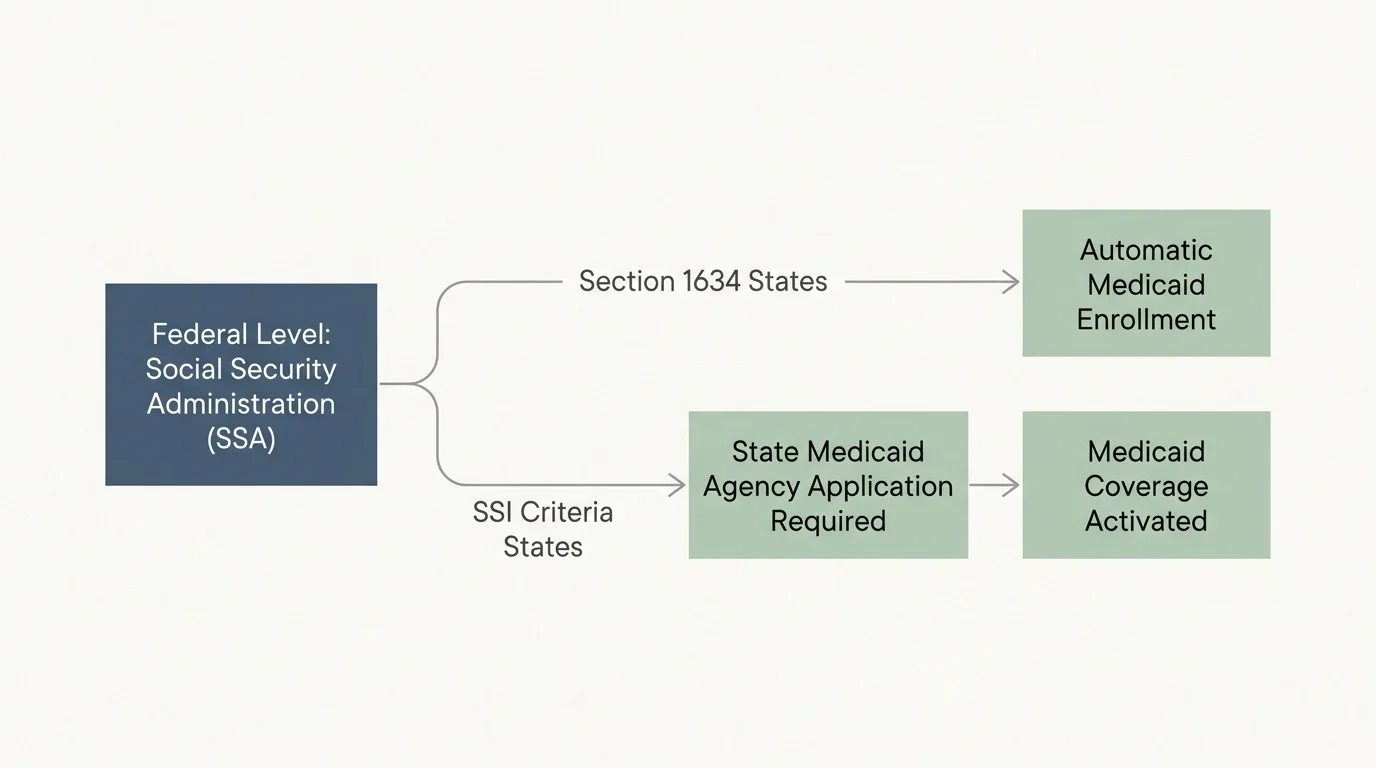
Understanding the SSI and Medicaid Connection by State
Supplemental Security Income provides monthly cash assistance to low-income seniors aged 65 and older, as well as individuals of any age with qualifying disabilities. While the Social Security Administration (SSA) manages SSI at the federal level, Medicaid operates as a joint federal-state program administered by individual state agencies. Because both programs target individuals with limited financial resources, federal law connects SSI eligibility directly to Medicaid entitlement; however, states maintain distinct administrative pathways for enrolling SSI recipients into Medicaid.
To understand the SSI and Medicaid connection by state, you must know which category your state falls into. Federal rules establish three distinct administrative classifications:
- Section 1634 States (34 states plus Washington, D.C.): In these states, the SSA shares your application data directly with the state Medicaid agency. When SSA approves your SSI, the state automatically enrolls you in Medicaid without requiring a separate state application.
- SSI Criteria States (7 states): These seven states adopt federal SSI Medicaid eligibility rules, meaning if you meet federal SSI standards, you automatically meet state Medicaid qualification rules. However, you must complete a separate state Medicaid application to receive your benefits card.
- Section 209(b) States (8 states): These states use Medicaid eligibility criteria that are more restrictive than federal SSI standards. If you live in a Section 209(b) state, SSI approval does not guarantee Medicaid eligibility, and you must complete a independent state evaluation process.









Leave a Reply