
The Circadian Clock and Morning Heart Health Risks
Your body operates on a natural 24-hour internal clock known as the circadian rhythm. This system controls sleep cycles, hormone production, body temperature, and blood pressure. While this internal clock helps you wake up feeling alert, it also triggers physical changes that significantly increase cardiovascular vulnerability in the early morning hours.
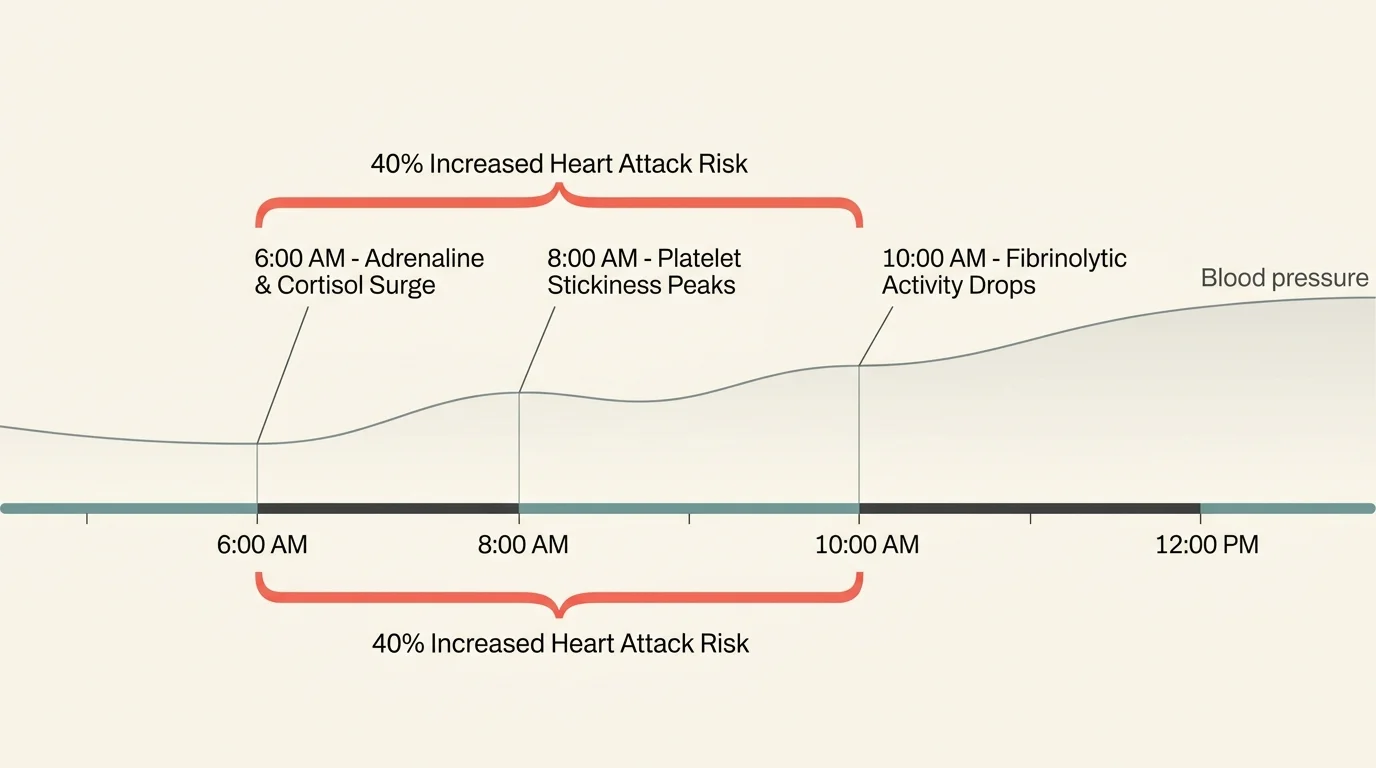
When you transition from sleep to wakefulness, your adrenal glands release a surge of hormones, primarily cortisol and catecholamines such as adrenaline and noradrenaline. These hormones prepare your body for daily activity by accelerating your heart rate and raising your blood pressure. For individuals with existing arterial plaque or underlying heart health conditions, this sudden surge creates intense mechanical stress on blood vessels.
Simultaneously, your blood chemistry changes in the early morning. Platelets—the tiny blood cells responsible for clotting—become much stickier and aggregate more easily between 6:00 AM and noon. At the exact same time, your body’s natural ability to dissolve blood clots, known as fibrinolytic activity, reaches its lowest point of the day. According to clinical research published in the American Journal of Hypertension, this dangerous combination makes blood significantly thicker and far more prone to forming dangerous clots inside narrowed coronary arteries.
These biological factors explain why your relative risk of suffering a heart attack actually triples during the first three hours after waking up. According to data from the American Heart Association, the average age for a first heart attack in the United States is 65 for men and 72 for women. Because these age ranges align closely with retirement, older adults must pay special attention to these morning biological shifts.









Leave a Reply