
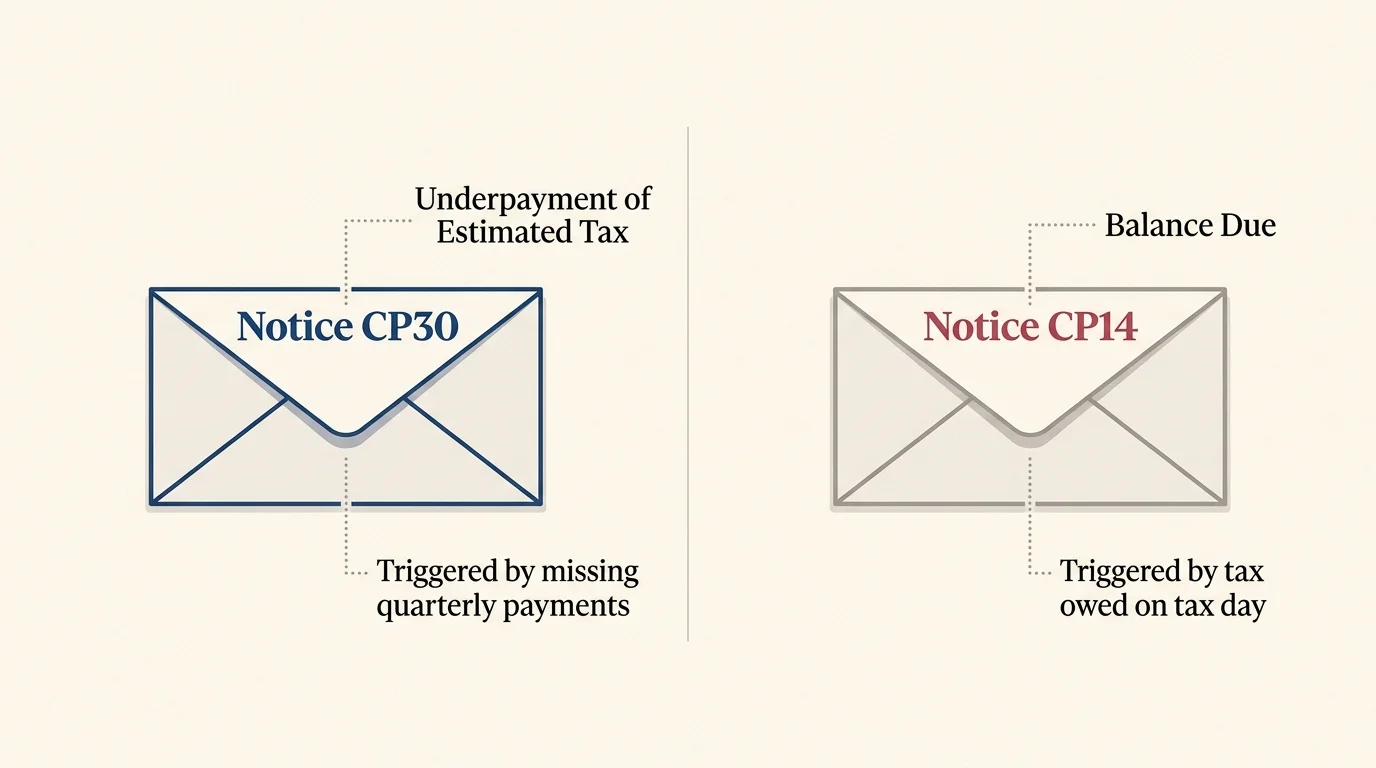
Deciphering Your IRS Penalty Notice (Notice CP30 vs. Notice CP14)
If you receive an irs penalty letter, stay calm. The IRS sends thousands of these notices each year, and receiving one does not mean you are under audit or in trouble; it simply means the IRS computer system detected a gap between your income and tax payments.
Two primary notices commonly arrive when estimated taxes fall short:
- Notice CP30: This notice informs you that the IRS assessed a penalty for underpaying your estimated tax. It details how the agency calculated the penalty based on payment dates and amounts.
- Notice CP14: This is the general balance-due notice. It alerts you that you owe unpaid taxes, along with interest and assessed underpayment penalties.
The IRS calculates underpayment penalties using short-term interest rates that update quarterly. For example, during 2026, the annual underpayment penalty rate stands at 7% for the first quarter, 6% for the second quarter, and 7% for the third quarter. Because interest accumulates until you pay the balance, addressing the notice promptly saves you money.
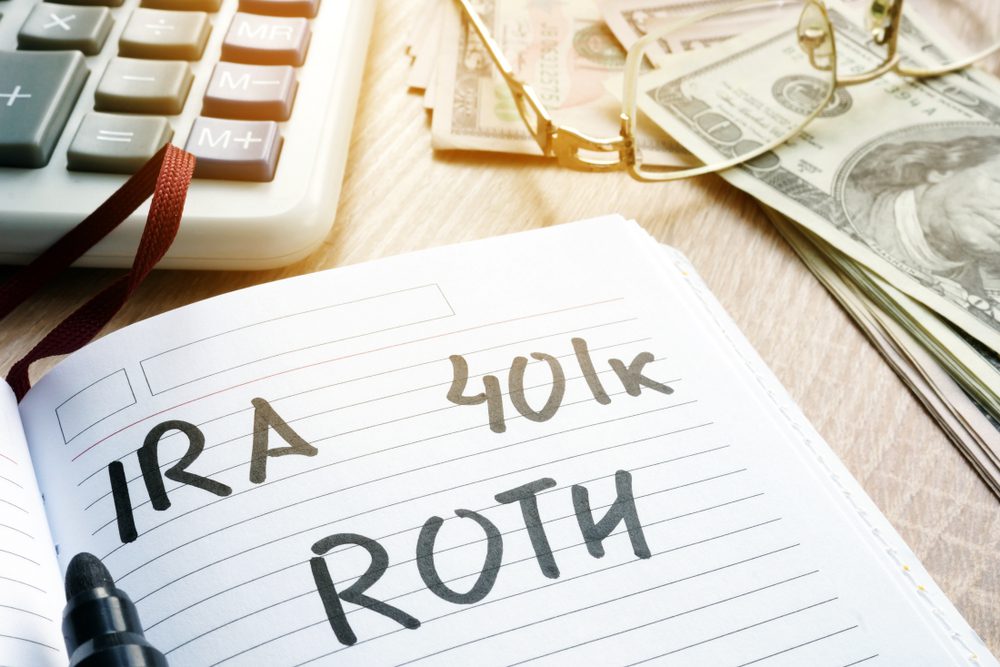
“Tax planning does not end when you retire—it actually becomes more vital because you gain direct control over when, how, and where your income is taxed.” — Ed Slott, CPA and IRA Expert






question. I will take my first RMD ON 12 /20/2026. THE AMOUNT OF $140,000. THE ESTIMATED TAX DUE ON 1/15/27 WILL BE $30,000 ON THAT WITHDRAWAL. FEDERAL WILL I GET HIT WITH A LATE FEE THE MONEY IS TAKEN THE LAST PART OF DECEMBER.
Who do you think is the Right Person for Washington, D.C. Mayor 2026? It is a person who can evolve intellectually, socially, politically, communicatively, Judicially, Legally, & in Educating as Science and Technology. It seems unfortunately Democrats & Republicans Lawmakers both “live in the past”. This is why the Judicial & Legal Systems Cite outdated Cases in Civil, Criminal, & Bankruptcy Court. My Leadership will evoke contemporary thinking in all areas. We need adequate Teachers, Politicians, Principals, Interventionists, Judges, Prosecutors, Clergy, Journalists, & Enforcers. I will have to learn more about IRS Taxes, Property Taxes, & Zoning Laws. I think we need a Constitution and Amendments to further define human rights. Please review this information and pass it on to as many others as possible, since November 3, 26 is right around the corner.